
Standing atop the High Atlas Mountains, I felt wonder and reverence. This world was unlike any I’d seen before. Here, ancient traditions and modern life blended, creating a beauty unlike any other. I set out to explore Morocco’s hidden gems and learn about the Berber people’s rich heritage.
The High Atlas Mountains, known as the « Mountains of Mountains, » tower over the Sahara Desert. They act as a barrier between the hot desert and the cooler regions to the north and west. The Berber people, also called the Amazigh, live here. They have a way of life that is deeply connected to the land.
From the towering peaks of Jbel Toubkal, the highest summit in North Africa, to the lush valleys, Berber culture thrives. It has left a lasting impact on Moroccan identity.
Key Takeaways
- Explore the authentic Berber culture and traditions in the High Atlas Mountains of Morocco
- Discover the rich history and evolution of the Amazigh people, the true name of the Berbers
- Immerse yourself in the vibrant arts, crafts, music, and cuisine that showcase Berber creativity
- Experience the breathtaking natural beauty of the High Atlas range, including the highest peak in North Africa, Jbel Toubkal
- Embark on unforgettable hiking and trekking adventures that connect you with the local Berber communities
Introduction to the Berber Tribe of Morocco
The Berber people, also known as the Amazigh, are the original people of North Africa. Their culture goes back over 4,000 years. The word « Amazigh » means « free people » in their Tamazight language. It shows their unique identity and heritage, different from Arab influences.
Understanding the Amazigh: The True Name of Berber People
The Amazigh people used to be called « Berbers. » But now, « Amazigh » is the preferred term. It highlights their role as the first people of North Africa, before the Arabs arrived.
Distribution of Berber-Speaking People in Africa
There are about 30 to 40 million Berber-speaking people in Africa. Most live in Morocco and Algeria. There are also smaller groups in Tunisia, Libya, Mauritania, Mali, Niger, and even Egypt and Burkina Faso. Knowing about the Berber’s language and culture helps us see the rich diversity of Morocco.
« The Amazigh people have long been the guardians of North Africa’s cultural heritage. They have kept their unique language, traditions, and way of life for thousands of years. »
The Historical Origins and Evolution of the Berber People
The Berber people, also known as the Amazigh, have a rich history in North Africa. It goes back to prehistoric times. Before the Arab conquest, they followed many faiths like Christianity, Judaism, and Animism. These beliefs connected people, nature, and the land.
When Islam arrived in the 7th century, most Berbers adopted it. Yet, some Jewish and Christian Berbers kept their faiths. The Berbers have always kept their cultural identity strong. They resisted outside influences and kept their traditions and language alive, even through conquests and colonization.
The Berber people have deep roots in berber history north africa. Their ancestors lived in the region for over 4,000 years. The berber religious beliefs have changed, with the berber conversion to islam being a key moment in their history.
| Era | Berber Religious Affiliation |
|---|---|
| Pre-Arab Conquest | Christianity, Judaism, Animism |
| After Arab Conquest (7th century) | Majority converted to Islam, some Jewish and Christian communities remained |
Despite facing many challenges, the Berber people have stayed strong. They have kept their cultural heritage and identity alive for centuries. Their history shows the resilience of a people who have overcome conquests and colonization. They remain a vibrant and unique part of North Africa’s cultural tapestry.
Rich Cultural Traditions of the Berber Community
Dive into the rich cultural heritage of the Berber community in Morocco. These resilient people, also known as the Amazigh, have a vibrant culture. They have artistic expressions, festivals, and musical traditions that show their deep connection to the land and their ancestry. [https://zonexplora.com/discover-morocco-your-ultimate-travel-guide/]
Arts, Crafts, and Festivals: Showcasing Berber Creativity
The Berber arts and crafts show the community’s creativity. They make intricate berber arts and crafts like weaving, pottery, and jewelry. Their fabric and carpets have stunning designs that reflect their unique styles and motifs.
Their celebrations are just as captivating. Festivals like the berber festivals and celebrations Festival of Fantasia and the Festival of Marriage bring communities together. These events honor their heritage through music, dance, and shared rituals. They offer a glimpse into the heart of moroccan berber culture.
The Rhythms of Berber Music and Dance
Music and dance are at the heart of Berber culture. They use instruments like flutes, drums, and stringed instruments in both rituals and celebrations. The hypnotic beats and soulful melodies capture the essence of their connection to the land and ancestors.
Berber dance traditions are captivating, with graceful movements and intricate footwork. These performances tell stories of joy, sorrow, and cultural identity. Witnessing them is a transformative experience that connects visitors to the Berber way of life.
« Immersing oneself in these vibrant cultural expressions is a transformative way to understand the depth and vitality of Berber identity. »
Exploring the rich cultural traditions of the Berber community is rewarding. It shows the enduring spirit and creativity of this remarkable people. From the intricate artistry to the captivating music and dance, their cultural heritage is a testament to the power of self-expression and tradition.
A Culinary Journey: Tasting Authentic Berber Cuisine
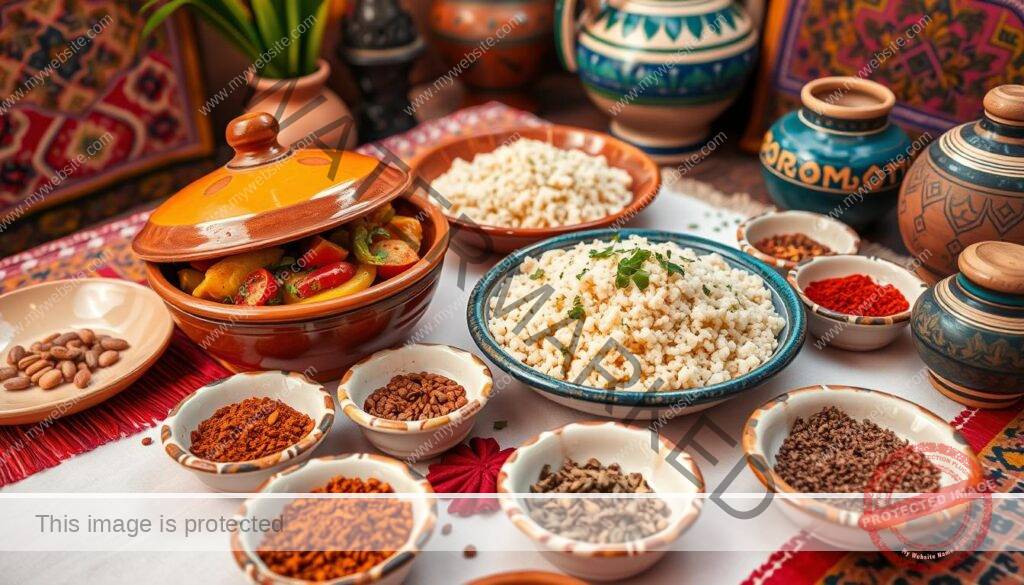
Berber cuisine is a key part of Morocco’s culture. It shows the community’s strong bond with the land and its resources. Couscous, a dish made from semolina wheat, is loved by many. Tagines, slow-cooked stews with meats, veggies, and spices, also highlight the Berber’s creativity and resourcefulness.
Traveling through Morocco lets you taste these real flavors. You’ll learn to appreciate the Berber’s close tie to nature and its gifts. From the aromatic berber tagine recipes to the rich moroccan couscous, each dish shares the Berber’s story of survival and success in the High Atlas Mountains.
Dive into the world of berber cuisine morocco and explore traditional berber dishes that have been shared for ages. Whether it’s a big family meal or a simple meal with locals, you’ll be amazed by the flavors and the sense of community in Berber cooking.
« The Berber people’s culinary heritage is a testament to their deep reverence for the land and their ability to create nourishing, flavorful dishes from the bounty of their surroundings. »
Start your culinary adventure in Morocco and enjoy the real tastes of Berber cuisine. It’s a chance to connect with the rich cultural history that’s in every dish.
| Dish | Description |
|---|---|
| Couscous | A staple Berber dish made from semolina wheat, often served with meat, vegetables, and a flavorful broth. |
| Tagine | A slow-cooked stew featuring a variety of meats, vegetables, and spices, cooked in a distinctive clay pot. |
| Mint Tea | A quintessential Berber beverage, known for its refreshing and aromatic qualities. |
| Harira | A hearty soup made with lentils, chickpeas, and meat, often consumed during the holy month of Ramadan. |
Immersing Yourself in the Berber Culture: Interacting with the Local Community
Visiting traditional Berber villages in the High Atlas Mountains is rewarding. It lets you see the daily lives and customs of the Berber people. You can talk to artisans, share mint tea with families, and get a real look at their centuries-old way of life.
The Berber people are known for their warm welcome and love to share their traditions. These berber village tours morocco and berber homestay experiences are great for those wanting to see more than just tourist spots. You can explore markets, watch traditional weaving, and enjoy music, all while meeting berber people morocco and engaging with local berber communities.
« Engaging with the Berber people is like stepping into a world that time has forgotten – a world of timeless traditions, captivating stories, and a profound connection to the land. » – Traveler, Morocco
By diving into the Berber culture, you learn to appreciate their resilience, creativity, and spirit. You can see the beauty of Berber rugs and pottery, join in celebrations, and get a glimpse into their vibrant culture. These experiences show the lasting impact of Berber traditions on Morocco.
Experiences like guided tours, homestays, or workshops let you connect deeply with the Berber people. They offer a chance to make lasting connections and respect their traditions. By embracing the Berber community’s warmth, you start a journey that changes you and deepens your love for Morocco’s rich heritage.
hiking in Morocco « Atlas Mountains trekking » best hiking trails Morocco
Start an amazing journey in Morocco’s High Atlas Mountains. This area has many hiking trails that take you through stunning views, Berber villages, and natural wonders. You can climb Jbel Toubkal, the highest peak in North Africa, or explore the Toghda and Todra Gorges.
Local mountain guides will help you on these tough terrains. They will teach you about the Berber culture and the area’s beauty. The Atlas Mountains stretch for 2,500km, with the High Atlas in Morocco having peaks over 4,000 meters.
Trekking here can be challenging, like dealing with altitude sickness at 2,800 meters. But reaching the top of Jbel Toubkal is worth it. From the summit, you can see amazing views of green valleys, Anti-Atlas, Sahara, and Marrakesh Plain. Climbing to the highest peak in North Africa takes 3-4 days.
- The Atlas Mountains stretch for 2,500km through Algeria, Morocco, and Tunisia.
- The highest peak in North Africa is Jebel Toubkal, standing at 4,167m.
- Altitude sickness may become an issue when hiking in the High Atlas, especially around 2,800m.
- Mount Toubkal is covered in snow throughout most of the year.
- Mount Toubkal trek can take two to four days to summit.
- The Neltner or Toubkal Refuge, built in 1938, is the last refuge before summiting Mount Toubkal.
The High Atlas Mountains in Morocco are perfect for any hiker or nature lover. They offer an adventure that will amaze you with their landscapes and Berber culture. With local guides, your trip will change how you see Morocco and give you memories to last a lifetime.
« Hiking in the High Atlas Mountains of Morocco is a truly transformative experience. The rugged terrain, stunning vistas, and warm hospitality of the Berber people make it a must-visit destination for any adventurous traveler. »
Exploring the Wonders of Toubkal National Park
Toubkal National Park in the High Atlas is a true treasure. It has many hiking trails that show off the area’s beauty. The park is home to Jbel Toubkal, the highest peak in North Africa, and the Toghda and Todra Gorges.
With the help of experienced guides, you can explore these trails. They will challenge you physically and teach you about the Berber culture. Whether you want to climb Jbel Toubkal or enjoy the park’s trails, Toubkal National Park is an unforgettable adventure in Morocco’s high country.
Conclusion
Exploring the Berber culture in Morocco is a journey that changes you. It shows you the real Morocco, not just the tourist spots. The Berbers have kept their traditions alive, offering a chance to see the true North Africa.
Travelers can hike in the High Atlas Mountains, meet local Berbers, or try their food. This experience will inspire you and make you appreciate Morocco’s rich heritage.
The Berber culture is a treasure trove for those who love adventure. It shows how a people can keep their traditions alive while embracing change. This journey opens your eyes to the beauty of Morocco and its people.
When you explore the Berber culture, you see the strength of a people who have faced many challenges. It’s a journey that broadens your view and helps you understand Morocco better.
As we end our journey with the Berbers, we invite you to keep exploring Morocco. There’s so much more to see and discover. It’s a chance to truly experience the heart and soul of this amazing country.