
Are you tired of the same old commercial cat food options? Want to give your feline friend a healthier, more wholesome diet? Look no further than homemade cat food recipes! This guide will show you the benefits of making your own cat food. Plus, we’ll share easy recipes that will make your kitty purr with delight.
Cats are carnivores, needing a diet rich in essential nutrients, vitamins, and proteins. By making your own cat food, you can ensure they get what they need. Plus, it can save you money compared to buying commercial pet food.
Key Takeaways
- Discover the benefits of making homemade cat food for your feline friend
- Learn about the essential ingredients needed for a nutritious cat diet
- Explore simple, easy-to-follow recipes for chicken, beef, and fish-based homemade cat food
- Understand the cost savings of DIY cat food compared to commercial options
- Gain tips and tricks for storing, serving, and addressing picky eaters when it comes to homemade cat meals
Introduction to Homemade Cat Food
Homemade cat food has many benefits over store-bought options. It’s a great choice for pet owners who care deeply about their pets. By making meals at home, you can control what goes into your cat’s food. This ensures they get a diet that’s both nutritious and natural.
Benefits of Homemade Cat Food
One big plus of homemade cat food is avoiding fillers and preservatives. These are often found in commercial pet foods and can be harmful. Homemade meals let you use high-quality, whole foods that are better for your cat.
Why Consider Making Your Own Cat Food?
Many cat owners choose homemade food because of health concerns and a desire for a natural diet. Making meals at home means you know exactly what you’re feeding your cat. This gives you peace of mind about the food’s quality and safety.
Homemade cat food can also save money, especially for those with multiple pets. With the right recipes, you can make healthy, affordable meals that meet your cat’s needs.
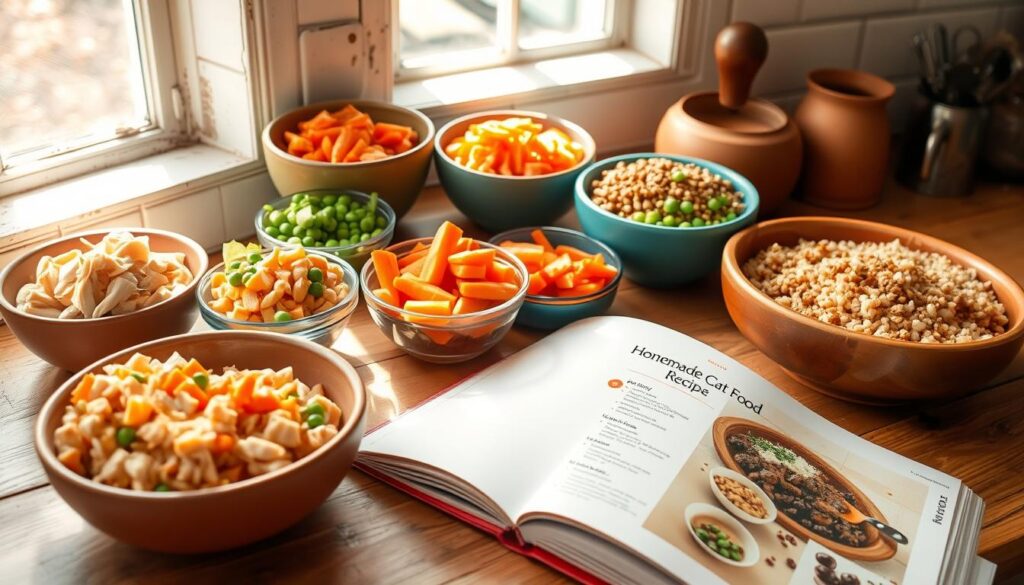
« Feeding my cats a homemade diet has been a game-changer. Their energy levels, coat quality, and overall health have improved significantly since I made the switch. »
Starting to make homemade cat food might seem hard, but the benefits are worth it. It’s a way to give your cat a diet that’s truly nourishing and tailored to their needs. By understanding the benefits and reasons for homemade cat food, you can start a journey to better health for your cat.
Essential Ingredients for Cat Food Recipes
Creating tasty homemade cat food starts with choosing top-notch protein sources for cats. Options like chicken, beef, and fish are packed with nutrients. They help keep your cat healthy and happy.
Protein Sources: Chicken, Beef, Fish
Chicken is a favorite for homemade cat food. It’s full of lean, easy-to-digest protein. Beef adds a rich, protein-packed base. Meanwhile, fish like wild-caught salmon gives a boost of omega-3s for a healthy coat and skin.
| Protein Source | Nutritional Benefits |
|---|---|
| Chicken | Lean, easily digestible protein |
| Beef | Hearty, protein-rich foundation |
| Fish (Salmon) | Omega-3 fatty acids for healthy skin and coat |
Supplements and Additives
Along with quality protein sources for cats, adding cat food supplements is crucial. These include vitamins, minerals, and more. They make sure your cat gets all the nutrients they need.
- Taurine: Supports heart and eye health
- Omega-3 and Omega-6 fatty acids: Promote a healthy skin and coat
- B-Complex vitamins: Support energy metabolism and nervous system function
- Vitamin E: Acts as an antioxidant to support the immune system
- Iodized salt: Helps regulate thyroid function
- Psyllium husk powder: Provides fiber for digestive health
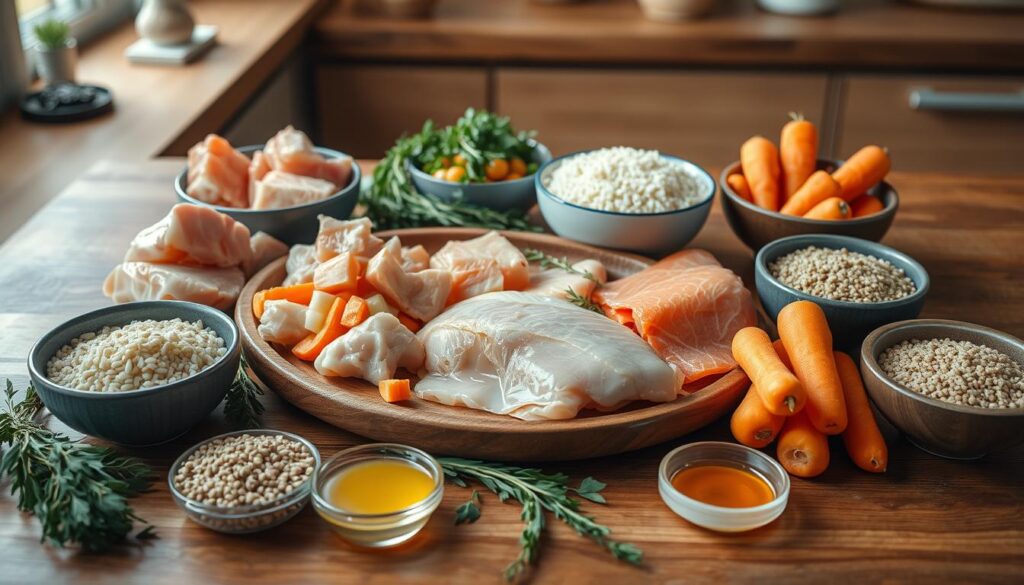
By picking the best protein sources for cats and adding the right cat food supplements, you make food that’s good for your cat. It tastes great and keeps them healthy.
Chicken-Based Homemade Cat Food Recipe
Making homemade cat food is easy and healthy. A simple recipe uses chicken to give your cat all the nutrients they need. Let’s look at what you need and how to make it.
Ingredients and Preparation
For a chicken-based cat food, you’ll need:
- 2 cups cooked, boneless and skinless chicken breasts, chopped or shredded
- 2 cups low-sodium chicken broth
- 1/2 cup cooked brown rice
- 1 raw egg, beaten
- 1 tablespoon unsalted butter or vegetable oil
- 1/4 cup cooked peas or other finely chopped vegetables
- Supplements: 1/4 teaspoon of a cat-safe multivitamin, 1/4 teaspoon of calcium, and 1 fish oil capsule
Just mix all the ingredients in a big bowl. Then, divide it into portions. Store them in the fridge or freezer for later.
Storing and Serving Homemade Cat Food
Keep homemade cat food in an airtight container in the fridge for 3-4 days. Freeze it for up to 3 months in freezer-safe bags or containers. Thaw frozen portions in the fridge overnight. Warm the food to room temperature before feeding.
Make mealtime fun by adding a bit of dried catnip or fresh parsley. Always check with your vet before changing your cat’s diet. And remember, onions, garlic, and chocolate are toxic to cats.
Beef-Based Homemade Cat Food Recipe
We want the best for our cats, and homemade food is a great choice. Cats need meat as their main food, so a beef-based recipe is perfect. It uses quality beef and other ingredients to make a tasty, healthy meal.
To make this cat food, you’ll need:
- Ground beef (80% lean)
- Egg yolk
- Barley (cooked)
- Vitamin and mineral supplements
Start by cooking the ground beef in a skillet until it’s fully cooked. Then, drain the fat and let it cool a bit. In another bowl, mix the egg yolk until it’s smooth. Combine the beef, egg yolk, and barley until everything is well mixed.
Adding the right vitamins and minerals is crucial for a balanced diet. Talk to your vet to find out what supplements your cat needs. Follow the instructions on the supplement packaging to add them correctly.
After making the food, divide it into portions and store them in the fridge or freezer. When it’s time to feed your cat, thaw the portion and warm it a bit before serving.
Cats might take time to get used to new food, so be patient. With the right mix of nutrients and considering your cat’s taste, this beef-based recipe can be a great choice for a healthy meal.
Fish-Based Homemade Cat Food Recipe
Making homemade cat food with fish can be very rewarding. It’s important to pick the right fish to ensure your cat gets a balanced meal. Look for fish low in mercury and avoid those that might cause allergies.
Selecting the Right Fish
Not all fish are good for cats. Choose low-mercury fish like salmon, tuna, and whitefish. These fish are full of omega-3 and omega-6 fatty acids. They help keep your cat’s immune system strong, reduce inflammation, and keep their skin and coat healthy. Stay away from high-mercury fish like swordfish, shark, and king mackerel.
Preparation and Cooking Tips
- Make sure to cook the fish well to kill off harmful bacteria or parasites.
- Add hearts and livers to the mix for a boost of taurine, a key amino acid for cats.
- Don’t forget to add B-complex vitamins to keep the diet balanced.
- Use a bit of low-sodium salt to add iodine to the recipe.
- Be careful not to overcook the fish, as it can lose taurine.
By picking the right fish and cooking it right, you can make a tasty and healthy homemade cat food. Your cat will love it!
Raw Cat Food Recipes
For cat owners looking to give their pets a natural diet, raw cat food recipes are a great choice. They offer many benefits like better digestion, healthier skin, and more energy.
Benefits of Raw Feeding
Cats need a diet full of animal proteins because they are obligate carnivores. Raw cat food recipes are like their natural prey. They provide all the nutrients cats need for good health.
Safety Precautions for Raw Cat Food
Raw cat food is safe if you follow some important steps. Make sure the ingredients are fresh and of high quality. Also, follow food handling rules to avoid foodborne illnesses. Storing and serving the food correctly is key to its safety.
« Making homemade cat food can be done by anyone, emphasizing the simplicity of creating raw food for cats. »
Knowing how to safely prepare raw cat food lets owners give their pets a healthy meal. It’s a tasty and nutritious option for your cat’s diet.
Homemade Cat Treat Recipes
You can make yummy homemade cat treats as rewards or snacks. These treats are better than store-bought ones because you choose the ingredients. This way, you ensure your cat gets the best nutrition.
Healthy Treat Options
One great recipe uses canned tuna, whole wheat flour, a whole egg, and olive oil. Baked at 350°F for 12-14 minutes, these treats are tasty and full of protein. For a softer texture, bake them for 4-5 minutes more.
Another good option is a hairball control treat. It’s made with brown rice flour, canned pumpkin, egg, oil, and ground flax. These treats help with digestion and reduce hairballs.
Grain-Free and Gluten-Free Treats
For cats with dietary issues, try grain-free and gluten-free treats. A recipe with tuna, pumpkin, coconut flour, mineral powder or parsley, and an egg is popular. A simple 3-ingredient treat uses canned salmon, an egg, and whole wheat flour.
Cheesy cat treats are also a hit. They’re made with cheese, yogurt, flour, cornmeal, and water. The « holy mackerel » treat is another favorite, with canned mackerel, breadcrumbs, egg, oil or bacon grease, and Brewer’s yeast.
When making homemade cat treats, avoid raw dough. It can harm your cat. Fully cooked treats are safer. With a bit of creativity, you can make many tasty and healthy treats for your cat.
Cost Savings of Homemade Cat Food
Feeding your cat can get expensive with commercial food. But, making your cat’s food at home can save a lot of money. By looking at the costs of homemade versus commercial cat food, you can see the financial benefits of cooking for your cat.
Comparing Costs to Commercial Cat Food
Homemade cat food costs between $0.90-1.52 per day, based on the recipe. Dry commercial food costs $1.77 per day. Wet and freeze-dried options can cost up to $6.74 and $6.75 per day, respectively. Homemade raw food can save $554.80 a year compared to other commercial diets.
Homemade cat food can cost $1-2 per day for each cat. This depends on the number of cats, their weight, and the ingredients. The time and effort you put into making homemade food can save you thousands of dollars a year.
| Diet Type | Daily Cost | Annual Cost |
|---|---|---|
| Homemade Raw | $1.52 | $554.80 |
| Commercial Dry | $1.77 | $646.05 |
| Commercial Wet | $6.74 | $2,460.10 |
| Commercial Freeze-Dried Raw | $6.75 | $2,463.75 |
Homemade cat food also offers benefits like better dental health and mental stimulation. It can lead to lower vet bills in the long run. The time spent making homemade food is worth it for the savings and health benefits.
how to make cat food recipes
Making homemade cat food is rewarding and saves money. It ensures your cat gets the best nutrition. Follow a simple guide and use helpful tips to make tasty meals for your cat at home.
Step-by-Step Guide
- Start by getting the right ingredients: Organic Beef (2 lbs, 90% ground), Organic Turkey Thighs (2 lbs, skinless and boneless, ground), Organic Chicken Organs (2 lbs, mixed ground), Organic Squash Meat (4 oz, prepped), Organic Berries (2 oz, mixed), Organic Broccoli (2 oz), Sardines in water (2 cans), and Organic Kale (2 oz).
- Preheat your oven to 350 degrees Fahrenheit. Bake the chicken thighs and livers for about 15 minutes. This kills bacteria without overcooking the bones.
- In a big mixing bowl, mix the cooked chicken, ground beef, and ground turkey. Add Organic Squash Meat, Organic Berries, Organic Broccoli, and Organic Kale.
- Add 2 eggs, 5-8 capsules of 1200 mg Fish Oil, 1 tsp of Morton Lite Salt with Iodine, 2 tbsp of Apple Cider Vinegar, 1 capsule of 400 IU Vitamin E, 1 capsule of Vitamin B-complex, and 4 capsules of 500 mg Taurine to the mix.
- Mix everything well until it looks like chili beans. If your cat doesn’t drink enough, add more water to make it more liquidy.
- Put the homemade cat food into airtight containers. Leave about 3/4 inch of space at the top for when it freezes.
- Keep the containers in the fridge or freezer, depending on when you need them.
Tips and Tricks for Homemade Cat Food
- Always check with your vet and do lots of research to make sure the food is right for your cat.
- Homemade cat food can take a lot of time, especially cleaning up. Use a bleach solution and hot soapy water to stay clean.
- Try different recipes like Kitty Chicken Soup, Crazy Cat Cookies, and Kitten Glop. This way, you can find what your cat likes best and what they need.
- Make sure to store the homemade cat food correctly. Follow the right steps for keeping it fresh in the fridge or freezer.
By following this guide and using these tips, you can make delicious homemade cat food. Your cat will be happy and healthy. Enjoy making these meals and watch your cat enjoy every bite!
Addressing Picky Eaters
Most cats aren’t picky, but some can be. They might not want to try new foods, like homemade cat meals. As a caring pet owner, you might find it hard to get your cat to eat homemade food. But, with patience and the right strategies, you can help your cat enjoy the homemade food you make.
Gradual Introductions
Start slow when introducing homemade cat food. Mix a little of the new food with their usual food. Gradually add more homemade food over a week or two. This helps their digestive system adjust and makes the change easier for them.
Flavor Enhancements
Some cats like the taste of their commercial food. To make homemade food more appealing, try adding human-grade tuna, chicken broth, or parmesan cheese. These can make the homemade food taste better to your cat.
Meal Frequency and Consistency
Cats like to eat small meals all day. Offering smaller meals can help them try homemade food. Also, keep the homemade recipe the same to make your cat like it more.
Changing a cat’s diet should be done slowly. Always talk to your vet for advice on what’s best for your cat. With patience and the right approach, your picky eater can start to enjoy homemade cat food.
Nutritional Considerations for Cats
When making homemade cat food, it’s crucial to meet your cat’s dietary needs. Cats need specific nutrients to stay healthy and happy.
Meeting Your Cat’s Dietary Needs
Cats are meat-eaters and need certain nutrients from animal sources. Homemade cat food recipes must have the right mix of proteins, vitamins, and minerals. This is key for your cat’s growth and health.
- Protein: Cats need high-quality protein from sources like chicken, beef, or fish. This supports their muscles and organs.
- Fats: Healthy fats, found in animal-based oils, are important for energy, coat health, and nutrient absorption.
- Carbohydrates: Cats can’t digest carbs well, so they should be used sparingly.
- Vitamins and Minerals: Supplements may be needed to ensure your cat gets enough vitamins and minerals, like taurine, iron, and vitamin E.
Homemade cat food that lacks the right nutrients can cause serious health problems. These include heart disease, blindness, anemia, and liver issues. It’s wise to get help from a vet nutritionist to make sure your cat’s food is balanced.
| Nutrient | Potential Deficiency Issues |
|---|---|
| Taurine | Heart disease, blindness, neurological issues |
| Iron | Anemia, weakness, lethargy, collapse |
| Thiamine | Decreased appetite, nausea, seizures, coma, death |
| Choline | Fatty liver disease |
| Vitamin E | Pansteatitis (inflammation of fat) |
Creating a balanced homemade cat food is hard. It needs careful planning, monitoring, and expert advice. Working with a vet nutritionist or using approved online resources can help. This ensures your cat gets the right food while avoiding diet-related risks.
Storing Homemade Cat Food
Keeping homemade cat food fresh and nutritious is key. Whether you’re chilling or freezing, knowing the right methods is important. This way, your cat gets a tasty and healthy meal.
Refrigeration and Freezing Tips
Refrigeration is best for short-term storage, keeping food fresh for 2-3 days. Chilled food in broth or gravy can last longer with a chiller. Freezing is better for longer storage, lasting up to 4 months. Vacuum-sealed foods can stay good for 6 months in the freezer.
Freezing food? Use containers like baking trays or ice cube trays for portions. This makes thawing easy. You can thaw by refrigerating, cold water, or a microwave on defrost.
To keep food fresh in the fridge, use airtight containers. Don’t leave food out for more than 2 hours. This prevents bacterial growth and keeps food safe.
| Storage Method | Shelf Life |
|---|---|
| Refrigeration | 2-3 days |
| Freezing | Up to 4 months |
| Vacuum-sealed Freezing | Up to 6 months |
By using these refrigerating and freezing tips, your homemade cat food stays fresh and safe. Your cat will love it.
Conclusion
Making homemade cat food is rewarding and good for your cat. It lets you control what they eat. This way, they get fresh, high-quality ingredients and all the nutrients they need.
Homemade cat food has many benefits. It can save money and let you tailor their diet to their needs. You can choose from chicken, beef, fish, or even raw food. The most important thing is to keep your cat healthy and happy.
When switching to homemade food, do it slowly and with your vet’s help. Use trusted recipes and add the right supplements. This way, you’ll make tasty, healthy meals for your cat. Enjoy making homemade cat food and know you’re giving your cat the best care.