
The digital age has changed education in big ways. At the center of this change are virtual classrooms. These online spaces bring many benefits that go beyond old-school classrooms. They’re changing how we see education.
Virtual classrooms make learning available to more people. They offer a way to learn that’s flexible and fits everyone’s needs. These online spaces are making education better for the future.
Key Takeaways
- Virtual classrooms provide enhanced accessibility and inclusivity, reaching learners across geographical boundaries.
- The flexibility and convenience of virtual classrooms cater to the diverse needs and schedules of modern learners.
- Interactive and immersive learning experiences, facilitated by collaborative tools and multimedia presentations, engage students and enhance their knowledge retention.
- Customized learning pathways and AI-powered personalization enable tailored educational journeys for each student.
- Virtual classrooms bridge geographical barriers, fostering global collaboration and knowledge-sharing among educators and students.
The Rise of Virtual Classrooms
The global virtual classroom market is set to hit $9.3 billion by 2026, growing at 10.9% annually from 2021 to 2026 (source: MarketsandMarkets). This growth shows how virtual learning is changing education. It brings accessibility, flexibility, and convenience to students all over the world.
Accessibility and Inclusivity
Virtual classrooms are breaking down barriers and making education more inclusive. They let students from different places get quality education without needing to be in the same room. This means students in big cities or small towns can learn together, thanks to the internet.
This makes education available to those who might have missed out before. It’s a big step towards making sure everyone has the same chance to learn.
Flexibility and Convenience
Virtual classrooms offer a lot of flexibility. Students can join classes from anywhere, like home, a café, or on the move. This is great for people who can’t fit regular classes into their schedule, like those working or with family duties.
With virtual classes, learning can happen anytime, anywhere. This fits well with how people live today, making it easier to balance work and study.
As more people work from home, virtual classrooms are becoming part of work training. Companies using them see a 45% jump in employee interest compared to old-school training, says the Brandon Hall Group.
« Virtual classrooms enable businesses to target specific skill gaps through upskilling and reskilling programs to adapt to the changing demands of various industries. »
Interactive and Immersive Learning Experiences
Online learning is not just about sitting in front of a screen. Virtual classrooms offer interactive learning that’s engaging. Students can join live video lectures, chat in real-time, and work together with others. Tools like interactive whiteboards and multimedia presentations make learning fun and immersive.
Collaborative Tools and Multimedia Presentations
Virtual classrooms use tools like shared documents and virtual whiteboards to make learning fun. Students can work on projects together and get feedback right away. Video lectures and multimedia presentations make learning more exciting, reaching different learning styles.
Gamification and Engagement
Gamification makes learning fun, increasing engagement. In virtual classrooms, AI takes this to the next level. It adds game elements like levels and leaderboards to learning. This makes education an adventure, boosting engagement and making learning fun.
Research shows that most people learn best through seeing things. About 65% are visual learners. Another 30% prefer hearing information. The rest like to learn by doing things hands-on. Virtual classrooms help everyone learn better, with up to 80% of what we experience sticking in our minds.
« Immersive learning is considered more effective compared to interactive learning for deeper understanding and knowledge retention. »
Customized Learning Pathways
Virtual classrooms let us create customized learning pathways for students. They offer flexibility and adaptability. This way, teachers can tailor the learning to fit each student’s style, speed, and level.
Virtual classrooms let students adjust settings like font size and background color. This makes learning comfortable for everyone. It helps students engage more and learn better, as they learn in a way that suits them best.
Teachers can also customize what they teach and how they teach it. They use adaptive learning tech and specific strategies. This helps all students succeed, no matter their learning style or level.
« The fusion of technology and personalized learning has revolutionized education, offering opportunities for tailored educational experiences that foster comprehension, retention, and mastery of academic concepts. »
By using personalized learning in virtual classrooms, teachers create a dynamic place for learning. Students take an active part in their education. This approach boosts engagement and helps students understand and retain more.
Tailored Learning with AI
AI has made customized learning pathways even better in virtual classrooms. AI systems can change what they teach based on how students do. They adjust the content and pace to fit each student’s needs.
AI helps with personalized feedback and support through chatbots and virtual tutors. This helps students learn at their own speed. It focuses on their strengths and weaknesses, leading to better results.
| Key Benefits of Customized Learning Pathways | Challenges in Implementation |
|---|---|
|
|
By using customized learning pathways in virtual classrooms, teachers can help students reach their full potential. They create a place where everyone can learn and succeed in today’s world.
AI-Powered Personalization
AI-powered virtual classrooms are changing how students interact with learning materials. They use AI to understand each student’s strengths and weaknesses. This creates a customized learning path that fits each student’s needs. This approach boosts student interest and motivation, and helps teachers improve their teaching with data.
Tailored Learning with AI
In virtual classrooms, AI acts as a smart mentor with Intelligent Tutoring Systems (ITS). These systems give each student specific help, making learning more personal. AI looks at how students do and what they need to work on, then offers advice. This way, students can learn at their own speed, getting better at what they’re doing. Teachers can also use ITS to make their teaching better.
Intelligent Guidance Systems
AI-powered classrooms also have Intelligent Guidance Systems that change to meet each student’s needs. These systems use AI algorithms, data-driven insights, and natural language processing for personalized help. They keep an eye on how students are doing, giving them feedback and advice in real time. This ensures students get the help they need to succeed in class.
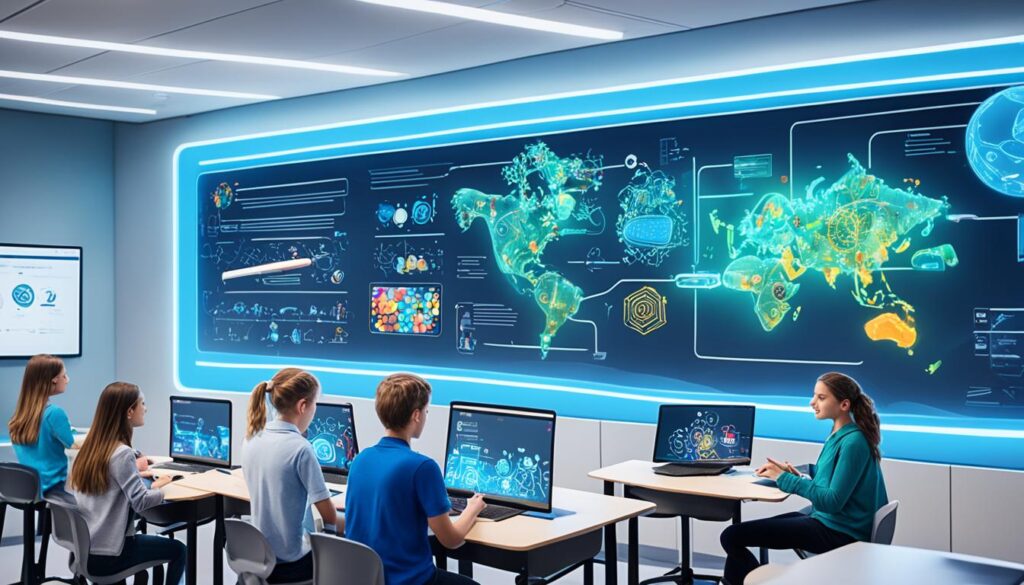
« AI-driven educational tools cater to individual student needs, offering customized content, adaptive learning paths, and targeted support, while addressing challenges such as algorithmic bias, ethical use of student data, and digital access disparities to ensure fair and inclusive personalized education. »
As AI gets better, it could change how we learn and make education better worldwide. With AI-powered personalization, virtual classrooms can offer adaptive learning and personalized guidance. This helps students achieve their goals.
virtual classrooms: Bridging Geographical Barriers
Virtual classrooms have changed how we see education. They let people learn from anywhere, breaking down walls that once stood in the way. Now, anyone with an internet connection can join classes, no matter where they are.
These classrooms make education fair for everyone. Students can learn from anywhere, making it easier for those in remote areas to get an education. This is a big step towards making learning available to all.
Virtual classrooms are flexible and easy to use. Students can learn at their own speed, fitting it into their busy lives. They also save money on things like travel and books, making school more affordable.
Artificial intelligence (AI) makes virtual classrooms even better. AI helps reach students in hard-to-reach places, making sure they don’t miss out. It also makes learning personal by adjusting to each student’s needs.
But, not everyone has the same access to the internet or devices. We need programs to help with internet costs, give out devices, and teach digital skills. This will make sure everyone can use virtual classrooms.
Virtual classrooms are changing education for the better. They offer global accessibility, education equity, and personalized learning experiences. This is creating a brighter future for learning.
Real-Time Assessment and Feedback
Virtual classrooms are changing how students get feedback. Gone are the days of pen-and-paper quizzes. Now, online polls, discussion boards, and chat boxes help teachers check understanding right away. Tools like Nearpod, Flipgrid, Padlet, and Seesaw make it easy to see how students are doing.
Teachers are advised to use a few key tools to keep feedback clear and effective. Meeting with students one-on-one helps teachers see how they’re doing and offer help. Quick checks help track students’ progress, both in learning and feeling good.
Journal Jot activities and one-pagers help students show what they’ve learned. They can use tools like Google Docs or Canva to do this. Giving students choices in how they show what they know helps them learn better.
| Assessment Tool | Description |
|---|---|
| Nearpod | An interactive platform that enables teachers to deliver lessons, assess understanding, and gather real-time feedback from students. |
| Flipgrid | A video discussion platform that allows students to record and share short videos, enabling peer-to-peer learning and reflection. |
| Padlet | A virtual bulletin board where students can post ideas, ask questions, and engage in collaborative discussions. |
| Seesaw | A digital portfolio platform that empowers students to demonstrate their learning through various multimedia formats. |
Activities like « Square, Triangle, Circle » help students think about their learning alone or with others. Adding art, music, and drama makes learning fun and shows how well students understand.
These new ways of assessing help virtual classrooms give feedback right away. This leads to better learning and helps students meet their goals.
Enhancing Resource Access
In virtual classrooms, the internet is like a huge library full of learning stuff. Students can easily find articles, videos, and more online. This makes learning more fun and deep.
Websites like Khan Academy and Coursera offer free courses from top schools. They make learning easy and don’t cost much. These sites use quizzes and assignments that fit what each student needs.
Also, online resources keep getting updated. This means students always get the latest info and fun ways to learn. From interactive tools to video lectures, technology makes learning better and more interesting.
| Online Resource | Key Features |
|---|---|
| Khan Academy | Free courses, personalized learning, interactive exercises |
| Coursera | Courses from top universities, flexible scheduling, certificates |
| edX | Courses from leading institutions, online discussions, hands-on projects |
| Udemy | Vast selection of courses, on-demand access, instructor-led learning |
Virtual classrooms use open-source education and multimedia learning to help students take control of their learning. With so many online resources, learning becomes richer and encourages students to keep exploring and learning for life.
Communication and Collaboration
In virtual classrooms, talking and working together is key for a great learning experience. Thanks to AI, how students and teachers talk online has changed a lot.
AI helps write down lectures as they happen, giving students clear captions. It also makes chatbots that talk to learners, answer questions, and give personal advice. This makes online learning feel more connected and teamwork-friendly.
AI-Enabled Natural Language Processing
Adding AI to natural language has changed how we talk online. These AI tools understand and work with both spoken and written words. They help students and teachers talk smoothly.
These AI tools make talking and working together in online classes better. Students can join in discussions, get quick feedback, and work on projects together. This makes learning more fun and everyone feels included.
| Virtual Communication Features | Benefits |
|---|---|
| Real-time transcription and captions | Improves comprehension and accessibility |
| Interactive chatbots | Provides personalized guidance and support |
| Collaborative tools | Enables seamless teamwork and project-based learning |
Using AI in virtual classrooms helps overcome communication barriers. It makes connections stronger and learning more engaging for everyone.
Environmental Sustainability
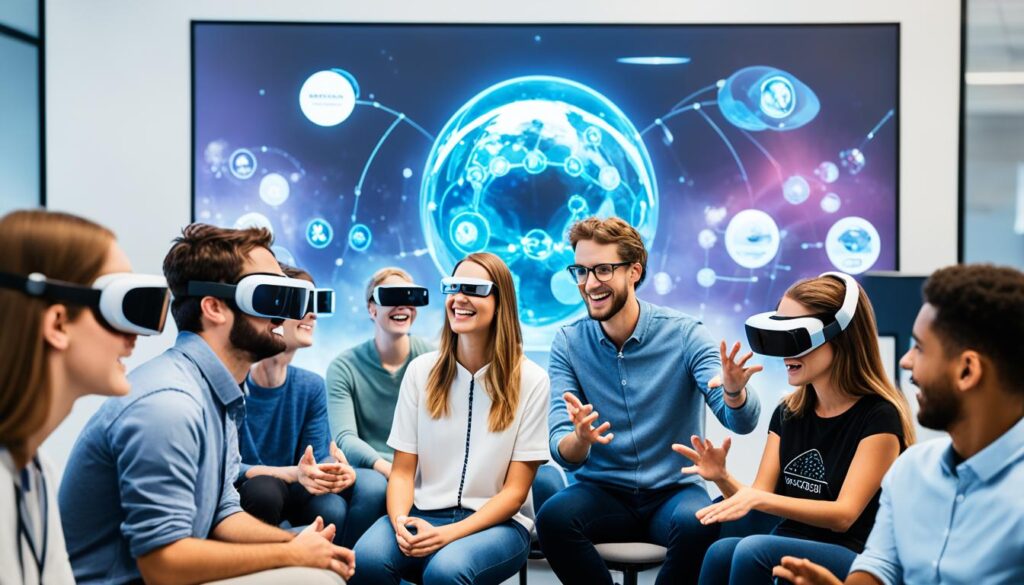
The rise of virtual classrooms is a big step towards a greener future. They cut down on the need for buildings and lower the carbon emissions from travel. This makes them a key part of fighting climate change in education.
Switching to eco-friendly education through digital classrooms helps the planet. It’s part of the global effort to fight climate change. By using virtual classrooms, schools can lessen their environmental impact. This leads to a better future for our planet.
Virtual classrooms are great for the environment. They use less energy and produce fewer emissions. This is because they don’t need as many buildings or transportation.
They also use less paper, thanks to digital books and resources. This means less harm to the environment. It also means students can learn from anywhere, in a way that’s good for the planet.
Schools can do even more to help the environment. They can build digital libraries and use online tests to cut down on paper. Hosting events online also means less travel, which is good for the planet.
To really focus on being green, schools need to teach about sustainability. They should show how everyday actions can help the environment. By doing this, virtual classrooms can help create a better future.
As education goes digital, we must keep the focus on being green. Virtual classrooms can be a big step towards a sustainable world. By choosing this path, schools can help fight climate change and protect our planet.
Predictive Analytics: Optimizing Student Success
In today’s changing education world, predictive analytics is a key tool for student success. It uses artificial intelligence (AI) to predict students’ academic paths. By looking at attendance, grades, and behavior, it spots students who might struggle early on. This lets teachers help them quickly.
Predictive analytics greatly helps with keeping students in school and graduating. It finds problems early so teachers can give extra help. This makes education fair for everyone, helping each student do their best.
With predictive analytics, teachers can make smart choices based on data. They learn what affects students’ grades and design better learning plans. This way, they meet the unique needs of each student.
The use of predictive analytics will be key in the future of education. It combines data and AI to support students fully. This ensures every student gets the help they need to succeed.
| Institution | Impact of Predictive Analytics |
|---|---|
| Lorain County Community College | 11% lift in persistence rate |
| Del Mar College | 34% increase in graduation rates |
| University of Central Oklahoma | $1.2 million net tuition revenue savings |
« Predictive analytics offers a glimpse into the future, empowering educators to make proactive decisions that transform lives and shape the future of education. »
Overcoming Challenges in the Virtual Realm
Virtual classrooms are changing how we learn, but they bring new challenges. One big issue is fostering student engagement online. Without being in the same room, it’s harder for teachers to keep students focused and involved.
To solve this, teachers need new ways to keep students interested and motivated. They can use interactive elements like quizzes and group talks in their lessons. Gamification can also make learning fun and engaging for students.
Strategies for Enhancing Student Engagement
- Use interactive tools and multimedia to get students involved
- Have regular meetings and one-on-one sessions to keep a personal touch
- Add gamification, like points and leaderboards, to increase motivation
- Give timely feedback to help students stay on track
Personalized learning approaches can also make virtual classes better for each student. By using data and AI, teachers can create learning plans that fit each student’s needs and learning style.
The virtual classroom has its own challenges in student engagement. But, with the right strategies, these challenges can be overcome. By tackling these issues, teachers can make virtual learning effective and rewarding for everyone.
Conclusion
Virtual classrooms have changed education in big ways, making it more accessible and interactive. As technology grows, the future of virtual classrooms and online education looks bright. It’s opening up new ways to teach and learn.
By using virtual classrooms, students and teachers can succeed in the digital world. AI-powered personalization and tailored learning pathways make learning more personal. This can change how we learn, meeting each person’s needs.
Virtual classrooms also make it easy for students and teachers to work together, no matter where they are. This creates a lively place for learning, where everyone can connect and share ideas.
Looking forward, new tech like virtual reality, augmented reality, and cloud computing will shape virtual classrooms even more. These advances will bring new, exciting ways to learn. By embracing this change, we can make online education better for everyone. This will lead to a future of education that’s open, fun, and empowering for all.