
In the heart of Morocco, a treasure of architectural wonders awaits. It’s a blend of the nation’s rich history. Every archway, tile, and doorway tells a story of cultural fusion. The roots of Moroccan architecture are as deep as the patterns on its famous buildings.
Exploring Moroccan architecture is like traveling through time. Each era adds its own layer to the design. This makes the architecture rich and diverse.
Key Takeaways
- Moroccan architecture blends Berber, Arabic, Andalusian, and European design elements.
- Traditional Moroccan buildings, such as riads and kasbahs, are renowned for their adaptation to the local environment.
- Intricate ornamentation, including calligraphic motifs, arabesques, and geometric patterns, are hallmarks of Moroccan architecture.
- Zellige, the Moroccan mosaic tilework, showcases mathematical precision and creative design.
- Preservation efforts are crucial in maintaining the historical and cultural significance of Moroccan architectural wonders.
The Timeless Allure of Traditional Moroccan Architecture
Berber Roots and Environmental Harmony
The Berbers are the original builders of Morocco, known for their strong bond with the earth. They used mud and stone to build homes that fit perfectly with nature. These designs were smart, made to handle the climate well. They included thick walls for insulation and courtyard homes to stay cool under the sun.
The Berbers didn’t just focus on looks. They built with the climate and resources in mind. Using mud and stone, they made buildings that stayed warm in winter and cool in summer. Courtyard homes had shaded areas for fresh air, making them a peaceful retreat from the heat.
« The Berbers’ approach to architecture was not merely aesthetics but a carefully considered response to the region’s climate and resources. »
Traditional Moroccan architecture is all about living in harmony with the environment. It’s a mix of old and new, showing how buildings can be both beautiful and practical. The beauty of Berber designs is how they adapt to the surroundings, offering a comfortable life that lasts for generations.
The Influence of Islamic Art and Spirituality
When Islam came to Morocco, its architecture became a way to express deep spirituality. Islamic architecture, with its geometric patterns and Arabic calligraphy, became key in mosques and madrasas. The rule of ‘Aniconism’ led to the use of Zellij tilework and plaster carvings. These elements created beautiful spaces for thinking and connecting with the spiritual.
The early Islamic art in Morocco was shaped by Arab conquests and the Berber culture. The Almoravid dynasty brought Moorish arches, while the Almohads created a major artistic movement. Their mosques featured large sizes and tall minarets.
Calligraphy has been a big part of Moroccan culture since Islam arrived. The Kufic script was one of the first calligraphic styles used in mosques. Today, Moroccan calligraphers mix old techniques with new ideas, adding beauty with flowers and shapes.
In Medersas, calligraphy teaches and decorates. In palaces and riads, it mixes with Zellij and muqarnas, creating peaceful spaces. Workshops and centers keep this art alive, teaching its value to new generations.
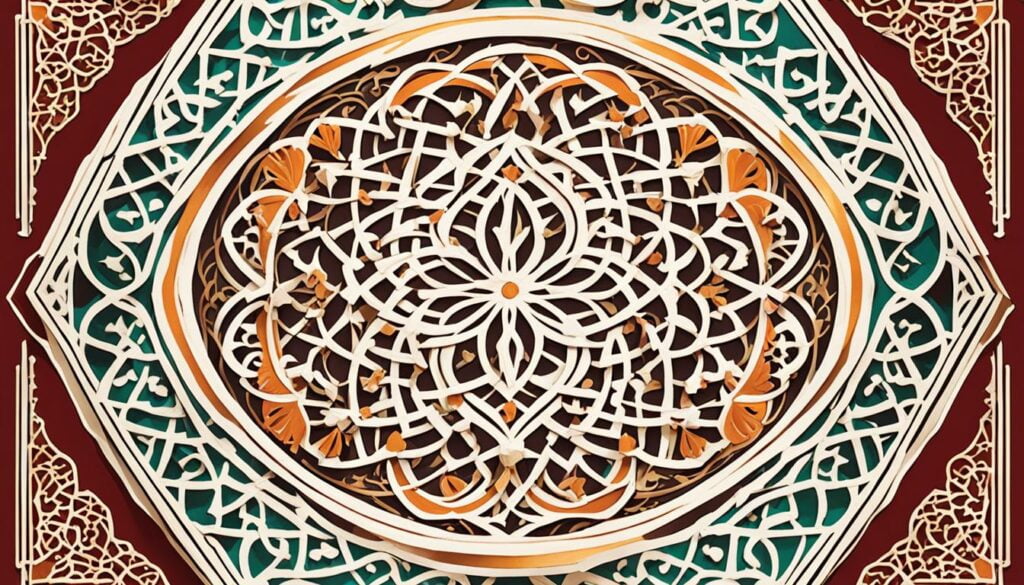
Islamic art has shaped Moroccan woodworking for ages. Calligraphy adds color and texture to furniture, showing the lasting impact of Islamic art. Symbols like stars and crescents are common, showing the art’s spiritual and cultural depth.
| Architectural Element | Islamic Influence |
|---|---|
| Mosques and Madrasas | Intricate geometric patterns, Arabic calligraphy |
| Zellij Tilework | Avoidance of depicting sentient beings (Aniconism) |
| Plaster Carvings | Encouragement of contemplation and spiritual connection |
| Moroccan Calligraphy | Educational tool, ornamental element, homage to the deceased |
| Moroccan Woodworking | Intricate abstract patterns, geometric shapes, religious symbols |
Andalusian Elegance: A Cross-Cultural Fusion
The exchange across the Strait of Gibraltar brought the Andalusian influence to Moroccan architecture. The Moors’ rule in the Iberian Peninsula brought new architectural styles and designs to Morocco. These included horseshoe arches, riads, and open balconies.
This mix of Andalusian and Moroccan styles is seen in cities like Fez and Marrakech. Later, the French and Spanish protectorates added their mark to Moroccan architecture. They brought European styles and modernist ideas, making cities like Casablanca famous for Art Deco and Neoclassical aesthetics.
European Protectorates and Modernist Flair
In the 20th century, French and Spanish rule brought a new architectural style to Morocco. Cities like Casablanca, under French influence, adopted the Art Deco style. At the same time, Neoclassical elements were added to buildings, mixing Moroccan and European styles.
This blend of cultures created a unique architectural identity. It honors Morocco’s rich past while embracing modern ideas. The result is a landscape that beautifully combines old and new, showing Morocco’s diverse culture.
traditional Moroccan architecture: A Living Legacy
Moroccan architecture tells a story of blending old and new. Today, architects mix ancient designs with modern needs and green tech. They use solar power and traditional mud-brick in new projects. This shows Moroccan architecture’s deep roots in history and its bright future.
New buildings in Morocco show how old and new styles can work together. Places like the Axa Assurance and Villa Zevaco mix Brutalist looks with Moroccan flair. The Idrrisi School group in Casablanca is another example of this mix.
Sustainability is key in Moroccan architecture now. Architects use solar technology and mud-brick designs to make buildings that save energy and protect the planet. The Thermal Spa in Sidi Harazem is a great example of this, blending into the landscape with its design.
Old traditions and cultural influences still guide Moroccan architects today. They draw inspiration from ancient Berber tafraout and the detailed stucco carvings of old times. They’re finding new ways to honor the past while meeting today’s needs.
| Architectural Landmark | Year | Architectural Style | Location |
|---|---|---|---|
| Notre Dame de Lourdes Catholic Church | N/A | Vibrant stained glass panels | Casablanca |
| Axa Assurance, Villa, Zevaco Studio, Idrrisi School group | N/A | Brutalist characteristics with traditional Moroccan aesthetics | Casablanca |
| Building | 1970 | Brutalist architecture blended with traditional Moroccan aesthetics | Marrakech |
| Thermal Spa | 1959-1975 | Disintegrated forms connecting exterior spaces | Sidi Harazem |
| TIT MELLIL REHABILITATION CENTER | 1951-1960 | New architectural form for administrative buildings | N/A |
| Post office | 1970s | Exposed concrete with blue ceramic tiles | Casablanca |
Moroccan architecture shows the country’s dedication to its heritage and progress. Architects are finding a balance between old and new. This creates a unique and exciting future for Moroccan architecture.
Architectural Marvels: From Riads to Mosaic Tilework
The Serene Oasis of Riads
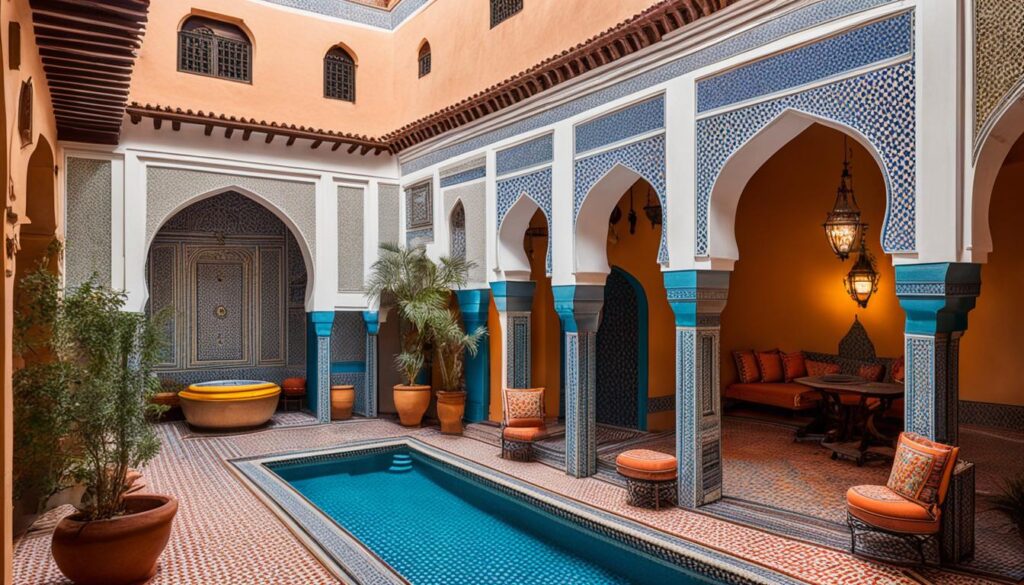
In the heart of Morocco’s ancient cities, the riad stands out as a peaceful retreat. These homes have a central courtyard with a fountain and greenery. This space is key to the riad’s charm, symbolizing family, hospitality, and a bond with nature.
Riads are traditional homes with Islamic influences. They are designed for privacy and protection from the sun. These courtyards are peaceful spots in busy cities, known for their beautiful plasterwork and carvings.
Zellige: A Narrative of Precision and Creativity
Zellige is more than just decoration; it tells a story of precision and creativity. It reflects the universe’s order through its geometric patterns. Hand-cut tiles in bright colors create a unique visual language, showing Moroccan craftsmanship and a quest for perfection.
Skilled artisans make Zellige tiles, keeping alive a tradition of craftsmanship. The interiors of riads are filled with intricate plasterwork inspired by Islamic art. This highlights local artistry and cultural heritage.
« The meticulous assemblage of hand-cut tiles in vibrant hues creates a striking visual language that serves as an emblem of Moroccan craftsmanship and its unyielding pursuit of perfection. »
| Architectural Feature | Description |
|---|---|
| Riads | Moroccan courtyard houses with Islamic influences, designed for privacy, security, and protection from the sun. |
| Zellige Tilework | Intricate, hand-crafted mosaic tiles that showcase Moroccan craftsmanship and creativity. |
| Bahia Palace | A grand palace in Marrakesh that blends Arab and Andalusian architectural styles, featuring zellig fireplaces, painted cedarwork, and a large riad. |
Arches, Doorways, and Carvings: Portals to the Past
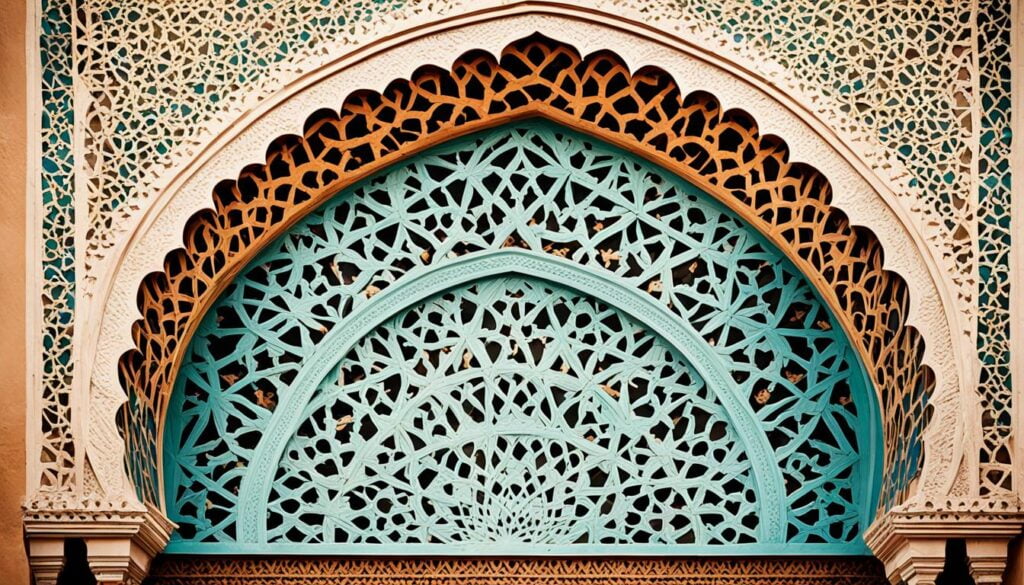
Walking through Fez’s historic areas or Morocco’s royal palaces, you can’t help but be amazed by the arches and doorways. They’re not just simple paths. They’re gateways that take you back to a time when every detail was a work of art. The Moroccan arch, with its beautiful calligraphy and flowers, combines beauty with strength. It shows how Islamic art and practical skill come together.
The ‘gebs’ work is a masterpiece, showing the craftsman’s skill and a deep commitment to adding beauty to everyday things. From the big mosque entrances to the small riad courtyards, these designs tell stories of old Morocco. They’re plaster and wood carvings that bring history to life.
Moroccan arches, doorways, and carvings capture our senses and fill us with wonder. Each design and detail proves Morocco’s dedication to keeping its architectural traditions alive. These gateways to the past will continue to amaze people for years to come.
« Moroccan architecture is a harmonious blend of Berber, Islamic, and European influences, creating a unique and captivating aesthetic that is both timeless and distinctly Moroccan. »
From the tall minarets of mosques to the fancy doorways of palaces, Moroccan buildings mix strength with art. The arches, doorways, and carvings are more than just parts of a building. They’re doors to a world full of history, culture, and spiritual meaning.
| Architectural Feature | Significance |
|---|---|
| Moroccan Arches | Iconic architectural elements that combine aesthetics and structural integrity, often adorned with calligraphy and floral motifs. |
| Doorways | Intricate and ornate entryways that serve as portals to the past, showcasing the craftsmanship and dedication of Moroccan artisans. |
| Plaster and Wood Carvings | Delicate and intricate decorative elements that elevate the mundane with a touch of the divine, reflecting the country’s rich cultural heritage. |
These architectural wonders, rooted in Moroccan traditions and influenced by Islamic art, still amaze and inspire people worldwide. As visitors walk through these arches and doorways, they see more than just the building’s strength. They see the beauty and cultural importance that have shaped Moroccan architecture for centuries.
Fortifications and Spiritual Beacons
The strong walls around Moroccan medinas and the tall minarets that help people find their way to prayer show the mix of defense and spiritual goals in Moroccan architecture. These buildings tell stories of old citadels that kept invaders out and spiritual guides that call people together for peace and prayer.
The Hassan II Mosque in Casablanca, finished in 1993, is Morocco’s biggest mosque and the third biggest in the world. Its minaret is 210 meters tall, one of the tallest in the world. This huge mosque shows Morocco’s dedication to keeping its Islamic traditions and architectural history alive.
In cities like Fez, Marrakech, and Meknes, the walled medinas have kept their people safe for hundreds of years. The Aït Benhaddou Kasbah, a UNESCO World Heritage Site from the 17th century, shows how these defensive buildings were made. Its design helps protect against the desert and invaders, and its beautiful architecture shows a deep spiritual connection.
« The ramparts and minarets of Morocco’s cities stand as timeless symbols of the nation’s rich cultural heritage, where the practical and the divine coexist in a harmonious embrace. »
Places like the Bahia Palace in Marrakesh and the big courtyards of the Royal Palace of Rabat show how Moroccan architecture combines defense and spiritual goals. These amazing buildings still draw in visitors, showing off the country’s lasting traditions and deep respect for both the world and the heavens.
As Morocco’s cities change, keeping these important buildings safe is a big goal. Groups and the government work hard to protect the country’s architectural treasures. They make sure these stories keep inspiring and teaching new generations.
Conclusion
Moroccan architecture is a stunning mix of culture, history, and nature. It shows off the country’s skill and deep spiritual meaning. From the tall minarets of the Hassan II Mosque in Casablanca to the detailed zellige tiles in the Medersa Bou Inania in Meknes, it’s clear to see Morocco’s lasting craftsmanship and spiritual depth.
Visitors love the beautiful riads in Marrakech and the strong kasbahs in Rabat. They see how Berber, Islamic, and Andalusian styles blend together. This tour is not just a feast for the eyes but also a way to learn about Morocco’s history and its creative spirit.
The beauty of Moroccan architecture is seen in both old and new buildings. From the modern looks of Casablanca to the traditional feel of the Atlas Mountains, it’s all captivating. Morocco keeps its old charm while moving forward, making it a must-see place for anyone wanting to explore its culture.