
The International Space Station (ISS) has been in orbit between 200-300 miles above Earth for years. It’s the fastest place a person can live, moving at over 17,000 miles per hour. On July 16, 2015, a piece of space debris, called Object No. 36912, was heading towards the ISS.
This object was a part of a Soviet military weather satellite from 1979. It was moving at 31,000 miles per hour towards the ISS. This posed a big threat to the space station and its crew.
This event shows the danger of space debris. With more satellites and objects in space, the chance of collisions is growing. This is a big worry for space agencies and companies.
Key Takeaways
- Space debris is a big threat to satellites and spacecraft in orbit.
- The ISS has had close calls with dangerous space debris, showing the growing issue.
- Governments and companies are working to detect and track threats from more satellites.
- The U.S. military has challenges in stopping hostile actions in space due to secrecy.
- Rules and guidelines are key to reducing space debris and keeping space safe for future use.
The Silent, Hidden Killer That Threatens Satellites in Space
The skies above us are filled with a lot of space debris. This debris is a silent, hidden killer that threatens the satellites we depend on. Satellites help us with communication, navigation, and scientific research. With companies like SpaceX launching many satellites, this problem is getting worse. It’s making it hard to keep our space activities safe.
In 2023, there were a record 212 orbital launches. This is a big jump from the 55 launches in 2005, thanks to SpaceX’s cheaper launches. This increase in launches means more orbital threats and space junk in space. These can hit and damage or destroy important satellites.
In 2024, a Canadian farmer found a piece of charred, battered debris in his field. It turned out to be part of a SpaceX Crew Dragon spacecraft’s cargo trunk. This shows how real the risks from silent, hidden killers in space are.
The satellite industry is growing, and more companies are joining in. We need to deal with the space debris problem more than ever. Protecting our satellites from these orbital threats is key. It helps keep our satellite networks reliable and safe, which is important for many services we use.
Deadly Debris: Orbiting Threats to Spacecraft
The space above our planet is getting crowded with debris. This debris, from old satellites to tiny pieces, can hit and harm important space equipment. It threatens the services we rely on every day.
Types of Space Debris
There are many kinds of space debris, each with its own problems:
- Defunct satellites: These are satellites that are no longer working but keep orbiting Earth.
- Spent rocket stages: These are the parts of launch vehicles that are thrown away after launch.
- Fragmented particles: These are small pieces of debris from collisions or explosions.
Potential Impacts on Satellites
Even tiny pieces of debris can be dangerous to satellites because they move so fast. The U.S. tracks about 1,000 big pieces of debris among 35,000 pieces that are one centimeter or bigger. A 2007 test by China created a lot of debris that still poses a threat today.
| Statistic | Value |
|---|---|
| Estimated objects orbiting Earth by 2030 | 30,000 |
| Percentage of British economy relying on satellite communications | 20% |
| Active satellites in orbit (2022) | Between 8,000 and 10,000 |
| Untracked pieces of old satellites still circling the planet | Over 100 trillion |
More satellites and debris mean more chances for collisions and damage. We must find ways to deal with this to keep our space technology safe and reliable. This is important for our daily lives.
The International Space Station’s Close Encounter
In July 2015, the U.S. Air Force spotted a piece of space debris, called Object No. 36912, heading towards the International Space Station (ISS). This debris was a part of a Soviet military weather satellite. It was moving at 31,000 miles per hour, posing a big risk to the ISS.
The crew had only four hours to prepare. They had to move to the Russian Soyuz spacecraft, the station’s backup, until the danger passed. This was the first time they had to take such a step because of space junk.
This event showed how dangerous space debris is for astronauts and the ISS. With more satellites and tests of anti-satellite weapons, the risk of collisions keeps going up. This could lead to big problems for space missions.
The Russian Satellite Debris Incident
Recently, there have been many space debris incidents. In November 2021, Russia tested an anti-satellite weapon, destroying one of its old satellites. This created a lot of debris that threatened the ISS and its crew.
« The debris field caused by Russia’s anti-satellite test resulted in more than 1,000 pieces of new debris being tracked by US Space Command. »
This event showed how big of a problem space debris is. We need to work together to solve this issue. With more satellites and space missions, the risk of collisions and new debris will get worse. This is a big challenge for space exploration and using space in the future.
Tracking and Monitoring Space Junk
The threat of space debris is growing, leading to global efforts to track and monitor it better. The U.S. military tracks over 160 million pieces of debris in space. Most of these are tiny, but nearly a million are bigger than a marble.
Every minute, tracking stations send data to Cheyenne Mountain in Colorado. Then, the 18th Space Control Squadron in California uses this info to prevent satellites from colliding. But, small debris can be hard to spot, threatening operational satellites and spacecraft moving at high speeds.
The Business Secretary Alok Sharma has given £1 million to improve tracking space debris. From 26 proposals, seven projects got funding. Each project aims to tackle the space junk problem in a unique way.
It’s vital to track and predict space debris to protect space assets and ensure space activities can continue safely. With over 170 million pieces of debris worth about US$700 billion, effective monitoring is crucial.
| Metric | Value |
|---|---|
| Estimated Pieces of Space Debris | 160 million |
| Debris Larger Than 1 cm | Nearly 1 million |
| Debris Tracked in Orbit | 27,000 out of 170 million |
| Estimated Value of Debris | US$700 billion |
| Debris Travel Speed | Up to 16,777 mph (27,000 km/h) |
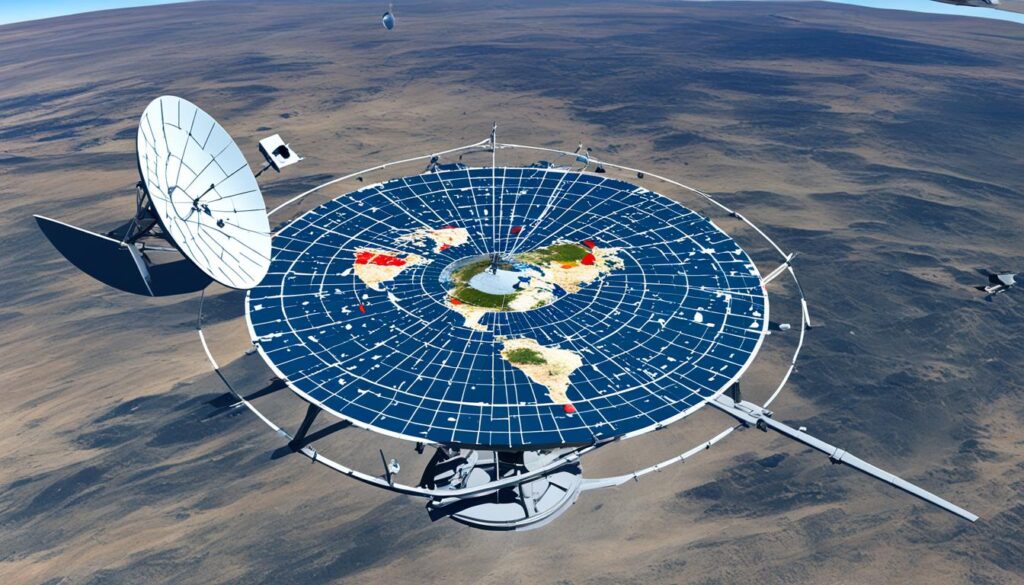
Dealing with space debris is a big challenge that needs global cooperation and new ideas. As more commercial and military space systems are launched, managing space debris is more important than ever. It’s key for keeping space safe for future use.
The Growing Threat of Orbital Debris
More satellites being launched have led to more collisions and pieces breaking off. This has made more orbital debris in space. This space debris growth is a big risk to working satellites and spacecraft. It threatens the future of space use.
Increasing Launch Activities
Projects like SpaceX’s Starlink aim to launch up to 42,000 satellites. This will make the space around Earth more crowded and dangerous. More satellites from countries and companies are making space more crowded and risky.
Collisions and Fragmentation Events
Events like the 2007 Chinese test have created lots of debris that stays in orbit for a long time. These collisions are a big risk to working satellites and spacecraft. They also make more debris, which increases the danger of more collisions.
« The space environment becomes more congested, the risk of future collisions and the generation of additional debris continues to rise, jeopardizing the long-term sustainability of space activities. »
| Metric | Value |
|---|---|
| Outer Space Treaty Ratifications | 89 countries |
| UNCOPUOS Member States | 83 as of 2015 |
| Countries with Space Programs | Over 130 |
The problem of orbital debris is getting worse. We need to take action and work together to solve it. This will help keep space safe for future use.
Anti-Satellite Weapons and Space Warfare
Space warfare has seen a rise in anti-satellite (ASAT) weapons, especially with China’s successful test in 2007. This test destroyed one of China’s own weather satellites at about 850 kilometers high. It created a lot of debris that still threatens space activities today.
China’s Anti-Satellite Test in 2007
This event started a global debate on the dangers of space warfare and the need for better rules to deal with orbital debris. The US and the Soviet Union had tested ASAT weapons before, but China’s 2007 test was different. It destroyed a satellite completely, causing the biggest satellite breakup ever.
The spread of anti-satellite weapons worries the world. With satellites crucial for our daily life and military, any threat to them is a big deal. This could start an arms race in outer space.
« China, Russia, the United States, and other countries are currently engaging in dramatic new initiatives in anti-satellite weaponry, leading to a potential arms race in outer space. »
As we rely more on space technology, we need strong policies and global cooperation. This is crucial to handle the issues of space warfare and space debris generation.
Satellite Vulnerability and Shielding
The threat of space debris is growing, making satellites and spacecraft more vulnerable to collisions. NASA’s Donald Kessler found that even a small piece of debris can cause a lot of damage. This has led designers to create special shields to protect against these dangers.
Shields on satellites and spacecraft can handle some impacts, but bigger debris is a bigger worry. For example, a large piece threatened the International Space Station in 2015. Such objects can cause big problems, even destroying things, which shows we need better shields.
It’s important to improve how we protect satellites and spacecraft from space debris. With more objects in space, the chance of big collisions and problems is higher. We need to find better ways to keep these objects safe.
| Threat Type | Potential Impact | Shielding Effectiveness |
|---|---|---|
| Small Debris (1 cm bolt) | Explosive force of a hand grenade | Limited protection |
| Larger Debris | Trigger chain reactions that could destroy entire structures | Inadequate protection |
We need to make better shields to protect satellites and spacecraft from space debris. With more objects in space, finding new ways to keep them safe is crucial. This is a big challenge for the space industry.
« Even small pieces of debris traveling at high speeds in orbit can prove devastating to satellites and spacecraft. »
Satellites and spacecraft are getting more at risk from space debris. We must pay more attention and invest in better spacecraft shielding and debris impact protection technologies. As space activities grow, protecting satellite vulnerability is more important than ever.
Space Debris Mitigation Strategies
The world is working together to tackle the growing issue of space debris. In 2007, the United Nations Committee on the Peaceful Uses of Outer Space (COPUOS) passed guidelines on space debris. These guidelines suggest ways to reduce space debris, like disposing of satellites properly after they’re used, making satellites less reflective, and avoiding collisions. But, making these guidelines a must-follow rule is hard because there’s no global law on space debris.
International Guidelines and Regulations
Creating stronger global rules is key to reducing new space debris and promoting responsible space use. Some important steps include:
- The COPUOS Space Debris Mitigation Guidelines, which offer advice on how to create less space debris.
- The International Organization for Standardization (ISO) standards on space debris mitigation, which give technical advice for designing and running satellites.
- National laws, like those in the United States and the European Union, that require space activities to follow debris reduction rules.
- Work by the Inter-Agency Space Debris Coordination Committee (IADC) to help countries work together and share info on space debris.
These guidelines and laws have made people more aware and have encouraged them to act voluntarily. But, we still need legally binding international treaties to really tackle space debris. It’s important to have clear rules and responsibilities for space activities to keep space safe for the future.
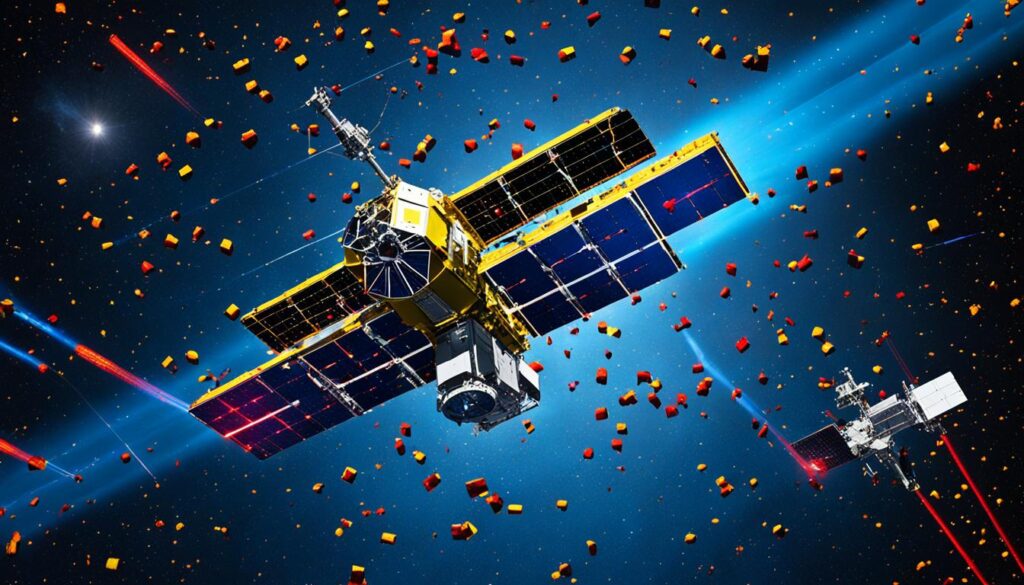
« Ensuring the long-term sustainability of the space environment requires a coordinated, international effort to develop and implement effective space debris mitigation strategies. »
The Cost of Space Debris Collisions
The financial hit from space debris collisions is huge. Losing one satellite can cost hundreds of millions. It also affects the economy and strategy of its owner. Plus, avoiding debris means more costs and delays in space operations.
In 2015, a close call with the International Space Station made the crew take shelter in the Soyuz spacecraft. This shows the danger of a collision. With more space debris around, the risks to satellites will keep growing.
| Statistic | Value |
|---|---|
| Estimated pieces of space debris floating around Earth | 160 million |
| Estimated pieces larger than 1cm | Almost 1 million |
| Speed of space debris | 18,000 mph |
| Pieces of space junk currently tracked | 27,000 out of 170 million |
The cost of space debris collisions is huge, not just in money. It also means replacing satellites and disrupting space operations. This affects communication, navigation, and Earth observation. With more satellites in space, dealing with this issue is more urgent.
« Only the biggest items in orbit can currently be spotted, highlighting the issue of tracking smaller pieces that could potentially cause damage. »
Worldwide, governments and groups are working on space debris mitigation strategies. They’re looking at tech like ‘tow trucks’ and spacecraft that shoot out foam. But, solving this big problem needs a global effort to keep space safe for the future.
The Environmental Impact of Space Debris
The problem of space debris is not just a threat to satellites and spacecraft. It also harms the environment. When space debris falls back to Earth, it pollutes our atmosphere. This includes the aluminum oxide from melted satellites.
This pollution can hurt the ozone layer, like the CFCs did in the past. With more satellites being launched and coming back, the danger from space debris will grow. It’s a big worry for keeping space safe and protecting our atmosphere.
Atmospheric Pollution from Reentries
When old satellites and spacecraft fall back to Earth, they bring pollutants with them. These include:
- Aluminum oxide, produced by the sublimation of satellite components
- Hydrochloric acid, released from the decomposition of rocket fuel
- Particulate matter, including soot and other debris
These atmospheric pollutants can harm the ozone layer. This can make climate change worse and threaten human health and the environment.
| Pollutant | Potential Impact |
|---|---|
| Aluminum Oxide | Ozone depletion, respiratory issues |
| Hydrochloric Acid | Acid rain, corrosion of infrastructure |
| Particulate Matter | Respiratory problems, visibility reduction |
The space industry is getting bigger, with more satellites coming back to Earth. This means the environmental harm from space debris will get worse. We need to address this issue to keep space safe for the future.
Legal and Liability Issues Surrounding Space Debris
The problem of space debris is getting worse, making the legal rules for space activities more important. The Outer Space Treaty and the Space Liability Convention say countries are responsible for their space objects. They also say countries are liable for any damage these objects cause. But, it’s not clear how these rules apply to space debris from private companies.
A Canadian farmer found SpaceX debris on his land, showing the need for clear rules. It’s important to make the laws about space debris stronger. This will help hold space companies responsible and encourage them to be careful.
The Outer Space Treaty and Liability Convention
The Outer Space Treaty from 1967 and the Space Liability Convention from 1972 are key to space law. They say countries are responsible for their space activities, whether done by the government or private companies.
But, with more private space companies and more space debris, these old rules are not enough. Figuring out who is responsible for damage from space debris is hard. It gets even harder when it’s not clear who caused the debris or if many companies were involved.
| Treaty | Key Provisions |
|---|---|
| Outer Space Treaty (1967) |
|
| Space Liability Convention (1972) |
|
The space industry is changing fast, with more satellites and private activities. We need to make the laws about space debris clear and strong. Policymakers and international groups must update the rules for today’s space world.
The Future of Space Sustainability
The long-term future of space is at risk as more satellites are launched and more debris fills the sky. This debris poses a threat of collisions, making it crucial to have space sustainability and debris mitigation plans. These plans are key to keeping space safe for future use.
The world must work together to solve this problem. We need to make international rules, improve technology for tracking and removing debris, and work together with countries and private companies. This will help keep space safe for the long run.
With more satellites going up, like SpaceX’s Starlink, we need strong space sustainability steps now more than ever. If collisions increase, the debris in space will grow fast. This could stop us from exploring space and using satellites, which are vital to our daily lives.
| Sustainability Measure | Key Objectives |
|---|---|
| Debris Mitigation Guidelines | Set international rules for how satellites should be made, disposed of, and avoid collisions |
| Debris Tracking and Monitoring | Get better at finding, tracking, and predicting where space objects will go |
| Active Debris Removal | Make and use tech to take big, dangerous pieces of debris out of orbit |
| International Cooperation | Help countries and private companies work together to solve common problems |
By taking these steps, we can keep space safe and open for the future. This will let us keep exploring and innovating in space.
« The long-term future of space is at risk from space debris. We need a global effort to tackle this problem and keep satellites safe for the future of space exploration. »
Protecting Satellite Constellations from Debris
The rapid growth of satellite « mega-constellations, » like SpaceX’s Starlink, brings a big challenge. They plan to launch up to 42,000 satellites. This will make it harder to protect these systems from space debris.
As more objects fill low-Earth orbit, the risk of collisions and more debris will grow. Satellite operators must use advanced tracking and maneuvering to avoid crashes. They also need to look into new shielding and self-healing tech to keep their satellites running.
Starlink and Other Mega Constellations
Starlink aims to put nearly 12,000 satellites in Low Earth Orbit (LEO). SpaceX plans to launch 2,200 satellites over the next five years, about 44 per launch. They need to keep launching to keep their constellation of 4,425 satellites.
Other companies like OneWeb and Telesat are working on smaller constellations set to start by 2021. Amazon and Samsung also plan to launch constellations with 3,236 to 4,600 broadband satellites.
Starlink satellites are made to burn up in Earth’s atmosphere quickly at the end of their life. The V1.0 satellites weigh 260 kg and use Ka-band frequencies. The constellation will cover 24 orbital planes at an inclination of 53°.
SpaceX got permission to use 15,000 MHz of spectrum from the FCC for free. This is more than Dish Network bought for over $30 billion. But, SpaceX and Dish are fighting over spectrum use, especially in the 12 GHz band, worrying about interference.
The Role of International Cooperation
Dealing with space debris needs a global team effort. The United Nations has made some rules, but making them stick is hard. We need strong laws and rules to make space companies act responsibly.
Working together on tracking debris, avoiding collisions, and removing it is key. With over 130 countries in space programs, we must work together to keep space safe for everyone.
We need a worldwide push to keep space safe for the future. Past efforts haven’t worked well, so we must try harder. We need to make new agreements and share information to keep space safe.