
After the pandemic, governments worldwide have seen the need for strong policies to keep the economy stable. This piece will look into how policies like fiscal, monetary, regulatory, and trade ones help keep the economy stable and growing.
Key Takeaways
- Government policies are key to keeping the economy stable and growing.
- Fiscal policy uses spending and taxes to balance the economy.
- Monetary policy, run by central banks, keeps prices and finances stable.
- Economic regulation helps keep the market competitive and stable.
- Trade and labor laws also play a big part in the economy’s stability.
Introduction to Government Policies and Economic Stability
Economic stability is key for a nation’s growth and success. It lets businesses grow, helps people make smart choices, and makes investments safe. The way government policies affect the economy is complex but very important.
Importance of Economic Stability for a Nation’s Growth
The U.S. has seen steady GDP growth since the 1980s thanks to economic stability. Policies that help during tough times and slow growth have kept things stable.
When COVID-19 hit, governments and banks took steps to prevent a big recession. This shows how vital economic stability is. It helps a country handle sudden problems and keep moving forward.
Overview of Government Policies and Their Impact
- Maintaining the legal and social framework: Government policies create a stable place for businesses and people to work and live.
- Providing public goods and services: The government spends on things like roads, schools, and healthcare that help the economy grow.
- Correcting externalities: Laws and actions fix problems like pollution or unfair business practices, helping everyone compete fairly.
- Stabilizing the economy: Policies like taxes and interest rates help control the ups and downs of the economy, fight off recessions, and keep inflation in check.
When done right, government policies can greatly improve a country’s economic stability and growth over time.
« Stabilization policy seeks to limit erratic swings in the economy’s total output, as measured by the nation’s gross domestic product (GDP), as well as controlling surges in inflation or deflation. »
| Economic Function | Examples |
|---|---|
| Maintaining Competition | Antitrust laws, deregulation, and promotion of free markets |
| Providing Public Goods | Investment in infrastructure, education, and national defense |
| Correcting Externalities | Environmental regulations, consumer protection laws, and financial market oversight |
| Stabilizing the Economy | Fiscal and monetary policies to manage the business cycle |
Fiscal Policy: A Key Driver of Economic Stability
Fiscal policy is key to keeping the economy stable. It includes how the government spends and taxes. By managing these well, policymakers can help the economy grow and stay strong.
Understanding Fiscal Policy and Its Objectives
The main goals of fiscal policy are to control inflation, boost jobs, and keep debt manageable. It’s a tricky balance to strike. Changes in spending and taxes can greatly affect the economy.
The Role of Government Spending and Taxation
Government spending impacts the economy a lot. It can help the economy grow, but only if done wisely to avoid too much debt. Taxes are important for making money and guiding how people and businesses act. This shapes the economy.
Getting the right balance between spending and taxes is hard. Policymakers must make sure their policies help the economy stay stable and strong through tough times.
| Fiscal Policy Objective | Impact on Economic Stability |
|---|---|
| Managing Inflation | Changes in spending and taxes can affect demand, helping keep prices stable. |
| Promoting Employment | Things like tax breaks or investing in jobs can boost the economy and create more work. |
| Ensuring Sustainable Debt Levels | Smart spending and budgeting can prevent too much debt, making the government stronger. |
Knowing how fiscal policy works helps policymakers use it to keep the economy stable and growing. This leads to a prosperous future for the country.
Monetary Policy: Maintaining Price and Financial Stability
Monetary policy is key to keeping the economy stable. Central banks adjust interest rates and manage liquidity to keep price stability and financial stability. They balance economic growth with inflation control.
Many countries set clear inflation targets. This focus on price stability helps keep expectations stable and supports a stable economy. During the global financial crisis, central banks cut interest rates to near zero. Some even used bond purchases to lower long-term rates.
The COVID-19 pandemic led central banks to increase liquidity and support credit. They used foreign exchange interventions and asset purchases. Now, with inflation rising, they’re raising interest rates. This balance is key for economic stability.
| Monetary Policy Tools | Objectives |
|---|---|
| Open Market Operations (OMO) | Controlling inflation and reducing unemployment |
| Reserve Requirements | Affecting borrowing, spending, and savings rates |
| Interest Rate Adjustments | Maintaining price stability and financial stability |
The International Monetary Fund (IMF) helps central banks with advice and technical help. It reviews central banks and advises on monetary policy. The IMF also checks financial systems and advises on stability risks.
« Maintaining price stability and financial stability are the primary objectives of monetary policy. Central banks must strike a careful balance to foster a thriving, sustainable economy. »
In conclusion, monetary policy is vital for economic stability. It works with fiscal policy to keep prices stable and the financial system strong. Coordination between these policies is crucial in uncertain times.
Economic Regulation: Fostering a Competitive Market Environment
Effective economic regulation is key for a competitive and efficient market. It supports long-term economic stability. This section looks at how antitrust laws and competition policies help keep the market fair. It also talks about regulating financial institutions and markets to keep them stable and safe.
Antitrust Laws and Competition Policies
Antitrust laws, like the Sherman and Clayton Acts in the U.S., protect consumers and businesses from unfair competition. They go after monopolies and cartels that harm the market. In 2023, the Federal Trade Commission and 17 states sued Amazon.com, Inc., saying it used unfair tactics to keep a monopoly.
- The deregulation of AT&T in the 1980s was meant to give consumers better long-distance phone rates.
- After the Airline Deregulation Act of 1978, there were 43 airlines. By 2023, that number was down to 19.
Regulation of Financial Institutions and Markets
Regulating financial institutions and markets is vital for financial stability and risk prevention. Agencies like the SEC and FDIC keep an eye on the financial sector. They ensure transparency, fairness, and protect consumers and investors.
« The FDIC was created after the Great Depression to insure bank deposits in case of bank failures. »
Good financial regulation helps avoid crises like the 2008 financial meltdown. It sets rules and encourages responsible practices in the industry.
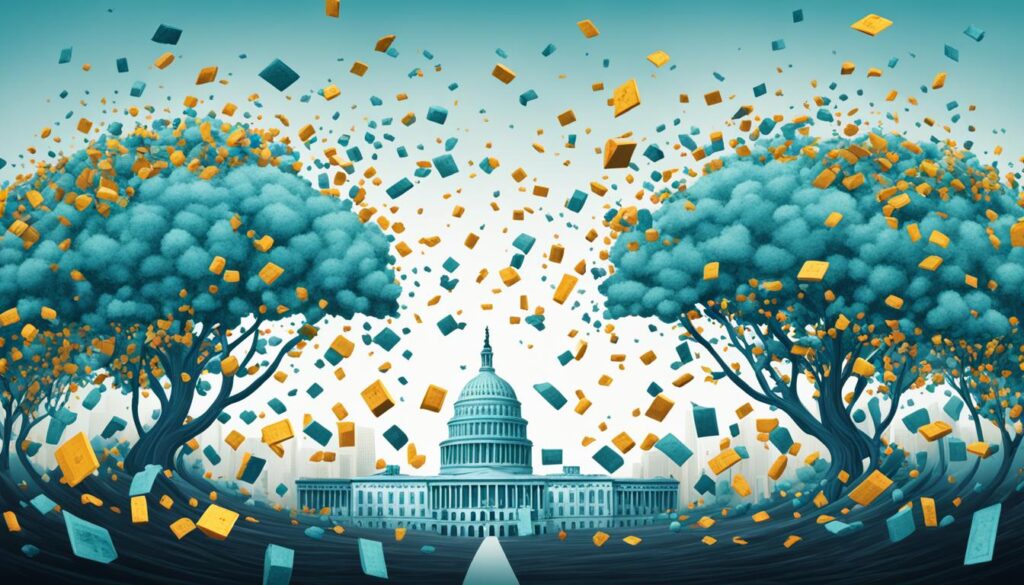
It’s important to find a balance between free markets and government rules for a strong economy. Policymakers need to keep checking and updating regulations to meet new market needs and challenges.
Trade Policies: Promoting Economic Integration and Growth
Trade policies are key to the global economy. They help nations work together for better economic growth. The way tariffs, trade agreements, and other measures work together is very important. This section will look into how trade policies affect economic stability and growth.
Tariffs, Trade Agreements, and Their Effects
Tariffs are taxes on imported goods. They can greatly affect trade and economic ties. On one side, they protect domestic industries. But, they can also cause other countries to retaliate, which can mess up global supply chains.
On the other hand, trade agreements like the USMCA or the EAEU help goods, services, and investments move freely across borders. This can lead to economic growth and countries working together more closely.
Trade policies have a big impact on the economy. Some studies say lower trade barriers can lead to more economic growth. But, others warn against making quick conclusions. The effects depend on many things, like a country’s development level and its role in global trade.
| Trade Indicator | 2017 | 2018 | 2019 |
|---|---|---|---|
| Global Trade Volumes Growth | 4.3% | 3.8% | 2.6% |
| World Bank Trade-Related Projects | 111 | 125 | 136 |
| World Bank Trade Financing ($ billion) | 22.5 | 24.1 | 25.8 |
The data shows how global trade has changed and the World Bank’s work in trade. It shows how trade policies affect economic integration and growth.
Policymakers face a tough challenge in trade. They must weigh the benefits of working together against the risks of protectionism. By promoting open and fair trade, countries can use global markets to grow sustainably and securely.
Labor Laws: Protecting Workers’ Rights and Wages
Labor laws are key to economic stability. They protect workers’ rights and ensure fair wages. In the U.S., the National Labor Relations Act (NLRA) of 1935 was a big step. It protected employees’ right to join together and bargain collectively. The NLRA aimed to balance the power between workers and employers, helping to stabilize wages and working conditions.
Over time, many places have made workers’ protections stronger. Some have set up offices to enforce labor laws. Others have given workers a formal say in local government. Also, some areas have set minimum wages and paid sick leave, improving job quality for local contractors.
Minimum Wage Laws and Their Impact
Minimum wage laws are vital for workers’ rights and economic stability. A higher minimum wage can lead to fewer jobs, but it also boosts wages for low-income workers. This can reduce poverty and help the economy grow.
But, the effects of minimum wage laws depend on the local economy and industry. Policymakers must weigh the need to protect workers against the impact on jobs and the economy.
| Key Labor Law Policies | Potential Impacts |
|---|---|
| Minimum Wage Laws |
|
| Collective Bargaining and Union Protections |
|
| Preemption Laws |
|
The U.S. economy is always changing. Labor laws are crucial for keeping workers safe and stable. Policymakers, employers, and workers all need to keep an eye on this area.
Environmental Policies: Balancing Economic Growth and Sustainability
Governments aim to keep the economy stable while thinking about the environment and sustainable growth. They use policies like rules on emissions and renewable energy to help the economy. It’s important to look at how these policies affect both the economy and the environment.
Since 1980, America has seen a link between the economy and the environment start to break. Cities like Los Angeles and New York City have gotten better. They’re now cleaner and their economies have grown.
Power plants and cars are the main causes of air pollution. But, protecting the environment can also help the economy. For example, clean air and water can make places more attractive for development.
| Environmental Indicators | Los Angeles | New York City |
|---|---|---|
| Visibility of Mountains | Improved | N/A |
| Bike Paths | Available | N/A |
| Raw Sewage Dumping | N/A | Reduced |
| Economic Growth (1980-2020) | Increased | Increased |
There’s a lot of debate on how to balance protecting the environment and growing the economy. Environmentalists should not sacrifice economic growth for environmental protection, as both can be accomplished together. We need to make sure economic growth is good for the environment.
Good design, managing sustainability, and technology can help make the economy more sustainable. Policymakers need to make sure their policies help the economy and the environment. This way, we can fight climate change and keep growing.
Role of Government Policies in Economic Stability
Keeping the economy stable is a big job for governments, especially when the economy is shaky. They must balance many challenges and risks to protect the economy. High inflation, rising borrowing costs, and financial weaknesses make their job even harder.
Navigating Volatile Times: Addressing Challenges and Risks
When the economy is uncertain, governments must act fast to lessen the effects of shocks. They might change spending and taxes to boost the economy and help people and businesses feel secure. Adjusting interest rates and adding liquidity can also help keep prices stable and the financial system strong.
It’s important for governments to keep a close eye on the financial sector. They should make sure banks and markets are open and accountable. This helps prevent big economic problems. Governments might also give extra help to areas or groups hit hard by economic troubles.
Supporting Stability: Consistent Policies and Targeted Support
- Having steady government policies is key for economic stability. Quick or sudden policy changes can make people and businesses unsure. This can slow down growth and investment.
- Helping certain areas or groups with things like tax breaks, subsidies, or partnerships can ease the effects of economic downturns. This can stop inequality and social problems that could make things worse.
- It’s important for governments to make sure their policies work together well. Economic, social, and regulatory actions should support a stable economy for everyone.
By facing challenges and risks with steady, thoughtful policies and specific support, governments can help keep the economy stable. This helps everyone in the country grow and thrive.

Debt Sustainability and Fiscal Buffers
Keeping the economy stable over time depends a lot on how much debt governments have and their fiscal buffers. It’s important for policymakers to find the right balance. They need to lower debt risks and increase fiscal space to handle future problems.
Reducing Debt Vulnerabilities and Rebuilding Fiscal Space
The COVID-19 pandemic has greatly affected public finances, causing a fast rise in debt-to-GDP ratios. This is especially true for countries with high debt levels already. To tackle this, following debt ceilings, like the EU’s 60% of GDP, is key. Also, controlling primary spending growth is vital.
This approach helps prevent debt from growing too fast and ensures debt sustainability.
Building up fiscal buffers is also key. It gives policymakers the flexibility to deal with economic shocks in the future. This can be done through careful budgeting, cutting non-essential spending, and boosting government income through tax reforms.
Challenges for Low-Income Countries
| Country Group | Average Debt Levels (% of GDP) 2011-2019 |
|---|---|
| Advanced Economies | 104.7% |
| Emerging Market Economies | 54.5% |
| Low-Income Countries | 47.0% |
Low-income countries have big debt vulnerabilities and challenges in increasing fiscal space. Their debt levels were already around 47% of GDP before the pandemic. They often don’t have enough resources or economic flexibility to cut debt. So, they need targeted international support and cooperation to deal with their debt sustainability issues and strengthen their fiscal buffers.
« Maintaining fiscal discipline and rebuilding fiscal buffers are critical for ensuring long-term economic stability, especially in the face of future shocks. »
Economic Stability and Poverty Reduction
Economic stability is key for a country’s prosperity and helps reduce poverty. It makes citizens’ lives better. Policies that create jobs, secure income, and offer safety nets help fight poverty and grow the economy for everyone.
The Link Between Economic Stability and Poverty
When the economy is unstable, people living in poverty face more stress. They struggle with making decisions and face health and education issues. This instability is getting worse, especially for those who are already poor and communities of color.
Policies to Promote Employment and Income Stability
- Investing in education and skills training to improve employability and earning potential
- Implementing strong labor laws and minimum wage policies to protect workers’ rights and incomes
- Developing robust social safety net programs, such as unemployment benefits and income assistance, to provide a cushion during economic downturns
- Fostering a competitive and stable business environment that encourages job creation and income growth
These policies help low-income people and families by tackling their economic challenges. They work to reduce poverty and make the economy more stable. It’s important to keep supporting these efforts for everyone to benefit.
« Investing in education shows a positive link between increased human capital and economic outcomes such as higher wages, increased labor participation rates, and economic growth. »
International Cooperation and Policy Coordination
In today’s global economy, working together and making policies in sync is key to keeping the economy stable. Groups like the International Monetary Fund (IMF) and the World Bank help by setting policy standards and helping countries work together. They make sure countries follow global best practices and tackle economic issues together.
The Role of Global Organizations and Policy Frameworks
A study looked at 150 years of history to see how countries can work together during tough economic times. It found that working together on technical issues works better than on big, political money and budget policies. The Basel Committee on Banking Supervision is a group that brings countries together to agree on things like how banks should be managed.
When we talk about working together, we look at many things. This includes how well economic policies work together, what stops countries from working together, and how often they do. Countries need to work together because what one country does can affect others.
Many believe that working together on economic policies is good because the world economy is more open and connected now. Since 1950, countries trade more and their money markets are more connected. But, working together can also have risks. It might make countries less careful with their money or be hard to do because countries have different goals and economies.
« Cooperation is most likely in four sets of circumstances: technical issues are favorable for cooperation, where discussions are undertaken by specialists with shared training who can reach common understanding; institutionalization of cooperation, where procedures and precedents reduce transaction costs for reaching an agreement; cooperation aimed at preserving existing policies and behaviors (a policy regime) is more likely than altering policies; and cooperation is most likely in the context of broad comity among nations, as conflict over other issues complicates reaching agreement. »
Conclusion
This article has shown how government policies shape economic stability. They use fiscal and monetary tools, set rules, and manage trade and the environment. These actions are key to growth and well-being.
Now, as the world recovers from the pandemic, the need for strong, focused policies is clear. These policies help tackle challenges and risks. They make sure economies grow, stay stable, and look after people and the planet.
By doing this, governments can help everyone get better living standards and a stronger global economy. It’s all about finding the right balance. With new ideas, good policy making, and working together, we can aim for a prosperous and united future.
The global economic crisis has made the role of government policies very important. By planning carefully and looking ahead, leaders can face the future with hope. They can create a fair and lasting economic future for everyone.