
Keeping reptiles as pets is both rewarding and fascinating. It requires special care. This guide offers key tips for your herp pets’ health and happiness. It covers their needs, habitat, diet, and safe handling.
Whether you’re new or experienced with reptiles, you’ll find what you need here. This will help you care for your scaly friends well.
Key Takeaways
- Reptiles have specific care requirements that differ from other pets
- Proper lighting, heating, and humidity levels are essential for reptile health
- Feeding a balanced, nutritious diet with calcium and vitamin supplements is crucial
- Handling reptiles with caution is important for their safety and yours
- Providing a secure, escape-proof habitat and regular cleaning is vital for reptile well-being
Understand the Unique Needs of Reptiles
Reptiles need special care that’s different from dogs and cats. Each reptile type has its own needs for environment, food, and behavior. It’s important to research the reptile you want before getting one to know the care it needs.
Reptiles Have Specific Care Requirements
Things like the size of their home, the right light, temperature, humidity, and food are key for reptiles. For instance, bearded dragons and red tail boas need different sized homes because of their size. They also eat differently, with some being herbivores, carnivores, or omnivores.
Research Your Chosen Species Thoroughly
Reptiles can live a long time and get big, so they need the right care. Most reptile health problems come from bad food, poor living conditions, or both. Knowing what your reptile needs is key to keeping it healthy.
« Reptiles do not receive vaccinations but still require routine vet check-ups, demonstrating the necessity of yearly wellness exams to catch diseases early and maintain their health. »
Knowing what reptiles need is vital for their care. By doing your research and giving them the right home, you help your reptile live a long, happy life.
Provide Proper Lighting and Heating
Keeping your reptile happy and healthy means giving them the right lighting and heat. Since reptiles can’t control their body temperature, they need their environment to do it for them. The right mix of UVB and UVA lighting and temperature and humidity levels is key. It helps them act naturally, eat well, and stay healthy.
Importance of UVB and UVA Lighting
UVB lighting is a must for reptiles. It makes vitamin D3, which is vital for strong bones and health. Without enough UVB, reptiles can get a serious bone disease. Each reptile type needs a certain kind of UVA and UVB light, so it’s important to get it right.
Regulate Temperatures and Humidity
It’s also crucial to keep the right temperature and humidity in the tank. Reptiles can’t control their body heat, so they depend on their surroundings. To keep them healthy, you need to watch and adjust these conditions closely. Using incandescent bulbs, mini halogen bulbs, and heat mats can create the perfect temperature. Don’t forget about thermostats and rheostats to keep your reptile safe from getting too hot.
By balancing reptile lighting, heating, and humidity, you make a great home for your reptile. Knowing what your reptile needs and how to meet those needs is key to caring for them well.
| Lighting and Heating Considerations | Details |
|---|---|
| UVB and UVA Lighting Requirements | – Reptiles need specific UVB and UVA lighting based on their natural habitats – Turtles, tortoises, iguanas, and bearded dragons require higher UVB levels – Lighting impacts hormone release and circadian rhythms |
| Heating Devices and Energy Efficiency | – Incandescent and mini halogen bulbs provide ambient heat and light – Heat mats use around 0.21 kWh per day, while incandescent bulbs can use 1.44 kWh per day – Rheostats and thermostats are essential for regulating temperature and preventing overheating |
| Lighting and Heating Cost Considerations | – Incandescent bulbs range from $5 to over $100 – Proper planning and calculation of total watts can help optimize energy efficiency and cost savings |
Offer a Balanced, Nutritious Diet
Feeding your reptile a balanced diet is key to their health and happiness. Different reptiles need different foods, like live prey, plants, or a mix of both. Adding calcium and vitamins to their meals is important to avoid health issues. It’s important to know what your reptile eats and feed them at the right times to keep them healthy.
Use Calcium and Vitamin Supplements
Reptiles need special nutrients based on their type. For instance, parrots eat a lot of fruits, veggies, nuts, and seeds with calcium and protein. Bearded dragons do well on insects, greens, and fruits, with the right calcium and vitamins. It’s key to give them the right mix of carbs, proteins, and fats for good health.
| Reptile Species | Recommended Diet | Calcium and Vitamin Supplements |
|---|---|---|
| Parrots | Fruits, vegetables, nuts, seeds | Calcium, protein |
| Bearded Dragons | Insects, leafy greens, occasional fruits | Calcium, vitamins |
| Sugar Gliders | Insects, fruits, vegetables, specialized pellets | Calcium, vitamins |
Good nutrition is vital for your exotic pet’s health, immune system, digestion, and breeding. Foods like Dubia roaches, silkworms, and black soldier fly larvae are great for reptiles. They offer many nutrients, helping your pet stay healthy and full of energy.
« Variety is crucial in a reptile’s diet to ensure they receive all essential nutrients for their health and well-being. »
Experts say to feed your reptile a mix of foods, including live prey, fruits, veggies, and supplements. This helps avoid nutritional shortages and supports growth and health. By giving your reptile a balanced diet and the right supplements, they’ll stay healthy and happy.
reptile care
Caring for reptiles means understanding their special needs and being dedicated to their health and happiness. It’s about making the right environment for them. This includes the right habitat, a balanced diet, and keeping an eye on their health. By following this guide, you’ll become a great reptile owner.
There are over 7,000 different lizard species in the Reptile Database. This shows how important it is to research your reptile’s specific care needs. The ReptiFiles® offers detailed care sheets for many lizard species in the USA, helping reptile owners a lot.
Nurturing Reptile Health and Wellness
Keeping your reptile healthy is key. Some reptiles can live a long time, like turtles over 30 years, pythons over 15 years, and lizards up to 20 years. But, most reptiles carry Salmonella bacteria, which can be harmful to humans if not handled properly.

For your reptile’s health, watch for signs of good health like proper weight, posture, and scale condition. Also, look for normal behavior and cleanliness. If you notice any issues, see a reptile vet for advice.
Creating the Perfect Habitat
Creating a great habitat is key for your reptile’s health and happiness. Reptiles can live indoors, outside, or both. Most are kept in indoor enclosures like vivariums that open for easy care.
- Lizards and snakes do well in vivariums with front-opening access.
- Turtles need big aquariums with good water quality.
- Reptiles need special UVA/UVB lighting and a humidity level of 40% to 60% for their health.
By making the perfect habitat and meeting your reptile’s needs, you’ll have a happy, healthy reptile friend.
Create a Safe and Secure Habitat
Building a safe home is key for your reptile’s health. The reptile enclosure must match your pet’s needs. It should have the right size, substrate, hiding places, and things to keep them busy. Make sure to pick escape-proof enclosures since reptiles are great at escaping. Use reptile habitat accessories like locking clips to keep your pet safe from harm.
Use Escape-Proof Enclosures
Choose a reptile habitat that stops escapes. Look for features like:
- Secure locking mechanisms on doors or lids
- Tight-fitting screens or mesh covers
- Smooth, slippery surfaces that make it hard for reptiles to climb out
- Appropriate substrate that doesn’t allow easy burrowing or tunneling
Keep an eye on your enclosure to make sure it stays safe and secure for your reptile.
Along with keeping your reptile in, the reptile enclosure should have everything they need. This includes the right temperature, humidity, lighting, and places to hide. A safe and interesting home helps your reptile stay happy and reduces escape risks.
For tips on creating the best reptile home, call the Reptile Super Show at 619-281-PETS (7387) or visit their website at https://reptilesupershow.com/vendor-application/.
Handle Reptiles with Caution
Handling reptiles needs careful thought and respect. It’s important for the safety of both the pet and the owner. Reptiles are sensitive and can get stressed, injured, or sick if not handled right.
When you touch your reptile, don’t hold them too high to avoid drops. Always wash your hands before and after touching them to stop bacteria spread. Try to handle them only when really needed to keep them calm and safe.
Reptiles, even the same kind, can have different personalities. Some like being handled more than others. Always respect their instincts and don’t force them if they seem stressed or scared.
- Slow, calm movements are key when handling reptiles, especially if they’re young, quick, or new.
- Lizards can be tough for beginners because they move fast and might be strong. You need special skills to keep them safe and happy.
- Supporting the reptile’s body and letting them feel secure can make handling better.
Reptiles are not like cats or dogs. They have ancient behaviors and instincts. It’s important to understand and respect these to keep your reptile happy and healthy.
« Handling reptiles with care and understanding is essential for their health and your safety. »
| Handling Technique | Recommended Approach |
|---|---|
| Snakes | Support the body weight and maintain control of the head while allowing others to touch them. |
| Lizards | Approach from the side and low to avoid startling, and support the body properly during handling. |
By following these tips and focusing on your reptile’s comfort, you can have a great time with your scaly friend.
Keep Habitats Clean and Hygienic
Keeping your reptile’s home clean is key for their health. Clean the enclosure regularly and manage the substrate well. This stops harmful bacteria from growing and keeps diseases away. It’s important to keep up with cleaning to help your reptile live well.
Avoid Direct Sunlight Exposure
Putting your reptile in direct sunlight is bad for them. The heat and light can stress them out and cause health problems. Use controlled lighting and temperature to make a safe space for your reptile. This keeps them happy and healthy.
- Clean and disinfect the reptile habitat every two to three months to prevent the build-up of harmful pathogens.
- Sanitize the terrarium decor and enclosure with a 10% bleach solution to ensure a clean environment.
- Replace the substrate to a depth of about 2 inches during habitat cleaning to maintain hygiene.
- Turn off the lights before cleaning the habitat to prevent accidents and bulb breakage.
- Scrub the interior surfaces of the enclosure with hot water and dish soap during the cleaning process.
- Allow the terrarium to warm up for 20 minutes before reintroducing the reptile to its habitat after cleaning.
Regular cleaning and upkeep are key for reptiles’ health. Keeping their homes clean and out of direct sunlight gives them a safe place to live.
« Up to 70% of reptiles and amphibians are carriers of Salmonella, making proper habitat maintenance crucial for their and your health. »
Seek Professional Advice When Needed
Looking after your reptile might sometimes mean you need expert advice. Talking to herpetological societies, exotic animal vets, and other trusted sources can help. They can guide you through any care challenges or questions you have.
Consult Reputable Sources
Be careful with online info, as not everything is reliable or current. Always aim to learn from trusted experts and groups for the best care for your reptile. Here are some ways to find good info:
- Look for local herpetological societies or reptile forums. These places are full of experienced hobbyists and pros.
- Talk to exotic animal vets who know about reptiles. They can give you advice and help with health issues.
- Check out educational stuff from big organizations like the Reptile and Amphibian Information Network (RAIN) or the American Veterinary Medical Association (AVMA).
Using these reputable reptile care sources, you can make sure you’re making the right choices. This helps keep your reptile happy and healthy.
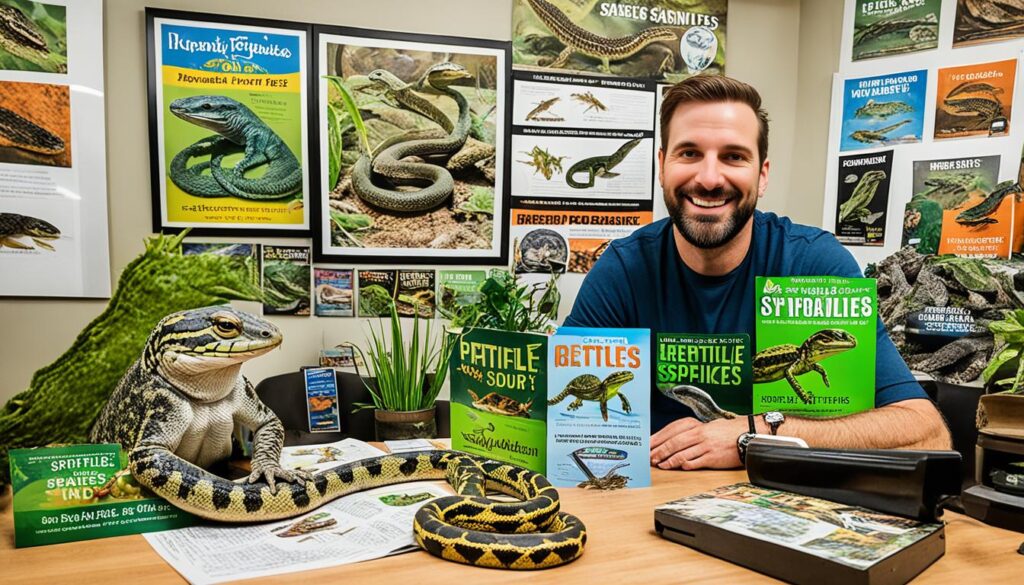
« Proper reptile care requires a commitment to learning and seeking guidance from experienced professionals. Your reptile’s health and happiness depend on it. »
Choose a Suitable Reptile Species
When picking a reptile as a pet, it’s key to match the species with your lifestyle and experience. Some reptiles, like big monitors and iguanas, need special care and can get really big. They might not be right for many people. It’s smart to research the needs and traits of different reptiles to find the best fit for your home and skills.
Reptiles need less daily care than dogs and cats, which makes them appealing to some. But, they can get sick if their diet, handling, or living space is wrong. They can’t control their body temperature. So, they need a certain temperature and humidity level in their space, especially in cold places during winter.
Good lighting is key for reptiles, and they don’t like being handled a lot. Kids should have an adult help with their reptile’s care. Reptiles can carry Salmonella, which can make people sick if not handled right.
Reptiles are a good choice for those allergic to furry or feathered pets. Yet, some reptiles can grow quite big and may be harder to handle when they get older. Some can bite and are venomous.
Reptiles vary in price based on their type, rarity, age, size, and color. Taking them to the vet regularly is important for their health. It’s best to get reptiles from reputable sources to support good breeding practices.
Recommended Reptile Species for Beginners
- Leopard geckos
- Crested geckos
- Fat-tailed geckos
- House geckos
- Bearded dragons
- Frill-necked lizards
- Blue-tongued skinks
- Corn snakes
- King and milk snakes
- Captive-bred ball pythons
Stay away from big constrictors like boa constrictors and Burmese pythons if you’re new to reptiles. Turtles, like red-eared sliders, are also not ideal for beginners. They are messy, live a long time, and need UV light for health.
« Unrealized expectations are identified as the leading cause of pet relinquishment. »
| Reptile Species | Suitability for Beginners | Average Size | Care Difficulty |
|---|---|---|---|
| Leopard Gecko | Highly Recommended | 8-12 inches | Easy |
| Crested Gecko | Highly Recommended | 8-10 inches | Easy |
| Bearded Dragon | Recommended | 18-24 inches | Moderate |
| Corn Snake | Recommended | 36-72 inches | Easy |
| Ball Python | Recommended | 36-60 inches | Moderate |
| Boa Constrictor | Not Recommended | 6-10 feet | Difficult |
Understand Reptile Behavior
Reptiles show a wide range of behaviors shaped by their instincts and evolution. They bask in the sun, hunt for food, and dig for shelter. These actions are key to their health and should be respected in captivity. By understanding your reptile’s natural behaviors and creating a suitable environment, you can lower stress and boost their health and happiness.
Respect Reptiles’ Natural Instincts
Snakes, lizards, and turtles have unique behaviors vital for their survival. A well-designed environment can encourage behaviors like foraging, climbing, digging, and swimming. By meeting these needs, you can make your reptile pet healthier and happier.
- Basking under a heat lamp or in the sun helps with temperature control, digestion, and bone health.
- Reptiles hide when stressed or threatened. More hiding spots can reduce stress.
- Aggressive behavior can be from feeling threatened or poor living conditions. It’s important to understand their body language to address it.
Reptiles in homes and zoos are now getting better care through enrichment and training programs. These programs boost well-being by offering choices and encouraging species-specific behaviors. Training and creating complex environments help reptiles’ physical and mental health.
« Properly designed environments can stimulate natural behaviors such as foraging, climbing, digging, and swimming in captive reptiles. »
Respecting your reptile’s instincts helps build a strong, healthy bond. It ensures the best care for your unique pet.
Provide Environmental Enrichment
Keeping your reptile both mentally and physically active is key to their happiness. Environmental enrichment helps prevent boredom and stress. It also lets your pet show their natural behaviors. By adding things that mimic their wild home, you make their life in captivity more interesting and rewarding.
Adding places for your reptile to hide, like logs or branches, is important. These give them a safe feeling and let them explore. For reptiles that like to climb, adding things for them to climb on is great. Using different types of substrate, like coconut coir, encourages digging and searching for food.
It’s also important to think about sensory enrichment. Adding real or fake plants makes the space look more like their natural home. This engages their sight, touch, and smell. Puzzle feeders and treat dispensers also keep their minds sharp by challenging them to figure out how to get food.
When picking enrichment items, make sure they’re safe for your reptile. Nothing should be toxic or harmful. Watch how your reptile reacts to the new items and change things if needed to keep them happy.
A good environmental enrichment plan helps your reptile act naturally, lowers stress, and keeps them healthy. By copying parts of their wild home and giving them things to do, you make them happier and healthier pets.
« Environmental enrichment is crucial for captive reptiles, as it allows them to engage in natural behaviors and prevents boredom and stress. »
| Enrichment Item | Benefits |
|---|---|
| Climbing Structures | Promote physical exercise, muscle development, and natural climbing behaviors |
| Hiding Spots | Provide a sense of security and mimic natural habitat features |
| Substrate Variety | Encourage burrowing, foraging, and other natural ground-based behaviors |
| Live or Artificial Plants | Add visual interest and create a more naturalistic environment |
| Puzzle Feeders and Treat Dispensers | Offer mental stimulation and opportunities for problem-solving |
Monitor Health and Well-Being
Keeping a close eye on your reptile’s health and well-being is key for their long life. Watch their behavior, eating habits, and physical state for any illness or distress signs. It’s a good idea to take your pet to the vet at least once a year for check-ups.
Watch for Signs of Illness or Distress
Look out for these signs of health problems in reptiles:
- Lethargy
- Loss of appetite
- Changes in skin or eye condition
- Abnormal bowel movements
- Respiratory problems
If you see any worrying signs, see a vet who knows about exotic animals right away. This helps fix the issue and keeps your pet healthy.
| Common Health Issues in Reptiles | Symptoms |
|---|---|
| Mites or Ticks | Skin irritation, loss of appetite |
| Respiratory Infections | Wheezing, difficulty breathing |
| Metabolic Bone Disease | Weakness, deformed limbs |
Reptiles need their environment to control their body temperature. Keeping an eye on the temperature and humidity is important. This helps avoid health problems like dehydration or breathing issues.
« Early detection of any abnormalities is key to ensuring the long-term health and well-being of your reptile pet. »
Tempcube lets you check the temperature and humidity in real-time. You can see the info anytime and get alerts if things aren’t right. This helps you take quick action to keep your reptile’s environment perfect. It makes your pet’s life better.
Conclusion
Caring for reptiles as pets means understanding their unique needs and being committed to their health and happiness. This guide has given you the key tips to be a great reptile owner. By following these tips, you’re on your way to caring for reptiles well.
Creating a safe home, feeding them right, watching their health, and letting them be themselves are all important. Each part of reptile care is key to making sure they do well. With the right knowledge and effort, you can enjoy caring for these interesting animals for many years.
As more people, especially Generation Z, get into reptile pet ownership, it’s vital to remember they have special needs. By focusing on their well-being and giving them the right care, you can build a strong and lasting connection with your reptile pets.