
Having a happy, bouncing rabbit at home is truly delightful. These furry friends bring joy and laughter into our lives. It’s our duty to make sure they live their best lives. This guide will give you the key tips for caring for your rabbit. You’ll learn how to make their living space comfy, feed them right, and keep their minds sharp.
Key Takeaways
- Rabbits show happiness with behaviors like binkies, zooming, and flops.
- It’s important to give rabbits a big, interesting space to live in.
- Feeding them hay, leafy greens, and a little bit of pellets keeps them healthy.
- Letting rabbits choose when to interact with you can make your bond stronger.
- Spaying or neutering rabbits helps prevent health and behavior problems.
Understanding Rabbit Happiness
Signs of a Happy Rabbit
Understanding your rabbit’s body language is key to knowing how they feel. Rabbits show happiness in their own special ways. If a rabbit is happy, they might have their ears close together, looking up, and sticking out a bit.
When a rabbit is calm, they often sit with their legs under their body. But if they’re stressed, they might hide or move away, flicking their back feet. Happy rabbits love to play by hopping, twisting, and racing around.
A happy rabbit might even « flop » over on their side, showing they’re really relaxed. They might also rub their chin on things, which is called « chinning. » This means they feel safe and at home.
« Understanding your rabbit’s body language is crucial for ensuring their overall happiness and well-being. Paying attention to these subtle cues can help you create a safe and enriching environment for your furry companion. »
Providing a Comfortable Home Base
Proper Enclosure Size
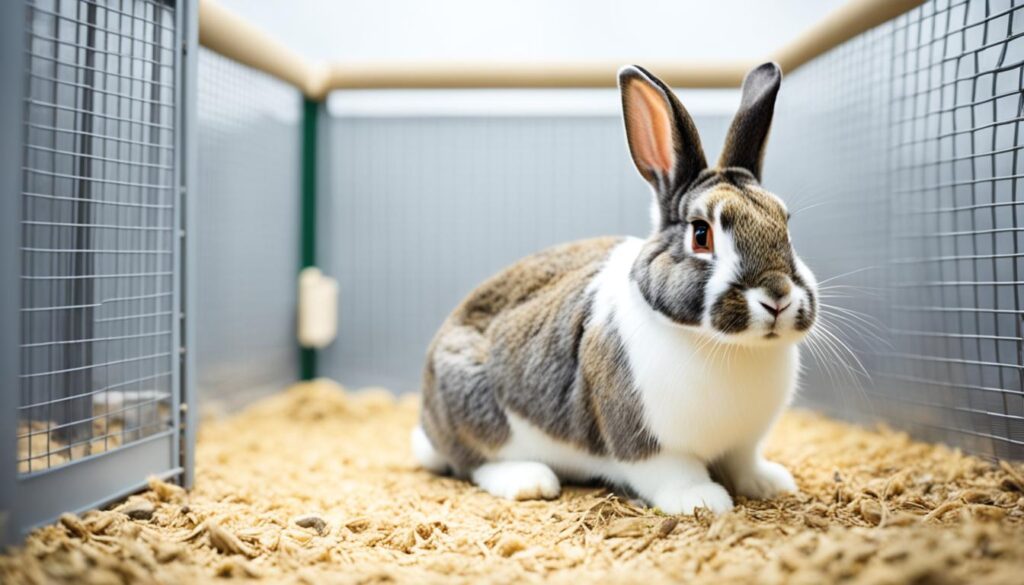
Creating a comfy home base is key for a happy rabbit. The enclosure should let your rabbit move freely and act naturally. Aim for a space that’s at least 3-4 times your rabbit’s length wide, 1-2 times their length long, and tall enough for them to stand on their tiptoes.
A rabbit ex-pen is a great choice, as most cages are too small. Big rabbits like Flemish Giants need a huge space, almost like a small room, for exercise and movement.
- Invest in a playpen with a gate that is around 3 feet high for a Netherland Dwarf and higher for larger breeds to prevent escape.
- Use a large, shallow litter box to facilitate litter training and maintenance.
- Provide traction with flatweave rugs that are easily washable to prevent injuries and promote natural behaviors.
- Use heavy, non-tippable food and water bowls to prevent spills.
Adding decorations, toys, and treat holders makes the environment better for your rabbit. They need a safe, well-ventilated, and clean space for hopping, running, jumping, digging, and stretching.
| Rabbit Breed | Minimum Enclosure Size |
|---|---|
| Netherland Dwarf | 4 x 6 feet |
| Larger Breeds (Flemish Giants, Commercial) | Close to the size of a small room |
« Rabbits, as prey species, require hiding places to feel secure and escape from potential predators, highlighting the importance of providing safe hiding spots within their living area. »
Enriching Their Environment with Toys
It’s key to give your rabbit lots of fun toys for their mind and happiness. Rabbits are lively, curious, and smart. They need a stimulating place to live. Toys help stop boredom, encourage natural actions, and get them moving.
Chew toys like wooden blocks or natural sticks are a must for rabbits. They let them chew as they naturally do and keep their teeth trimmed. Puzzle toys with hidden treats also make them think and move, mimicking foraging in the wild.
- Wooden blocks and natural sticks for chewing
- Puzzle toys that hide treats to encourage foraging
- Cardboard tubes and paper bags for exploration and play
- Platforms and ramps for climbing and jumping
- Soft, plush toys for gentle tossing and cuddling
Change up the toys often to keep your rabbit interested and prevent boredom. Rabbits love new things, so different textures and shapes keep them active and curious.
When picking toys for your rabbit, make sure they’re safe and don’t have small parts that could be swallowed. Check and replace any toys that are broken or worn out to keep your rabbit safe and happy.
With a variety of rabbit toys, you can meet your furry friend’s needs for fun and thought. This helps with their rabbit enrichment and rabbit mental stimulation. Playing with your rabbit also makes your bond stronger and keeps them healthy and joyful.
A Balanced and Varied Diet
It’s key to feed rabbits a balanced and varied diet for their happiness and health. Hay should make up about 85% of what an adult rabbit eats daily. Timothy hay, orchard grass, or a mix of grass-based hays are great choices. They give rabbits the fiber they need for their digestive system.
Rabbits also need leafy green veggies every day. Aim for 1-2 cups of greens for every 4 pounds of rabbit. Broccoli, kale, romaine lettuce, and other nutrient-rich veggies should be part of their diet.
Hay-based Diet
In the wild, rabbits spend about 70% of their time eating grass and other plants. This hay-based diet is crucial for their digestive health and keeps their teeth trimmed. It’s important to give rabbits a steady supply of high-quality hay.
- Hay should make up 85% of an adult rabbit’s diet
- Timothy hay, orchard grass, or a mix of grass-based hays are excellent choices
- Hay helps maintain a rabbit’s dental health and digestive function
Pellets should only be about 5% of a rabbit’s diet, with fruits and treats making up less than 5%. Some breeds may need more protein or pellets, while overweight rabbits might need fewer. Always talk to a vet for specific dietary advice, especially for rabbits with health issues.
By giving your rabbit a balanced, hay-based diet and adding fresh greens, you can keep them happy and healthy.
Respecting Their Boundaries
Rabbits like being around others but have their own likes and dislikes. They often don’t like being picked up because it scares them. It’s important to let your rabbit choose when they want to interact.
When you meet your rabbit, sit or lie down at their level. This makes you seem less scary to them. You can show love by gently petting them on the forehead or behind their ears without picking them up.
With patience, rabbits can learn to enjoy cuddling and may even come to you for more attention. Some rabbits like to sit on sofas or laps when they feel safe. But, never force them to interact if they don’t want to. This can hurt your bond and make them less likely to be around you.
Rabbits are naturally shy and scared of new people and places. They are prey animals and run away when they’re startled. Letting them come to you helps them feel safe. This is key for a strong bond and more rabbit interaction and rabbit socialization.
With regular rabbit handling and rabbit training, your rabbit will trust you more. They might even get used to being touched over time. Always let them decide when they’re ready for physical contact.
« The best way to earn a rabbit’s trust is to respect their boundaries and allow them to come to you on their own terms. » – Jane Doe, Rabbit Care Expert
The Importance of Spaying/Neutering
Keeping your rabbit healthy and happy is key. Spaying or neutering is a big step in this journey. As rabbits grow, they may become aggressive and territorial because of hormones. Spaying or neutering your rabbit helps stop these behaviors and makes them more loving companions.
Benefits of Spaying/Neutering
Spaying and neutering your rabbit has many benefits. It can reduce aggression, stop territorial behavior, and lower the risk of serious diseases. For example, unspayed female rabbits face a high risk of up to 65% of getting uterine cancer by age 4. Neutering males can prevent testicular and prostate cancers, keeping them healthier for longer.
- Reduced aggression and territorial behavior
- Elimination of spraying and marking
- Lower risk of reproductive cancers, especially in females
- Decreased likelihood of hormonal-related health issues
- Easier litter box training and a more affectionate temperament
Veterinary medicine has made spaying and neutering safer and easier. This means it’s now a safer and more accessible option. By doing this, you ensure your rabbit lives a happier, healthier life.
« Spaying and neutering rabbits is one of the most important things you can do to ensure their long-term health and happiness. »
Providing Social Interaction
Rabbits love being around others and need regular interaction to be happy. If you don’t have another rabbit for your pet, spend time with them every day. This helps meet their need for companionship. Let them explore your home and do activities together to bond.
Rabbits need about 30 to 40 hours of time outside their cage each week. They can live up to 7-10 years, so give them lots of chances for rabbit companionship, socialization, and bonding. They like to sit with their owners but don’t like being held. They can even learn to use a litterbox.
- Give them toys like cardboard boxes, wire cat balls, hard plastic baby keys, and untreated willow baskets. This encourages their natural curiosity and rabbit enrichment.
- Slowly give them more space to get used to it and build trust.
- Give them treats like scratches, rubs, and ear rubs to make them feel good and bond with you.
| Behavior | Positive Outcome |
|---|---|
| Using the litterbox | Improved interactions and quicker socialization |
| Not chewing wires | Stronger bond with owner |
| Not digging at carpets | Increased trust and comfort in the environment |
Give your rabbit lots of chances for social interaction, companionship, and enrichment. This ensures they have a happy life as your pet.
« A happy rabbit is a rabbit that is provided with the right environment, diet, and social interaction. With proper care, rabbits can make wonderful, lifelong companions. »
Treat Time!
Rabbits love treats and they make them happy. It’s good to give them small, healthy rewards. This helps them feel good and behave well. Find out what rabbit treats your rabbit likes best.
Choose rabbit rewards like fresh or dried fruits and veggies that are safe. Carrots, apples, bananas, and leafy greens are great rabbit treats. Try different ones to see what your rabbit likes best.
Remember, don’t give your rabbit too many treats. They can be a fun way to make your rabbit happy, but they shouldn’t replace their main meals. Always give treats in small amounts.
- Offer fresh or dried fruits and vegetables as rabbit treats
- Introduce new rabbit treats gradually to discover your rabbit’s favorites
- Use rabbit treats in moderation to avoid disrupting their rabbit diet
Give your rabbit rabbit treats now and then to show you care. By choosing and giving them out carefully, you help your rabbit stay happy and healthy.
rabbit care
Owning a rabbit means you must put their health and happiness first. It’s key to take them to the vet regularly. Rabbits are good at hiding when they’re not feeling well. So, it’s important to check in with a vet every year.
They also need their teeth checked yearly. Rabbits’ teeth grow all the time, and if they get too long, it hurts. Keeping their teeth trimmed is a must.
Grooming your rabbit is also vital for their health. Brushing their fur helps prevent hairballs and keeps them happy. You should trim their nails every four to six weeks to stop them from getting too long.
Don’t forget to take your rabbit to the vet regularly. These visits help catch health problems early. They also make sure your rabbit gets the care they need to stay healthy.
| Aspect of Rabbit Care | Recommended Frequency |
|---|---|
| Veterinary Check-ups | Annually |
| Dental Examinations | Annually |
| Nail Trimming | Every 4-6 weeks |
| Fur Brushing | 1-2 times per week |
Being careful with your rabbit can make sure they live a long, happy life. Remember, rabbits need care similar to dogs or cats. So, be ready for the commitment of having a rabbit as a pet.
Creating Fun Play Areas
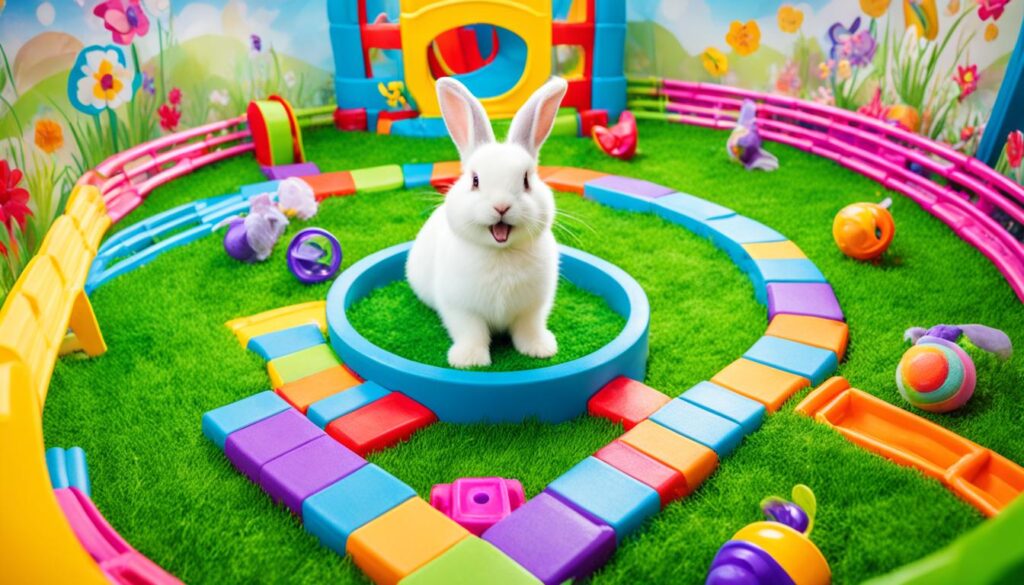
Rabbits love to explore and seek new experiences. It’s key to make play areas that meet their needs. Adding fun elements helps with rabbit play, rabbit enrichment, and rabbit exploration.
Encouraging Curiosity
Rabbits do well in places that challenge their senses. Add things like:
- Tunnels of different sizes to tap into their burrowing instincts
- Elevated spots and ramps for climbing and looking around
- Places to hide and feel safe
- Changing toys and textures to keep them interested
Change things up or add new items to keep your rabbit excited. This keeps them curious and mentally sharp.
« Enriched environments can reduce confrontational behaviors among residents, and individualized enrichment plans can help increase mental stimulation and positive emotions in residents. »
It’s important to give your rabbit lots of chances for rabbit play, rabbit enrichment, and to explore. This makes them happy and well. By meeting their needs, you make their life fulfilling and fun.
Promoting Exercise
Rabbits love to run and explore. Without enough space and exercise, they can get bored, depressed, and sick. It’s key to give your rabbit lots of chances to move and play for their health.
They need 3-4 hours of exercise each day to run, jump, and check out their world. Make a special rabbit-proofed area or playpen for them. Put in toys like cardboard tunnels, sea grass mats, and empty boxes to make them dig, shred, and burrow.
| Ideal Exercise Time | Minimum Enclosure Size | Recommended Playtime |
|---|---|---|
| 3-4 hours daily | 32 square feet | Dawn or dusk |
Rabbits move most at dawn and dusk, so play with them then. Letting them explore your rabbit-proofed home is great exercise and fun. Always watch them to keep them safe.
Not enough exercise can cause health problems like obesity, sore hocks, weak bones, muscle loss, kidney failures, stomach issues, and depression. Keeping your rabbit active helps them stay healthy, happy, and interested.
Using different toys and activities that boost rabbit exercise, rabbit activity, rabbit movement, and rabbit behavior makes life better for your rabbit. It ensures they do well in your care.
Channeling Natural Behaviors
Rabbits are naturally curious and love to move around. It’s our job to give them ways to show their true selves. This keeps them happy and stops them from getting bored or upset.
Understanding and meeting their need to dig and chew is key in caring for rabbits. These actions help keep their minds sharp and their teeth healthy. By giving them the right things to chew on and dig in, we help them in a good way.
- Provide cardboard boxes, cardboard tubes, and other sturdy chewing materials to satisfy their need to gnaw.
- Offer digging boxes filled with loose, safe substrates like shredded paper or untreated potting soil, allowing them to indulge their natural burrowing impulses.
- Encourage exploration and foraging by scattering treats and hay throughout their enclosure, stimulating their natural curiosity and problem-solving skills.
Creating a space that fits their rabbit behavior and rabbit instincts helps them stay happy and healthy. With the right rabbit enrichment and rabbit training, they can be their true selves.
« A content rabbit is a rabbit that can be their true, natural self. »
Letting your rabbit be their natural self is the best way to have a happy pet. By giving them what they need, we can make a strong bond with them. This goes beyond just being a pet owner.
| Natural Behavior | Enrichment Idea | Benefits |
|---|---|---|
| Digging | Provide a digging box with safe substrate | Satisfies natural instincts, promotes mental stimulation |
| Chewing | Offer a variety of safe chewing materials like cardboard, wood, and hay | Maintains dental health, prevents unwanted chewing on household items |
| Foraging | Hide treats and hay throughout the enclosure | Encourages natural exploratory behaviors, stimulates problem-solving skills |
The Joy of Petting
Rabbits love being petted and handled with care. They bond well with humans, making petting them a joy. This bonding is natural and brings happiness to both the rabbit and the person.
Bunny Massages
Rabbits enjoy gentle massages on their forehead, behind the ears, and along their back. Your fingers moving through their fur can make them very happy. Some even show love by purring or licking you.
These massages help strengthen your bond with your rabbit. They build trust and companionship between you.
Rabbits are social and love being around people. Learning how to handle and pet them right can open up a world of rabbit affection and rabbit bonding. This will make your lives together better.
When handling your rabbit, be gentle and respect their space. Start by letting them sniff your hand. Then, you can pet their forehead, cheeks, and back. Avoid touching their belly, feet, and chin.
With time and patience, your rabbit will learn to enjoy your touch. This leads to better rabbit grooming and overall health.
« The simple act of petting a rabbit can have a profound impact on both the animal and the human, fostering a deep sense of connection and mutual understanding. »
Bonding with Your Bunny
Domestic rabbits are very social and need a strong bond with you for their happiness. They need regular interaction and companionship. If you don’t have another rabbit, give them lots of attention and playtime to meet their need for connection.
Spending quality time with your rabbit lets them explore your home and builds trust. Remember, it can take a few months for them to adjust to a new home and people. Be patient and understanding.
When with your rabbit, talk softly and act calmly, like rabbit friends do. Rabbits don’t like being held but enjoy being petted, snuggled, and sitting together.
Every rabbit is different, so know what your bunny likes. Some are easygoing, others need lots of attention, or might be a bit scared. Watch how they act to understand them better.
Doing things together, like playing with toys or sharing treats, builds trust. Rabbits like toys like stacking cups, plastic baby keys, and wooden blocks. These toys are great for fun and learning.
Getting to know your bunny takes time, but the rewards are huge. With patience, understanding, and lots of love, you can have a deep bond with your rabbit.
Conclusion
Following these key rabbit care tips can make sure your furry friend is happy and healthy. It’s important to give them a comfy home, a balanced diet, and respect their space. These things together help your rabbit live its best life.
Good rabbit care is key for their health and happiness. Knowing what makes a happy rabbit, making a comfy home, and keeping them busy with activities helps you bond with them. Rabbits need care, a varied diet, and exercise to be their best.
Understanding your rabbit’s needs and behaviors makes them happier and strengthens your bond. With patience and dedication, you can create a great home for your rabbit. This way, you’ll have a lifelong friend that makes your home happier.