
A 2022 U.S. survey by The Association for Pet Obesity Prevention found that 61% of cats and 59% of dogs are overweight or obese. Pet obesity is a big concern because it can cause serious health issues. It can also shorten and lower the quality of a pet’s life. This article will look at the causes, risks, and ways to prevent and manage pet obesity. We’ll help you keep your furry friend at a healthy weight for a better life.
Key Takeaways
- Obesity affects over 60% of pets in the United States, putting their health at risk.
- Excess weight can lead to chronic conditions like diabetes, heart disease, and arthritis.
- Regular exercise, portion control, and a balanced diet are essential for maintaining a healthy pet.
- Veterinary guidance is crucial for developing a personalized weight management plan.
- Monitoring your pet’s weight and body condition is key to preventing and managing obesity.
Causes of Pet Obesity
Pet obesity is rising due to overfeeding, lack of exercise, breed and age, and unhealthy diet and treats. Many pet owners give their pets too much food, thinking they need it. This leads to weight gain. Also, high-calorie and processed pet foods are making the problem worse.
Overfeeding and Lack of Exercise
Pets are not moving as much because of technology. Overfeeding pets and not exercising them enough causes weight issues.
Breed and Age Factors
Some breeds like Labradors, Beagles, and Golden Retrievers are more likely to get obese. This is because of their genes. As pets get older, they might eat more and move less, making them gain weight.
Unhealthy Diet and Treats
Unhealthy pet diet and giving pet treats can lead to weight problems. Owners often give pets too many table scraps and high-calorie treats, upsetting their diet balance.
| Factor | Impact on Pet Obesity |
|---|---|
| Overfeeding | Providing excessive food leads to weight gain |
| Lack of Exercise | Sedentary lifestyle contributes to obesity |
| Breed Predisposition | Some breeds are more prone to weight issues |
| Age | Slower metabolism in older pets increases risk |
| Unhealthy Diet and Treats | Excessive calories from table scraps and high-calorie treats |
Knowing the pet obesity causes is key to helping overweight and obese pets. By understanding these factors, pet owners can help keep their pets healthy and happy.
Health Risks Associated with Pet Obesity
Being overweight can seriously harm a pet’s health and life quality. Just like humans, pets face health issues from too much weight. Overweight pets are more likely to get diabetes because their extra fat messes with blood sugar control. This extra weight also leads to heart problems by making the heart work harder.
Also, the extra pounds can cause arthritis by putting stress on the joints. This leads to pain and less movement. Respiratory issues can happen too, making it hard for pets to breathe when they move. Sadly, being too heavy can shorten a pet’s life.
Diabetes and Heart Disease
- More than 50% of dogs in North America are reported as overweight by the Association for Pet Obesity.
- Being moderately overweight can reduce a dog’s life expectancy by nearly two years compared to leaner dogs.
- Obesity can shorten a dog’s life and increase the risk of diseases such as cancer, diabetes mellitus, heart disease, hypertension, osteoarthritis, urinary bladder stones, and anesthetic complications.
Arthritis and Respiratory Issues
- Obese dogs have an increased risk of developing hypothyroidism or Cushing’s disease.
- The body condition of a dog can be assessed using a scale of 1-5 or 1-9, with 3 or 5 being ideal, respectively.
- Overweight pets are oval-shaped rather than having the distinct taper at the waist between the abdomen and hips characteristic of healthy pets.
Shortened Lifespan
Dogs that maintain a healthy weight live an average of two years longer than obese dogs.
« Obesity affects more than half, 54%, of all dogs in the US, with 35 million considered overweight and 6.7 million clinically obese. »
Signs Your Pet is Overweight
It can be hard to tell if your pet is overweight. The weight gain might not be obvious at first. But, there are signs that can help you check if your pet is the right weight. You should see a clear waistline behind your pet’s ribcage. If your pet looks round or rectangular without a waist, they might be overweight.
You should be able to feel your pet’s ribs easily. If you can’t feel them, your pet is probably overweight. Also, if your pet has trouble grooming themselves, it could mean they’re obese.
Overweight dogs often pant when they walk, even if it’s not a hard walk. They might also walk slower or sleep more than before. Dogs that are overweight won’t have a visible waistline. They won’t have a clear difference between their chest and stomach when viewed from the side.
Checking your pet’s weight regularly is key for their health. Taking them for yearly or twice-yearly wellness exams helps vets keep an eye on their weight. This way, they can catch any early signs of illness. By being watchful and dealing with weight issues early, you can help your pet live a longer, healthier life.
« One in three cats and dogs living in the U.S. are overweight. In 2019, a study by Banfield Pet Hospital indicated that the percentage of overweight and obese pets has reached epidemic levels. »
To keep your pet at a healthy weight, give them a balanced diet, make sure they exercise regularly, and take them for check-ups with your vet. Catching any weight-related issues early means your furry friend can enjoy a better life for many years.
Body Condition Scoring for Pets
It’s key to keep an eye on your pet’s weight for their health. A good way to check their weight is through body condition scoring (BCS). BCS uses a scale of 1 to 9, with 1 being underweight and 9 being obese. Your vet can figure out your pet’s BCS during check-ups.
Evaluating Your Pet’s Weight
A BCS of 4/5 or 7/9 means your pet has 30% body fat, which is overweight. Regular vet visits help track your pet’s weight and spot any health issues. In fact, dogs at an ideal body weight lived around two years longer than their obese counterparts, says the Purina Life Span study.
Importance of Regular Check-ups
Regular check-ups are key for watching your pet’s weight and condition. Overweight dogs often act differently, and their quality of life gets better after losing weight. Keeping an eye on them long-term is important to stop weight gain.
| Statistic | Value |
|---|---|
| Overweight dogs and cats in the U.S. (2017) | 56% of dogs and 60% of cats |
| Body fat percentage correlated with BCS 4/5 or 7/9 | 30% |
| Lifespan difference between ideal and obese dogs | Around 2 years |
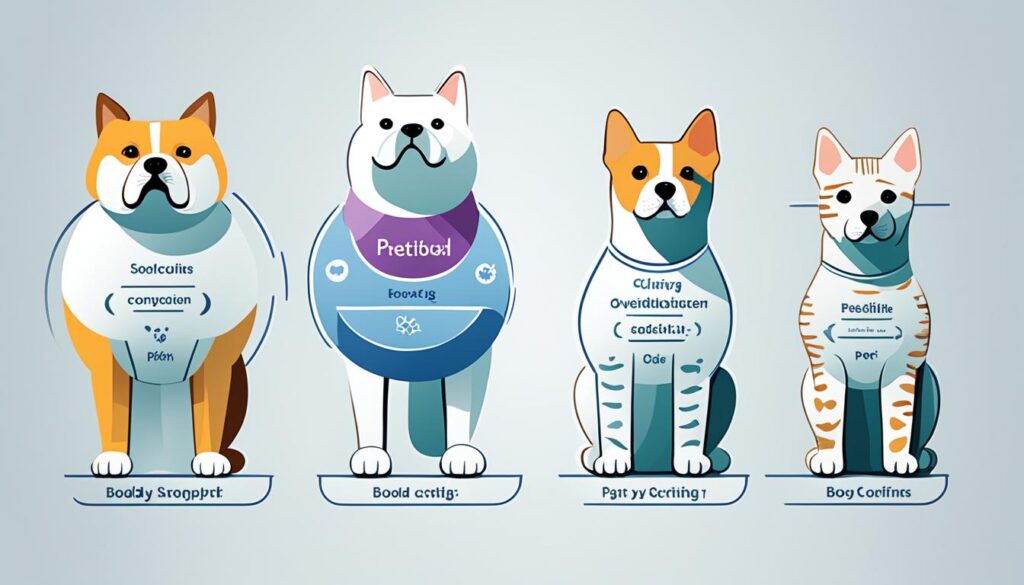
By checking your pet’s weight and condition often, you and your vet can keep them at a healthy weight. This lowers the risk of obesity problems and makes their life better.
Tips for Preventing Pet Obesity
Keeping your pet at a healthy weight is key to their happiness and health. With a few easy steps, you can stop pet obesity and make sure your pet lives a long, joyful life. Here are some easy tips to help your pet stay fit.
Balanced Diet and Portion Control
Picking a top-notch, balanced pet diet is the first step against obesity. Don’t overfeed or give too many treats, as they can lead to weight gain fast. Use a measuring cup to give the right amount of food, following the brand’s guidelines to avoid giving too many calories.
Regular Exercise and Playtime
Exercise is vital for a healthy weight. Walk your dog every day or play with them in fun ways. For cats, use toys like laser or wand toys to get them moving. Slowly increase how long and hard you exercise to help them burn calories and stay in shape.
Stopping pet obesity is all about balance. It’s about giving them a good diet, controlling how much they eat, and making sure they exercise and play often. With these simple changes, you can help your pet stay at a healthy weight for a happy life.
« For most pets, the secret to weight loss lies in the dedication, commitment, and care of their family members. »
Creating a Weight Loss Plan
Getting your pet to a healthy weight starts with a plan made with your vet. Our vets can help guide you in losing weight safely and effectively for your pet.
Veterinary Guidance and Support
It’s key to work with your vet on a pet weight loss plan. They check your pet’s weight and Body Condition Score (BCS) to suggest the best way to lose weight. They’ll give you pet weight loss diet plans and might suggest a special diet to help your pet lose weight safely.
Regular vet visits and weight checks help track your pet’s progress. Your vet might change the diet and exercise plan if needed. They could also suggest medicines like appetite suppressants to help with weight loss.
Tailored Diet Plans
For vet guidance pet weight loss, a one-size-fits-all plan won’t work. Your vet will create a pet weight loss plan just for your pet. They’ll consider your pet’s breed, age, activity level, and health.
These diets give all the needed nutrients but fewer calories for safe weight loss. By following your vet’s advice, you can be sure your pet is on the path to a healthier life.
pet obesity: A Growing Concern
Pet obesity rates in the U.S. are rising fast and need attention. The 2022 U.S. Pet Obesity Prevalence Survey found 61% of cats and 59% of dogs are overweight or obese.
This shows we must act fast. Many pet owners don’t realize how serious the problem is. But, most vets (84%) see pet obesity as a big health issue.
Some pets, like Labrador Retrievers and Maine Coon cats, easily gain weight. Even exotic pets like rabbits and guinea pigs can get too heavy.
Many factors cause pet obesity, like giving them too many treats or not enough exercise. Experts say treats should make up no more than 10% of a pet’s daily food. Pets need regular activity to stay healthy.
| Statistic | Percentage |
|---|---|
| Overweight or obese cats in the U.S. | 61% |
| Overweight or obese dogs in the U.S. | 59% |
| Cat owners who acknowledge their pet is overweight | 28% |
| Dog owners who acknowledge their pet is overweight | 17% |
| Veterinary professionals who believe pet obesity is a significant health issue | 84% |
We must fight the pet obesity epidemic together. Pet owners and vets need to work as a team. By understanding the causes and taking steps to prevent it, we can keep our pets healthy and happy.
Monitoring Your Pet’s Progress
Helping your pet stay at a healthy weight is a journey that needs regular checks and tweaks. Monitoring pet weight loss and pet weigh-ins at the vet are key steps.
Regular Weigh-Ins
Going to the vet often for pet weigh-ins helps you see how your pet is doing. It lets you spot any changes in weight. These visits give you and your vet important info to adjust your pet’s weight loss plan.
Adjusting the Plan as Needed
- Your vet can tweak the diet and exercise based on pet weigh-ins info. This ensures your pet keeps losing weight safely.
- Working together with your vet is crucial for your pet’s weight management success.
- Regular check-ups and plan adjustments help your pet stay healthy and improve their life quality.
« Monitoring your pet’s progress through regular weigh-ins and adjusting the plan as needed is key to successful and sustainable weight management. »
By being watchful and working with your vet, you can help your pet stay at a healthy weight. This lowers the risk of obesity problems and ensures a happier life.
Medical Interventions for Weight Loss
A balanced diet and regular exercise are key for a pet’s weight management. Sometimes, pets need pet weight loss medications or medical interventions pet weight loss to lose weight safely. Your vet might suggest these to help your pet lose weight.
Appetite suppressants are a common medical option. They help reduce your pet’s hunger. These should be used with a calorie-controlled diet and exercise suited to your pet. Your vet will watch your pet’s progress and adjust the plan as needed for safe weight loss.
Special diets for weight loss might also be suggested. These diets have the right nutrients but fewer calories. Your vet will help pick the best diet for your pet.
Remember, starting medical interventions pet weight loss should always be under a vet’s guidance. They’ll work with you to create a plan that addresses your pet’s weight issues and keeps them healthy.
With a custom diet, regular exercise, and sometimes pet weight loss medications, you can help your pet reach a healthy weight. Your vet is there to support you and your pet on this path.
Maintaining a Healthy Weight
Keeping your pet at a healthy weight is a journey that takes time and effort from both you and your pet. Obesity is a big problem, with 56% of dogs and 60% of cats in the U.S. being overweight or obese. To help your pet live a happy, active life, you need to make lasting changes in your lifestyle that support maintaining pet healthy weight.
Lifestyle Changes for Pet and Owner
Starting with a balanced diet and regular exercise is key to a healthy weight. Work with your vet to create a pet owner lifestyle changes plan that fits your pet’s needs. This could mean:
- Practicing portion control and limiting treats to no more than 10% of your pet’s daily caloric intake.
- Providing engaging toys and activities to encourage physical activity and prevent boredom-induced overeating.
- Incorporating daily exercise routines, such as walks, playtime, or swimming, tailored to your pet’s breed, age, and fitness level.
Long-term Commitment
Keeping your pet at a healthy weight is a long-term effort, not a short-term fix. Regular vet check-ups, weight checks, and adjusting your pet’s diet and exercise plan are key. With your commitment and your vet’s help, you can help your pet stay healthy, lowering the risk of serious health issues and ensuring a longer, happier life.
« Obesity in pets can lead to serious health problems such as reduced lifespan, joint problems, diabetes, heart and respiratory issues, and an increased risk of certain cancers. »
| Metric | Percentage of Overweight/Obese Pets |
|---|---|
| Dogs | 56% |
| Cats | 60% |
Benefits of a Healthy Weight
Keeping your pet at a healthy weight is key for their well-being. It boosts their quality of life by cutting down on obesity-related health issues. These issues include diabetes, heart disease, arthritis, and breathing problems.
At a healthy weight, pets move better, breathe easier, and have more energy. This lets them be more active and enjoy life more. Plus, they live longer because they’re not at risk for obesity-related health problems.
Improved Quality of Life
Being at a healthy weight changes your pet’s life for the better. They move more easily, breathe better, and have more energy. This means they can play and enjoy activities more, making their life richer.
Reduced Health Risks
Too much weight can lead to serious health problems in pets, like diabetes, heart disease, arthritis, and breathing issues. Keeping your pet at a healthy weight cuts down on these risks. This makes them healthier and happier for a longer time. It also means they live longer.
| Health Benefit | Description |
|---|---|
| Improved Mobility | Pets at a healthy weight experience better joint function and reduced pressure on their limbs, allowing for more comfortable movement and increased physical activity. |
| Better Breathing | Excess weight can put strain on a pet’s respiratory system, leading to breathing difficulties. A healthy weight can alleviate these issues, improving overall respiratory function. |
| Reduced Disease Risk | Maintaining a healthy weight lowers the risk of developing obesity-related conditions, such as diabetes, heart disease, and certain types of cancer. |
| Longer Lifespan | Pets with a healthy weight tend to have a lower risk of premature death, allowing them to live longer, healthier lives with their loving owners. |
« A healthy weight is essential for my pet’s well-being. It not only improves their quality of life but also reduces the risk of serious health problems. I’m committed to keeping my furry friend at a healthy weight through proper nutrition and regular exercise. »
Conclusion
Pet obesity is a big issue that needs attention from pet owners and vets. We must understand the causes, spot the signs, and use good prevention and management. This helps our pets stay at a healthy weight.
Working with your vet, making a diet and exercise plan, and sticking to it are important. These steps help keep your pet healthy and happy.
Having your pet at a healthy weight can really improve their life and how long they live. We can all help our pets by tackling pet obesity. Managing and preventing pet obesity are key to keeping pets happy and healthy for a long time.
We aim to spread awareness and find practical solutions to fight pet obesity. By acting now and putting our pets first, we can make sure they live a long, happy life with us.