
We must be ready to act fast when our pets face medical emergencies. This guide will teach you how to spot critical situations, give first aid, and get your pet to the vet quickly. We’ll cover everything from severe bleeding and breathing problems to seizures, poisonings, and injuries.
Key Takeaways
- Knowing the signs of pet emergencies is key to quick and right care.
- First aid can greatly improve a pet’s chances of recovery from a medical crisis.
- Finding and using vet emergency services is vital for full treatment and recovery.
- Having a pet emergency kit and a plan ready can help you act fast in an emergency.
- Learning about common pet toxins and how to care for your pet after an emergency can prevent more problems and keep your pet healthy.
Recognizing Emergency Pet Situations
Time is crucial in pet emergencies. As a responsible pet owner, knowing how to spot critical situations is key. Signs like severe bleeding, breathing issues, and poisoning need quick action. These signs can mean life or death for your pet.
Severe Bleeding
Severe bleeding that doesn’t stop in 5 minutes is an emergency. Look for bleeding from the nose, mouth, or rectum. Coughing up blood can also be a sign of an injury that needs fast care.
Breathing Difficulties
Choking or trouble breathing is a serious issue. Watch for constant coughing or gagging. These signs could mean your pet is facing a life-threatening situation.
Poisoning Suspicion
If you think your pet ate something toxic like antifreeze or chocolate, act fast. Quick action is key to stop serious harm or death.
| Condition | Signs to Watch For | Recommended Action |
|---|---|---|
| Severe Bleeding | Bleeding from nose, mouth, rectum, or coughing up blood | Seek immediate veterinary attention |
| Breathing Difficulties | Nonstop coughing, gagging, or unusual respiratory distress | Seek immediate veterinary attention |
| Poisoning Suspicion | Ingestion of toxic substances like antifreeze, chocolate, or rodent poison | Seek immediate veterinary attention |
Quickly spotting these emergencies and acting fast can save your pet’s life. Always choose safety over caution for your pet’s health.
Seizures and Neurological Emergencies
Seizures and other neurological issues can be serious threats to pets. They can show up as sudden collapse, loss of consciousness, or strange movements. It’s vital to get vet help fast to keep pets safe.
Some dogs like collies and Cocker spaniels are more likely to have seizures. Owners should act fast if their pet has a seizure over 3 minutes, several seizures in a row, or more than three in 24 hours.
To figure out why a pet is having seizures, vets might do tests like blood work or imaging. Sometimes, a pet needs to see a specialist in veterinary neurology for more tests and care.
There are medicines to help stop seizures before they start. When a pet has a seizure, vets give anti-seizure drugs right away. Taking care of these emergencies is key for a pet’s health and future.
« Neurological emergencies are common in small animal practice, and advanced imaging techniques like computed tomography (CT) and magnetic resonance imaging (MRI) are increasingly used for diagnosis and management. »
Seizures can be full-body or just in part of the brain. Pets younger than 1 year or older than 5 are more likely to have serious seizures. Cats usually have seizures for other reasons, not just epilepsy.
Quick action is crucial for pets with neurological emergencies. Knowing the signs of seizures helps owners get the right help fast. This can stop more problems from happening.
Traumatic Injuries and Fractures
Pets can face severe animal injuries, like broken bones or trauma, needing quick help. Owners should look for clear
Signs of Pain or Distress
and an
Inability to Move Limbs
. These injuries are serious and need fast action.
Fractures can happen from car accidents, falls, or fights with other animals. They can also come from poor nutrition, infections, or cancer. These injuries cause a lot of pain, swelling, and make it hard for the pet to move.
Animals with broken skulls, spine, or open fractures need vet help right away. These are very serious and need quick care. Even though the fracture itself isn’t usually deadly, the damage and bleeding can be.
- Avoid touching the broken bone to prevent more pain and injury.
- Use a big board to keep the injured limb still when taking the pet to the vet.
- Don’t try to use a splint, as it could make things worse.
Fixing a fracture means a full check-up, tests like x-rays and blood work, and sometimes more detailed scans. In bad cases, taking off the limb might be the only option.
« Traumatic injuries in animals, including fractures and internal injuries, may not be immediately apparent after trauma and can manifest even 12-48 hours post-incident. »
Quick vet care is key for pets with injuries to help them move again, ease pain, and stop serious problems. By spotting signs of distress and getting emergency help, pet owners can make sure their pets get the care they need.
Heat Stress and Heatstroke
Pet emergencies from heat stress and heatstroke can be deadly for our furry friends. It’s important for pet owners to know the signs and act fast to prevent more harm.
Heatstroke happens when a pet’s body temperature goes over 103°F. They can’t cool down like humans do. Short-nosed breeds, older or heavier pets, and those in the heat during summer are at higher risk.
Symptoms of heat stress and heatstroke include a lot of panting, drooling, feeling very tired, weakness, throwing up, diarrhea, a fast heart rate, falling down, seizures, and not being awake. Seeing these signs and getting your pet to a vet quickly can save their life.
First aid for heatstroke includes giving cool water, wetting their fur, and using cool towels to lower their body temperature. But, they really need to see a vet. Heatstroke can cause serious problems like kidney damage, blood clotting issues, and shock, which need quick medical help.
To avoid heat-related emergencies, keep your pets cool, give them water, and don’t make them do hard activities when it’s very hot. Knowing what your pet can handle, using cooling tools, and having an emergency plan can protect their health.

« Rapid recognition of warning signs of heatstroke is crucial as it can be fatal if not treated promptly. »
Even on mild days, the inside of a car can get very hot fast, which is dangerous for pets. Never leave your pet in a hot car. By understanding the risks and acting early, you can keep your pet safe during the summer and stop emergencies.
Gastrointestinal Emergencies
Pets can face life-threatening issues with their stomach if not treated quickly. Severe vomiting or diarrhea with other signs of illness is an emergency. If a pet stops drinking for over a day, it can lead to dehydration and other serious problems.
Severe Vomiting or Diarrhea
Pet constipation is a common issue. Signs include hard, dry stools, straining, passing mucus, or not going to the bathroom for two days. Dehydration, not enough fiber, grooming, blockages, or enlarged prostate glands can cause it.
Pet diarrhea can come from blockages, infections, stress, or eating the wrong things.
Refusal to Drink
Pets showing ongoing vomiting, not eating for over a day, or having eaten something they shouldn’t have are urgent cases. If a pet has two or fewer vomiting episodes, acute diarrhea without vomiting, or ate something they shouldn’t have but seems okay, it’s semi-urgent. Quick vet care is key to stop dehydration and other serious issues.
Stomach torsion, or bloat, is more common in big, older dogs. It happens when pets eat a lot and swallow air, making their stomach swell and possibly twist, cutting off blood flow. If a pet shows signs of stomach torsion, they need to see a vet right away.
« Most pets will experience at least one episode of gastrointestinal upset in their lifetime. »
One case of a pet eating something they shouldn’t have was mentioned. This shows how common it is for pets to have GI emergencies. The ASPCA Animal Poison Control is a resource for pets who eat something toxic, showing how often pets eat things they shouldn’t.
Unconsciousness and Unresponsiveness
If your pet can’t wake up or doesn’t react, it’s a big emergency. You should get vet help fast if they ignore you or don’t react to things. This could mean they’re facing a serious issue that needs quick action.
There are many reasons why pets might not be awake or alert. These include pet emergencies, veterinary emergencies, or a pet health crisis needing urgent pet treatment.
Some reasons for this include big injuries, seizures, eating something bad, or other health problems. You must act fast and call a vet if your pet is not awake or reacting. Waiting too long could cause serious harm or even death.
- Being unconscious can mean a big medical emergency, like a head injury, stroke, or brain problems.
- If your pet won’t answer their name or react to things, it could be many things, like low blood sugar, heart, or lung issues.
- If your pet is not awake or reacting, call a vet or an emergency pet clinic right away. Tell them what’s happening and when it started.
Quick vet care is key here. They need to find and treat the problem fast to help your pet recover. By knowing when your pet is not awake or reacting and getting help right away, you can make sure they get the urgent pet treatment they need during a pet health crisis.
When to Seek Emergency pet emergencies Care
Our pets’ health is always the most important thing. It’s hard to know when to get emergency vet care, but it’s key to call a vet if you’re unsure. If you’re worried about your pet’s health, it’s best to get emergency care. Many serious issues can seem minor at first.
Pet emergencies can happen anytime, so being ready is crucial. Always call a vet or an emergency clinic if you’re unsure if your pet needs care right away.
Here are some signs that mean your pet might need emergency care:
- Unconsciousness or unresponsiveness
- Severe injuries, such as those from car accidents or broken bones
- Uncontrolled bleeding
- Vomiting or blood in diarrhea
- Lameness or inability to walk
- Bloated, swollen, or painful abdomen
- Dilated pupils
- Seizures
- Inability to urinate or defecate
- Sudden blindness
- Ingestion of poisonous foods or substances
If your pet has a medical emergency, basic first aid can help. Check for choking hazards, muzzle the pet, and stop any bleeding. Have a plan ready, including important phone numbers and knowing pet CPR and first aid.
Getting quick emergency care is key because some problems can get worse fast. Knowing the signs that mean your pet needs help right away helps keep them safe.
Preparing for Pet Emergencies
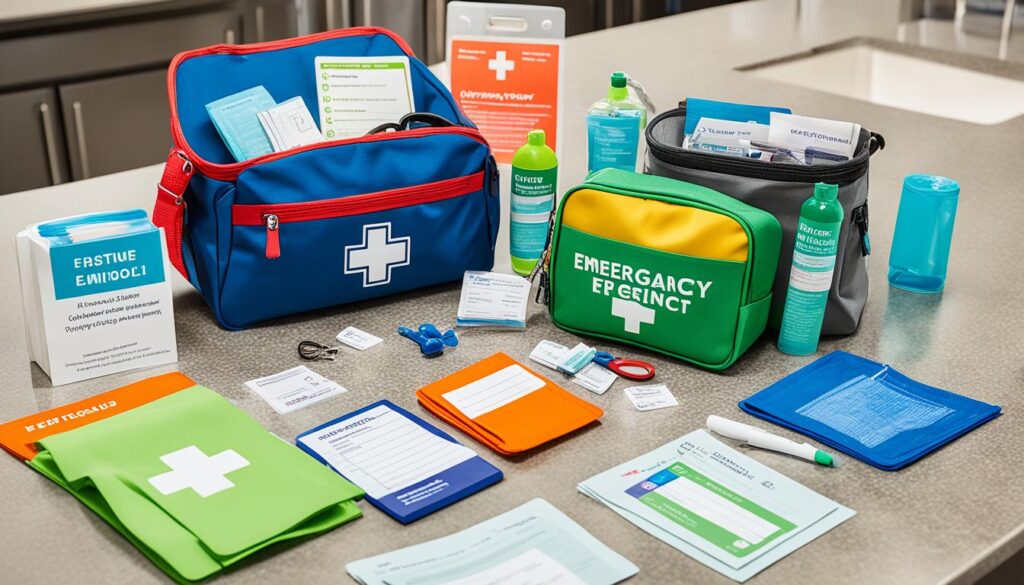
Being a responsible pet owner means being ready for emergencies. Keep a first aid kit ready and have emergency vet contacts and transport plans. This way, you can give your pet the best care in a crisis.
First Aid Kit Essentials
A good pet first aid kit has many important supplies. You should have gauze, antiseptic, tweezers, bandages, scissors, and more. Your vet can tell you what your pet needs most.
Emergency Contacts and Transportation
Having a plan for emergency vet care is key. Keep a list of 24-hour emergency vet clinics handy. Also, have a way to get your pet there fast, like a pet-friendly taxi or ride-share service.
Getting ready for pet emergencies makes you feel more confident. By making a first aid kit and planning for vet care, you ensure your pet gets the right treatment fast.
| First Aid Kit Essentials | Emergency Contacts |
|---|---|
|
|
« Being prepared can make all the difference in an emergency situation. Taking the time to assemble a pet first aid kit and have a plan in place can help provide the best possible care for your furry friend. »
Roles of Emergency Veterinary Clinics
When pets are in life-threatening emergencies, emergency veterinary clinics are key. They offer veterinary emergencies and urgent pet treatment all the time. These places have skilled vets and techs ready to handle many medical crises. They give 24/7 expert care to pets in bad shape.
24/7 Expert Care
Emergency vet clinics are open all day, every day. This means pets get quick emergency pet care when it’s most needed. They have the latest tools and treatments for emergencies like severe bleeding, breathing problems, seizures, injuries, and stomach issues.
Advanced Diagnostics and Treatment
Vets at these clinics can quickly find out what’s wrong with a pet and treat it right. They use top-notch equipment like digital x-rays, ultrasound, and lab tests. This helps them make smart decisions and give pets the care they need in critical times.
« The emergency veterinary setting is often fast-paced, challenging, and high-stakes, requiring emergency veterinarians to remain calm under pressure and be empathetic towards patients and their families. »
Emergency clinics work closely with pet owners and regular vets. They are key to getting the best outcomes for pets in veterinary emergencies. Their commitment to giving top-level care around the clock is crucial for pet owners in emergencies.
Common Pet Toxins and Poisonings
Pets can face serious health crises from common items like chocolate, xylitol, and cleaning products. It’s important for pet owners to know these dangers. If you think your pet has eaten something harmful, get vet help right away.
Chocolate and Xylitol
Chocolate is bad for pets because of theobromine, a stimulant. Darker chocolates have more theobromine, causing problems like shaking, seizures, and heart issues. Xylitol, found in sugar-free foods, is also toxic. It can cause low blood sugar and liver problems.
Household Chemicals and Medications
Household cleaners and human medicines like ibuprofen are dangerous for pets. Ibuprofen can cause stomach problems, kidney damage, and even seizures. 16.8% of pet poisonings were from OTC drugs, and 13% from prescription drugs.
Keep these pet toxins away from pets. If you think your pet ate something harmful, get to a vet fast. Quick action is key to help your pet.
Post-Emergency Care and Follow-up
After a pet emergency, it’s key for owners to work closely with their vet. This ensures their pet recovers well and stays healthy. They might need ongoing treatment, checks, and changes to their care plan.
Studies show that sleep helps the body heal best. Pets need good food too, even if they don’t want to eat right after an emergency. Vets may give painkillers and antibiotics to help with recovery.
Physical therapy can really help pets after emergencies or surgeries. Experts like CCRTs work on muscle strength, coordination, pain relief, and mental health. Pets need love and care to get better.
It’s important to have follow-up vet visits after an emergency. These visits include exams, X-rays, and tests to check healing. Owners should work with their vet to make a care plan for their pet.
By focusing on post-emergency care and follow-ups, pet owners help their pets recover fully. This leads to a happy, active life for them.
Conclusion
Pet emergencies can be scary, but knowing what to do can help save your pet’s life. It’s important to recognize critical situations and have a first aid kit ready. Knowing when to get immediate vet care is key to saving your pet.
Emergency vet care can be expensive. It includes tests, monitoring, and treatments. Pet owners must be ready to pay for this care. Saving money for emergencies or getting pet insurance can help. Waiting too long to get vet care can harm your pet.
Emergency vet clinics are key to saving pets fast. By learning pet first aid and keeping vet contacts handy, you can act fast in an emergency. This helps keep your pet safe until they can get to a vet.