
Keeping your pet’s mouth healthy is key to their overall health. Bad dental care can cause many health problems, like periodontal disease and tooth abscesses. It can even lead to heart, kidney, and liver issues. This guide will show you how to keep your pet’s teeth and gums healthy. We’ll cover professional cleanings, home care, and ways to prevent problems.
Key Takeaways
- 80% of dogs and 70% of cats have some form of periodontal disease by age 2.
- Small and toy dog breeds are most prone to developing periodontal disease.
- Dental cleanings for pets are recommended at least once a year to reduce the risk of periodontal disease.
- Untreated dental disease can lead to tooth loss, painful abscesses, and systemic infections.
- Regular veterinary check-ups are essential in maintaining good oral hygiene for pets.
Importance of Pet Dental Hygiene
Keeping your pet’s teeth clean is key to their health. It stops many serious problems, like periodontal disease and organ damage. By age 3, pets often show signs of periodontal disease, which can get worse without care.
Impact on Overall Health
Periodontal disease is a big problem for dogs and cats. It ranges from 0 (normal) to 4 (severe). If not treated, plaque bacteria can move to the heart, kidneys, and liver, causing damage.
Good dental health stops these infections and keeps organs safe.
Common Dental Issues in Pets
Pets can also get broken teeth, abscesses, and mouth tumors. Regular care keeps these problems away, making your pet happy and healthy.
| Dental Condition | Prevalence |
|---|---|
| Periodontal Disease | Most common dental issue in dogs and cats |
| Broken Teeth | Common in pets |
| Oral Abscesses | Can occur due to untreated dental problems |
| Oral Tumors | Rare, but can develop in the mouth |
« By the time they are three years old, 80% of dogs and 70% of cats have oral disease. »
Causes of Dental Problems in Pets
Dental issues in pets often stem from plaque and tartar buildup on their teeth. Plaque, a sticky film of bacteria, can harden into tartar. This creates a perfect spot for more bacteria to grow. This can cause gum inflammation, periodontal disease, and other dental problems.
Factors like diet, genetics, and poor oral hygiene play a big role in dental problems in pets.
| Dental Condition | Prevalence | Contributing Factors |
|---|---|---|
| Periodontal Disease | Over 80% of dogs over 3 years old | Plaque and tartar buildup, poor oral hygiene, genetics, breed-specific factors |
| Tooth Fractures | Less than 10% of dental issues in dogs | Chewing on hard objects like bones, antlers, or hard nylon chews |
| Tooth Decay | Rare in pets | Poor diet, lack of dental care |
Small breed and brachycephalic (short-nosed) dogs face a higher risk of periodontal disease. This is due to their jaw anatomy. Using dental products and diets designed to reduce plaque and tartar accumulation can help. But, once tartar forms, professional scaling and polishing under general anesthesia are usually needed.
« Over two-thirds of dogs over three years old suffer from some degree of periodontal disease, making it the most common dental issue affecting pet dogs. »
Tooth fractures in dogs often come from chewing on hard objects. This shows why it’s key to give them safe chew toys. Regular dental cleanings and checks can spot and fix dental problems early.
Understanding Veterinary Dentistry
Keeping your pet’s mouth healthy is key to their overall health. Veterinary dentistry includes cleaning, fixing, or removing your pet’s teeth. It’s important to have a vet or a special dental vet do these procedures to keep your pet safe and comfy.
First, your pet gets an oral exam. Then, they might need a dental cleaning, scaling, and polishing. This is similar to what humans get for their teeth. It’s crucial for pets to have these cleanings often because many dogs and cats get mouth diseases by age three, says the American Veterinary Dental College.
Good veterinary dentistry helps prevent losing teeth and keeps your pet healthy. If you ignore your pet’s dental care, it can lead to big health issues and higher costs for dental treatments later.
- Brushing your dog’s teeth a few days a week is recommended for maintaining good oral health.
- It is suggested to aim for brushing a pet’s teeth 3-4 times a week if daily brushing is not possible.
- Small breeds of pets may require dental cleanings twice a year to prevent tooth loss.
« Effective pet dental care involves maintaining good oral hygiene and being proactive in addressing dental issues to keep pets healthy. »
Vets play a big role in pet dental care. They can spot and fix dental problems early. This helps prevent more serious issues and keeps your pet healthy.
Importance of Anesthesia in Pet Dental Procedures
Anesthesia is key for pets’ safety and comfort during dental work. Guidelines from groups like the American Animal Hospital Association say not to do dental work without anesthesia. It’s not safe, effective, or right. Anesthesia lets vets clean and check teeth and gums fully, especially below the gumline where most dental problems start.
Ensuring Pet Safety and Comfort
Without anesthesia, pets might get stressed, move too much, or bite, hurting themselves or the vet team. Anesthesia keeps the pet calm and still during the dental cleaning and check-up. This makes the process safer and more effective.
Enabling Thorough Cleaning and X-rays
Anesthesia lets vets take x-rays to check teeth and jawbone health under the gumline. This is important because two-thirds of the tooth is below the gumline in animals. X-rays are needed for a full check-up and treatment plan. Anesthesia for dental work is lighter than for big surgeries, lowering risks.
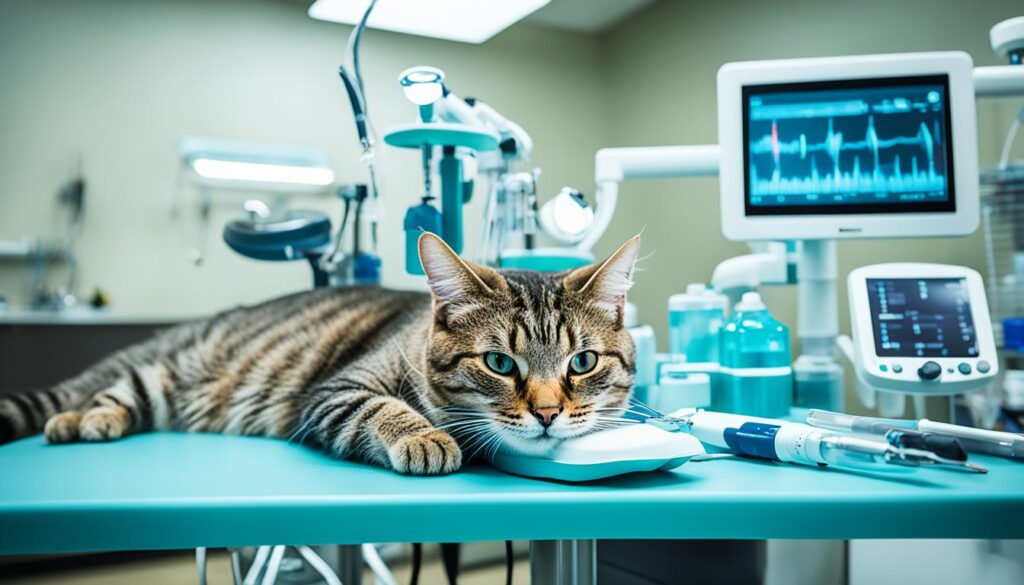
It’s advised to start dental care early for pets. For medium and large breeds, this is at 24 months, and for small breeds at 18 months. Waiting too long can make anesthesia risks higher. Early care means shorter anesthesia times and fewer risks.
« Anesthesia-free dentistry offers little true medical benefit compared to veterinary dentistry under anesthesia, which allows for a thorough examination and treatment of pets’ oral health. »
At-Home Oral Care for Pets
Keeping your pet’s teeth clean at home is key for their health. Brushing regularly is the best way to keep their teeth and gums healthy. Even brushing a few times a week can help.
There are other ways to help your pet’s mouth stay healthy at home. Dental wipes, chews, and gels are safe for pets and can be part of their dental care. Start slowly when adding new dental care items to make sure your pet gets used to them.
- Dental wipes with ingredients that fight plaque are safe and work well for pets.
- Special diets like Purina Dental Diet and Royal Canin Dental Diet help reduce tartar and plaque.
- Dental chews like CET Hextra Chews are safe and good for pet oral health.
The Veterinary Oral Health Council (VOHC) helps find dental products that are safe and work well. Products with the VOHC seal are a good choice for at-home pet dental care, brushing pets’ teeth, and dental products for pets.
« Twice daily tooth brushing is best for at-home dental care, but treats, chews, and additives can help dogs who don’t like brushing. »
Starting dental care at home after your dog gets periodontal disease won’t fix it or stop it from getting worse. But, it can help keep their mouth healthy. Regular care, like brushing, using dental products, or a mix, can prevent further problems.
Concerns with « Anesthesia-Free » Dental Cleanings
« Anesthesia-free » dental cleanings for pets might seem like a good idea, but they come with big risks. They don’t offer the care your pet’s mouth really needs. The American Veterinary Dental College™ says these procedures are not enough for your pet’s oral health. They push for full, anesthetized dental cleanings instead.
These « non-anesthetic dentistry » (NAD) cleanings don’t fix all dental problems pets might have. They only clean what you can see above the gum, missing the important areas below. This means pets can still have hidden dental issues that could get worse and affect their health.
NAD can be stressful and uncomfortable for pets because they’re awake during the cleaning. This can lead to injuries to both the pet and the person doing the cleaning. On the other hand, general anesthesia makes sure the cleaning is thorough and painless. It keeps your pet safe and comfortable.
The American Animal Hospital Association and the American Veterinary Dental College™ say anesthetized dental cleanings are best for pets. They say only under general anesthesia can vets do everything needed for good dental care. This includes scaling, polishing, examining the mouth, making dental charts, and taking X-rays.
« Anesthesia-free dental cleanings cannot address the full scope of dental issues that pets may face, leaving them vulnerable to ongoing, undetected problems that can ultimately lead to more severe health complications. »
Anesthetized dental care might cost more upfront, but it’s worth it for your pet’s health. It helps prevent serious problems like periodontal disease and avoids more expensive treatments later.
As a pet owner, knowing the risks of anesthesia-free dental cleanings is key. Work with your vet to make sure your pet gets the best oral care. Choosing anesthetized dental procedures can keep your pet’s smile healthy and pain-free for a long time.
Signs of Dental Issues in Pets
It’s important to watch your pet’s dental health closely. They might not show pain or discomfort clearly. Look for signs like bad breath, discolored or swollen gums, and changes in behavior. Catching these early can stop bigger problems and keep your pet healthy.
Bad Breath
Pets with dental issues often have bad breath. Normal pets have some smell, but bad breath can mean dental problems. These could be plaque buildup, gum disease, or tooth decay. If your pet’s breath smells really bad, see a vet for a check-up.
Discolored or Swollen Gums
Healthy gums are light pink. If your pet’s gums look red, inflamed, or not right, they might have gum disease or other dental issues. Swollen gums also mean there could be a problem. Your vet should look at this right away.
Behavioral Changes
Changes in your pet’s behavior can mean dental problems. They might eat less, not want to eat hard foods, or seem tired. Eating can hurt if they have dental pain. If you see these changes, your pet’s dental health needs a check-up.
Regular vet visits and watching your pet at home can keep their dental health good. Being alert and fixing dental issues early stops bigger problems. This keeps your pet happy and healthy.
pet dental care
Keeping your pet’s teeth clean is key to their health. Regular pet dental care at home and with a vet can stop painful dental problems. It’s important to work with your vet for a good dog teeth cleaning and cat dental hygiene plan.
More than 80 percent of pets have periodontal disease, the most common pet health issue. Professional pet dental services, like yearly check-ups and dental x-rays, can catch problems early.
- Up to 63 percent of wild dogs in one study had at least one fractured tooth due to eating or fighting for food and territory.
- Veterinary dentists specialize in advanced dental procedures for pets, including root canals, orthodontics, and advanced imaging for tumors or jaw fractures.
- The American Animal Hospital Association (AAHA) recommends regular oral examinations and dental cleanings, under general anesthesia, for all adult dogs and cats at least annually.
Daily tooth brushing is the best way to keep your pet’s teeth healthy. Most pets can learn to tolerate tooth brushing. Dental wipes, treats, and chews can also help, but watch your pet to make sure they’re safe.
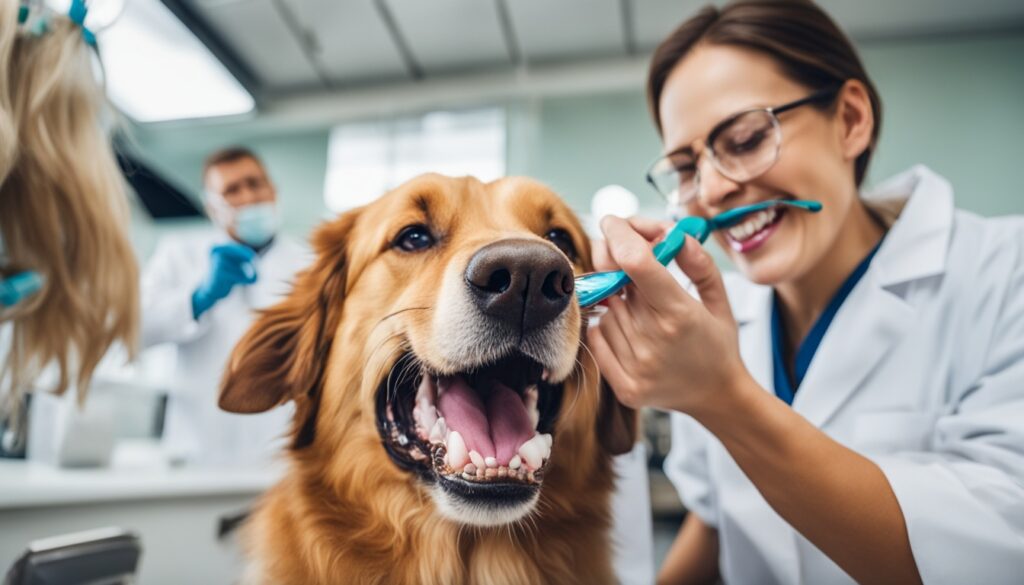
Working with your vet and using different pet dental care methods can keep your pet’s smile healthy and pain-free for a long time.
Differences in Dental Care for Dogs and Cats
Dogs and cats both need good dental care, but they have different needs. Knowing these differences helps make sure your pet gets the right care for their teeth.
Feline Odontoclastic Resorptive Lesions (FORLs)
About 75% of cats over five years old get feline odontoclastic resorptive lesions (FORLs). These painful lesions can cause tooth loss if not treated. It’s important to take your cat to the vet regularly for dental checks.
Tooth Fractures in Dogs
Dogs often get tooth fractures from chewing hard things. Some breeds like Rottweilers are more likely to get these injuries because they have strong jaws. Giving your dog safe chew toys and watching their dental health can prevent tooth fractures.
Crowding and Breed-Specific Concerns
Some dog and cat breeds, like flat-faced pets, have crowded teeth and other dental issues. This includes Persian cats and pugs. They need special care to keep their teeth healthy. Regular vet visits and good dental care are key for these pets.
| Dental Concern | Dogs | Cats |
|---|---|---|
| Feline Odontoclastic Resorptive Lesions (FORLs) | Less Prone | Affect 75% of Cats Over 5 Years Old |
| Tooth Fractures | More Prone | Less Prone |
| Crowding and Breed-Specific Concerns | Brachycephalic Breeds (e.g., Pugs) | Persian Cats |
Knowing what dogs and cats need for their teeth helps pet owners work with their vets. Together, they can make a dental care plan that fits your pet’s needs. Keeping up with dental care is key to your pet’s happiness and health.
Professional Dental Cleanings and Treatments
Keeping your pet’s mouth healthy is key. Regular dental cleanings are a big part of that. At these visits, a vet or a dental specialist will clean, scale, and polish your pet’s teeth. They do this under anesthesia to keep your pet safe and comfy.
Up to 95% of dogs and cats get dental disease. That’s why cleanings are so important. They remove bad tartar and plaque, stopping decay and other problems. Anesthesia lets the vet do a full check-up, take detailed X-rays, and fix any issues, like pulling teeth or root canals.
Before the cleaning, your vet will check your pet’s health to make sure it’s safe. During the cleaning, they’ll carefully remove plaque and tartar above and below the gum line. This helps stop more plaque from coming back, keeping your pet’s mouth healthy.
« Regular professional pet dental cleanings are essential for maintaining your pet’s overall health and well-being. »
Your vet might suggest other dental treatments, like pulling teeth or surgery, if needed. These are for serious dental issues and help prevent more problems.
Looking after your pet’s teeth is a big part of their health care. Working with your vet helps keep their teeth and gums healthy. This lowers the chance of dental disease and its problems.
Dietary Considerations for Dental Health
The food your pet eats greatly affects their dental health. Pet dental diet and dental-friendly pet foods are key to keeping their mouth healthy. It’s important to know how diet affects their dental health.
Dry kibble and special dental diets help remove plaque and tartar, keeping teeth and gums healthy. But, foods with lots of sugar and carbs can lead to plaque and tartar.
Talk to your vet to find the best diet for your pet’s dental health. They’ll suggest foods based on your pet’s age, breed, and health. Regular vet visits, daily brushing, and the right diet are crucial for good oral health.
| Dietary Factor | Impact on Dental Health |
|---|---|
| Dry Kibble | Helps scrape away plaque and tartar |
| Dental-Specific Diets | Promote healthier teeth and gums |
| High-Sugar and Carbohydrate Foods | Contribute to plaque and tartar formation |
Choosing the right pet dental diet and dental-friendly pet foods can boost your pet’s oral health. Make sure to talk to your vet to meet your pet’s dietary needs. This way, your pet can have a lifetime of healthy smiles.
Conclusion
Keeping your pet’s mouth healthy is key to being a good pet owner. Regular vet check-ups, daily brushing at home, and a diet good for their teeth can prevent many dental problems. This helps your pet live a happier and longer life.
Small dogs and pets with flat faces often face dental challenges because of their breed. This makes it even more important to keep their mouths clean. If plaque and tartar build up, it can lead to serious health issues like heart and kidney disease. Catching dental problems early can save you money and keep your pet out of pain.
Putting your pet’s dental care first is good for their health overall. Create a good dental care plan and work with your vet to keep your pet’s teeth and gums healthy. This will help your pet stay happy and healthy for many years.