
Breaking, also known as « Breakdancing, » started in the Bronx, New York. It’s part of the hip-hop culture from the 1970s. This dance is known for its cool moves like spins and flips.
Competitions started in the 1990s. By 2018, breaking was in the Youth Olympic Games in Buenos Aires, Argentina. It was a big hit, so it’s now part of the Paris 2024 Olympics.
Key Takeaways
- Breaking, also known as breakdancing, is the only new sport added to the 2024 Paris Olympics program.
- The sport has its origins in the Bronx, New York, as part of the hip-hop culture that emerged in the 1970s.
- International breaking competitions began in the 1990s, and the sport made its debut at the 2018 Youth Olympic Games.
- Breaking competitions at the 2024 Paris Olympics will feature one-on-one battles judged on criteria such as technique, execution, musicality, originality, and vocabulary.
- Countries like the U.S., Japan, Canada, China, France, and the Netherlands are considered dominant powers in Olympic breaking.
What is Olympic Breakdancing?
Breaking, or breakdancing, started in the Bronx, New York, in the 1970s. It was part of the growing hip-hop culture. The « break » in a song is when all sounds stop, leaving only the drums. DJs like Kool Herc saw people dancing during these breaks. They started mixing records to give dancers more time to dance.
Origins of Breaking in the Bronx
Breaking began in the 1970s in the Bronx, New York, as part of the hip-hop culture. It came from the « breaks » in songs, where DJs extended these parts for dancers to show off.
Breaking as Part of Hip-Hop Culture
As breaking became more popular, dancers from different backgrounds joined, forming crews for dance battles. This competition and the mix of cultures made breaking a key part of hip-hop culture.
« Breaking became a way for young people to express themselves, showcase their creativity, and forge a sense of community within the emerging hip-hop scene. »
Is Breaking a Sport?
Breaking, a dance style from the Bronx, New York, in the 1970s, is now seen as a sport. It requires great athleticism and coordination. The moves, like spins and flips, need a lot of physical skill and control.
Athleticism and Coordination in Breaking
B-Boys and B-Girls compete in « battles » to show off their skills. They are judged on musicality, vocabulary, originality, technique, and execution. The moves they do are very athletic and require a lot of coordination.
Breaking became a competitive sport in the 1990s. It was first in the 2018 Youth Olympic Games in Buenos Aires. At the 2024 Paris Olympics, 16 men and 16 women will compete. Nine judges will score them.
| Judging Criteria | Weight |
|---|---|
| Creativity | 20% |
| Personality | 20% |
| Technique | 20% |
| Variety | 20% |
| Performativity | 10% |
| Musicality | 10% |
The judges will look at six things, with creativity and performativity most important. These make up 60% of the score.
Breaking being in the Olympics shows it’s a sport that needs a lot of athleticism and coordination. The moves are explosive and acrobatic, and they match the music perfectly.
Breaking’s Debut at the Olympic Games
Competitive breaking, or breakdancing, is set to make its big debut on the world stage. It has become very popular and has been added to the Paris 2024 Olympics. This makes it the newest sport in the Olympics.
This big moment for breakdancing started in 2018 at the Youth Olympic Games in Buenos Aires, Argentina. The event was a huge hit, drawing over 1 million viewers. It was more popular than many other sports.
The 2018 Youth Olympic Games
The 2018 Youth Olympics were a big deal for breakdancing. They showed off the sport’s amazing skills, creativity, and cultural importance to the world. B-Boys and B-Girls showed off their incredible moves in a competition that valued their technical skill, originality, and musical talent.
The success of breakdancing at the 2018 Youth Olympics led to its inclusion in the Paris 2024 Olympics. This is a big deal because breakdancing started in the Bronx in the 1970s as part of hip-hop culture. Now, it’s going to be a top-level international sport.
The Paris Games are the only chance for breakers to win an Olympic medal. The competition will have 32 athletes, 16 women and 16 men, competing over two days. They will show off their skills in a big way.
Everyone is excited for breakdancing’s debut at the Paris 2024 Olympics. The breaking community is training hard. They want to make the most of this historic moment and show the world what their art is all about.
Olympic Breakdancing Competition Format
The Olympic breakdancing competition at the 2024 Paris Games is set to be thrilling. It will take place over two days, with the women’s event on the first day and the men’s on the second. This marks the first time breakdancing will be in the Olympics.
16 B-Boys and 16 B-Girls will compete, divided into groups of four for the first round. The top two from each group will move on to the next stage. This includes the quarter-finals, semi-finals, and finals. This format promises an exciting showdown among the world’s top breakdancers.
| Competition Details | Information |
|---|---|
| Dates | August 9-10, 2024 |
| Number of Events | 2 (1 men, 1 women) |
| Total Competitors | 33 from 16 nations |
| Composition of Competitors | 16 B-Boys and 17 B-Girls |
| Qualification Spots | 32 quota places (16 each for B-Girls and B-Boys) |
| Maximum per NOC | 4 (2 per gender) |
| Qualification Route | Over 80% through tripartite qualification |
| Direct Quotas | From 2023 WDSF World Championships |
| Continental Meets | Highest-ranked breakers to receive spots |
| Olympic Qualifier Series | Worldwide from March to June 2024 |
| Host Nation Spots | 1 B-Boy and 1 B-Girl for France |
| Universality Invitations | Additional spots available |
| Medal Events | 1 for men, 1 for women |
| Competition Format | Round-robin to knockout |
| Scoring Criteria | Technique, Vocabulary, Execution, Musicality, Originality |
| Medal Table | Japan (1 Gold), Lithuania (1 Silver), China (1 Bronze) |
The competition will be held at the Place de la Concorde in Paris. This iconic location will provide a stunning backdrop for the athletes to display their skills and creativity.
Scoring and Judging Criteria
As breaking makes its debut at the 2024 Paris Olympics, the judging criteria are clear. This exciting dance sport is judged on five main areas: musicality, vocabulary, originality, technique, and execution. Each area counts for 20% of the total score. Nine experienced judges will decide the scores.
Musicality
Musicality in breaking means how well dancers match their moves with the music’s rhythms and beats. Judges check if the dancer’s actions blend smoothly with the music. They look for a natural flow between the dancer and the music.
Vocabulary
The vocabulary of a breaking routine is about the variety of moves used. Judges want to see a mix of power moves, footwork, freezes, and transitions. This shows the dancer’s skill and versatility.
Originality
Originality in breaking is about being unique and creative. Judges want to see spontaneity and new ways of combining moves. They look for performances that stand out and are fresh.
Technique and Execution
Judges pay close attention to the technical skills of breaking. They check for body control, athleticism, and how accurately moves are performed. Breakers must do their moves with precision and avoid mistakes.
| Judging Criteria | Percentage of Final Score |
|---|---|
| Musicality | 20% |
| Vocabulary | 20% |
| Originality | 20% |
| Technique | 20% |
| Execution | 20% |
The Olympic breaking competition will highlight the sport’s beauty and energy. Breakers will aim to impress judges and the audience with their skills in musicality, vocabulary, originality, technique, and execution.
Qualifying for the Paris 2024 Olympics
The path to the Olympics for breaking athletes is filled with top competitions. The qualification process for the 2024 Paris Olympics offers many ways for breakers to shine. This ensures a wide range of talented breakers from around the world.
World Championships
The world champions in B-Boy and B-Girl categories will get their spots at the Paris 2024 Olympics. This honor highlights their amazing skills and confirms their top status globally.
Continental Games
Breakers can also qualify through the continental games, like the African Games and Asian Games. A total of 10 athletes, five each for B-Boys and B-Girls, will qualify this way. This shows the strength of breaking in different regions.
Olympic Qualifier Series
The last 14 spots, seven for each gender, will come from the Olympic Qualifier Series (OQS) in Shanghai and Budapest. Breakers in the top 24 of the final OQS rankings will get their Olympic spot. This offers a final chance to make it to the biggest stage.
| Qualification Pathway | Quota Places |
|---|---|
| World Champions | 2 (1 B-Boy, 1 B-Girl) |
| Continental Games | 10 (5 B-Boys, 5 B-Girls) |
| Olympic Qualifier Series | 14 (7 B-Boys, 7 B-Girls) |
| Universality Places | 4 (2 B-Boys, 2 B-Girls) |
| Host Country (France) | 2 (1 B-Boy, 1 B-Girl) |
| Total | 32 (16 B-Boys, 16 B-Girls) |
The qualification process for Paris 2024 combines world-class skills, regional dominance, and exciting events. It promises to highlight the diverse talents and global reach of this dynamic Olympic sport.
Prominent Breaking Athletes
The spotlight is on two athletes as the Olympic breaking competition approaches: B-Boy Victor and B-Girl Nicka.
B-Boy Victor
Victor Montalvo, known as B-Boy Victor, is from Kissimmee, Florida. He’s 23 and has won over fans with his style and charm. He took first place at the 2023 World Championships. Now, he’s aiming for the Paris 2024 Olympics to share hip-hop culture and breakdancing with the world.
B-Girl Nicka
Dominika Banevic, or B-Girl Nicka, is a 16-year-old star from Lithuania. She’s the women’s world and European champion. Nicka’s skill and youth make her a standout in the breaking world. She’s ready to make a big impact at the Paris 2024 Olympics.
Victor and Nicka have shown their talent and creativity. They’re heading to Paris with the world’s best breakers. They’ll bring the dynamic culture of breaking to a global audience.
Breaking Competition Venue
The breaking competition at the Paris 2024 Olympics will be at the famous Place de la Concorde. This public square is in the heart of Paris. It’s at the end of the Champs-Élysées, offering a beautiful view for breaking athletes.
This event is one of the new sports at the Olympics, along with skateboarding and sport climbing. It will be held at the Place de la Concorde. This spot will highlight the city’s young culture and athletic skills, making the event exciting for everyone.
| Key Details | Fact |
|---|---|
| Breaking Venue | Place de la Concorde, Paris |
| Participating Countries | 15 countries, including Refugee Olympic Team |
| Total Breakers | 33 breakers |
| Judging System | Trivium system (technique, vocabulary, execution) |
| Unique Elements | DJ, emcee, hip-hop culture |
The breaking competition at the Paris 2024 Olympics will be thrilling. It will mix athletic skill, creativity, and culture. The Place de la Concorde is the perfect place for these artists to show their talents to the world.
Schedule and Format
The breaking competition at the Paris 2024 Olympics will be thrilling. It will feature the world’s top B-Boys and B-Girls showing off their skills. The event will last two days, with the women’s event on the first day and the men’s on the second.
There will be 16 competitors in each category, divided into groups of four. In the first round, breakers will compete against each other. The top two from each group will move on to the quarter-finals.
Then, the competition will move to the semi-finals and the exciting finals. All this will happen in a five-hour window for each day.
| Event | Date | Duration |
|---|---|---|
| Women’s (B-Girls) Event | Friday, August 9 | Approximately 5 hours |
| Men’s (B-Boys) Event | Saturday, August 10 | Approximately 5 hours |
Competitors will be judged on several things. These include Technique, Creativity, Musicality, Stage Presence, and Difficulty. Each thing has a point value. The winner will be the one with the highest total points.
The breaking competition at the Paris 2024 Olympics will be a mix of athleticism, artistry, and culture. It’s the sport’s first time on the world stage.
The Role of DJs and MCs
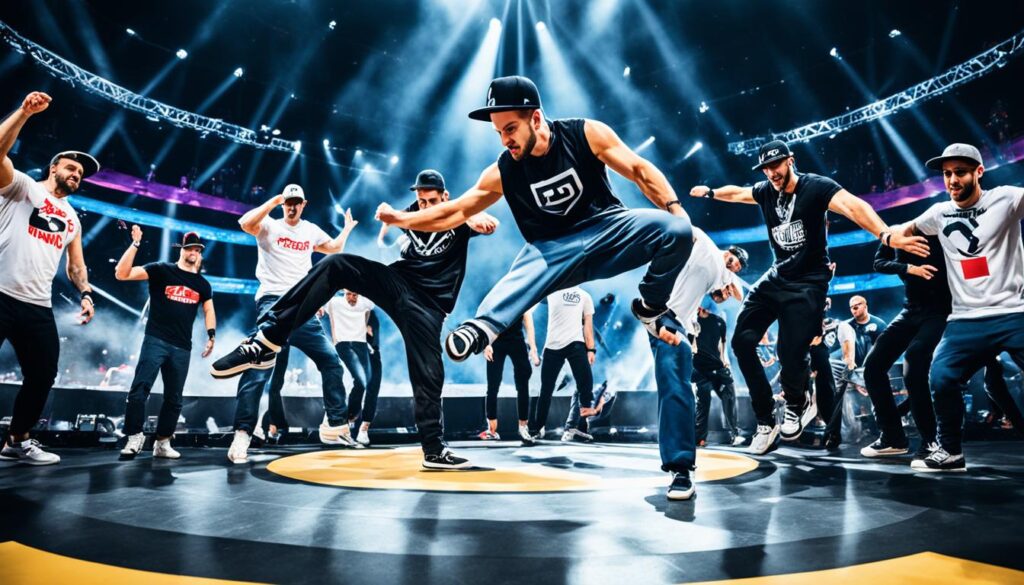
At the Paris 2024 Olympics, DJs and MCs played a huge part in the breakdancing events. They brought the energy and excitement that wowed the crowd. Their roles were key to the success of the competition.
Music Selection: The Heartbeat of Breaking
DJs picked the music that let B-Boys and B-Girls show off their skills. They chose everything from classic hip-hop to the latest hits. This music helped the dancers move and improvise, setting the mood for each battle.
Hosting Battles: Hyping the Crowd
MCs were the ones who kept the crowd pumped up. They introduced dancers, gave lively commentary, and got everyone excited. Their work made sure the battles were thrilling for both the dancers and the fans.
DJs and MCs were the stars behind the scenes at the Olympics. They worked together to make the breakdancing unforgettable. Their skills in music and hype brought out the best in the athletes and the audience.
| Role of DJs in Breaking | Role of MCs in Breaking |
|---|---|
|
|
« The DJs and MCs are the unsung heroes of Olympic breakdancing. Their contributions are vital in creating the energy and excitement that captivates the audience and elevates the performances of the athletes. »
Breaking’s Olympic Future
Breaking made its Olympic debut at the Paris 2024 Games. But, its spot in future Olympics is still up in the air. The sport was left out of the 2028 Los Angeles Olympics. Now, the World Dance Sport Federation is pushing for its return in 2032 Brisbane.
The success of breaking in Paris will greatly influence its Olympic future. The International Olympic Committee will watch closely. They will decide if new sports like breaking stay or go.
At the Paris 2024 Olympics, 16 dancers showed off their skills. Japan’s Ami won gold, Lithuania’s Nicka got silver, and China’s 671 took bronze. But, being left out of the 2028 Los Angeles Olympics has raised doubts about its Olympic future.
The World DanceSport Federation (WDSF) is fighting to bring breaking back in 2032 Brisbane. They see its growing popularity and its power to attract young athletes. But, the International Olympic Committee has many factors to consider. Breaking’s Olympic status will depend on how well it’s received, media coverage, and its ability to prove it belongs.
« Breaking’s debut at the Paris 2024 Olympics will be a crucial step in determining its long-term future as an Olympic sport. The sport’s success or failure in Paris will be closely watched by the IOC, and that will largely shape its inclusion or exclusion in future Games. »
Everyone is watching as breaking makes its Olympic debut in Paris. Athletes, fans, and governing bodies hope it will stay an Olympic sport. They believe it will keep inspiring and empowering young people worldwide.
Breaking’s Influence on Youth Culture
Adding breaking to the Olympic Games could greatly impact youth culture, especially in cities. This dance form blends athleticism, creativity, and self-expression. It lets young people show off their skills and be unique.
Breaking focuses on physical dexterity and complex moves. This has encouraged many to improve their coordination, strength, and fitness through it.
Artistic Expression
Breaking is more than just physical. It’s a way for dancers, or B-boys and B-girls, to express themselves through dance. They create unique routines that show off their style and heritage.
This freedom makes breaking popular among the young who want to be creative and connect with others.
Physical Dexterity
Skills like toprock, downrock, freezes, and power moves in breaking need a lot of physical dexterity. Young dancers work hard to master these moves. They improve their strength, balance, and coordination.
This focus on athleticism and expression makes breaking attractive for youth looking for a fun, challenging way to stay fit.
With breaking in the Olympic Games, the sport could gain even more attention. The Olympics provide a worldwide stage to highlight breaking’s artistry, athleticism, and cultural value. This could spark a new interest in the sport among young people.
Breaking Terminology Explained
To get into breaking, you need to know its special words. It’s a world where dancers compete in battles or show off in cyphers. These terms capture the excitement of breaking.
Battles
A « battle » is when two breakers or crews go head-to-head. These competitions are key to breaking culture. Dancers show off their skills, trying to beat their opponents.
B-Boys and B-Girls
B-Boys and B-Girls are the men and women who practice breaking. They spend hours perfecting their moves and style. Their hard work makes breaking what it is today.
Cyphers
A « cypher » is when dancers take turns showing off in a circle. It’s a way for them to share energy and creativity. Cyphers show the fun and community of breaking.
Throw Downs
A « throw down » is when a dancer breaks out without planning. It’s a way to show off their skills and love for breaking. These moments can get the crowd excited and bring out the competitive spirit.
Knowing these terms helps you understand breaking better. It’s getting ready to debut at the 2024 Paris Olympics.
Breaking Dance Moves
Breaking is a dynamic sport that will debut at the Paris 2024 Olympics. It’s known for its acrobatic and athletic dance moves. Breakers show off their creativity, coordination, and strength with various techniques.
Top Rock
Top rock is the foundation of breaking, involving standing footwork and hand movements. It lets breakers show off their rhythm, style, and personality. They perform intricate steps and hand gestures, setting the stage for their performance.
Down Rock
Down rock is the opposite, focusing on floor movements. Athletes use their knowledge of physics to do spins and rotations. They show off their control, strength, and agility moving from standing to the ground.
Windmills
The windmill is a famous move that shows off core strength and balance. Breakers spin on the floor, using their momentum to move their legs and body in circles. This creates a stunning visual effect.
Freezes
Freezes are when breakers hold static poses, often using their heads or hands for support. These poses highlight their control, strength, and awareness. They add dramatic pauses and highlights to their routines.
Breaking combines hip-hop culture, acrobatics, and physical skill. It’s a captivating sport that challenges athletes. At the 2024 Olympics, it will show the best of athletic expression and artistry.
Conclusion
The debut of breaking at the Paris 2024 Olympics marks a big step for the sport. It started in the vibrant hip-hop culture of the Bronx in the 1970son olympic breakdancing>. This urban sport requires great coordination, strength, and artistry. It’s set to win over fans worldwide and motivate the next breakers.
Its future as an Olympic sport is still up in the air, but Paris 2024 could change thaton olympic breakdancing>. Adding breaking to the Olympics shows the International Olympic Committee’s effort to modernize the Games. It also aims to attract younger fans, possibly opening doors for more urban sports in the future.
Top B-boys and B-girls will compete in Paris, aiming for gold medals. They’ll also highlight the athleticism, creativity, and cultural value of their dance. The first-ever Olympic breaking championson olympic breakdancing> will be crowned, marking a historic moment. This event will celebrate the growth and global impact of a dance style born from humble beginnings.