
« Morocco is not a country, it is a dream. » – Winston Churchill
Morocco’s culture is a vibrant mix of old and new. It shows how the country keeps its heritage alive while moving forward. Here, art, music, food, festivals, and history blend together in a living mosaic.
This mosaic is deeply rooted in the past but always looks towards the future. Morocco invites everyone to explore its beauty and discover the stories of its culture and identity.
Key Takeaways
- Morocco boasts over 1,500 historical sites and a diverse array of artifacts showcased in its museums and art galleries.
- Moroccan music festivals attract around 2 million attendees annually, highlighting the cultural significance of music in the country.
- Traditional Moroccan cuisine has been recognized by UNESCO as an Intangible Cultural Heritage, preserving the country’s culinary identity.
- The Moroccan handicraft sector employs approximately 2.3 million people, emphasizing the role of traditional crafts in the cultural landscape.
- Moroccan art and architecture reflect the convergence of Arab, Berber, and Mediterranean influences over centuries.
Morocco’s Vibrant Cultural Tapestry
Morocco’s culture is a mix of many influences. It includes ancient Berber traditions and the lasting effects of Arab and Mediterranean cultures. This mix shows the country’s long history and the people’s ability to adapt.
Converging Influences of Tradition and Modernity
Morocco became Muslim in the 9th-10th century AD. Since then, its culture has been shaped by Berber, Arab, and Andalusian influences. The arrival of Andalusians from the Iberian Peninsula added to Moroccan culture, bringing new art, architecture, and food traditions.
Today, Moroccan cities blend the old with the new. Historic medinas like Marrakech’s UNESCO site show off traditional architecture with beautiful tilework and lively souks. Modern buildings, trendy hotels, and a thriving arts scene show Morocco’s growth.
Artistic Expressions Woven into Daily Life
Art is a big part of Moroccan life. The Koutoubia Mosque in Marrakech and the Bahia Palace’s mosaics and calligraphy celebrate its heritage.
- Artisans in Morocco make traditional crafts like pottery, metalwork, textiles, and mosaic tilework.
- The Majorelle Garden in Marrakech, once owned by Yves Saint Laurent, shows off the country’s plant diversity.
- Visitors can enjoy Gnawa music, a spiritual and musical tradition, in Marrakech.
Morocco’s culture shows the lasting power of tradition and its welcome of new ideas. As it changes, its heritage stays a key part of pride for Moroccans and fans worldwide.
Artistic Endeavors in Morocco
Morocco’s art shows off its deep history and lively modern scene. It’s where old crafts not only live on but also grow, mixing with new styles. This mix creates a story that grabs and varies. From the fine mosaics in old mosques to the detailed carvings on cedarwood gates, Moroccan art and architecture are a mix of many influences.
Ancient Crafts Blending with Modern Art
The Berber people have lived in Morocco’s deserts and mountains for ages. They have a unique tradition in architecture and crafts. Their colorful carpets, carved doors, and Kasbahs show their deep culture. The Arab influence brought new designs with geometric shapes and arabesque calligraphy.
The French protectorate era added more to Morocco’s look, mixing local styles with Art Deco. Now, Moroccan art keeps changing. Artists like Amine El Gotaibi are making new works that talk about culture, the environment, and social change.
Diverse Visual Narratives of Morocco
Moroccan art gets its spark from many things like architecture, mosaics, calligraphy, jewelry, carpets, and books. This mix has led to a strong art scene, especially in Marrakech. It’s become a key place for art in the last ten years.
In Marrakech, you can find many galleries, museums, and cultural spots. They show both traditional and modern Moroccan art. The 1-54 Contemporary African Art Fair in Marrakech helps make the city a place for art discovery and new ideas.
Moroccan art and architecture still amaze people from all over the world. They give a peek into Morocco’s rich culture and its lasting creative spirit.
Musical Heritage of Morocco
Morocco’s music shows off the rich diversity of its people. It has a wide range of sounds, from the deep tunes of Andalusian orchestras to the lively beats of Berber Ahidous. Moroccan music covers many genres and styles, showing Morocco’s key role in keeping traditional and new music alive.
The music in Morocco is shaped by many styles, like Arab, Berber, Andalusi, Mediterranean, Saharan, and West African. These styles have led to unique regional music types. For example, Chaabi in the Atlantic coast, Reggada in the Beni-Znassen area, and Gnawa in Essaouira and Marrakesh.
Gnawa music is a big part of Moroccan music. It comes from West Africa and is now a big part of Moroccan culture. Gnawa music, with its deep chants and rhythms, brings people together across Morocco.
Today, Moroccan music is loved around the world. Artists mix traditional music with new styles. Bands like Nass El Ghiwane and Hoba Hoba Spirit have made a big mark. Hip-hop artists like L’Morphine, El Grande Toto, and Manal Benchlikha add a modern touch to Moroccan music.
Music festivals in Morocco celebrate its rich musical culture. They show Morocco’s effort to keep its heritage alive and fresh. Moroccan music, from Ahwash to Gnawa and Raï to hip-hop, draws in fans globally, highlighting the country’s cultural diversity.
« Moroccan music is a tapestry of influences, woven together to create a truly unique and captivating sound that resonates with the soul. »
Moroccan Culinary Delights
Moroccan cuisine takes diners on a flavorful journey through the country’s diverse landscapes and rich history. Each dish is a blend of flavors and stories. From the slow-cooked tagine to the sweet pastilla, these meals are more than food. They are rituals that show the Moroccan values of hospitality and family.
Spices like saffron, cumin, and Ras El Hanout add depth to each dish. This makes Moroccan cuisine a celebrated art that feeds both the body and the soul.
Aromatic Journey through Diverse Landscapes
The royal kitchens of Fez, Meknes, and Marrakech have been perfecting Moroccan cuisine for over 600 years. They blend local ingredients with traditional techniques. This creates dishes that take you on a sensory journey.
Couscous, Morocco’s main dish, is hand-rolled and cooked in many ways. It shows the country’s culinary diversity.
The tagine pot is a key part of Moroccan cooking. It came from the Berbers and is used to make flavorful stews. Today, tagines can include fish, lamb, or chicken, with spices like saffron and cumin.
Rituals Embodying Hospitality and Family
Moroccan hospitality and traditions are central to their cuisine. Couscous is eaten in nearly every Moroccan home on Fridays. It’s a dish full of cultural meaning.
Pastilla is a special dish often made for big events. It can be made with chicken or even vegetables, showing the flexibility of Moroccan food.
Sharing mint tea is a key part of Moroccan hospitality. Harira soup, eaten during Ramadan, is a hearty dish for the community. It’s made with lentils and chickpeas, showing the Moroccan traditions of feeding and celebrating together.
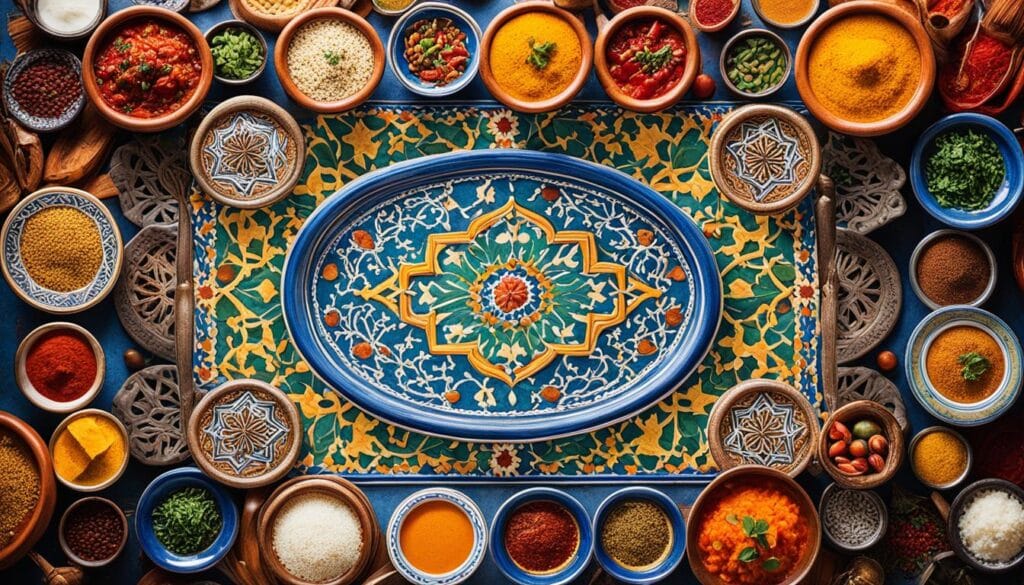
« Moroccan cuisine is a fusion of flavors and cultures, influenced by centuries of cultural fusion and trade between kingdoms and nations. »
Exploring Morocco’s Museums and Galleries
Step into the world of Moroccan art and history by visiting its museums and galleries. You’ll find ancient medinas in Fes and Marrakech and archaeological sites like Volubilis. Morocco is full of cultural treasures waiting for you to discover.
Immersive Experience of Art and History
Museums and galleries across the country show off Morocco’s rich heritage. They mix Arab, Berber, and Mediterranean cultures. You’ll see Islamic architecture, beautiful crafts, and stories told through art.
The Mohammed VI Museum in Marrakech celebrates Morocco’s water history. The Batha Museum in Fez has a great collection of crafts, like ceramics and wood carvings.
In the Saharan region, the Laâyoune Museum shows the traditions of Morocco’s nomadic people. Each museum takes you on a journey through Morocco’s history and culture.
« Moroccan decorative arts exhibit intricate ornamentation with active craft traditions primarily found in urban centers. »
Visiting Morocco’s museums and galleries shows its deep respect for its culture. Places like the Médersa Merinide in Rabat and the Yves Saint Laurent Museum in Marrakech highlight Moroccan creativity and innovation.
Whether you like Islamic architecture, traditional crafts, or modern art, Morocco’s museums and galleries will impress you. They offer an experience that touches your heart and mind deeply.
morocco culture and history
Morocco’s culture is a mix of Arab, Berber, and Mediterranean influences. This blend has created a unique identity over centuries. The country has a long history, over 5,000 years, with the Berber people at its core.
Converging Influences: A Diverse Cultural Tapestry
Most Moroccans are Berbers and Arabs. But, the country’s culture is also shaped by French, Roman, Jewish, Spanish, and other traditions. This mix has made Morocco a fascinating place, seen in its art, architecture, food, and lifestyle.
Morocco sits between the Mediterranean Sea and the Atlantic Ocean. Its location has greatly influenced its culture. It’s just 10 miles from Spain, making it a center for cultural exchange.
- Morocco is made up of sixteen different regions, each with its own distinct cultural and linguistic traditions.
- Berber people have lived in Morocco for thousands of years and account for 40% of the country’s population.
- Nearly all Moroccans are Muslims, with the majority being Sunni.
- Moroccan Arabic Darija and Berber Amazigh languages are the official languages of the country.
Today, Morocco’s diverse culture is celebrated and kept alive. Tourism, agriculture, and renewable energy are key sectors that help the country’s economy and society.
« Morocco is a country that has a history, culture, language and values that are deeply rooted and anchor its people in a sense of belonging and identity. »
Languages of Morocco
Morocco’s languages show the country’s deep cultural roots. Moroccan Arabic and Berber languages are key parts of this mix. They come from Arab, Berber, and European influences over time.
Berber Languages: Tarifit, Tamazight, and Tashelhiyt
Berber languages, known as Tamazight, are a big part of Morocco’s language scene. They include Tarifit, Tamazight, and Tashelhiyt, each with its own unique traits. About 26% of Moroccans speak these languages, with Tashelhiyt being the most common at 14.1%.
- Tarifit is mainly spoken in the Rif Mountains in northern Morocco. It’s used by about 4% of the population.
- Tamazight, or Central Atlas Tamazight, is found in the central Atlas Mountains. It makes up 7.9% of the Moroccan people.
- Tashelhiyt is the most spoken Berber language. It’s in the High Atlas Mountains and Anti-Atlas region, home to 14.1% of Moroccans.
These languages have a long history and have greatly influenced Morocco’s culture. They live alongside Moroccan Arabic, the most spoken language in the country.
| Language | Region | Percentage of Speakers |
|---|---|---|
| Tarifit | Rif Mountains | 4% |
| Tamazight | Central Atlas Mountains | 7.9% |
| Tashelhiyt | High Atlas and Anti-Atlas | 14.1% |
Morocco’s mix of Moroccan Arabic and Berber languages shows its rich culture. It highlights how different cultures live together in harmony.
Moroccan Literature and Poetry
Morocco’s rich culture shines through its literature. Moroccan literature has grown and changed over time. It includes many types of writing, from old Berber stories to modern works.
Traditional works like poetry and essays are big parts of Moroccan literature. Famous writers like Ibn Battuta and Ahmed al-Mansour have made big impacts. Schools like the University of Al Karaouine and the Moroccan National Library help keep these stories alive.
Recently, Moroccan literature has become known around the world. Authors like Driss Chraibi and Mohamed Choukri have won fans everywhere. Their books are written in Arabic and French, making them more accessible.
« Moroccan literature encompasses a rich tapestry of genres, from poetry and prose to theater and nonfiction, reflecting the country’s cultural diversity and international influences. »
Today, Moroccan literature is still thriving. It shows the creativity of the Moroccan people. Writers and poets use their words to honor their culture and traditions.
| Genre | Notable Moroccan Authors | Language(s) Used |
|---|---|---|
| Poetry | Ahmed al-Mansour, Mohammed Bennis | Arabic, French |
| Prose | Driss Chraibi, Tahar Ben Jelloun | French, Arabic |
| Theater | Tayeb Saddiki, Aziz Chouaki | Arabic, French |
| Nonfiction | Ibn Battuta, Fatema Mernissi | Arabic, French, English |
Morocco’s literature still draws in readers from all over the world. It’s a key part of the country’s culture and creativity.
Music of Morocco
Morocco’s music is a mix of many styles, each showing off the country’s rich culture. From the catchy Chaabi to the deep trance of Gnawa, and the elegant Andalusian music, Morocco’s tunes show its artistic side.
Diverse Genres from Chaabi to Gnawa
Moroccan music covers a lot of styles, each with its own story and feel. Chaabi, the « people’s music, » comes from traditional folk tunes and is loved at parties and social events. Gnawa music mixes Arab, Berber, and African sounds, creating a trance with its rhythms and melodies.
Andalusian music, going back to the 9th century, still charms with its complex tunes and deep feelings. These nuba, or suites, can go on for hours, showing the beauty and complexity of this music.
Contemporary Fusions and Innovations
Moroccan music keeps changing, taking in new sounds and styles. Roots Fusion, a style from the 1970s, combines Berber, Arab, Sufi, Gnawa, and Western pop and rock. This creates a fresh and exciting sound.
Now, Moroccan artists mix their music with global styles like reggae, funk, hip-hop, and drum’n’bass. This brings Moroccan music to more people around the world. It shows how Moroccan culture and music are always changing and growing.
Moroccan music keeps evolving but stays true to its roots. It blends old and new sounds, from Chaabi to Gnawa. This music takes you on a journey through Morocco’s moroccan cultural diversity and moroccan musical heritage. It ends in a rich mix of moroccan contemporary music.
Visual Arts in Morocco
Morocco’s culture shines through its vibrant visual arts. They mix traditional Maghrebi-Andalusian styles with modern art. The arts show Morocco’s long history of creativity.
Maghrebi-Andalusian Art and Architecture
Decorative arts are big in Moroccan culture. Maghrebi-Andalusian art and architecture define Morocco’s artistic identity. You’ll see beautiful Arabesques, zellige tilework, and carved wood panels. These pieces blend Islamic patterns and calligraphy perfectly.
Calligraphy and the Maghrebi Script
Calligraphy is a highly valued art in Morocco. The Maghrebi script is a special type of Arabic calligraphy. Artists like Muhammad al-Qandusi in the 19th century helped shape this elegant script. It’s used in architecture and art across the country.
Modern Moroccan art also explores new styles and mediums. Artists like Muhammad Ben Ali Rabati were early to adopt European techniques. This opened the door for many modern and contemporary Moroccan artists to shine on the world stage.
Moroccan visual arts still amaze people around the world. They show Morocco’s deep cultural roots and its mix of old and new art. From historic Arabesques to modern calligraphy, Moroccan art is a source of endless inspiration.
Modern and Contemporary Moroccan Art
Morocco’s art scene has changed a lot, mixing old styles with new art. The country’s modern art has three main groups: Populists, Nativists, and Bipictorialists.
The Populists were self-taught artists who showed everyday life in Morocco. They got support from French and American fans. The Nativists in the 1960s wanted to leave behind Western and French art styles. On the other hand, the Bipictorialists, like Ahmed Cherkaoui and Jilali Gharbaoui, mixed Moroccan, French, and Western styles. They aimed to bring together different parts of Morocco’s identity after colonial times.
Now, Moroccan contemporary art keeps changing. Galleries and museums help spread and grow it. Artists take inspiration from Islamic art, Berber crafts, and Morocco’s architecture. They use geometric patterns, calligraphy, and mixed media, mixing old and new in their art.
| Institution | Highlight |
|---|---|
| Mohammed VI Museum of Modern and Contemporary Art | This museum in Rabat, the capital of Morocco, opened in 2014. It has a big collection of Moroccan art from the early 20th century to today. A big event was the « Face à Picasso » showcase in 2018. |
| Museum of African Contemporary Art Al Maaden (MACAAL) | MACAAL is in Marrakesh and has over 2,000 pieces of contemporary African art. It includes works by famous Moroccan artists. The « Material Insanity » exhibition showed works by 34 artists from Africa. |
| CM Galerie | This Marrakesh gallery only shows Moroccan artists’ work. The « Poesies Africaines » exhibit showed the work of many Moroccan artists. It highlighted the variety in Moroccan art today. |
Morocco’s art scene keeps changing, showing a mix of old and new. Galleries, museums, and teamwork help spread Moroccan modern art, contemporary art, and visual arts around the world.
« Moroccan art is a testament to the country’s vibrant cultural heritage, blending ancient traditions with modern expressions to create a truly unique and captivating artistic landscape. »
Immersive Cultural Experiences in Medinas
The medinas, or historic city centers, are the heart of Moroccan culture. Walking through their winding streets, you’ll see Moroccan daily life up close. It’s a unique chance to experience the culture.
Observing Moroccan Daily Life
In the medinas, you’ll find markets full of spices, textiles, and crafts. You’ll see artisans making their products, using old and new techniques. This shows the blend of tradition and innovation in Moroccan traditions.
The medinas are full of sights, sounds, and smells. You might smell fresh bread or tagines cooking. Talk to the locals, who love to share their Moroccan hospitality and daily life with you.
Friendly Gatherings and Traditions
In the medinas, you can see how Moroccans live together. Watch the tea ceremony, where tea is shared to show friendship and welcome. Join in the fun of Moroccan traditions and celebrations, with music, dance, and stories.
Walking through Fes, Chefchaouen, or Marrakech, you’ll have an unforgettable cultural trip. The medinas of Morocco will give you memories and a deeper love for its heritage.
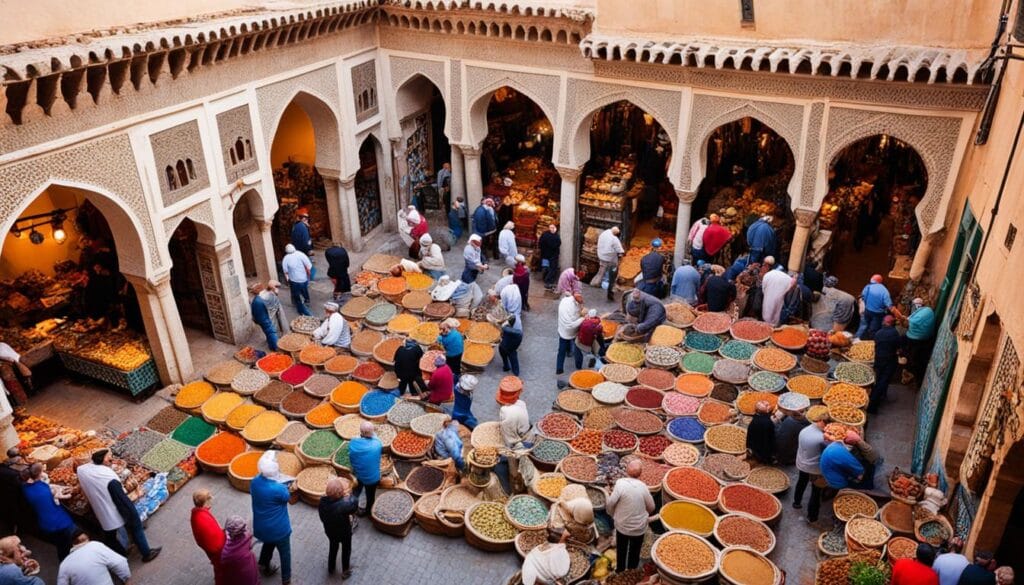
« Wandering through the medinas of Morocco is like stepping into a living, breathing museum of culture and tradition. »
Conclusion
Morocco’s culture is a mix of old and new, with a rich history and many influences. It shows how well it keeps traditions alive while also moving forward. When you explore its moroccan culture and moroccan heritage, you see a country that honors its past and innovates.
This moroccan diversity is full of sights, sounds, and tastes that are unforgettable. Morocco has something for everyone, whether you’re there for a week, two weeks, or a month. It’s a place where nature’s beauty meets adventure, making it a unique spot for cultural discovery.
The best times to visit Morocco are in spring (March to May) and fall (September to November). The weather is nice, and there are fewer people around. Morocco is known for its history, culture, and friendly people. It’s a place that will touch your heart and make you want to explore more.