
Dive into the world of traditional Moroccan weddings, where old customs and vibrant culture blend. This creates a magical celebration of love and unity. From the elegant proposal to the grand wedding day, it’s a journey through Morocco’s rich heritage.
The proposal marks the start of a Moroccan wedding. The groom’s family visits the bride’s family to ask for her hand in marriage. Then, the engagement, lasting up to three days, is filled with music, dance, and traditional clothes. Henna is applied to the bride’s hands and feet, symbolizing good luck and protection.
The wedding day is the climax, full of color and energy. The bride wears stunning Moroccan clothes, like the kaftan and takchita. The ceremony includes signing the marriage contract and the bride’s dramatic entrance. It’s all set to live music and dance.
Key Takeaways
- Moroccan weddings involve a three-step process: proposal, engagement, and wedding ceremony
- The engagement celebration, known as khutuba, is a lavish multi-day event with music, dance, and traditional attire
- Moroccan wedding ceremonies feature intricate rituals, including the signing of the marriage contract and the bride’s dramatic entrance
- Moroccan wedding attire, such as the kaftan and takchita, showcases the country’s rich cultural heritage
- Moroccan weddings are characterized by vibrant music, dance, and a grand, festive atmosphere
What is a Traditional Moroccan Wedding?
A Moroccan wedding is a beautiful celebration that brings together two families and the love of the couple. It’s filled with cultural heritage and ancient traditions. These traditions show the deep respect for marriage in Islamic faith. The festivities include henna designs, music, and dance, making it a captivating event.
A Celebration of Love and Heritage
At the core of a Moroccan wedding is the deep respect for the couple and their families. The celebrations can go on for days, showing the community’s support. Each step, from the engagement to the signing of the marriage contract, is full of meaning.
The bride wears up to seven traditional outfits, each more beautiful than the last. Before the wedding, she goes through a special ritual called Hammam. This includes massages and waxing, preparing her for the big day. The Henna party is where women decorate the bride’s hands and feet with designs that mean fertility, luck, and happiness.
| Moroccan Wedding Traditions | Description |
|---|---|
| Drib Sdak | The ceremony where the bride and groom sign their marriage contract, officiated by an Adoul (religious official). |
| Hammam Ritual | The bride undergoes a purification process involving massages, scrubbing, perfumery, and waxing. |
| Henna Party | Women gather to decorate their hands and feet with intricate henna designs, symbolizing fertility, luck, and happiness. |
| Amaria Tour | The couple is carried in decorated seats and accompanied by traditional musicians during the wedding celebrations. |
These rituals show the rich cultural heritage of Morocco. They mix the wisdom of the past with today’s celebrations. A traditional Moroccan wedding is an immersive experience. It lets guests see the blend of love, tradition, and the beauty of Moroccan culture.
Pre-Wedding Traditions
Drib Sdak Day
The Moroccan wedding journey starts with Drib Sdak day, a day before the big event. On this day, the couple signs their marriage contract, the « Akd Zawaj », with their families and an « Adoul » present. This makes the marriage official, and they celebrate with a small party with close ones.
Drib Sdak day is a big deal in Moroccan weddings. It’s when the couple officially says yes to each other and their families gather to see it happen. Signing the marriage contract is a big deal, setting the stage for the big celebrations ahead.
After signing the contract, the couple and their families have a small, intimate party. They enjoy the excitement of the wedding that’s coming. This tradition gets everyone ready for the big events that will happen over the next few days. Moroccan moroccan wedding traditions and moroccan wedding rituals will be in full swing.
« The Drib Sdak day is a cherished tradition that marks the official beginning of the Moroccan wedding celebration. It is a time for the couple to officially commit to one another and for their families to come together, setting the stage for a grand and joyous celebration of their love and heritage. »
The Hammam Party
The Hammam party is a key part of the Moroccan wedding celebration. It’s the first day of the wedding. The bride and her friends go to a traditional Hammam for a purification ritual.
This ancient practice includes steam rooms, exfoliating, and massages. It’s a way to cleanse and beautify the bride before her new life begins.
At the Hammam party, the bride and her loved ones meet at a bathhouse. They enjoy a pampering session. This starts with ghassoul, a natural Moroccan clay, on the skin.
Then, they get a soothing massage and rinse off, leaving the bride’s skin glowing.
The Hammam is more than just a physical cleanse. It’s a ritual that purifies the bride’s mind, body, and soul. It prepares her for her new journey.
During this time, the women share stories and laughter. They create a strong bond, which is key to Moroccan wedding traditions.
After the Hammam, the bride and her friends enjoy a feast. They eat traditional Moroccan dishes and drink mint tea. This meal sets the stage for the moroccan wedding rituals to come. The bride starts her new life feeling refreshed and connected to her heritage.
The Henna Party
In Moroccan wedding traditions, the Henna Party is a key celebration. It’s filled with symbolism and cultural heritage. Held before the big wedding, it’s a time when women gather to honor the bride-to-be.
Blessings of Fertility and Luck
The Henna Party centers on the ancient art of henna application. A skilled « Nekkasha » paints intricate designs on the bride and her loved ones’ hands and feet. These designs symbolize fertility, luck, and the bride’s transition to womanhood.
As the henna dries, the women chant and dance, filling the air with blessings for the couple. The bride wears a traditional keswa el kbira (a lavish robe), full of joy and excitement for what’s to come.
« The henna party is a joyous celebration of the bride’s upcoming nuptials, a time-honored tradition that blends the sacred and the secular, the ancient and the modern. »
The party is a feast for the senses, with the smell of traditional Moroccan food filling the air. Guests enjoy mint tea, marzipan cookies, and many sweets and snacks. This adds to the festive feel.
As night falls, the party gets even more lively. The couple is lifted in an amaria (a chair) as people dance around them. They wish them a happy future. The Henna Party shows the beauty of Moroccan traditions, mixing the old and new in a joyful celebration.
The Wedding Day Celebrations
The Moroccan wedding day is a big event filled with joy and celebration. It happens in a big tent or even on the street, bringing together friends, family, and the community. When the couple arrives, they’re welcomed with cheers and chants from the « Neggafates, » the experts who plan the day.
Grand Entrances and Festivities
The bride wears traditional Moroccan clothes, changing outfits to show off the country’s diverse styles. She might wear everything from colorful Takshitas to elegant white dresses. The day is full of music, dance, and special ceremonies to celebrate the couple.
- The wedding day celebration typically spans 2-3 days, with some regions extending it up to 7 days.
- The bride may change into up to 7 different outfits, representing various Moroccan styles and traditions.
- Professional « Neggafates » are often hired to coordinate the bride’s wardrobe and accessories for her fashion show during the wedding.
- Moroccan weddings are marked by the presence of music, dance, and celebratory chants, creating a vibrant and festive atmosphere.
The Moroccan wedding day is a celebration of the country’s rich culture. It combines Berber, Arab, and Andalusian traditions into a beautiful mix. From the big entrances to the special rituals, every part of the day honors the couple and Moroccan wedding customs.
how to experience a traditional moroccan wedding
Getting into the heart of a Moroccan wedding is an experience you won’t forget. It’s full of vibrant traditions and lively celebrations. It’s a peek into Morocco’s rich culture.
When you go to a Moroccan wedding, dress up nicely and modestly. Right when you arrive, say congratulations and give small gifts to the families. It shows respect and joy.
- Embrace the Festivities: Moroccan weddings are full of music, dance, and rituals. Join in and feel the local culture.
- Observe the Traditions: These weddings follow old traditions, like signing the marriage contract and henna on the bride’s hands. Seeing these rituals helps you understand Moroccan culture better.
- Enjoy the Culinary Delights: The food at these weddings is amazing, with dishes like pastilla, salads, and seafood. Trying these foods is a big part of the fun.
- Appreciate the Music and Dance: There’s live music and dancing for women and men. Watching or joining in these performances is exciting and memorable.
By taking part in the customs and celebrations of a Moroccan wedding, you’ll really get to know the country’s culture. It’s a great way to make memories in this magical place.
« Attending a Moroccan wedding is like stepping into a vibrant tapestry of ancient traditions and modern celebrations. It’s an opportunity to immerse oneself in the heart of the country’s cultural identity. »
If you’re going to Morocco or can attend a Moroccan wedding, make the most of it. It’s a journey that’s both enriching and unforgettable.
Symbolic Rituals and Practices
Moroccan weddings are filled with old traditions and symbols. Each part of the wedding has deep cultural meaning. The Hammam ritual and henna designs honor the wisdom of the past and Morocco’s rich heritage.
The Bridal Hammam ritual is a key tradition in Morocco. Young women and girls go through it. It purifies the bride, cleaning her body and spirit before the wedding.
Then, there’s the henna party, a big event the day before the wedding. The bride gets her hands and feet painted with henna. These patterns are thought to bring fertility and protection, symbolizing beauty and luck.
The wedding day itself is a big celebration. The couple’s clothes show off Moroccan culture. Women often wear the traditional Kaftan or Takchita, while men might wear a Djellaba or Gandoura.
The Takchita, a handmade dress, is the go-to for Moroccan brides. It marks their change into a wife. It’s a symbol of their new role.
« The henna party, a significant pre-wedding ceremony, takes place one day before the wedding in Morocco, with the bride’s hands and feet adorned with intricate henna patterns. These designs are believed to bring fertility and protection against evil, symbolizing beauty, luck, and the blessings of the ancestors. »
These rituals and practices celebrate Moroccan culture and connect couples with their heritage. They show the deep meaning of a traditional Moroccan wedding.
Blending Diverse Influences
Moroccan wedding traditions are a vibrant mix of different cultures. They come from the Berber, Arab, and Andalusian influences over the years. These traditions show the nation’s rich cultural heritage.
A Tapestry of Berber, Arab, and Andalusian Heritage
Moroccan wedding customs show the country’s long history. Berber traditions are seen in the Henna Night, where the bride gets henna patterns. These patterns mean fertility and beauty.
Arab influences are in the Khetba, a formal engagement ceremony. Here, families gather to talk about the wedding and set a date.
The Andalusian legacy is in the elegant Kaftan gowns and Jellaba outfits. These clothes show individual style and honor Morocco’s rich culture.
« Moroccan weddings are a stunning mix of different influences. Each adds a special thread to the celebration of love and heritage. »
Traditional music like Gnawa and Andalusian music sets the mood. The food, with Mechoui (roasted lamb) and sweet pastries, delights the senses. Guests get to experience Morocco’s captivating culture.
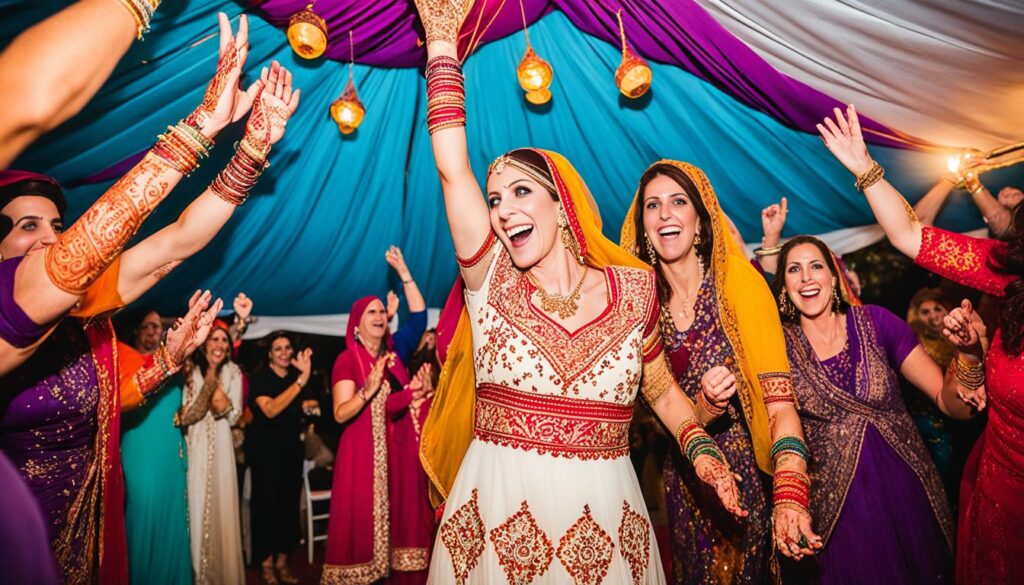
Moroccan weddings blend tradition and modernity. They show the strength of the country’s cultural heritage. These celebrations, in both rural and city areas, symbolize Morocco’s lasting identity. They mix the past and present, offering a unique and memorable experience.
The Groom’s Rituals
The groom is just as important as the bride in Moroccan weddings. On the wedding day’s morning, he joins a purification ritual at the mosque with his family and friends. This act shows the spiritual value of the wedding and the groom’s commitment to his new life.
The Moroccan wedding traditions include the groom’s special rituals. Before the ceremony, the groom’s family asks for the bride’s hand in marriage. This step is very important. The groom is called the « Moulay Sultan » and wears traditional clothes like a « Jellaba » or « Jabadur » and a suit.
The groom’s ritual of spiritual purification shows the importance of Moroccan wedding ceremonies. It shows he’s ready for marriage and highlights the community’s role in the celebration. Everyone comes together to support the couple.
« The groom’s rituals in a Moroccan wedding are a testament to the deep-rooted traditions that blend religious, cultural, and familial elements. »
Guest Etiquette and Participation
Going to a Moroccan wedding is a big honor. It comes with its own set of rules. Guests should dress modestly and elegantly to show respect. When you arrive, it’s a nice gesture to congratulate the couple and their families with small gifts. This shows you’re part of the joy and blessings of the day.
Dress Modestly and Embrace the Celebrations
The wedding might be a lot to take in, but guests should dive into the fun. Join in the music and dance, and get to know the culture. Moroccans are very proud of their traditions. When guests join in, it shows they respect and appreciate the culture.
- Dress modestly in long, loose-fitting clothing that covers the shoulders and knees.
- Bring small gifts, such as traditional sweets, perfume, or jewelry, to present to the couple’s families.
- Participate in the dancing and music, following the lead of the locals.
- Refrain from excessive drinking or loud behavior, as the wedding is a sacred event.
- Observe and learn about the various rituals and customs, but avoid interrupting or disrupting the proceedings.
By following the dress code and etiquette, guests can really get into the spirit of a Moroccan wedding. They’ll take home memories of the vibrant culture and heritage.
| Recommended Attire | Participation Etiquette | |||||
|---|---|---|---|---|---|---|
| Long, loose-fitting clothing | Covering shoulders and knees | Elegant and modest in style | Offer congratulations and gifts | Participate in music and dance | Observe rituals and customs | Avoid disruptive behavior |
« Attending a Moroccan wedding is a unique and immersive cultural experience. By embracing the etiquette and customs, guests can fully participate in the joyous celebrations and leave with a deeper appreciation for the rich heritage of this North African nation. »
The Role of Music and Dance
At the heart of a Moroccan wedding is a mix of traditional music and dance. This mix sets the mood for the celebrations. From the lively Chaabi beats to the elegant Andalusian dance moves, these traditions bring people together. They share blessings and honor Morocco’s heritage.
The air is filled with the sounds of live Moroccan music. Skilled musicians play the oud, darbuka, and violins. This music draws guests to the dance floor, where they join in the fun. The dances show off the country’s rich cultural mix.
The el aamaria ceremony is a highlight. The bride and groom arrive on decorated seats, to the beat of traditional music. This grand entrance marks the start of a celebration that honors the couple and Morocco’s culture.
Throughout the wedding, special songs and prayers bless the newlyweds. The bride may wear different dresses, each with traditional Moroccan designs. This shows off the country’s rich fashion heritage.
The music and dance turn the Moroccan wedding into a vibrant celebration. It brings together the past and present. Everyone is invited to enjoy the traditions that make this celebration special.
| Traditional Moroccan Dances | Description |
|---|---|
| Ghiaytas | Traditionally performed in preparation for war by Haha Berber tribes in the Atlas Mountains. |
| Ouais | Described as a mixture of English ballet and classical Arabic music, mainly performed at weddings. |
| Ahidou | Performed by both men and women, with all dancers standing in a circle. |
| Houara | A mixed gender folk dance with a performance troupe including several men and one woman. |
| Taskiwin | Recognized by UNESCO as Intangible Cultural Heritage, specific to the western High Atlas mountain range. |
Globalization has made young people less likely to dance the traditional Taskiwin. It’s important to keep these dances alive. This way, Morocco’s heritage can be shared with future generations.
« Moroccan weddings are known for their alcohol-free ambiance, setting them apart from European weddings. »
Preserving Ancient Traditions
As Morocco changes, keeping old wedding traditions alive is key. These customs blend Berber, Arab, and Andalusian roots. They honor the wisdom of ancestors and Morocco’s rich moroccan cultural heritage. By keeping up with traditional weddings, Morocco keeps its cultural identity strong. It also connects us to our past as we look to the future.
Honoring the Past, Celebrating the Future
A traditional Berber wedding in the High Atlas Mountains lasts four to five days. Over a hundred dishes are made for more than a hundred guests. The meal has five parts: tea and pastry, grilled chicken, tagine with prunes, couscous or sffa noodles, and fruits.
Women from both families do henna traditions before the wedding. The groom’s family invites all the village men for lunch on the first day. The bride’s family invites all the village men for dinner on the third day. The bride arrives at the groom’s house with a big celebration, welcomed with singing and a ceremony of commitment.
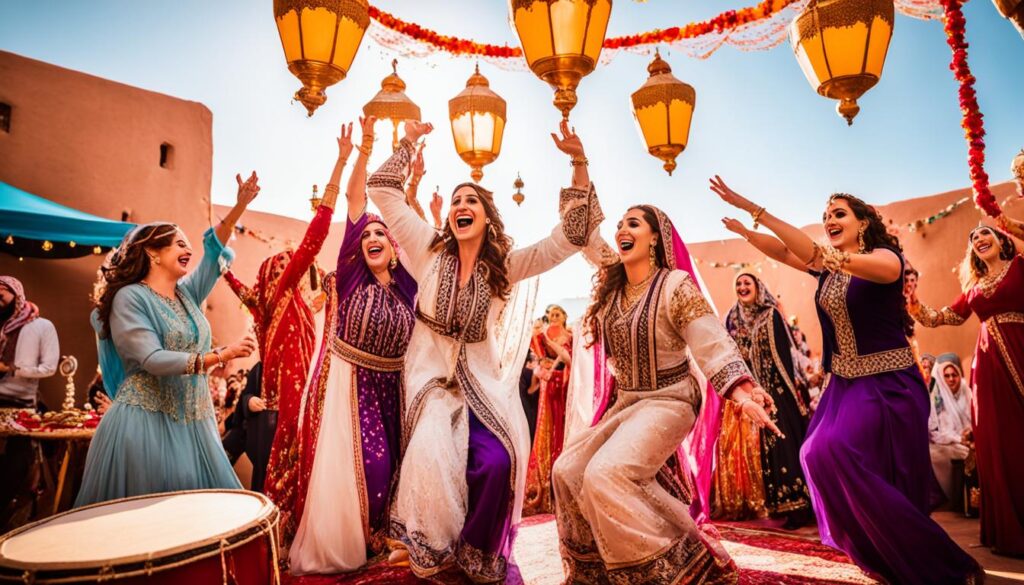
Mothers teach wedding traditions, rituals, and procedures to their daughters. This keeps the honoring moroccan traditions alive. From the beautiful caftans and drumming to the Ahwash music, every part of a Moroccan wedding shows the country’s deep culture. It keeps the past alive while looking forward to the future.
Conclusion
Getting to know a traditional Moroccan wedding is a special way to dive into the culture of Morocco. It’s filled with ancient symbols and traditions that make it unique. By taking part in the customs, music, and dance, you’ll learn a lot about Moroccan culture.
The Henna ceremony, the beautiful clothes, and the meals with family and friends make the wedding unforgettable. It shows the deep meaning of these traditions and the strong family bonds. It also highlights Moroccan hospitality.
Being part of a Moroccan wedding lets you connect deeply with the country and its people. You’ll make memories that last forever. It’s a chance to see Morocco’s rich culture and feel the warmth of its people.