
Financial markets feel the effects of geopolitical tensions deeply. Political issues, economic sanctions, trade disputes, and military conflicts can change how investors feel and affect global supply chains and market ups and downs. The DAX index in Germany and the S&P 500 in the United States show how big of an impact these events have.
The MSCI Germany Small Cap Index and the MSCI World Small Cap Index track smaller companies. They can be affected by geopolitical events. The U.S. dollar index also changes quickly with global political news.
Geopolitical factors can change the prices of commodities like oil. Supply problems or policy changes can cause big price swings. It’s important for investors to understand how geopolitics and financial markets work together.
Key Takeaways
- Geopolitical events can greatly affect financial markets, changing how investors feel and impacting global supply chains and market ups and downs.
- Big market indices like the DAX, S&P 500, and MSCI World Small Cap feel the effects of political tensions, economic sanctions, and military conflicts.
- The U.S. dollar index changes quickly with global political news.
- Commodity markets, like oil, are often affected by geopolitical factors, leading to big price changes.
- It’s key for investors to grasp the complex link between geopolitics and financial markets to navigate the changing global scene.
Introduction to Geopolitical Events and Financial Markets
Geopolitical events cover a wide range of international happenings. They include political instability, military conflicts, and threats from terrorism. These events can affect the global economy in big ways, through financial, trade, and commodity prices.
What are Geopolitical Events?
These events come from the mix of geography, politics, economy, and society. They can be anything from political unrest to military battles or trade issues. All these can greatly impact the world’s financial markets.
How Do Geopolitical Events Affect Financial Markets?
Geopolitical events can greatly affect financial markets. Investors often move their money to safer places during uncertain times. This means putting money into things like government bonds or gold. Exchange rates also change because of these events, affecting investments in different currencies. Some industries, like defense or energy, might see benefits from these events.
Trade tensions between big countries can have lasting effects on investments. They can change global supply chains and how people make investment choices. Spreading out investments can lessen the blow from these events. Keeping up with world events is key for investors to understand how they might affect their money.
« Geopolitical events have led to an average 10% fall in US shares as an initial market reaction to major events, based on historical data. »
To guard against market drops from geopolitical events, investors might use strategies like options or inverse ETFs. But, it’s important to think long-term and not make quick decisions based on short-term events.
Measuring Geopolitical Risk and Its Impact
Geopolitical events can greatly affect financial markets. It’s important for investors and policymakers to understand this link. The Geopolitical Risk Index (GPR) and how it relates to market indices are key to this understanding.
The Geopolitical Risk Index (GPR)
The Geopolitical Risk Index (GPR) tracks newspaper articles about bad geopolitical events like wars and political tensions. It gives a score based on how much attention the market pays to these risks. A high GPR means more bad events, a higher chance of future problems, and more severe future issues.
Studies show that a high GPR can lead to:
- Higher oil prices
- Less investment
- Higher inflation
- Less economic activity and trade
- More volatile capital flows
- Less private sector credit in emerging markets
Correlations between GPR and Market Indices
Researchers look at how the Geopolitical Risk Index affects market indices. They study how geopolitical risks impact financial markets. This helps investors and policymakers make better decisions.
The BlackRock Geopolitical Risk Indicator (BGRI) looks at how often brokerage reports and news talk about geopolitical risks. It gives a score showing how much the market is paying attention. A score of one means the market is paying more attention than usual.
Market-Driven Scenarios (MDS) help estimate the one-month impact of geopolitical risks on global assets. The market movement index has two parts: Similarity and Magnitude. A score of 1 means the market has reacted just like the MDS predicted. A score of zero means there’s no match, and -1 means the market is moving opposite to the MDS.
Understanding how geopolitical events affect financial markets helps investors and policymakers. They can plan better and make informed decisions. This improves their risk management and decision-making.
Event Study Approach to Analyzing Market Reactions
Researchers have used the event study method to see how geopolitical events affect financial markets. They looked at 71 different geopolitical events, classifying them as ‘positive’ or ‘negative’. The goal was to see how markets reacted over various time periods. The markets studied include India, Israel, South Korea, and Turkey. These countries have stable financial systems and flexible currency rates.
The study used the Average of Cumulative Abnormal Returns (ACAR) to track return rates and their changes after big events. This method helps us see how different markets react to conflicts or big geopolitical events. It looks at both the strength and direction of price changes in financial markets.
This research shows how important it is to understand how geopolitical events affect financial markets. It looks at both short and medium-term effects on return rates worldwide. The study aims to help with investment strategies and risk management by showing the economic impact of conflicts and other big events.
| Event | Market Reaction | Time Frame |
|---|---|---|
| Russian Invasion of Ukraine (February 2022) |
| Within weeks of the invasion |
| African Stock Market Reactions |
| During the Russia-Ukraine crisis |
| Russia-Africa Trade |
| 2020 |
This research gives us deep insights into how markets and investors react to big events. By looking at stock returns, currency pairs, raw materials, and food prices, we get a full picture of the global economic effects of the Russia-Ukraine conflict and other big events.
« Studying how markets react to big events is key to understanding risks for investors and policymakers. This research fills a gap by looking at the Russia-Ukraine crisis’s impact on African stock markets, which hasn’t been studied much before. »
Transmission Mechanisms of Geopolitical Events
Geopolitical events can greatly affect financial markets. They do this through two main ways: the trade channel and the capital flows channel.
Trade Channel
When geopolitical events happen, they can make trade harder and more expensive. This can hurt the demand for a country’s currency. It also affects the country’s economy.
Capital Flows Channel
Geopolitical events can also change how money moves in and out of a country. If investors feel more risk, they might pull their money out. This can make the currency value drop and asset prices fall.
| Transmission Channel | Impact on Financial Markets |
|---|---|
| Trade Channel |
|
| Capital Flows Channel |
|
These mechanisms show how geopolitical events can spread through financial markets. They affect currencies, asset prices, and the economy. It’s important for investors, policymakers, and researchers to understand these effects. This helps them deal with the challenges of a changing geopolitical world.
Market Reactions to Positive and Negative Events
Financial markets quickly respond to geopolitical events, showing different reactions to good and bad news. The way currency and equity markets move shows how global economic forces and investor feelings mix.
Currency Market Reactions
Currency markets drop fast when things go wrong, losing value in just two days what they normally would in a month. This fast drop comes from investors feeling unsure and worried about risks. For example, the Israeli shekel fell over 5% against the U.S. dollar with the recent conflict.
On the other hand, when things go well, currency markets can really benefit. Investors getting more confident and moving their money can make currencies of countries in the good news go up for a while.
Equity Market Reactions
Equity markets usually react similarly to both good and bad news. They tend to stay above or below their usual levels for a few months after an event. For instance, the S&P 500 index is close to where it started with the recent conflict and is still about 20% higher than a year ago.
Commodity markets like oil and gold also feel the impact of geopolitical events. Their prices have gone up about 10% since the conflict began. This shows more people want safe investments and there could be supply problems.
| Indicator | Reaction to Negative Events | Reaction to Positive Events |
|---|---|---|
| Currency Spot Markets | Instant losses, up to 1 month’s worth in 2 days | Sustained medium-term appreciation |
| Equity Markets | Rolling returns below average for 1-2 months | Rolling returns above average for 1-2 months |
| Commodity Prices (e.g., Oil, Gold) | Significant price spikes (up to 10%) | Significant price spikes (up to 10%) |
Financial markets show us how complex the global economy is and why it’s key to keep up with the news. Investors and policymakers need to watch these trends closely. This helps them deal with the challenges and grab the chances that come from changing geopolitical situations.
the influence of geopolitical events on markets
Geopolitical events greatly affect financial markets, causing big ups and downs. These events include wars, trade issues, and big political changes. They can greatly impact the global economy and how investors feel.
It’s hard to see the full effect of these events on markets right away. They can be unpredictable and hard to measure. For example, a war in Africa might not affect markets the same way as one in the Middle East, even though they’re both big deals.
But, the impact of these events is clear. Events like Russia’s move into Ukraine have made prices for things like oil and wheat go up. Trade fights, like the one between China and the U.S. in 2018, can make markets unstable. This happens when groups start talking about tariffs and negotiating.
These events can also change how people feel about risk and affect stock prices. When things are uncertain, investors might sell fast, which can hurt businesses. This can make things more expensive, mess up supply chains, and hurt companies’ profits.
Investors don’t like uncertainty, which makes it hard to predict what will happen next. This can make it tough for businesses to make plans. Governments might also make things harder by limiting trade and causing money to leave the country, which can make things more expensive.
Events like Brexit have really shaken up the markets, especially in Europe. They bring up worries about the economy, trade, and rules. Some investors see chances to make money in these times, while others might pull back because they’re frustrated.
In the end, it’s clear that geopolitical events really do affect markets in big ways. They can cause prices to jump and make investors nervous. It’s important for investors, policymakers, and businesses to understand how these events can change things.
Case Studies: Market Reactions in Specific Countries
Researchers have looked into how geopolitical events affect financial markets in countries like India, Israel, South Korea, and Turkey. They studied how these countries handle global political changes. This gave them insights into how different places react to these events.
India
India is a big economic force in South Asia. It has faced many geopolitical challenges. Researchers looked at 71 geopolitical events in India since the late 1980s. They labeled them as « positive » or « negative. »
They checked how the market reactions were over time. This included looking at the effects within two days, a week, a month, a quarter, and a year. This helped them see how geopolitical risk affects India’s markets.
Israel
In Israel, the researchers also looked at market reactions to geopolitical events. They found and sorted 71 such events in Israel over various periods. This helped them understand how Israel’s financial markets deal with global issues.
South Korea
South Korea is a key player in East Asia’s economy. It too has felt the impact of geopolitical events. The researchers studied how market reactions in South Korea changed with 71 identified geopolitical events over different time frames.
Turkey
Turkey, important in the Middle East, was the last country studied. They looked at how its market reactions changed with the same 71 geopolitical events as before. This showed how Turkish financial markets handle global political issues.
These detailed studies show how geopolitical events affect market reactions in various countries. They highlight the importance of understanding how global politics and financial markets interact.
Geopolitical Events and Commodity Markets
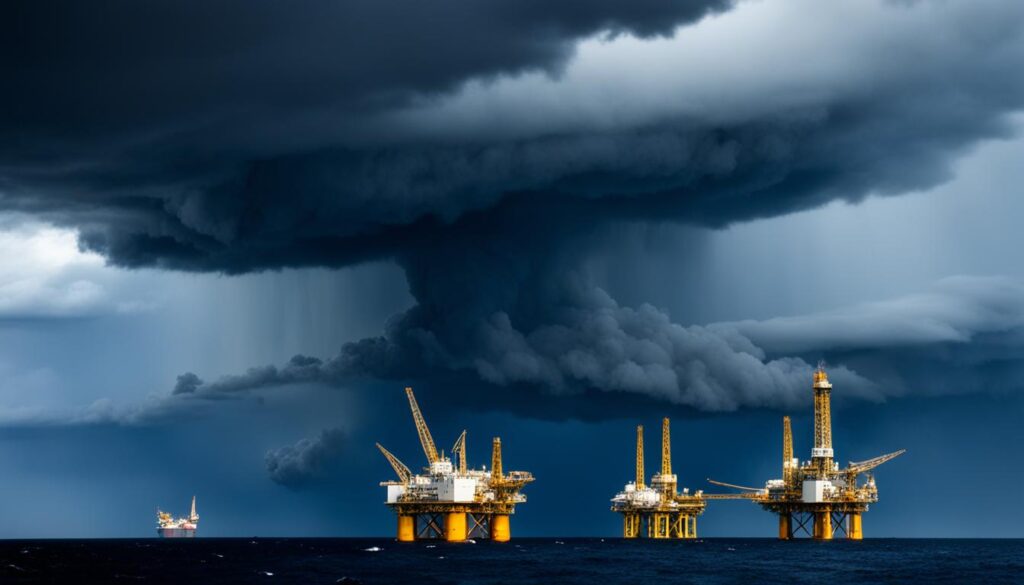
Geopolitical events can greatly affect commodity markets. They change the supply, demand, and prices of important resources. Even though oil’s role has decreased, its connection to commodity prices is still key for investors and policymakers.
Geopolitical events often disrupt trade and supply chains. For instance, new trade restrictions have more than tripled since 2019. This leads to more volatility in commodities like metals, energy, and food. Also, the geopolitical risk index has spiked in 2022 following Russia’s invasion of Ukraine. This shows the growing uncertainty in global markets.
The effect of geopolitical events on commodity markets depends on the event and market integration. Trade and investment flows between blocs have declined by roughly 12 and 20 percent more than within blocs since Russia’s invasion of Ukraine. This shows that the disruption to global trade affects different regions and industries differently.
| Commodity | Share of Reserves in Less Politically Stable (LPS) Countries | Share of Production in LPS Countries |
|---|---|---|
| Copper | 28.9% | 31.8% |
| Oil | 69.2% | 57.2% |
| Lithium | 54.0% | 58.0% |
| Rare Earth Elements | 38.8% | 61.0% |
The table shows how key commodities are exposed to geopolitical risks. A big part of their reserves and production is in less stable countries. This means geopolitical events could disrupt the supply and prices of these resources.
In conclusion, geopolitical events deeply affect commodity markets. They influence supply, demand, and prices. As global tensions rise, understanding the connection between geopolitics and commodity markets is vital. It helps investors, policymakers, and businesses to navigate the complex market.
Risk Assessment and Portfolio Management Strategies
Understanding the link between global financial markets and geopolitical events is key. Investors face the challenge of linking these events to investment performance. An enhanced approach to studying events helps grasp the risks and chances from future geopolitical changes.
Recent studies show a « sweet spot » for USD-based equity investors one month after positive geopolitical events. This happens when currency and equity performance beats a slight rise in volatility. Using this insight, investors can aim for better returns while reducing the effect of geopolitical risks.
Evaluating Geopolitical Risks
Geopolitical risk is vital for deciding on assets and building portfolios. Investors need to look at the chance, speed, and size of geopolitical events and their effect on different assets. Plural, a platform for real-time geopolitical risk tracking, sends alerts on key legislation and spots bills up for vote soon. This helps investors make smart choices.
Incorporating Geopolitical Risk into Portfolio Management
Asset managers can use a top-down method to add geopolitical risk to their strategies. Scenario analysis helps see how portfolios might perform under various global scenarios. Identifying risks as more or less likely is another way to manage risk. Geopolitical risk also affects multi-factor models, influencing momentum, valuation, sentiment, or the economic cycle.
| Key Metrics | Results |
|---|---|
| Achievement of Supply PnL Targets | 130% |
| Unique Combinations Processed Daily | 30,000+ |
| Reduction in Value at Risk (VaR) | $1.5m |
| Reduction in Manual Work | 80% |
| Overall Efficiency Increase | 95% |
By combining risk assessment and portfolio management strategies, investors can better navigate global financial markets. This approach helps them seize chances from future geopolitical events with more confidence and resilience.
« Geopolitical risk is crucial for deciding on an asset class for an investment plan, affecting expected returns. »
The Role of Geopolitics in the Global Economy
Geopolitics looks at how geography, economics, and politics shape our world. It’s key to understanding the global economy’s workings. Events like conflicts and changes in trade policies affect financial markets and economic growth worldwide.
Direct and Indirect Impacts
Geopolitical events can directly hit the global economy through financial markets. They cause stock market ups and downs, currency changes, and interest rate shifts. Trade issues and supply chain problems from conflicts also affect industries and consumers worldwide.
But the effects of these events can also be subtle yet big. They can change commodity prices, especially in energy and raw materials. For instance, oil supply issues from conflicts can make fuel prices go up. This increases costs for businesses and cuts what people can spend.
Geopolitical Risks and Populism
Geopolitical risks can lead to the rise of populist movements. These governments often focus on quick wins over long-term economic health. They might use protectionist trade policies or spend more money than they take in. This can start trade wars, lower currency values, and make markets more unstable.
Businesses and investors need to keep an eye on these geopolitical changes. They should use this info to plan and manage risks. Knowing how geopolitics and the economy interact helps leaders get ready for and lessen the effects of these big forces.
« Geopolitics has become a multiverse with a complex mix of alliances and rivalries, and the year 2024 will see heightened competition between blocs or alliance networks as geopolitical power becomes more dispersed. »
Measuring and Tracking Geopolitical Risks
In today’s complex world, knowing how to measure and track geopolitical risks is key for investors, businesses, and policymakers. The Geopolitical Risk Index (GPR) is a tool that helps by giving a score on how tense the world is and its effect on money markets.
The Geopolitical Risk Index (GPR)
The GPR index is made by experts to help us see how geopolitical risks change over time. It looks at media reports to show us the level of global tensions. This gives us a clear picture of what’s happening with geopolitical risks right now.
But, the GPR index has its limits. It’s an aggregate measure of geopolitical risks, which means it doesn’t tell us about the different kinds of risks. It also can’t predict how these risks might change in the future.
Limitations of the GPR
The GPR index can’t fully capture the complexity, sources, and persistence of geopolitical risks. So, experts often use other methods like qualitative analysis, expert consultation, probability-based assessments, and scenario analysis to get a fuller picture of the risks.
Even with its limits, the GPR index is still a key tool for keeping an eye on geopolitical risks and their effects on money markets. By knowing what it can and can’t do, people in charge can make better decisions when dealing with geopolitical risk index and GPR limitations.
« The Geopolitical Risk Index is a useful tool, but it’s not a crystal ball. To truly understand and anticipate geopolitical risks, we need to complement it with a range of analytical approaches. »
Major Geopolitical Risks in 2024
Experts say 2024 will bring big risks to global markets and the economy. The Russia-Ukraine war, the Israel-Hamas conflict, and US political issues are top concerns. These issues could greatly affect the world.
The Russia-Ukraine War
The Russia-Ukraine war has been a big worry since 2022. It’s expected to keep causing trouble in 2024. If Ukraine splits, it could hurt the global economy by affecting oil and food markets.
Trade wars and tensions have already made many economies drop their exports. If fighting goes on, it could also stop Russia from trading with NATO, making cheap Russian gas hard to get in some places.
The Israel-Hamas Conflict
The fight between Israel and Hamas in the Middle East is another big risk for 2024. If it gets worse, it could shake global markets, even if it doesn’t affect oil. It could mess with the world’s shipping routes.
This could block key shipping paths that carry a lot of the world’s goods. It would cause supply chain problems and economic issues worldwide.
US Elections and Political Polarization
The 2024 US presidential election is also a big worry. The country is more divided and doesn’t trust its politics as much. This could make global markets more unstable as people worry about new policies and rules.
Next year’s elections will cover a lot of the world’s people and economy. This shows how big of a deal these elections are for the global economy.
As we face these big challenges, businesses and investors need to keep an eye on things. They should be ready to change their plans if needed.
Elections and Their Global Impact in 2024
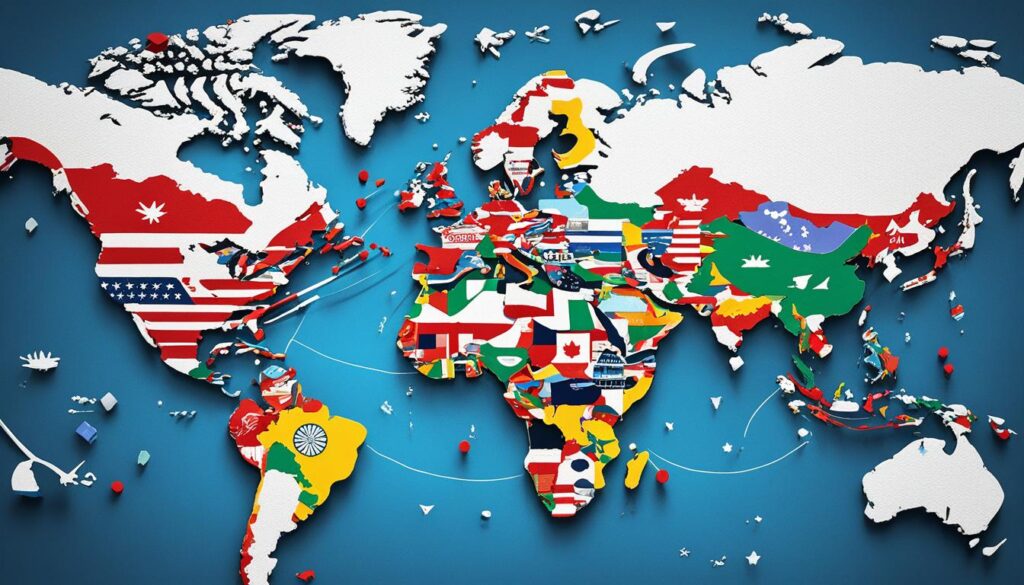
The 2024 global elections will greatly affect the world’s politics and economy. Over half of the world’s people will vote in various elections this year. These votes could change how countries trade, keep peace, and work together.
Important elections will happen in the United States, Brazil, India, and some European Union countries. The U.S. elections are especially crucial. If Donald Trump comes back, it could change the global economy in three big ways:
- Trade policy shifts: His « America First » plan might make trade rules stricter, affecting global trade.
- Geopolitical tensions: It could lead to more conflicts with countries like China, causing market ups and downs.
- Domestic policy changes: Changes in U.S. policies could affect the global economy, like in climate and tech rules.
In Europe, elections could change how the EU works and its views on things like immigration and money matters. If more populist or far-right parties win, it might make the EU focus more on itself. This could affect how it deals with other countries and trade.
Elections in India and Indonesia are expected to keep things as they are, mostly affecting their own countries. But, South Africa’s election could be big news. The African National Congress might lose its majority, which could slow down changes in the country.
« The 2024 elections present a critical juncture for global politics and trade, with the potential to redefine international order, alliances, economic strategies, and global markets. »
The 2024 elections will have big effects on many areas, like trade, fighting climate change, and new tech. Businesses and investors should keep an eye on these changes to stay ahead.
Conclusion
Geopolitical events greatly affect financial markets, both directly and indirectly. This study has shown a new way to understand how these risks impact markets. Geopolitical events can be risks but also chances for smart investors.
It’s hard to measure and track geopolitical risks. We need both numbers and expert opinions. With risks like the Russia-Ukraine war, Israel-Hamas conflict, and US elections in 2024, knowing how geopolitics affects markets is key for investors and leaders.
This article highlights the need to think about geopolitics in investment and risk plans. By keeping up with the changing world and its market effects, people in the market can make better choices. This helps them succeed in a world that’s always changing.