
Finding the best prices for airline tickets can seem tough. Airlines use complex algorithms to make more money. They look at demand, how many seats are left, and when people book. By understanding this fare calculation for flights, travelers can find great deals on airfare pricing and airline ticket costs.
The airline industry has tools like flight fare estimators and airfare rules engines. These tools help them keep up with the changing market. Ticket prices can change fast, making it hard to know if you’re getting a good deal. But, with the right information and tools, smart shoppers can find the best airfare pricing.
Key Takeaways
- Airlines use complex algorithms to dynamically price their flights, taking into account factors like demand and available seats.
- Understanding the airline’s pricing strategy can help travelers find the best deals on flights.
- Timing is crucial when booking flights, as the optimal time to buy a ticket is often late on Tuesday or early on Wednesday.
- Booking group reservations separately may be more cost-effective than booking as a group.
- Airlines try to maximize their operating margins, which can lead to strategies like overbooking and protecting seats for high-paying customers.
Understanding the Airline Pricing Strategy
The airline industry has changed a lot over the years. Before 1978, the cheapest round-trip flight from New York to Los Angeles was $1,442 in today’s money. Now, you can fly that route for just $268. This shows how airline prices have changed a lot.
Airlines use advanced systems to set their prices and manage how many seats are available. They use algorithms and AI to look at past data, market trends, and fuel prices. This helps them change prices based on different things.
Overbooking and Maximizing Revenue
Airlines often overbook flights to make more money. They think some passengers won’t show up or cancel. This lets them fill flights and reduce lost money from empty seats. Overbooking is a big part of how airlines make money.
Protecting Seats for High-Paying Customers
Airlines save some economy seats for « full fare » passengers who book last minute and pay more. This way, they make sure to earn from business travelers. They also offer different prices to attract many customers. The goal is to balance overbooking with keeping high-paying customers happy.
The way airlines set prices has changed a lot. They want to make more money and serve different customers. Using new systems and pricing strategies has changed how airlines set prices and manage seats. This affects what travelers pay for flights.
| Booking Class | Description | Typical Fare Level |
|---|---|---|
| F | Full-fare first class | Highest |
| J | Full-fare business class | Higher |
| Y | Full-fare economy | Standard |
The IATA uses codes like F for first class, J for business class, and Y for economy to set prices and manage seats. Airlines use these classes to sort customers and plan how to make money.
Dynamic Pricing and Load Factors
Airlines are now using dynamic pricing. This means they change flight fares based on the market. The load factor – how full a flight is – is key. Airlines watch this to set prices to make more money and get more people to book.
When many people want to fly, prices go up. This is because customers are more willing to pay. But when not many want to fly, prices drop to get more people to book. This strategy helps airlines make more money and be more profitable.
Adjusting Fares Based on Real-Time Demand
Dynamic pricing works best when airlines can predict how many people will want to fly. They look at things like the time of year, how popular the route is, what others are charging, and how people book. This helps them decide when to change prices.
For example, flights for fun trips have more changing demand than work trips. Airlines use this to adjust their dynamic pricing and make more money on different types of flights.
| Key Factors Influencing Dynamic Pricing | Impact on Fare Adjustments |
|---|---|
| Seasonality | Fares may increase during peak travel seasons and decrease during off-peak periods. |
| Route Popularity | Fares tend to be higher on more in-demand routes with limited capacity. |
| Competitor Offerings | Airlines may adjust fares to match or undercut competitor pricing. |
| Booking Patterns | Fares may increase as a flight approaches capacity or decrease to stimulate last-minute bookings. |
By using dynamic pricing, airlines can make more money and offer better deals to customers.
Predicting Total Demand: Cyclical and Stochastic Fluctuations
Airline demand changes in both regular and unpredictable ways. The demand for a flight changes with the day of the week and the season. These are the cyclical changes airlines can plan for. But, there are also stochastic (random) changes that are harder to predict.
It’s important for airlines to accurately predict demand to set fares and manage capacity well. They aim to find the best mix of customers by deciding how many seats to sell at a discount and how many to keep for full-fare passengers. Most models don’t think about the risk of changing revenues, except for a study by Lai and Ng (2005).
- Terms in airline revenue management include demand, load, and spill, where load is always less than or equal to demand.
- Spill occurs when potential passengers can’t get a reservation because there’s not enough room on the flight.
- Overbooking is different from spill, as spill is when there’s not enough space on the plane, while denied boardings happen when more people show up than there are seats, even if there was no spill.
Capacity allocation means dividing the market into fare classes based on how sensitive people are to price. The protection level in this process is the difference between the plane’s capacity and the booking limit. If the booking limit is too low, there might be empty seats. If it’s too high, you could lose money by selling seats at a discount instead of to full-fare passengers.
Fares in the airline industry go up and down based on how many people book. If there are no sales, fares might stay the same or even drop. The trend is usually positive, with fares going up as the flight gets closer. This way of pricing helps by offering discounts to those who book early and still having seats for those who book late.
Nested Booking Policies and Fare Buckets
Airlines use « nested booking policies » to make more money. They put fares into « fare buckets » based on how much people want to travel. When lots of people want to travel, they charge more. When fewer people want to travel, they charge less.
Grouping Fares into Buckets
Airlines have different fares for the same flight, each with its own price and rules. The cheapest fares can’t be changed or refunded and have strict rules. The most expensive fares are flexible and can be changed or refunded.
Systems help airlines decide how many seats to sell in each fare class. In nested systems, the limit for a higher fare class also includes the limit for a lower fare class.
Demand Factors Influencing Fare Buckets
Airlines look at things like flight date, time, where it’s going from, and where it’s going to. For example, a Friday evening flight might have more expensive seats. A Tuesday morning flight might have cheaper seats.
This way, airlines make more money by saving seats for people who might pay more. If the expensive seats aren’t selling, they move seats to cheaper fares. This makes sure the plane is full.
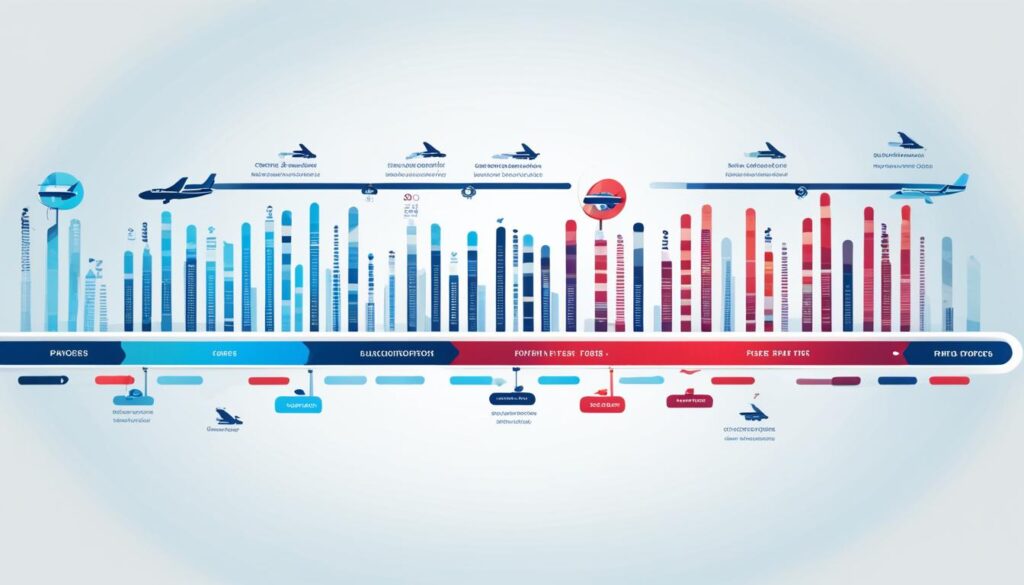
Airlines aim to make at least a 5% profit but often don’t hit this goal. By using nested booking policies and fare buckets, they can make more money from each flight.
Best Time to Book Flights
Finding the best time to book flights is key to getting the cheapest tickets. Experts say the best time changes with the trip type and destination.
For short-haul flights (less than 3 hours), book a few weeks to four months early. These flights usually have good prices. The US has cheap flights to places like Hawaii and Las Vegas.
Long-haul flights (6+ to 12+ hours) get cheaper when booked 8 months to 6 weeks ahead. You can save $100+ on these flights compared to booking last minute.
In Europe, budget airlines like Ryanair and easyJet offer flash sales. These sales happen close to the flight date. You can save $20-30 on short flights and more on longer ones.
Holiday travel has its own booking patterns. Thanksgiving flights get cheaper four to six weeks before the holiday but might go up closer to it. Christmas and New Year’s flights drop in price two to three weeks before but can increase near the holiday.
To save money, be flexible with your travel dates and destinations. Visit popular spots before or after the peak season. Flying on holidays like New Year’s or Christmas can also save you a lot.
Using tools like Google Flights and setting price alerts helps passengers find the best time to book flights for their trips.
| Route Type | Best Booking Window | Average Savings |
|---|---|---|
| Short-haul ( | Few weeks to 4 months before | $20-30 |
| Long-haul (6+ to 12+ hours) | 8 months to 6 weeks before | $100+ |
| Budget airline flash sales (Europe) | Closer to departure | $20-30 on short-haul, more on long-haul |
| Thanksgiving flights | 4-6 weeks before | N/A |
| Christmas/New Year’s flights | 2-3 weeks before | N/A |
Knowing when to book flights helps travelers get the best deals. This way, you can save money on your next trip.
Group Reservations and Separate Bookings
Planning group travel means knowing how to book flights. Airlines call group bookings any request for 10 seats or more with the same carrier, route, and date. These bookings might seem easier, but they have some downsides.
Airlines don’t offer special prices for group bookings. They make sure everyone flies together and pays the same fare. This might not always save money, as the airline calculates an average rate for the group to manage costs and handle cancellations.
Booking separate flights might be better for your group. Buying tickets one by one can help get the lowest fares. If there aren’t enough seats at the cheapest price, the system will move to the next higher price, possibly costing more for everyone.
When planning group travel, knowing airline rules is key. Airlines usually need at least ten passengers for a group booking. This process can take a lot of time, often 1 to 10 days, as you contact many airlines for prices.
The choice between group reservations and separate bookings depends on what the travelers need and want. It also depends on the flights’ availability and prices. By considering the pros and cons, travelers can pick the best option for their group.
fare calculation for flights
Calculating flight fares is complex, with many factors at play. Demand, seat availability, and revenue strategies are key. Airlines use advanced algorithms to adjust prices often. They aim to make profits while offering good deals to customers.
Overbooking is a big part of fare calculation. Airlines sell more seats than they have, expecting some won’t show up. This strategy helps them fill more seats and boost revenue. But, it can cause issues if too many people do arrive.
Airlines also protect seats for high-paying customers. This means they save seats for passengers who pay more. Prices change based on demand, going up or down as more people want to fly.
Knowing how many people will travel is vital for setting fares. Airlines study and predict passenger numbers to set the best prices.
| Fare Calculation Factor | Description |
|---|---|
| Overbooking | Airlines sell more seats than available, anticipating some no-shows. |
| Protecting High-Paying Customers | Airlines reserve seats for their most profitable passengers. |
| Demand Prediction | Airlines analyze and forecast passenger numbers to optimize pricing. |
| Nested Booking Policies | Airlines group fares into « buckets » based on demand factors. |
| Fare Basis Codes | Codes that indicate price, airline miles, and ticket flexibility. |
Understanding fare calculation for flights and airfare pricing helps travelers. It lets them find the best deals for their trips.
Tracking Internet Users for Demand Prediction
In today’s digital world, airlines use data from internet tracking to improve their demand forecasts. They watch how people search for and book flights to understand demand better. This helps them set prices smartly, leading to more revenue and better service for travelers.
Using Online User Data for Pricing
Airlines use online data to guess how many people will want to fly. They look at search patterns, browsing, and booking habits. This lets them spot trends and predict demand changes. They can then change prices to stay competitive and make more money.
Studies show using internet data helps predict air travel demand better. Combining this data with advanced algorithms makes forecasts more accurate. This mix helps airlines quickly adapt to market changes.
| Metric | Value |
|---|---|
| China’s air passenger turnover in 2019 | 1,170.51 billion passenger-kilometers (up 9.3% year-on-year) |
| China’s civil aviation passenger throughput in 2019 | 1.352 billion (up 6.9% year-on-year) |
| Forecast evaluation on 7 routes and 61 flights | 89% of forecasts performed better than naive forecast, with an average MASE of 0.78 and MAPE of 38.53% |
By using online user data for pricing and predicting total demand, airlines can lead the market. They can offer the best flight options to customers. This approach helps both airlines and travelers.
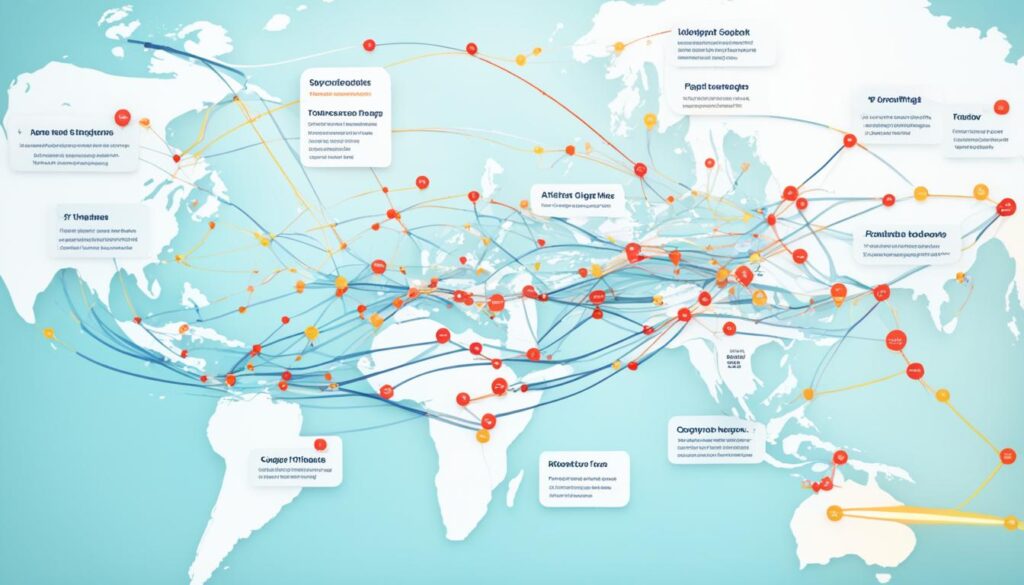
Airlines’ Fare Calculation Algorithms
Airlines use complex algorithms to figure out flight fares. These algorithms look at many things like flight pricing algorithms and airline fare construction. They keep getting better to help airlines make more money and compete well.
One big factor in fare calculation is fuel costs. When oil prices change, so do airline fuel costs, which affects ticket prices. If the economy is down, fewer people want to fly, so airlines might lower their fares.
When setting prices, airlines watch how early people book. Prices often go up as the flight gets closer. Codesharing and alliances with other airlines can also change ticket prices by offering more flight options.
Dynamic pricing algorithms are key in setting fares. These algorithms look at real-time things like demand and booking history. They change prices based on what’s happening in the market right now.
Seasonal demand, how efficient airports are, and big events can change ticket prices. Currency exchange rates can also affect prices on international flights.
Before, figuring out fares was hard and often had mistakes. But the 1960s brought Global Distribution Systems (GDS), changing everything. Now, airlines use data analytics and machine learning to set their prices better and make more money.
« Airlines are constantly refining their pricing algorithms to stay ahead of the competition and meet the evolving demands of their customers. »
Airlines are looking for new ways to make money, like extra fees and personalized fares. New tech like mobile apps and blockchain is changing how people book flights.
In short, airlines use advanced algorithms to set fares. These algorithms consider many things to help airlines make more money and compete well. Knowing about these algorithms can help both airlines and travelers.
Price Fluctuations and User Experience
Airline ticket prices can change a lot, often leaving customers upset and confused. Prices might go up after someone looks at a flight, or a great deal can disappear quickly. Knowing why these price fluctuations and disappearing deals happen can help travelers book flights better.
Dealing with Price Changes and Disappearing Deals
Airlines use different pricing strategies to make more money. They do this through overbooking, protecting seats for high-paying customers, and adjusting fares based on real-time demand. This can cause prices to change fast, sometimes in just minutes. Airlines might also limit certain fare classes or quickly sell out the cheapest options, making disappearing deals.
To deal with these price fluctuations and disappearing deals, travelers should:
- Keep an eye on prices and be ready to book quickly when a good deal shows up
- Be flexible with travel dates and times to find lower fares
- Book flights early, as the best prices are usually found 21 to 115 days before flying
- Use tools and apps that track price changes and alert you to deals
By understanding what affects airline prices, travelers can better predict and react to price fluctuations and disappearing deals. This helps them find the best prices for their trips.
| Airport | Average Domestic Airfare |
|---|---|
| Madison (MSN) | $503 |
| Anchorage (ANC) | $495 |
| Birmingham (BHM) | $488 |
| Washington-Dulles (IAD) | $475 |
| Minneapolis (MSP) | $470 |
| Sanford (SFB) | $249 |
| St. Petersburg (PIE) | $237 |
| Lihue (LIH) | $231 |
| Las Vegas (LAS) | $227 |
| Kona (KOA) | $221 |
« Continuous pricing in the airline industry aims to dynamically adjust fares in response to contextual signals, potentially leading to improved demand forecast and personalized offers. »
Privacy-Focused Flight Search
In today’s world, our every move is tracked and analyzed. This is especially true when booking flights. Airlines and travel sites use our search data to set prices. But, new flight search engines are coming up. They offer a private and clear way to find great deals.
These tools put your privacy first. They don’t use cookies or track your location. Instead, they use clear algorithms and data to show you real prices. This means you won’t face dynamic pricing or tactics to make airlines more money.
Using a privacy-focused flight search engine keeps your search data private. This means the prices you see are the same for everyone. You won’t pay more because of your searches or who you are.
These tools also help you save money on flights. For example, you can compare prices from different countries. Flight prices can change a lot based on where you’re searching from.
« By using a privacy-focused flight search engine, travelers can take back control of their data and ensure they’re getting the best possible deals on their flights. »
The rise of privacy-focused flight search engines is a big deal. They put your privacy first and show clear prices. This lets travelers make smart choices and save money without giving away their online life.
Conclusion
Calculating flight fares is complex and always changing. Airlines use strategies and algorithms to manage their revenue. By knowing what affects airfare pricing, travelers can find the best deals on airline ticket costs.
Airlines use many tactics to set fare calculation for flights. These include overbooking and dynamic pricing. By understanding these tactics, travelers can save money on their flights.
The airline industry is always changing, with new technology and rules from groups like IATA and ARC. Knowing about airline pricing is key. This way, travelers can get the best deals on their flights.