
« The single biggest problem in communication is the illusion that it has taken place. » – George Bernard Shaw. Effective communication is the cornerstone of any healthy and fulfilling relationship. When partners can express their thoughts, feelings, and needs openly and honestly, they build a stronger bond and are better equipped to navigate the ups and downs of life together.
In this article, we’ll explore proven strategies and techniques that couples can use to communicate more effectively, foster deeper emotional intimacy, and resolve conflicts constructively. From active listening and empathy to boundary-setting and nonverbal cues, these insights will help you and your partner strengthen your relationship and create a more satisfying partnership.
Key Takeaways
- Effective communication is essential for building a strong, healthy relationship.
- Active listening and open dialogue are key to fostering trust and emotional intimacy.
- Practicing empathy and avoiding assumptions can deepen your understanding of your partner.
- Conflict resolution through compromise and finding common ground is crucial.
- Establishing healthy boundaries and being attuned to nonverbal cues can enhance communication.
What is Effective Communication in a Relationship?
Effective communication in a relationship goes beyond simply exchanging information. It involves creating an environment of mutual understanding, respect, and emotional connection. When couples engage in open communication, they build trust and deepen their emotional intimacy, feeling more secure in expressing their thoughts, feelings, and needs.
Understanding the Importance of Open Dialogue
Open dialogue is the foundation of a strong and fulfilling relationship. It allows partners to share their perspectives, listen actively, and find common ground. By fostering open communication, couples can navigate challenges, resolve conflicts, and develop a deeper understanding of one another.
Fostering Trust and Emotional Intimacy
When partners feel comfortable expressing their vulnerabilities and emotions, they cultivate a sense of trust and emotional intimacy. This creates a safe space for couples to be their authentic selves, leading to a more profound connection and a stronger bond.
« The most important thing in communication is to hear what isn’t being said. » – Peter Drucker
Effective communication in a relationship is not just about the words exchanged; it’s about creating an environment where partners feel heard, understood, and valued. By embracing open communication, trust, and emotional intimacy, couples can build a relationship that is resilient, fulfilling, and enduring.
Active Listening: A Cornerstone of Healthy Communication
Effective communication in a relationship hinges on the ability to actively listen. Active listening involves more than simply hearing your partner’s words; it requires a genuine willingness to understand their perspective, empathize with their feelings, and respond thoughtfully. This critical communication skill can profoundly impact the quality of your relationship.
At the heart of active listening is the commitment to fully focus on your partner, setting aside distractions and preconceptions. By suspending judgment and giving your undivided attention, you demonstrate your partner’s importance and create an environment of trust and openness. This, in turn, encourages your partner to feel heard and understood, fostering a deeper connection.
Beyond simply hearing the words, active listening prompts you to delve deeper, asking clarifying questions and reflecting back what you’ve understood. This not only helps you gain a more comprehensive understanding of your partner’s thoughts and emotions but also shows them that you are truly invested in the conversation.
By mastering the art of active listening, you develop a heightened sense of empathy and understanding for your partner’s needs and concerns. This awareness can lead to more meaningful and productive discussions, where both partners feel valued and respected. Ultimately, active listening lays the foundation for stronger communication skills and a more fulfilling relationship.
Empathy: Seeing Through Your Partner’s Eyes
In the realm of effective communication, empathy stands as a cornerstone. Empathy, the ability to understand and share the feelings of another person, is a powerful tool for building strong and lasting relationships. By cultivating empathy, couples can deepen their emotional connection and foster a more compassionate and understanding partnership.
Practicing Empathy in Daily Interactions
Empathy is not just a lofty concept – it can be practiced in the everyday interactions between partners. When your partner shares a concern or frustration, take the time to truly listen and try to see the situation from their perspective. Ask thoughtful questions to better understand their emotional state and the reasons behind their feelings. This act of perspective-taking can help you respond with greater emotional awareness and create a more empathetic dialogue.
Avoiding Assumptions and Judgment
One of the greatest barriers to empathy is the tendency to make assumptions or pass judgement on our partner’s thoughts and actions. Instead of jumping to conclusions, approach every situation with an open mind and a willingness to understand your partner’s point of view. Avoid making snap judgments and instead, ask clarifying questions to gain a deeper understanding of their experiences and emotions.
« Empathy is about finding echoes of another person in yourself. » – Mohsin Hamid
By practicing empathy in your daily interactions, you can build a stronger, more resilient relationship – one where both partners feel heard, understood, and valued. Remember, true connection is born when we are willing to see the world through each other’s eyes.

ways to communicate effectively with your partner
Expressing Emotions with Clarity and Respect
Effective communication in a relationship involves the ability to express one’s emotions, needs, and concerns in a clear and respectful manner. By learning to communicate their feelings with clarity and empathy, couples can navigate conflicts more effectively and maintain a healthy, balanced relationship.
One key aspect of assertive communication is the ability to express emotions without blame or judgment. This means using « I » statements to convey your feelings, rather than making accusations or assumptions about your partner’s intentions. For example, instead of saying « You never listen to me, » you could say, « I feel unheard when we don’t have time for open discussions. »
Practicing conflict resolution skills can also help couples communicate more effectively. When disagreements arise, it’s important to approach the situation with a mutual understanding that both partners’ perspectives are valid. By actively listening to each other and seeking common ground, couples can find constructive solutions that address the underlying issues.
« The biggest communication problem is we do not listen to understand. We listen to reply. » – Stephen R. Covey
Ultimately, effective communication in a relationship requires a willingness to be vulnerable, to express your feelings openly, and to consider your partner’s point of view. By cultivating these skills, couples can build a foundation of mutual trust and understanding that strengthens their bond.
Conflict Resolution: Navigating Disagreements Constructively
Disagreements and conflicts are a natural part of any relationship, but how couples navigate them can make all the difference. Effective conflict resolution and the ability to find compromise are essential skills for maintaining a healthy, thriving partnership.
Seeking Compromise and Finding Common Ground
When conflicts arise, it’s important to approach them with an open and problem-solving mindset. Active listening is crucial, as it allows partners to truly understand each other’s perspectives and concerns. By seeking common ground and being willing to make compromises, couples can find solutions that address both people’s needs.
- Identify the core issue: Delve deeper to understand the underlying causes of the conflict, rather than focusing solely on the surface-level disagreement.
- Actively listen and validate: Make an effort to hear your partner out, acknowledge their feelings, and show that you understand their point of view.
- Look for win-win solutions: Explore options that satisfy both partners’ needs, rather than trying to « win » the argument.
- Be willing to compromise: Recognize that relationships require give and take, and be open to finding a middle ground.
- Avoid escalation: Steer clear of hurtful language, personal attacks, or raising your voice, as these can further escalate the conflict.
By approaching conflicts with empathy, understanding, and a collaborative spirit, couples can strengthen their bond and deepen their connection, even in the face of disagreements.
« The secret of a happy marriage is finding the right person. You know they’re right if you love to be with them all the time. » – Julia Child
Emotional Intelligence: Understanding Yourself and Your Partner
Emotional intelligence, the ability to recognize, understand, and manage emotions, is a crucial skill for effective communication in relationships. By cultivating greater self-awareness and empathy, couples can navigate relationship challenges with more emotional resilience and maturity.
The foundation of emotional intelligence lies in self-awareness – the capacity to identify and understand one’s own emotions, strengths, and weaknesses. When partners develop self-awareness, they can better regulate their emotional responses, leading to more constructive conversations and fewer reactive outbursts.
Alongside self-awareness, emotional regulation is a vital component of emotional intelligence. The ability to manage and express emotions in a healthy manner can help couples avoid escalating conflicts and foster an environment of mutual understanding and trust.
Equally important is the skill of empathy, the capacity to understand and share the feelings of one’s partner. By putting themselves in each other’s shoes, couples can build deeper connections, anticipate each other’s needs, and respond with compassion during challenging times.
« Emotional intelligence is the ability to sense, understand, and effectively apply the power and acumen of emotions as a source of human energy, information, connection, and influence. » – Robert K. Cooper
By developing emotional intelligence, couples can cultivate stronger relationship dynamics, marked by open communication, mutual respect, and a greater ability to navigate the ups and downs of their partnership. This, in turn, can lead to a more fulfilling and satisfying relationship for both individuals.
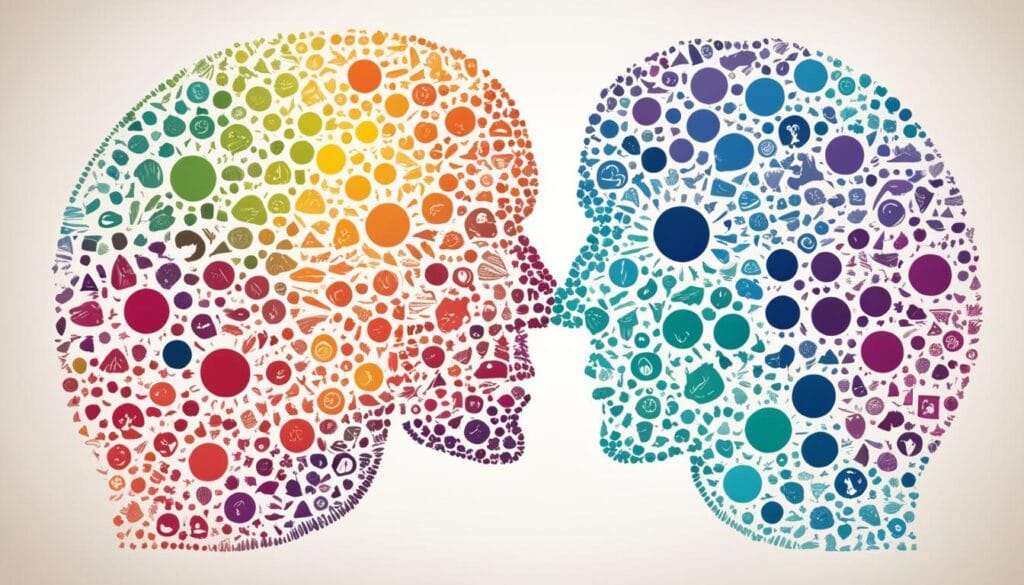
In summary, emotional intelligence is a fundamental skill that can empower couples to understand themselves and each other more deeply, fostering a bond built on trust, empathy, and emotional resilience.
Healthy Boundaries: Establishing Mutual Respect
Establishing healthy boundaries is essential for maintaining a strong and fulfilling relationship. By learning to respect each other’s needs and limits, couples can avoid resentment, build trust, and foster a more balanced and equitable partnership.
Setting Boundaries Without Shutting Down Communication
Effective communication is key when it comes to setting boundaries in a relationship. It’s important to express your needs and limits clearly, while also being open to your partner’s perspective. This delicate balance can be challenging to strike, but it’s crucial for maintaining healthy boundaries and mutual respect.
One effective approach is to use « I » statements when communicating your boundaries. For example, « I feel uncomfortable when you call me during work hours » is more constructive than « You’re always calling me at work and it’s disruptive. » This helps to avoid accusatory language and fosters a collaborative problem-solving mindset.
It’s also important to be willing to compromise and find a middle ground. Relationships thrive on communication and conflict resolution, not rigid boundaries that shut down dialogue. By actively listening to your partner and finding solutions that address both of your needs, you can establish healthy boundaries while maintaining a strong emotional connection.
« Healthy boundaries are not about power or control, but about mutual respect and care. »
Remember, setting boundaries is an ongoing process, not a one-time event. As your relationship evolves, your needs and limits may change, and it’s important to revisit and adjust your boundaries accordingly. By prioritizing healthy boundaries and mutual respect, you can create a strong foundation for a fulfilling, long-lasting partnership.
The Power of Nonverbal Cues
In the realm of effective communication, the power of nonverbal cues cannot be overstated. As couples strive to connect on a deeper level, understanding and responding to body language, facial expressions, and tone of voice can be transformative. By developing an acute awareness of these nonverbal signals, partners can gain valuable insights into each other’s thoughts, feelings, and unspoken needs, ultimately strengthening their emotional bond and communication skills.
Reading and Responding to Body Language
Nonverbal communication, such as body language, plays a crucial role in how we interpret and convey meaning. From the way we stand and sit to the gestures we make, our bodies often reveal more than our words. Active listening and empathy become essential as couples learn to read each other’s body language and respond accordingly.
For instance, if your partner’s arms are crossed, they may be feeling defensive or closed off. By acknowledging this and gently inquiring about their thoughts or concerns, you can create an opportunity for open and nonverbal communication. Similarly, if your partner leans in, makes eye contact, and nods while you’re speaking, it’s a clear sign that they are engaged and interested in what you have to say.
« The most important thing in communication is hearing what isn’t said. » – Peter Drucker
Developing the ability to read and respond to body language allows couples to navigate conversations with greater sensitivity and understanding. By tuning in to these nonverbal cues, partners can identify potential areas of tension or discomfort, and address them proactively, fostering a more harmonious and fulfilling relationship.
- Observe your partner’s posture, gestures, and facial expressions to gain insights into their emotional state and receptiveness to communication.
- Respond empathetically to your partner’s nonverbal signals, adjusting your approach to create a more open and comfortable dialogue.
- Cultivate self-awareness and pay attention to your own nonverbal cues, ensuring that your body language aligns with your intended message.
By mastering the art of reading and responding to nonverbal communication, couples can deepen their understanding, foster trust, and communicate more effectively, ultimately strengthening the foundation of their relationship.
Conclusion
In conclusion, effective communication is the cornerstone of a strong and fulfilling relationship. By practicing active listening, cultivating empathy, expressing emotions with clarity and respect, and navigating conflicts constructively, couples can build a deeper, more meaningful bond.
Additionally, developing emotional intelligence and establishing healthy boundaries are key to maintaining a thriving partnership. Remember, effective communication is an ongoing process, and with dedication and commitment, couples can continually improve their ability to connect and support one another.
The mastery of relationship skills, including conflict resolution, is essential for couples who aspire to create a harmonious and fulfilling union. By embracing these principles, partners can foster a deeper understanding, strengthen their emotional intimacy, and cultivate a lifelong bond that transcends the challenges they may face.