
The global economy is facing tough times, with growth expected to hit just 2.4% in 2023. This is what experts call a global recession. Even though some areas are seeing better times, like lower inflation, growth is still not as strong as before the pandemic. This makes it hard to meet basic needs like having enough food, protecting people, and dealing with climate change.
Without strong global policies, the current economic issues could turn into bigger problems in the future. This could shake the whole global economy.
To help developing countries, leaders and economic experts need to work hard. They must understand the complex trends, challenges, and chances in the global South. By using the advice in this article, countries can better handle today’s economic challenges and work towards a brighter future.
Key Takeaways
- Developing economies face a complex set of challenges, including subdued global growth, inflationary pressures, debt burdens, and uneven recovery paths.
- Economic diversification and industrial policy are critical for enhancing resilience, stimulating growth, and reducing poverty and inequality in the global South.
- Sustainable Development Goals (SDGs) provide a comprehensive framework for tracking progress in areas like decent work, economic growth, and sustainable consumption and production.
- Foreign direct investment and trade patterns play a pivotal role in shaping the economic prospects of developing nations.
- Addressing infrastructure deficits and harnessing the potential of the informal sector are key priorities for fostering inclusive development.
Introduction to Economic Trends in Developing Countries
Developing economies are key to the global economy, making up a big part of the world’s population and economic output. It’s vital to understand the importance of developing economies and the economic challenges in the global south. This knowledge helps policymakers, investors, and researchers spot growth chances, tackle challenges, and support sustainable development.
Significance of Studying Developing Economies
Developing countries have a lot of growth potential in emerging markets. This is thanks to things like changes in population, cities growing, and more people joining the middle class. Looking into economic trends in these areas gives us insights into the global economy. It also helps create strategies for growth that includes everyone and is sustainable.
Challenges and Opportunities Faced by Developing Nations
Developing countries have their own set of problems, like not having good infrastructure, not having enough money, and being affected by big economic changes. But, they also have chances to beat these issues and use new opportunities. They need to deal with big issues, like making sure everyone is not poor and building strong financial systems. This way, they can use their full economic potential.
« Empirical macroeconomists turned to explain differences in growth rates around the world in the late 1980s and early 1990s. Hundreds of separate studies typically used cross-sectional regressions to determine factors impacting growth rates. »
Recent studies show that how smart a population is affects economic growth. This means investing in education and improving people’s skills is key in developing countries. Policymakers and experts need to focus on strategies that help everyone in the global south have a better economic future.
Global Economic Slowdown and Its Impact
The global economy is slowing down, with growth expected to hit just 2.4% in 2023. This slowdown meets the definition of a global recession, affecting economies worldwide. A slight improvement is expected in 2024, with growth reaching 2.5%. But, this recovery depends on the euro area’s recovery and avoiding shocks from leading economies.
Projected Growth Rates for 2023 and 2024
This slowdown makes it harder to tackle big issues like food security, social protection, and climate change, especially in developing countries. These countries are still recovering from the global health pandemic. The UN Trade and Development reports that developing countries paid out more to creditors than they received in aid by almost $50 billion in 2022.
Despite the tough outlook, there’s hope. Global economic growth is expected to slow down but then stabilize. Inflation will drop from 8.7% to 6.8% this year and to 5.2% by 2024. But, the recovery is fragile. Policymakers need to act fast to fix the issues and make economies stronger.
« The global economy is currently experiencing a concerning slowdown, with projected growth of just 2.4% in 2023. This growth rate meets the technical definition of a global recession, posing significant challenges for economies worldwide. »
Advanced economies will see their growth slow down from 2.7% last year to 1.5% this year. Next year, growth is expected to be slightly better at 1.4%. Emerging markets and developing economies will see growth increase from 3.1% in 2022 to 4.1% in the next two years. Emerging and developing Asia is expected to grow at 5.3% this year.
As the world deals with the pandemic’s aftermath and economic slowdown, policymakers must focus on sustainable and inclusive growth. They need to tackle issues like food security, social protection, and climate change.
economic trends in developing countries
Developing economies face many factors that affect their growth. Changes in population and moving to cities can increase spending and the number of workers. New technologies and innovation help make things better and bring in new industries.
Foreign direct investment (FDI) and trade are key for developing countries. FDI brings in new tech, opens up global markets, and shares skills and knowledge. But, these countries struggle to draw in FDI and deal with the complex trade world.
Factors Driving Growth in Emerging Markets
- Changes in population and moving to cities boost spending and the workforce
- New tech and innovation make things better and bring in new industries
- Better infrastructure and connections help join with global markets
- More middle-class people with more money to spend
- Trying to make the economy less dependent on just a few products
Role of Foreign Direct Investment and Trade
FDI and trade are very important for emerging markets. They bring in new tech, open up markets, and share skills. But, these countries find it hard to get and use FDI well, and deal with trade’s complexities.
| Indicator | 2023 Forecast | 2024 Forecast |
|---|---|---|
| Global Growth | 3.0% | 3.2% |
| Inflation in Advanced Economies | 6.8% | 5.9% |
| Growth in Emerging Market and Developing Economies | 4.3% | 4.2% |
As the world slows down, it’s key for leaders in developing countries. They should focus on using the drivers of growth in emerging markets. They should also use the role of FDI and trade in developing economies to support growth that lasts and includes everyone.
Income Inequality and Poverty Reduction Strategies
Income inequality is a big issue in many developing countries. Wealth and economic chances often go to just a few people. This makes it hard for the economy to grow and for society to be stable. Governments in these countries are looking at different ways to tackle income inequality and reduce poverty.
One important way is to invest in education and healthcare. By making sure everyone has good access to education and healthcare, governments can give everyone a fair chance. This helps to close the income gap.
Another strategy is using progressive tax systems. These tax systems put a higher tax on the rich and use the money to help the poor. This can lessen income differences and help fight poverty.
Improving social safety nets is also key. Things like unemployment benefits, cash transfers, and welfare programs help the most needy people. They lessen the effects of income inequality.
It’s important to make sure everyone has access to the same resources and chances. This helps with inclusive development and makes people’s lives better in developing countries.
« Financial inclusion significantly reduces poverty rates and income inequality in developing countries. »
Research shows that a 10% increase in economic growth can cut poverty by 25.9%. The World Bank wants to end extreme poverty by 2030. They also aim to reduce income inequality.
By using these strategies together, developing countries can aim for a more fair and inclusive economy. This way, the benefits of growth will be shared more fairly among everyone.
Sustainable Development Goals and Economic Growth
The Sustainable Development Goals (SDGs) aim for a better world by focusing on economic, social, and environmental issues. They help countries grow and develop, especially in the developing world. Leaders in these countries are making plans to match their economic goals with the SDGs. They want to grow in a way that is good for everyone and the planet.
Progress on SDGs in Developing Countries
Developing countries are making different levels of progress on the SDGs. Some are facing issues like poverty, equality, and climate change. According to the Sustainable Development Goals Report 2023, the global unemployment rate went down to 5.4% in 2022 from 6.6% in 2020. But, there were still 192 million people without jobs in 2022, and that number is expected to drop to 191 million in 2023. Also, about 1 in 4 young people were not in school, work, or training, which is 289 million people worldwide.
Even with progress, reaching the SDGs by 2030 is tough. Developing countries face big challenges like:
- Persistent poverty and income inequality
- Limited access to healthcare and education
- Environmental degradation and climate change impacts
- Weak institutional capacity and governance challenges
To overcome these hurdles, leaders in developing countries are setting their economic goals to match the SDGs. They’re focusing on sustainable infrastructure, renewable energy, and financial systems that include everyone. The global real GDP per capita went up by 5.3% in 2021 but is expected to slow down to 1.0% in 2023 before picking up slightly in 2024 and 2025. Reaching the SDGs will need hard work and teamwork from governments, businesses, and civil society.
« Sustainable development is not a destination, but a journey. It is about finding the right balance between economic, social, and environmental progress to create a better future for all. »
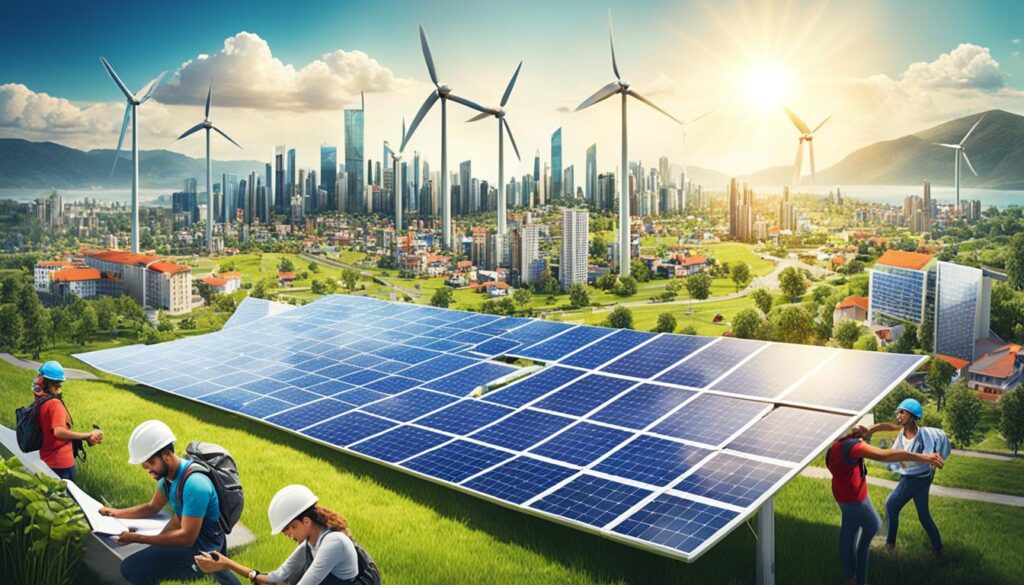
The progress on the Sustainable Development Goals in developing countries is not the same for all. Leaders are trying to make their economic plans match the SDGs, but there are big challenges. These include poverty, equality, and climate action. To meet the SDGs by 2030, everyone in society must work together.
Resource-Based Economies and Diversification Efforts
Many developing countries depend a lot on natural resources like oil, gas, and minerals for growth. This wealth from resources can bring in a lot of money but also makes these countries very dependent on the ups and downs of the market. To avoid this, countries with lots of natural resources are trying to diversify their economies.
Challenges Faced by Resource-Rich Nations
But, these countries face big challenges in making their economies more diverse. Oil prices hit $70 a barrel in early 2020, then fell to less than $20 a barrel due to a price war and COVID-19. This big change in prices is a big problem for countries that rely on these resources.
Countries like Nigeria get most of their government money and export earnings from natural resources. This makes them very vulnerable to economic problems and makes it hard to diversify.
These countries often don’t have a wide range of exports, making them very sensitive to price changes. The initial wealth from resources can also affect things like education, research, and access to money, making diversification harder.
But, some countries with lots of resources are doing better at growing other parts of their economy. Chile, Norway, and Malaysia have gotten better at competing and diversifying. Yet, Oman’s manufacturing only makes up 10% of its GDP, showing how hard it is for very dependent countries to diversify.
It’s clear that countries rich in resources need to work on diversifying their economies, especially during the COVID-19 crisis and price changes. Doing well in diversification can make these countries less vulnerable and support more balanced and sustainable growth.
Infrastructure Deficits and Economic Development
In many developing countries, the lack of good infrastructure is a big problem. This includes things like roads, energy systems, and ways to communicate. This problem stops the economy from growing by making it hard to move goods and people, limiting access to basic services, and slowing down information and technology sharing.
Fixing this issue is crucial for leaders. Investing in infrastructure development in developing countries can make things better. It can increase productivity, help trade and investment, and improve people’s lives.
Studies show that investing in infrastructure really helps the economy grow in poor countries. These countries are spending more on infrastructure, with help from both the government and private companies. But, they still face challenges like finding enough money, picking the right projects, and making them work.
Most of the money for infrastructure comes from the government in these countries. Over the last 15 years, more money from outside the government has also come in for these projects. Even so, these countries are still behind in building and improving their infrastructure. The impact of infrastructure on economic growth is big. Better infrastructure can make workers more productive over time.
| Indicator | Developed Countries | Developing Countries |
|---|---|---|
| Infrastructure Investment as % of GDP | 3.8% | 2.5% |
| Access to Electricity | 100% | 79% |
| Access to Improved Sanitation | 95% | 70% |
Putting money into infrastructure development in developing countries has big benefits. These include:
- Boosting productivity and economic growth
- Helping trade and investment
- Making basic services more accessible and reducing inequality
- Helping to reduce poverty and make things more inclusive
But, how well infrastructure investment works can change a lot. Leaders need to pick the right projects, make sure things are done fairly, and fight corruption. By focusing on infrastructure development in developing countries, governments can help their economies grow and develop over time.
« Investing in infrastructure is not just about building roads and bridges; it’s about connecting communities, creating jobs, and unlocking economic potential. »
Informal Sector Dynamics and Their Implications
The informal sector is a big part of many developing countries’ economies. It includes activities that aren’t regulated or taxed. The International Labour Organization says about 60% of jobs worldwide are informal, with most in the informal sector.
In emerging markets and developing economies, the informal sector is a big part of what gets made and sold. It also provides jobs for a lot of people.
Role of the Informal Economy in Developing Countries
Many people in developing countries find work and make money in the informal sector. It’s especially true for those who can’t get into the formal economy. Self-employment makes up about 42% of jobs in these areas, and informal work is often a big part of the economy.
But, the informal sector also has its downsides. It can mean less tax money, fewer protections for workers, and harder for businesses to grow. Governments are trying to find ways to help the informal economy without hurting its benefits.
There’s a link between how much people work informally and a country’s wealth. Wealthier countries usually have fewer people working informally. Research shows that things like laws and access to money can keep people working informally.
« Informal gross domestic product (GDP) fluctuates between 15% and 35% of total GDP, varying by region, as indicated by studies by Ohnsorge, Yu, Deléchat, and Medina. »
Policymakers in developing countries face big challenges with the informal sector. They need to balance helping the economy grow with making sure rules are strong. By understanding the informal sector better, they can make plans to help workers and businesses move to the formal economy. This could lead to growth that’s good for everyone.
Regional Economic Trends and Outlooks
The world of developing economies shows a mix of growth and challenges. Asia shines as a leader, while Africa faces hurdles to its growth.
Asia’s Emerging Powerhouses
Asia leads in global economic growth with countries like China and India at the helm. Southeast Asia also thrives, thanks to rapid industrial and urban growth. South Asia is the fastest-growing area, thanks to India’s strong economy.
Africa’s Economic Potential and Challenges
On the other hand, African countries face big economic hurdles. Issues like poor infrastructure and political instability slow them down. Yet, Africa holds great economic potential. It has a young population, rich resources, and is working on integration and diversification. Sub-Saharan Africa expects its economy to grow from 2.6% in 2023 to 3.4% in 2024.
| Region | Projected Growth Rates |
|---|---|
| East Asia and Pacific | Experiencing slower growth post-pandemic |
| South Asia | Fastest-growing region globally, primarily driven by India |
| Sub-Saharan Africa | Growth expected to increase from 2.6% in 2023 to 3.4% in 2024 |
| Europe and Central Asia | Growth projected to drop to 2.8% in 2024 from 3.3% in the previous year |
| Latin America and Caribbean | GDP growth expected at 1.6% in 2024, with rates of 2.7% and 2.6% expected for 2025 and 2026 |
| Middle East and North Africa (MENA) | Predicts modest growth in 2024 similar to the pre-pandemic decade |
« The diverse regional economic trends in developing countries highlight the need for tailored policies and strategies to address the unique challenges and harness the immense potential of each region. »
Debt Sustainability and Financial Stability
Developing countries often take on a lot of debt to fund projects and programs. This debt can threaten their financial stability and limit their ability to make decisions. They are looking for ways to handle debt sustainability in developing countries and managing debt burdens to overcome financial stability challenges.
Managing Debt Burdens in Developing Economies
About 60% of low-income countries face a high risk of debt distress or are already in trouble. In 2023, they spent more on debt than on health and education combined. The World Bank helps these countries with special loans, but managing debt burdens is still a big issue.
| Indicator | 2019 | 2020 | 2021 |
|---|---|---|---|
| Global public debt (% of GDP) | 72% | 97% | N/A |
| Developing country debt payments | Highest since 2001 | N/A | N/A |
| Debt relief through G20 DSSI | N/A | $6 billion | $7 billion |
To handle debt sustainability in developing countries, they can try to change loan terms, improve how they collect money, and grow their economies. They also need international help and changes in the global financial system. This would give them better access to affordable loans and help them keep financial stability challenges under control.
« Managing debt burdens is a critical challenge for developing economies, as high levels of debt can undermine financial stability and limit policy autonomy. »
Foreign Aid and Development Assistance
Foreign aid and development assistance are key to helping developing countries grow economically and socially. They provide resources for things like building infrastructure, education, and healthcare. But, there are debates about how well this aid works. Some worry about making countries too dependent on aid, not matching aid with local needs, and the need for better coordination and accountability.
Recently, the amount of Official Development Assistance (ODA) went down by 2% or $4 billion for developing regions. Over 70 countries, including 24 least developed and 15 small island ones, saw less aid. This change affected more than 2.9 billion people. The aid fell short of the Sustainable Development Goal 17 target by $143 billion.
Donors gave only 0.37% of their gross national income (GNI) as ODA, missing the SDG 17.2 goal of 0.7%. The use of concessional loans is rising, now making up 37% of ODA, up from 32% before. This is especially true in Latin America and the Caribbean, where loans made up 49% of ODA in 2022.
Policymakers are looking for ways to make aid more effective and sustainable. They want to make sure aid meets the real needs of the countries getting it.
| Indicator | 2021 | 2022 |
|---|---|---|
| Official Development Assistance (ODA) | $291 billion | $287 billion |
| ODA as a share of GNI | 0.38% | 0.37% |
| ODA grants to developing regions | $118 billion | $109 billion |
| ODA loans to developing regions | $55 billion | $61 billion |
Foreign aid and support are still very important for developing countries. But, we need to keep checking if these programs really help and meet the needs of the countries getting aid.
Climate Change and Environmental Challenges
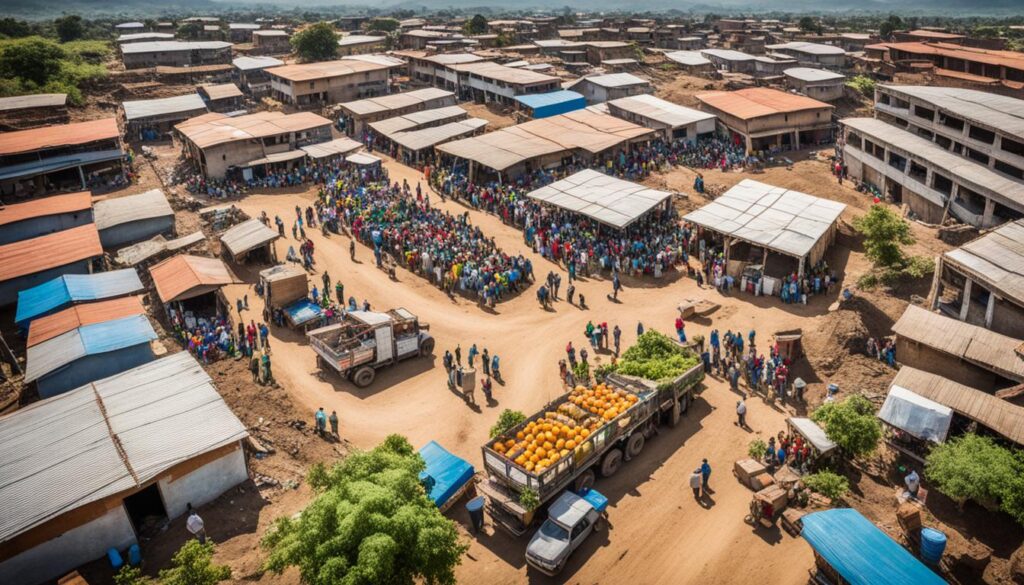
Developing countries face big challenges from climate change. This can make things worse for them and slow down their economic growth. Sea levels are rising, causing floods and droughts. These events can hurt farming, damage buildings, and force people to leave their homes. This leads to big economic and social problems.
In the global south, leaders are working on climate adaptation strategies. They’re building stronger buildings, helping farmers grow food in a changing climate, and setting up early warning systems. Getting help from other countries and climate finance is key to these efforts. It helps make developing economies more resilient over time.
Adapting to Climate Change in Developing Countries
The environmental challenges in developing countries are huge. The Earth’s temperature has gone up by 0.75º Celsius in the last 100 years. And 11 of the last 12 years were among the 12 warmest ever recorded. If we keep going on like this, temperatures could rise another 2ºC to 5ºC by 2100.
- Over the past 15 years, the United Nations Development Programme (UNDP) has raised $2.7 billion for over 400 big and 1,000 small projects on energy and climate.
- UNDP has helped more than 20 countries with projects and pushed forward 16 adaptation projects in 40 countries, with about $150 million in funding.
- The MDG Carbon Facility was set up to use the carbon market for long-term sustainable development.
These efforts show how hard people are working to deal with the climate change impact on developing economies. They’re putting a lot of effort into adaptation strategies in the global south.
« An average temperature rise of 1°C in a country and year caused per capita income to fall by 1.4 percent in the second half of the twentieth century. »
The economic effects of climate change can be really tough on developing countries. This shows how important it is to have strong adaptation strategies. These strategies help build resilience and protect progress.
Global Value Chains and Shifting Trade Patterns
Developing economies are joining global value chains (GVCs), which boosts their growth and industry. GVCs create more jobs and help economies grow. But, the COVID-19 pandemic and global tensions are making countries rethink their trade links.
This change brings both good and bad news for developing countries. Being part of GVCs means trading goods and sharing knowledge. This has led to faster growth, more skills, and more jobs in countries like China and India.
Now, policymakers in developing countries are looking for ways to do better in GVCs. They want to be more resilient and less affected by global issues. By using their strengths well, they can do better in GVCs.
The World Bank Group is helping countries make the most of GVCs. They know it’s key to link up with GVCs well to succeed. Governments need a clear plan, to work with the private sector, and to attract investments. Things like education, infrastructure, and making it easier for workers to move around are also important.
As trade changes, developing countries must adjust to keep up with GVCs. The World Bank Group’s Macroeconomics, Trade and Investment Global Practice is helping them. They offer specific help to deal with these changes and make the most of GVCs.
| Metric | 2010-2019 | 2020-2023 |
|---|---|---|
| Global GDP Annual Growth | 4% | 4% |
| Global Trade Annual Growth | 4.2% | 4.2% |
| FDI Growth | Near 0% | Near 0% |
| Share of Cross-border Greenfield Projects in Services Sector | 65% | Over 80% |
| FDI in Manufacturing (CAGR) | N/A | -12% |
| Greenfield Projects to China | 100% | 33% |
| Share of Geopolitically Distant Investments | 23% | 13% |
| Share of Environmental Technology Investments | 1% | 20% |
| Share of Greenfield FDI in LDCs | 3% | 1% |
| Share of FDI in Developing Countries to Low/Lower-middle Income Economies | N/A | Decreased by 1/3 |
The data shows how global trade is changing, with less FDI growth and new investment patterns. This means developing countries need to adjust to stay ahead in global value chains.
« Effective strategies can help developing countries optimize their participation in global value chains, leveraging their unique strengths and comparative advantages. »
Technological Advancements and Digital Transformation
Technology is changing the economy in developing countries. It brings new ways to work, access information, and create businesses. But, it can also make things worse for some people if not managed well.
Impact of Technology on Economic Growth
Policymakers in developing countries aim to use technology for growth that includes everyone. They’re tackling issues like digital skills, infrastructure, and training.
In least developed countries, only about 6% shop online, compared to 62% in richer countries. Many can’t get to a 4G network, which is key for online trade. 36 countries have gotten help to improve their e-commerce readiness, and 28 are making plans to use e-commerce in their growth strategies.
Countries like Peru, Ghana, Mauritania, and Mongolia are seeing the good side of technology. Peru is improving its digital networks and making rules to help competition and quality. Ghana is investing in ICT, which has made internet and financial access better. Mauritania is starting its digital plan with help from UNCTAD. Mongolia is focusing on improving digital skills and making trade easier.
But, making sure everyone benefits from technology is a big challenge. Productivity and income equality have been a problem in many countries. Automation is changing job needs, making some skills more valuable than others. This shift is affecting who earns more, leaning towards those with more capital. To fix this, a full approach is needed to support technological progress in developing economies, push digital transformation, and use technology’s role in economic growth.
Policy Recommendations and Way Forward
Developing countries face a tough economic landscape. Policymakers need new strategies for growth that’s both sustainable and inclusive. They must tackle income inequality, financial stability, and global coordination to build a strong future.
Strategies for Sustainable and Inclusive Growth
To get there, policymakers should look at these policy suggestions:
- Work on reducing income inequality and promise to protect everyone. This means balancing the budget with inclusive growth.
- Improve global policy coordination. Have central banks play a bigger role in keeping things stable and sustainable.
- Make rules for trading commodities, especially food, part of the global financial system.
- Change global financial rules to make sure developing countries have steady access to money and a stable financial scene. This encourages more investment.
By following these steps, developing countries can overcome the global economic slowdown. They can tackle issues like income inequality and poverty. This will lead to growth that’s sustainable and includes everyone.
« Policymakers in developing countries must consider innovative strategies to foster sustainable and inclusive growth, addressing the pressing issues of income inequality, financial stability, and global coordination. »
Conclusion
The global economy, especially in developing countries, faces many challenges. These include slow growth, ongoing inequalities, climate change, and geopolitical tensions. These issues threaten the chance for sustainable and inclusive development.
Policymakers in developing countries must tackle these challenges. They need to focus on reducing income gaps, improving global cooperation, and changing the global financial system. This way, they can unlock their countries’ economic potential and help create a more stable and fair world.
We must take a comprehensive approach to tackle inequality. We should use technology to our advantage and work together with neighboring countries. By working together and focusing on sustainable growth, developing countries can overcome their challenges. They can become a positive force in the global economy.