
Morocco is known for its rich food traditions. Its desserts are a big part of that. From Mulhalbia to Chebakia, these treats take you on a taste journey through North Africa. UNESCO has recognized Moroccan cuisine as an Intangible Cultural Heritage. This shows how important its desserts are to the country’s culture.
Let’s dive into the most popular Moroccan desserts. They will make your taste buds dance and take you straight to Morocco. You’ll love the mix of spices, honey, cinnamon, orange blossoms, walnuts, and almonds in these pastries.
Key Takeaways
- Moroccan cuisine is famous for its tasty desserts, many of which are recognized as an Intangible Cultural Heritage by UNESCO.
- These pastries and sweets are special because of their unique mix of spices, honey, cinnamon, orange blossoms, walnuts, and almonds.
- Traditional treats like Mulhalbia and Chebakia let you taste the flavors of North Africa.
- Find out about the top Moroccan desserts, each with its own special taste and cultural background.
- Learn about the vibrant food traditions that make Moroccan cuisine a favorite among food lovers worldwide.
Tantalizing Traditional Moroccan Sweets
The world of traditional Moroccan desserts is full of rich culture. It combines Mediterranean, Arab, and Berber tastes over the years. At the center is the mulhalbia, a sweet orange blossom crème brûlée. It’s a key part of Morocco’s food history and often gets all the attention.
A Rich Cultural Heritage
Moroccan sweets are a big deal in the country’s social and cultural events. They’re found at weddings, holidays, and family get-togethers, bringing people together with their amazing tastes. Before Ramadan, big trays of these sweets are made to share each night after the fast ends.
Now, gourmet shops and online stores are bringing Moroccan sweets to people all over the world. Morocco’s desserts and sweets use spices in a special way. This creates a mix of smells and tastes that really stand out.
The Iconic Mulhalbia
Mulhalbia, a famous Moroccan dessert, shows off the country’s unique culture. It’s a sweet orange blossom crème brûlée loved in Morocco and around the world. It’s almost as famous as the big Moroccan pastries that also show off the local flavors.
« Moroccan desserts are a testament to the country’s rich cultural tapestry, where the flavors of the Mediterranean, Arab, and Berber worlds converge, creating a symphony of indulgence. »
Gazelle Horns: A Symbol of Elegance
The gazelle horns, known as « Kaab el Ghazal, » are iconic Moroccan pastries. They symbolize elegance and cultural heritage in North Africa.
Their crescent shape honors the graceful gazelle, a revered animal in Arab culture. These pastries are a treat and reflect the region’s culinary traditions and hospitality.
Gazelle horns are key at family events, religious festivals, and special occasions. They symbolize celebration, generosity, and Moroccan hospitality.
In Morocco, Tunisia, and Algeria, gazelle horn pastries vary. The Tunisian version is fried, while Moroccan ones can be plain or decorated with various toppings. Algerian ones are rolled in icing sugar or have almond chips.
Yasmine Boudia, an Algerian pastry chef in France, has made gazelle horns famous worldwide with her Maison Yasmine patisserie. Her version uses ground almonds, lemon zest, orange blossom water, sugar, and butter for a delicious taste.
Making gazelle horns is time-consuming but rewarding. The mix of flavors and textures makes each bite delightful. From the buttery pastry to the almond and citrus filling, they’re a beloved symbol of Moroccan culture.
Chebakia: A Ramadan Favorite
As Ramadan comes closer, the sweet smell of chebakia, a traditional Moroccan pastry, fills the air. This treat is also called « m’harka. » It’s a favorite in Moroccan homes during Ramadan.
Deep-Fried Delicacy
Chebakia is a family effort, with each batch around 2 kg (4 pounds). Making it takes about 45 minutes, and then 45 minutes to cook. That’s a total of 1 hour and 45 minutes of hard work.
Spiced and Sweet
The dough includes saffron, cinnamon, and ground anise. These spices give it a unique taste and help with digestion. The cookies are fried until golden brown.
Then, they’re soaked in about 1 1/2 kg (3 lbs.) of honey for 5 to 7 minutes. This makes them crunchy and sweet.
The recipe needs a lot of ingredients, like 1/2 kg (4 cups) of flour and 200 g (7 oz.) of sesame seeds and tahini. Making chebakia is a big job, but Moroccan women often work together to make lots of it.
If you want to taste Ramadan’s flavors, try chebakia. This deep-fried, honey-soaked pastry is full of spices and crunch. It shows off Morocco’s rich food culture.
Baklava: A Middle Eastern Treasure
Baklava is a tasty pastry from the Middle East that has won over dessert fans all over the world. It comes from the Ottoman Empire and is still loved in Turkey today. You can find it in pastry shops, filled with nuts and covered in honey syrup.
This treat is made with flaky phyllo dough, butter or olive oil, and a mix of nuts. The Moroccan version, called baklawa, adds cocoa to the mix for extra flavor.
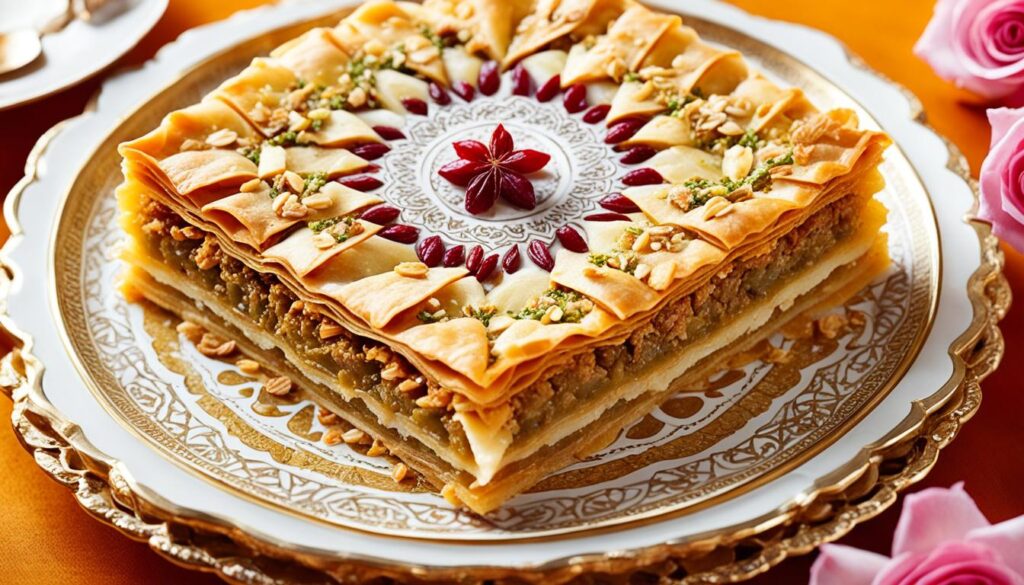
Baklava is not just tasty; it’s also good for you. Layla’s Delicacies, a famous Middle Eastern pastry shop, makes desserts with 70% healthy nuts. These nuts provide healthy fats and potassium.
Ingredients like pistachios, almonds, pine nuts, and hazelnuts add texture and flavor. Sesame seeds, rose water, and cardamom make the flavors even more complex. Almond flour and extra virgin olive oil make it a healthier option.
Baklava is a favorite in many places, including the Levant, Balkans, Caucasus, and North Africa. Its crispy layers and sweet syrup make it a treat for the senses.
« Baklava, a syrupy confection with dozens of delicate layers, is a sought-after treat in regions including the Levant, Balkans, the Caucasus, and North Africa. »
Baklava and its Moroccan version, baklawa, are perfect for special occasions or just a sweet treat. They showcase the rich food traditions of the Middle East, offering a delightful taste of history in every bite.
Seffa: From Humble Beginnings
Seffa is a traditional Moroccan dessert loved by many. It’s made from semolina or angel hair and has a long history. This dish has been a staple for generations.
Once, seffa was seen as the breakfast of the poor. It was high in energy, helping workers through long days. Now, it’s celebrated as a special treat for family gatherings, birthdays, and weddings. Even kids love this tasty Moroccan couscous dessert.
Making seffa is a big job that takes about 3 hours. The semolina or angel hair is steamed carefully. The result is a mix of savory and sweet flavors, with lots of butter, cinnamon, and almonds. This traditional Moroccan sweet is a favorite in the country’s Moroccan pastries and traditions.
« Seffa is a true testament to the ingenuity and resourcefulness of Moroccan cooks, who have transformed a humble ingredient into a delectable and versatile delight. »
Seffa still wins over the hearts and taste buds of Moroccans and visitors. It shows off the country’s rich culture and the lasting charm of its traditional Moroccan sweets.
Macroute: A Diamond in the Rough
Macroute, also known as « macrude, » is a North African dessert from the Algerian border. It’s loved in Morocco for its sweet candied dates and unique diamond shape. This treat has been popular since the ninth century, especially in Fez, thanks to the Cayruans’ cooking skills.
The Cayruans came from Kairouan in Tunisia. They were experts at making a tasty filling with dates, figs, and almonds. They’d roll out wheat semolina, bake it, and fill it with honey and orange blossoms. This made it a treat for the senses.
Macroute, or « macrude, » is a favorite among traditional Moroccan sweets and Algerian-Moroccan desserts. Its special shape and taste have made it a beloved dessert in Morocco. People see it as a macroute, a true diamond in the rough.
« Macroute is a delightful paradox – a humble pastry that packs a punch of flavor and a touch of elegance. »
Macroute is perfect for special events or just a sweet treat. Its lasting popularity shows the deep culinary roots of North Africa. It’s a true gem among Moroccan sweets.
Briuat: A Triangular Treat
In the world of Moroccan pastries, the briuat is a standout. It’s a triangular delight that shows off Morocco’s rich food culture. It mixes savory and sweet tastes in a perfect way.
Briuats are like marshmallows and similar to the famous seffa. They can be filled with tasty ingredients like tuna, chicken, walnuts, almonds, and cinnamon. All these are wrapped in a dough that’s buttery and has orange blossom flavor.
Savory and Sweet Fillings
Briuats are amazing because they can be both savory and sweet. In the Middle East, people love these pastries filled with sweet things. They have a crunchy outside and melt in your mouth, thanks to the right mix of butter and orange blossom water.
Whether you like tuna or prefer sweet fillings like walnuts and cinnamon, the briuat is a treat. It shows the creativity of Moroccan pastry chefs. This traditional Moroccan pastry is a must-try for those wanting to try traditional Moroccan desserts and Moroccan sweets.
« The briuat is a true reflection of the cultural tapestry that defines Moroccan cuisine, seamlessly blending the savory and the sweet to create a delicacy that is both satisfying and captivating. »
Sphenje: The Moroccan Churro
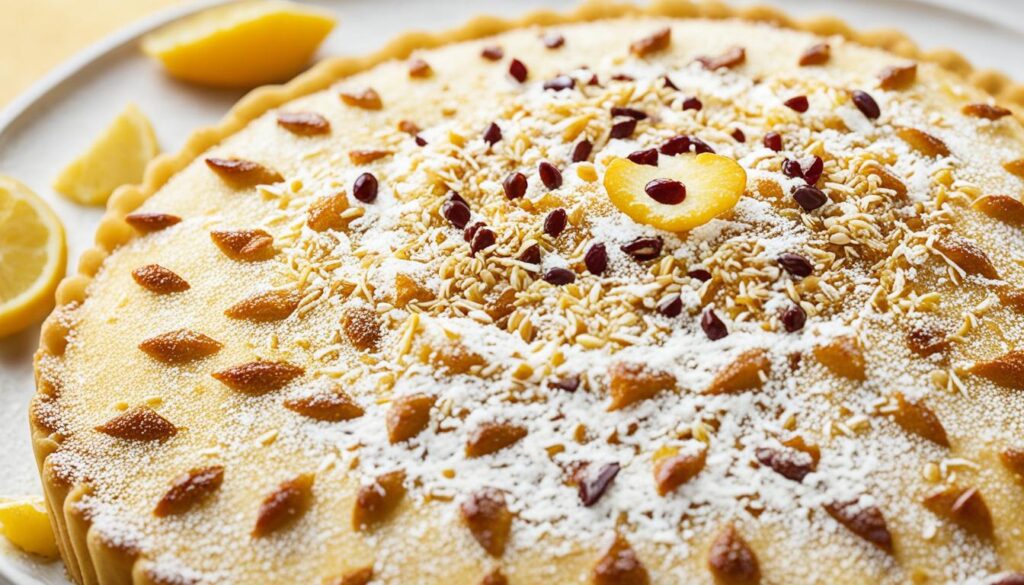
In Morocco, a traditional pastry is a favorite – the sphenje, also known as sfenj. It’s like a Spanish churro but with a Moroccan twist. It’s fried and has a doughy texture.
The sphenje in Morocco are made with wheat flour. This makes them light and airy. You can find these tasty treats at market stalls and bakeries. They look golden brown and smell amazing.
People love to eat sphenje in the morning or afternoon. They enjoy them with tea or a spicy drink. You can also dip them in icing sugar or other sweet toppings.
The sphenje shows off Morocco’s rich culture. It’s a big part of their food traditions. Whether eating it on the street or at home, it’s a treat that captures Moroccan pastry excellence.
« Sphenje, the Moroccan churro, is a delightful testament to the country’s rich culinary heritage, blending tradition and modernity in every bite. »
Fekka: A Cake for All
In Morocco, fekka is a favorite dessert loved by many. It’s a traditional Moroccan dry cake enjoyed all year. The recipe is simple, using eggs, sugar, flour, and yeast, which are easy to find and affordable.
Some families add fruits, honey, and milk to make it sweeter. Wealthier families might use almonds, sultanas, dried fruit, ginger, and anise for extra flavor. But fekka is always served with mint tea or milk, especially by kids.
Fekka is a hit at cultural festivals and celebrations all year. It’s a staple dessert in Morocco. People enjoy it as a snack, after dinner, or as a special duaz atai treat. It’s a beloved part of Moroccan food culture.
| Ingredient | Quantity |
|---|---|
| Eggs | 3 |
| Caster Sugar | 200g |
| Plain Flour | 250g |
| Dried Cranberries | 100g |
| Unsalted Shelled Pistachios | 100g |
| Roasted Almonds | 100g |
| White Chocolate | 100g |
To make these tasty Moroccan dry cakes, divide the dough into three. Roll each part into a cylinder, about 3 cm wide. Bake at 180°C for 30-35 minutes, then at 150°C for another 10-15 minutes.
Let the cookies cool for 20 minutes before decorating with white chocolate. Add dried cranberries, pistachios, and almonds on top. These fekkas stay fresh for months in an airtight container, perfect for any time of the year.
Knafeh: Crunchy and Creamy
Knafeh is a traditional Moroccan dessert known for its crunchy outside and soft inside. It’s shaped like a triangle and has a bright orange color. The dessert is made with Acavi cheese, kadaifs, and melted butter.
It’s then topped with a syrup flavored with rose water. This makes the dessert truly special.
A Ramadan Night Delight
During Ramadan, Arabs love to enjoy this tasty pastry. It’s perfect for breaking the fast and getting strength for the rest of the day. The mix of creamy filling and crunchy outside is a hit at Ramadan parties.
Knafeh is a favorite in the Middle East for its delicious taste. It’s made with shredded phyllo dough and often has a sweet surprise inside. Mozzarella cheese is used instead of traditional Arabic cheese because it’s easier to find and melts well.
The syrup for knafeh includes rose water and orange blossom water. The pastry is shredded and coated with melted butter before baking. After baking, the dessert is soaked in the syrup and topped with pistachios.
« Knafeh is a true taste of Moroccan heritage, capturing the essence of the country’s rich culinary tradition. It’s a dessert that brings people together, creating lasting memories and celebrating the joy of shared experiences. »
Knafeh is enjoyed during Ramadan and as a special treat. Its mix of crunchy and creamy with aromatic flavors is a must-try for those wanting to explore maghrebi desserts.
Ghoriba: Nutty Mushroom Cookies
In Morocco, the ghoriba, or Moroccan mushroom cookies, are a beloved treat. They are a mix of the country’s rich culture and tasty flavors. These cookies blend the scents of the Maghreb region.
The ghoriba is a mix of almonds and coconut, with orange blossom water and lemon zest. It looks like Italian macaroons or French macarons but has a unique touch with almond slices. This makes it stand out among Maghrebi sweets.
These cookies are a hit during holidays, family get-togethers, or with Moroccan mint tea. They’re made with almond flour and semolina flour. This gives them a special taste and texture.
The ghoriba cookies don’t have eggs or dairy, making them vegan. Applesauce replaces eggs, and baking powder makes them light. They taste sweet with a hint of lemon.
Enjoying ghoriba with Moroccan mint tea or on its own is a treat. They show off the best of Maghrebi sweets. Their shape and taste make them a favorite around the world.
Sellou: An Energizing Snack
Discover the delightful Moroccan treat known as Sellou. This traditional snack is loved during Ramadan for its nutrients and energy boost. It’s also enjoyed at special events like weddings and celebrations, often with Moroccan tea.
Sellou is made with almonds, sesame seeds, and spices. Each family or region has its own way of making it. But the core idea is a snack that’s both nutritious and a tribute to Morocco’s food culture.
Making Sellou takes time and care. First, sesame seeds are toasted, then almonds are blanched and fried until golden. Finally, all the ingredients are mixed together. This creates a snack that’s crunchy and creamy, with a mix of sweet, nutty, and spiced flavors.
Sellou is very versatile. You can eat it as a quick snack or have it with Moroccan tea. It also keeps well, staying fresh for two months in a sealed container or up to six months in the freezer.
If you want a tasty and nutritious snack or a taste of Moroccan culture, try Sellou. It’s part of a tradition that includes sfouf, zmita, and other Moroccan ramadan desserts and energy snacks loved by many.
« Sellou is not just a dessert, it’s a symbol of Moroccan hospitality and tradition. »
Discover the Best Popular Moroccan Desserts
From the iconic Mulhalbia to the deep-fried Chebakia, Morocco has many tasty desserts. These sweets use ingredients like honey, almonds, and orange blossoms. They show off the country’s rich culture.
Looking for a crunchy pastry or a creamy treat? Morocco has a dessert for you. Baklava, with its layers of nuts and honey, is a favorite. Maamoul cookies, filled with dates or nuts, are another classic treat.
Enjoy these desserts with mint tea for a real Moroccan feel. Chebakia is special for big events, while Sellou and Cinnamon Oranges are easy to find. There’s a dessert for every taste.
Try the best popular Moroccan desserts and dive into Moroccan food traditions. These must-try Moroccan sweets will impress anyone who tries them.
« Moroccan desserts are not expensive, typically sold by weight, allowing customers to get about a pound of cookies for less than $5. »
The Ghoriba cookies and Knafeh show Morocco’s love for its food. These popular Moroccan desserts offer a mix of flavors and textures. They highlight Moroccan hospitality and sweetness.
Conclusion
Moroccan desserts are a true delight for the senses. They show off the country’s vibrant culinary traditions and unique flavors. From the iconic gazelle horns to the energizing Sellou, these treats highlight Morocco’s rich cultural heritage.
They blend Mediterranean, Arab, and Berber influences perfectly. If you’re planning a trip to Morocco or just want to try some authentic flavors, exploring these desserts is a must. It’s perfect for any food lover.
The variety of Moroccan desserts reflects the country’s Moroccan culinary heritage. Each region and community adds its own flavor to the mix. From the traditional Baklava to the simple yet tasty Sesame-Pistachio Balls, these desserts show off Moroccan pastry makers’ creativity and skill.
Moroccan desserts are becoming more popular around the world. Their unique ingredients like argan oil, pistachios, and saffron, along with traditional methods, have won over food lovers globally. This shows how these desserts are captivating people everywhere.