
« The key to trading success is emotional discipline. If intelligence were the key, there would be a lot more people making money trading. » – Victor Sperandeo, renowned trader and author.
Starting your day trading journey is exciting and could be very rewarding. But, it’s important to approach it with care and understand the market well. Day trading means buying and selling financial assets within the same day. It can be profitable if you have the right mindset and tools.
This guide will help you start with day trading. We’ll cover important strategies, platforms, and how to manage risks. These tips will help you in the fast-paced financial markets.
Key Takeaways
- Learn about the financial markets and what affects prices.
- Start small and slowly increase your investments as you get more experience.
- Spread your investments to reduce risk and not put all your eggs in one basket.
- Use stop-loss orders to control potential losses and manage risks.
- Keep up with economic news and global events that could change the markets.
What is Day Trading?
Day trading is a way to make money by buying and selling stocks or other financial items within one day. Traders use technical analysis and strategies like momentum trading to make quick profits from price changes. They aim to profit from the day’s market ups and downs.
Definition and Overview
Day trading means buying and selling things like stocks or currencies in the same day. The goal is to make money from small price changes, not from holding onto investments overnight. Traders look to make many trades to earn from the day’s market swings.
How Day Trading Works
Day traders use technical analysis and tools to spot and act on short-term price changes. They combine real-time data, news, and indicators to make their moves. Using leverage can increase their potential gains but also their losses.
| Characteristic | Description |
|---|---|
| Time Frame | Day traders hold their positions for a short time, from minutes to hours, closing all trades by day’s end. |
| Strategies | Scalping, range trading, trend following, and news-based trading are common strategies. |
| Volatility | Day traders need market volatility to make profits, using the day’s price changes. |
| Risk Management | Managing risk with strategies like position sizing and stop-loss orders is key for day traders. |
Day trading needs skill, knowledge, and discipline to succeed. It can lead to quick profits but also brings a high risk of losses. Most individual day traders don’t make money over time.
Advantages and Disadvantages of Day Trading
The world of day trading is complex and often misunderstood. It offers the chance for quick profits, but it also has big risks and challenges. Let’s look at the pros and cons of day trading to help you decide.
Advantages of Day Trading
- Potential for High Profits: Day trading can lead to big earnings by making the most of small price changes and doing many trades in one day.
- Independence and Flexibility: Day traders get to be their own bosses and set their own hours, usually working just 2-3 hours a day.
- Variety and Excitement: Day trading is fast-paced and exciting, with lots of chances to check the market and make quick moves.
Disadvantages of Day Trading
- High Risk and Potential Losses: Day trading is risky and can lead to big losses, especially for new traders.
- Emotional and Psychological Toll: The stress of day trading can affect your emotions and decision-making, leading to losses.
- Transaction Costs and Fees: Day trading has high costs like commissions, fees, and spreads, which can eat into profits and make it hard to make money consistently.
- Steep Learning Curve: To be good at day trading, you need to understand market dynamics, technical analysis, and trading strategies. This takes a lot of time and effort.
Day trading may offer quick profits, but it also has big risks and challenges. Those thinking about day trading should carefully consider the pros and cons. They should also have a good trading plan and be ready to spend a lot of time and effort to succeed.
« The market is the most efficient machine in the world for transferring wealth from the impatient to the patient. » – Warren Buffett
Success Rate of Day Traders
Many have looked into how successful day traders are. Studies show that only a few make it big in this tough trading world. It’s said that less than 10% of traders can make a steady profit. This fact comes from brokers who know the real numbers.
Studies on Profitability
A 2014 study by University of California professors looked at over 3.7 billion trades. They found that just 3% of day traders were making money. Another study in Brazil from 2013-2015 showed that 97% of traders lost money. Only 1.1% made more than the minimum wage.
These findings show how tough it is for day traders to stay profitable. The risk in day trading is high, and so are the emotional demands. This makes it hard for most people to succeed.
« The success rate for day trading remains low, emphasizing the importance of disciplined effort and efficient work for those aspiring to succeed in this field. »
Even with the low success rate, some day traders do make a living. They usually have a lot of money, know the market well, and stick to a strict trading plan.
The Basics of Stock Charts
Day traders use technical analysis to understand the market and predict its future. They often turn to candlestick charts. These charts show the high, low, open, and closing prices for a set time. This helps traders see the market’s price movement.
Candlestick Charts and Patterns
Candlestick charts are key for traders. They show market sentiment through patterns like the hammer and engulfing pattern. These patterns help traders know if the market is up or down.
Best Charting Time Frames
Day traders usually look at short-term charts like 1-minute or 5-minute ones. These let them see quick market changes. Some use 15-minute or hourly charts for a wider view.
Technical Indicators
Day traders also use technical indicators. Tools like volume bars and the Relative Strength Index (RSI) help spot trading chances. These indicators, along with chart analysis, give a full view of the market.

« Successful day trading requires a deep understanding of how to read and interpret stock charts, as well as the ability to identify key technical indicators that can signal potential trading opportunities. »
How to Start Day Trading
Starting day trading needs a full plan that includes market knowledge, enough money, and discipline. Here are the key steps to begin:
Gain Market Knowledge
Learn the basics of day trading like technical analysis, trading psychology, and managing risks. These skills help you move through the markets with confidence.
Sufficient Capital Requirements
Decide how much money you need for day trading. Experts say start with $25,000 to $50,000 to follow the Pattern Day Trader rule and manage your trades well. Always trade with money you can afford to lose.
Develop Trading Discipline
Day trading needs discipline, patience, and control over emotions. Create a clear trading plan with your goals, how much risk you can take, and your trading strategies. Stick to your plan and don’t let feelings guide your trading.
Follow these steps to lay a strong base for your day trading journey. Remember, making money in day trading means learning, planning, and staying disciplined.
| Key Considerations for Starting Day Trading | Description |
|---|---|
| Market Knowledge | Understand trading principles, technical analysis, and risk management |
| Capital Requirements | Allocate sufficient funds (minimum $25,000 to $50,000) to comply with regulations and manage positions effectively |
| Trading Discipline | Develop a well-defined trading plan and stick to it, controlling emotions and making calculated decisions |
With the right knowledge, enough money, and disciplined trading, you’re set for success in day trading.
Day Trading Strategies for Beginners
For beginners in day trading, knowing different strategies is key. Swing trading is one method that looks for short-term trends and reversals. Another strategy is trading news-driven events, like economic data or corporate earnings releases.
Successful day traders work on their strategies until they make consistent profits and keep losses small. Here are some tips for beginners:
- Look for stocks with big price moves: These stocks can offer big profits from small moves.
- Use momentum trading patterns: Patterns like bull flags and flat top breakouts help spot good entry points and aim for a 2:1 profit-loss ratio.
- Trade during the most active hours: The first two hours the market opens (9:30 am – 11:30 am) are best for day trading, with the most activity.
- Choose stocks with low float and high volume: Stocks with fewer shares and high volume are more volatile and good for day trading.
Day trading is risky, and most traders lose money. Beginners should start with one or two trades a day. This helps in managing risks and aiming for big gains. By improving your strategies and being disciplined, you can do well in day trading.
| Strategy | Description | Potential Gains |
|---|---|---|
| Momentum Day Trading | Capitalizing on stocks with significant price movements and high relative volume | Over six figures in verified profits this year |
| Reversal Trading | Identifying and trading on market reversals using specific chart patterns | Skilled traders can make six figures working only 2-3 hours a day |
| Pre-Market Gapper Trading | Focusing on stocks that experience significant price gaps in the pre-market session | Potential for substantial gains from short-term price movements |
« Capturing small portions of large moves, such as 5% or 10%, can still result in notable profits. »
Day Trading Platforms and Tools
For successful day trading, having good day trading platforms and day trading tools is key. Pro day traders use many resources to get ahead in the market. They make quicker, smarter trading choices.
Lightspeed Financial Broker is a top day trading platform. It has hot keys, direct access, and fast order execution. Capital Market Elite Group (CMEG) is another great option. It lets traders with as little as $500 trade all day.
Traders also use special day trading tools to improve their analysis and choices. The Warrior Trading Scanners spot trading chances by looking at market indicators. Warrior Charts offer a budget-friendly charting solution for day traders.
| Day Trading Platform | Key Features |
|---|---|
| Lightspeed Financial Broker | Hot keys, direct access routing, fast executions |
| Capital Market Elite Group (CMEG) | Unlimited day trading, $500 minimum balance |
Using the right day trading platforms and day trading tools helps traders make better choices. They can trade more efficiently. This can lead to more success in the competitive day trading world.
« Successful day traders typically only work 2-3 hours per day, but they require access to the best day trading platforms and day trading tools to make the most of that limited time. »
Risk Management in Day Trading
Day trading is risky as traders try to make quick profits from short-term price changes. To limit losses, successful traders use strong day trading risk management strategies. They set strict stop-loss orders, diversify their investments, and risk only a small part of their account on each trade. It’s also key to stay disciplined and in control of emotions, sticking to the trading plan.
The one-percent rule advises not to risk more than 1% of your capital on one trade. This rule is often followed by traders with less than $100,000. Traders use moving averages like the 5-, 9-, 20-, 50-, 100-, and 200-day averages to set stop-loss and take-profit points. It’s wise to set stop losses at least 1.5 times the current high-to-low range to avoid unnecessary losses.
| Risk Management Strategies | Importance |
|---|---|
| Setting strict stop-loss orders | Limits potential losses |
| Diversifying portfolio | Manages risk across sectors, market caps, and regions |
| Risking a small percentage per trade | Prevents account blowouts |
| Maintaining trading discipline | Ensures adherence to trading plan and emotional control |
Looking at two traders shows that making more money and having a balanced win rate is key for day trading profitability. Risk/reward ratios are important, aiming for 3:1 or higher to ensure steady profits.
« Cutting your average loss by $100 has the same net effect as increasing your average profits by $100. »
Using stop-loss orders is vital for managing risk to prevent big losses. Planning ahead and setting these orders helps reduce the shock of losing. It’s important to know your maximum loss per-trade, per-day, and per-week for effective day trading risk management.
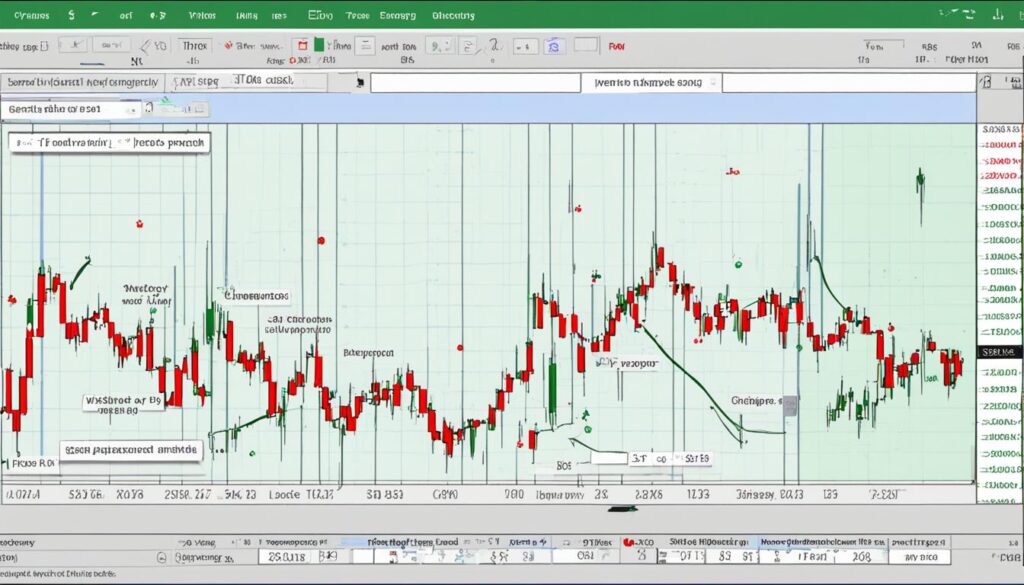
Good risk management lets traders afford to be wrong more often until they find the best trading setup. Balancing risk and reward increases the chances of long-term success in the markets.
Day Trading Psychology
Day trading is more than just knowing the market and technical skills. It also needs a lot of self-discipline and objectivity. Traders must make quick, emotionless decisions in a fast-changing market. Fear, greed, and overconfidence can lead to bad trading choices and big losses.
Emotional and Psychological Challenges
Handling the emotional and psychological parts of day trading is key for making money over time. Day traders need to manage their feelings and stay calm and rational, even when the market moves fast. Fear of missing out (FOMO), the excitement of winning, and the pain of losses can lead to bad decisions if not controlled.
Building a strong trading psychology is vital for long-term success in day trading. This means having discipline, patience, and the skill to look at the market objectively without letting feelings guide you. By improving these skills, traders can handle market ups and downs better and make smart, emotionless trading choices.
« The key to successful day trading is not just understanding the technical aspects of the market, but also managing your own emotional and psychological responses to it. »
To beat the emotional hurdles of day trading psychology, traders should work on managing stress, staying positive, and making logical decisions. This might mean practicing meditation, keeping a trading journal, and always learning and getting better at trading.
By tackling the emotional challenges of day trading, traders can boost their chances of making money over time and succeeding in the fast-paced day trading world.
Regulations for Day Traders
Day trading means buying and selling financial instruments within one day. In the U.S., it’s governed by the Financial Industry Regulatory Authority (FINRA) and the Securities and Exchange Commission (SEC). They set rules to keep the markets stable and fair.
The « pattern day trader » rule is a key guideline. It says if you make four or more day trades in five business days, you’re a « pattern day trader. » To keep trading, you must have at least $25,000 in your account.
This rule is meant to protect new traders from the dangers of fast trading. It makes sure only those with enough money and knowledge can take part in this risky activity.
Day traders also follow other rules, such as:
- Compliance with margin requirements: You must keep a certain margin in your account for trading.
- Disclosure of trading activity: Brokers must tell you about your day trading, like how many trades you made and your account balance.
- Restrictions on leverage: The SEC and FINRA limit how much leverage day traders can use to reduce risks.
These rules help protect investors and the financial markets. They make sure trading is fair and open. They also help day traders have the right resources and knowledge to trade well.
| Regulation | Description |
|---|---|
| Pattern Day Trader Rule | Investors who execute four or more day trades within a five-business-day period must maintain a minimum account balance of $25,000. |
| Margin Requirements | Day traders must maintain a certain level of margin in their accounts to support their trading activities. |
| Disclosure of Trading Activity | Brokers are required to provide detailed information about a client’s day trading activities, including the number of day trades executed and the account balance. |
| Leverage Restrictions | The SEC and FINRA have set limits on the amount of leverage that day traders can use. |
By knowing and following these rules, day traders can trade with more confidence. This helps them manage the risks of their trading.
Who Makes a Living by Day Trading?
Day trading is a thrilling field where both institutional and individual traders chase profits in fast markets. But who are the people making a living from this intense trading style?
Institutional Day Traders
Institutional day traders work for big names like hedge funds or proprietary trading desks. They have big advantages, like a dedicated desk, top financial data, and advanced tools. This setup helps them make smart trades and manage risks well.
Individual Day Traders
Individual day traders trade on their own and take on more risk. They don’t have the support of a big company. So, they use technical analysis and leverage to make money from small price changes. They face big emotional challenges, needing to stay disciplined and calm in a volatile market.
Whether they’re institutional or individual, day trading demands total dedication. Making steady profits is not easy. Both groups must handle risks and market changes to succeed over time.
| Characteristic | Institutional Day Traders | Individual Day Traders |
|---|---|---|
| Access to Resources | High (dedicated trading desk, advanced analytics) | Limited (rely more on personal expertise) |
| Risk Profile | Lower (institutional backing, diversification) | Higher (greater reliance on leverage and technical analysis) |
| Emotional Challenges | Moderate (team support and infrastructure) | Significant (must maintain discipline and control emotions) |
The day trading world is varied, with both institutional and individual traders aiming for success. Knowing the strengths and challenges of each group sheds light on professional day trading.
Getting Started with Paper Trading
Before diving into day trading, it’s key for beginners to practice with paper trading. This lets new traders get used to the market and their trading tools without real money risks. It’s a way to learn without losing money, making it a vital step before trading for real.
Many online brokers like Interactive Brokers, TradeStation, and TD Ameritrade offer paper trading accounts. Traders can also use spreadsheets, pen-and-paper, or online tools to practice. This practice boosts confidence and helps traders make better decisions by removing emotions from trading.
But, remember that paper trading isn’t exactly like real trading. Things like slippage and spreads might not match up. Still, it’s a great way for beginners to learn about the market and test their strategies. It helps build skills and discipline before trading with real money.