
In today’s world, cyberattacks are a big threat, costing the global economy $6 trillion in 2023. Businesses need strong cybersecurity to protect their data and systems. Multi-factor authentication (MFA) is key in cyber insurance. But, why is MFA so important for cyber insurance, and how does it protect your digital assets?
This article explores MFA’s role in cyber insurance. It shows how MFA can protect your business from digital threats. We’ll look at different MFA types, how they work with insurance, and strategies to strengthen your cybersecurity. This will help you get better insurance terms.
Key Takeaways:
- Cyber insurance is vital for protecting against digital threats, with MFA being crucial.
- MFA makes identity verification stronger by needing more than one form of authentication. This lowers the risk of unauthorized access to sensitive data and systems.
- Insurance companies see MFA as a basic security need, especially for high-risk areas like finance and healthcare. Without it, they might not cover you or charge more.
- Using advanced MFA, like adaptive authentication and AI, can help you get better insurance terms and protect against complex cyber threats.
- It’s important to match your cybersecurity strategy with MFA best practices. This keeps your cyber insurance coverage strong and protects your digital assets.
What is Multi-Factor Authentication (MFA)?
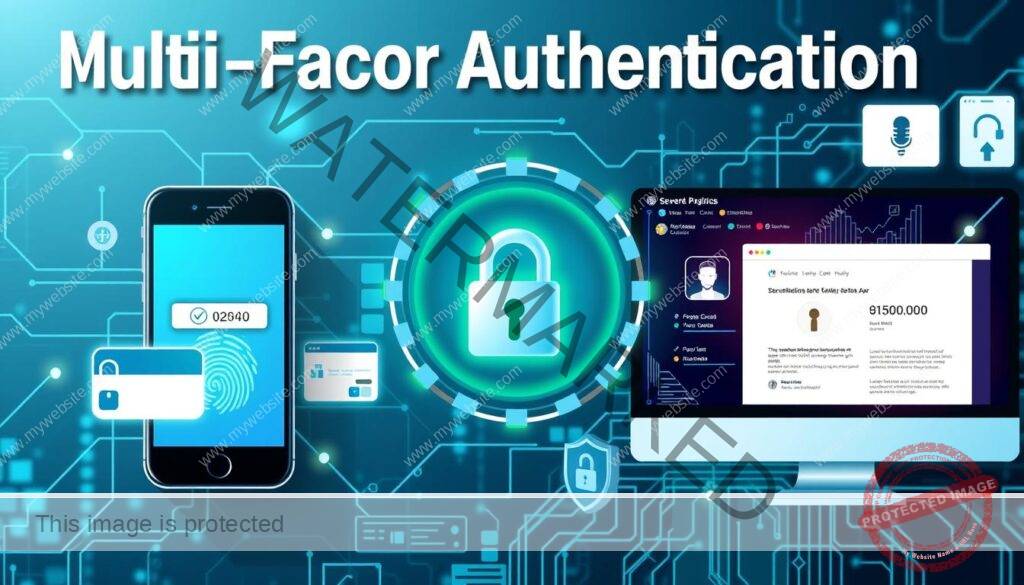
Multi-factor authentication (MFA) is a way to make sure only the right people get into a system. It uses more than one way to check who you are. There are three main types of authentication:
- Something you know, like a password or PIN
- Something you have, like a physical token or a mobile device
- Something you are, like your fingerprints or face
MFA adds extra security by combining these methods. This makes it much harder for hackers to get in. With cybercrime costs expected to hit $10.5 trillion by 2025, and ransomware attacks on the rise, with a $40 million payout in 2021, MFA is more important than ever.
Something You Know: Passwords and PINs
Passwords and PINs are common but vulnerable. Hackers can steal or guess them easily. MFA adds an extra layer of security, making it harder for them to get in.
Something You Have: Physical Tokens and Devices
Physical tokens, like USB keys or smart cards, add security by needing a physical item. Mobile devices can also be used as software tokens, giving one-time passwords or using biometrics.
Something You Are: Biometric Data
Biometric data, like fingerprints or facial recognition, is the most secure. It’s hard for hackers to fake or steal this kind of data, unlike passwords or tokens.
Using MFA with different types of authentication can greatly improve a business’s security. It helps protect against cyber attacks.
Importance of MFA for Cyber Insurance Coverage
In the face of rising cyber threats, cyber insurance providers have recognized the critical role of multi-factor authentication. They see it as key to reducing an organization’s risk exposure. As a result, MFA has become a standard for businesses looking for cyber insurance.
Insurers now see MFA as a must-have before they grant policies. Businesses that use MFA across their systems are more likely to get good insurance terms. This is because MFA helps prevent costly data breaches and ransomware attacks.
MFA’s effectiveness in preventing cybersecurity breaches is notable in industries like banking and healthcare, illustrating the practicality and success of MFA implementation.
« MFA remains a powerful cybersecurity defense due to its capacity to protect vital information and safeguard against evolving cyber dangers. »
By requiring strong cyber insurance requirements, including multi-factor authentication, insurers aim to reduce risk. They want to improve the policy coverage for their clients. This helps businesses stay safe online and keep their operations running smoothly.
As the digital world keeps changing, MFA’s role in cyber insurance will grow. Companies that focus on MFA show they care about cybersecurity. This builds trust and can lead to better insurance deals and more protection.
Types of MFA Solutions
Organizations have many options for multi-factor authentication (MFA). These include hardware tokens, software tokens, and smart cards. Each has its own benefits and things to consider.
Hardware Tokens
Hardware tokens are physical devices that show one-time passwords. They can also connect to a computer via USB. These devices add an extra layer of security, making them hard to hack.
Software Tokens
Software tokens are digital, stored on phones or computers. They work with a password or PIN to verify identity. While convenient, they can be vulnerable to theft or malware.
Smart Cards
Smart cards are like credit cards but with a chip for storing data. They’re used for access control in various settings. Known for their security, they’re popular in secure industries.
Choosing the right MFA solution depends on several factors. These include security needs, user convenience, resources, and system compatibility. The right choice can greatly improve cybersecurity and protect digital assets.
| MFA Solution | Key Features | Advantages | Disadvantages |
|---|---|---|---|
| Hardware Tokens | Physical devices that generate one-time passwords | High security, resistance to phishing | Potential for loss or damage, additional cost |
| Software Tokens | Virtual tokens stored on mobile devices or computers | Convenience, digital access | Vulnerability to device theft or malware |
| Smart Cards | Credit-card-sized cards with embedded computer chips | High security, versatile applications | Integration challenges, additional hardware required |
« MFA drastically reduces the likelihood of successful cyberattacks by requiring multiple verification factors for access. »
How Does MFA Work With an Insurance Policy?
Cyber insurance policies often require multi-factor authentication (MFA) for coverage. This is especially true for high-risk industries like construction and healthcare. Services needing MFA include email and cloud services.
Businesses must match their MFA with their cyber insurance policy. This ensures they stay covered and avoid protection gaps. Statistics show 49% of breaches use stolen credentials, making MFA crucial.
Industries Likely to Require MFA
- Construction
- Education
- Engineering
- Financial Services
- Healthcare
- Law
- Manufacturing
- Telecommunications
Services Requiring MFA Coverage
- Cloud Services
- Remote Access/VPNs
- Administrative Accounts
- Customer Portals
- Payment Systems
Using MFA, like biometric or token-based authentication, meets cyber insurance needs. It helps protect against threats like ransomware. Proactive MFA use can lead to better insurance coverage and digital asset protection.
| Cyber Insurance Requirement | MFA Coverage |
|---|---|
| Required | |
| Cloud Services | Required |
| Remote Access/VPNs | Required |
| Administrative Accounts | Required |
| Customer Portals | Required |
| Payment Systems | Required |
Aligning MFA with cyber insurance policy requirements boosts protection. It also increases the chance of getting full coverage and better insurance rates.
Cyber Attacks That MFA Can Stop
Multi-Factor Authentication (MFA) is key in protecting organizations from cyber threats. It requires more than one form of verification. This makes it harder for unauthorized access and data breaches to happen. Let’s explore some cyber attacks MFA can stop:
Credential Stuffing
Credential stuffing attacks use stolen usernames and passwords across different services. MFA adds an extra layer of security. This makes it tough for hackers to get in, even with the right login info.
Phishing
Phishing tricks users into sharing their login details by pretending to be trustworthy. With MFA, even if someone falls for phishing, the extra step blocks the attacker. This keeps accounts safe.
Identity Theft
Identity theft happens when hackers steal personal info, like login details, to fake someone’s identity. MFA stops this by needing more than one form of ID. This makes it hard for hackers to get to sensitive info.
Using MFA, organizations can lower the risk of these cyber attacks. It’s a crucial step in protecting digital assets and sensitive data.
| Cyber Attack | Description | MFA’s Impact |
|---|---|---|
| Credential Stuffing | Automated attacks that use stolen credentials to gain unauthorized access to accounts | MFA blocks access even with stolen credentials, requiring an additional verification step |
| Phishing | Attempts to deceive users into disclosing their login credentials | MFA prevents access even if a user’s credentials are compromised in a phishing attack |
| Identity Theft | Stealing personal information to impersonate the victim and commit fraud | MFA makes it much more difficult for attackers to access accounts and information using stolen identities |
By using MFA, organizations can greatly reduce the risk of these cyber attacks. It’s a vital step in protecting digital assets and sensitive data.
Best Practices for Setting Up MFA Inside Your Organization
Setting up Multi-Factor Authentication (MFA) in your organization needs a smart plan. To make MFA work well, follow these key steps:
Identifying Systems to Protect
First, find out which systems and accounts need the most protection. Use MFA for these key areas to lower the risk of data breaches. Remember, 81 percent of data breaches are due to account takeovers.
Creating Policies and Procedures
Make detailed security policies and procedures for MFA use. These should cover device management, security updates, and cyber insurance needs. Make sure your MFA follows industry standards, like those from the Cybersecurity and Infrastructure Security Agency (CISA).
Integrating with Current Systems
Make MFA work smoothly with your current systems. This includes protecting both remote and internal access to important systems. Using tools like authenticator apps and SSO solutions makes integration easier and better for users.
By sticking to these MFA implementation, security policies, system integration, and cybersecurity best practices steps, you can get the most out of MFA. This keeps your cybersecurity strong and in line with your cyber insurance.
Limitations of Cyber Insurance MFA
Multi-factor authentication (MFA) is key to a strong cybersecurity strategy. Yet, it has its limits. For example, integrating MFA with older software can be tough and needs extra effort. Also, SMS-based tokens can be weak against hackers, making app-based MFA a better choice.
Another issue is keeping service accounts safe. These accounts are often ignored but can be a target for hackers. Also, if account recovery is not secure, MFA’s benefits can be lost. This is because hackers can use weak recovery methods to get past MFA.
Knowing these limitations helps organizations build a stronger security plan. This ensures their cyber insurance works well against new threats. By fixing MFA and account management issues, companies can better protect themselves from data breaches and cyber attacks.
| Limitation | Impact | Solution |
|---|---|---|
| Integration challenges with on-premise infrastructure | Difficulty in implementing MFA across legacy systems and software | Prioritize modernization and compatibility when selecting MFA solutions |
| Vulnerabilities in certain MFA methods | Increased risk of credential compromise and unauthorized access | Favor app-based MFA over SMS-based tokens for enhanced security |
| Difficulty in monitoring and securing service accounts | Potential for lateral movement and privilege escalation by threat actors | Implement comprehensive account management and auditing processes |
| Issues with account recovery | Compromised recovery options can undermine the security provided by MFA | Establish robust account recovery procedures and secure alternative recovery methods |
By tackling these issues, organizations can improve their cybersecurity. This ensures their cyber insurance is effective against MFA limitations, on-premise infrastructure, service accounts, and account recovery problems.
A Multi-Faceted Security Strategy
To protect digital assets, a security strategy must be broad and complete. Both multi-factor authentication (MFA) and cyber insurance are key. They work together to lower risks and lessen cyber threat impacts.
MFA acts as a first line of defense, stopping cyber attacks early. It requires more than just a password for access. This makes it hard for hackers to get in, reducing the need for insurance claims and financial losses. MFA can block up to 90% of cyberattacks, making it vital for strong security.
Cyber insurance offers a backup plan if a breach happens. Insurers now ask for MFA to strengthen defenses. Companies with MFA get better coverage and lower premiums. This shows insurers’ commitment to protecting against cyber threats.
Using MFA and cyber insurance together makes a security plan stronger. It acts as an early alert system, helping respond quickly to breaches. It also improves cybersecurity, leading to better insurance deals and lower costs.
« The average cost of a ransomware breach in 2022 is $4.26 million, with the healthcare and finance industries facing potentially higher costs. »
The cyber insurance market is growing, with prices up 35% in 2021. It’s key for companies to focus on a complete security plan. This includes MFA and cyber insurance. It helps lower risks and protect digital assets from cyber threats.
Conclusion
The digital world keeps changing, making cyber insurance and multi-factor authentication (MFA) key for keeping data safe. Cyber insurers see MFA as a must for lowering risks and protecting digital assets.
MFA helps stop unauthorized access and keeps data safe from theft and breaches. It can cut down password risks by up to 99.9%. Push-to-authenticate methods are 100% effective against automated attacks and 99% against bulk phishing.
By using MFA and cyber insurance, businesses can boost their security. They can also lessen the financial hit from cyber attacks. Companies with strong Identity and Access Management (IAM) systems, including MFA, can get better cyber insurance deals and save money.