
Moroccan mint tea is more than just a drink. It’s a symbol of Moroccan hospitality and culture. Historians agree that it was first introduced during Sultan Moulay Ismaïl’s reign. Tea was given as a gift, especially to the British.
By the start of the Crimean War in 1854, tea spread widely in Morocco. Today, Morocco imports a lot of tea, making it a big tea consumer worldwide.
Moroccan mint, known as « Na’na » or « Tourouk, » is common in Moroccan gardens. It shows how important mint is in Moroccan life. Twinings’ Moroccan Mint Tea range proves its popularity and cultural value.
This mint is not just a cultural icon. It also helps control pests like aphids and rodents naturally. It grows well in many soils and places, making it good for gardens.
Key Takeaways
- Moroccan mint tea is a deeply rooted cultural icon in Morocco, with a long history dating back to the 17th century.
- Moroccan mint is a versatile herb, providing natural pest control benefits and supporting sustainable gardening practices.
- Moroccan mint tea is a low-calorie and low-sodium beverage, making it a healthy choice for consumers.
- The preparation and serving of Moroccan mint tea is a significant part of Moroccan hospitality and social rituals.
- Moroccan mint tea is seen as a symbol of Moroccan identity and is consumed throughout the day, especially in hot weather.
The Origins and Journey of Moroccan Mint Tea
The story of Moroccan mint tea goes back to the 16th century, during the Saadian dynasty. It shows how Morocco welcomed influences from the Silk Road caravans. Since then, it has become the national drink, linking past and present.
Tracing the Introduction of Tea to Morocco
In the 19th century, tea came to Morocco, starting a new tradition. By the late 1800s, Morocco was a big tea importer. Now, Moroccans call tea « Attay, » and it’s a big part of their culture.
The Silk Road’s Influence on Moroccan Tea Culture
The mix of green tea and mint in Moroccan mint tea comes from different cultures. This blend started with the Silk Road, a network of trade routes between East and West. The Silk Road brought new tastes and traditions to Morocco, which the people loved.
| Key Facts about Moroccan Mint Tea |
|---|
| – Mint tea is a symbol of Moroccan hospitality and Maghreb culture |
| – In Morocco, men traditionally prepare the mint tea |
| – Tea is served three times before changing the leaves |
| – Tea is essential for demonstrating hospitality in Moroccan customs |
| – Mint tea consumption is widespread throughout the Maghreb region |
« Moroccan mint tea is a symbol of unity and conversation, a narrative of history, culture, and community. »
A Tapestry of Regional Variations
In Morocco, drinking mint tea is a special tradition. It varies from the windy coasts of Casablanca to the historic Fez. Each place adds its own special touch to this tea. Coastal teas are light and delicate, while inland teas are stronger and more full-bodied. This shows the unique places and cultures that make them.
Coastal Blends vs. Inland Brews
By the sea, people prefer a lighter, refreshing mint tea. It reflects the salty sea air and cool climate. These teas often have a hint of orange blossom, adding a sweet floral taste to the mint.
In the inland areas, tea is stronger and more intense. It has a deeper aroma and taste. This is because of the rich history and traditions in these places.
Local Herbs and Spices Infusing Unique Flavors
- The north’s orange blossom adds a light, floral touch to tea.
- The south’s sage brings a warm, earthy flavor to tea.
- Places like Ouarzazate and Ourika use local herbs like wormwood and lemon catnip for unique tastes.
- Khelta tea blends lavender, sage, rose petals, chamomile, and acacia gum, showing Morocco’s botanical diversity.
Drinking Moroccan mint tea is like hearing a story of the land and its people. It’s about the traditions that have lasted for centuries. From the sunny coasts to the rugged interior, each tea tells a part of Morocco’s story.
| Coastal Mint Tea | Inland Mint Tea |
|---|---|
| Lighter, more refreshing blend | Robust, full-bodied brew |
| Infused with fragrant orange blossom | Accented with bold, herbaceous sage |
| Reflects the cooling coastal climate | Resonates with the region’s rich history |
| Popular in seaside communities | Traditional in inland cities and villages |
« Each sip of Moroccan mint tea is a journey through the country’s diverse landscapes and cultural tapestry. »
The Elixir of Health and Harmony
Moroccan mint tea is more than just a tasty drink. It’s known for its health benefits. This green tea is a key part of Moroccan culture, offering a break to relax and refresh.
This tea is full of antioxidants, making it a natural health booster. The green tea and mint together create a drink that supports the immune system. It can also help with digestion and ease breathing problems.
But its benefits aren’t just physical. In Moroccan culture, making and sharing this tea brings people together. The act of pouring it, creating the rizza, is a moment to enjoy the now and find peace.
« Moroccan mint tea is not just a drink, but a way of life. It is a celebration of tradition, a symbol of hospitality, and a elixir for the body and soul. »
Enjoying Moroccan mint tea can be a casual affair or part of a big event. It encourages us to slow down and appreciate life’s simple joys. This tea is a symbol of Moroccan culture, showing the importance of balance in life.
cultural significance of mint tea in morocco
Mint tea is more than just a drink in Morocco. It’s a symbol of Moroccan hospitality and identity. Serving it is a way to show respect and unity, especially at important events like weddings and religious festivals.
Mint Tea as a Symbol of Moroccan Hospitality
In Morocco, making and sharing mint tea is a long-standing tradition. The eldest male in the household makes the tea. He pours it from high up, showing respect and welcoming guests.
Guests get at least three glasses, each with a different flavor. This act brings them closer to the family and the community.
Mint Tea and Moroccan Identity
Mint tea has a long history in Morocco, dating back to the 12th century BC. The Phoenicians first brought tea here. Over time, it became a unique blend with local herbs and spices.
Today, mint tea is Morocco’s national drink. It reflects the country’s rich culture and traditions. In Marrakech’s souks and quiet Berber villages, the sound of pouring tea and its scent bring people together.
« Mint tea is the elixir of Moroccan hospitality, a liquid manifestation of the country’s warmth and generosity. » – Fatima Belkhir, Moroccan Cultural Anthropologist
Moroccans share mint tea with family, friends, and guests. This tradition shows the strength of their culture and their bond of unity and friendship.
The Art of Preparation
Starting your Moroccan mint tea journey is simple yet requires skill. First, boil water. Then, add green tea leaves and sugar. Finally, add fresh mint leaves to steep and infuse the tea with their scent.
Achieving the Perfect Rizza (Foam)
Creating the perfect rizza, or foam, is an art. It’s made by pouring tea from high up. This skillful act adds a rich, creamy foam to the tea. It makes the tea look great and taste even better.
The Ceremonial Pouring Technique
The way of pouring Moroccan mint tea is special. It’s done from about a foot high. This method is thought to improve the tea’s flavor and smell. The tea maker’s skill in pouring shows pride, making sure each glass gets an equal share of tea and foam.
Moroccan mint tea making is a mix of simple and elegant steps. It combines ingredients, technique, and tradition for a unique experience. From the mint leaves to the foam and the way it’s poured, each step shows the rich culture behind this tea.
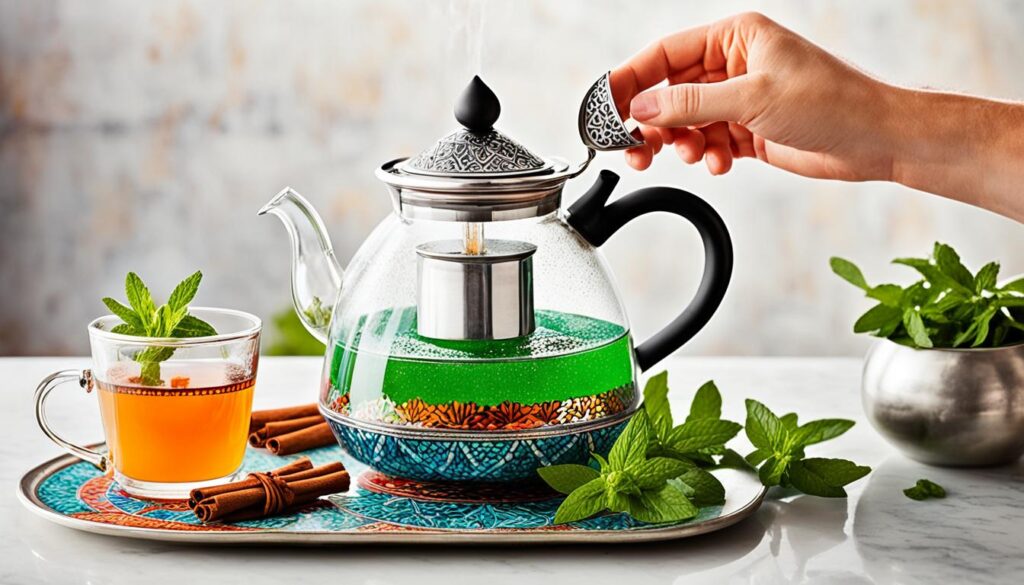
« The preparation of Moroccan mint tea is a dance of simplicity and skill, where the interplay of ingredients, technique, and cultural tradition come together to create a truly remarkable experience. »
Moroccan Tea Etiquette and Rituals
In Moroccan culture, Moroccan mint tea is a big part of daily life. It’s found in busy markets and quiet family times. This tea is a sign of welcome, respect, and togetherness. The head of the family makes it and serves it with great care.
The Role of the Head of the Family
The male head of the house makes the Moroccan tea. It’s more than just pouring tea; it shows respect and care. He picks the best tea leaves, fresh mint, and sugar. Then, he mixes them to make the famous Moroccan mint tea.
Preparing the tea is a big deal for the head of the family. He pours it from high up, which makes the tea better and shows respect. Guests should take the tea with both hands and look at the host to say thanks.
The tea ceremony has three glasses, each with its own meaning. The first is bitter like life, the second is strong like love, and the third is soothing like death. Guests must drink all three glasses as a sign of respect.
At big events like weddings and holidays, the head of the family serves tea. This brings people together and honors the tradition of Moroccan mint tea.
Mint Tea across Moroccan Culture
In Morocco, serving mint tea is more than just a simple act. It’s a sign of respect and friendship. This tea is present at big events like weddings and celebrations and at religious festivities and gatherings. Each time the berrad (teapot) is used, it symbolizes unity and joy. This tradition shows the Moroccan way of life, filled with warmth, generosity, and the art of enjoying the moment.
Weddings and Celebrations
Mint tea is key at Moroccan weddings and celebrations. Making and serving it is a big deal, showing off the country’s deep cultural roots. The way tea is poured, called « high pouring, » shows the host’s respect and skill. It makes the event even more special.
Religious Festivities and Gatherings
Mint tea is also important at Moroccan religious events. It’s there during Ramadan and Eid celebrations. This tea brings people together, sharing a moment of togetherness, spirituality, and tradition.
Mint tea in Moroccan culture shows the country’s rich heritage and the value of hospitality and respect. The way tea is poured and the meanings behind it highlight its importance. It’s a key part of Moroccan identity, linking celebrations, spirituality, and community together.
The Significance of Mint in Moroccan Cuisine
Mint is more than just a drink in Moroccan cuisine. It’s a key part of many traditional dishes and treats. This shows how important mint is in Moroccan food culture.
Moroccan food is known for its bold tastes, and mint is a big reason why. It’s found in many dishes, like couscous and tagines. Moroccan mint tea is often served with these, creating a unique taste that’s truly Moroccan.
Mahensha, a Moroccan salad, highlights mint’s role. It mixes mint with tomatoes and other veggies. The mint adds a cool, refreshing touch to the dish.
Mint isn’t just for taste in Moroccan food. It’s also seen as a health booster. It can ease stomach troubles, help with heartburn, boost brain function, fight bad breath, and more. These benefits add to its value in Moroccan cooking.
Mint in Moroccan food shows the country’s deep culture. Moroccan mint tea is like a symbol, much like earl grey tea in Britain or green tea in China. Making and drinking this tea is a big part of Moroccan hospitality.
« Moroccan mint tea has been a significant part of Moroccan culture for thousands of years. »
In summary, mint’s role in Moroccan cuisine goes way beyond just adding flavor. It reflects the country’s food traditions, culture, and health views. Mint is a key part of Moroccan food, from salads to tea.
Moroccan Hospitality and Mint Tea
In Morocco, serving mint tea is more than just a gesture of hospitality. It’s a sign of respect and friendship. This tradition has been passed down for generations. It shows the Moroccan spirit – warm, generous, and full of life.
Welcoming Guests with Mint Tea
Welcoming guests with mint tea is a big part of Moroccan culture. It doesn’t matter if it’s a close friend or someone new. Pouring this tea from the berrad (teapot) means you’re inviting them to join in the Moroccan way of life.
The way tea is poured, creating a rich rizza (head), is an art. The sound of tea pouring is key to knowing it’s ready. It’s a big part of the experience.
« Mint tea is the elixir of Moroccan hospitality, a ritual that transcends mere refreshment and becomes a symbol of unity, respect, and the art of living. »
Traditionally, guests got three glasses of tea. Each glass stood for something different: bitterness, strength, and soothing. But now, the focus is on welcoming and chatting over tea.
Moroccan mint tea is served at big events like weddings and festivals. Each time tea is poured, it’s a sign of unity and joy. It shows the Moroccan values of warmth, giving, and enjoying life.
Traditional Moroccan Mint Tea Recipe
Discover the secrets of making the quintessential Moroccan mint tea. This drink is a symbol of Moroccan hospitality and tradition. It has been passed down through generations, offering a blend of flavors that take you to Morocco’s vibrant souks and serene courtyards.
This beloved beverage is made with just a few simple ingredients:
- 7 fresh mint sprigs
- 1 heaped teaspoon of loose gunpowder tea
- 500ml of boiling water
- 3 tablespoons of caster sugar
Making traditional Moroccan mint tea is an art. It requires precise techniques and attention to detail. Start by rinsing the tea and mint leaves to unlock their full aroma. Then, put the tea leaves and boiling water together in a Moroccan teapot or stovetop kettle. Let it steep for at least 15 minutes.
After filtering the tea into a stainless steel pot, add fresh mint leaves and sugar. Adjust the sugar to your taste. Traditionally, the tea is brought to a gentle boil over low heat to dissolve the sugar. But many Moroccans prefer to let it infuse before serving.
« Moroccan mint tea is an emblem of Morocco, comparable in cultural significance to Earl Grey tea for the British and green tea for the Chinese. »
The result is a sweet, fragrant, and refreshing tea. It’s perfect for any time of day, especially with Moroccan food. The traditional teacups, with their colorful designs, are ideal for enjoying this tea.
The classic recipe is a tradition, but you can also try new things. You might add herbs like verbena, geranium, or citrus peels for a unique taste. No matter what, this tea is a key part of Moroccan culture. It shows the power of simple pleasures.
Mint Tea and Moroccan Identity
In Morocco, serving mint tea is more than just a gesture of hospitality. It’s a sign of respect and friendship. This tradition has been around for ages, showing the Moroccan spirit. It’s a mix of warmth, generosity, and the art of living.
Back in the late 19th century, Moroccan tea culture changed a lot. Mint tea became popular across all social classes, from palaces to simple homes. Sultan Hassan I started giving silver teapots filled with tea and sugar as gifts. This made mint tea a symbol of hospitality and power.
The British influence brought sugar to Moroccan tea, making it sweeter. This changed its taste and made it a favorite drink in the country. The fight between France and Germany over Moroccan sugar shows how tea became a symbol of power and influence.
Today, mint tea is still a big part of social life in Morocco. It’s served at important events like weddings and religious celebrations. Every time someone pours tea from the berrad (teapot), it brings people together and celebrates unity.
« Refusing Atai (Moroccan tea) is considered impolite and rude, emphasizing the cultural significance and hospitality associated with tea in Moroccan society. »
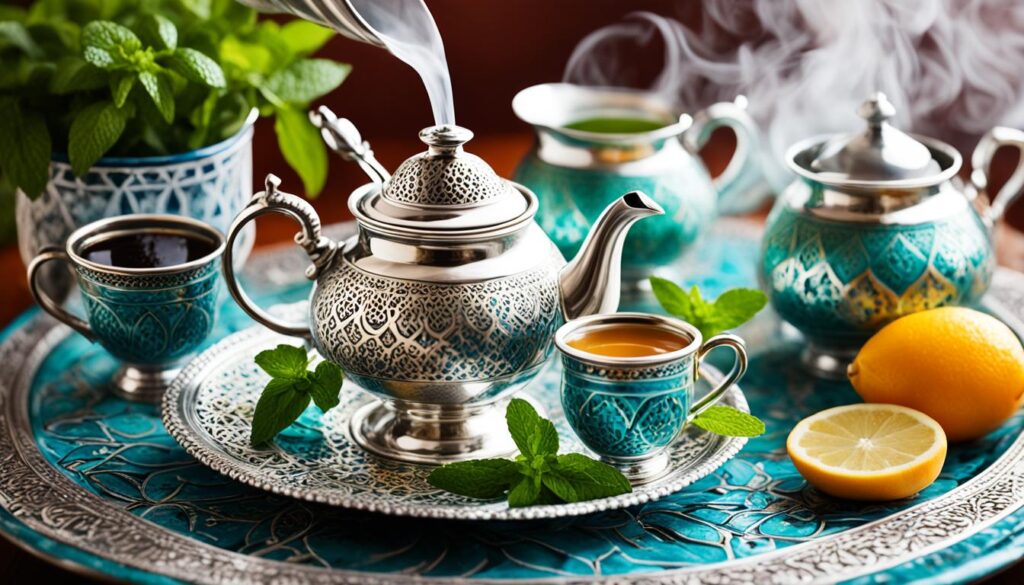
The tea glasses and teapot are decorated with Moroccan art, showing the country’s craftsmanship. The tea set includes a tray, sugar bowl, and mint container. These items symbolize Moroccan hospitality and make the tea ceremony special.
Moroccan tea culture is lively and a big part of social life. Tea is served before, during, and after meals, and also in between. The way tea is prepared, with steeping and pouring from a height, adds to the ceremony.
The sweetness of the sugar and the mint’s aroma make Moroccan mint tea a symbol of the country’s identity. It’s a cultural icon that goes beyond time and space. Every sip shows Moroccan hospitality and the spirit of a people who value this tradition deeply.
The Visual Journey of Mint Tea Preparation
For those eager to embark on a culinary adventure, the preparation of Moroccan mint tea is a dance of simplicity and skill. It starts with boiling water, a key step that brings out the tea’s vibrant flavors. After boiling, green tea and sugar are added, making the brew sweet.
The real magic happens when mint leaves are added. Their vibrant essence infuses the tea, creating a captivating aroma. The tea maker’s skill is shown as they carefully monitor the steeping, ensuring the perfect balance of flavors.
Achieving the perfect rizza (foam) is a true craft. It’s a spectacle of pouring from high above, showing the tea maker’s skill. The pour is a mesmerizing display of precision and artistry.
The presentation of Moroccan mint tea is also key. Ornate teapots and decorated glasses add to the experience. A generous bunch of fresh mint leaves not only enhances the flavor but also connects the tea to the land and its people.
Whether enjoyed in Marrakech’s busy souks or Fez’s serene courtyards, the visual journey of Moroccan mint tea preparation is a testament to the country’s rich culture. It’s a captivating dance that invites the senses to engage. It creates a shared moment of hospitality, respect, and the celebration of tea-making.
Mint Tea Culture in Modern Morocco
In Moroccan cities, the smell of fresh mint tea fills the air. It invites everyone to join in the tradition of tea-drinking. Tea houses and social spots are key parts of life, keeping the mint tea culture alive.
« Atay houses » have been important for centuries. They’re where people come to talk, listen to music, and enjoy Moroccan mint tea. This tradition started with the Berber tribes, who made herbal teas from local plants.
Arab traders brought tea leaves, mixing them with Berber herbal ways. This created Morocco’s unique tea culture. Today, « qahwa » tea houses are in historic buildings with Islamic, Berber, and Andalusian designs. They have beautiful tile work, greenery, and traditional lanterns, making them welcoming.
Drinking tea in Morocco follows strict customs. From washing the teapot to pouring the tea, every step matters. The tea comes with biscuits, nuts, and pastries, making it a special experience.
Tea houses are now places for music, fun, and food. You can hear traditional instruments like the oud and darbuka. People enjoy Moroccan dishes like tagine stew with a cup of mint tea.
Morocco is a big tea buyer, showing how important tea is in its culture. Moroccan mint tea is a sign of hospitality and friendship. It’s a key part of social life with family and friends, making it a cultural symbol.
Exploring Regional Varieties of Mint Tea
In Morocco, the tradition of drinking mint tea varies by region. From the coast of Casablanca to Fez’s historic heart, each place adds its own twist to this favorite drink. This creates a rich mix of flavors that showcase the country’s cultural diversity.
By the sea, people often prefer a light, delicate mint tea that matches the cool ocean air. Move inland, and you’ll find stronger teas in cities like Fez. These teas have a bold taste, with hints of sage or orange blossom.
The secret to these unique tastes is in the ingredients. Tea makers carefully pick the best mint, from the north’s sharp spearmint to the south’s sweet peppermint. They mix these with tea leaves, sugar, and herbs. This creates a blend that lets you taste the essence of each area.
| Region | Signature Blend | Distinguishing Characteristics |
|---|---|---|
| Casablanca | Light and refreshing | Subtle notes of coastal breezes and a delicate mint aroma |
| Fez | Robust and full-bodied | Infused with bold sage and hints of the city’s rich history |
| Marrakech | Fragrant and aromatic | Fragrant orange blossom and a harmonious balance of sweetness |
| Tangier | Crisp and invigorating | Bright, minty notes that capture the energy of this coastal hub |
Whether you enjoy regional varieties of moroccan mint tea in a busy market, a quiet tea house, or a cozy home, each sip tells a story. It’s a chance to experience Morocco’s rich culture. Enjoy the flavors, feel the warmth of the welcome, and let your senses take you on a journey through this beautiful country.
« Moroccan mint tea is not just a beverage; it’s a cultural experience that transcends the boundaries of a simple cup. Each sip is a journey through the heart of this remarkable country. »
Conclusion
Moroccan mint tea is more than just a drink; it’s a symbol of Moroccan culture and hospitality. It dates back to the late-17th or early-18th century. This blend of Chinese green tea and mint has become a key part of Moroccan life.
It stands for friendship, family, and enjoying life to the fullest. The way it’s made, with careful steps and a special pouring method, shows Morocco’s love for tradition. The beautiful teapots and glasses used also highlight Moroccan craftsmanship.
This tea is not just a drink; it opens doors to Moroccan warmth and kindness. It’s enjoyed in many situations, from business meetings to family gatherings. It brings people together, creating bonds and understanding. As we end our exploration of Moroccan mint tea, we value its deep cultural roots and the traditions it upholds.