
From the streets of New York in the 1970s to the grand stage of the Olympic Games, breakdancing has made a big leap. This dance sport combines urban dance with athleticism. It’s now part of the Olympic programme. After its first appearance at the 2018 Youth Olympics in Buenos Aires, breaking is joining the Paris 2024 Olympics. Now, it’s a dance sport with clear rules for fair competition.
Key Takeaways
- The 2024 Paris Olympics will see 32 dancers compete in breaking, with 16 B-girls and 16 B-boys participating.
- Breaking is one of the four foundational elements of hip-hop and was added to the 2024 Summer Olympic lineup after a successful debut at the 2018 Youth Olympics.
- Judges in breaking score based on criteria such as technique, vocabulary, execution, musicality, and originality, with each category accounting for 20% of the final score.
- The 16 B-girls and 16 B-boys competing at the Olympics have multiple wins in various championships leading up to the Games.
- Breaking is the only new sport at the 2024 Paris Olympics, aimed at appealing to younger fans and adding an urban flair to the Summer Games.
Introduction to Breakdancing at the Olympics
Breakdancing, also known as breaking, is a dance sport that combines urban dance with athleticism. It made its debut at the 2018 Youth Olympics in Buenos Aires. Now, it’s set to appear at the Paris 2024 Olympics. This dance has changed from street dance to a formal sport with its own rules for fair play.
Breakdancing as a Dance Sport: Athleticism Meets Urban Dance
Breaking is a fusion of gymnastics, martial arts, music, and improvisation. It includes four main parts: Toprock, Power moves, Footwork, and Freezes. Judges will look at technique, vocabulary, execution, musicality, and originality using the Trivium system.
This mix of dance and athleticism makes breakdancing exciting for the Olympics. The sport has its own rules and format, needing creativity and adaptability. Only two breakers move on from each group to the next rounds, leading to the final match.
« Breaking is a mix of gymnastics, martial arts, music, and improvisation. »
The competition tells a story in real time, with the audience playing a big part. The DJ helps set the mood, making the event dynamic and engaging. This approach turns watching breaking into a conversation, not just a show.
Breaking, a dance style making its Olympic debut in 2024, started at the 2018 Summer Youth Games in Buenos Aires. It’s now part of the 2024 Summer Games in Paris. This move from the streets to the Olympics shows how breakdancing has grown and been recognized as a real dance sport.
The Three Elements of Breakdancing
Breakdancing, or « breaking, » is a dynamic dance style that’s made it to the Olympic stage. It’s built on three key elements: top rock, down rock, and freeze. Each element is vital for showing off breakdancing’s athleticism, creativity, and style.
Top Rock: Standing Moves and Footwork
Top rock is the part of breakdancing where dancers start with standing moves and footwork. Here, they show off their style with cool hand moves and detailed footwork. It lets breakers express their unique style before moving into the down rock section.
Down Rock: Floor Moves, Spins, and Power Moves
The down rock is the heart of breakdancing. Here, dancers do amazing floor moves, spins, and power moves. This part is key, showing off their strength, balance, and flexibility. Power moves are especially impressive, being acrobatic moves that amaze the crowd.
Freeze: Holding Unusual Poses During the Routine
The freeze is the last part of breakdancing. Dancers freeze in unusual positions, like on their head or hands. These poses are striking and show off their control, balance, and strength.
Together, top rock, down rock, and freeze make up breakdancing. They create a captivating and dynamic art form. It’s sure to wow audiences at the Olympic Games in Paris 2024.
Breaking Battle Format
In the exciting world of Olympic breakdancing, athletes compete in one-on-one battles. These breakdancing one-on-one battles let each breaker show off their skills and moves.
These breakdancing battles usually have a set number of rounds. Most competitions have two or three rounds, with the last round sometimes having three or five rounds. This setup lets judges and fans see each breaker’s best moves and creativity.
There’s no limit to how long a breakdancing routine duration can be, as long as each round doesn’t go over 60 seconds. This rule lets athletes show off their skills in unique and exciting ways.
« The breakdancing throw downs are where the true artistry and athleticism of these breakers shine. It’s a mesmerizing display of power, precision, and pure passion for the craft. »
Everyone is excited for the 2024 Paris Olympics to show off these amazing breakdancing battle sets. It will be a chance to see the top breakdancers compete.
Judging Criteria for Breakdancing
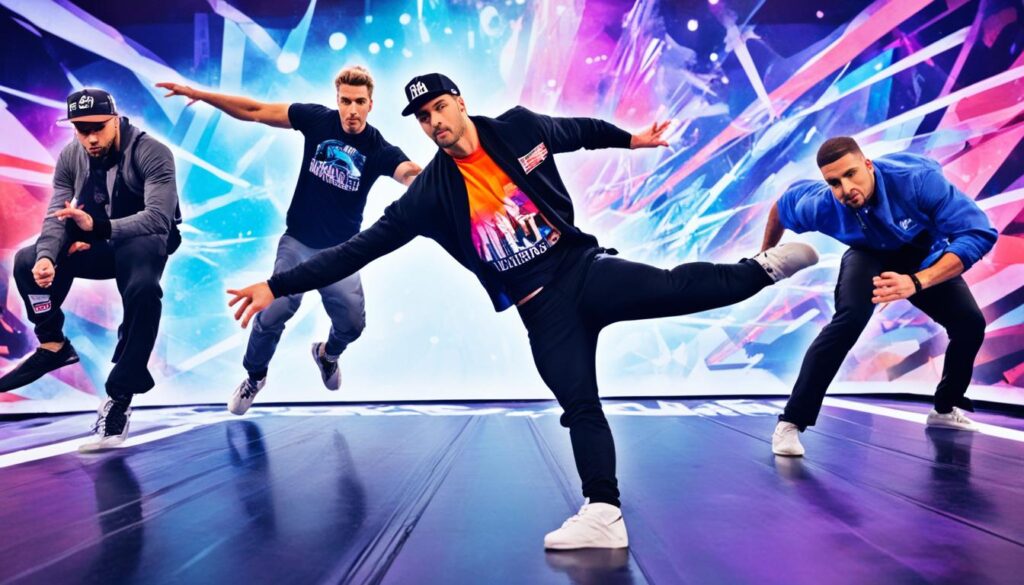
At the 2024 Paris Olympics, the world’s top B-Boys and B-Girls will compete. The judges will look at six key areas: creativity, personality, technique, variety, performativity, and musicality. These factors will decide who wins.
Technique, performativity, and creativity make up 60% of the score. This shows how crucial it is to have great moves, connect with the audience, and come up with new routines. The other 40% looks at variety, musicality, and personality. This means performances that do well in all areas get more points.
| Judging Parameter | Weightage |
|---|---|
| Technique | 25% |
| Performativity | 20% |
| Creativity | 15% |
| Variety | 15% |
| Musicality | 15% |
| Personality | 10% |
Five experienced judges will score each round at the 2024 Olympics. The one with the most points after each round wins and moves on. This system makes sure the best breakdancers get the Olympic gold they deserve.
breakdancing olympics rules
The Paris 2024 Olympics will feature breakdancing with two events: b-girls and b-boys. There will be 17 athletes in the b-girls event and 16 in the b-boys event. This will bring together the world’s top breakdancers to the Olympic stage.
Breakdancing Competition Format
The competitions will be held at the famous Place de la Concorde in Paris. The women’s event is set for August 9th, and the men’s event on August 10th. Dancers will first compete in a round-robin stage with four groups. The top dancers will move on to the quarter-finals, semi-finals, and finals to find the champions.
Each battle will have three 60-second « throw downs » to show off the dancers’ skills and creativity. A panel of judges will score the dancers on five key areas: technique, vocabulary, execution, musicality, and originality. Each area counts for 20% of the total score.
| Judging Criteria | Weightage |
|---|---|
| Technique | 20% |
| Vocabulary | 20% |
| Execution | 20% |
| Musicality | 20% |
| Originality | 20% |
The breakdancing competition at the Paris 2024 Olympics is a big moment for the sport. It’s making its Olympic debut. The world’s best b-boys and b-girls will compete for gold. This event will show the artistry and athleticism of breakdancing to a global audience.
Paris 2024 Olympics Breaking Competition Format
The world is excited for breakdancing’s Olympic debut at Paris 2024. The competition will show off athletes’ skills and urban dance moves. It will feature both b-boys and b-girls in a thrilling progression through different stages.
Pre-qualifier and Round-Robin Stages
The first round is the pre-qualifier, where the 16th and 17th-ranked athletes compete. The winner moves on, and the loser is ranked 17th. Then, the round-robin stage begins with four groups of four athletes. Each athlete battles three times against others in their group.
Knockout Stages: Quarterfinals, Semifinals, and Finals
After the round-robin, the competition moves to the knockout stages. Here, athletes compete in best-of-three rounds in the quarterfinals, semifinals, and finals. The winner of each round moves forward. The losers of the quarterfinals are ranked 5th to 8th.
The losing semifinalists then battle for the bronze medal. The winners of the semifinals meet in the gold medal match.
This breakdancing olympics competition format will highlight athletes’ skills, creativity, and flexibility. They’ll compete for Olympic titles in a celebration of hip-hop culture and athleticism.
« Breaking is the only sport making its debut at the 2024 Summer Olympics, and it’s set to be a must-watch event for fans of urban culture and athletic performance. »
Scoring System at the Olympics
Breakdancing is new to the 2024 Paris Olympics, and the scoring system is key to finding the winners. The breakdancing olympics scoring system looks at athletes’ skills, creativity, and technical skills.
Competitors face off in one-on-one battles with the breakdancing judges. Each battle is a best-of-three showdown. Athletes take turns showing off their moves, creating a thrilling exchange of skills.
The Role of Judges and Their Scoring Criteria
Nine breakdancing judges score each performance. They look at five main areas:
- Technique: How well the breaker moves
- Vocabulary: How unique the breaker’s moves are
- Execution: How smoothly the routine is performed
- Musicality: How well the breaker matches the music
- Originality: How creative and unique the breaker is
Each area counts for 20% of the total score. Judges adjust scores based on how the two competitors do against each other.
The breakdancing olympics scoring system focuses on the quality of the art. Judges look for control, varied moves, smooth transitions, and unique style.
Top breakdancing judges will be in Paris. They will pick the winners of this exciting Olympic event.
The Athletes to Watch
The 2024 Paris Olympics are coming, and everyone is excited about the breakdancing. The world’s best breakdancing b-boys and b-girls will show off their amazing skills. They have worked hard for years and have won big competitions around the world.
Breakdancing Olympians
There are 16 b-girls and 16 b-boys going to the 2024 Paris Olympics. They come from 15 countries and the Refugee Olympic Team. These breakdancing top athletes have won big titles like the WDSF World Championships and the Pan American Championships.
Look out for b-girls like India Sardjoe from the Netherlands and Manizha Talash from the Refugee Olympic Team. She made it to the Olympics despite facing tough challenges. The b-boys to watch include Victor Montalvo, Jeffrey Louis, Sunny Choi, and Logan Edra from the USA. They have all shown their skills in big competitions.
| B-Girls | B-Boys |
|---|---|
| India Sardjoe (Netherlands) | Victor Montalvo (USA) |
| Manizha Talash (Refugee Olympic Team) | Jeffrey Louis (USA) |
| Aya Youssef (Egypt) | Sunny Choi (USA) |
| Jade Chynoweth (Canada) | Logan Edra (USA) |
These breakdancing olympians will amaze us with their skills, creativity, and love for breaking. They will compete for Olympic medals.
Breaking’s Journey to the Olympics
Breakdancing started in the Bronx, New York, in the 1970s. It’s one of hip-hop’s four core elements. Over time, it moved from street performances to a global sport.
In 2020, the International Olympic Committee added breaking to the 2024 Summer Olympics in Paris. This was after its first appearance at the 2018 Youth Olympic Games in Buenos Aires. There, it drew over 1 million viewers, as reported by NBC News.
The path to the Olympics shows how popular breakdancing is. Pioneers like Tony « Mr. Wave » Wesley are keeping the art’s history alive. They do this through virtual lessons and educational programs.
As the 2024 Olympics approach, top B-Boys and B-Girls are preparing. Stars like Arif Chaudhary, Victor Montalvo, Sunny Choi, Philip Kim, and Dominika Banevič will show off their skills. They’ll perform power moves, intricate footwork, and creative routines.
Breaking’s inclusion in the Olympics is a big deal. It celebrates the breakdancing olympic journey and breakdancing olympic inclusion. It also highlights the breakdancing history and breakdancing growth. This move will inspire a new generation to explore breaking’s limits.
Safety and Attire Guidelines
Breakdancing is set to make its Olympic debut at Paris 2024, bringing safety and dress code rules into the spotlight. The WDSF Breaking Rules and Regulations Manual sets out the rules for the Olympic breaking events.
Regulations Regarding Safety Equipment
Safety is key in the fast-paced sport of breaking. Athletes must wear certain safety gear during their routines:
- Knee pads for floor moves and power moves
- Elbow pads for landing safety
- Wrist guards for handstands and freezes
Breakdancing Attire Guidelines
There are also rules for what athletes can wear. They must follow these dress code guidelines:
- Tight athletic bottoms for easy movement
- Close-fitting tops for full movement
- Shoes with good grip for floor moves
Any logos or personal marks on clothes must follow Olympic rules and the International Olympic Committee’s guidelines.
| Misbehavior | Penalty |
|---|---|
| Mild (e.g., inappropriate gestures, excessive showboating) | Deduction of points |
| Moderate (e.g., unsportsmanlike conduct, disregard for safety regulations) | Warning and possible disqualification |
| Severe (e.g., deliberate attempts to harm opponent, blatant disregard for rules) | Immediate disqualification |
Following these breakdancing safety and breakdancing attire rules ensures a fair and safe competition at the Paris 2024 Olympics. Breakdancing equipment and breakdancing regulations will be strictly followed.
Breaking’s Cultural Significance
Breakdancing started in the Bronx, New York, in the 1970s. It was part of hip-hop’s four elements. Now, it’s a global dance sport.
Being part of the 2024 Paris Olympics is a big deal for breakdancing. It shows the sport’s athleticism and creativity. It also celebrates its roots in Black and Latino communities.
Team USA’s dancers at the Olympics are diverse. They include Sunny Choi, a former Estée Lauder executive, and b-boys Jeffrey Louis and Victor Montalvo. They want to share hip-hop’s values of peace, unity, and fun with the world.
France loves hip-hop almost as much as the U.S. It has laws to teach hip-hop dances. This shows how much breakdancing is valued there.
Breakdancing in the Olympics does more than just compete. It celebrates its history and the communities that support it. Watching these athletes will inspire a new generation to dance and appreciate breakdancing.
« Breakdancing is a cultural movement that has been around for decades, and its inclusion in the Olympics is a testament to its global impact and recognition as a legitimate dance sport, » said Logan Edra, a member of Team USA’s breaking squad.
Breakdancing moving from streets to the Olympics shows its strength and flexibility. The spotlight on breaking lets us celebrate its cultural richness and diversity.
Controversy and Debates
Breakdancing’s addition to the Olympic Games has sparked a lot of talk. Many see it as a big step forward, but others have doubts. They wonder if this new sport fits the Olympic spirit.
Preserving the Cultural Roots of Breakdancing
Some worry that breakdancing might lose its true meaning as it becomes more commercial. Breakdancing started as a way for urban youth, especially those of color, to express themselves. Adding it to the Olympics could change what it stands for.
Aligning with Traditional Olympic Values
Others question if breakdancing fits the Olympic Games’ traditional values. Breakdancing is all about spontaneity and creativity, which might clash with the Olympics’ strict rules. It’s feared that the true spirit of breakdancing could get lost.
Concerns about Judging and Scoring
There are also worries about how breakdancing will be judged. Unlike most Olympic sports, breakdancing scores can vary a lot. This could lead to debates over fairness in the judging.
« The inclusion of breakdancing in the Olympics is a double-edged sword. While it brings much-needed diversity and recognition, it also risks diluting the cultural identity and authenticity that made breakdancing such a powerful and captivating art form in the first place. »
As breakdancing debuts at the 2024 Paris Olympics, the debate will surely continue. The goal is to keep the true spirit of breakdancing while making it work for the Olympics. It’s a delicate balance.
Future of Breakdancing in the Olympics
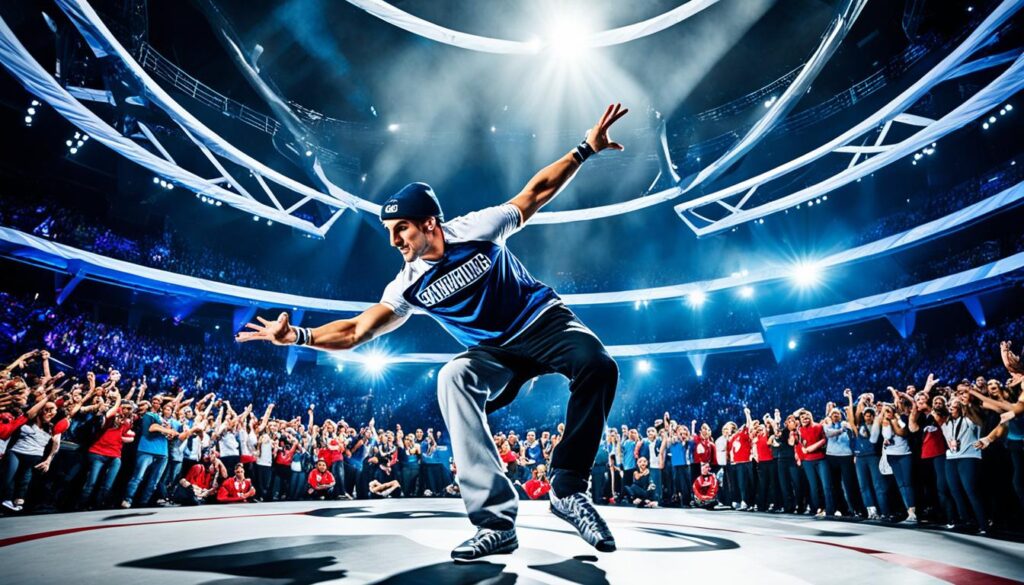
Breakdancing is set to make its Olympic debut at the Paris 2024 Games, sparking excitement. This move shows the International Olympic Committee’s (IOC) aim to draw in younger fans. It also highlights how international sports and culture are evolving.
Since its first appearance at the 2018 Summer Youth Games in Buenos Aires, breakdancing has gained popularity. Now, 32 breakers, half men and half women, will compete in Paris. This shows the sport’s growing global presence.
The sport’s Olympic future hinges on keeping its cultural roots while fitting into the Olympic scene. Breakdancing must balance its grassroots spirit with Olympic demands. This will help it keep fans, old and new, interested.
| Breakdancing Olympic Growth | Breakdancing Olympic Popularity |
|---|---|
|
|
The future of breakdancing olympic future will depend on keeping its cultural identity. It must also fit well into the Olympic scene and win over fans. As it grows, finding the right balance between its roots and Olympic demands will be key to success.
« The inclusion of breakdancing, along with other youth-centric events, signals the IOC’s efforts to attract a younger audience and reflect the changing landscape of global sports and culture. »
Conclusion
Breakdancing has traveled from New York’s streets to the Olympic stage. This journey is truly remarkable. Being part of the 2024 Paris Games marks a big step in its growth. It proves breakdancing is now a recognized and organized sport.
The rules, judging, and competition format for the Paris Olympics highlight the sport’s progress. World-class B-Boys and B-Girls will shine, making the breakdancing olympics future bright. This event could draw in fans, motivate new dancers, and secure its spot in global sports.
The breakdancing rules and breakdancing competition setup at the Paris 2024 Olympics focus on fairness and artistry. Judges will look at technique, vocabulary, and more. This makes the competitions exciting, showing off the sport’s flexibility and energy.