
In the fast-paced trading world, knowing how well your trading strategies work is key. This is where backtesting comes in. Backtesting means testing a trading strategy by using past data. It lets traders see if their strategies could make money without using their own cash.
Backtesting is very important. By looking at how a strategy would have done before, traders can learn a lot. They can see if the strategy works well, find its weak spots, and decide if it’s good for the future. This leads to better and more profitable trading.
Key Takeaways
- Backtesting checks how trading strategies did in the past to see if they’re good and profitable.
- It helps traders make steady strategies and feel more sure about their trading models.
- Backtesting gives useful insights on a strategy’s success, like average gain, loss, profit/loss, and win/loss ratios.
- Traders can test their strategies on their own for free to improve their trading skills and make better choices.
- Backtesting tools do statistical analysis and give insights on trading setups and strategies using past data.
Understanding Backtesting in Trading
What is Backtesting?
Backtesting is key in trading. It lets traders test their strategies without using real money. By using past market data, traders see how their strategies would have done before. This helps them improve their trading plans before using them in real markets.
Backtesting Strategies
Traders use different methods for backtesting. They might use platforms like MetaTrader, special software, or make their own tools. The main goal is to test and prove trading strategies with past data. This helps them be sure their strategies can make money.
Backtesting helps spot problems in trading strategies before using real money. Traders can see how their strategies work in different markets. They can then tweak and improve them to make them better.
It also lets traders compare different strategies. This helps them pick the best one to use. This is very useful for making algorithmic trading systems work better.
To get accurate backtesting results, traders must watch out for biases. Avoiding mistakes like using future info is key. By using the right methods and avoiding biases, traders can make smart trading choices.
In short, backtesting is vital for traders. It helps them check their strategies with past data, improve them, and increase their success chances. By knowing how to use backtesting well, traders can get better at trading and feel more confident in their decisions.
The Significance of Backtesting Trading Strategies
Backtesting trading strategies is key for traders wanting to boost profits and cut losses. It lets traders check how a strategy did in the past. This gives them important insights for making better choices and managing risks.
One big plus of backtesting is checking a strategy’s win/loss ratio. This tells traders if a strategy works or needs tweaks. By looking at past results, traders can decide if a strategy is good and likely to make steady profits.
For new traders, backtesting is a big help in learning fast. Using methods like forward testing and out-of-sample testing shows a strategy’s real strengths and weaknesses. This quick learning helps new traders spot patterns and make smarter choices sooner.
| Metric | Significance |
|---|---|
| Net Profit/Loss | Measures the total amount of money gained or lost by the strategy over the testing period. |
| Return | Indicates the percentage change in the value of the strategy during the testing period. |
| Volatility | Represents the degree of variation or fluctuation in the value of the strategy over the testing period. |
| Drawdown | Measures the maximum percentage decline in the value of the strategy from peak to trough during the testing period. |
| Sharpe Ratio | Determines the risk-adjusted return of the strategy by comparing the excess return over the risk-free rate to the standard deviation of the strategy. |
| Win Rate | Shows the percentage of trades that resulted in a profit by the strategy over the testing period. |
| Profit Factor | Measures the ratio of gross profit to gross loss of the strategy during the testing period, indicating its profitability. |
| Maximum Adverse Excursion (MAE) | Indicates the maximum amount of money lost by the strategy before a trade is closed in a profit during the testing period, representing the worst-case scenario. |
| Maximum Favorable Excursion (MFE) | Represents the maximum amount of money gained by the strategy before a trade is closed in a loss during the testing period, showing the best-case scenario. |
These metrics are key for traders to check, fine-tune, and boost their trading strategies with past data. This helps them succeed more and lowers the chance of failure in the market.
In conclusion, backtesting trading strategies is very important. It lets traders look at past data and see how trading approaches perform. This helps traders make smart choices, manage risks better, and increase their chances of steady profits in the markets.
What Can You Backtest?
Backtesting is a key tool for traders in different markets. It helps traders test how well their strategies work using past data. This method is useful for forex trading strategies, crypto trading strategies, and options and futures trading.
Traders who aren’t skilled in coding can work with experienced programmers. Together, they can turn trading ideas into real strategies. This way, traders can use backtesting without needing a lot of technical knowledge.
In quantitative trading and algorithmic trading, backtesting is key for trying out different strategies. Traders can test many strategies to see which ones work best for their goals.
- Forex traders can test and improve their strategies with backtesting.
- Crypto traders can use backtesting to check and improve their strategies too.
- Options and futures traders can backtest to get the best risk-reward ratios.
- Algorithmic traders can test their systems to make sure they work well in different markets.
Backtesting lets traders test many different ideas, from simple indicators to complex algorithms. The goal is to find strategies that are profitable and can be used over time.
« Backtesting is a crucial step in the development of any trading strategy, as it allows traders to validate their ideas and refine their approaches before risking real capital. »
Avoiding Backtesting Bias
In the world of quantitative analysis and algorithmic trading, backtesting is key for checking trading strategy performance. But, backtesting can be biased, leading to wrong models and results. Traders need to watch out for these biases to make sure their strategies are right.
Prevent Look Ahead Bias
Look ahead bias is a big issue in backtesting. Traders might use future info, making their results look too good. To avoid this, traders must only use info available when they made their trading decisions. They should not use data that came later.
Using a variety of data sets is crucial to avoid biases. Traders should test their strategies on many stocks, Forex pairs, and cryptocurrencies. Relying on just a few data sets or not using typical market data can lead to biased models.
Both institutional and individual traders need to be careful with backtesting. By fixing common backtesting biases, they can make stronger, more reliable models. These models will better match the real market.
| Backtesting Bias | Description | Impact | Mitigation Strategies |
|---|---|---|---|
| Look Ahead Bias | Incorporating future information into the backtest | Overly optimistic results |
|
| Optimization Bias | Overfitting the model to historical data | Poor out-of-sample performance |
|
| Survivorship Bias | Considering only currently available data, neglecting delisted stocks | Overestimating historical performance |
|
By tackling these biases and using strong data sets, traders can make more dependable and fair trading strategies. This leads to better investment choices and improved performance over time.
Adjusting Inputs with Backtesting
Backtesting is a key tool for traders to make their strategies better. It helps by adjusting different parts of the strategy. For example, traders use moving averages a lot. Backtesting helps them find the best lengths for these averages.
Short moving averages react quickly to price changes. Longer ones show the big picture over time. By testing different lengths, traders find the best settings for their goals and market conditions.
Backtesting also lets traders tweak other strategy parts like indicator settings and risk levels. This process of optimizing trading strategy inputs is key to making a trading system work well.
Through detailed quantitative analysis and backtesting, traders find the best input combinations for their algorithmic trading strategies. This method helps them make smart choices, not just guessing.
| Moving Average Length | Backtesting Results | Recommendation |
|---|---|---|
| 9-period | Responsive to market changes, but prone to whipsaws | Suitable for volatile, fast-moving markets |
| 20-period | Captures medium-term trends effectively, with fewer false signals | Optimal for most trading environments |
| 50-period | Smooth, long-term trend identification, but slower to react | Ideal for low-volatility, steady markets |
By adjusting their strategy inputs through backtesting, traders can make their backtesting moving averages strategies better. This leads to better performance and returns in their algorithmic trading systems.
« Backtesting is the foundation of any successful trading strategy. It allows me to validate my ideas, identify the optimal parameters, and make informed decisions before risking real capital. »
Backtesting Reduces Trading Losses
Traders who use backtesting tend to make more money and lose less. This method lets them check if their trading plans work by testing them with past market data. It helps spot problems, tweak settings, and improve risk management before using real money.
Backtesting shows traders how often they win or lose and their profits. This info helps them decide if to use the strategy as it is, tweak it, or try something new. It’s a key tool for managing risks, showing how a strategy might do under different market conditions.
Learning from backtesting can greatly improve a trader’s choices. Traders without backtesting risk losing money if their strategies don’t work well, especially at first. Backtesting gives the data and insights needed for better trading decisions. This leads to making more money and losing less.
| Metric | Backtested Strategy | Live Trading Strategy |
|---|---|---|
| Total Return | 35% | 28% |
| Sharpe Ratio | 1.2 | 0.9 |
| Maximum Drawdown | 12% | 18% |
| Win Rate | 65% | 58% |
| Risk-Reward Ratio | 2.1 | 1.7 |
The table shows how backtesting can reveal important info about a trading strategy. By comparing backtested and real results, traders can spot areas to improve. This helps make their strategy more profitable and manage risks better.
« Backtesting is key for traders and investors to check their strategies and cut losses. It helps refine risk management and boosts trading profits. »
Gaining Experience Through Backtesting
Backtesting is a key tool for new traders to learn faster and gain valuable experience. It lets them test their trading strategies on past market data. This way, they see how their strategies would have done before.
This process helps them recognize patterns quickly. It also boosts their technical analysis skills and quantitative analysis abilities.
Backtesting exposes traders to many price actions and chart patterns. By looking at these past market moves, they learn to spot patterns in trading. This skill is very useful in fast markets like Forex, where quick action can lead to success.
Backtesting also lets traders gain experience without risking real money. They can test and improve their algorithmic trading strategies safely. This is key for building confidence and getting ready for live trading.
« Within a few hours, a trader can go through 30 to 50 trades during a backtest to improve pattern recognition and understand price behavior. »
By testing their strategies often, traders get a deeper understanding of the market. They develop a more refined trading style and boost their performance. The experience from backtesting is priceless. It helps traders handle the financial markets better and with more confidence.
Determining Sufficient Backtest Sample Size
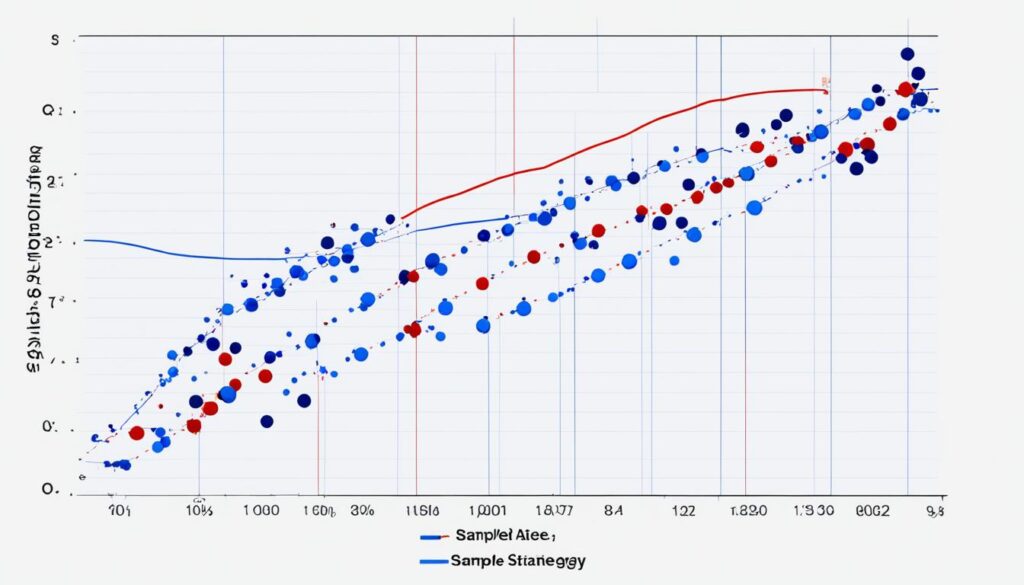
When backtesting trading strategies, the number of trades matters a lot. Experts suggest testing with at least 100 trades. This is because just five or 10 trades don’t show how a strategy will really do. Using few trades doesn’t give enough statistical significance, so it’s not a good idea.
The right number of trades for backtesting depends on the quantitative analysis and algorithmic trading strategy. Generally, more trades mean more reliable results. This is because a bigger sample size lessens the effect of random fluctuations. It also shows the strategy’s true performance better.
To figure out how many trades you need, consider these tips:
- For strategies with many trades, aim for at least 100 trades for good stats.
- For strategies with fewer trades, like weekly or monthly signals, you might need 500 or more trades for solid results.
- Calculate the standard error of your backtest to understand the uncertainty from the sample size. ±1 standard deviation gives 68.3% confidence, while ±2 standard deviations gives 95.4% confidence.
The how many trades to backtest depends on your strategy, the market, and how much risk you can handle. With enough trades, you boost the statistical significance of backtesting. This makes your trading strategies more reliable.
« The key is to have enough trades to establish statistical significance, but not so many that the backtest becomes overly optimized to the past. »
Weaknesses of Backtesting
Backtesting is a key tool for testing trading strategies. Yet, it has its downsides. One big issue is over-optimization. Traders might focus too much on making profits from past data. This can lead to a model that works great on paper but not in real trading, especially in fast markets like Forex.
Another problem is look-ahead bias. This happens when a strategy uses future info to make trading decisions. This makes the backtest results unrealistic. Automated backtesting can miss out on human insight and adaptability to unexpected events.
Backtesting also doesn’t consider transaction costs like commissions and spreads. This can make the strategy seem better than it really is. It also doesn’t capture the emotional and psychological factors that affect real trading.
To overcome these issues, traders need to be careful with backtesting. They should do out-of-sample testing to see how their model really performs. It’s also important to include realistic costs and keep updating their strategies for market changes.
It’s also key to use quantitative analysis and understand algorithmic trading well. By knowing the limits of backtesting and using a full approach, traders can make their strategies more reliable and effective.
« Past performance is not indicative of future results » – A fundamental principle in finance and investing.
Using MetaTrader for Backtesting
Backtesting is key in algorithmic trading. The MetaTrader platform has strong backtesting tools. Traders can test their strategies by picking a market, going back in time, and using their favorite indicators.
The Strategy Tester in MetaTrader 4 and 5 makes backtesting easy. Traders set parameters like testing mode and initial deposit. They can also use genetic algorithms to find the best strategy settings.
Looking at backtesting results helps traders see how good their strategies are. They can check profit/loss, drawdown, and risk-reward ratio. This info helps them make their strategies better.
| Metric | Description | Importance |
|---|---|---|
| Profit/Loss | The total profit or loss generated by the trading strategy. | Provides an overall assessment of the strategy’s profitability. |
| Drawdown | The maximum decline in the account balance during the backtest period. | Helps measure the risk and volatility associated with the strategy. |
| Risk-Reward Ratio | The ratio of potential reward to potential risk for each trade. | Indicates the strategy’s overall risk-adjusted performance. |
| Win/Loss Percentage | The percentage of winning and losing trades executed by the strategy. | Provides insight into the strategy’s consistency and reliability. |
Backtesting is useful but doesn’t guarantee success. Markets change over time. To get better results, use good historical data and adjust settings. Always check your strategy’s real-time performance.
In conclusion, MetaTrader is great for backtesting trading strategies. It helps traders get insights, improve their strategies, and succeed in the markets.
Backtesting with Different Software
Backtesting trading strategies is key in quantitative analysis and algorithmic trading. MetaTrader is a top choice for this, but traders can also use many specialized software options. These tools help traders test their strategies better.
Specific Backtesting Software
There are many backtesting software platforms out there, each with special features. Popular ones include NakedMarkets, TradingView, and Forex Tester. Others are Amibroker, NinjaTrader, ProRealTime, cTrader, StrategyQuant, TrendSpider, MultiCharts, and TradeStation.
These apps make it easy to add stock data and run backtests. Traders can then tweak the inputs to boost their strategy’s profits.
Custom Software Development
Some traders prefer making their own backtesting software. They work with developers using languages like Python or R. This method gives more control but costs more than ready-made software.
Custom software lets traders fine-tune backtesting for their needs. They can use advanced techniques and unique indicators for deeper analysis.
Backtesting software is vital for checking trading strategies, spotting biases, and fine-tuning parameters. With the right tools, traders can see how profitable their strategies might be. This helps them make better decisions.
| Backtesting Software | Key Features | Supported Markets |
|---|---|---|
| NakedMarkets | Automated backtesting, strategy optimization, performance analysis | Forex, stocks, futures, indexes |
| TradingView | Cloud-based platform, custom programming language (PineScript), advanced charting | Forex, stocks, futures, cryptocurrencies |
| Amibroker | Algorithmic trading development, backtesting, optimization using AFL language | Stocks, futures, options, Forex |
| NinjaTrader | Automated and manual backtesting, strategy optimization, multi-market support | Futures, equities, Forex, options |
Combining Backtesting Approaches
Many traders use a mix of backtesting methods to improve their trading strategies. This blend helps them understand their algorithmic trading models better.
Some traders pick specific backtesting software for basic strategies. Then, they create their own software for complex ideas. This custom route is pricier but lets traders use their unique strategies fully.
By combining backtesting methods, traders do a deep quantitative analysis of their strategies. This multi-pronged backtesting approach spots patterns, finds hidden risks, and improves their algorithmic trading models.
« Systematic backtesting provides a comprehensive understanding unmatched by other methods of analysis. »
This method lets traders test their strategies under many market conditions. Testing against different historical data shows how strong and flexible their models are.
Also, combining methods lets traders look at their strategies from many angles. They can check profitability, risk, and other key metrics. This gives them a clear view to make better trading decisions.
In short, mixing backtesting methods helps traders deeply analyze their algorithmic trading models. Using specialized software for simple strategies and custom solutions for complex ones is key. This approach reveals strengths, fixes weaknesses, and sharpens trading strategies for success.
Backtesting for Different Markets
Traders can use backtesting in various financial markets, like Forex and cryptocurrency. Backtesting helps Forex traders understand how their strategies work over time. Crypto traders also benefit a lot from backtesting in the fast-changing cryptocurrency markets.
Forex Backtesting
The Forex market is always open and very liquid, offering both challenges and chances for traders. Backtesting Forex trading strategies helps traders see how well their ideas work in different market conditions. They can look at historical data to improve their entry and exit points and manage risks better.
Crypto Backtesting
Backtesting for crypto trading is key for success in the cryptocurrency market. This market is known for quick price changes and sudden news impacts. Backtesting lets traders test their strategies in various conditions, check how strong they are, and make needed changes to boost profits and quantitative analysis of their algorithmic trading.
Backtesting is a powerful tool for traders, no matter the market. It helps them check their trading ideas, improve their strategies, and feel more confident in their choices. By using backtesting, traders can deeply understand the markets they’re in and aim for long-term success.
| Backtesting Approach | Forex Backtesting | Crypto Backtesting |
|---|---|---|
| Timeframe Selection | 1-minute to monthly charts | 1-minute to daily charts |
| Analysis Depth | Chart, Shallow, Medium, Deep | Chart, Shallow, Medium, Deep |
| Trade Execution Prices | Open, High, Low, Close, Averages | Open, High, Low, Close, Averages |
| Key Performance Indicators | Profit/Loss, Win Rate, Avg. Gain/Loss, Max Drawdown, Risk-Reward Ratio | Profit/Loss, Win Rate, Avg. Gain/Loss, Max Drawdown, Risk-Reward Ratio |
By exploring the unique aspects of different markets through backtesting, traders gain a deep understanding of their markets. This helps them set themselves up for long-term success.
Determining Optimal Backtest Duration
Finding the right backtest duration is key for traders. The number of trades tested greatly affects the results’ reliability. Experts suggest testing a strategy with at least 100 trades for a good sample size.
The backtest duration is vital because it changes the results’ significance. Longer backtests give more reliable results by testing the strategy in various market conditions. This helps traders see how the strategy would do in real trading.
Testing trading strategies is a core part of quantitative analysis and algorithmic trading. By using historical data, traders can see potential profits or losses. This is key for finding the best backtest duration and making sure the backtesting is meaningful.
| Backtest Duration | Impact on Statistical Significance |
|---|---|
| 100 trades or more | Ensures a sufficient sample size for reliable insights into strategy performance |
| Less than 100 trades | May not provide enough data to accurately assess the strategy’s true potential |
Doing thorough backtests with enough data helps traders understand their strategies better. This lets them spot weaknesses, fine-tune their settings, and trust their algorithmic trading more.
In conclusion, picking the right backtest duration is crucial for quantitative analysis of trading strategies. Testing strategies with enough trades ensures the statistical significance of backtesting. This helps traders make better decisions about their trading systems.
Conclusion
Backtesting trading strategies is key to trading success. It lets traders test their strategies with past market data. This way, they can see how well their strategies might work and the risks involved.
It’s vital to backtest. This helps traders check if their trading ideas work, see how they perform, and make their strategies better. By doing this, traders can lower their risks and boost their chances of making money over time.
But, backtesting has its limits. Past data might not always predict what the future market will be like. Traders need to be careful not to over-optimize their strategies. They should think about things like market changes, slippage, and commission costs when looking at backtesting results.
Backtesting is a strong tool for traders. But, it should be used with other methods and real-world experience too. By using quantitative analysis, algorithmic trading, and understanding market dynamics, traders can create strong and profitable strategies.
« Backtesting is not a guarantee of future success, but it can be a crucial step in developing a profitable and sustainable trading approach. »
The need for backtesting trading strategies will keep growing as financial markets change. Traders who keep refining their strategies will be ready to face the market’s challenges and grab its opportunities.
In finance, backtesting trading strategies is key for traders and firms. It lets them check how strategies would have done in the past. This helps them see if their strategies would work well under different conditions.
Creating a winning trading strategy is tough. Not every strategy will make money over time. That’s why strategy performance metrics and risk management techniques are important. Backtesting helps traders weed out bad strategies, test new algorithmic trading ideas, and make their strategies better.
By testing their trading models, traders can feel sure about their strategies. Backtesting also lets them try out market simulation. This way, they can check if their trading system validation works before using real money.
Key Takeaways
- Backtesting is key for checking how a trading strategy does in different markets by looking at past data.
- It helps traders see how a strategy would do in various market conditions like rising or falling markets.
- Backtesting lets traders pick out strategies that don’t cut it, test new ideas, improve their strategies, and check out strategies from others.
- It gives traders confidence in their strategies and lets them test market conditions before using real money.
- Good backtesting means avoiding biases, using solid data, testing in many scenarios, and thinking about costs.
Understanding Backtesting in Trading
Backtesting is key for traders to check if their trading strategies work well and could make money. It uses past market data to see how a strategy would have done before. This helps traders improve their strategies without losing real money.
What is Backtesting?
Backtesting means testing a trading strategy with past market data to see how it performed. Traders know it’s important to test their strategies first with real money. Backtesting helps find any issues that could affect the strategy’s success, making sure it’s ready for real use.
Backtesting Strategies
Traders use different methods for backtesting, like MetaTrader, special software, or their own software. These tools let traders test their strategies against past market data. They get to see how much money the strategy could have made, its risks, and other important details.
Good backtesting is key for traders wanting to make money and keep doing well. By using past data and simulating trades, backtesting helps traders make smart choices. It helps them cut losses and learn more about the markets.
The Significance of Backtesting Trading Strategies
Backtesting trading strategies is key for traders wanting to boost profits and cut losses. It uses past market data to test a strategy’s performance. This way, traders learn how well a strategy works, manage risks, and see if it’s a good fit.
Backtesting helps traders figure out a strategy’s success rate. This info helps them decide if the strategy is good or needs tweaks. It also keeps traders from losing money by testing strategies first.
For new traders, backtesting is a big help. It speeds up learning by letting them test strategies and spot market patterns. This makes their trading decisions better over time.
Backtesting is also key for quantitative analysis and algorithmic trading. Here, traders use data to make smart choices. By testing strategies in different market conditions, they learn what works and what doesn’t. This helps them improve their risk management and trading strategy performance.
« Backtesting is an essential tool for traders to understand the importance of backtesting trading strategies, reducing trading losses, and gaining valuable experience in the markets. »
In summary, backtesting is very important for traders. It helps them make decisions based on data, reduce losses, and manage risks better. This leads to better strategy performance and success in trading over time.
What Can You Backtest?
Backtesting is a powerful tool for traders. It lets them check if their trading strategies work by using past market data. It’s great for many trading types, like forex trading strategies, crypto trading strategies, and options and futures trading.
Backtesting is great because it lets traders test any idea they can measure. Even if a trader can’t code, they can work with programmers. These experts can make their ideas into real trading strategies.
For algorithmic traders, backtesting is key for diversifying their strategies. By testing different strategies in various markets, they find the best ones. This makes their trading systems work better.
| What Can Be Backtested | Key Benefits |
|---|---|
| Forex trading strategies | Evaluate the historical performance and viability of forex trading strategies |
| Crypto trading strategies | Test the effectiveness of trading strategies in the volatile cryptocurrency markets |
| Options and futures trading | Analyze the potential performance of options and futures trading strategies |
| Quantitative trading | Validate the mathematical models and algorithms used in quantitative trading approaches |
| Algorithmic trading | Optimize and diversify automated trading systems for improved overall performance |
Backtesting gives traders the confidence and insights they need for the live market. It helps them make their trading strategies more profitable.
Avoiding Backtesting Bias
Backtesting is key in making good trading strategies. But, it’s important to watch out for backtesting bias. Traders should test their strategies on many assets like stocks, Forex, and cryptocurrencies. This helps make sure their models work well on different data sets, not just one.
Using a variety of data sets is key. Picking certain data can make models that don’t work well in real trading.
Prevent Look Ahead Bias
Look ahead bias is a big problem in backtesting. Traders might use future info in their tests. This makes models that do well in tests but not in real trading. Both big and small traders need to be careful with their data to avoid this.
To stop look ahead bias, traders should:
- Pick historical data that was available when they made their trading decisions.
- Make sure the backtest doesn’t use data or events after the decision was made.
- Test the strategy on data not used in making it to check its real-world value.
These steps make backtesting more reliable and accurate. This leads to better and more profitable trading strategies over time.
| Key Backtesting Biases to Avoid | Description |
|---|---|
| Look-Ahead Bias | Using future info in backtests, leading to unrealistic results. |
| Overfitting Bias | Making a strategy too specific to in-sample data, leading to poor performance later. |
| Survivorship Bias | Leaving out failed strategies or assets, making results look better than they are. |
By tackling these biases, traders can make stronger and more reliable strategies. These strategies are better at handling real-world market challenges.
Adjusting Inputs with Backtesting
Backtesting trading strategies is a key tool for improving your trading plan. It’s great for tweaking moving averages, a common tool in technical analysis. By testing different moving averages, traders can see which ones work best on past data. This helps them optimize their trading strategies.
Short moving averages react fast, showing recent price changes. Longer ones take their time, showing the big picture over longer periods. Testing these lengths helps traders find the best fit for their trading style and market conditions.
Backtesting isn’t just for moving averages. It lets traders play with many strategy inputs, like:
- Indicator parameters (e.g., RSI period, Bollinger Band width)
- Trade entry and exit thresholds
- Position sizing and risk management rules
- Portfolio diversification and asset allocation
This quantitative analysis finds the best mix of inputs for top performance. It also considers real-world factors like transaction costs and market ups and downs.
| Backtest Statistic | Short MA (20 days) | Medium MA (50 days) | Long MA (200 days) |
|---|---|---|---|
| Total Return | 28.4% | 19.7% | 12.6% |
| Annualized Return | 7.2% | 5.1% | 3.3% |
| Sharpe Ratio | 0.78 | 0.54 | 0.36 |
| Maximum Drawdown | -12.8% | -18.4% | -21.6% |
The table shows how backtesting helps traders pick the best moving average lengths. It also guides them in finding the right strategy for their algorithmic trading. By always improving and fine-tuning their strategies, traders can aim for success over time.
Backtesting Reduces Trading Losses
Traders who test their strategies before trading see better results and manage risks better. Backtesting uses past market data to check how a strategy would have done. It helps traders spot what works well and what needs work.
This method lets traders see how much profit or loss a strategy could have made. It shows how often it would win or lose trades and the biggest loss it might face. With this info, traders can decide if to use the strategy, tweak it, or try something new. They can adjust how much to invest, set stop-loss rules, and manage risks better.
Algorithmic traders use backtesting a lot to make and improve their strategies. They test their ideas on past data for markets like the Nifty 50. This helps them find the best settings and keep a mix of strategies, not just one.
Groups like the Securities and Exchange Board of India (SEBI) say backtesting is key for algorithmic trading. It makes trading fair, clear, and stable. Backtesting helps traders keep checking and improving their strategies, making their trading systems work better.
| Backtesting Benefit | Impact on Trading Profitability |
|---|---|
| Evaluating strategy performance | Helps identify profitable and loss-making aspects of a trading strategy |
| Quantifying risk and potential drawdowns | Allows for better risk management and position sizing |
| Optimizing trading parameters | Enables the refinement of entry/exit signals, stop-loss levels, and other factors |
| Assessing strategy resilience | Provides insight into a strategy’s performance across diverse market conditions |
Backtesting helps traders cut losses, boost profits, and manage risks better. Using numbers and algorithms in trading gives traders a big edge in the market.
Gaining Experience Through Backtesting
Backtesting is a key tool for traders wanting to improve their skills. It lets them test trading strategies on past data. This way, they learn faster and get better at spotting market patterns.
Backtesting helps traders spot patterns fast. By looking at different price actions and chart patterns, they learn about market trends. This skill helps them make quick decisions in fast markets like Forex.
It also boosts traders’ confidence in their strategies. By checking how their strategies did in the past, they can see what needs work. They can tweak their strategies and test new ideas. This makes their trading stronger and more reliable.
Tools like TrendSpider’s Strategy Tester make backtesting easy. They let traders customize their strategies and use real market data for testing.
Backtesting teaches traders a lot about the market, technical indicators, and how to analyze data. By making it a part of their routine, they can trade better and increase their chances of success.
Recognizing Patterns Quickly
Backtesting is great for improving pattern recognition skills. By looking at different market data, traders get faster at spotting important signals.
This skill is key in fast markets like Forex, where quick decisions are crucial. As traders practice backtesting, they get better at using short-term market trends. This helps them make smart trading choices in real time.
Backtesting also sharpens technical analysis skills. Traders learn how different indicators affect the market. This knowledge, along with quick pattern recognition, gives them an edge in trading.
« Backtesting is an essential tool for traders to gain experience and develop a keen eye for pattern recognition in the markets. By simulating trading strategies on historical data, they can shorten their learning curve and make better-informed decisions in fast-moving environments. »
In conclusion, backtesting is vital for traders wanting to improve. It helps them recognize patterns fast and trust their strategies. This leads to better technical skills, data analysis, and algorithmic trading abilities. It boosts their chances of success over time.
Determining Sufficient Backtest Sample Size
Backtesting trading strategies requires careful thought on the number of trades used. Experts recommend at least 100 trades for reliable results. Testing with just five or ten trades is not enough to see how a strategy will do in real life.
The statistical significance of backtesting is key to trustworthiness. A few trades might not show the strategy’s true performance. This can lead to wrong or misleading results. Testing more trades gives a clearer view of the strategy’s quantitative analysis and its chance for steady profits.
In algorithmic trading, picking the right backtest size is vital. These systems use past data a lot to make and improve their strategies. Not enough trades can lead to strategies that don’t work well or are too specific.
To make sure you test enough trades, follow these tips:
- Try to test at least 100 trades
- Make sure these trades cover different market conditions, like when markets are up and down
- Look at key performance numbers, like how often you win, your average profit, and risk-adjusted returns
- Do sensitivity analysis to see how different factors affect the strategy’s success
By following these guidelines, traders can make their backtesting more reliable and meaningful. This leads to better trading choices and better results.
Weaknesses of Backtesting
Backtesting is a key tool for traders and financial experts. It helps them check how trading strategies work using past data. But, it has its downsides. A big issue is the risk of over-optimization.
Over-optimization happens when traders tweak their systems too much to get the best results from past data. This can make strategies look great on paper but not work well in real trading, especially in fast markets like Forex. This is known as the overfitting problem.
To fix this, traders use out-of-sample testing. They test their optimized models on data they didn’t use before. This checks if the strategy really works in real situations.
Another problem with backtesting is the Hindsight Bias. Traders might think past events were easier to predict than they actually were. This can lead to unrealistic expectations and strategies that don’t work in real trading.
To avoid these issues, traders need to be careful with backtesting. They should stick to a solid trading plan and watch out for bias. Using out-of-sample data or forward testing helps too. Also, good risk management practices and understanding market changes are key.
Over-Optimization Pitfalls
Backtesting can lead to over-optimization. Traders might adjust their systems too much to get the best past results. This can make strategies look great on paper but not work well in real trading, especially in fast markets like Forex. To fix this, traders use out-of-sample testing. They test their optimized models on data they didn’t use before to see if they really work.
Backtesting also has limits when it comes to unexpected market events or the emotional side of trading. For traders who rely on their gut feeling, backtesting might not be enough. Market Replay offers a way to practice with real data, helping traders get used to the real trading feel.
Backtesting is a strong tool for testing trading strategies. But, traders need to know its weaknesses and use good risk management to make sure their strategies can handle real market challenges.
Using MetaTrader for Backtesting
Backtesting trading strategies is key in algorithmic trading and quantitative analysis. The MetaTrader platform, with MT4 and MT5, makes backtesting easy for traders. It helps them check how their strategies work.
MT4 lets traders test their strategies with the Strategy Tester feature. They need to turn on the feature in the terminal and use Expert Advisors and indicators for automatic testing. Or, they can test strategies by hand in MT4, which is good for complex strategies or visual trading.
MT4 shows backtesting results like total profits, losses, and wins or losses. It has three testing models – Every tick, Control points, or Open prices only. Every tick is the most accurate.
MT5 has a better strategy tester for testing complex strategies across currencies. It uses MQL5 coding. cTrader uses cAlgo (C#) for trading robots and is simpler than MT5 for backtesting.
To backtest, traders pick settings like Expert Advisor, symbol, timeframe, and leverage. It’s important to use recent data as markets change. This helps get accurate results.
Some platforms, like MT4 and MT5, show backtesting results as graphs. These graphs show how the account balance and equity changed over time. This helps traders see how their strategy is doing and where to improve.
Backtesting on MT4 and MT5 saves time, giving quick results. This lets traders check many strategies fast. It helps them make better decisions.
| Backtesting Platform | Key Features | Advantages |
|---|---|---|
| MetaTrader 4 (MT4) |
|
|
| MetaTrader 5 (MT5) |
|
|
| cTrader |
|
|
In conclusion, MetaTrader, especially MT4 and MT5, is great for backtesting trading strategies. It helps traders learn, cut losses, and get better at trading.
Backtesting with Different Software
MetaTrader is a popular choice for traders, but there are other tools that offer advanced backtesting features. These tools help traders test their strategies and gain deeper insights. They make the backtesting process better.
Specific Backtesting Software
TrendSpider is a specialized tool for backtesting. It has many features, including different chart types like Generic OHLC and Heikin-Ashi. Traders can test their strategies with various charts and timeframes. This suits different trading styles, from day trading to position trading.
NinjaTrader is another great option for backtesting. It provides a detailed environment for testing strategies with historical data. Traders can see how well their strategies perform with metrics like profit and loss. The platform is flexible, allowing traders to test on different timeframes and asset classes.