
Australia is a land of diverse landscapes, from deserts to rainforests and the famous Great Barrier Reef. These places are home to unique wildlife found only here. The country stretches over 7.6 million square kilometers, divided into eight states and territories. Each area has its own special plants and animals.
From tall eucalyptus trees to colorful coral reefs, Australia is a place of natural beauty. You can see amazing sights like Uluru’s sandstone formations, kangaroos, and koalas. Or visit ancient Aboriginal rock art in Kakadu National Park. Australia’s natural wonders will amaze and inspire you.
Key Takeaways
- Australia is home to a diverse array of unique and captivating wildlife, including kangaroos, koalas, Tasmanian devils, and kookaburras.
- The country boasts an impressive range of natural landscapes, from the arid deserts of the Outback to the lush rainforests and towering mountain ranges.
- Australia’s coastline stretches over 25,000 kilometers and features stunning beaches, iconic rock formations, and the world-renowned Great Barrier Reef.
- With 20 UNESCO World Heritage sites, Australia offers an unparalleled opportunity to explore ancient cultures, unique ecosystems, and geological wonders.
- The country’s national parks, such as Kakadu and Uluru–Kata Tjuta, provide a glimpse into the heart of Australia’s natural and cultural heritage.
Rainforests of Australia
Australia is home to some of the world’s most diverse and ancient rainforests. They cover about 0.3% of the country, or nearly 3,500 square miles. These lush areas are full of life, housing about one-third of Australia’s mammals and birds, and nearly half of its plants.
Gondwana Rainforests UNESCO World Heritage Area
The Gondwana Rainforests of Australia are a UNESCO World Heritage site. They stretch across southeast Queensland and northeast New South Wales. This area includes 50 separate reserves over 366,500 hectares.
This ancient rainforest is a piece of the Gondwana supercontinent, dating back millions of years. It’s known for its rare and ancient plant and animal species.
Cool Temperate Rainforests in Victoria and Tasmania
In Victoria and Tasmania, you can find cool temperate rainforests. These areas are home to unique plants and animals. The Tarkine Rainforest in Tasmania is a pristine ancient forest.
It’s a haven for rare birds like the orange-bellied parrot and the endangered Tasmanian devil. The Overland Track in Cradle Mountain-Lake St Clair National Park is a popular trail through these ancient forests.
Monsoonal and Coastal Rainforests
Australia’s rainforests aren’t just in the Gondwana and cool temperate regions. The Northern Territory’s Kakadu National Park and Western Australia’s Kimberley region have beautiful monsoonal and coastal rainforests. These areas show off the country’s incredible natural beauty.
These unique ecosystems amaze and inspire visitors from all over the world.
Deserts and Outback
The deserts and outback cover over 70% of Australia, showing the country’s vast natural beauty. They include the famous Great Victoria Desert and the vast Tanami Desert. Each desert has its own unique wildlife and landscapes.
Ten Official Deserts of Australia
Australia has ten official deserts, each with its own special features. These deserts include the Great Victoria Desert, Tanami Desert, and Gibson Desert. They also include the Strzelecki Desert, Tirari Desert, and Great Sandy Desert. Other deserts are the Simpson Desert, Little Sandy Desert, Sturt Stony Desert, and the Pedirka Desert.
These deserts blend with the Australian Outback, creating a stunning landscape. This has drawn adventurers and nature lovers for years.
The Red Centre and Alice Springs
The Red Centre is at the heart of Australia’s desert lands. It’s known as the « Capital of the Outback. » The town of Alice Springs is a key spot here, acting as a gateway to amazing desert views.
Visitors can see the ancient Uluru rock and the Simpson Desert’s vast dunes. The Red Centre offers a deep dive into Australia’s desert wilderness.
| Desert Name | Area (km²) | Notable Features |
|---|---|---|
| Great Victoria Desert | 348,750 | Largest desert in Australia, sand dunes, rocky outcrops |
| Tanami Desert | 184,500 | Rugged, remote landscape, Spinifex grasslands |
| Gibson Desert | 156,000 | Sand dunes, salt lakes, rocky ranges |
| Strzelecki Desert | 80,250 | Parallel sand dunes, dry salt lakes |
| Simpson Desert | 170,000 | Largest parallel sand dune desert in the world |
« The Australian desert has the largest population of feral camels in the world. »
Iconic Rock Formations
Australia is known for its stunning rock formations. Each one has a unique story and beauty. From ancient monoliths in the Outback to dramatic coastal cliffs, these natural wonders amaze people from everywhere.
Uluru (Ayers Rock) and Kata Tjuta
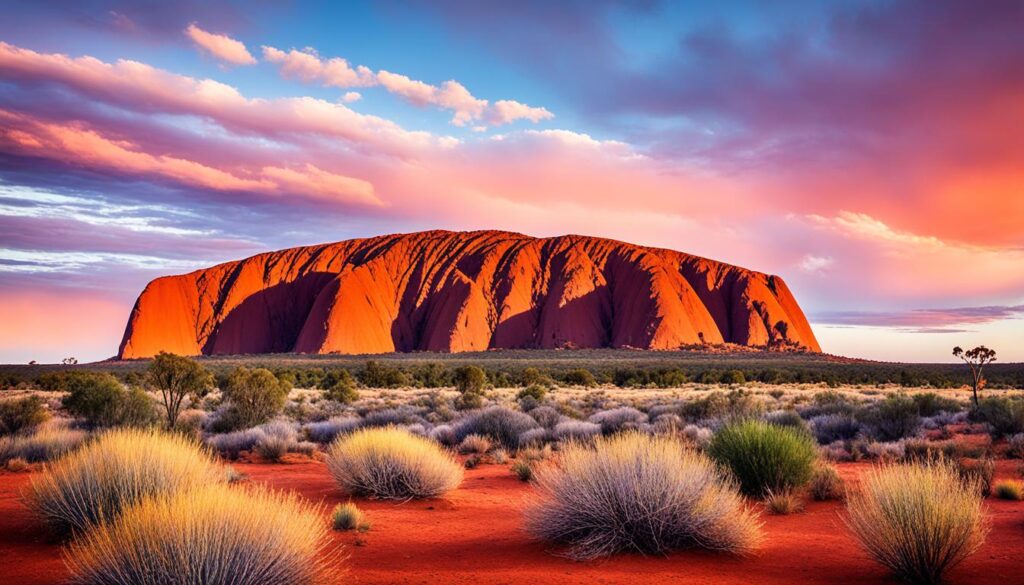
Uluru, also called Ayers Rock, is Australia’s most famous rock. It’s a huge sandstone formation in the Northern Territory. It’s sacred to the Anangu people and a UNESCO World Heritage site. Near it, Kata Tjuta (The Olgas) has 36 giant domes, some over 500 million years old.
Coastal Rock Formations
Australia’s coasts show off amazing rock formations. The 12 Apostles on the Great Ocean Road in Victoria are famous. They are tall limestone stacks in the Southern Ocean. On Kangaroo Island in South Australia, the Remarkable Rocks are granite boulders shaped by wind and water over millions of years.
Climbing Meccas
- The Tasman Arch in Tasmania, the Pyramid in Queensland’s Girraween National Park, and the Three Sisters in the Blue Mountains of New South Wales are top spots for rock climbers.
- The Pinnacles near Perth in Western Australia and the Booroomba Rocks near Canberra are known for their tough climbing routes.
Australia’s rock formations, from ancient monoliths to coastal cliffs, inspire and amaze people worldwide.
Lakes and Waterbodies
Australia’s desert landscape is quite different from its beautiful lakes. Lake Hillier is a standout, with its pink color from Dunaliella salina algae and Halobacteria. These tiny organisms make the lake look vibrant.
The Blue Lake in Mount Gambier, South Australia, is another gem. Its waters change color with the day, showing off its deep blue. Nearby, Lake Mckenzie on Fraser Island in Queensland is a favorite spot for those seeking beauty.
Lake Eyre in the South Australian Outback is truly unique. It’s the world’s largest dry lake, filling up only after heavy rain. When it does fill, it can be as deep as 4 meters and cover over 9,500 square kilometers.
| Lake | Location | Distinctive Features |
|---|---|---|
| Lake Hillier | Western Australia | Unique pink hue due to Dunaliella salina algae and Halobacteria |
| Blue Lake | Mount Gambier, South Australia | Vibrant turquoise waters that change color throughout the day |
| Lake Mckenzie | Fraser Island, Queensland | Stunning turquoise waters in a natural paradise setting |
| Lake Eyre | South Australian Outback | One of the world’s largest dry lakes, can reach 4 meters (13 feet) in depth during rare flood events |
These lakes and water bodies show a different side of Australia. They let visitors see the country’s diverse natural beauty.
Mountain Ranges
Australia boasts some of the world’s most stunning mountain ranges. From the lush Blue Mountains to the snowy Australian Alps, these areas are full of breathtaking views and unique plants and animals.
The Australian Alps and Mount Kosciuszko
Mount Kosciuszko, Australia’s highest peak, is in the Australian Alps of New South Wales. It stands tall at 2,228 meters (7,310 feet) in the Great Dividing Range. This range stretches across Southeastern Australia. The Australian Alps are perfect for skiing and snow sports, set against beautiful alpine scenery.
The Blue Mountains
West of Sydney, the Blue Mountains are a UNESCO World Heritage site. They’re famous for their blue haze, thanks to the eucalyptus forests. Hikers and nature lovers will find endless trails, stunning views, and quaint towns to visit.
Cradle Mountain and Mount William
In Tasmania, Cradle Mountain soars over 1,500 meters (4,921 feet) in the Tasmanian Wilderness World Heritage Area. Mount William in Victoria’s Grampians reaches 1,168 meters (3,832 feet). These mountains offer a wild and beautiful setting for exploring Australia’s southern nature.
« Australia’s mountain ranges are a testament to the country’s geological diversity, offering breathtaking landscapes and unique ecosystems that captivate visitors from around the world. »
Coastal Regions and The Great Barrier Reef
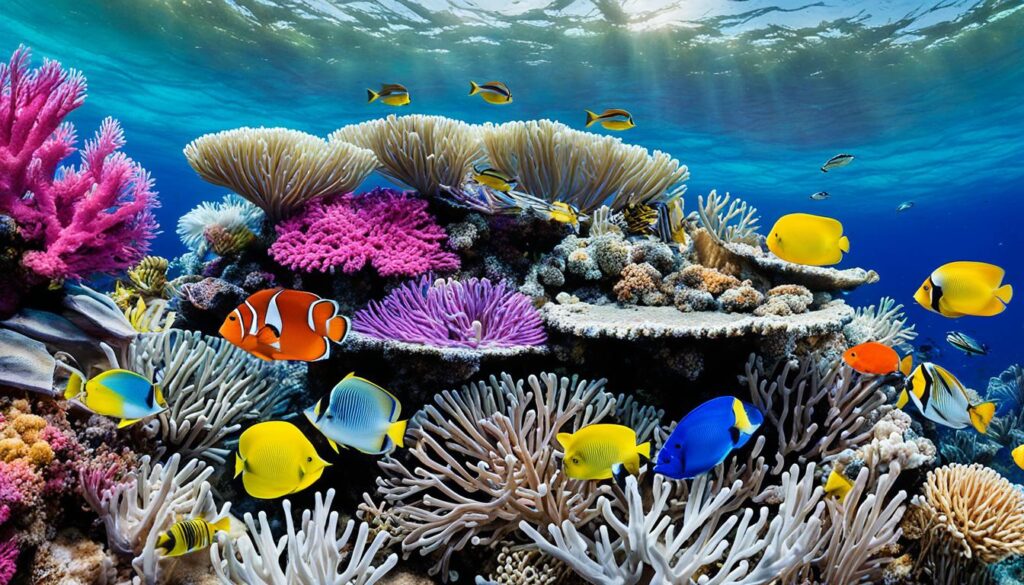
Australia’s coastline stretches over 25,000 kilometers, showing off its diverse marine life. The Great Barrier Reef is a UNESCO World Heritage site, the biggest coral reef system in the world. It covers 344,000 square kilometers in Queensland’s Coral Sea. This place is full of life, with over 1,500 fish species, 400 coral types, and 240 bird species.
Australia’s coasts have many beaches and islands, each unique. You can surf at Bondi and Manly or explore the wild 75-Mile Beach. About 40% of the coastline is islands, like the beautiful Whitsundays and Fraser islands.
The Great Barrier Reef
The Great Barrier Reef is a natural wonder, huge and full of life. It’s about 135,000 square miles big, with 2,100 reefs and 800 fringing reefs. The water is warm, between 70 to 100 °F, perfect for the reef’s diverse marine life.
| Key Facts about the Great Barrier Reef | Value |
|---|---|
| Total Area | 135,000 square miles (350,000 square km) |
| Number of Individual Reefs | Around 2,100 |
| Number of Fringing Reefs | Around 800 |
| Water Temperature Range | 70 to 100 °F (21 to 38 °C) |
| Number of Fish Species | Over 1,500 |
| Number of Coral Species | About 400 |
| Number of Bird Species | Around 240 |
The Great Barrier Reef is a natural wonder, full of life and beauty. It shows off the best of Australia’s coasts.
Australia’s Beaches and Islands
Australia is famous for its beautiful beaches and islands, besides the Great Barrier Reef. You can surf at Bondi and Manly or see the wild 75-Mile Beach. Nearly 40% of the coastline is islands, like the stunning Whitsundays and Fraser islands.
« The Great Barrier Reef is one of the most awe-inspiring natural wonders of the world, a true testament to the beauty and diversity of Australia’s coastal regions. »
UNESCO World Heritage Sites
Australia boasts 20 UNESCO World Heritage Sites, highlighting its rich natural and cultural heritage. These sites, vital for their global importance, range from the famous Great Barrier Reef to the ancient Gondwana Rainforests and the stunning Uluru-Kata Tjuta National Park.
UNESCO World Heritage sites cover a vast area of 3,500,000 km², bigger than India. They safeguard over 75,000 plant species and 30,000 animals, including endangered ones like elephants, tigers, and rhinos.
Australia’s UNESCO sites are not just ecologically valuable but also boost local economies through tourism and recreation. About 90% of these sites support jobs and income for communities.
Yet, these natural treasures face threats like climate change, invasive species, and land use changes. Climate change is the biggest threat, with highly threatened sites nearly doubling in the last decade. It’s vital to protect these sites for their biodiversity and for future generations to enjoy.
Australia’s UNESCO sites, from the ancient Willandra Lakes Region to the Sydney Opera House, highlight its varied natural and cultural heritage. With Australia at the forefront of conservation, these sites will continue to attract nature lovers and cultural seekers.
National Parks of Australia
Australia is filled with national parks that show off unique natural wonders. From the ancient rock art in Kakadu National Park to the marine life of Christmas Island National Park, these places highlight the country’s biodiversity and cultural history.
Kakadu National Park
Kakadu National Park is Australia’s largest, covering nearly 20,000 square kilometers. It’s a World Heritage site famous for its ancient Aboriginal rock art, some over 22,000 years old. Visitors can see everything from the Ubirr rock formations to wetlands full of wildlife like crocodiles and birds.
Christmas Island National Park
Christmas Island National Park is a paradise for nature lovers. It’s in the Indian Ocean and is full of wildlife. You’ll find sea turtles, seabirds, and red crabs that migrate every year.
Grampians and Uluru-Kata Tjuta National Parks
The Grampians National Park in Victoria has sandstone mountains and Aboriginal rock art. Uluru-Kata Tjuta National Park in the Northern Territory is home to Uluru and Kata Tjuta, with 32 domes.
Kosciuszko and Cradle Mountain-Lake St Clair National Parks
Kosciuszko National Park in New South Wales has Australia’s highest peak, Mount Kosciuszko. Cradle Mountain-Lake St Clair National Park in Tasmania is famous for the Overland Track, a top hike.
These parks and others across Australia show off the country’s varied landscapes, cultural heritage, and wildlife. By visiting, travelers can learn more about the natural beauty and importance of these places.
Australian wildlife and nature
Australia is a land full of incredible wildlife. It has a wide range of unique and fascinating creatures. From the colorful underwater world of the Great Barrier Reef to the diverse animals on Kangaroo Island, there’s so much to discover.
The Great Barrier Reef Marine Life
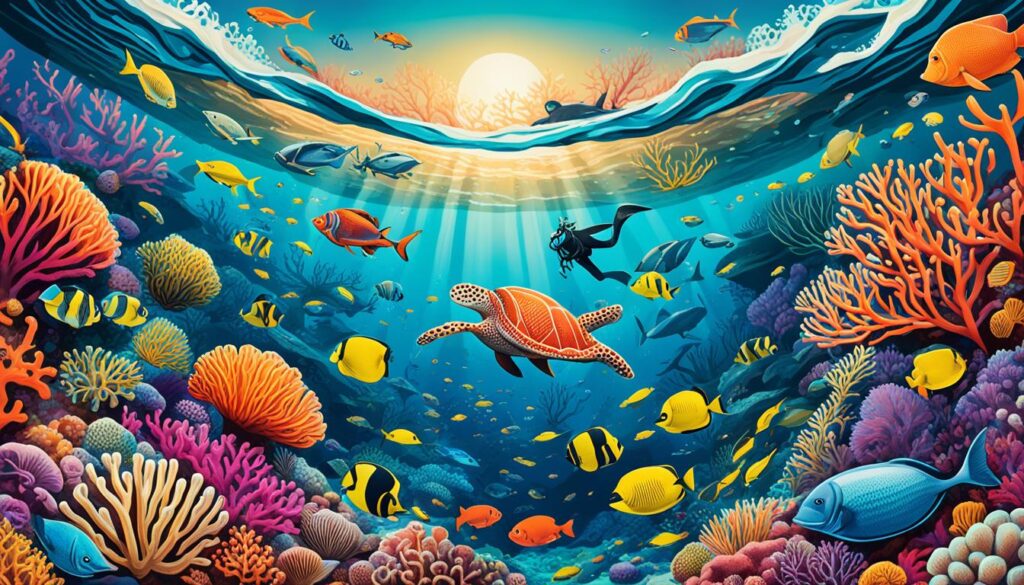
The Great Barrier Reef is the world’s biggest coral reef system. It’s a place full of life under the sea. Here, you can see over 130 types of sharks and rays, thousands of colorful fish, and six kinds of sea turtles.
Visitors can watch manta rays glide through the water and see Saltwater Crocodiles up close. The reef is full of coral and creatures that live on it. It’s a sight to behold.
Kangaroo Island Wildlife
Kangaroo Island is off the coast of South Australia and is a wildlife paradise. Here, you can see kangaroos, Tammar Wallabies, and koalas in their natural setting. The island is also home to the Short-Beaked Echidna, an egg-laying mammal.
Kangaroo Island has many different ecosystems. These provide a safe place for many native animals. It’s a great place for nature lovers to explore.
« Australia’s wildlife is some of the most varied on the planet, with over 80% of the country’s plants, mammals, reptiles, and frogs found nowhere else in the world. »
Australia’s wildlife shows how unique the country is. Its long history has led to a wide variety of animals and plants. From the Great Barrier Reef to Kangaroo Island, there are many ways to experience Australia’s amazing nature.
Outback Wildlife Spotting
The Australian Outback is a vast and captivating place. It lets you see the country’s iconic wildlife in their natural settings. You’ll find everything from red desert landscapes to rugged mountains. This area is full of diverse plants and animals waiting to be discovered.
Seeing kangaroos is a must in the Outback. These big marsupials hop across the red earth, often in big groups. Emus, the world’s second-largest birds, are also iconic. They have long necks and can’t fly.
The Outback is full of colorful parrots too. You’ll see cockatoos and lorikeets with their bright colors. These birds make the dry landscapes come alive with their energy.
There’s more to see than just marsupials and birds. Dingoes, Australia’s wild dogs, roam the rugged terrain. The Thorny Devil lizard, with its unique armor, can also be found here.
To see the Outback’s wildlife, think about joining a guided tour or exploring on your own. With the right preparation and a sharp eye, you can see the amazing natural wonders of the Australian Outback.
| Featured Wildlife Tours Around Australia | Average Cost (USD) | Duration (Days) |
|---|---|---|
| 7 | $9,491.29 | 11-18 |
Australia is home to a wide variety of wildlife, with 45% of its bird species unique to the country. The Outback is famous for its unique and thriving animal life. It gives visitors a chance to dive into the natural beauty of this amazing land.
« The Outback is a place of endless wonder, where the wild and untamed reign supreme. It’s a privilege to witness the resilience and beauty of the Outback’s iconic creatures in their natural habitats. »
The Outback is a true sanctuary for wildlife lovers. Whether you’re exploring alone or with a guide, the Outback offers an unforgettable experience. It connects you with the natural world in a special way.
Sydney and Melbourne Wildlife Tours
Discover the vibrant wildlife of Australia’s two largest cities, Sydney and Melbourne, through exciting wildlife tours. These tours let you see native species in their natural habitats, close to the city centers.
In Sydney, you can go on guided tours to places like the Royal National Park. There, you might see kangaroos, wallabies, and many bird species. You might also visit the Sydney Olympic Park to see possums and wombats.
Melbourne has its own natural spots. Tours here often take you to the Yarra Bend Park to see platypus. You can also find koalas, kookaburras, and unique birds in the Dandenong Ranges.
These tours are great for seeing Australia’s iconic species up close. They also teach you about their behavior, habitats, and conservation. Whether you love nature, photography, or just want to learn about local wildlife, Sydney wildlife tours and Melbourne wildlife tours will impress you.
| Tour | Location | Age Range |
|---|---|---|
| East Coast Explorer | Sydney, Melbourne | 18 to 35 years old |
| Kangaroo Island Adventure | Kangaroo Island | 15 to 99 years old |
| Great Barrier Reef Explorer | Cairns | Up to 35 years old |
| Eyre Peninsula & Flinders Ranges Adventure | Eyre Peninsula, Flinders Ranges | 12 to 70 years old |
| Ultimate 10 | Sydney, Melbourne, Cairns | 8 to 80 years old |
| Cairns 6 Days Escape Package | Cairns | Up to 68 years old |
| Australia – 9 Days Highlights Cairns Barrier Reef Sydney | Cairns, Sydney | 18 to 90 years old |
| Sydney to Brisbane – 8 Day Boutique Comfort Tour | Sydney, Brisbane | Up to 88 years old |
Australia’s Biodiversity
Australia is the sixth largest country in the world, known for its amazing Australian biodiversity. It’s home to many plant and animal species found only here. From lush rainforests to dry deserts, its varied landscapes support a wide range of unique plants and animals.
Despite having around 600,000 to 700,000 native species, only a tiny fraction of the estimated 30 billion species that have ever lived are still around today. Human actions like changing habitats, pollution, and climate change threaten Australian biodiversity.
In the last two hundred years, Australia has lost more mammal species than any other continent. Now, over 1,900 Australian species and their communities are threatened or could go extinct. The number of threatened species under the EPBC Act has been rising for almost all groups over the past five years.
Species like the central rock-rat, northern hopping-mouse, and Christmas Island flying fox are at high risk of disappearing in the next 20 years. Alpine ecosystems and biodiversity in Australia are also facing threats from climate change, with snow depth and biodiversity decreasing in some areas.
Yet, Australian biodiversity still amazes and intrigues us. Indigenous people have lived in harmony with nature for thousands of years, influencing evolution and adapting to survive. With ongoing conservation efforts and a better understanding of the importance of preserving this heritage, there’s hope for protecting Australia’s unique natural world for the future.
« The loss of biodiversity diminishes nature’s resilience to environmental shocks, destabilizes ecosystems, and undermines the productivity of the natural systems on which we depend. »
Plan Your Wildlife Adventure
Discover the wonders of Australia’s diverse wildlife and stunning landscapes by planning the perfect plan Australian wildlife adventure. From the famous Great Barrier Reef to the wild Outback, this country is full of chances to dive into its unique biodiversity.
Begin by checking out the many guided tours and vacation packages available. These range from 8 to 19 days, offering something for everyone. You can swim with whale sharks at Ningaloo Reef, hike the Tongariro Alpine Crossing, or explore the Daintree Rainforest.
Australia has adventures for every type of traveler. Whether you want a romantic getaway, a family trip, or an exciting journey, there’s something for you. Enjoy special experiences like private boat tours, helicopter rides, and cultural tours. Stay in luxury lodges, on private islands, or at 5-star resorts while you take in the beauty of the country.
For wildlife lovers, there are tours that let you get up close with Australia’s famous animals. Join a small-group tour with Andrew Ucles, a top wildlife expert, and visit the Finniss River Station. This place is full of unique animals.
From the colorful life under the Great Barrier Reef to seeing kangaroos, koalas, and other native animals, planning your Australian wildlife adventure is an unforgettable experience. It will leave you amazed by the country’s incredible natural beauty.
| Destination | Wildlife Highlights | Unique Experiences |
|---|---|---|
| Great Barrier Reef | 350 coral species, 1,500 tropical fish, 10,000 sponges, 125 shark species, 4,000 mollusks | Snorkeling, diving, and exploring the vibrant underwater ecosystems |
| Kangaroo Island | Kangaroos, koalas, and other iconic Australian wildlife | Kangas and Kanapes (Roos and Booze) experience, interacting with wild kangaroos |
| Finniss River Station | Diverse range of native fauna, including rare and elusive species | Small-group expeditions led by wildlife expert Andrew Ucles |
When planning your Australian wildlife adventure, think about what each place offers and make your trip fit your interests. With so much to see, your journey will be an unforgettable celebration of Australia’s natural beauty.
Conclusion
Australia’s landscapes and natural environments are truly awe-inspiring. They are home to a wide variety of plant and animal life. From ancient rainforests to the rugged outback, there are many UNESCO World Heritage sites and national parks to explore.
The State of the Environment report shows us the challenges facing Australia’s natural ecosystems. Threats include climate change and habitat loss. But, conservation efforts like those at Brindingabba in New South Wales give us hope for the future.
Learning about Australia’s unique animals and diverse plants helps us understand why we must protect its natural heritage. Australia has breathtaking views like the Great Barrier Reef and majestic rock formations like Uluru. Exploring these places inspires us all.
By planning your own wildlife adventure, you can help protect these precious environments. You’ll support the conservation of Australia’s remarkable biodiversity. Let’s all do our part to keep these natural wonders safe for future generations.