
Airfares have been rising fast this summer, leaving travelers searching for the best deals. The Union Civil Aviation Ministry has asked airlines to keep prices reasonable, but airlines won’t listen. They use complex algorithms, AI, and historical data to set ticket prices.
These algorithms look at many things like how much it costs to fly, how much profit airlines want, how many seats are left, and how many people might want to fly. They also consider the current flying conditions and the competition in the market.
Key Takeaways
- Airline pricing algorithms rely on historical data, booking patterns, and market demand to dynamically adjust fares.
- Cost price, profit margins, inventory management, and revenue optimization are key factors influencing ticket prices.
- Airlines offer diversified fare types to cater to budget-conscious and premium travelers, with business travelers accounting for a significant portion of revenue.
- Real-time price adjustments and personalized offers are emerging trends, driven by advanced forecasting and data analytics.
- Transparency and consumer education are vital for building trust in airline pricing practices.
Introduction to Airline Pricing Algorithms
The airline industry has changed a lot in how it sets and changes airfares. For a long time, airfare was heavily controlled, with state-owned airlines leading the market. But things started to change with the arrival of low-cost carriers like Air Deccan in 2003. They offered much lower prices but with a simpler flying experience.
The deregulation of the airline industry, especially in the U.S. with the 1978 Airline Deregulation Act, brought more competition and new pricing models. This change let airlines change fares more often based on demand, costs, and market conditions. Before deregulation, the cheapest round-trip flight from New York to Los Angeles cost about $1,442 in the early 1970s. By 2011, this price had dropped to $268 thanks to more competition and pricing flexibility.
The Shift from Regulated to Dynamic Pricing Models
As the airline industry changed, so did the ways to set airfares. Airlines started using advanced pricing algorithms and AI to look at past data, market conditions, and how customers behave. This move to dynamic pricing models helps airlines make more money and adapt to changes in demand.
Now, airlines use various methods, like booking classes and revenue management, to set ticket prices. They keep an eye on what competitors charge, change fares based on sales, and offer last-minute deals on first class to avoid losing money. This makes airfare pricing more complex and tailored to each traveler.
« The optimal booking control structure employed by airlines, known as the nested booking policy, involves categorizing fares into different buckets based on perceived demand levels, adjusting prices accordingly. »
Factors Influencing Airline Ticket Prices
Airline ticket prices change due to many factors. These range from the airlines’ own operations to the wider market. Knowing what affects prices helps travelers find the best deals.
Cost Price and Profit Margins
Airlines start with the cost price, which includes buying aircraft, running operations, and other costs. They balance these costs with profits to stay financially healthy.
Inventory and Demand Forecasting
Managing seats and predicting demand is key to setting prices. Airlines watch seat availability, seasonal changes, and what customers want. This helps them set prices to make the most money.
Operational Environment and Market Dynamics
Things like fuel prices, world events, and the economy affect airlines. Also, competition, price wars, and the financial health of airlines change ticket prices.
Knowing these factors helps travelers make smarter choices when booking flights. Staying up-to-date with trends and being flexible can lead to cheaper tickets.
« The airline industry is a constantly evolving landscape, and it’s essential for travelers to stay informed about the factors that shape ticket prices. »
Booking Classes and Revenue Management
Understanding airline pricing is key in today’s fast-changing aviation world. At the core, booking classes are crucial for airlines’ revenue management strategies.
Understanding Fare Codes and Booking Classes
Airlines use a complex system of booking classes to set prices and availability. These classes are more than just economy or business class. They are shown by letters that tell the fare level passengers pay. Over time, airlines have added more codes to fine-tune their revenue.
In the Oneworld alliance, discounted business class fares have codes like D, C, R, and I. United Airlines uses J, C, D, Z, and P for these fares. This detailed system helps airlines control revenue by managing each class’s availability and price.
Revenue Maximization Through Yield Management
Airline revenue management, or yield management, is key to making more money. Airlines adjust booking classes and availability based on market changes and customer demand. This strategy boosts their financial success.
The 1980s saw a big change with airfare deregulation, led by American Airlines. This led to better pricing and yield management. Now, airlines use real-time data and analytics to improve their revenue strategies. They aim to get the most value from each passenger.
| Booking Class | Fare Level | Airline Example |
|---|---|---|
| F | Full-fare first class | Various airlines |
| J | Full-fare business class | Various airlines |
| Y | Full-fare economy | Various airlines |
| D, C, R, I | Discounted business class | Oneworld alliance |
| J, C, D, Z, P | Discounted business class | United Airlines |
« Airlines need to move away from past breakthroughs and adopt new technologies to enhance revenue management strategies. »
– Sebastian Touraine, Head of Airline Commercial Systems at IATA
Dynamic Pricing and Personalization
The airline industry has changed a lot in recent years. Airlines now use dynamic pricing algorithms to set ticket prices. These algorithms change fares in real-time. They look at market demand, what competitors charge, and other factors.
Advanced analytics and machine learning are key to this change. They help airlines make smart pricing choices. Airlines can now offer special deals to certain customers based on what they like and how much they want to pay.
Real-Time Price Adjustments
Old pricing models are gone. Airlines now use dynamic pricing to change ticket prices quickly. This lets them make more money and keep their prices competitive for different types of travelers.
Tailored Offers and Customer Segmentation
Airlines are also using personalized offers and customer segmentation. They look at what customers bought before and what they’re interested in. This way, they can offer special deals that match what each customer wants or needs.
This makes customers happier and helps airlines make more money. It’s all about matching what the customer is willing to pay.
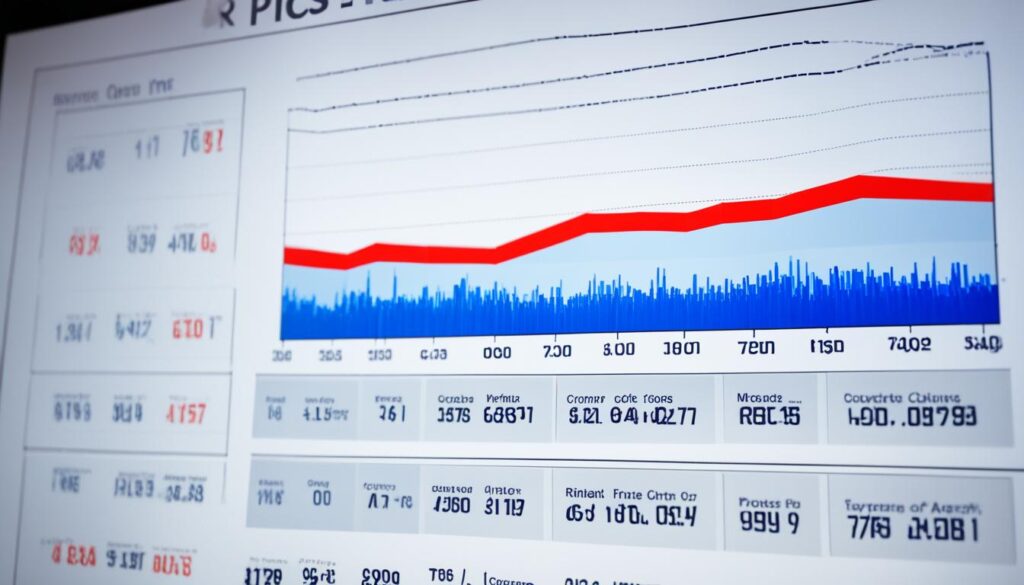
« The industry is moving towards a combined approach of continuous pricing and personalized (context-specific) pricing to achieve the ultimate goal of dynamic pricing. »
airline pricing algorithms
Airlines have changed a lot in recent years with their pricing algorithms. They now use AI-driven pricing algorithms to set ticket prices. These algorithms use historical data and predictive analytics.
Before, airlines looked at past sales to set prices. Now, they use advanced data analysis for better pricing. This includes market conditions, fuel prices, and demand patterns.
AI-Driven Pricing Algorithms
Airlines use their own AI technology for pricing. These algorithms look at lots of data, like customer search and booking histories. They predict demand and set prices based on this.
By using predictive analytics, airlines can change prices quickly to make more money.
Integrating Historical Data and Predictive Analytics
Airlines have always looked at past sales for pricing. But now, they use predictive analytics too. This helps them forecast demand and set prices ahead of time.
For example, airlines might change prices based on:
- Changes in fuel prices, which affect costs
- The type and age of aircraft, with newer ones allowing for lower prices
- Seat inventory management, based on past demand
- Booking lead time and how close the travel date is, with prices going up closer to the flight
By combining historical data and predictive analytics, airlines can set prices that match market conditions and what customers want. This helps them make more money.
« Airlines set the prices of seats on each individual flight on a given route separately, not considering consumer substitutions, which is a surprising finding. »
The airline industry is always changing. The use of AI-driven pricing algorithms and predictive analytics will keep growing. This means airlines can offer better and more competitive prices to customers.
Competitor Analysis and Price Matching
In the airline industry, analyzing competitors and matching prices is key to staying ahead. Airlines watch each other’s fares on similar routes closely. If one airline drops its prices, the others usually do the same soon after. This has led to big fare cuts when low-cost carriers enter new markets.
Airlines use advanced pricing tools and data to understand the market and set their fares. They adjust prices often, thanks to continuous pricing. This means they change fares in real-time based on demand and market conditions. AI helps them keep an eye on demand, adjust fares instantly, and give customers personalized fare updates.
| Airline | Pricing Strategy | Target Customers |
|---|---|---|
| Air India | Dynamic pricing with revenue optimization | Business and first-class passengers |
| IndiGo | Aggressive pricing and add-on fees | Cost-conscious travelers |
| Vistara | Bundled fares with adjustments based on competition | Hybrid market segment |
The airline industry’s pricing is always changing. Airlines keep tweaking their strategies to stay competitive and make more money. With more airlines using AI for pricing, the competition in the skies is getting fiercer. Airlines are fighting hard for the attention and loyalty of travelers who want more.
« Airlines engage in overbooking as a revenue optimization strategy, managing spill (demand vs. actual bookings) to minimize revenue loss. »
Ancillary Revenue Strategies
Airlines are always looking for new ways to make more money. One big strategy is focusing on ancillary revenue. This means charging extra for things like checked bags and seat choices.
Unbundling and Ancillary Fee Models
Airlines now offer cheaper flights but charge extra for things like checked bags and seat choices. This way, they can attract budget-conscious travelers and make more money from those who want extras. Ancillary revenue can range from 20% of total revenue for major airlines to as high as 50% for low-cost carriers.
Ancillary revenue has grown a lot, reaching nearly $110 billion in 2019. It dropped to over $50 billion in 2020 because of the pandemic. But, airlines still rely more on these fees, even when times were tough.
Loyalty Programs and Frequent Flyer Benefits
Loyalty programs and frequent flyer benefits are key to making more money. Airlines target their best customers with special deals to keep them coming back. This includes perks like better seats and more rewards.
Airlines are now focusing on making the most of their revenue. They use data and AI to make smarter decisions. This helps them manage their money better and give customers a more personalized experience.
| Ancillary Revenue Trends | Percentage of Total Revenue |
|---|---|
| Major Airlines | 20% |
| Low-Cost Carriers | 50% |
« The growth of ancillary revenue took most airlines by surprise during the global pandemic, as they were forced to rely more heavily on these additional revenue streams to offset the dramatic drop in passenger traffic. »
Traveler Profiling and Willingness to Pay
Airlines know how important it is to understand what their customers like and need. They see a big difference between those who travel for fun and those who travel for work. Leisure travelers book early and like to have options, while business travelers book last minute and pay more for certain times.
Airlines use customer data to give everyone a better experience. They offer personalized tickets, special add-ons, and deals. By knowing what each traveler is willing to pay, airlines can set prices that make the most money.
They use special methods like Expected Marginal Seat Revenue (EMSR) to change prices quickly. This helps them understand what each passenger wants and make more money. It also makes flying more personal for everyone.
As things change, using Willingness-to-Pay technology will be key. This lets airlines move away from old pricing and offer prices that match what each passenger is looking for. It makes flying more flexible and personal.
« Implementing Willingness-to-Pay forecasting technology enables airlines to combat revenue dilution caused by buy-down and drive incremental revenue. »
Airlines can make more money by knowing how sensitive passengers are to price changes. This helps them fill higher classes and avoid losing sales. Focusing on understanding travelers and what they’re willing to pay is key to staying ahead in the changing market.
Seasonal and Peak Travel Patterns
Airline ticket prices change a lot with the seasons. Prices go up during holidays and big events. But, you can save money by traveling during the shoulder seasons. Booking flights 3 to 4 months early can help you save a lot.
Demand Fluctuations and Pricing Adjustments
Airlines watch how many people travel at different times to set their prices. Prices go up in summer and during holidays to make more money. But, prices drop during off-peak times when there are fewer travelers.
Timing Your Bookings for Cost Savings
Airlines share their flight plans and prices 11 months ahead. This lets travelers look for the best deals. Booking 3 to 4 months early can save you money because prices are more flexible then.
| Season | Typical Price Range | Recommended Booking Window |
|---|---|---|
| Winter | Lowest prices | 3-4 months in advance |
| Spring | Moderate prices | 3-4 months in advance |
| Summer | Highest prices | 3-4 months in advance |
| Fall | Moderate prices | 3-4 months in advance |
Knowing about seasonal travel patterns, peak travel periods, and demand fluctuations helps travelers save money. By timing their bookings right, they can find the best deals on flights.
Fare Rules and Restrictions
Airline pricing changes often, with airlines using many strategies to make more money and manage their seats. They use fare rules and restrictions to affect ticket prices for travelers.
Airlines sell more tickets than they expect to fill, counting on some people not showing up. This is called « yield management. » They use « fare fences » like booking early or staying over a Saturday night. This lets them charge different prices to different people.
- Fare rules can limit ticket changes, cancellations, and refunds. They also set rules for how long you must stay.
- Airlines offer up to 20 different fare classes. Each has its own rules and prices to control pricing and inventory.
- The first letter of the fare code shows the booking class. Codes like Y, B, Q, and K have different prices and conditions.
Fare rules and restrictions help airlines manage demand, make more money, and meet the needs of different customers. It’s important for travelers to know these rules to find the best deals.
« Airlines can offer as many as 20 different fare classes to fine-tune pricing and inventory control. »
The airline industry is always changing. Airlines will likely use more advanced data and personalization to set prices. Travelers need to stay informed to understand airfare pricing.
Transparency and Consumer Education
In the world of airline pricing, being open and teaching customers are key. The civil aviation minister recently asked airlines to watch their prices and set fair prices using Fare Codes. This shows how important it is for the industry to tackle this issue.
Fare Codes are codes airlines use to show different fare types. They split each seat into categories with their own prices and rules. Experts say the industry should be clear and teach travelers about these complex pricing systems to gain trust.
Building Trust Through Pricing Transparency
Customers often get upset by unclear airline prices. Airlines can make things better by sharing info on what affects ticket prices. This includes cost, profit, inventory, demand, and operational environment.
Educating Travelers on Pricing Strategies
Sharing clear info on airline pricing strategies helps with consumer education. Teaching travelers about things like dynamic pricing and revenue management helps them make better choices. This builds trust in the industry.
| Pricing Transparency Initiatives | Potential Benefits |
|---|---|
| Clearly explaining Fare Codes and Booking Classes | Helps customers understand the rationale behind different price points |
| Providing real-time price adjustments and justifications | Enhances customer trust and perception of fairness |
| Offering personalized pricing breakdowns | Enables customers to make more informed purchasing decisions |
By focusing on pricing transparency and consumer education, airlines can deal with complex pricing. This helps build stronger bonds with their customers.
Emerging Trends and Future Developments
The airline industry is changing fast, and experts see big changes coming. They talk a lot about making ticket prices more personal. This means using data to give customers special deals and add-ons.
Another big change is continuous pricing. This means prices change in real-time, not just when you book. Airlines will use this to make prices match what people are willing to pay right now.
Technology like AI and machine learning will also change how we see ticket prices. These tools can look at lots of data to set the best prices. This helps airlines make more money and give customers what they want.
| Emerging Trend | Impact |
|---|---|
| Personalized Pricing | Tailored ticket recommendations, customized add-ons, and targeted promotions |
| Continuous Pricing | Dynamic fare adjustments based on real-time data, maximizing transaction value |
| AI-driven Pricing Algorithms | Optimized pricing strategies and enhanced revenue management |
Travelers will see a big change in how ticket prices work. Airlines will use new tech to make prices better for everyone. This means a more personal and efficient way to travel.
« The future of airline pricing lies in the seamless integration of data, technology, and customer-centric strategies. As the industry evolves, we will see a shift towards more personalized and agile pricing models that cater to the evolving needs of travelers. »
Conclusion
Airline ticket pricing changes often because of many factors like algorithms and AI. Airlines use different booking classes and pricing models to make more money and meet customer needs. Knowing what affects ticket prices helps travelers find the best deals for their next flight.
The Competition Commission of India looked into airline pricing and found no evidence of price fixing. This shows how market shares and human decisions show competition. Airlines must balance making money and being open with customers as they change with the market and new tech.
The future of airline pricing is hard to predict, with prices possibly going up because of the pandemic and market changes. But, staying up to date on pricing can help travelers save money on their trips. By understanding airline pricing, travelers can find good deals that fit their travel plans and budgets.