
Australia is famous for its unique wildlife, like kangaroos and koalas. It also boasts the stunning Great Barrier Reef and Uluru. This country is full of natural wonders that amaze and inspire people worldwide. It spans over 7.6 million square kilometers, featuring everything from lush rainforests to arid deserts and beautiful coastlines.
This guide will lead you on an amazing journey through Australia’s diverse ecosystems and natural landmarks. You’ll learn about the wildlife that calls this place home. Whether you want to see kangaroos, explore the Great Barrier Reef, or watch Uluru change colors at sunrise and sunset, Australia has it all.
Key Takeaways
- Australia is home to the most endemic bird species of any country, with around 45% of its 828 bird species found exclusively in the country.
- The waters of Australia are a haven for 30 species of whales, including the largest migrations of Humpback Whales globally.
- Australian wildlife tours offer a range of immersive experiences, from citizen science and conservation activities to dedicated birdwatching excursions.
- The country’s diverse landscapes include the ancient Daintree Rainforest, the iconic Uluru, and the stunning Great Barrier Reef.
- Australia’s natural wonders have been recognized as UNESCO World Heritage Sites, highlighting their global significance and the importance of their preservation.
Diverse Australian Landscapes
Australia’s landscapes are full of contrasts, showing the country’s amazing variety. From dense, old rainforests to vast deserts, each place gives us a peek into the country’s natural wonders.
Rainforests
Australia’s rainforests cover a huge 3.6 million hectares. They are home to 60% of the country’s plant species and many mammals and birds. Places like the Gondwana Rainforests and the Daintree Rainforest, the oldest rainforest in the world, are must-sees.
Deserts and Outback
Seventy percent of Australia is dry, with 10 official deserts. These deserts have unique plants and animals that have adapted to the tough conditions. The Kimberley region in Western Australia shows off the beauty of the outback.
Rock Formations
Australia is famous for its stunning rock formations. The sandstone monolith Uluru and the ancient rock domes of Kata Tjuta are examples. These formations have been shaped over millions of years, telling stories of the past.
« Australia has a vast array of natural wonders, from the lush rainforests of the Daintree to the otherworldly rock formations of Uluru and Kata Tjuta. Each region offers a unique and awe-inspiring glimpse into the country’s diverse ecosystems. »
Breathtaking Lakes and Mountains
Australia is full of contrasts, showing in its stunning lakes and majestic mountains. Beyond the hot deserts, travelers find many natural wonders. These include the unique pink Lake Hillier, the blue Blue Lake, and the turquoise Lake Mckenzie. Lake Eyre is a famous lake that fills up with water only after heavy rain, changing the landscape.
Lakes
Australia’s lakes show off a wide range of beauty. Lake Hillier on Middle Island is known for its pink color from algae in salty water. Blue Lake in South Australia has bright blue water. Lake Mckenzie in Queensland has turquoise water and green forests around it.
Mountains
Australia’s mountains tower high, showing the country’s varied geology. The Australian Alps are part of the Great Dividing Range and have the highest peak, Mount Kosciuszko, at 2,228 meters. The Blue Mountains near Sydney are famous for their blue haze and the Three Sisters rock formation. In Tasmania, Cradle Mountain has glacial peaks and a beautiful setting.
« Australia is a land of contrasts, and this diversity extends to its stunning lakes and majestic mountains. »
| Lake | Location | Distinctive Feature |
|---|---|---|
| Lake Hillier | Middle Island, Western Australia | Striking pink hue |
| Blue Lake | South Australia | Vivid azure color |
| Lake Mckenzie | Fraser Island, Queensland | Turquoise waters, lush surroundings |
| Lake Eyre | South Australia | Ephemeral lake that fills after heavy rain |
From the snow-topped peaks of the Australian Alps to the wild beauty of Cradle Mountain, Australia’s mountains are perfect for outdoor fun and exploring nature.
Coastal Wonders: Oceans, Beaches, and the Great Barrier Reef
Australia is a land of breathtaking coastal beauty. Its vast 25,000-kilometer coastline is filled with idyllic islands and pristine beaches. The Great Barrier Reef, a world-famous wonder, adds to its charm. This area is surrounded by the Indian, Southern, and Pacific oceans, creating a rich marine world full of diverse wildlife.
From Bondi Beach and Manly in Sydney to Byron Bay’s laid-back vibe, Australia’s beaches are famous for their beauty. The Great Barrier Reef, a UNESCO World Heritage site, is the largest coral reef system in the world. It offers amazing snorkeling and diving spots.
The Great Barrier Reef stretches over 2,300 kilometers along Australia’s northeastern coast. It includes thousands of coral reefs and islands. Visitors can enjoy this underwater paradise from June to October, when it’s cooler and drier.
The reef is home to a wide variety of marine life. You can see Great Barracuda, Clownfish, Maori Wrasse, and Green Sea Turtles. There are also Giant Clams, Manta Rays, Humphead Wrasse, Dolphins, various sharks, and Butterflyfish.
| Destination | Key Highlights |
|---|---|
| Whitsundays |
|
| Cairns |
|
Australia’s coasts are not just beautiful but also full of activities. Visitors can enjoy snorkeling, scuba diving, island hopping, boat tours, and aerial sightseeing. The Australian coast is perfect for adventure and exploration.
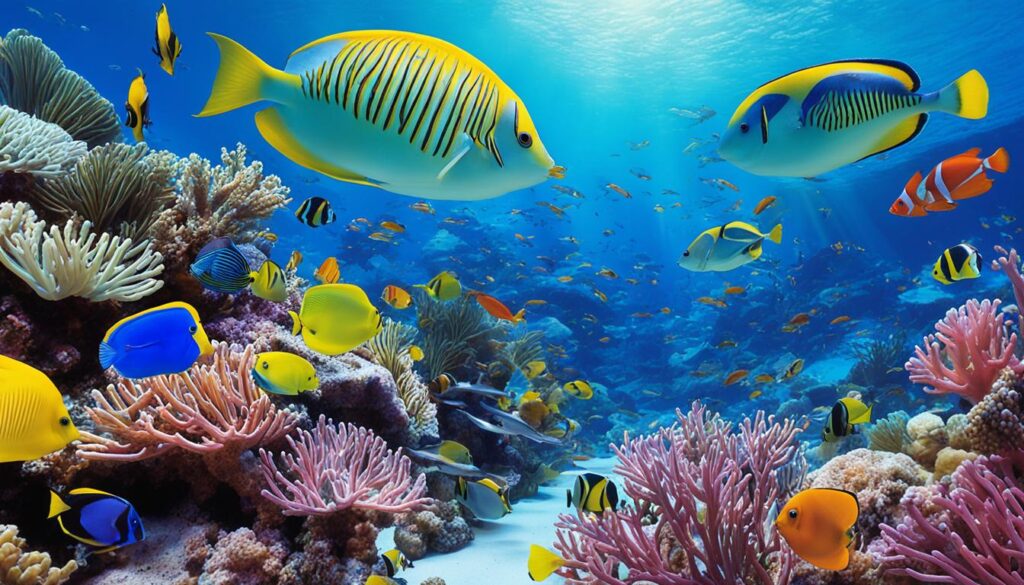
« The Great Barrier Reef is a global treasure, a biodiversity hotspot that must be protected for future generations. »
UNESCO World Heritage Sites in Australia
Australia boasts an impressive 20 UNESCO World Heritage sites. Each site highlights the country’s natural and cultural beauty. You’ll find the Great Barrier Reef, Uluru-Kata Tjuta, Fraser Island, the Gondwana Rainforests, the Blue Mountains, the Wet Tropics of Queensland, and the Sydney Opera House among them. These sites show off the vast and stunning natural wonders of Australia.
The Great Barrier Reef, the biggest coral reef system, was listed in 1981. It stretches over 348,000 square kilometers. It’s filled with over 2,500 reefs, 900 islands, and a vast array of marine life. This includes 1,500 fish species, 400 coral species, and 240 bird species.
Other natural sites include the Uluru-Kata Tjuta National Park and K’gari (Fraser Island), the largest sand island. The Gondwana Rainforests and Wet Tropics of Queensland highlight Australia’s ancient forests. The Blue Mountains are famous for their stunning rock formations and trails.
The Sydney Opera House is a cultural icon also on the list. It’s known for Australia’s arts and architecture. These sites, spread across the country, give visitors a deep look into Australia’s unique treasures.
« Australia’s UNESCO World Heritage sites represent the country’s incredible natural and cultural diversity, from the iconic Great Barrier Reef to the ancient Gondwana Rainforests and the majestic Uluru-Kata Tjuta. »
National Parks: Protecting Australia’s Natural Treasures
Australia is filled with national and marine parks that protect its stunning nature. These places let visitors see different landscapes, like old rainforests and famous sandstone rocks. Some top parks include Kakadu, the Great Barrier Reef, the Grampians, and Uluru-Kata Tjuta.
Kakadu National Park
Kakadu National Park is in the Northern Territory and is a UNESCO World Heritage site. It’s known for its old Aboriginal art and many different kinds of plants and animals. The park is huge, with wetlands, hills, and lots of wildlife, like saltwater crocodiles and over 2,000 plant types.
Great Barrier Reef National Park
The Great Barrier Reef National Park is home to the biggest coral reef system in the world. It’s along Australia’s northeast coast. This place is a big hit with tourists, bringing in over $6 billion a year and supporting more than 63,000 jobs.
Grampians National Park
In Victoria, the Grampians National Park has beautiful sandstone mountains and old Indigenous rock art. It’s a favorite spot for hikers and nature lovers. They come to see the tough landscapes, many plants and animals, and the cultural history.
Uluru-Kata Tjuta National Park
Uluru-Kata Tjuta National Park is in the Northern Territory and has the famous Uluru (Ayers Rock) sandstone rock. It’s a sacred place for the local Anangu people. The park also has the amazing Kata Tjuta rocks, showing Australia’s old history and culture.
These national parks and many others in Australia are key to protecting the country’s nature. They let visitors see the amazing natural sights of the nation.
| National Park | Location | Key Highlights |
|---|---|---|
| Kakadu National Park | Northern Territory | Ancient rock art, diverse ecosystems, wetlands, and abundant wildlife |
| Great Barrier Reef National Park | Queensland | World’s largest coral reef system, attracts over $6 billion in tourism annually |
| Grampians National Park | Victoria | Sandstone mountain ranges, Indigenous rock art, and diverse flora and fauna |
| Uluru-Kata Tjuta National Park | Northern Territory | Iconic Uluru sandstone monolith, Kata Tjuta rock formations, and cultural significance |
« National parks serve as important resources for the pharmaceutical industry, clean water provision, and food security. »
Australia’s national parks are loved for their beauty and their big role in keeping nature safe. They help protect the country’s rich nature for the future.
Australian Wildlife and Nature Encounters
Australia is famous for its unique Australian wildlife. You can see kangaroos, koalas, and Tasmanian devils up close. These animals live in their natural habitats, waiting for visitors to discover them.
The Great Barrier Reef
The Great Barrier Reef is a top spot for seeing wildlife. When you snorkel or dive here, you’ll see many marine life species. This includes sharks, rays, and turtles. It’s important to keep a safe distance and follow the rules to protect these amazing animals.
Kangaroo Island
Kangaroo Island is a great place for wildlife sightings. It’s full of kangaroos, wallabies, koalas, and echidnas. Here, you can watch these animals in their natural setting. This helps you understand and appreciate Australia’s unique wildlife better.
When you meet Australian wildlife, always think about their well-being. Don’t feed them or disturb their natural behavior. Support places that treat animals with respect. This way, you’ll have a special and responsible experience with Australia’s nature and wildlife.
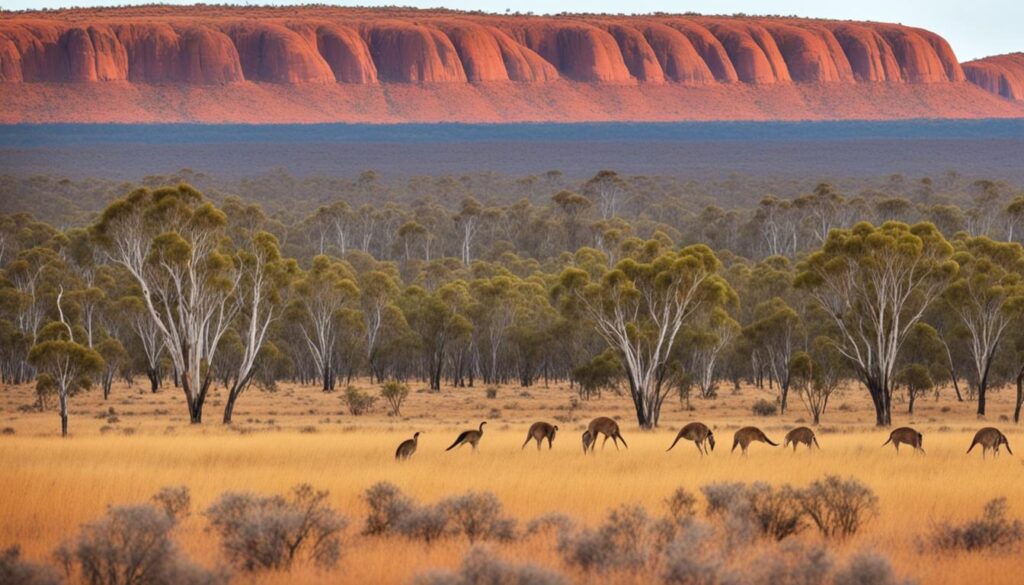
Iconic Natural Landmarks of Australia
Australia is a land of extraordinary beauty, filled with landmarks that attract visitors worldwide. From the majestic Uluru (Ayers Rock) in the Northern Territory to the dramatic Twelve Apostles on the Great Ocean Road, these landmarks show the incredible diversity of Australia’s landscapes.
Uluru, a massive sandstone monolith, rises 1,142 feet above the desert. It’s a sacred site for the Anangu people and has amazed travelers for years.
The Twelve Apostles along the Great Ocean Road are a sight to behold. Despite erosion, nine of these limestone stacks still stand, showing the power of nature.
In Western Australia, the Pinnacles Desert offers a surreal landscape. These limestone formations, over 30,000 years old, rise from the sand, drawing visitors from all over.
Further north, Shark Bay is home to the bubblegum-pink waters of Lake Hillier. This vibrant color contrasts with the turquoise ocean and sandy beaches, making it a favorite among photographers and nature lovers.
The Grampians National Park in Victoria is known for its rugged mountains, waterfalls, and diverse wildlife. It’s a paradise for hikers and those who love the outdoors.
These landmarks are just a few reasons why Australia is a top destination for those seeking natural beauty. Whether you’re into ancient rock formations, stunning coastlines, or vast wilderness, Australia’s landmarks will leave a lasting impression.
The Great Barrier Reef: A Underwater Paradise
The Great Barrier Reef stretches over 344,000 square kilometers in the Coral Sea off Queensland’s coast. It’s a UNESCO World Heritage site and the world’s biggest coral reef system. This place is full of life, with over 1,500 species of tropical fish, sharks, rays, and six kinds of sea turtles. It’s perfect for snorkeling and diving.
This reef is over 18 million years old, offering a historical dive experience. It has the largest coral reef collection on Earth, with about 2,500 reefs and 900 islands. Divers can see the bright colors of the coral and the rich marine life that lives here.
The reef is a hub of life, with over 450 types of corals, 1,600 fish species, and 4,000 molluscs. It’s also home to 6 sea turtles, 25 whales and dolphins, 6 giant sea clams, 125 sharks, 10,000 sponges, and 22 sea life species.
« The Great Barrier Reef is among the most sought-after diving destinations globally due to its unparalleled coral, marine life, and water conditions. »
There are many reef sites for snorkeling, diving, deep dives, underwater caverns, and shipwrecks to explore. The reef is great for diving all year and has seasonal marine life, like humpback whales.
To protect this amazing place, visitors should follow sustainable practices. Don’t touch the coral, use reef-safe sunscreen, avoid harming the reef, keep your belongings secure, and take only photos.
Uluru: The Sacred Sandstone Monolith
Uluru stands tall in the Australian Outback, drawing in visitors from all over. This massive sandstone monolith is 863 meters (2,831 feet) high. It has been a sacred place for the Anangu people for over 10,000 years.
Its unique shape and vibrant colors make Uluru stand out. The sandstone changes color with the light, especially during sunrise and sunset. This creates a stunning view.
The Uluru-Kata Tjuta National Park is full of natural beauty. It has over 400 plant species and 175 bird species. You can also find red kangaroos and thorny devils here.
| Key Facts About Uluru | Details |
|---|---|
| Elevation | 863 meters (2,831 feet) |
| Prominence | 348 meters (1,142 feet) |
| Circumference | 9.4 kilometers (5.8 miles) |
| Age of Sandstone Formation | 550-530 million years old |
| Uluru-Kata Tjuta National Park Area | 1,326 square kilometers (512 square miles) |
Visitors can learn about Aboriginal culture through guided tours and workshops. The Tali Wiru Dining Experience lets you enjoy local food while watching Uluru change colors at sunset.
« Uluru is a place of great spiritual significance for the Anangu people. It is a sacred site that must be respected and protected. »
Uluru is a UNESCO World Heritage Site, touching the hearts of all who visit. It connects us to the land and the Aboriginal culture that has thrived here for thousands of years.
Shark Bay and the Pinnacles Desert
Shark Bay is 800 kilometers north of Perth, on Australia’s west coast. It’s a UNESCO World Heritage Site known for its stunning views. The area has rocky cliffs, white sand dunes, and a rich marine life.
It’s where you can find over 10,000 dugongs, the most in the world. There are also many endangered species and lots of marine life.
North of Shark Bay, the Pinnacles Desert is in Nambung National Park. It looks like another planet with thousands of limestone pillars. These pillars can be up to 3.5 meters tall.
The best time to see the Pinnacles Desert is from August to October. The weather is mild, and it gets about 250,000 visitors a year.
Geraldton is a town 132 miles north of the Pinnacles. It has many places to stay and is a good place to start exploring. Visitors can go on tours to see Shark Bay and the Pinnacles Desert. These tours include stargazing and seeing the area’s wildlife.
« The Pinnacles Desert is a one-of-a-kind landscape that transports visitors to another world. The towering limestone pillars against the backdrop of the golden sands create a truly mesmerizing sight. »
The Twelve Apostles: Eroded Limestone Stacks
The Twelve Apostles sit along the famous Great Ocean Road in Victoria, Australia. They are a stunning natural sight. These limestone formations were shaped by erosion over millions of years. They show the power of the Southern Ocean.
Once, the Twelve Apostles were nine tall rock stacks. But, time and the sea took their toll. Now, eight stacks remain after one fell in 2005 and another in 2009. These limestone structures, up to 50 meters tall, keep changing shape under the waves and wind.
The limestone of the Twelve Apostles dates back to the Mid-Late Miocene, about 15 to 5 million years ago. The cliffs show layers of different colors, telling the area’s geological story. On top, thick vegetation helps hold the limestone together, preventing further erosion.
| Statistic | Value |
|---|---|
| Number of original Twelve Apostles | 9 |
| Current number of remaining Apostles | 8 |
| Height of the collapsed Apostle | 50 meters (160 feet) |
| Maximum height of the Apostles | 50 meters (160 feet) |
| Age of the Port Campbell Limestone | 15 to 5 million years old |
Visitors are drawn to the Twelve Apostles for their beauty. The area’s low light pollution lets people see stars like the Southern Cross and Orion. The name « Twelve Apostles » was chosen to attract tourists, but it’s a place of wonder for all who see it.
« The Twelve Apostles are a testament to the power of nature and the relentless forces that have shaped this magnificent coastal landscape over millions of years. »
Fraser Island: The World’s Largest Sand Island
Off the coast of Queensland, Australia, lies Fraser Island, the world’s largest sand island. It stretches 123 kilometers long and up to 22 kilometers wide. This island is a natural wonder, full of diverse landscapes and wildlife.
The island is known for its ancient rainforests on high sand dunes. These lush forests contrast with the island’s white sandy beaches along the Pacific Ocean. There are over 100 freshwater lakes here, like Lake McKenzie, famous for its clear waters and beautiful setting.
Visitors love the island’s dingoes, wild dogs that have lived here for centuries. These dogs are part of the island’s rich wildlife, along with kangaroos, wallabies, and many birds.
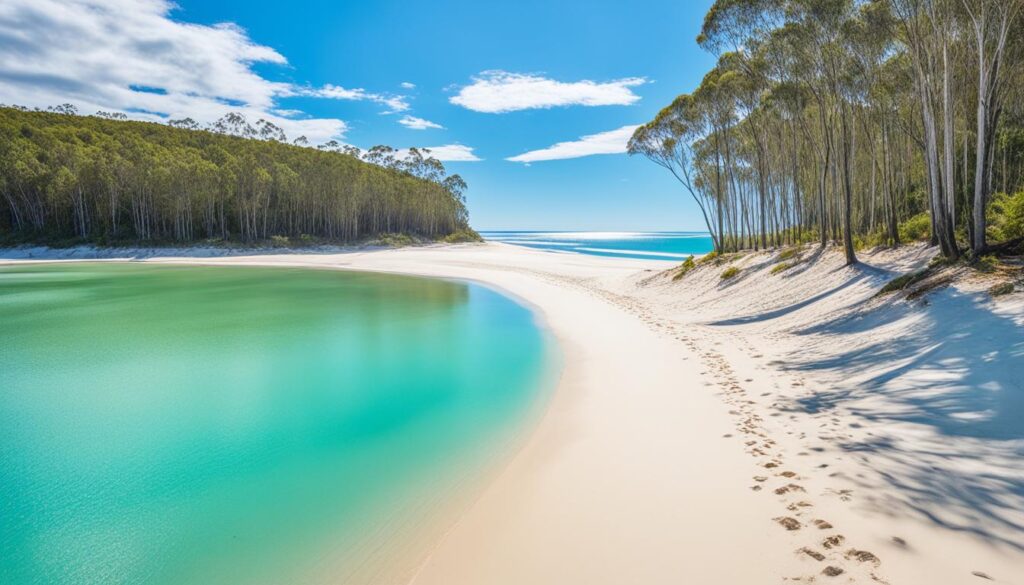
Fraser Island is a UNESCO World Heritage Site. It shows the beauty and strength of Australia’s nature. It’s perfect for those wanting peace, adventure, or to explore unique ecosystems. Fraser Island gives an unforgettable experience to all who visit.
Kakadu National Park: A Biodiversity Hotspot
In the heart of Australia’s Northern Territory, Kakadu National Park is a natural wonder. It covers over 20,000 square kilometers. This UNESCO World Heritage site is a biodiversity hotspot, filled with many plants and animals.
The park has different ecosystems like floodplains, tidal flats, and rugged escarpments. These support a wide variety of life. You can find over 1,700 plant species, 68 mammals, 120 reptiles, 26 frogs, and 300 fish in the park.
Kakadu is not just about its wildlife. It’s also famous for its ancient Aboriginal rock art. This art is over 20,000 years old. It shows the cultural heritage of the Bininj/Mungguy people.
| Kakadu National Park Key Facts | Statistics |
|---|---|
| Total Area | 19,804 sq km (7,646 sq miles) |
| Indigenous Occupation | Over 65,000 years |
| UNESCO World Heritage Status | Recognized in 1981 |
| Major Landforms | Wetlands, rivers, escarpments |
| Biodiversity | 1,700+ plant species, 68 mammals, 120 reptiles, 26 frogs, 300 fish |
Kakadu National Park is a place of beauty, with stunning landscapes, amazing wildlife, and deep cultural significance. It’s a top spot for anyone wanting to explore Australia’s natural beauty.
« Kakadu National Park is a place of immense beauty, where the land, the people, and the wildlife coexist in a delicate balance. It is a true testament to the enduring spirit of the Australian wilderness. »
The Blue Mountains: Eucalyptus-Hued Hikes
The Blue Mountains are a natural wonder, just two hours west of Sydney. They invite travelers to explore Australia’s breathtaking landscapes. This UNESCO World Heritage site gets its blue color from the eucalyptus trees that release oil into the air.
There are many hiking trails in the Blue Mountains. They cover 11,400 square kilometers of mountains, cliffs, and valleys. The area took 250 million years to form. The first Europeans arrived in 1813, after the indigenous Gundungurra and Darug people lived there for centuries.
The Three Sisters rock formation is a famous spot. It has amazed visitors for years. Near it, the Jenolan Caves, which are about 340 million years old, show off Australia’s ancient past.
The Blue Mountains are full of outdoor adventures. You can go abseiling, rock climbing, or canyoning. Or, take guided tours to learn about conservation and see Wollemi pines, some of the oldest plants in the world.
Looking for a scenic hike, a wellness retreat, or a cultural experience? The Blue Mountains offer it all. It’s a place of unforgettable moments in the Great Dividing Range.
Conclusion: Experiencing Australia’s Natural Wonders
Australia is a top spot for nature lovers, thanks to its diverse landscapes and wildlife. You can see the colorful coral reefs, ancient rocks, and more. It’s full of natural wonders waiting to be explored.
Want to see unique animals, explore ancient forests, or hike in stunning mountains? Australia has many national parks and UNESCO sites for that. These places let you connect deeply with nature.
Visiting Australia lets you appreciate its beauty and unique wildlife. Over 80% of its animals can’t be found anywhere else. You’ll see endangered species and the Great Barrier Reef, showing how rich and fragile Australia’s nature is.
When planning your trip, make sure to dive into Australia’s nature and wildlife. From the tough Outback to peaceful coasts, each place offers a special experience. You’ll leave with a deep love for nature and a wish to see more of Australia’s beauty.