
Moroccan tagine cooking is a special way of cooking that has won the hearts of food lovers all over the world. It uses a unique clay pot and special spices to make dishes that are both tender and full of flavor. If you love cooking at home or are just starting out, learning to make Moroccan tagine can be a fun and tasty adventure.
This guide will give you the tips and tricks you need to start with Moroccan tagine cooking. You’ll learn about the important tools and spices used, how to prepare your ingredients, and how to make different types of tagine dishes. By the end, you’ll be able to make delicious tagine dishes that will take you straight to the lively markets of Morocco.
Key Takeaways
- Discover the fundamental components of a traditional Moroccan tagine pot and its role in slow-cooking techniques.
- Explore the essential spices and ingredients that define the authentic flavors of Moroccan tagine dishes.
- Learn the art of layering ingredients in a tagine to build depth of flavor and texture.
- Uncover the versatility of Moroccan tagine cooking, including vegetarian and vegan options.
- Gain insights into the regional variations of tagine dishes and how to incorporate them into your culinary repertoire.
Introduction to Moroccan Tagine Cooking
Dive into the world of Moroccan cuisine with the iconic tagine. This traditional cooking vessel is key to the rich culinary culture of North Africa. The tagine, with its unique shape, has shaped Moroccan cooking for centuries.
What is a Tagine?
A tagine, or tajine, is a special pot from Morocco. It has a round base and a conical lid. This design lets steam go back into the dish, making food tender and full of flavor.
The shape of the tagine brings out the best in spices, vegetables, and meats. These ingredients cook slowly together, creating a perfect blend of flavors.
Significance and History of Tagine in Moroccan Cuisine
The tagine is deeply important in Moroccan culture. It shows the resourcefulness and cooking traditions of the region. Nomads in North Africa used to carry these pots to cook on open fires.
These pots were made of clay and didn’t have a glaze. They were great at simmering food, letting out natural flavors.
« Tagines have been used by Moroccans for hundreds of years, and the two-piece pots are typically made from clay or ceramic. They are designed to create a moisture-rich environment that stays hot without drying out the food. »
Today, tagines come in many materials and designs. But, the traditional clay ones are still loved for their ability to simmer food well. This shows the skill and creativity of Moroccan cooks in making delicious, slow-cooked meals.
Understanding Tagine Cookware
Tagines are famous for making dishes full of rich, aromatic flavors. They come in many materials, each with its own benefits for home cooks. From traditional clay and ceramic to modern cast iron, the type of tagine you pick can change how your Moroccan dishes turn out.
Types of Tagines
Tagines are made from different materials, including:
- Clay Tagines – These traditional Moroccan pots are known for even heat distribution and adding an earthy taste to food. They need to be seasoned and cared for to stay in good condition.
- Ceramic Tagines – With many colors and designs, ceramic tagines are loved for their looks and cooking ability. They’re easier to keep clean than clay ones.
- Cast Iron Tagines – Cast iron tagines are strong and keep heat well. They’re perfect for cooking on the stovetop, in the oven, or over an open flame.
Choosing the Right Tagine
When picking a tagine, think about these things to find the best one for your cooking:
- Size – Tagines vary in size, from single servings to big pots for the family. Pick one that fits the number of people you usually cook for.
- Heat Source Compatibility – Make sure the tagine works with your cooking setup, whether it’s a gas stove, electric cooktop, or outdoor grill.
- Maintenance Requirements – Clay and ceramic tagines need more care and seasoning than cast iron ones. Think about how much time you’re willing to spend on upkeep.
Caring for Your Tagine
Looking after your tagine well is key to its lasting performance. Here are some tips to keep it in great shape:
- Seasoning – New clay or ceramic tagines should be seasoned first to protect them and remove any raw clay taste.
- Cleaning – Don’t use harsh cleaners or rough scrubbers, as they can harm the tagine. Instead, use gentle hand-washing with warm water and mild soap.
- Temperature Control – Tagines are made for slow cooking at a steady, moderate temperature. This helps prevent them from cracking or warping.
Knowing about the different tagines, choosing the right one, and taking good care of it will help you become a pro at making Moroccan tagine dishes.
Essential Ingredients and Spices for Authentic Flavors
Moroccan cuisine is known for its vibrant mix of spices and ingredients. These elements come together to create the unique Moroccan flavor profile. From the warm cumin to the sweet saffron, these Moroccan spices make every dish special.
Commonly Used Spices
Moroccan cooking is famous for its complex spice blends. Some recipes use over a hundred ingredients. Here are some top spices used in Moroccan dishes:
- Cumin
- Cinnamon
- Ginger
- Coriander
- Turmeric
- Saffron
- Paprika
- Caraway
Key Ingredients for Authentic Flavors
There are also key ingredients that make Moroccan food stand out. These include:
- Preserved lemons: They add a bold, salty flavor.
- Olives: These bring a briny taste to dishes.
- Fresh herbs: Parsley, cilantro, and mint add a fresh touch.
- Honey: It balances the savory and sour flavors.
- Argan oil: This oil has a nutty flavor used in cooking and beauty products.
These key ingredients for Moroccan cuisine blend with spices to create the unique tastes of authentic Moroccan tagine dishes.
« Moroccan cuisine takes influence from European, Arab, and Berber cultures, resulting in a unique and captivating flavor profile. »
moroccan tagine cooking tips
Learning to cook Moroccan tagine can seem hard, but with the right tips, you can make authentic dishes at home. These tips will help you, whether you’re new to cooking or have been doing it for years. They’ll lead you to making great Moroccan tagine dishes.
Layering Ingredients
Layering ingredients is key to a great tagine. Start with the protein like chicken, beef, or lamb at the bottom. Then, add onions, followed by vegetables like carrots, potatoes, or zucchini. End with dried fruit, olives, or nuts on top. This way, the flavors mix well during slow cooking.
Managing Heat Settings
Getting the heat right is important with a tagine. Tagines are often used on the stovetop or in the oven. Begin with high heat to simmer, then lower it to cook slowly. Cooking time for a Moroccan tagine can be from one hour to four hours or more, depending on the tagine size, the meat, and how you cook it.
Achieving the Desired Consistency
Reduce the liquids at the end to make a thick sauce in a tagine. A watery sauce isn’t what you want. This makes the flavors strong and the dish have the right texture. Don’t forget to adjust the seasoning to get the flavors just right.
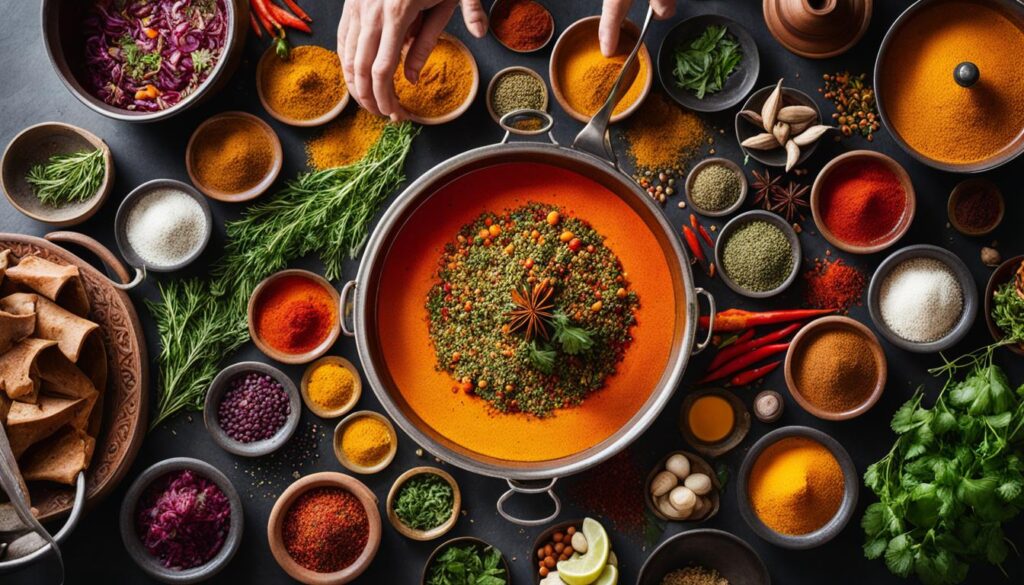
« Cooking a tagine is a labor of love, but the end result is truly worth the effort. The slow-cooked flavors and tender, fall-off-the-bone meat are simply unparalleled. »
With these tips, you’re on your way to making delicious tagine dishes that taste like Morocco. Enjoy the slow cooking process and let your tagine do its magic!
Preparation Techniques for Tagine Cooking
Successful tagine cooking is all about layering ingredients well and controlling the heat. These two steps are key to getting the right flavors and textures in your Moroccan dishes.
Layering Ingredients
How you add ingredients to a tagine matters a lot. Start with the big, dense items like meat or root veggies at the bottom. This lets them cook well and soak up flavors. Then, put the lighter items like herbs, fruits, and spices on top.
This way, everything cooks just right without getting too crowded or overcooked.
- Begin with the protein, such as chicken, lamb, or beef, at the bottom of the tagine.
- Add root vegetables like potatoes, carrots, and onions in the next layer.
- Top with dried fruits, olives, and preserved lemon for a sweet-and-sour balance.
- Sprinkle aromatic spices like saffron, cumin, and cinnamon over the ingredients.
- Finish with a layer of fresh herbs like cilantro or parsley to add a vibrant, herbal note.
Managing Heat Settings
Keeping the right heat is key for great tagine cooking. Tagine pots are made to cook at a steady, low to medium heat. This slow cooking lets the ingredients blend together well. Don’t let the heat jump too much, as it can break the tagine.
- Cook tagines over low to medium heat, never exceeding medium-high.
- Use a heat diffuser between the heat source and the tagine to ensure even, gentle cooking.
- Add warm or hot water to the tagine, rather than cold water, to prevent sudden temperature shifts.
- Be patient and allow the tagine to cook for the recommended time, usually 2-4 hours, to achieve the desired tenderness and flavor development.
Mastering how to layer ingredients and control the heat will help you make amazing Moroccan dishes at home.
« The secret to a perfect tagine lies in the patient, gentle cooking process that allows the flavors to meld and the ingredients to become beautifully tender. »
Classic Moroccan Tagine Recipes
Moroccan cuisine is famous for its aromatic and flavorful tagine dishes. These dishes highlight the rich culinary traditions of the region. We will look at two classic Moroccan tagine recipes: Chicken Tagine and Beef Tagine.
Chicken Tagine
Chicken tagine is a traditional Moroccan dish. It features tender chicken pieces cooked with spices, garlic, onion, olives, and preserved lemons. Using bone-in, skin-on chicken thighs gives the best flavor and texture.
The dish is seasoned with spices like paprika, cumin, cayenne pepper, ginger, coriander, and cinnamon. These spices give the tagine a complex and comforting flavor.
Nani, a reviewer, gave the Moroccan chicken tagine a 5-star rating from 12 reviews. It’s easy to make and has substitutions like preserved lemon or green olives. Serve it with Moroccan bread, couscous, or a gluten-free option for a satisfying meal.
Beef Tagine
Beef Tagine is another classic Moroccan dish. It has tender beef pieces cooked in a flavorful sauce. This dish uses the slow-cooking method that’s key to Moroccan cuisine. The meat becomes tender and the flavors blend well.
The tagine is seasoned with spices like cinnamon, cumin, paprika, and ginger. These spices give the dish a warm, complex taste.
Beef Tagine is often served with couscous, Moroccan bread, or French fries. It’s a hearty meal. You can also make gluten-free and vegetarian versions.
These classic tagine recipes are perfect for anyone who loves Moroccan cuisine or is just curious to try it. They offer a delicious taste of Morocco’s vibrant flavors. Every bite will take you to the bustling markets and kitchens of North Africa.
| Dish | Cuisine | Cooking Method | Rating | Servings | Prep Time | Cook Time |
|---|---|---|---|---|---|---|
| Moroccan Chicken Tagine | Moroccan, North African, Mediterranean, African | Baked, Tajine | 5/12 | 6 | 10 minutes | 1 hour |
| Moroccan Beef Tagine | Moroccan, North African, Mediterranean, African | Baked, Tajine | N/A | 4 | 15 minutes | 2 hours |
Both chicken and beef tagine recipes are simple to make and offer many serving options. You can serve them with traditional Moroccan bread and couscous or gluten-free alternatives. These dishes will take your taste buds on a journey to the vibrant markets and kitchens of North Africa.
Vegetarian and Vegan Tagine Options
Tagine dishes in Moroccan cuisine aren’t just about meat. They also offer many tasty, plant-based options. These recipes use the rich spices and ingredients of Moroccan cooking. If you’re a vegetarian, vegan, or just want more meatless meals, vegetarian tagine recipes and vegan tagine recipes are a great choice.
A great example is the Vegetable Tagine. It has carrots, potatoes, sweet potatoes, and chickpeas in a spicy broth. The broth is made with Moroccan spices like harissa, coriander, cinnamon, and turmeric. This dish gets 4.9 out of 5 stars from 78 reviews and serves 4 to 6 people. It’s ready in about 30 minutes.
« This vegetable tagine is an absolute delight! The flavors are so rich and complex, yet the preparation is straightforward. It’s become a staple in our household. »
For a vegan tagine, try the Chickpea Tagine. It has chickpeas, green beans, and butternut squash in a tasty broth. This dish gets 4.81 out of 5 from 56 votes and serves 8-10 people. It’s ready in about 1 hour, making it perfect for a hearty, meatless meal.
If you’re a vegetarian or vegan, or just want to try new foods, vegetarian tagine recipes and vegan tagine recipes are a great choice. They offer a chance to explore Moroccan cuisine’s rich spices and vegetables. These Moroccan vegetable tagines are flavorful and satisfying, leaving you wanting more.
Cooking Tagine on an Electric Stove
Tagine, a traditional Moroccan dish, is becoming popular worldwide. People want to make it with modern appliances like electric stoves. It’s possible to cook tagines on electric stoves with some adjustments. We’ll share tips and techniques for cooking tagine on an electric stove to make your Moroccan cooking a hit.
Choosing the Right Tagine for Electric Stoves
Traditional tagine pots are made from clay or ceramic. These materials help cook the dish with rich flavors and tender textures. When using an electric stove, pick a tagine made for electric stoves. It should handle the heat without cracking or breaking.
Using a Heat Diffuser
Electric stoves can make cooking tagine tricky because of uneven heat. A heat diffuser can solve this problem. It spreads the heat evenly, preventing hot spots and cooking the tagine properly.
Adjusting Cooking Times
When cooking tagine on an electric stove, you might need to cook it longer. Electric stoves cook at lower temperatures than gas or charcoal. Keep an eye on your tagine and adjust the cooking time as needed.
Follow these tips for cooking tagine on an electric stove to enjoy Moroccan flavors at home. With the right tagine, a heat diffuser, and adjusted cooking times, you’ll master tagine on an electric stovetop.
Serving and Presenting Tagine Dishes
Moroccan tagine dishes are a feast for both the taste and the eyes. Serving them in a traditional way can make the meal special. It feels like a trip to Marrakech’s lively streets. Let’s learn how to serve and present these dishes.
Using Traditional Serving Vessels
The tagine pot is key for serving these stews. Its unique shape makes it perfect for the job. Putting the pot on the table adds to the Moroccan feel. It also lets the delicious smells fill the room.
Preparing the Presentation
- Make sure the tagine pot shines, showing off its beautiful designs and colors.
- Top the dish with fresh herbs like cilantro, parsley, or mint for color and freshness.
- Add toasted almonds, sesame seeds, or fried onions on top for texture and looks.
- Offer couscous or warm Moroccan flatbread on the side for a full Moroccan meal.
Plating and Serving Tips
Be careful when moving the tagine to plates because it’s hot. Use oven mitts or a strong spoon to keep the dish looking great.
Put lemon wedges or a bowl of preserved lemons on the side. This lets guests add a bit of tanginess to their meal.
| Serving Tip | Benefit |
|---|---|
| Serve the tagine in the traditional tagine pot | Enhances the authentic Moroccan dining experience |
| Garnish with fresh herbs and toasted nuts | Adds visual appeal and textural contrast |
| Accompany with couscous or Moroccan flatbread | Provides a complementary starch to soak up the flavorful tagine sauce |
| Offer lemon wedges or preserved lemons on the side | Allows guests to customize the flavor profile to their liking |
By using these tips, you can make your Moroccan tagine dishes stand out. Traditional pots, garnishes, and sides will take your guests to Morocco. Each bite will be a memorable experience.
Tagine Cooking Classes and Workshops
For those eager to learn Moroccan tagine cooking, there are many classes and workshops available. You can learn from experienced Moroccan chefs and culinary experts. These classes are perfect for improving your skills and understanding of this North African dish.
In cities like New York City, Chicago, San Francisco, Los Angeles, and Seattle, you can find moroccan tagine cooking classes and tagine cooking workshops. These classes teach the basics of tagine cooking. You’ll learn how to pick the right cookware and use traditional spices and techniques.
ClassBento is a standout for its creative workshops. This US-based company offers a wide range of learning to cook moroccan tagine classes. They have a money-back guarantee and group sessions for up to 12 guests. ClassBento also gives back to charity with every booking, making it a great choice for your culinary adventures.
« The tagine cooking class at La Maison Arabe in Marrakech was an unforgettable experience. Not only did I learn how to prepare authentic Moroccan dishes, but I also gained a deeper appreciation for the rich history and cultural significance of this iconic cooking vessel. »
In Marrakech, Morocco, moroccan tagine cooking classes offer a chance to learn from local chefs in an authentic setting. These workshops last about 5 hours and include a lunch. You get to enjoy the food you make.
Whether you like in-person classes or online tagine cooking workshops, there are many options. You can learn about different tagines and how to make the perfect spice blend. These classes will make you confident and inspired in the kitchen.
Exploring Regional Variations of Tagine
Moroccan cuisine is famous for its diverse and flavorful dishes, and tagine is a key part of that. As you explore Moroccan tagines, you’ll find many regional variations. Each has its own special twist on this slow-cooked dish.
From the coastal cities of Essaouira and Tangier, where seafood tagines are popular, to the Atlas Mountains, where lamb and vegetable tagines are common, Moroccan tagines vary greatly. These differences make exploring Moroccan tagine cooking exciting.
Coastal Delights: Seafood Tagines of the North
In the north of Morocco, tagine takes on a seafood flavor. In places like Essaouira and Tangier, you’ll find tagines full of fresh seafood. This includes shrimp, octopus, fish, and mussels. These dishes often have flavors like preserved lemon, cilantro, and spices that go well with the seafood.
Berber Bounty: Tagines of the Atlas Mountains
The Atlas Mountains have their own special tagine tradition. It’s hearty and comes from Berber culture. These tagines use local ingredients like lamb, vegetables, and dried fruits. They also use spices like cumin, cinnamon, and ginger to warm the body in the cool mountains.
Moorish Melting Pot: Tagines of the Imperial Cities
The cities of Fez, Marrakech, and Meknes are Morocco’s cultural centers. Their tagine traditions show the mix of Moorish, Arab, and Mediterranean flavors. These dishes often include preserved lemons, olives, and spices like saffron and rose water. They’re also known for their beautiful presentation and special serving rituals.
Exploring Moroccan tagine cooking shows how each region adds its own touch to this dish. Whether you’re enjoying seafood by the coast, hearty dishes in the mountains, or elegant tagines in the cities, Moroccan tagines are sure to impress you.
| Region | Tagine Specialties | Signature Ingredients |
|---|---|---|
| Coastal Cities (Essaouira, Tangier) | Seafood Tagines | Shrimp, Octopus, White Fish, Mussels, Preserved Lemon, Cilantro |
| Atlas Mountains | Lamb and Vegetable Tagines | Lamb, Root Vegetables, Dried Fruits, Cumin, Cinnamon, Ginger |
| Imperial Cities (Fez, Marrakech, Meknes) | Moorish-Influenced Tagines | Preserved Lemons, Olives, Saffron, Rose Water |
Pairing Tagine with Moroccan Drinks and Sides
Moroccan cuisine shines with its tagine dish, but don’t forget the drinks and sides. They add a special touch to your meal. From mint tea to vibrant salads, the right pairings boost your tagine’s flavors.
Moroccan Drinks to Pair with Tagine
No Moroccan meal is complete without mint tea. This refreshing drink matches the rich tagine flavors perfectly. The tea’s herbal taste and the tagine’s spices work together beautifully.
For a treat, try Moroccan harira, a hearty soup eaten during Ramadan. It’s a great match for tagine, offering a comforting contrast to the slow-cooked dish.
Moroccan Side Dishes for Tagine
- Moroccan Salads: Salads like taktouka (roasted pepper and tomato) or zaalouk (smoky eggplant) are great sides. They add a fresh touch to the rich tagine.
- Vegetable Sides: Roasted or sautéed veggies like carrots, potatoes, and green beans offer a nice contrast. They add flavor and texture to your meal.
- Bread: Msemmen or khobz, the Moroccan flatbread, is ideal for enjoying the tagine’s sauce and juices.
Choosing the right Moroccan drinks and sides can make your meal unforgettable. It celebrates the rich tastes of Moroccan cuisine.
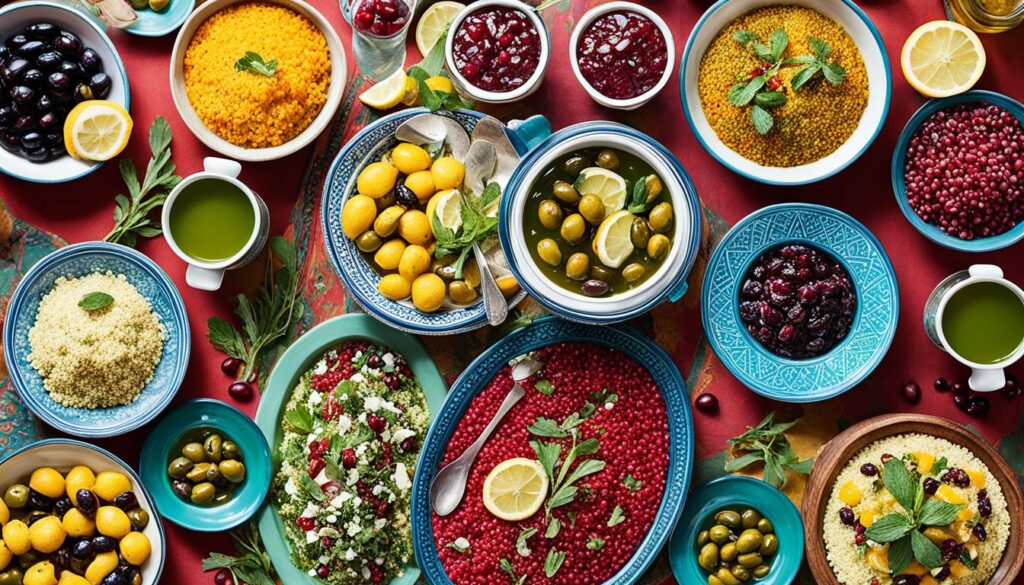
« The key to a successful Moroccan meal is finding the right balance between the bold, complex flavors of the tagine and the complementary yet distinct tastes of the accompanying dishes and beverages. »
Tagine Meal Prep and Leftovers
Moroccan tagine dishes are not only tasty but also great for meal prep and leftovers. Their complex flavors get even better over time. This makes them perfect for busy weeknights or meal planning. Let’s look at some tips for prepping tagine meals and using leftovers.
Prepping Tagine Meals Ahead of Time
Tagine cooking is great because its flavors get better as it sits. This makes it ideal for meal prep. You can make the tagine ahead, whether it’s with meat or veggies, and keep it in the fridge or freezer until you’re ready to eat.
- Prepare the tagine base, including the meat or vegetables, spices, and sauce, up to 3 days in advance. Store in an airtight container in the refrigerator.
- For longer storage, freeze the prepared tagine base in individual portions. Thaw in the refrigerator overnight before reheating and serving.
- When ready to serve, simply reheat the tagine base and add any fresh ingredients like herbs or vegetables to complete the dish.
Storing and Reheating Tagine Leftovers
Tagine dishes are great leftovers because their flavors get even better over time. With the right storage and reheating, your leftovers will taste as good as the first day.
- Let the tagine cool down before storing. Put it in an airtight container and keep it in the fridge for up to 3 days.
- If you want to keep it longer, freeze individual portions in freezer-safe containers for up to 3 months.
- To reheat, thaw the tagine in the fridge overnight if it was frozen. Then, heat it up on the stovetop or in the microwave, stirring now and then, until it’s hot.
- Add a bit of broth or water if the tagine seems too thick or dry when reheating.
Repurposing Tagine Leftovers
Don’t waste those delicious tagine leftovers! Get creative and find new ways to enjoy them. You can add them to other dishes or make new meals.
| Leftover Tagine Idea | How to Use |
|---|---|
| Chicken or Beef Tagine | Serve over couscous, rice, or flatbread; use as a filling for stuffed peppers or eggplant; mix with pasta or rice for a tagine-inspired casserole. |
| Vegetable Tagine | Toss with roasted vegetables for a hearty salad; mix into omelets or quiches; serve as a topping for baked potatoes or cauliflower rice. |
| Any Tagine Stew | Use as a filling for hand pies or savory turnovers; mix into a soup or stew; serve over grains or mashed potatoes. |
Using tagine leftovers creatively lets you enjoy its rich flavors in many ways. This approach reduces food waste and makes meal prep more efficient.
« The true magic of tagine cooking is how the flavors evolve and deepen over time. With a little planning, you can enjoy the fruits of your labor all week long. »
Conclusion
You’ve dived into the world of Moroccan tagine cooking and seen its rich heritage and diverse flavors. You now know how to make authentic, delicious tagine dishes at home. This includes understanding the different types of tagines and how to layer ingredients and control the heat.
Key tips for making Moroccan tagine include using spices like cinnamon, cumin, and saffron. Try different proteins like meat, poultry, fish, and vegetarian options. Let the slow cooking process make your tagine full of deep flavors. With patience and practice, you’ll make tagines that feel like a trip to Morocco.
Keep exploring tagine variations and new ingredients. Share your dishes with friends and family. Moroccan tagine cooking is a mix of history, culture, and taste. By diving into it, you’ll improve your cooking skills and appreciate the food traditions of Morocco more.