
Moroccan street food is a mix of flavors from the Mediterranean, Middle East, and Africa. You’ll find everything from the savory harira soup to the sweet sfenj doughnuts. This variety lets visitors dive into Morocco’s rich food culture. Whether you’re in busy markets or trying local spots, every bite is a true taste of Morocco.
Key Takeaways
- Moroccan street food is a melting pot of Mediterranean, Middle Eastern, and African influences.
- Popular savory specialties include brochettes (grilled meat skewers), baghrir (semolina pancakes), and chebakia (sesame cookies).
- Sweet treats like sfenj (doughnuts), batbout (pea soup), and rsf mil (pastries) offer a delightful balance to the savory dishes.
- Street food prices in Morocco are generally very reasonable, with most items costing less than $1-2.
- Exploring the bustling markets and meeting welcoming vendors is an integral part of the Moroccan street food experience.
Introduction to Moroccan Street Food Culture
Moroccan street food is a mix of Mediterranean, Middle Eastern, and African flavors. It comes alive in markets and stalls across the country. Here, vendors welcome you with a variety of tasty dishes. From Fez’s medinas to Marrakech’s squares, you’ll dive into the sights, sounds, and smells of Morocco’s street food.
Influence of Mediterranean, Middle East, and Africa
Moroccan street food shows off the country’s rich culture. It’s shaped by Moroccan, Arab, Jewish, and Mediterranean tastes. You’ll find spices like cumin, coriander, and cinnamon, along with fresh herbs like parsley and mint.
Bustling Markets and Welcoming Vendors
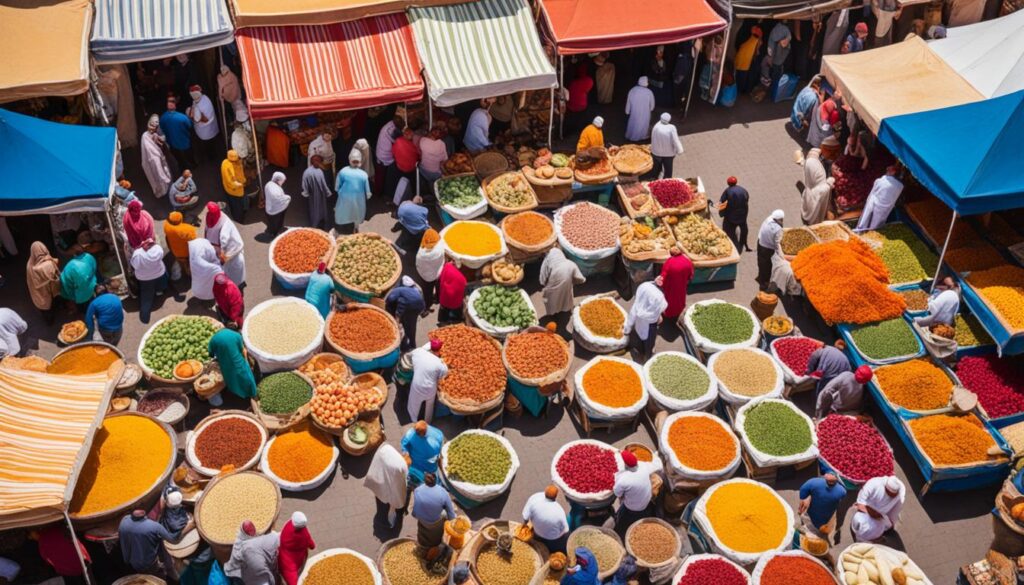
Street food markets in Morocco are a feast for the senses. They’re full of colors, smells, and the friendly faces of vendors. These places are where people come together, making them key to the community.
By asking locals for tips, you can find the best street food spots. You’ll taste the real flavors of Moroccan cuisine. Moroccan Mint Tea and Harira soup, eaten during Ramadan, show the pride in their food culture.
« Moroccan street food is a living, breathing embodiment of the country’s diverse cultural influences, where every bite tells a story of tradition and innovation. »
Savory Street Food Specialties for Meat Lovers
Morocco’s street food scene is a dream for meat lovers. It offers a wide range of savory dishes. Kefta and briouat are two dishes that stand out, delighting both locals and visitors.
Kefta: Grilled Lamb or Beef Skewers
Kefta is a favorite in Moroccan street food. It’s made with seasoned lamb or beef on skewers. Vendors grill these to perfection, using spices like cumin, paprika, and coriander.
The smell of kefta grilled skewers draws people in. It’s a staple in markets and food stalls.
Briouat: Savory Meat-Filled Pastries
Briouat is another must-try dish. These pastries are filled with meats, cheeses, and vegetables. They’re deep-fried until golden, offering a crispy outside and a rich filling.
You can find briouat meat pastries in many Moroccan markets. They’re a great snack for meat lovers on the move.
« Kefta and briouat are two of the most iconic and beloved moroccan street food meat specialties that capture the essence of Moroccan culinary traditions. »
When in Marrakech or Fez, don’t miss out on moroccan street food meat specialties. Kefta and briouat are a must-try. They’ll leave you wanting more of Morocco’s diverse flavors.
Seafood Delights from Morocco’s Coastlines
Along Morocco’s coastlines, you’ll find a vibrant street food scene. It’s filled with fresh and flavorful seafood specialties. From the famous babbouche snail soup to the beloved grilled sardines, these dishes offer a taste of Morocco’s coastal heritage.
Babbouche: Flavorful Snail Soup
Babbouche is a standout in Moroccan street food. It’s a savory snail soup with over 15 spices. Vendors serve the snails in their shells, letting diners extract the meat with a toothpick.
The broth is complex and aromatic. Snails are believed to help with digestion and fever. They’re a local favorite, showing Morocco’s diverse culinary influences.
Grilled Sardines: A National Specialty
Grilled sardines are another iconic dish. These small fish are marinated in a tasty chermoula sauce. The sauce includes parsley, cilantro, garlic, and citrus.
Then, they’re grilled over hot coals. Locals and visitors love these succulent sardines. They highlight Morocco’s coastal resources and seafood traditions.
« Moroccan cuisine is a captivating fusion of flavors. It blends Mediterranean, Middle Eastern, and African influences. From markets to seaside stalls, babbouche and grilled sardines show the diverse and delicious Moroccan street food. »
Vegetarian and Vegan Street Food Options
Morocco is famous for its meat dishes, but its street food also has many vegetarian and vegan choices. You can find everything from crispy fried doughnuts to rich bean soups. These options show how diverse and flexible Moroccan food can be.
Sfenj: Fried Doughnuts with Honey
Sfenj is a favorite among vegetarian street foods in Morocco. It’s a fried doughnut enjoyed for breakfast or as a snack. The dough is yeast-based, shaped into rings, and fried until golden. Then, it’s coated with sweet honey, mixing savory and sweet perfectly.
Bissara: Hearty Fava Bean Soup
Bissara is another vegetarian highlight in Moroccan street food. It’s a thick, creamy soup made with fava beans or split peas. Seasoned with garlic, olive oil, cumin, and paprika, it’s full of flavor. Sometimes, it comes with harissa, a spicy chili paste, for more taste.
Morocco’s street food isn’t just about meat. It has many tasty vegetarian and vegan dishes too. You can enjoy crispy sfenj doughnuts or the rich bissara soup. There’s a lot to try and love.
« Moroccan cuisine is a beautiful tapestry of flavors, and the vegetarian and vegan offerings are a testament to the country’s culinary creativity and inclusivity. »
Moroccan Street Food Specialties
Morocco’s street food scene is full of specialties beyond the well-known tagine and couscous. You’ll find everything from savory pies to fragrant sausages. These foods offer a tasty look into Morocco’s rich food culture.
Kalinti, a savory chickpea pie, is a unique twist on traditional pizza found in the north. It has a crisp crust and a tasty chickpea filling. Another favorite is the merguez sausage, made with beef or lamb and spices like harissa. These sausages are spicy and often come with a tangy tomato sauce.
The shawarma found in Morocco is special, with many toppings like hummus and tahini. For a simple snack, try hammas kamoun, roasted chickpeas seasoned with cumin. It’s a must-try for its earthy flavor.
| Moroccan Street Food Specialty | Average Cost (MAD) | Average Cost (USD) |
|---|---|---|
| Kalinti Chickpea Pie | 2-5 | $0.24-0.59 |
| Merguez Sausage | 10-15 | $1.18-1.77 |
| Shawarma | 15-20 | $1.77-2.36 |
| Hammas Kamoun Roasted Chickpeas | 2-3 | $0.24-0.35 |
These Moroccan street food specialties show the country’s mix of flavors from the Mediterranean, Middle East, and Africa. Whether you like meat, seafood, or are a vegetarian, there’s something for everyone in the moroccan street food scene.
Sweet Treats and Desserts on the Go
No trip to Morocco is complete without trying its sweet Moroccan street food sweet treats. Nougat, or halwa, is a sweet treat that comes in many shapes and flavors. Chebakia, a crispy pastry coated with sesame seeds, is a favorite during Ramadan but can be found all year. These chebakia honey pastries are a perfect end to exploring street food.
Nougat: Colorful Nut-Based Candies
Nougat is a special treat in Morocco, made with whipped egg whites, honey, and nuts like almonds and pistachios. These nougat candies come in shapes like blocks and fingers, each with its own taste and texture. Vendors in Morocco’s busy markets sell this popular treat.
Chebakia: Crispy Pastries with Honey
Chebakia is a traditional Moroccan pastry loved for its crispy texture and sweet honey flavor. These chebakia honey pastries are shaped like flowers and sprinkled with sesame seeds for extra crunch. They’re a hit during Ramadan but are enjoyed all year as a tasty street food.
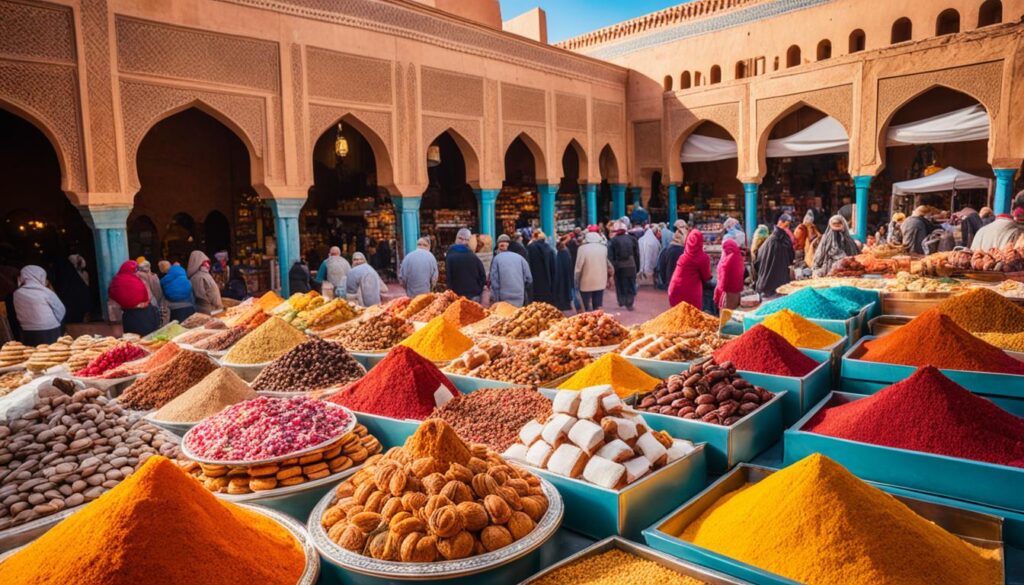
« Moroccan desserts often include pastries infused with aromatic spices or honey, featuring textures varying from crispy to flaky and incorporating popular ingredients like nuts and dried fruits. »
| Moroccan Street Food Dessert | Key Ingredients | Serving Style |
|---|---|---|
| Nougat (Halwa) | Egg whites, honey, nuts (almonds, pistachios, hazelnuts) | Blocks, fingers |
| Chebakia | Sesame seeds, honey | Flower-shaped pastries |
Regional Specialties and Local Favorites
Many Moroccan regional street food specialties are found all over the country. But each area has its own special Moroccan street food favorites. By exploring different cities and towns, visitors can learn about Morocco’s rich food culture. They can also taste the unique flavors and ways of cooking in each place.
In Tetouan, you’ll find Chebakia, a tasty pastry with crispy dough and honey. In Marrakech, Djemaa el-Fna square is famous for Mechoui, a slow-roasted lamb that’s incredibly tender.
Fez is known for Harira, a thick soup with lentils, chickpeas, and meat. It’s a favorite during Ramadan. In Essaouira, try the fresh grilled sardines, a beloved street food in Morocco.
Trying these Moroccan street food specialties and local favorites lets you see the variety and traditions of Moroccan cuisine. Each dish tells a story of the land, its people, and the mix of flavors that make Moroccan food special.
« Moroccan cuisine is a harmonious fusion of Berber, Arab, and Mediterranean flavors, reflecting the country’s unique geographic and cultural heritage. »
From Fez’s spice markets to Marrakech’s tagine stalls, Moroccan street food is an adventure for your taste buds. Join this food journey and find the special things that make each region’s street food specialties and local favorites stand out.
Best Street Food Destinations in Morocco
For those who love Moroccan street food, certain places are a must-see. Marrakech’s Djemaa el-Fna square and Fez’s ancient medina are top spots. They offer a wide range of local foods that are a treat for your taste buds.
Marrakech’s Djemaa el-Fna Square
Marrakech’s Djemaa el-Fna square is a food lover’s dream. It’s filled with food stalls and vendors. You can find everything from grilled meats and hearty soups to fried doughnuts and colorful nut-based candies.
Popular dishes here include Kefta (grilled lamb or beef skewers), Briouat (savory meat-filled pastries), and Sfenj (fried doughnuts with honey).
There are also street food tours available. These tours let you try different local foods. You’ll learn about Marrakech’s rich food traditions from knowledgeable guides.
Fez’s Ancient Medina
Fez is known as the culinary heart of Morocco. Its ancient medina is a maze of food stalls and markets. Here, you can find everything from Babbouche (flavorful snail soup) to Chebakia (crispy pastries with honey).
The medina also offers Berber specialties like Medfouna (Berber pizza) and Tanjia (a slow-cooked Marrakshi dish). It’s a place where you can find both savory and sweet treats.
Moroccan street food vendors in Fez, Marrakech, and other cities offer a taste of the region’s unique flavors. By visiting these best moroccan street food destinations, travelers can experience the famous tastes of Moroccan cuisine.
Seasonal and Climate Considerations
Exploring moroccan street food is fun all year, but the food choices change with the moroccan climate and seasons. Knowing this can make planning your food adventures in Morocco easier and more fun.
Morocco’s varied landscapes create different climates, affecting the food. Coastal areas like Tangier have a mild climate, while places like Marrakech get very hot in summer. These differences affect what street food is available.
- In the cool winter, dishes like bissara (fava bean soup) are popular, warming you up.
- Summer brings cool fruit juices, iced treats, and salads to beat the heat.
When planning to try moroccan street food, think about the moroccan climate and what’s in season. This way, you can enjoy the best foods, whether it’s warm winter dishes or cool summer treats.
| Season | Typical Street Food Offerings | Climate Considerations |
|---|---|---|
| Winter | Hearty soups, stews, and roasted meats | Cooler temperatures, especially in the Atlas Mountains and inland cities |
| Spring | Fresh salads, grilled seafood, and seasonal produce | Mild, pleasant weather with blooming flowers and greenery |
| Summer | Refreshing juices, chilled desserts, and light, cooling dishes | Hot, dry conditions in inland regions; more comfortable coastal climates |
| Autumn | Roasted vegetables, hearty tagines, and autumnal fruits | Comfortable temperatures and fewer crowds in popular destinations |
Matching your moroccan street food trips with the moroccan climate and season can make your experience better. You’ll enjoy the tastiest and most authentic foods during your Moroccan trip.
Essential Tips for Enjoying Moroccan Street Food
Dive into the world of Moroccan street food with these key tips. Dress right and respect local customs to fully enjoy your food adventure in Morocco.
Comfortable Clothing and Footwear
Walking through Moroccan markets and food stalls needs comfy clothes. Choose light, breathable fabrics for easy movement. Wear closed-toe shoes with good grip for safety on uneven paths. Don’t wear fancy or impractical clothes that might get in the way of enjoying your food.
Respect for Local Customs
Morocco values its traditions deeply. Be mindful of these customs when eating street food. Dress modestly, especially in conservative areas. Avoid public displays of affection and respect religious and social norms. This way, you’ll truly connect with the Moroccan street food scene.
Enjoying Moroccan street food means being open-minded and adventurous. Dress comfortably and respect local ways to fully appreciate the food and culture. This will help you enjoy the true taste and spirit of Moroccan street food.
« The true essence of Moroccan cuisine lies in the vibrant and flavorful street food that captures the heart and soul of this captivating country. »
Conclusion
Exploring Moroccan street food is a must for anyone visiting the country. You’ll find everything from savory kefta and briouat to sweet nougat and chebakia. This variety lets travelers dive deep into Morocco’s rich food culture.
The street food scene is a mix of many flavors, including Berber, Arab, Andalusian, and Mediterranean. Spices like cumin, saffron, and cinnamon are key to Moroccan dishes. They add a unique taste. Sharing meals from a big platter is common, bringing people together.
In places like Marrakech’s Djemaa el-Fna square and Fez’s ancient medina, street food is everywhere. There’s something for everyone, whether you love meat, seafood, or vegetarian dishes. So, start a tasty journey and discover the conclusion moroccan street food specialties that make Morocco’s food scene special.