
Welcome to the world of Moroccan tagine, where spices, slow-cooked meats, and vibrant vegetables blend into a culinary delight. This dish comes from the ancient Berber traditions of North Africa. It has become a symbol of Moroccan cuisine, loved by chefs and home cooks for its rich flavors and traditional ways of making it.
We’re going to explore the history, cultural importance, and real recipes of the Moroccan tagine. You’ll learn about the spices that give these stews their unique taste. We’ll also look at the different proteins and vegetables used, showing why the tagine is a key part of Moroccan celebrations.
Key Takeaways
- The tagine has become a global ambassador of Moroccan cuisine.
- Chefs worldwide strive to recreate the authentic taste of Moroccan Tagine.
- The tagine is a central element to Moroccan festivities and familial bondings.
- Lamb, chicken, and fish are popular protein options in Moroccan Tagine dishes.
- Fresh vegetables and a blend of essential spices are the building blocks of authentic Tagine recipes.
The Iconic Moroccan Tagine: A Journey Through History and Flavor
The Moroccan tagine is more than just a pot. It’s a symbol of Moroccan history and culture. It started with the nomadic Berber people, who used it for slow-cooking meals on the go. Today, it’s a key part of Moroccan identity, with recipes and methods passed down through families.
Tagine’s Cultural Significance and Global Appeal
Moroccan cuisine has become famous worldwide, and the tagine is a big part of that. Chefs everywhere try to make its unique flavors and traditions. It shows the deep link between food and culture in Morocco.
« The Moroccan tagine represents a vessel that embodies Moroccan culture, tradition, and the warmth of its people, illustrating the deep-rooted connection between food and cultural heritage in Morocco. »
Traditional tagines are made from clay or ceramic and are colorful and beautifully designed. They’re cooked slowly over low heat for hours. This makes the meat tender, the vegetables soft, and the sauce rich.
Sharing a tagine in Morocco means you’re showing hospitality and togetherness. It’s about eating with others and building connections. Moroccan cuisine is a mix of Arab, Berber, and Mediterranean flavors. The tagine is a perfect example of Morocco’s diverse culinary heritage.
Essential Ingredients for an Authentic Moroccan Tagine
Making a real Moroccan tagine means picking ingredients that are key to the area’s cooking. You start with proteins like traditional moroccan tagine ingredients lamb and chicken, or even seafood. Then, add a mix of fresh vegetables.
Building Blocks: Proteins, Vegetables, and Spices
A Moroccan tagine recipe often calls for 8 chicken thighs, weighing about 4 pounds. These are seasoned with essential spices for moroccan cuisine like cumin, ginger, turmeric, and saffron. Coriander, parsley, and preserved lemons add more flavor and color. This mix, cooked slowly, brings out the true taste of Moroccan tagine.
The Spice Quartet: Cumin, Ginger, Turmeric, and Saffron
The spices cumin, ginger, turmeric, and saffron are crucial in a Moroccan tagine. Cumin adds a smoky taste, while ginger brings a spicy warmth. Turmeric gives the dish a golden color and a mild flavor. Saffron adds a luxurious, aromatic touch.
Herbal Accents: Coriander, Parsley, and Preserved Lemons
Coriander and parsley add fresh, herbaceous flavors to the tagine. The tangy taste of preserved lemons adds a unique Moroccan twist. These ingredients, along with slow cooking, make the dish truly special.
These ingredients, when cooked slowly, bring out the best in Moroccan tagine. They create a dish that’s both familiar and exotic.
« The secret to a truly remarkable Moroccan tagine lies in the careful selection and harmonious blending of its essential ingredients. »
The Art of Tagine Preparation: A Slow-Cooked Symphony
The making of a traditional Moroccan tagine is a detailed dance of time and taste. It starts with searing the protein, which locks in juices and creates a rich crust. Next, vegetables are added to the tagine pot, followed by pouring in the flavorful broth or stock.
As it simmers, the conical lid traps steam, letting the ingredients blend and tenderize. This slow cooking is key to a great tagine, bringing out deep flavors and turning it into a masterpiece.
In Moroccan cooking, the tagine is crucial for keeping the region’s rich food culture alive. These dishes mix sweet and savory tastes, using spices like cumin, cinnamon, and saffron for complex flavors.
The traditional moroccan tagine cooking methods focus on layering ingredients for even cooking and flavor. It’s important to manage the heat well to tenderize and boost flavors. The tagine preparation process often includes marinated meats, special spices, and preserved lemons and olives for extra taste.
« The slow-cooking process in a tagine allows the flavors to meld and develop into a harmonious symphony, creating a truly authentic Moroccan culinary experience. »
Letting the tagine rest after cooking brings out the best flavors. It also shows the importance of sharing food in Moroccan culture. Whether it’s a lamb tagine with prunes and almonds or a vegetable mix, making a tagine is a way to honor Morocco’s culinary traditions.
Recreating Magic: Bringing a Moroccan Tagine to Your Kitchen
Bringing a Moroccan tagine to your kitchen is a fun challenge. First, collect the key ingredients like proteins, veggies, spices, and herbs. The traditional tagine pot is a must-have, but you can also use a Dutch oven or casserole dish.
Setting the Stage: Ingredients and Equipment
To make a real Moroccan tagine at home, start with the right gear. The tagine pot is key, but a Dutch oven or casserole dish works too. For ingredients, pick a protein like lamb, chicken, or beef. Add veggies like onions, carrots, and potatoes. Don’t forget the spices and herbs like cumin, ginger, turmeric, saffron, coriander, and parsley.
The Soulful Dance: Searing, Layering, and Slow-Cooking
The secret to a great tagine is searing the meat, layering ingredients, and slow-cooking. Start by searing the meat to keep the juices in. Then, layer the veggies and spices in the pot. Let it cook slowly for 1-2 hours, filling your kitchen with amazing smells and flavors.
« The secret to a great tagine is the slow, gentle cooking that allows the flavors to meld and the textures to become delightfully tender. » – Chef Fatima Mountassir, Marrakesh
By using these traditional methods, you can make a Moroccan tagine at home. It will take you to the vibrant markets and streets of North Africa.
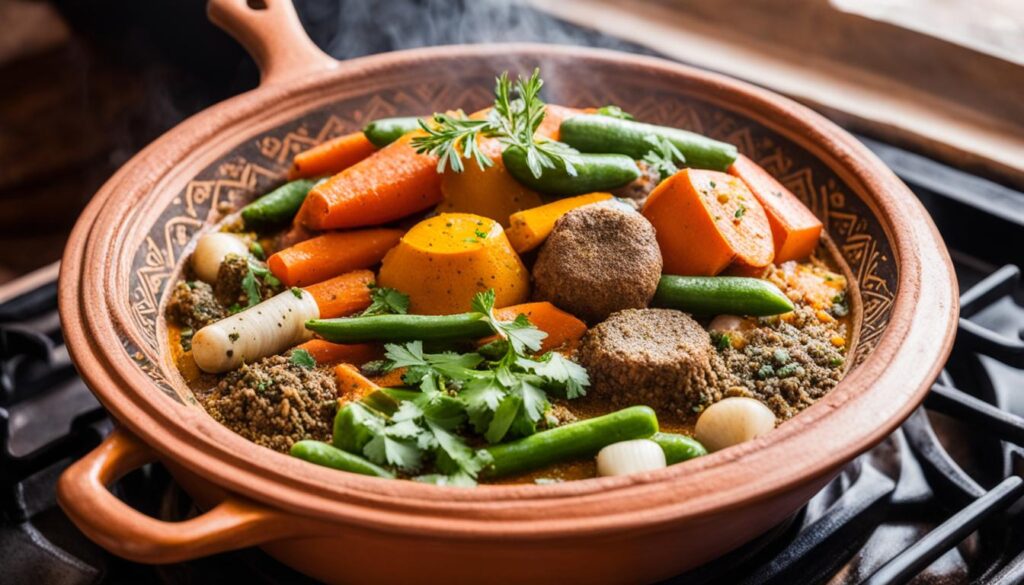
traditional moroccan recipes for tagine dishes
Moroccan cuisine is famous for its rich and diverse tagine dishes. Each dish is a mix of flavors that share the region’s culinary story. The Moroccan Chicken Tagine is loved for its tender meat, salty olives, and tangy preserved lemon. The Moroccan Lamb Tagine is known for its flavorful spices and soft vegetables.
For those who prefer vegetarian options, the Moroccan Vegetable Tagine is a great choice. It uses seasonal produce and the special spice mix that makes this dish unique. These recipes show the lasting traditions of Moroccan cooking, whether with meat, seafood, or vegetables.
Explore the Flavors of Moroccan Tagine
Discover authentic Moroccan tagine dishes with these traditional recipes:
- Moroccan Chicken Tagine: Tender chicken thighs cook in a rich sauce with olives, preserved lemons, and spices.
- Moroccan Lamb Tagine: Lamb chunks are slow-cooked with spices, vegetables, and sweet dried fruits.
- Moroccan Vegetable Tagine: This dish features a mix of vegetables like eggplant, zucchini, and chickpeas, all seasoned with Moroccan spices.
| Dish | Protein | Key Ingredients |
|---|---|---|
| Moroccan Chicken Tagine | Chicken | Olives, preserved lemons, spices |
| Moroccan Lamb Tagine | Lamb | Vegetables, dried fruits, spices |
| Moroccan Vegetable Tagine | Vegetables | Eggplant, zucchini, chickpeas, spices |
« Tagine is the ultimate Moroccan dish, with many variations made in homes across the country. It shows the lasting cooking traditions of this amazing region. »
Try these traditional tagine recipes to explore Moroccan cuisine’s rich flavors and cultural heritage. Each recipe is a delicious trip through the unique tastes of this incredible place.
A Tagine for All Seasons: Meat, Seafood, and Vegetable Variations
The Moroccan tagine is incredibly versatile, perfect for many proteins and produce. It goes from the rich, slow-cooked Lamb Tagine for cold months to the light, refreshing Seafood Tagine full of ocean flavors. There’s a tagine for every season and taste.
For those who love plants, the Vegetable Tagine is a feast of the region’s produce. It uses spices and herbs to make simple ingredients shine. Whether you like meat or veggies, the Moroccan tagine can be made for any time of the year.
The tagine’s design lets steam circulate, keeping food moist. You can cook it on the stovetop, in the oven, or over charcoal. Beef Tagine needs three to three and a half hours to make the meat tender.
Beef Tagine uses chuck roast, spices like paprika and cumin, and veggies like carrots and potatoes. It also has dried fruits and flavor boosters like tomato paste and beef broth. In Algeria, they add spices like coriander and turmeric to their tagines.
| Tagine Dish | Protein | Cooking Time | Key Ingredients |
|---|---|---|---|
| Lamb Tagine | Lamb | 3-4 hours | Lamb, spices, dried fruits, vegetables |
| Seafood Tagine | Shrimp, fish | 1-2 hours | Seafood, saffron, tomatoes, herbs |
| Vegetable Tagine | N/A | 1-2 hours | Seasonal vegetables, spices, legumes |
Whether you want a hearty meat tagine, a light seafood dish, or a colorful veggie tagine, there’s one for every craving and season. The Moroccan tagine’s versatility makes it a year-round culinary delight.
Exploring Regional Nuances: Berber, Fez, and Marrakesh Tagines
The Moroccan tagine is a beloved dish across the country, but each region adds its own twist. Berber tagines come from the indigenous people and are known for their strong flavors. They often include preserved lemons and olives.
In Fez, tagines are made with a focus on refined spices. They aim for a delicate balance of flavors. This creates a subtle yet captivating taste.
Marrakesh is famous for its bold, spicy tagines. These dishes take inspiration from the city’s lively markets and global tastes. Exploring these tagines lets us see the rich variety in Moroccan food. Each dish tells us about the unique flavors and traditions of its region.
« Moroccan cuisine is a tapestry of flavors, woven together by the rich cultural heritage and diverse regional influences that shape each recipe. »
Berber tagines from North Africa show the resilience of the indigenous people. They use local ingredients to make hearty dishes. These dishes often have a strong base with tangy preserved lemons and salty olives.
Fez, Morocco’s spiritual and intellectual center, is known for its elegant tagines. These dishes have a delicate spice balance. They feature aromatic spices like saffron, ginger, and cinnamon.
Marrakesh is a mix of different culinary styles, and its tagines reflect this. They use bold spices and ingredients like apricots, dates, and honey. This gives them a unique taste.
Exploring Moroccan tagines from different regions is a journey of discovery. It shows the depth and complexity of Moroccan cuisine. From the rugged Berber flavors to the refined Fez and the global tastes of Marrakesh, each dish offers a glimpse into Moroccan culinary traditions.
Serving and Accompaniments: Couscous, Bread, and Salads
No Moroccan tagine meal is complete without the right sides. Couscous is a key player, soaking up the rich sauces of the tagine. It’s warm, fluffy, and perfect for showing off the dish’s bold flavors.
Traditional Moroccan flatbreads like msemmen and khobz are great for dipping in the sauce. To lighten things up, refreshing salads with bright veggies and tangy dressings are perfect. They cleanse your palate and offer a fresh contrast to the slow-cooked tagine.
Couscous and Bread Pairings
- Fluffy, steamed couscous
- Msemmen (flaky Moroccan flatbread)
- Khobz (traditional Moroccan bread)
- Buttery, tender rghaif (layered flatbread)
- Nutty, whole-wheat baraka (flatbread)
Moroccan Salad Recipes
- Taktouka (roasted red pepper and tomato salad)
- Zaalouk (eggplant and tomato salad)
- Salade Mechouia (grilled vegetable salad)
- Moroccan Carrot Salad with cumin and lemon
- Fattoush (mixed green salad with toasted pita)
These traditional sides, from couscous to salads, take the tagine to the next level. They create a perfect mix of flavors and textures. This truly captures the spirit of this North African dish.
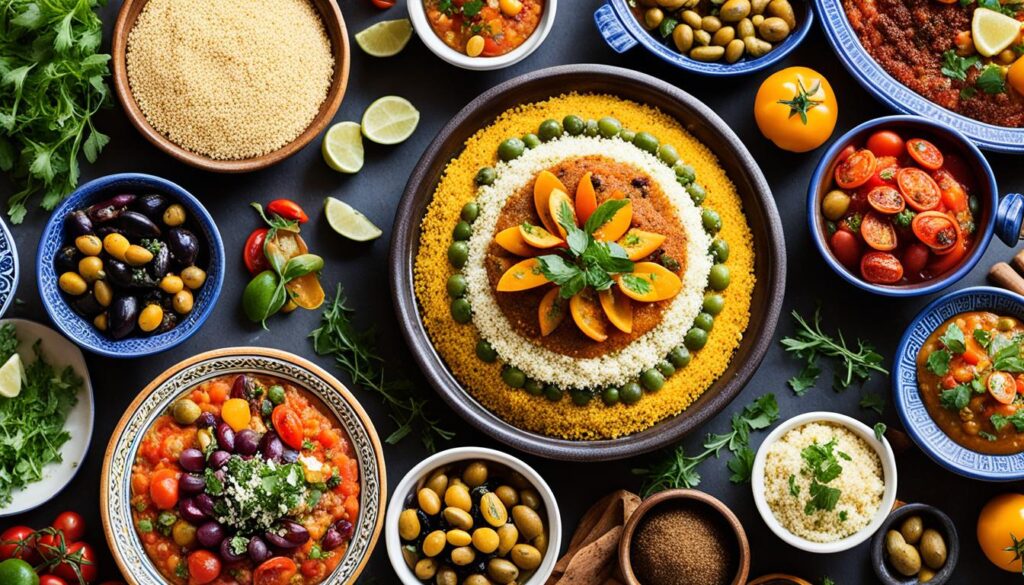
« The tagine may be the star, but its supporting cast of couscous, breads, and salads truly make the meal. »
The Tagine’s Versatility: From Casual to Celebratory Meals
The Moroccan tagine is a dish that easily moves from everyday meals to special events. At home, it’s often the main dish, bringing family together. It’s a comforting meal that nourishes and unites people at the table.
Gatherings and Festivities: Tagine’s Role in Moroccan Social Life
The tagine is more than just food; it’s a key part of Moroccan traditions and celebrations. It welcomes guests and marks important events. The tagine symbolizes hospitality, community, and the lasting heritage of Moroccan culture.
It goes from simple meals to grand feasts, showing its deep role in Moroccan life. Tagine dishes are not just food; they’re a key part of Moroccan culture. They connect family, community, and the rich culinary history of the country.
« The tagine is the heart and soul of Moroccan cuisine, a dish that brings people together, celebrates our traditions, and nourishes both body and spirit. »
– Fatima Ezzahra, Moroccan chef and food historian
The Moroccan tagine is versatile, fitting from weeknight dinners to big celebrations. It’s a key part of Moroccan culture, bringing family and community together. Its role in celebrations shows its deep importance in Moroccan life.
Health Benefits of Tagine Cooking: Nutrition and Well-Being
The Moroccan tagine is more than just tasty; it’s also good for you. The slow-cooking method makes the meat and veggies tender and easy to digest. Spices like cumin, ginger, and turmeric are packed with anti-inflammatory and antioxidant powers, boosting your health.
Tagine dishes are a mix of proteins, veggies, and healthy fats. This makes them a great choice for a meal that’s both tasty and nutritious. By cooking like the Moroccans do, you can enjoy delicious food and take care of your health.
Artichokes, often found in tagine, are full of fiber, vitamins, and minerals. A single medium artichoke gives you almost 7 grams of fiber. That’s about 23-28% of what you need daily.
Moroccan cooking uses fresh, seasonal produce that’s full of nutrients. Tagine’s mix of protein, carbs, and fats helps with muscle growth and digestion. Spices like cumin and turmeric help with digestion and fight inflammation.
Moroccan olive oil, used in many tagine recipes, is full of healthy fats and antioxidants. It lowers the risk of heart disease. Herbs like cilantro and mint aid in digestion and detox.
By cooking with Moroccan tagine recipes, you get to enjoy tasty food that’s also good for you. It’s a way to nourish your body and soul with every bite.
Tagine Cooking Tips and Tricks: Mastering the Art
Making an authentic Moroccan tagine can seem hard, but with the right tips, you can get it right. It’s all about picking the right meat, getting a perfect sear, and layering ingredients carefully. Each step is key to making a great tagine.
Seasoning well, using a heat diffuser to prevent the pot from cracking, and getting the right balance of liquids are crucial. These steps help achieve the tender, flavorful, and beautifully presented tagine that Morocco is known for. By following these tips and solving common problems, you can make your kitchen feel like a Moroccan spice market. This way, you can create a tagine that’s perfect for any feast.
Tips for Making the Perfect Moroccan Tagine
- Select the right cuts of meat: Choose bone-in lamb or chicken for richer flavor and depth.
- Achieve the perfect sear: Dry the meat well and sear it over high heat to lock in flavors and create a crust.
- Layer ingredients with care: Arrange the meat, veggies, and spices thoughtfully in the pot, so each adds its own flavor.
- Simmer low and slow: Cook the tagine at a low temperature for 1-2 hours to let the flavors blend and the meat get tender.
- Balance the liquids: Use just enough broth, stock, or water to avoid a dry or watery dish.
- Utilize a heat diffuser: A heat diffuser under the pot ensures even heat and prevents the ceramic from cracking.
Troubleshooting Common Tagine Cooking Issues
- Dry or tough meat: Make sure the meat is covered in liquid and adjust the cooking time if needed.
- Vegetables that don’t soften: Cut veggies into bigger pieces and cook them for longer.
- Overpowering spices: Be careful with spices and adjust the amount based on what you like.
- Burning or sticking: Check the heat and use a heat diffuser to prevent burning or sticking.
- Cracked tagine pot: Preheat the pot slowly and avoid sudden temperature changes to prevent it from cracking.
With these tips, you can make a Moroccan tagine that captures the true spirit of this North African dish. It takes patience, attention to detail, and a love for real flavors. With these, you can create the perfect tagine.
« The secret to a perfect Moroccan tagine lies in the balance of spices, the slow-cooking process, and the layering of ingredients. It’s a labor of love, but the results are truly worth it. »
Moroccan Tagine: A Feast for the Senses
To enjoy a Moroccan tagine is to start a journey of the senses. It’s a trip that excites the taste buds and brings Moroccan culture to life. The first touch is the smell, as spices, onions, and meat or vegetables fill the room. This invites everyone to come closer.
Aromatic Allure: The Sensory Experience of Tagine
When the tagine is opened, a feast for the eyes begins. It shows a mix of colors and textures that promise great flavors. The first bite takes you to Marrakesh’s busy markets, Fez’s scented gardens, or the Berber mountains. It’s more than food; it’s a way to connect with Morocco’s rich culture.
The smell of the tagine brings warmth and comfort. It makes you feel like you’re in the heart of Moroccan cooking. The dish looks as good as it tastes, making the meal an unforgettable experience.
The first taste is a mix of textures and flavors. The meat or vegetables are tender, and the spices leave a lasting taste. It makes you want to enjoy every bite and learn about Moroccan cooking.
Tagine is also about sharing with family and friends. It brings people together, creating a sense of unity and pride in their culture. Cooking, serving, and eating together forms a special bond that goes beyond the table.
« Eating a Moroccan tagine is not just a meal, it’s a sensory experience that transports you to the heart of Moroccan culture. »
The Moroccan tagine is a feast for the senses. It has amazing smells, bright colors, and complex flavors. It shows the deep culture of Morocco and is a journey every food lover should take. It’s a dish that truly shows the beauty of North African cuisine.
Preserving Traditions: Passing Down Tagine Recipes
The Moroccan tagine is a treasure of culinary traditions that must be kept alive. As the world changes, it’s crucial to keep the authentic ways of making the tagine. This ensures the dish stays loved by Moroccans and food lovers worldwide.
Home cooks, chefs, and teachers are working hard to keep the tagine’s secrets alive. They document and share the recipes and methods. This helps us honor Morocco’s rich food culture and teach new people about it.
Teaching traditional Moroccan cooking, especially how to make tagine, is very important. It keeps the true taste and smell of Moroccan food alive. This way, the tagine can continue to amaze and please people for many years.
Looking into Moroccan food traditions shows us how food connects us to our roots. By keeping these traditions alive, we protect a valuable part of our heritage. We also help people understand and appreciate Morocco’s rich food history.
| Statistic | Value |
|---|---|
| Over 99% of the population in Morocco is Muslim | Indicating a strong religious influence on the culture and traditional dishes |
| Morocco has ties to various countries | Such as Portugal, Spain, Persia, Senegal, France, Berber North Africa, Italy, and Turkey, contributing to the diverse flavors in Moroccan cuisine |
| A traditional Moroccan mint tea preparation time | Ranges from 20 to 30 minutes, highlighting the significance of tea time in Moroccan culture |
| The preparation time for chicken tagine with lemon | Is between 1 to 1.5 hours, showcasing the time and effort required to cook this traditional dish |
By keeping the tradition of making tagine alive, we make sure its rich flavors and cultural importance continue. This way, the iconic North African dish will be celebrated and shared for years to come.
« The true essence of Moroccan cuisine lies in the preservation of its traditional recipes and techniques. By honoring and passing down the art of tagine-making, we are not just preserving a culinary legacy but also a deeply rooted cultural identity. »
Conclusion: Moroccan Tagine, a Timeless Culinary Treasure
The Moroccan tagine is more than just a dish; it’s a bridge to North Africa’s rich culture. It started as a portable oven for nomadic tribes and now is a global food icon. This dish has become a symbol of Moroccan identity.
Today, the tagine invites us on a journey through Morocco’s spice markets, orchards, and sunny landscapes. It’s a way to experience the flavors and traditions of Moroccan cuisine. The tagine is a cultural ambassador, sharing Morocco’s history with the world.
By celebrating the tagine, we keep Morocco’s culinary legacy alive. This dish shows the beauty of Moroccan cooking and its lasting appeal. It’s a symbol of the traditions that make Moroccan food special.
When we enjoy a tagine, we feel like we’re in the heart of Morocco. It connects us to the daily life and mindful eating of the Moroccan people. The tagine is a symbol of Moroccan culture’s strength and beauty, loved by food lovers everywhere.