
Dining in Morocco is a big part of its culture and community values. When you’re invited to a Moroccan home for dinner, knowing the local ways can make your visit better. It shows you respect your hosts. These etiquette tips for dining in a Moroccan home will guide you through the Moroccan dining customs. They’ll help you enjoy your meal and show you’re grateful for the hospitality.
Key Takeaways
- Moroccan dining is a communal experience, with meals typically served family-style on a shared platter.
- Elders are shown respect by allowing them to be seated first, and hands are washed before and after the meal.
- Eating with the right hand is the norm, and avoiding cross-contamination is important.
- Traditional Moroccan dishes like couscous and tajine are often served, and etiquette around specific foods should be observed.
- Sharing food and offering second helpings are signs of Moroccan hospitality and appreciation.
Communal Dining Experience
Dining in a Moroccan home is a unique, shared experience. Guests sit together around a big, shared plate of food. This setup, known as communal dining, brings everyone closer together.
Seating Arrangements
There’s a special way to sit during these meals. Guests of honor sit near the Moroccan dining platter. Everyone else sits around, making sure each person gets an equal share.
Eating from a Shared Plate
As you eat, you take food from the closest part of the communal plate with your right hand. This way, everyone enjoys the meal together. It’s a chance to taste the delicious Moroccan dishes as a group.
« Dining together is not just about satisfying one’s hunger, but about fostering connections, sharing stories, and celebrating the richness of Moroccan culture. »
Communal dining in Morocco shows the country’s values of hospitality and togetherness. By joining in, guests feel the warmth of Moroccan hospitality firsthand.
Using Hands to Eat
In traditional Moroccan dining, people don’t use forks, spoons, or knives. They eat with their hands. This practice is a big part of their culture, focusing on sharing meals together. When you eat with a Moroccan family, you must use your right hand and not lick your fingers until the meal ends.
Proper Hand Usage
Eating with hands helps build connections and lets you connect more with your food. In Morocco, the right hand is for eating, and the left for tearing bread. Remember, don’t put your hand in your mouth because it will be used for more food.
Avoiding Cross-Contamination
Keeping hands clean and avoiding germs is crucial when eating with hands in Morocco. 95% of meals in the mentioned family are eaten with hands. To eat Moroccan-style, wash your hands before and after eating. Use your right hand and a new piece of bread for each dip into the dish. Using hands to eat has many unwritten rules.
| Eating with Hands in Morocco | Eating with Utensils in the West |
|---|---|
| Communal dining, sharing a single plate | Individual plates and utensils |
| Using the right hand exclusively for eating | Using both hands and utensils |
| Washing hands before and after the meal | Less emphasis on hand washing |
| Licking fingers at the end of the meal | Avoiding licking fingers in public |
« The preference for communal dining and using hands to eat represents a significant departure from Western dining norms that prioritize individual plates and utensil usage. »
Traditional Moroccan Dishes
Morocco is famous for its rich and flavorful food. This cuisine has been shaped by many cultures over the years. Couscous and tajine are two iconic dishes loved by Moroccan families.
Couscous and Tajine
Couscous is a key food in Moroccan diets. It’s often the base for various stews and tagines. The couscous is steamed above boiling vegetables, making it fluffy and light.
Then, it’s served with a tajine in the middle. Guests use their right hand to eat, showing how important sharing meals is in Morocco.
Tajine is a slow-cooked stew made in a special pot. It comes in many flavors, like beef with prunes or chicken with lemon and olives. These dishes are often eaten with couscous, making a complete and tasty meal.
« Couscous and tajine are not just dishes, but rather a reflection of the rich cultural heritage and traditions of Morocco. They are the heart and soul of Moroccan cuisine, bringing family and friends together around the table. »
Whether it’s a family dinner or a big celebration, couscous and tajine are key. They show off Morocco’s cooking skills and the strong bond of sharing meals together.
Etiquette for Specific Foods
When you’re dining in a Moroccan home, knowing the etiquette for certain foods is key. This includes how to handle meat and bones. Moroccans take great pride in their food culture. So, understanding these rules can make you a better guest.
Etiquette for Eating Meat
When meat is on the table, wait for the host to start eating first. This shows respect for the host and the meal’s shared nature. Also, don’t grab the best meat pieces right away. It’s seen as rude.
Etiquette for Eating Bones
If there are bones in the tajine, it’s okay to suck out the marrow. This is a sign of enjoying the meal and showing gratitude. But, if you don’t want to eat the bones, it’s okay to say no without causing offense.
Following these etiquette for eating meat morocco and eating bones in morocco rules shows you respect Moroccan culture. It also makes the meal more enjoyable for everyone.
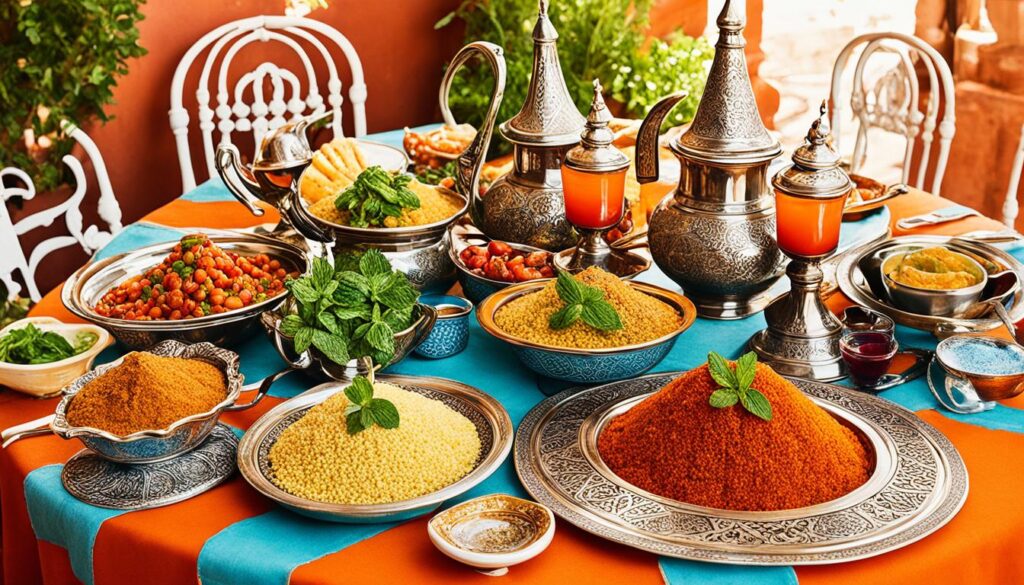
« The essence of Moroccan dining etiquette lies in the communal experience and the appreciation for the flavors and traditions that have been passed down through generations. »
etiquette tips for dining in a moroccan home
When dining in a Moroccan home, there are etiquette tips to keep in mind. First, never walk on the carpets with your shoes on. This is seen as disrespectful. Remove your footwear before entering the dining area.
It’s also important to learn everyone’s names and ask about their family. Showing genuine interest in your hosts and their loved ones is highly appreciated. Offering a small gift like soda or juice when arriving is also a nice gesture of appreciation.
- Avoid excessive praise or gushing compliments, and instead use the phrase « tbarkellah » to express your appreciation for the meal or hospitality.
- Be mindful of portion sizes and avoid taking more food than you can eat. Moroccan hosts want to make sure their guests are well-fed.
- If offered more food, it’s polite to accept, even if you are full. Refusing additional servings may be seen as rude or ungrateful.
The key to successful dining in a Moroccan home is to embrace the communal nature of the experience. Show respect for your hosts and their traditions. And enjoy the delicious flavors of Moroccan cuisine.
| Etiquette Tip | Explanation |
|---|---|
| Remove shoes before entering the dining area | Walking on carpets with shoes is considered disrespectful in Moroccan culture. |
| Learn everyone’s names and ask about their family | Showing genuine interest in your hosts and their loved ones is highly appreciated. |
| Offer a small gift like soda or juice when arriving | This gesture of appreciation is a common practice in Moroccan hospitality. |
| Use the phrase « tbarkellah » to express gratitude | Avoid excessive praise or gushing compliments, which may be seen as uncomfortable. |
| Accept additional servings, even if full | Refusing more food can be interpreted as rude or ungrateful by Moroccan hosts. |
By following these etiquette tips for dining in a Moroccan home, you can ensure a respectful and enjoyable experience. You’ll also get to embrace the communal nature of Moroccan hospitality.
Tea Serving Traditions
Moroccan culture values the art of tea serving deeply. The moroccan tea serving etiquette is a tradition passed down through generations. Tea, especially the famous moroccan mint tea, is key to daily life and special events in Morocco.
The man of the house usually serves tea to guests. He mixes green tea leaves, fresh mint, and sugar for a balanced, aromatic drink. When pouring tea, he holds the teapot high, creating a « fez » of bubbles. This shows respect and honor to the guest.
Pouring and Aerating Tea
The pouring and aerating tea morocco ceremony is a unique art. The teapot is lifted high, making a « fez » of bubbles. This not only looks beautiful but also improves the tea’s taste and smell.
- Moroccan tea is served in small, patterned or colored glasses, not cups.
- There’s a saying: the first tea is bitter like life, the second is strong like love, and the third is soothing like death.
- Refusing Moroccan mint tea is seen as rude, showing it’s a big part of Moroccan tradition and hospitality.
The Moroccan tea ceremony can take 30 minutes to an hour. Guests and hosts chat and enjoy the tea together. This shows the value of hospitality and the shared love for Moroccan culture.
« The first glass is as bitter as life, the second is as strong as love, the third is as soothing as death. » – Moroccan Proverb
The moroccan tea serving etiquette and the pouring and aerating tea morocco ceremony mean more than just tea. They symbolize deep cultural values and the importance of hospitality in sharing experiences.
Communal Mindset in Moroccan Culture
In Moroccan culture, family and community bonds are very important. This idea of being close-knit is seen in many parts of life, including eating together. People in Morocco don’t use individual plates; they share food, showing their strong community ties.
Morocco’s location has made it a crossroads for trade, bringing in many different cultures over time. This mix of cultures is seen in the country’s crafts. Artisans can sell their work directly to visitors, making sure they get fair pay and support from their community.
Respecting elders and the role of Islam are big parts of Moroccan life. Helping others, like making sure no one goes hungry, is also very important. These acts show the deep community spirit and kindness in Moroccan culture.
« Sharing is deeply rooted in Moroccan culture, with even those who have little being extremely generous to ensure strangers are not left hungry. »
Eating in Morocco is all about sharing. It shows how important community is to them. This way of eating reflects the strong bonds that Moroccan culture values a lot.
Welcoming strangers into their homes is a big part of Moroccan hospitality. This act of kindness shows how much they value guests. It’s a big part of what makes Moroccan society so tight-knit.
Moroccan Table Manners
Dining in Morocco is filled with deep cultural traditions. These traditions focus on respect, hospitality, and sharing meals together. A key part of Moroccan dining is eating with the right hand. Moroccans use only their right hand to eat, seeing the left as unclean. This custom is important for both practical and symbolic reasons.
Using the Right Hand
In Morocco, eating with the right hand is a social rule. People see the right hand as « clean, » unlike the left, which is for personal hygiene. Guests are told to use their right hand to take food from the shared plate. This keeps the meal clean and shows respect among diners.
Eating Order and Etiquette
There’s also a set order for eating in Morocco. Guests wait for the host to start eating before they do. This shows respect and is a big part of Moroccan dining. People are also told to eat only from their own part of the plate. They shouldn’t reach or lick their fingers until the meal ends.
Following these rules shows respect for Moroccan culture. It values community, hospitality, and respect. By doing this, visitors can really get into the Moroccan dining culture. They show they value the host’s kindness.
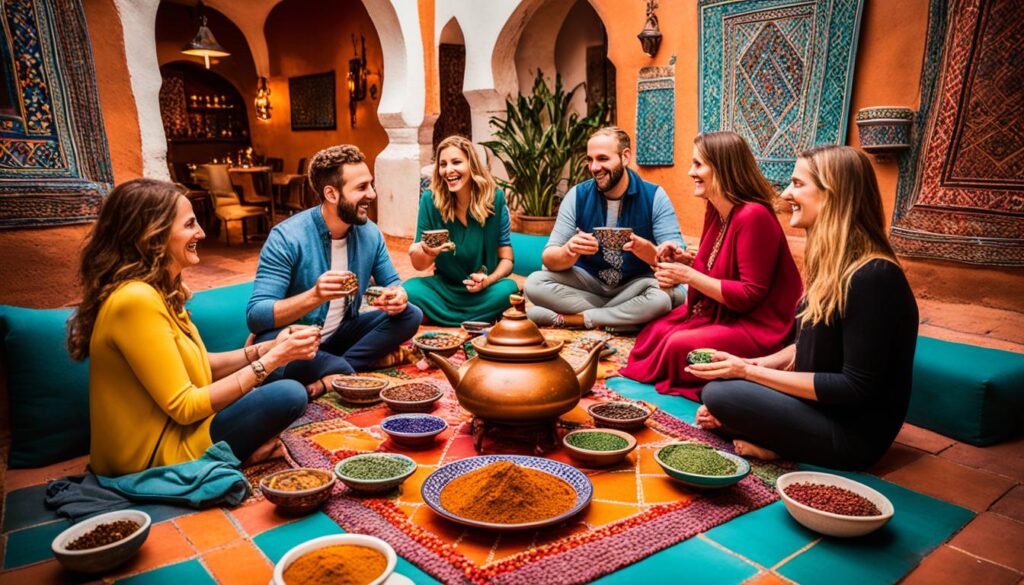
« Meals in Morocco are usually eaten communally from a large dish, with bread often used as silverware instead of forks or spoons. »
| Moroccan Dining Etiquette | Importance |
|---|---|
| Using the right hand for eating | Reflects cleanliness and respect |
| Waiting for the head of household to take the first bite | Shows deference and respect |
| Eating only from the portion in front of you | Maintains order and prevents cross-contamination |
| Avoiding licking fingers until the end of the meal | Upholds table manners and cleanliness |
Being a Gracious Guest
When dining in a Moroccan home, being a gracious guest is key. Start by bringing a small gift, like soda or juice, when you arrive. Moroccans love to welcome guests with open arms, seeing it as a great honor.
Gift Etiquette
In Moroccan culture, homemade gifts aren’t as important. Instead, it’s about giving back with something of equal or greater value. Cookies, candies, flowers, or sugar cones are great options for gifts.
Complimenting Your Hosts
Complimenting in Morocco is a bit different from in North America or Europe. Moroccans prefer saying « tbarkellah, » which means praising the Creator, not the host or their things. This shows respect for their culture and beliefs.
During the meal, eat everything offered, even if you’re full. Moroccans believe in sharing and giving generously. Leaving food behind might seem like you’re not valuing their hospitality.
After eating, you might want to help clean up. But, the hosts will likely say no. What’s important is to thank them for the meal and leave with respect and gratitude for their kindness.
« Moroccans are extremely hospitable, and it is common for new friends to be invited to share a meal in their homes. »
Religious Practices at Meals
Moroccan meals are more than just food; they include deep religious traditions. People often say « Bismillah » (in the name of God) at the start and « Alhamdulillah » (all praise is to God) at the end. These phrases show the strong spiritual side of Moroccan culture.
These simple sayings remind us that even eating is a sacred act. Saying God’s name before and after meals shows thanks for the blessings. It also highlights the role of gratitude in life.
Saying Bismillah and Alhamdulillah
For Muslims in Morocco, saying « Bismillah » and « Alhamdulillah » is a big part of their faith. It’s not just for meals; it’s also for starting any task. These phrases are key in daily life, showing the importance of faith.
- Bismillah: This means « in the name of God. » It’s said to ask for divine blessings and protection at the start of a meal. It shows how faith is a big part of Moroccan culture.
- Alhamdulillah: This means « all praise is to God. » It’s a way to say thanks for the meal and the blessings received. It’s used to show gratitude and appreciation.
These practices during meals remind Moroccans of their faith’s importance. They blend spiritual traditions with everyday life, making faith a big part of their culture.
Pacing and Portion Control
When you eat in a Moroccan home, it’s key to pace yourself and control your portions. Moroccans serve many courses at once. So, don’t eat too much, even if the first dish is amazing. It’s important to be mindful of how much you eat to enjoy all the dishes.
It’s vital to pace yourself during a Moroccan meal. Moroccans believe in savoring each dish, not rushing through it. As a guest, leaving a bit of food on your plate shows you’re full and happy with the meal. Eating too much is seen as rude and might stop you from enjoying the meal fully.
Controlling your portions is also crucial. In Moroccan meals, everyone shares dishes. It’s polite to take only what you need, leaving enough for others. Avoiding too much food shows you’re considerate of others.
By pacing yourself and controlling your portions, you’ll enjoy Moroccan cuisine more. You’ll also show you respect the dining traditions. This thoughtful way of eating makes your Moroccan meal unforgettable and enjoyable.
Offering to Help After the Meal
As your Moroccan meal ends, showing your thanks by helping clear the table is key. Your hosts might say no, but offering to help shows you get Moroccan customs. It also shows you’re ready to join in the effort.
Moroccan culture values sharing and working together. Helping out shows you appreciate the meal and the effort put into it. It also makes your bond with your hosts stronger, making you a gracious guest in Morocco.
Your offer might be turned down, but it’s still seen as very kind. Moroccan hosts love to take care of their guests. Saying you want to help shows you respect their hard work and want to be part of their traditions.
Offering to help after a Moroccan meal is a nice thing to do. It lets you join in the post-meal activities. This way, you learn more about Moroccan ways and customs.
« The essence of Moroccan hospitality lies in the shared responsibility and communal mindset that permeates every aspect of the dining experience. By offering to assist, you not only honor your hosts but also become a true participant in this cherished tradition. »
Conclusion
Learning the etiquette for dining in a Moroccan home might seem tough at first. But, knowing the cultural ways can make it more fun and meaningful. This article has given you key tips to be a great guest and dive into the warm, welcoming spirit of Moroccan dining.
This guide covered everything from sitting together and sharing dishes to using your hands and the importance of traditional Moroccan food. It also talked about tea traditions, the community feel, and religious aspects of meals. These insights show the deep cultural values that shape dining in Morocco.
If you’re visiting Morocco or living there, remember the Moroccan table manners, help out, and say thank you to your hosts. Doing so will make your dining experience positive and enriching. By following Moroccan dining etiquette, you’ll truly get the essence of their hospitality and community spirit.