
Foreign direct investment (FDI) is key to boosting economic growth, especially in emerging markets. It happens when someone or a company owns over 10% of a business abroad. This kind of investment brings more than just money. It also shares management skills, technology, and special equipment.
The US and China have been top spots for FDI in recent times. They are seen as great places for long-term investments. The amount of FDI a country gets compared to its GDP shows how attractive it is to foreign investors. Smaller, fast-growing economies often draw more FDI.
Key Takeaways
- FDI brings in money and expertise from abroad to help companies grow in new markets.
- It leads to more jobs and chances for growth in the host country.
- Foreign investors get tax breaks and enjoy policies that help businesses thrive.
- FDI shares resources, knowledge, and skills, making companies more efficient and productive.
- Stable politics and economy are key for foreign investors when looking at FDI options.
Introduction to Foreign Direct Investment (FDI)
Foreign direct investment (FDI) is a big part of the global economy. It means owning a part of a company or project in another country. Companies or governments from one country invest in this way to grow in new areas.
What is Foreign Direct Investment?
FDI is when a company or person puts money into a business in another country. This can mean starting a new branch, buying part of a company, or working with a partner from that country. The key thing is the investor has a big say in the business they invest in.
Types of Foreign Direct Investment
There are three main kinds of FDI:
- Horizontal FDI: This is when a company sets up the same kind of business in another country. For example, a car maker opens a new factory abroad.
- Vertical FDI: This is when a company buys a business that makes something it needs. Like a car maker buying a parts supplier.
- Conglomerate FDI: This is when a company invests in a business that is not related to its own. It’s done to add variety to the company’s portfolio.
These types of foreign direct investment help companies grow globally. They get to enter new markets and use their strengths in different places.
« FDI is a powerful engine of economic growth, technological progress, and social development. It connects countries and companies, and it can help transform lives through the creation of jobs, the transfer of skills, and the promotion of more sustainable practices. »
– UNCTAD, World Investment Report
Advantages of Foreign Direct Investment
Foreign direct investment (FDI) brings many benefits that help grow the economy. It boosts the manufacturing and services sectors. This leads to more jobs and lowers unemployment in the host country.
More jobs mean higher incomes and more money to spend. This boosts the economy even more.
Economic Growth and Job Creation
FDI is key to growing the economy and creating jobs. Big factories built in developing countries create new jobs and increase economic activity. They also bring in local taxes.
FDI helps build new industries by partnering with local firms. This creates more job chances.
Human Capital Development
FDI helps grow human skills and knowledge. Foreign direct investment exposes national and local governments, businesses, and citizens to new ways of doing business, management techniques, and technology.
Technology Transfer
FDI brings in the latest tools, technologies, and ways of working. It turns backward areas into industrial centers, helping their social economy, as seen in industry data. It introduces new technologies and best practices to local industries.
« FDI contributes to developing human capital through training and experience, adding to the knowledge and skills of the local workforce, as observed in the industry. »
| Advantage | Description |
|---|---|
| Economic Growth and Job Creation | FDI boosts the manufacturing and services sectors, leading to job creation and reduced unemployment. This increased employment translates to higher incomes and more buying power, stimulating the overall economy. |
| Human Capital Development | FDI supports skill development and knowledge transfer, as employees gain valuable experience and exposure to new business practices and technologies. |
| Technology Transfer | FDI provides access to the latest financing tools, technologies, and operational practices, enhancing the efficiency and effectiveness of the industry. |
Increased Exports and Global Market Access
Foreign Direct Investment (FDI) is key to growing international trade. It lets companies reach new markets worldwide. Goods from FDI projects often go global, not just staying in one country. This leads to more exports and better access to the world market.
The U.S. had a trade deficit of $69.4 billion in March 2024. This means imports were more than exports. Comparative advantage theory, from 1817, shows how countries gain by trading what they’re best at. Some argue that trade limits can come from groups wanting to protect their interests, even if it hurts the economy.
FDI from trade can create jobs and help the economy grow. Free traders believe in few trade limits for better market results. On the other hand, protectionists support tariffs and subsidies to fix market problems. The U.S. has often imported more than it exported, bringing in about $260 billion a month from 2018 to 2020.
| Trade Metric | Value |
|---|---|
| U.S. Trade Deficit (March 2024) | $69.4 billion |
| U.S. Average Monthly Imports (2018-2020) | $260 billion |
Getting into global markets is hard due to tariffs, duties, and other barriers. Trade helps businesses grow by reaching more customers and making more money. It also spreads out income sources, making companies less affected by economic downturns.
Good market access is key for a country’s economy. It brings in investment, creates jobs, and grows the economy by letting countries export more. It also helps with cultural exchange, leading to new ideas and understanding.
Tariffs and other barriers can make it hard to enter markets. To get around this, countries can join trade deals, cut tariffs, and improve infrastructure. By focusing on FDI and boosting exports, countries can grow and develop their economies.
Exchange Rate Stability and Improved Capital Flow
Foreign direct investment (FDI) is key to keeping exchange rates stable and improving capital flow. When a country gets a lot of FDI, it means more foreign money comes in. This helps the country’s central bank keep a strong foreign exchange reserve. This stability is good for the economy.
FDI is especially helpful for countries with few resources or limited global funding options. It brings in more capital, letting the country fund projects and activities better. This can lead to economic growth and more jobs.
| Indicator | Value |
|---|---|
| Daily trading volume in the forex market | Over $5 trillion |
| FDI inflows in 2005 | $916 billion |
| Capital flows in the U.S. (March 2024) | $102.1 billion |
Studies show that changes in exchange rates affect foreign investment. A drop in currency value makes exports cheaper, which can change trade balances. On the other hand, a strong currency can hurt exports and slow growth. Stable exchange rates help bring in investment by making things more predictable.
« Stable currencies are essential to attract foreign direct investment (FDI) and portfolio investments. »
Also, the impact of capital flows on growth depends on their type. Short-term flows can cause quick economic problems, but long-term investments like FDI help with steady growth.
In summary, FDI brings important economic benefits like stable exchange rates and better capital flow. These are key for growth, jobs, and long-term development in emerging economies.
Creation of a Competitive Market Environment
Foreign direct investment (FDI) is key in making markets competitive. It breaks up domestic monopolies and boosts innovation. By letting foreign companies into the market, FDI makes the competition fierce.
Breaking Domestic Monopolies
Foreign firms bring new competition, shaking up the market. This makes existing companies work harder to stay ahead. They improve their offerings, leading to more innovation and benefits for consumers.
Fostering Innovation and Consumer Benefits
Companies fight for customers, pushing them to be creative and offer better deals. This means more choices for consumers, leading to higher quality and value. It also makes domestic companies invest in new ideas, driving more innovation.
In 2022, about $1.28 trillion in foreign direct investments were made worldwide. China and the U.S. got a big share of these investments. This flow of FDI helps break up domestic monopolies and encourages innovation, benefiting consumers.
« Companies achieve competitive advantage through acts of innovation. Competitive advantage is created and sustained through a localized process. »
– Michael E. Porter, Harvard Business Review
FDI is crucial for economic growth and improving consumer choices. It leads to more innovative products and services. When foreign firms enter, they challenge the status quo, making the market more lively and competitive.

Environmental Benefits of Foreign Direct Investment
Foreign direct investment (FDI) is key in fighting global environmental issues, like climate change. The United Nations encourages FDI worldwide to tackle climate change. It brings clean tech, sustainable methods, and new environmental solutions to countries.
Recently, global FDI jumped by 77% to $1.65 trillion in 2021. Most of this came from developed economies, showing their big role in global investment. But, FDI’s effect on the environment changes with the host country’s wealth.
Research shows FDI helps reduce carbon emissions in poorer countries. But in richer countries, it can increase emissions. This shows that FDI can help the environment in advanced economies.
Africa has seen more FDI and rising carbon emissions over years. Yet, it’s using energy and energy sources more efficiently. This shows some environmental progress linked to foreign investment. Also, Africa is using more renewable energy as FDI grows.
Switching to a green economy is a worldwide goal, and FDI is key. Green FDI, focusing on renewable energy and environmental tech, has grown a lot. Developed countries are seeing a lot of green FDI, helping them move to a sustainable future.
Emerging markets are still catching up in making their economies greener. But they could attract a lot of FDI, especially in energy and cars. By investing in sustainable projects, these countries can fight climate change and gain from a greener economy.
« The logic of falling costs for clean energy sources and steady improvements in related technologies is globally applicable, highlighting the potential impact of investments in avoiding dire climate scenarios and reducing a potential hit to global GDP of up to 14% in 2050 from unmitigated climate change. »
In summary, FDI has big environmental benefits. It supports clean tech, sustainable practices, and new environmental solutions. This can help fight global environmental challenges and lead to a sustainable future.
Economic Advantages for Foreign Investors
The United States is a top choice for foreign investors. It offers many economic benefits. These include tax breaks, business-friendly laws, access to skilled workers, and great locations.
One big reason investors come here is the favorable tax environment. The US has a low corporate tax rate and offers many tax credits and deductions. This makes investing here more appealing. The country’s stable politics and strong laws also help investors feel secure.
Another big plus is the skilled and educated workforce. The US is known for its top universities and talent. This makes it easy for foreign companies to find the right people for their teams. Plus, its location and infrastructure give investors a big edge in reaching markets worldwide.
Investors also like the US for its low operational costs and natural resources. The country offers affordable labor and plenty of raw materials. This helps foreign companies run efficiently and make more money.
So, the US is a top spot for foreign investment. It has tax breaks, friendly business laws, skilled workers, great locations, low costs, and natural resources. These benefits attract investors from all over the world, helping the country grow and develop.
| Economic Advantages for Foreign Investors | Key Highlights |
|---|---|
| Tax Incentives and Business-Friendly Policies | – Competitive corporate tax rate – Wide range of tax credits, deductions, and incentives – Stable political climate and robust legal frameworks |
| Access to Skilled Workforce | – Highly educated and talented pool of workers – World-class universities and educational institutions |
| Strategic Locations and Infrastructure | – Unparalleled access to domestic and global markets – Well-developed transportation and communication networks |
| Low Operational Costs and Natural Resources | – Cost-effective labor and abundant natural resources – Opportunities to optimize operations and reduce expenses |
« The United States continues to be a premier destination for foreign direct investment, attracting over $1.5 trillion in FDI since 2006 due to its numerous economic advantages. »
Tax Incentives and Business-Friendly Policies
The U.S. and many other countries want to bring in foreign direct investment (FDI) to boost their economies. They offer tax breaks and policies that help attract investors.
The U.S. has a lower corporate tax rate of 21%. This is lower than the world average. There are also tax credits and deductions for things like research and development, renewable energy, and expanding manufacturing.
The U.S. has made its rules easier for businesses to follow. This includes faster approval times and programs that help investors. These programs offer guidance and support during the investment process.
The U.S. Department of Commerce’s SelectUSA program helps foreign companies invest in the U.S. It provides services, information, and connects them with local economic groups.
« Tax incentives and business-friendly policies are crucial tools in the U.S. government’s arsenal to attract foreign direct investment and drive economic growth. »
Tax breaks and easier rules make the U.S. a great place for foreign investors. They can take advantage of the big market, skilled workers, and stable economy.
The U.S. keeps working on its investment strategies to stay competitive. It aims to be the top choice for companies wanting to grow and use the U.S. market’s opportunities.
Access to Skilled Workforce and Strategic Location
The United States has a highly skilled and educated workforce. This makes it a top choice for foreign investors looking for the best talent. The country has a deep pool of skilled professionals in many fields. This gives companies a big advantage when they want to grow or start new operations here.
The strategic location of the United States also draws in foreign investors. It’s close to big markets and has a well-developed transport network. This includes roads, rails, air, and sea routes. These networks make it easy to get to global markets and supply chains.
| Workforce Development Initiatives | Workforce Training Partnerships |
|---|
- San Bernardino County, California’s collaboration between workforce and economic development organizations
- East Mississippi Community College’s training program for Yokohama Tire
- Louisiana’s FastStart workforce training program
- Charlotte, North Carolina’s workforce development board and Siemens hiring initiative
- Forrest City, Arkansas’s computer coding classes for high school students
- North Carolina’s Apprenticeship 2000 program in Charlotte
- Chattanooga, Tennessee’s Volkswagen Academy apprenticeships
- Mason, Ohio’s Mechatronics Apprenticeship Program
- Athens Technical College in Georgia and Hitachi’s training partnership
- Michigan’s Michigan Advanced Technician Training Program (MAT²)
- Apprenticeship Carolina™ in South Carolina
These efforts show the United States’ dedication to building a skilled workforce. They also focus on creating a strategic talent availability for foreign investors. By working together, schools, workforce agencies, and businesses ensure a steady flow of ready-to-work talent. This supports the growth and success of foreign direct investment (FDI) projects.
« The U.S. offers a strategic location with access to major markets and a highly skilled workforce, making it an attractive destination for foreign investors seeking to capitalize on these advantages. »
Low Operational Costs and Resource Availability
The United States is a great place for foreign investors. It has low operational costs and a lot of natural resources. This makes it easy for companies to make more money and compete better.
Cost-Effective Labor
The U.S. has a big and skilled workforce. This means foreign investors can find workers at a good price in many places. Some areas even have really good labor markets, helping companies keep costs down.
Access to Natural Resources
The U.S. has lots of natural resources like oil, minerals, and good land for farming. These resources help foreign investors save money and run their businesses smoothly. Being able to easily use these resources is a big reason why companies want to invest here.
| Statistic | Value |
|---|---|
| Global foreign direct investment flows dropped by 40% immediately following the COVID-19 shock. | 40% |
| Nearly 30% of investors plan to reduce their investments in the host developing country in the coming year based on a pulse survey of multinational corporations during April-June 2022. | 30% |
| In Bangladesh, reforms led to over $721 million cost savings for businesses and citizens, with over 1,200 firms benefiting from the reforms. | $721 million |
The U.S. is a top choice for foreign investment because of its low costs and plenty of resources. Companies can make more money and compete better by using these benefits.
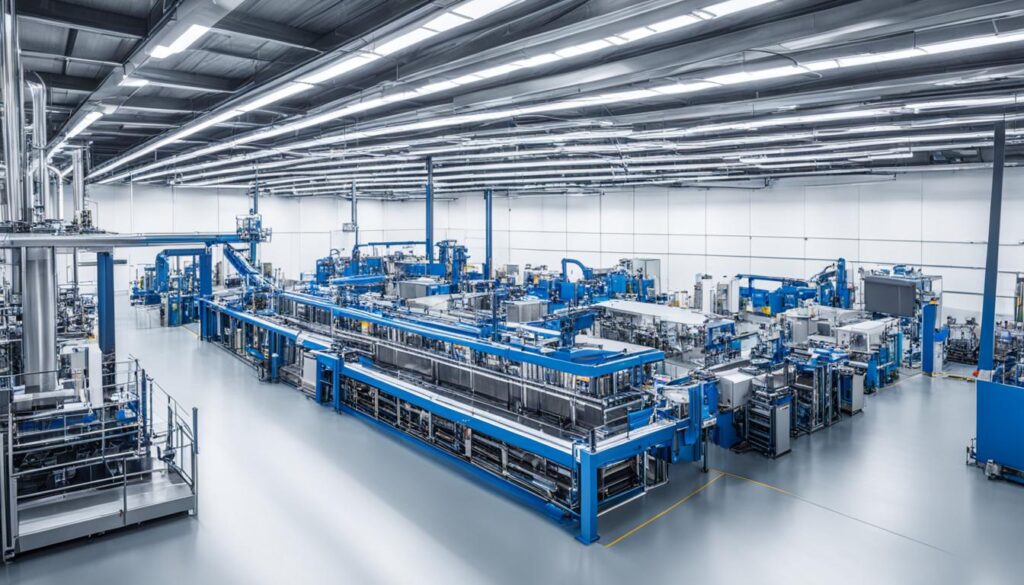
« The ease of access to these natural resources can be a significant draw for foreign companies seeking to establish a presence in the United States. »
Infrastructure Quality and Political Stability
The United States is a top choice for foreign investors. It has a top-notch infrastructure, like advanced transport and energy systems. These are key for businesses to run well. The country is also stable politically, making it a great place for investment.
Infrastructure quality is key for attracting foreign investment. It means having good transport, communication, and energy systems. In the U.S., these systems are well-developed and always getting better. They help businesses move goods and information easily.
Political stability is also a big plus for investors. The U.S. has strong democratic systems and clear laws. This makes investing here predictable and safe.
The mix of great infrastructure and political stability makes the U.S. very appealing for businesses. Investors get the support they need in a secure setting. This helps the economy grow and develop.
« The quality of a country’s infrastructure and its political stability are two key factors that shape the investment climate and determine the attractiveness of a destination for foreign direct investment. »
In summary, the U.S. is a top spot for foreign investors. Its strong infrastructure and stability offer a great business environment. These factors, along with other economic benefits, make it a leading place for foreign investment.
Challenges and Risks of Foreign Direct Investment
The United States is usually a stable and welcoming place for foreign investment. Yet, there are some hurdles and risks to consider. These include political and economic instability, rules that can be hard to follow, and the chance of losing assets to the government. It’s important for foreign investors to look into these risks and find ways to lessen them when making investment choices.
Political and Economic Instability
Some areas can be unstable, which is a big risk for foreign investors. Political instability can cause changes in government, unrest, or conflict. This can mess up business and lead to unpredictable policy changes. Economic instability like currency changes, high inflation, or financial crises can also hurt the success of foreign investments.
Regulatory Barriers and Expropriation Risks
Foreign investors might run into regulatory barriers, like tough laws, lots of paperwork, and hard-to-get licenses. There’s also a risk of expropriation, where the government takes over foreign-owned assets without paying a fair price. This is a big worry, especially in places with weak laws and a history of government control over businesses.
According to UNCTAD (2001:6-7), most of the 1,185 changes in FDI laws from 1991-2000 helped foreign investors. But, regulatory hurdles and expropriation risks are still big concerns for many foreign investors.
| Challenges of FDI | Potential Impacts |
|---|---|
| Political Instability | Disruption of business operations, unpredictable policy changes |
| Economic Instability | Currency fluctuations, high inflation, financial crises |
| Regulatory Barriers | Restrictive laws, bureaucratic red tape, licensing requirements |
| Expropriation Risks | Nationalization or seizure of foreign-owned assets without fair compensation |
To deal with these challenges, foreign investors should deeply study the political, economic, and regulatory scene of the country they’re investing in. They should also plan ways to reduce their risk of instability and losing assets.
Role of Foreign Direct Investment in Emerging Economies
Foreign direct investment (FDI) is key to the growth and industrialization of emerging economies. It brings capital, technology, and expertise. This helps these countries grow faster, create jobs, and join the global economy. The United States, a big source of FDI, can help these markets grow and build strong economic ties.
A study looked at FDI’s effect on growth in seven emerging countries from 1991 to 2018. It found FDI didn’t always help, especially in Saudi Arabia. Trade openness and employment had a bigger impact on growth.
In Brazil, FDI didn’t really affect growth, but trade and jobs did. This shows it’s important to know each market’s unique traits when looking at FDI’s role.
Still, research says FDI can bring capital, increase production, and boost trade. This leads to more capital, better balance of payments, and growth.
As more FDI goes to emerging markets, it’s key for policymakers and investors to understand the challenges and chances in each place. With the right strategies, they can make the most of FDI and help these economies grow and industrialize.
| Country | FDI Impact | Significant Factors |
|---|---|---|
| Saudi Arabia | Insignificant | Trade Openness, Employment |
| Brazil | Insignificant | Labor Force, Employment |
| China | Significant | Not Specified |
| Egypt | Significant | Not Specified |
| India | Significant | Not Specified |
| Australia | Significant | Not Specified |
| Kenya | Significant | Not Specified |
The importance of FDI in emerging economies is growing. It has different effects on different countries. By understanding each market’s unique traits, policymakers and investors can use FDI to drive economic development and industrialization.
Case Studies: Successful Foreign Direct Investments
The United States has seen many examples of successful foreign direct investments. International companies have set up thriving operations here. They have also boosted the local economy. These case studies show what makes FDI successful. They also encourage other foreign investors to look at the United States for opportunities.
Intel’s investment in Costa Rica is a great example. Intel has greatly helped Costa Rica’s economy. Since Intel started in 1997, the country’s exports and economy have grown a lot. Now, Costa Rica exports more manufactured goods and less natural resources.
Intel’s presence has also helped the economy in many ways.
Small foreign-owned companies have also made big investments in the United States. The U.S. Small Business Administration (SBA) says most U.S. companies have fewer than 500 employees. Recently, five small foreign-owned companies invested here. They wanted to tap into the big consumer market, find safety, and focus on innovation.
| Key Factors of Successful FDI | Challenges Faced by Small Foreign Businesses |
|---|
- Established strong partnerships and networks with local institutions
- Leveraged university and incubator programs for support
- Focused on innovation and technology transfer
- Diversified geographic presence
- Capitalized on the large consumer market
- Navigating the large U.S. market
- Understanding complex policies and regulations
- Making connections and accessing information
- Limited resources and high costs
- Difficulties in raising capital and hiring workers
These foreign direct investments have made a big difference in local communities. They have brought training programs, new technology, and more jobs. Most of these businesses found it crucial to network and partner with local institutions.
They also want help with planning their costs better.
These case studies show the good and bad sides of successful foreign direct investments in the United States. They offer important lessons for policymakers and potential investors.
Conclusion
Foreign direct investment brings big benefits to both the United States and the countries investing. The U.S. is a top choice for FDI because of its skilled workers, friendly business policies, and strong infrastructure. By using these strengths and solving challenges, the U.S. can keep being a top spot for foreign investment.
This investment has a big effect on the U.S. economy. Germany, Canada, and Switzerland are big investors here. Germany, France, and Canada also create a lot of jobs and boost state economies. Foreign companies have made a big mark in areas like manufacturing and innovation, especially in New Hampshire.
The U.S. aims to stay competitive and make a great place for FDI. This way, the country can use the many investment opportunities and enjoy the perks of FDI. These include sharing technology, reaching global markets, and growing the economy. By connecting foreign and domestic companies, the U.S. makes sure FDI’s good effects spread across the country, helping communities all over.