
Did you know that 1940s fashion is still popular today? This era marked a shift from strict wartime styles to the start of modern fashion. Men’s fashion from this time kept the broad-shouldered look but focused on being practical and simple due to fabric limits.
Despite these challenges, the 1940s set the stage for today’s men’s fashion. It combined function with a bit of style. This mix is still seen in men’s clothes today.
The 1940s introduced us to classic looks like the double-breasted suit and the bomber jacket. The fedora hat also became a symbol of style from this time. Let’s dive into the world of 1940s mens fashion and see why it’s still loved today.
Key Takeaways
- The 1940s saw a transition from wartime austerity to the beginnings of modern style sensibilities in men’s fashion.
- Utility, durability, and simplicity became paramount, with restrictions on fabric leading to innovations in style.
- Timeless pieces like the double-breasted suit, bomber jacket, and fedora hat gained mainstream popularity during this era.
- The 1940s laid the groundwork for contemporary men’s fashion, emphasizing functionality with a hint of flair.
- The era’s fashion choices, including the use of wool, tweed, and neutral colors, continue to influence modern menswear.
A Brief Background on 1940s Men’s Fashion
The 1940s was a key decade for men’s fashion, shaped by World War II. Early in the war, the UK and US had to limit fashion due to resource needs. This led to the ‘demob suit,’ a simple double-breasted suit for returning soldiers, showing the era’s focus on practicality.
The Impact of World War II on Menswear
Wartime conditions made fashion simpler and limited fabric use. Suits lost features like pocket flaps and belts due to fabric shortages. Shirts also became more functional, with plain white dress shirts becoming common.
The Transition from Wartime Austerity to Post-War Prosperity
After the war, fashion became more lavish. Women’s fashion saw a big change with Christian Dior’s ‘New Look’ collection. It introduced more feminine shapes. Men’s fashion also evolved, with broader shoulders, defined waistlines, and fuller trousers, leading to the stylish 1950s.
| Wartime Fashion | Post-War Fashion |
|---|---|
|
|
The shift from wartime austerity to post-war prosperity changed men’s fashion. It set the stage for the iconic styles of the 1950s.
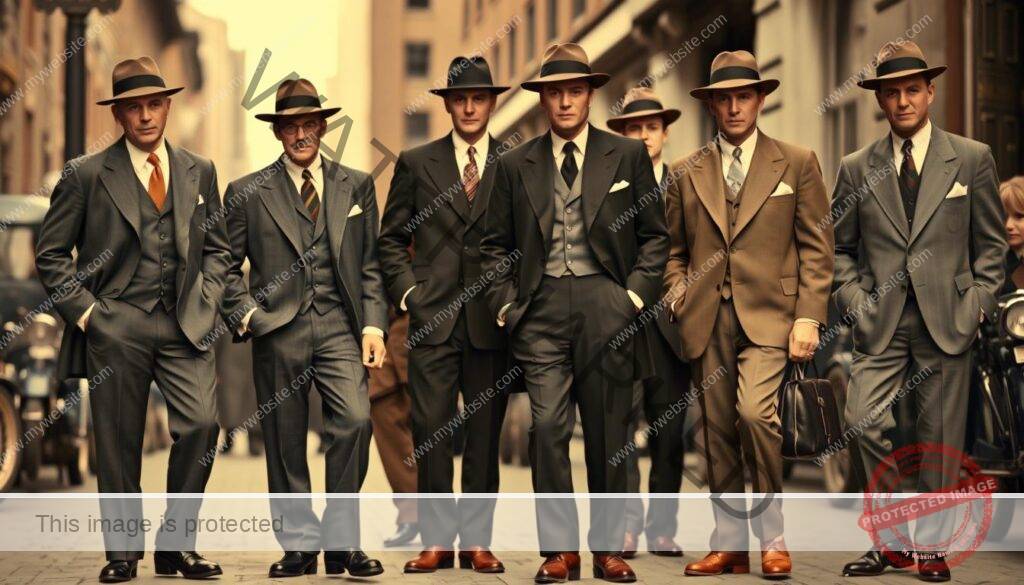
Style Essentials of 1940s Men’s Fashion
Suits: Boxy Silhouettes and Fabric Restrictions
The suits of the 1940s were known for their boxy silhouettes and broad shoulders. They had nipped waists too. Because of fabric rationing, suits were simpler, with fewer pockets.
They also had restrictions on pocket flaps and lapel sizes. Patch pockets became popular to save fabric. This style was also seen in war fatigues.
The mix-and-match styling trend allowed men to create unique outfits. They combined different parts of suits and shirts. This led to innovative styles.
Shirts: From Functional to Fashion-Forward
Shirt designs in the 1940s focused on function and comfort. The dress shirt and utility shirt were common. They were essential for both the working man and serviceman.
These shirts had soft collars, similar to today’s dress shirts. In the early 40s, spear point collars were popular. They had long tips.
Later, collars became shorter. The late 1940s saw the rise of micro patterns and plaid in everyday wear.
| Suit Styles | Shirt Designs |
|---|---|
|
|
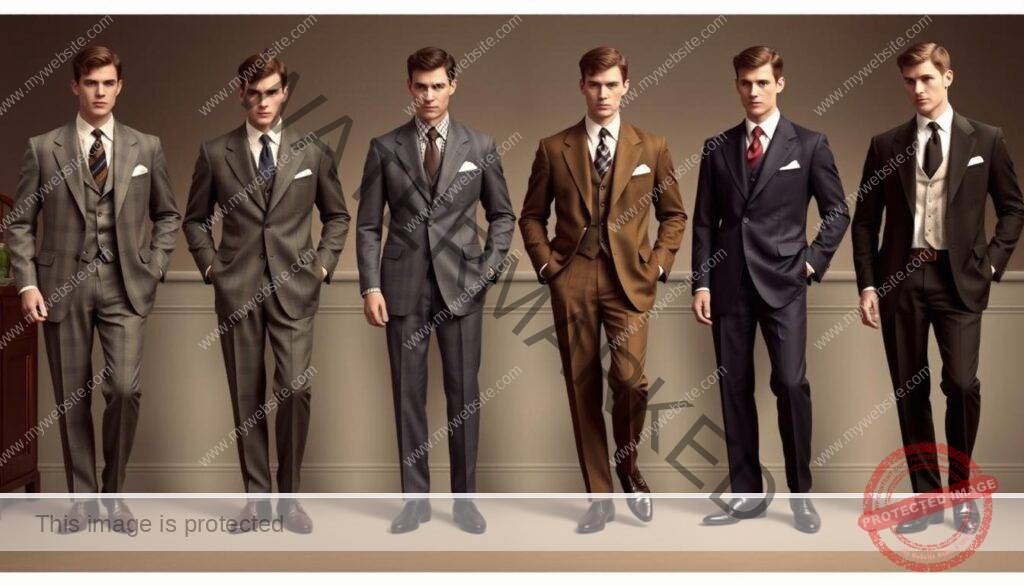
« In the early 1940s, men’s suits were typically single-breasted and made from materials such as wool, worsted wool, tweed, and synthetics like rayon blended with wool. »
Formalwear in the 1940s
In the 1940s, men’s formal clothes were quite traditional. Suits looked strict and formal. Double-breasted suits were in style, with wide lapels and a slim waist. They made a man look strong and fit.
Single-breasted suits were also popular. They were sleek and versatile, great for work or parties. They were less formal than double-breasted suits but still looked classy.
Double-Breasted and Single-Breasted Suits
The double-breasted suit was a big deal in the 1940s. Its wide lapels and slim waist made a bold statement. Single-breasted suits, with two or three buttons, were more streamlined and flexible.
These suits were made from wool, linen, cotton, and synthetic materials. This was because of fabric shortages during the war. Despite this, men could still look stylish and put together.
Formal Shirts and Collars
Formal shirts in the 1940s were mostly white. They were simple yet elegant. The pointed collar was a favorite, adding a crisp touch to suits.
Some older men wore detachable collars for an even more polished look. This allowed for a clean and refined appearance.
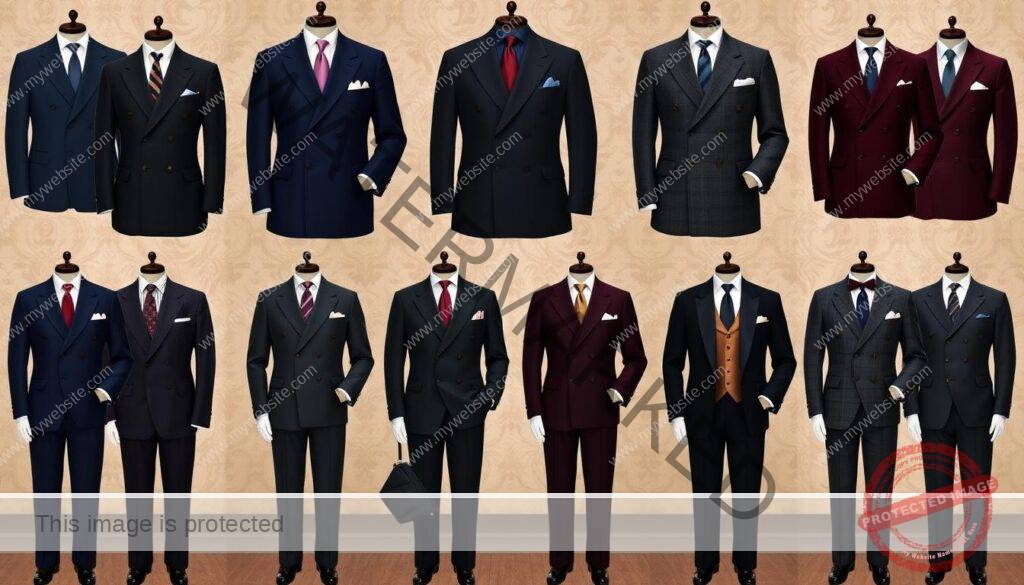
« Formalwear in the 1940s was a reflection of the era’s mix of tradition and innovation, as men sought to maintain a sense of elegance and refinement even during the challenges of wartime. »
Casualwear: The Rise of Everyday Comfort
In the 1940s, suits were big in formal menswear. But, casual clothes were also gaining ground. The « shirt and slacks » look was perfect for any event. Sportswear, like bomber jackets and polo shirts, also became popular.
War-time fabric limits changed fashion. Shirts and ties got simpler and more bold. The Zoot Suit was a bold statement against the war’s strict rules.
As time went on, comfort in men’s clothes became key. Bomber jackets and high-waisted pants were favorites. They were both stylish and practical.
« Casualwear in the 1940s was all about finding that perfect balance between style and comfort. It was a time when men could express their individuality through their everyday attire, while still adhering to the era’s sense of elegance and refinement. »
The 1940s laid the groundwork for today’s casual fashion. It made men’s clothes more versatile and easy to wear.
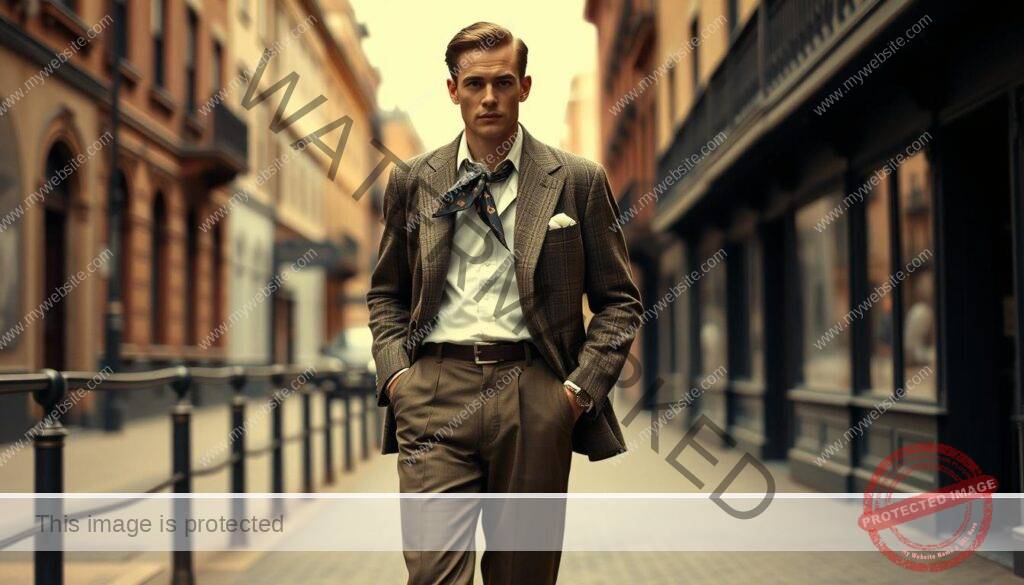
1940s mens fashion: Accessories that Defined the Era
In the 1940s, accessories were key to men’s style and elegance. The fedora, trilby, and newsboy caps were iconic. They added sophistication to any outfit.
Hats: Fedoras, Trilbys, and Newsboy Caps
The fedora was a favorite among 1940s men. Made from wool or felt, these hats had a distinctive crown and brim. They were often tilted for a stylish look.
The trilby, similar but with a shorter brim, was also popular. It showed refined masculinity. For a casual look, the newsboy cap was perfect, especially for the working class.
1940s men’s fashion included more than just hats. Neckties, suspenders, pocket squares, and cufflinks were also key. These accessories added elegance, even with wartime austerity and fabric rationing.
| Accessory | Popularity and Usage |
|---|---|
| Fedoras | Widely worn by men, known for their distinctive crown and brim, often tilted to the side for a stylish appearance. |
| Trilbys | Similar to fedoras but with a shorter brim, also gained widespread popularity in the 1940s, exuding a sense of refined masculinity. |
| Newsboy Caps | Became a popular choice among the working class, offering a more casual alternative to the formal fedora. |
| Berets | Favored by those seeking a more bohemian, artistic aesthetic. |
| Neckties | Typically wide and made of silk, adding sophistication to men’s ensembles. |
| Suspenders (Braces) | A common choice for holding up pants, available in various colors and patterns. |
Outerwear and Jackets of the 1940s
The 1940s were marked by a rise in military-inspired outerwear, thanks to World War II. The trench coat and bomber jacket became symbols of the era.
The Timeless Trench Coat
The trench coat, first made for British Army officers before World War I, became a hit in the 1940s. Its water-resistant material, belt, epaulets, and storm flaps made it both practical and stylish. Stars like Humphrey Bogart and Peter Sellers made the trench coat a symbol of elegance.
The Military-Inspired Bomber Jacket
The bomber jacket, designed for pilots, became a favorite in the 1940s. Made from leather or canvas, it was warm and durable. Its appeal has kept it popular in military-inspired outerwear for years.
« The trench coat and bomber jacket were two of the most iconic pieces of men’s outerwear in the 1940s, seamlessly blending military aesthetics with civilian style. »
Knitwear and Sweaters in Men’s Fashion
The 1940s were a big time for men’s sweaters and knitwear. This was because of the need for warmth during wartime and the recovery after. Sweaters became a must-have, not just for style but for keeping warm.
The crew neck sweater became very popular. It was worn over a collared shirt, adding a classy touch to daily clothes.
The v-neck sweater also became a favorite. It was great when paired with a tie, mixing comfort with a bit of formality. In the UK, the Fair Isle sweater became a casual wear icon with its colorful patterns.
Cardigans made a comeback in the 1940s, becoming a stylish part of men’s fashion. Button-front cardigans in thick wool were especially popular for adding elegance to casual looks. The « commando sweater » was also introduced, designed for soldiers with strong shoulders and elbows.
Wool was the top choice for men’s sweaters in the 1940s. It was valued for its warmth and durability. This focus on practicality and style made knitwear a lasting favorite in men’s fashion.
« The 1940s marked a significant era for men’s sweaters and knitwear, largely influenced by the practical needs of wartime and the subsequent post-war recovery period. »
Footwear Trends in the 1940s
In the 1940s, men’s shoes were about being tough and stylish. Leather shoes were everywhere, with oxfords and brogues leading the pack. These shoes were built to last, showing the practical side of men’s fashion back then.
Oxfords, Brogues, and Leather Shoes
The oxford shoe was a big hit in the 1940s, coming in many colors like mellow brown and white. Saddle shoes with cool color combos were also in style. These shoes were loved for their looks and durability.
Because of World War II, fabric shoes became a cheaper option. But, men still chose leather shoes for their lasting quality, even if they were pricey.
| Shoe Style | Popularity in the 1940s | Characteristics |
|---|---|---|
| Oxfords | Very popular | Lace-up style in mellow brown, chocolate brown, white, grey, and dark blue colors. Two-tone and wingtip variations were also common. |
| Brogues | Widely worn | Characterized by perforated patterns, brogues were a durable and stylish choice for men’s footwear in the 1940s. |
| Saddle Shoes | Notable trend | Featured contrasting colors, such as black and white or brown and white, for a distinctive two-tone look. |
Other favorites included ankle boots, monk strap shoes, and loafers. Even sandals were popular for casual days. The 1940s were all about mixing durability with style and elegance.
Grooming and Hairstyles of the 1940s
The 1940s brought back classic, short hairstyles for men, thanks to the military and movies. Short hairstyles like the crew cut and flat top were big because they were easy to keep up. This was during a time of simplicity after World War II. Yet, the era also saw the rise of slicked back and stylish looks, thanks to stars like Cary Grant.
Many men wanted to look neat and polished, with side parts and military influence hairstyles. These looks showed discipline and unity. The pompadour, with its swept-up front, became popular too. It symbolized hope and a desire for elegance after the war.
- Slicked-back hair was made smooth with hair oils and pomades, giving a shiny look.
- Waved hairstyles were done by combing the hair up and to the side for a side-swept look.
- Naturally curly-haired men could style their hair in side parts, slick backs, or let it be for a frizzy look.
Grooming tools and products, like combs, brushes, and hair tonics, were key for these classic 1940s hairstyles. Brilliantine cream was especially popular for its ability to make hair sleek and shiny.
While military-inspired cuts and slicked-back styles were common, Hollywood glamour also played a part. Men wanted to look like stars like Clark Gable and Frank Sinatra. This mix of practicality and style still influences men’s grooming today.
Conclusion: The Enduring Legacy of 1940s Men’s Fashion
The 1940s were a key time for men’s fashion. They set the stage for many styles we see today. Even with the challenges of war, the era made timeless pieces like the double-breasted suit and fedora hat popular. These items still inspire today’s fashion.
Designers and wearers showed great creativity and resilience during this time. Their work has greatly influenced men’s fashion over the years. This shows how important the 1940s were in shaping fashion.
The 1940s’ style is still seen in today’s fashion. Things like structured clothes and durable fabrics are still loved. Vintage fans and fashion lovers keep these classic looks alive, showing the lasting appeal of well-made designs.
In short, the 1940s were a turning point in men’s fashion. They combined practicality with creativity, leaving a lasting mark. The lessons from this era, like using new materials and perfecting classic looks, still inspire us today. This ensures the 1940s’ style will always be a source of inspiration.