
Was the 18th century a golden age of fashion? It was a time of opulence and extravagance. Explore the world of Rococo fashion, a style that changed the era’s fashion and aesthetics. This article looks at the evolution of Rococo fashion and its lasting impact on fashion today.
Key Takeaways
- Rococo fashion emerged in the 18th century, marked by a distinctive ornate and opulent style.
- Rococo fashion for women featured a rounded bosom, narrow waist, and wide pannier skirts that extended the hips.
- The Rococo period was characterized by intricate designs, powdered wigs, ruffles, and a pastel color palette.
- Luxurious fabrics like silk, satin, and delicate lace were prevalent in Rococo fashion.
- Influential designers like Madame de Pompadour and Rose Bertin shaped the fashion trends of the Rococo era.
Introduction to Rococo Fashion
Origins and Influences
Rococo fashion started in 18th century France. It focused on elegance and extravagance. The origins of rococo fashion began in the early 1700s, as a reaction to earlier styles.
This new style was playful and opulent. It quickly caught the eye of the French aristocracy.
Aristocratic Embrace of Rococo Style
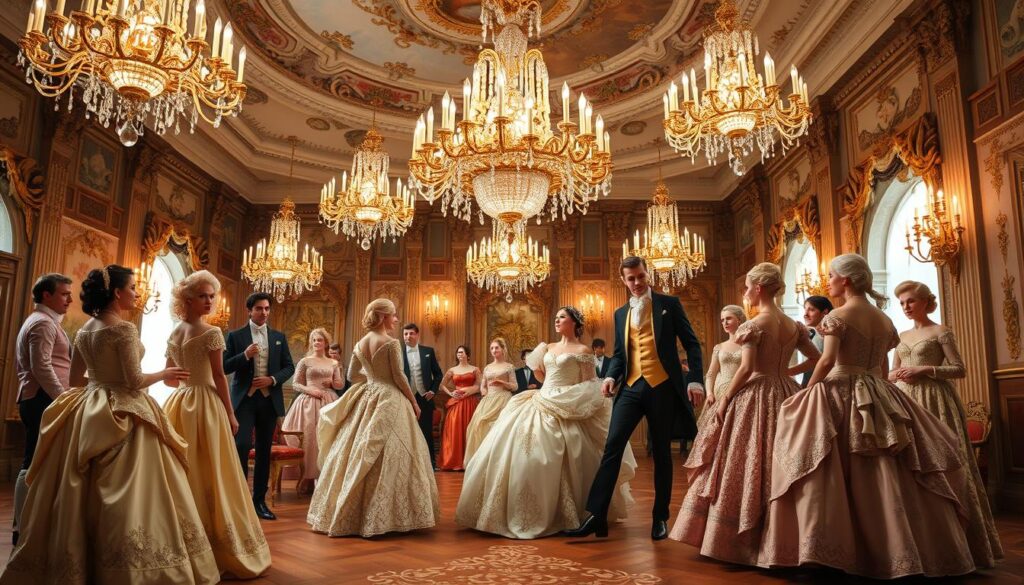
The French aristocracy loved the rococo style. They used it to show off their wealth and status. Their clothes were soft pastel colors and full of fancy details.
They used silk, satin, and velvet. These fabrics were decorated with lace and embroidery. This showed the aristocratic adoption of rococo fashion.
The era’s fashion was known for its curved lines and fancy decorations. Marie Antoinette was a big fan of the Rococo style. She made it a symbol of French French aristocracy and rococo fashion.
| Key Rococo Fashion Influences | Timeframe |
|---|---|
| Emergence of Rococo style in furniture, silver, and ceramics in France | 1720s and 1730s |
| Flourishing of Rococo style in English design | 1740 to 1770 |
| Establishment of the St Martin’s Lane Academy (Royal Academy of Arts) in England | 1735 |
| Publication of Rococo ornament pattern books in England | 1740s and 1750s |
| Publication of « The Gentleman and Cabinet Maker’s Director » by Thomas Chippendale | 1754 |
Key Characteristics of Rococo Fashion
Rococo fashion came to life in 18th century France. It’s known for its fancy details and soft, romantic colors. The clothes were covered in intricate lace, delicate ribbons, and playful floral patterns. These added a touch of fun and elegance.
The colors used were soft pastels like pink, blue, and cream. These hues made the clothes feel light and airy. This was the charm of Rococo fashion.
Ornate Decorative Elements
Rococo fashion was a feast for the eyes. Each piece of clothing was a work of art, full of details. Silk flowers on gowns brought nature’s beauty to the wearer. Lace trims added a hint of class.
Ruffles and ribbons, often in pastel colors, made the clothes feel playful. Every stitch was done with care. This showed the carefree spirit of the time.
Pastel Color Palette
The colors of Rococo fashion were soft and dreamy. Hues like pale pink, blue, and cream were common. They added a romantic and whimsical touch to the clothes.
This was different from the bold colors of earlier times. It showed the Rococo’s love for a lighter, more playful style.
| Key Rococo Fashion Characteristics | Description |
|---|---|
| Ornate Decorative Elements | Intricate lace, delicate ribbons, and whimsical floral patterns |
| Pastel Color Palette | Soft hues of pink, blue, and cream |
| Luxurious Fabrics | Silk, satin, and velvet |
| Elaborate Embellishments | Silk flowers, lace trims, ruffles, and ribbons |
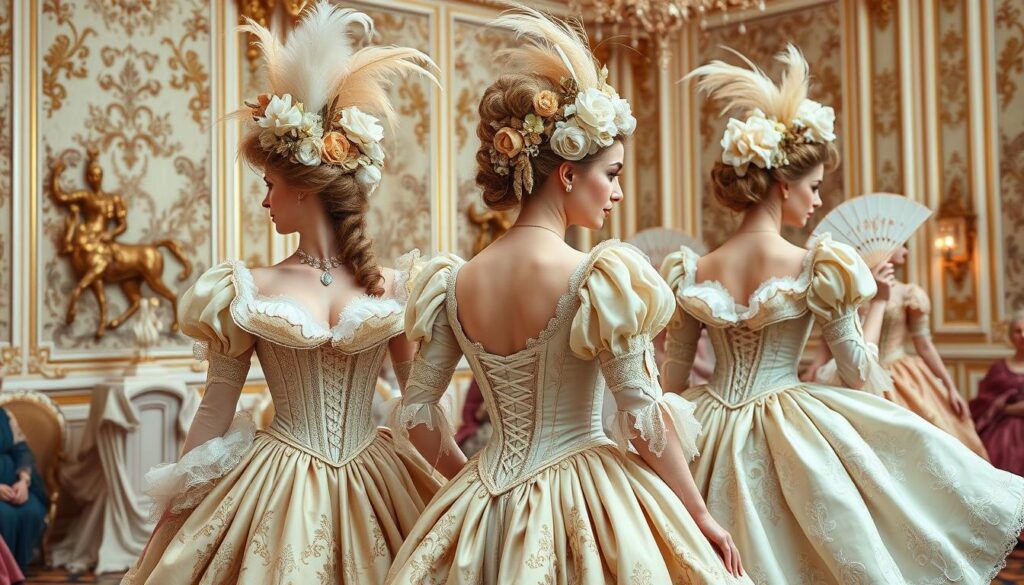
The key elements of Rococo fashion were delicate lace, layered ruffles, and decorative ribbons. Silk flowers and a pastel color palette also played a big role. Together, they created a look that was both playful and elegant, defining the 18th century’s style.
Iconic Garments of the Rococo Era
The Rococo era was known for its stunning fashion. The Robe à la Française had a fitted bodice and flowing back pleats, showing off grandeur. On the other hand, the Robe à l’Anglaise was simpler, with a high waistline and smooth skirt.
The Watteau gown had pleats at the back, creating a beautiful train for formal events. Mantua dresses were stiff with open front skirts, showing off the era’s love for grand fashion. Marie Antoinette made the Chemise à la Reine popular, a loose dress that marked a shift towards neoclassical styles.
« Fashion was a primary means of communication for women in the 1700s due to limitations on liberties. »
Rococo fashion was all about bright colors, lavish elegance, and lots of gold. The French court at Versailles loved it. Iconic rococo fashion garments like the robe à la française and robe à l’anglaise showed off the era’s skill and style.
These iconic pieces were covered in ribbons, lace, and ruffles on heavy silk brocades. They were a way for women in the 18th century to express themselves. The Rococo look, with its soft colors and romantic details, still inspires fashion today. The Moschino Fall 2020 show is a great example, mixing Rococo with 1980s extravagance.
rococo fashion
The Rococo era was known for its opulent fashion. Luxurious fabrics and detailed materials were key. Silk, satin, and velvet were used for their rich textures and shine.
Delicate lace and intricate embroidery added sophistication. Lavish embellishments like silk flowers and ruffles brought whimsical luxury.
Fabrics and Materials
Rococo fashion loved luxurious fabrics in rococo fashion, like brocade and silk in rococo. These fabrics were perfect for showing off ornate embellishments in rococo and intricate details in rococo textiles. Brocade’s rich patterns added grandeur to every garment.
Rococo Color Palette
The Rococo era was known for its pastel colors in rococo fashion. Soft colors like powder blue, pale pink, and lavender highlighted the lace and embroidery. This color scheme, popularized by Madame de Pompadour, showed the era’s love for elegance and joy.
« Every piece was a testament to the skill and artistry of the craftsmen, where the fabric was as important as the design, each element contributing to an overall sense of elegance and innovation. »
Influential Designers and Artists
The Rococo era was known for its stunning fashion. Designers and artists like Madame de Pompadour, Rose Bertin, and Thomas Gainsborough made a big impact. Their work helped create the look of the time.
Madame de Pompadour
Madame de Pompadour, the queen of King Louis XV, set the fashion trend. She loved fancy fabrics and detailed designs. Her style, with its soft lace and pastel colors, became the symbol of Rococo fashion.
Rose Bertin
Rose Bertin, known as the « Minister of Fashion, » followed in Pompadour’s footsteps. She created clothes that were both creative and classy. Her designs showed the true beauty of Rococo fashion.
Thomas Gainsborough
Thomas Gainsborough, a famous artist, also played a big role. His portraits captured the beauty of Rococo fashion. His work showed the elegance and luxury of the time.
These designers and artists, from Madame de Pompadour to Thomas Gainsborough, changed fashion forever. They made the Rococo era unforgettable.
Silhouettes and Shapes
The Rococo era saw a big change in fashion silhouettes. Women’s clothes were full and curvy, while men’s were slim and simple. This difference showed the social and cultural life of the time. It made Rococo fashion truly stand out.
Women’s Silhouette
Women’s clothes in the Rococo era had a big bosom, a small waist, and wide pannier skirts that made their hips look bigger. They wore stays to shape their upper body. The robe à la française was a favorite, with a tight bodice and a wide skirt that highlighted their curves.
Men’s Silhouette
Men’s fashion in the Rococo era was different. It was sleek and simple. Men wore fitted coats, waistcoats, and breeches. They also wore lace, embroidery, and powdered wigs for extra flair. This made their look stand out against the women’s.
The change in silhouettes in the Rococo era showed the era’s artistic and cultural spirit. It showed the tastes and values of the rich. The contrast between women’s curves and men’s neatness was key to Rococo fashion.
« The Rococo silhouette for women was a testament to the period’s artistic and cultural influences, reflecting the social dynamics and aesthetic preferences of the aristocratic elite. »
Accessories and Embellishments
The 18th century’s Rococo fashion was all about lavish accessories and detailed embellishments. Delicate lace, intricate ruffles, and flowing ribbons made clothes look like art. They added sophistication to every outfit.
Silk flowers on gowns brought a touch of nature’s beauty. Ornate jewelry, like diamond brooches and pearl necklaces, showed off the wearer’s wealth. Powdered wigs with feathers, ribbons, and jewels symbolized luxury and elegance.
These decorative elements were more than just accessories. They were key to the Rococo look, turning each piece into a masterpiece. The focus on detail made Rococo fashion stand out, leaving a lasting mark on elegance.
| Rococo Accessory | Description |
|---|---|
| Lace | Delicate, intricate fabric with an open, mesh-like pattern |
| Ruffles | Pleated or gathered strips of fabric used as decorative trim |
| Ribbons | Narrow strips of fabric, often used to adorn clothing and hairstyles |
| Silk flowers | Artificial floral decorations made from silk or other fine materials |
| Jewelry | Ornate accessories such as brooches, necklaces, and earrings |
| Powdered wigs | Elaborate hairstyles created with wigs, often adorned with feathers and jewels |
The opulent accessories and decorative elements in Rococo fashion were more than just for show. They were essential to the style, making each outfit a masterpiece. This focus on detail and embellishment defined the Rococo era, making a lasting impact on fashion.
« The Rococo was an extravagant, ornate, and highly decorative style that emerged in the early 18th century, characterized by an abundance of curves, scrolls, and natural forms. »
Transition to Neoclassical Fashion
As the 18th century ended, fashion changed a lot. It moved away from the fancy styles of the Rococo era. The Neoclassical style brought a new look, inspired by ancient Greece and Rome.
Shift in Aesthetic Ideals
The French Revolution was a big reason for this change. People didn’t want the fancy clothes of the Rococo anymore. They wanted something simpler and more classic.
This change showed a bigger cultural shift. People started to like simple, symmetrical designs and natural shapes. This was a big change from the fancy styles of before.
Emergence of Neoclassical Style
Classical art and architecture had a big impact on fashion. Designers wanted to make clothes that looked like ancient styles. This change meant saying goodbye to the fancy styles of Rococo. It welcomed a new look that focused on natural shapes.
The Neoclassical style showed how fashion was changing. It reflected the new social and cultural values of the time.
« The Neoclassical era in France, between 1790 and 1810, marked the period when neoclassical clothing dominated French women’s fashion, signifying a significant aesthetic shift emphasizing comfort, mobility, and self-representation. »
Conclusion
The legacy of Rococo fashion is vast and enduring. Its influence on modern design is clear, with its enduring elegance still captivating many. This shows the era’s deep impact on fashion history.
The era’s use of lavish fabrics and pastel colors is unmatched. Its silhouettes and embellishments also left a lasting mark. Today, we see its influence in fashion, interior design, and the timeless appeal of elegance.
Even though the Rococo era has ended, its legacy lives on. It reminds us of fashion’s power to transcend time and celebrate human beauty. The Rococo aesthetic continues to shape fashion history, leaving a lasting impact.