
Dr. Temple Grandin, a well-known author and animal welfare advocate, once said, « You can’t give animals dignity if you don’t give them food dignity. » This quote highlights the raw dog food movement. It’s all about giving our dogs a diet that’s more natural and right for them. Instead of processed kibble, many are turning to fresh, whole-food diets for their pets.
The raw dog food trend is not just a fad. It’s a thoughtful way to feed our dogs. It’s based on the BARF diet, which means Biologically Appropriate Raw Food. This diet can bring many benefits, like better skin and coat health, more energy, and overall well-being.
Key Takeaways
- Raw dog food diets are based on the premise of providing dogs with a biologically appropriate and natural diet that closely mimics their ancestral eating habits.
- Proper preparation and handling of raw dog food are crucial to ensure food safety and minimize the risks of bacterial contamination.
- Transitioning to a raw diet requires a gradual approach and close monitoring to ensure your dog’s nutritional needs are met.
- Consulting with your veterinarian is essential when considering a raw food diet for your canine companion.
- Commercial raw dog food options offer a convenient alternative to homemade raw diets, but it’s important to research and select high-quality brands.
Introduction to Raw Dog Food
Feeding dogs raw, unprocessed food has become more popular lately. This diet is called « raw dog food » or « biologically appropriate raw food » (BARF). It’s based on the idea that dogs should eat like their wild ancestors.
What is Raw Dog Food?
Raw dog food includes uncooked meats, organs, bones, fruits, and veggies. It aims to copy the diet of wolves and wild dogs. Supporters think this diet is better for dogs because it gives them important nutrients in a natural way.
The Concept of Biologically Appropriate Raw Food (BARF)
Australian vet Dr. Ian Billinghurst introduced the BARF diet in the 1990s. He said adult dogs do well on a diet like their wild relatives ate before humans domesticated them. The BARF diet uses raw bones and veggies, unlike harmful grain-based pet foods.
Even though some vets and the FDA have concerns, the raw diet for dogs is getting more popular. Many owners like the idea of giving their dogs a natural diet. They think it can make their dogs healthier and happier.
Benefits of a Raw Food Diet for Dogs
Many pet owners choose the raw dog food diet for its health perks. They say it makes their dogs’ coats shinier and their skin healthier. It also helps with cleaner teeth and more energy.
Improved Skin and Coat Quality
The raw diet is great for a dog’s skin and coat. It’s full of proteins and fatty acids that make coats shiny and healthy. It can also ease skin problems and allergies, making skin clear and bright.
Better Dental Health
Raw diets are good for dogs’ teeth too. The raw meats and bones help clean plaque and tartar. This means cleaner teeth and better breath, which can prevent dental problems.
Increased Energy Levels
Switching to a raw diet can make dogs more energetic. The diet’s high-quality protein and nutrients boost their immune system and vitality. This lets dogs stay alert and active all day.
| Potential Benefits of Raw Dog Food | Supporting Evidence |
|---|---|
| Shinier Coats | The nutrient-rich raw ingredients, particularly the high-quality proteins and essential fatty acids, can promote a shinier, healthier-looking coat. |
| Healthier Skin | The raw diet may help alleviate skin irritations and allergies, leading to clearer, more vibrant skin. |
| Cleaner Teeth | The natural abrasive action of raw meats and bones can help scrape away plaque and tartar buildup, leading to cleaner teeth and fresher breath. |
| Higher Energy Levels | The high-quality protein and nutrient-dense ingredients in raw food may support a stronger immune system and overall vitality, allowing dogs to feel more alert and active throughout the day. |
While many dog owners see these benefits, there’s limited science on raw diets. Always talk to a vet before starting your dog on a raw diet to make sure it’s safe and right for them.
Potential Risks and Concerns
The raw dog food diet is popular for its health benefits. But, it’s key to know the risks and concerns. Raw dog food can be harmful to humans and dogs if not handled safely.
Bacterial Contamination and Safety Measures
Studies show raw pet food often has harmful bacteria like Salmonella and Listeria. The FDA worries about health risks to owners from handling raw meat. To stay safe, the FDA suggests washing hands well and cleaning surfaces touched by raw pet food.
Nutritional Imbalances and Deficiencies
Raw dog food diets often lack or have too much of some nutrients. For instance, diets with lots of liver can give too much vitamin A, which is bad. Also, these diets might not give dogs all the nutrients they need for good health.
| Potential Risks | Concerns |
|---|---|
| Bacterial contamination (Salmonella, Listeria) | Threats to human and dog health from bacteria in raw meat |
| Nutritional imbalances and deficiencies | An unbalanced diet that may damage the health of dogs if given for an extended period |
| Whole bones | Potential for whole bones to choke an animal, break teeth or cause an internal puncture |
Pet owners thinking about raw dog food should know these risks. They should take steps to keep their dogs healthy and safe.
raw dog food Ingredients and Composition
https://www.youtube.com/watch?v=6uGyzdE74_Q
A balanced raw dog food diet includes key ingredients that mimic a dog’s natural diet. These are muscle meats, bones, organ meats, eggs, and fresh fruits and vegetables. These whole, unprocessed foods give dogs the best nutrition and help their health.
Muscle Meats and Bones
About 70-80% of a raw dog food diet is muscle meats, often still on the bone. These provide high-quality protein, amino acids, and important vitamins and minerals. Raw, edible bones (10-15% of the diet) help balance calcium and phosphorus, supporting strong bones.
Organ Meats and Eggs
Organ meats, like liver and kidneys, make up 10% of the diet. They are full of vitamins, minerals, and nutrients vital for dogs. Raw eggs add high-quality protein, fats, and vitamins and minerals too.
Fruits and Vegetables
Fruits and vegetables, making up 7-10% of the diet, offer many benefits. They provide phytochemicals, antioxidants, and fiber for health. Suitable options include broccoli, spinach, carrots, blueberries, and apples.
| Ingredient | Recommended Percentage |
|---|---|
| Muscle Meats | 70-80% |
| Raw Edible Bones | 10-15% |
| Organ Meats | 10% |
| Fruits and Vegetables | 7-10% |
| Eggs | Occasional Addition |
By balancing these nutrient-dense ingredients, a raw diet can give dogs the best nutrition. But, always talk to your vet to make sure your dog’s diet meets their needs.
Preparing and Handling Raw Dog Food
Feeding your dog raw food needs careful handling and cleanliness. FoodSafety.gov says to use raw ground meats and seafood for people within 1 to 2 days. For dogs, use it within 7 days to keep it fresh and safe.
Safe Handling and Storage Practices
Keeping your pet’s food safe means following certain rules. The CDC says to keep fridges at 40 degrees Fahrenheit or less to stop bacteria from growing. When thawing raw pet food, put it in the fridge.
Also, wash your hands well with soap and warm water for 20 seconds after touching raw pet food. This stops bacteria like Salmonella and Listeria from spreading. These bacteria are in about 25% of raw dog food samples.
Owners should watch out for dogs with long beards that can catch liquids. Wipe them after feeding to lower the risk of bacteria. Following safe handling and storage practices is key for a barf diet or biologically appropriate raw foods for your pet.
« Dogs and cats can handle more bacteria than humans. But, pet owners must still be careful about thoroughly wash hands with soap and water and disinfect surfaces when handling raw pet food. »
Commercial Raw Dog Food Options
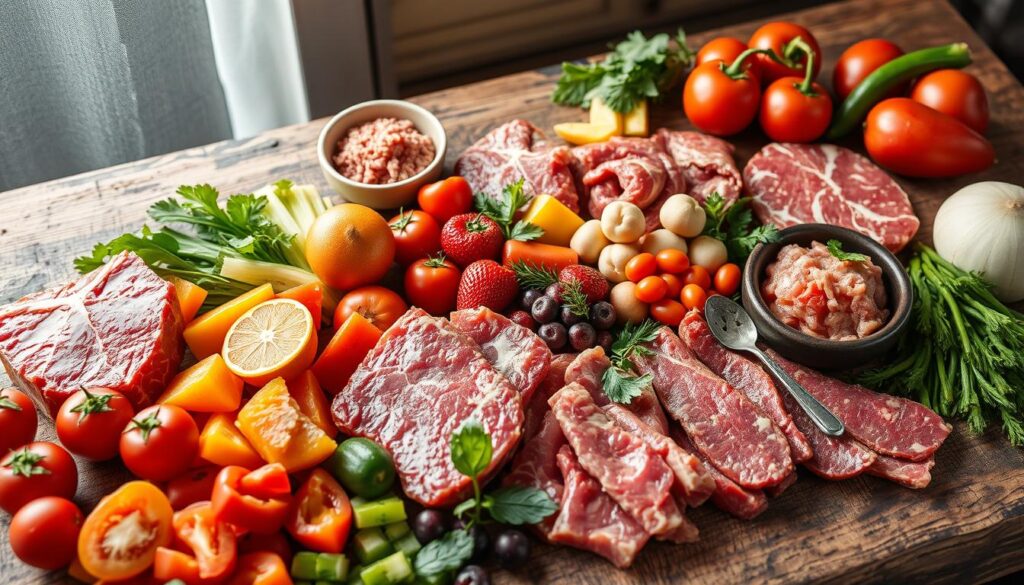
Pet owners can choose from many commercial raw food options for their dogs. These include frozen and freeze-dried raw food brands. They are made by veterinary nutritionists to fill the nutritional needs of dogs. This helps fix any imbalances or deficiencies in homemade raw diets.
Frozen or Freeze-Dried Raw Food Brands
Brands like Ollie team up with canine nutritionists. They create cooking methods and formulas that include all the vitamins, minerals, and nutrients dogs need. They also think about the dog’s weight, breed, age, activity level, and allergies.
We Feed Raw Turkey Patty got the top rating of 5 stars. It has 49% protein, 25% fat, and 18% carbohydrates. Open Farm Grass-Fed Beef Recipe got 4.5 stars, with 43% protein, 40% fat, and 9% carbohydrates.
Dr Marty Nature’s Blend Essential Wellness also got 4.5 stars. It has 39% protein, 29% fat, and 24% carbohydrates.
Evaluating Quality and Nutritional Value
When picking commercial raw dog food, look for high-quality, human-grade ingredients. Make sure it meets AAFCO standards for complete and balanced nutrition. Halo Freeze-Dried Raw Meal Bites Beef Recipe got the top rating of 5 stars. It has 44% protein, 36% fat, and 13% carbohydrates.
Raw dog food diets are called raw because they’re made without high heat. This helps them keep more of their natural nutritional value. The ingredients in commercial raw dog food can be strictly raw or pasteurized to kill harmful germs. This makes it safe for your dog.
Transitioning to a Raw Diet
Switching your dog to a nourriture crue pour chien (raw dog food) diet should be done slowly. Watch their health and how they react. Vets suggest starting with a little raw food in their current diet and slowly adding more over weeks. This helps their body get used to the new alimentation crue (raw feeding) slowly.
It’s important to look out for any signs of stomach trouble or health issues during this change. If you notice anything, talk to a vet. They can help with the best plan for your pet’s nutrition canine (canine nutrition) needs.
Monitoring the Transition
When moving to a régime barf (biologically appropriate raw food) diet, keep an eye on your dog. You might see some changes like:
- Digestive upset, such as gas, loose stools, or vomiting bile
- Changes in appetite and hunger levels
- Shifts in gut flora, leading to excess gas or feelings of nausea
With careful nutrition crue pour animaux de compagnie (raw pet food) introduction and watching, most dogs do well on a aliments crus biologiquement appropriés (biologically appropriate raw foods) diet. It might take one to two weeks to adjust, but sometimes it can take longer.
Talking to your vet and following their advice is key for a smooth move to a viande crue pour chiens (raw meat for dogs) diet.
Consulting with Your Veterinarian
Thinking about a raw dog food diet? It’s key to talk to your vet first. Many vets are wary of raw diets because of risks. But, some holistic vets might support it. You need a vet who knows about raw feeding to guide you safely.
They can help pick the right raw diet for your dog. This is crucial for puppies, dogs with health issues, or those with weak immune systems. They’ll share the good and bad of raw feeding. Plus, they’ll suggest the best raw dog food and how to feed it right.
- Talk about raw feeding and why you’re thinking about it with your vet
- Ask about any worries or risks they see with a raw dog food diet
- Find out if they know a lot about raw nutrition for pets
- Plan a safe way to switch your dog to a raw diet together
- Make sure to keep up with vet visits and watch for health problems
With a vet who knows about raw feeding, you can make a smart choice. This way, you’ll keep your dog healthy on a raw dog food diet.
« More than 100 years of combined experience in veterinary nutrition among the professionals at PetDiets. »
Conclusion
The debate on nourriture crue pour chien, or raw dog food diets, is complex. Some people believe in a natural, nutrition crue pour animaux de compagnie approach. But, there are worries about the risks of bacterial contamination and not getting enough nutrients.
Studies show that many aliments crus biologiquement appropriés have harmful germs like Escherichia coli, Listeria, and Salmonella. These germs can be dangerous for pets and their owners.
Yet, research suggests raw diets might be better for dogs. They can be more digestible and tasty for some dogs. But, it’s important to get the ingredients from good sources and handle and prepare them safely.
When deciding on a alimentation crue diet, talk to your vet. They can help you understand the good and bad points for your dog. Whether you go for homemade raw food, a store-bought nourriture crue pour chien, or quality kibble, aim for a balanced diet that keeps your dog healthy.