
Investing in the stock market can be complex. It’s important to know the different trading strategies out there. Long-term and short-term trading are two main types, each with its own benefits and things to consider. This article will help you understand the main differences between these two styles. It aims to guide investors in making choices that fit their financial goals, how much risk they can take, and how much time they can dedicate.
Key Takeaways
- Long-term trading is about holding onto positions for months or years. Short-term trading, on the other hand, involves quick buys and sells over a day or weeks.
- Long-term traders look at the big picture, using economic factors. Short-term traders focus on market trends and technical analysis.
- Long-term trading aims for the asset’s long-term growth. Short-term trading tries to make money off quick price changes.
- When picking a trading style, think about your financial goals, how much risk you can handle, how much time you have, and the market conditions.
- Both trading styles have their pros and cons. The choice between them depends on your personal situation and what you prefer.
Understanding Long-Term Trading
Long-term trading means keeping stocks for months to years, not just a few days. These traders look for assets that will slowly increase in value over time. They use deep research and understand economic factors to make their investment choices.
Holding Positions for Extended Periods
Long-term traders are okay with holding onto stocks for a long time. They know that short-term price changes don’t always mean much for the future. This patience helps them to see the big picture and benefit from long-term growth.
Objectives and Investment Decisions
The main goal of long-term traders is to make steady money over time. They look for assets that are priced too low or have a lot of potential. They do a lot of research, looking at things like a company’s finances and its place in the industry. This helps them make smart choices that fit their financial goals and how much risk they can handle.
Popular Long-Term Trading Strategies
- Buy-and-hold investing – Keeping assets for a long time to earn dividends and see their value go up.
- Dividend investing – Picking companies that pay steady dividends and using those dividends to buy more shares.
- Value investing – Finding assets that are priced lower than they should be and waiting for the market to catch on.
These strategies show how important it is to be patient, do your homework, and focus on the basics for long-term success in trading.
Understanding Short-Term Trading
Short-term trading is all about buying and selling financial assets quickly, often in a day or a few weeks. These traders use technical analysis and market trends to make fast decisions. They aim to make money from the market’s ups and downs.
Buying and Selling Assets Quickly
These traders buy and sell assets fast to profit from volatility. Day trading, scalping, and momentum trading are strategies that keep positions short, sometimes just for seconds or minutes.
Capitalizing on Market Volatility
They love the market volatility during the trading day. Using technical analysis, they quickly spot chances to trade. Their goal is to make small profits from price changes.
Common Short-Term Trading Strategies
- Scalping: This strategy makes many trades to profit from small price changes, holding positions for seconds or minutes.
- Momentum trading: They focus on assets with strong price trends, trying to keep making money as those trends continue.
- Swing trading: This strategy aims to earn from big market swings, holding positions for days to weeks.
These strategies highlight the need for risk management. Fast trades can lead to big losses if not handled well.
« The key to successful short-term trading is to remain disciplined, patient, and focused on managing risk effectively. »
Key Differences between Long-Term and Short-Term Trading
Trading and investing have two main ways: long-term and short-term. The main difference is in how long you hold investments, how much risk you can take, and the potential profits.
Investment Time Horizons
Long-term trading means holding onto positions for months or years. These investors accept short-term ups and downs for long-term growth. Short-term trading, however, focuses on days to weeks. It aims to make money from quick price changes and manage risks better.
Risk Tolerance Levels
Long-term traders prefer to keep risks low, focusing on steady growth over time. Short-term traders, though, use market ups and downs to make quick profits. This means they take on more risk.
Profit Potential
Long-term trading aims for big gains from an asset’s growth over time. Short-term trading looks for quick wins from price changes. While long-term can lead to big gains, short-term might offer more frequent profits but smaller ones per trade.
Knowing the differences between long-term and short-term trading helps you pick the right approach. It depends on your investment time horizons, risk tolerance, and profit potential goals.
« Investing is not a game of beating the market. Investing is a game of beating yourself. » – Benjamin Graham, renowned investor and father of value investing.
Analytical Methodology for Trading
Successful trading, whether for the long or short term, needs a deep understanding of the right analytical methods. Long-term strategies focus on fundamental analysis, economic indicators, and looking at a company’s future. Short-term trading, however, focuses more on technical analysis, price changes, and market trends.
Traders must pick the right analytical tools for their trading style. Fundamental analysis looks at a company’s finances, management, and the big picture of the economy. It’s key for long-term traders who want to find companies that are worth more than their current price.
| Trading Approach | Analytical Methodology | Key Factors |
|---|---|---|
| Long-Term Trading | Fundamental Analysis | Company financials, industry trends, economic indicators |
| Short-Term Trading | Technical Analysis | Price movements, market trends, volatility patterns |
Technical analysis looks at past prices and volumes to spot patterns and trends. Short-term traders use technical indicators and chart patterns to make quick profits. Keeping an eye on market trends and economic indicators helps traders understand what’s driving the market.
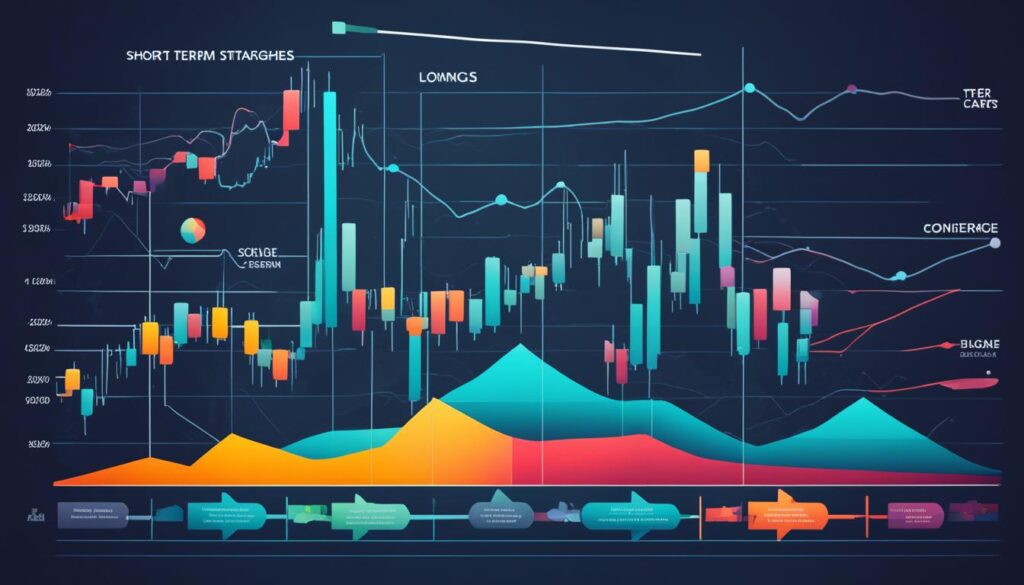
« The essence of successful trading is the ability to identify and analyze the appropriate information to make informed decisions. Mastering the analytical tools that align with your trading approach is crucial for consistent profitability. »
Trading Frequency and Activity Level
Investment strategies differ in how often and how much they trade. Long-term trading, or « buy-and-hold, » keeps positions for years or more. Short-term trading, or « active trading, » buys and sells assets often to make quick profits.
Long-term traders, or « passive investors, » trade less, focusing on growth over time. They stick to a patient plan, ignoring short-term ups and downs. Short-term traders, or « active investors, » trade more, trying to make quick gains by buying and selling often.
| Characteristic | Long-Term Trading | Short-Term Trading |
|---|---|---|
| Trading Frequency | Lower, with fewer transactions | Higher, with more frequent buying and selling |
| Trading Activity | Passive investing, following a buy-and-hold strategy | Active trading, aiming to capitalize on short-term price movements |
| Profit Potential | Potentially higher returns over the long run, but with lower volatility | Higher potential for short-term gains, but also higher risk levels |
| Time Horizon | Months, years, or even decades | Seconds, minutes, or days |
Choosing between long-term and short-term trading depends on your goals, how much risk you can take, and what you prefer. Knowing the differences in trading frequency and activity helps pick the best strategy for your financial goals and risk level.
Factors to Consider When Choosing a Trading Style
Investors can choose between long-term and short-term trading in the financial markets. Each style has its own benefits and needs careful thought. You should think about financial goals, risk tolerance, and time commitment. These factors help pick the right trading style selection for you.
Financial Goals and Objectives
When picking a trading style, your financial goals and objectives should lead the way. Long-term trading is good for those aiming for value enhancement over time. Short-term trading is for those wanting frequent gains. Think about your investment objectives to see which approach fits your goals.
Personal Risk Tolerance
Your personal risk tolerance is key too. Long-term trading is usually safer than short-term trading, as it involves holding positions longer. Short-term trading, however, brings higher market volatility and significant short-term fluctuations. Pick a trading style that feels right for your risk tolerance.
Time Commitment for Trading
How much time you can spend on trading matters too. Short-term trading needs more active participation and constant market observation than long-term trading. If you can watch the markets closely, short-term trading could work for you. But if you’re short on time, long-term trading might be better.
Choosing between long-term and short-term trading depends on your financial goals, risk tolerance, and time commitment. By considering these factors, you can pick the trading style that matches your investment goals.
long-term vs. short-term trading approaches
Investing can be split into two main styles: long-term and short-term trading. These styles differ in their strategies, risks, and rewards. It’s important for investors to pick the right style that fits their goals and market conditions.
The Time Factor
Long-term trading means holding onto investments for a year or more. The goal is to make money from big market trends over time. Short-term trading, however, is all about making quick buys and sells within a day to profit from small price changes.
Risk and Reward
Long-term trading usually means less risk but can lead to bigger gains over years. Short-term trading is riskier and can offer quick profits but these may be smaller. Taxes also play a part, with long-term gains taxed less than short-term ones.
Analytical Approach
Long-term traders use fundamental analysis to look at economic trends and company finances. They aim for investments that will do well over time. Short-term traders focus on technical analysis, using charts and indicators to spot quick price changes.
Trading Frequency
Long-term traders make fewer trades, focusing on long-term goals. Short-term traders can make many trades in a day, trying to make the most of short-term market shifts.
Choosing between long-term and short-term trading depends on your financial goals, how much risk you can take, and how much time you have. Knowing the differences between these styles helps investors make better choices and set up strategies that fit their needs.
| Criteria | Long-Term Trading | Short-Term Trading |
|---|---|---|
| Investment Time Horizon | Typically a year or more | Typically less than a year |
| Risk Profile | Lower risk, potential for higher long-term gains | Higher risk, potential for quicker, smaller profits |
| Tax Implications | Long-term capital gains taxed at lower rates | Short-term capital gains taxed as regular income |
| Analytical Approach | Fundamental analysis, focus on long-term trends | Technical analysis, focus on short-term price movements |
| Trading Frequency | Lower, less frequent transactions | Higher, more frequent transactions |
« The stock market is a device for transferring money from the impatient to the patient. » – Warren Buffett
Market Conditions and Economic Situations
Understanding the financial markets means knowing the market conditions and economic factors. These forces can greatly affect trading success. Both long-term and short-term traders need to grasp this.
When markets are volatile, short-term trading can be a good way to make money. Short-term traders do well in these times. They can quickly change their positions to take advantage of trading opportunities.
Long-term investors might prefer stable times. They hold onto investments for a long time. This helps them deal with market ups and downs.
| Market Conditions | Impact on Short-Term Trading | Impact on Long-Term Trading |
|---|---|---|
| High Volatility | Increased trading opportunities | Increased risk and potential for losses |
| Economic Stability | Limited trading opportunities | Favorable for long-term growth |
| Rapid Market Movements | Potential for quick profits | Increased uncertainty and risk |
Traders and investors must think about the market conditions and economic situations when picking a strategy. Knowing how these factors affect the market helps them make better choices. This way, they can aim for success in the markets.

« Successful investing is about managing risk, not avoiding it. » – Benjamin Graham
Recognizing Potential Candidates for Short-Term Trades
Short-term trading is fast-paced and requires quick, smart moves. Traders must watch technical indicators, market cycles, and the market’s overall direction closely. This helps them spot good opportunities fast.
Monitoring Moving Averages
Traders often look at moving averages to find trades. An upward sloping moving average means a bullish trend, signaling a good time for a long position. A flat or falling moving average might mean it’s time for a short trade.
Understanding Market Cycles and Patterns
Smart traders know about market cycles and patterns. They use this knowledge to time their trades well. This helps them make the most of short-term price changes.
Identifying Overall Market Trends
Looking at the big picture is key for picking trades. Traders check the direction of major indices and investor sentiment. This helps them make informed decisions that match the market.
By analyzing moving averages, market cycles, and trends, traders can find the best trades. This approach helps them succeed in the fast and unpredictable markets.
« The key to successful short-term trading is the ability to quickly identify and capitalize on emerging market trends. This requires a deep understanding of technical analysis and a keen eye for recognizing market patterns. »
Risk Management in Short-Term Trading
Managing risk is key to doing well in short-term trading. Markets can be unpredictable, so it’s vital to control your risks. As a short-term trader, you must use strategies to lessen losses and increase wins.
Stop-loss orders are a main tool for managing risk. They sell your stock if the price falls below a set level. It’s wise to set your stop-loss 10-15% below your buy price. This keeps your money safe while still letting the market move.
Position sizing is also crucial. It’s about how much money you put into each trade. The « one-percent rule » advises not to risk more than 1% of your account on one trade. This rule helps you avoid big losses from a single bad trade.
| Risk Management Strategy | Explanation |
|---|---|
| Stop-Loss Orders | Automatically sell your position if the price drops below a predetermined level, limiting downside exposure. |
| Position Sizing | Allocating a small percentage (e.g., 1%) of your total account value to each trade to manage overall risk. |
| Diversification | Spreading your investments across different industries, market capitalizations, and geographic regions to reduce risk. |
| Hedging with Derivatives | Using options, such as downside put options, to protect against significant price drops and mitigate losses. |
Diversification is another way to manage risk. By investing in various sectors, sizes, and areas, you lessen your risk. This approach increases your chances of making money.
In short-term trading, managing risk is essential. Using strategies like stop-loss orders, sizing positions, and diversifying can help. These methods let you trade with confidence and protect your money while looking for profits.
« The key to successful trading is managing your risk, not maximizing your gains. » – Anonymous
Technical Analysis for Short-Term Trading
Short-term traders find technical analysis key for understanding market trends and spotting trading chances. They watch indicators and price patterns closely. This helps them decide when to buy or sell, using the market’s ups and downs.
Buy and Sell Indicators
Short-term traders use the RSI and stochastic oscillator as main indicators. The RSI shows an asset’s price movement speed. It helps spot when prices are too high or too low. The stochastic oscillator looks at an asset’s closing price against its price range over time. It shows the asset’s speed and when it might change direction.
Identifying Price Patterns
Smart short-term traders also look at price patterns to guess where the market will go next. They see patterns like head and shoulders, triangles, double tops, and double bottoms. These patterns can mean a trend is changing or staying the same. By spotting these, traders can make better buy and sell choices, making the most of market swings.
| Technical Indicator | Description | Potential Signals |
|---|---|---|
| Relative Strength Index (RSI) | Measures the momentum of an asset’s price movement | Overbought (>70) and oversold ( |
| Stochastic Oscillator | Compares an asset’s closing price to its price range over a given time period | Momentum and potential reversal points |
Using technical analysis, short-term traders get a better grasp of the market. This helps them make smarter choices. It boosts their chances of making money in the quick world of short-term trading.
Pros and Cons of Short-Term vs. Long-Term Investing
Investing can be done in two ways: short-term and long-term. Each has its own good and bad points. Knowing these differences helps pick the best strategy for your money goals and how much risk you can take.
The Appeal of Short-Term Investing
Short-term investing can lead to quick profits. It uses market ups and downs for fast returns. This is great for those wanting quick money or who are okay with more risk.
The Stability of Long-Term Investing
Long-term investing is safer and can grow more over time. It benefits from the investment growth over years and can handle market changes better. This method suits those who prefer less risk and have a long time to invest.
Tax Implications
Taxes play a big part in choosing between short-term and long-term investing. Short-term gains are taxed like regular income, which is 20% to 35%. Long-term gains are taxed less, between 0% and 20%. This affects how much money you make from your investments.
| Metric | Short-Term Investing | Long-Term Investing |
|---|---|---|
| Holding Period | Less than 1 year | 1 year or more |
| Profit Potential | Higher, but more volatile | Lower, but more stable |
| Risk Tolerance | Higher | Lower |
| Tax Implications | Short-term capital gains tax (20-35%) | Long-term capital gains tax (0-20%) |
Choosing between short-term and long-term investing depends on your financial goals, how much risk you can handle, and your time frame. Mixing both strategies in your portfolio can spread out risk and increase your chances of long-term growth.
« The secret to investing is to figure out the value of something – and then pay a lot less for it. »
Conclusion
Choosing between long-term and short-term trading depends on your financial goals, how much risk you can handle, and how much time you can dedicate. It’s important to know the differences between these strategies. This includes their time frames, risk levels, and how they analyze the market. This knowledge helps investors make choices that fit their goals and likes.
Success in trading, no matter the strategy, needs good research, managing risks well, and adapting to market changes. Long-term trading can lead to big gains but requires patience and hard work. On the other hand, short-term trading might bring quick profits but is riskier and needs constant attention.
Deciding on a trading approach should be a thoughtful process. Think about your personal situation, financial aims, and how much risk you’re okay with. By doing this, investors can pick a strategy that helps them reach their goals and avoids big problems.