
Stop-loss orders are a simple yet powerful tool for smart trading. They help limit an investor’s loss when a security moves in the wrong direction. By setting a stop-loss order, you can prevent big losses or secure profits. This makes them useful for almost all types of investors.
Using a stop-loss strategy helps take the emotion out of trading. It also protects your investments during market ups and downs.
Key Takeaways
- Stop-loss orders can limit an investor’s losses on a security by automatically selling at a set price.
- These orders don’t cost anything until the stop-loss price is hit, offering a free way to protect your investments.
- They help avoid making decisions based on emotions and reduce losses during market volatility.
- Investors can use stop-loss orders to secure profits by setting trailing stops that adjust with price changes.
- Choosing the right stop-loss levels involves looking at your risk tolerance, the security’s volatility, and your investment goals.
Understanding Stop-Loss Orders
In the fast-paced world of stock trading, managing risk is key. Traders and investors use stop-loss orders to limit their losses. A stop-loss order tells a broker to buy or sell a stock at a specific price, called the stop price.
What Is a Stop-Loss Order?
A stop-loss order helps traders limit their losses or lock in profits. It’s different from a stop-limit order, which has a price limit. With a stop-loss order, it turns into a market order to sell when the stop price is hit. A stop-limit order only executes at the set limit price or better.
Traders can set stop-loss orders to sell when a stock drops or to buy when it goes up. The main goal is to automatically close a losing trade to limit losses. On the other hand, it can also be used to lock in profits by selling at a set price.
Stop-loss orders are a key risk management tool in the US stock market. By setting a price to close a trade, traders can reduce losses and protect their money, even when markets are unstable.
« Stop-loss orders are a crucial tool for managing risk in the stock market. They allow traders to limit their downside exposure and lock in profits, making them an essential component of a well-rounded trading strategy. »
Using stop-loss orders can change the game for traders and investors. It helps them deal with the unpredictable market and make smarter decisions based on their risk level and goals.
Advantages of Using Stop-Loss Orders
Stop-loss orders are a key tool for investors wanting to limit potential losses and remove emotional influence from trading. They don’t cost anything to set up. The only fee is when the stop-loss price is hit and the stock is sold.
These orders automate the sell process. This helps insulate decision-making from emotional influences. It stops investors from holding onto losing stocks, hoping they’ll bounce back. This is especially good for new traders who might let emotions guide their choices.
Stop-loss orders also make things easier by avoiding the need to constantly watch investments. The order sells the stock if the stop price is hit. This limits losses and lets investors focus on other parts of their portfolio.
| Advantage | Explanation |
|---|---|
| Cost-Effective | Stop-loss orders are free to implement, with commissions only charged when the order is executed. |
| Emotional Detachment | Stop-loss orders help remove the emotional influence from investment decisions, preventing investors from holding onto losing positions. |
| Convenient Monitoring | Stop-loss orders allow investors to avoid constantly checking their holdings, as the order will automatically sell if the stop price is reached. |
Using stop-loss orders helps investors effectively manage their risk, protect their trading capital, and potentially improve their overall investment performance. They offer cost savings, emotional control, and easy monitoring. This makes them a great tool for investors at any level.
Stop-Loss Orders for Locking in Profits
Stop-loss orders help prevent losses and lock in profits. They use a trailing stop-loss order. This sets a stop price a certain percentage or dollar amount below the current price. As the stock price goes up, the stop price moves up too. This way, investors protect their gains and still benefit from the stock’s rise.
Trailing stop-loss orders are great for protecting profits. They adjust the stop price as the stock price increases. This means you won’t lose your gains unless the stock drops by a set amount.
Utilizing Trailing Stop-Loss Orders
Here are the benefits of using trailing stop-loss orders:
- The stop price goes up as the stock price rises, keeping your gains safe.
- You can still enjoy the stock’s growth because the order won’t trigger unless the price falls by a set amount.
- These orders help protect you from sudden market drops, offering strong downside protection.
Using trailing stop-loss orders helps you balance risk and reward. It’s especially useful in unpredictable markets. This approach can help you keep your profits safe while still benefiting from market growth.
« Trailing stop-loss orders are a powerful tool for investors looking to lock in profits and manage their downside risk. By automatically adjusting the stop price as the stock price rises, you can protect your gains while still participating in the upside. »
Adding trailing stop-loss orders to your strategy can boost your returns and reduce losses. It’s a smart way to manage risk for long-term success in investing.
Potential Disadvantages of Stop-Loss Orders
Stop-loss orders help manage risk in the stock market but have some downsides. A big issue is the risk of a short-term price fluctuation making you sell too soon. This happens if the stop price is too close to the market price, causing unnecessary sales.
In fast-moving or gapping markets, stop-loss orders might not execute at the expected price. This can lead to unexpected losses. It’s important to pick the right stop-loss levels to protect against losses without selling too early.
Another challenge is figuring out when to get back into the market after a stop-loss. Market uncertainty makes it hard to know the best time to invest again, possibly missing out on profits.
Using stop-loss orders can also lead to emotional trading. This means reacting too much to short-term market changes. It might cause you to miss out on market recoveries, staying in cash and not getting the best long-term returns.
Finally, stop-loss orders can lead to extra fees from stockbrokers. These fees can reduce the benefits of using this risk management tool.
« Stop-loss orders can be a valuable tool, but they also come with their own set of drawbacks that investors need to carefully consider. »
In summary, stop-loss orders are useful for managing risk but have downsides like early exits, unexpected prices, and challenges in timing reinvestment. A balanced and informed approach is key when using stop-loss orders in your investment strategy.
Determining Appropriate Stop-Loss Levels
Setting the right stop-loss levels is key to managing risks in trading. The best stop-loss depends on your risk tolerance, the volatility of the security, and your investment goals.
Aggressive traders might set stop-loss levels 5% or 10% below their entry price to cut losses. Longer-term investors might prefer wider stop-loss levels, like 15% or 20%, to match market ups and downs.
Tools for technical analysis can help find the right stop-loss prices. They look at past price movements and current market trends. Using support and resistance levels or the Average True Range (ATR) can guide you in setting stop-loss orders.
When choosing stop-loss levels, think about how to balance risk and avoid unnecessary stop-outs. A solid trading plan with clear entry and exit points is key. It helps you stick to your stop-loss strategy and avoid making decisions based on emotions.
| Stop-Loss Placement Method | Description |
|---|---|
| Percentage-Based Stops | Conservative traders with big accounts often set stop losses at 1-3%. Aggressive traders or those with smaller accounts might use 5-10%. |
| Volatility-Based Stops | Using the Average True Range (ATR), traders might set stop losses 2x the ATR below their entry for long positions. |
| Technical Analysis Stops | Traders set stop losses at specific levels like major support levels, moving averages, or chart patterns. |
| Time-Based Stops | Traders close positions if there’s no movement in the desired direction after a set time. |
| Dollar Amount Stops | Traders start stop losses based on an absolute dollar amount they’re willing to risk on a trade. |
Choosing the right stop-loss levels is crucial for managing risks and getting the best trading results. Think about your risk tolerance, the market’s volatility, and your investment goals. This way, you can set stop-loss orders that fit your trading strategy and risk management plan.
utilizing stop-loss orders effectively
For traders, using stop-loss orders is key to keeping their money safe and sticking to their plans. These orders stop you from losing more money if a trade goes wrong. They help you avoid making decisions based on feelings, like hoping a bad trade will get better.
By setting these orders, you take the emotion out of selling. This means you don’t let your feelings make you change your original plan. It’s important to keep checking and adjusting these orders as things change in the market.
Staying true to your strategy is vital. This means looking at your stop-loss levels often and changing them if needed. Doing this helps protect your money and can make your investments better over time.
Choosing Appropriate Stop-Loss Levels
When picking stop-loss levels, think about how volatile the asset is, how much risk you can handle, and the time frame of your trade. Tools like support and resistance levels, moving averages, and Fibonacci retracement levels can help find good stop-loss spots.
Avoid mistakes like setting stop-losses too close or at round numbers. This can cause them to trigger too soon. Always think about the market situation and adjust your stop-loss levels as needed.
Balancing Risk and Reward
Good stop-loss strategies balance risk and reward. Set a risk-reward ratio for your trades and make sure your stop-loss levels let for potential gains while capping losses. This makes sure the potential gain is worth the risk.
Using stop-loss orders is part of a good trading plan. Make sure they fit with your overall trading style and use them consistently in different market conditions.
| Stop-Loss Strategy | Average Quarterly Return | Cumulative Return |
|---|---|---|
| 20% Stop-Loss | 1.71% | – |
| 15% Stop-Loss | – | 73.91% |
| 10% Stop-Loss | – | – |
By being disciplined and using stop-loss strategies well, traders can keep their money safe, avoid making decisions based on feelings, and might see better long-term results.
« Implementing effective stop-loss strategies is crucial for traders who aim to protect their capital and stay disciplined in their investment decisions. »
Stop-Loss Strategies for Long-Term Investors
Long-term investors often focus on the big picture, not short-term ups and downs. Still, stop-loss orders can be a smart way to manage risks. They help protect your money when the market drops, making it easier to buy low later. Stop-loss levels can also signal when it’s time to rebalance your portfolio, keeping your investment strategy on track.
Studies show that stop-loss strategies are good for long-term investors. A study found that a certain stop-loss strategy boosted returns by 1.71% each quarter. Another study showed that a trailing stop-loss strategy beat traditional methods, especially with a 15% or 20% stop-loss level.
Using a trailing stop-loss strategy can also lead to better returns. It outperformed traditional methods by up to 27.47% over 11 years. This proves that stop-loss strategies can help long-term investors reduce risks and improve their investment outcomes.
Long-term investors have many ways to set stop-loss levels. Some use percentage stops, like 1-3% for cautious traders or 5-10% for bold ones. Others prefer volatility-based stops or technical analysis stops. Time-based stops close positions after a set time, too.
It’s crucial to stick with your chosen stop-loss method. Successful traders always use stop losses to protect their money. This allows them to make smart changes in their portfolios based on the market. By using stop-loss strategies, investors can better manage risks and aim for long-term growth.
Combining Stop-Loss Orders with Other Risk Management Tools
Smart investors know that stop-loss orders are just one part of managing risk. By using them with other strategies, traders can better protect their investments. This mix helps them handle market ups and downs more effectively.
Using Options for Downside Protection
Options contracts are a great addition to stop-loss orders. By buying put options, investors set a price to sell their stocks, no matter the market. This is especially useful in unpredictable markets where stop-loss orders might not work as planned.
Using stop-loss orders and options together offers strong risk management. Stop-loss limits losses on each trade, while options add extra protection for the whole portfolio. This approach gives investors confidence and peace of mind, even when the market drops.
| Risk Management Tool | Description | Benefit |
|---|---|---|
| Stop-Loss Orders | Automated orders to exit trades at predefined prices | Protects capital and prevents emotional decision-making |
| Options Contracts | Derivatives that provide downside protection | Establishes a predetermined price level to sell holdings |
| Diversification | Investing in a variety of asset classes and sectors | Reduces overall portfolio risk and volatility |
| Position Sizing | Limiting exposure to individual trades | Minimizes the impact of a single trade on the portfolio |
| Hedging | Using derivatives and other instruments to offset potential losses | Protects against market downturns and unexpected events |
By mixing stop-loss orders with tools like options for downside protection and hedging strategies, investors can make their portfolios stronger. This approach helps them handle market changes and stay stable during tough times.
« Effective risk management is not just about limiting losses, but also about preserving and growing your capital over the long term. »
Research on Stop-Loss Strategies
Many studies show that stop-loss strategies are good for investors. One study found that a simple 10% stop-loss rule over 54 years led to better returns than just holding onto investments. It also greatly reduced losses.
Another study looked at using stop-loss orders on OMX Stockholm 30 Index companies. It found that a 15% or 20% stop-loss rule led to the best returns. Using stop-loss strategies can also cut down on the risk of big losses and boost returns.
Studies Demonstrating Improved Returns
Research has shown that stop-loss strategies work well for investors. Some key findings are:
- Stop-loss orders cut potential losses by an average of 70% in cryptocurrency trading.
- Using stop-loss strategies can boost success rates by up to 40% in the stock market.
- Traders who use stop-loss orders have 25% fewer liquidations in forex trading.
- Commodity traders who use stop-loss orders keep more of their initial investments, by 60%.
- Stop-loss orders can reduce emotional trading by 15% among futures traders.
These studies show the benefits of stop-loss strategies. They help reduce losses, improve returns, and manage risk better for investors in different markets.
« During the 2008 financial crisis, traders who utilized stop-loss strategies successfully limited their losses amidst extreme market volatility. »
Research emphasizes the value of stop-loss strategies for investors. By managing risk and securing profits, investors can boost their long-term returns. This helps them meet their financial goals more effectively.
Implementing Stop-Loss Strategies
Setting up a stop-loss strategy needs a clear plan. First, decide on the right stop-loss levels. Think about the security’s volatility, your risk level, and how long you plan to invest. Look at market data and past price trends to help make these decisions.
Practical Steps for Execution
After picking your stop-loss levels, set up the orders with your broker. Make sure the stop-loss orders work as planned. It’s important to know the different types of orders, like stop-market or stop-limit, and your broker’s rules.
- Determine appropriate stop-loss levels based on security volatility, risk tolerance, and investment time horizon.
- Set up stop-loss orders with the brokerage, ensuring proper configuration and execution.
- Monitor positions and adjust stop-loss levels as needed, especially during periods of heightened market volatility.
- Be aware of any broker-specific restrictions or limitations on stop-loss order placements.
It’s key to keep an eye on your stop-loss levels and adjust them when needed. This is especially true when the market is very volatile. Sudden price changes can affect how well your stop-loss strategy works.
Using a clear plan for setting and managing stop-loss orders helps protect your money and improve your trading results. To use stop-loss strategies well, you need patience, discipline, and a good understanding of the market and your own risk level.
« Consistently using stop-loss orders is one of the most effective ways to manage risk and protect your trading capital. »
Psychological Aspects of Stop-Loss Orders
Stop-loss orders can deeply affect an investor’s mindset, helping to cut out emotional decisions that often lead to poor choices. Traders might want to keep losing positions hoping for a turnaround. But, a stop-loss order stops this emotional decision-making.
Investors can face many cognitive biases that can hurt their trading. Loss aversion bias makes traders worry more about losses than gains, leading to risk-averse behavior. Overconfidence bias makes traders think they’re better than they are, taking too many risks and ignoring risk management. Self-control bias makes it hard for traders to follow their plans, leading to impulsive decisions based on short-term feelings or market changes.
Automating the sell decision with stop-loss orders can help traders beat these psychological hurdles. Following a stop-loss strategy requires discipline, which strengthens an investor’s approach. It shows the value of sticking to a plan. Using stop-loss orders as a risk management tool keeps investors focused and rational, improving their long-term performance.
« Utilizing stop-loss orders can be a game-changer for traders, as it helps remove the emotional influence that often leads to poor investment decisions. By automating the sell decision, stop-loss orders can enhance an investor’s discipline and promote a more rational, long-term approach to trading. »
But, the placement of stop-loss orders can also be swayed by psychological biases. Status quo bias might make traders stick to their current strategies or portfolios, placing stop-loss orders too close to the market price. Regret aversion bias can cause traders to hesitate in cutting losses or closing positions, keeping losing positions for too long.
To beat these psychological challenges, traders should aim for a disciplined and systematic use of stop-loss orders. By recognizing how cognitive biases affect trading and adjusting their strategies, investors can use stop-loss orders to improve their psychological aspects of stop-loss orders, removing emotional influence, and disciplined investment approach.
Automating Stop-Loss Execution
Investors can make their stop-loss strategy better by automating it. By using stop-loss orders with their broker, the sell decision is made automatically. This removes the chance of human error or emotional influence. Automated stop-loss ensures the set risk parameters are always followed, no matter the market or the investor’s feelings.
This consistency in risk management is very useful during volatile markets. At such times, making decisions manually can be hard. Automating stop-loss orders helps investors stay disciplined and better manage their risks.
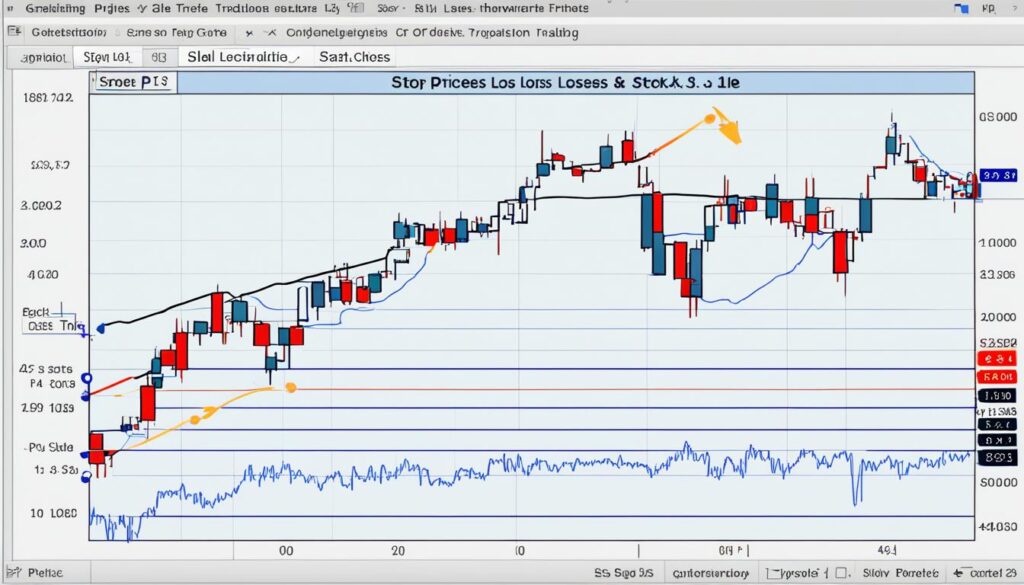
Knowing how to place stop-loss orders is key to a good trading plan. Not understanding stop losses can put traders at a big disadvantage. Usually, the profit target is set further away than the stop loss. It’s best to set the stop loss before the profit target to control risks.
How many futures contracts to hold is important, and traders should think about the stop-loss distance. The risk-to-reward ratio should match market stop and profit targets, not the other way around. Each market is different, so using the same stop loss or profit value for all can be risky.
Trailing stop-loss strategies can automate the stop-loss process. They help manage trades well. By setting a trailing stop-loss order, the stop price changes with the market price. This way, investors can lock in profits and reduce human error.
Conclusion
Stop-loss orders are a key tool for managing risk. They help investors of all levels protect their money and make the most of their investments. By setting limits on losses and securing profits, these orders can safeguard your capital and improve your investment performance over time.
Using stop-loss orders can lead to better returns and lower the chance of big losses. This makes them a smart part of any investment plan. By learning how to use stop-loss orders, investors can better handle market ups and downs. This leads to more informed and disciplined choices.
Stop-loss orders are essential for successful investing. They help traders and investors control risk and make better decisions. This can lead to better investment performance over the long run.