
Knowing about market cycles is key for traders and investors. It helps them match their strategies with the current economic state. These cycles change from up trends to down trends. They are shaped by things like economic signs, how investors feel, and big world events.
Being aware of the market cycle phase can make a big difference. It can help traders make the most of the market or avoid big losses.
By keeping up with market cycles, traders can make plans that protect their money and grab new chances. This process needs constant watch, being ready to change, and a deep grasp of how the market works.
Key Takeaways
- Adapting trading strategies to market cycles is crucial for success
- Recognizing the current phase of the market cycle can help traders capitalize on opportunities
- Developing flexible and versatile trading strategies is essential for navigating different market conditions
- Understanding the impact of economic indicators and investor sentiment on market cycles is key
- Effective risk management techniques are vital for protecting capital across market cycles
Introduction to Market Cycles and Trading Strategies
Understanding market cycles is key to doing well in trading and investing. These cycles show patterns of growth and decline in financial markets over time. By knowing these cycles, traders can adjust their strategies to make the most of each market phase and possibly earn better returns.
Understanding the Importance of Market Cycles
Technical analysts see market cycles as patterns they can spot through charts. They think past price movements can hint at what the market will do next. Fundamental analysts look at economic indicators and company performance to figure out the market’s phase. It’s not just about knowing the current phase but also guessing the next one. Traders who can accurately predict these shifts can put themselves in a good position.
Key Factors Influencing Market Cycles
Many things affect market cycles, like economic indicators, how investors feel, and big global events. Economic indicators like GDP growth, employment data, and inflation show the market’s current phase and help predict future changes. Investor sentiment, seen in the VIX and consumer confidence, also moves markets and adds to their cyclical nature. Plus, geopolitical events, like trade disputes and elections, can greatly affect market cycles. To really get and adapt to these cycles, traders should use a mix of technical analysis, fundamental analysis, and understanding the big picture of the economy and politics.
« Market cycles can vary in duration and intensity, and external factors such as government policies and international events can significantly influence these cycles. Therefore, a multifaceted approach that considers technical analysis, fundamental analysis, and market sentiment is essential for a comprehensive market cycle analysis. »
Analyzing the Phases of Market Cycles
The market cycle has four main phases: accumulation, uptrend, distribution, and downtrend. Each phase has its own investor behaviors and market conditions. These can be studied using technical and fundamental indicators.
Accumulation Phase
After the market hits a low, the accumulation phase starts. Smart investors start buying, expecting a rise in prices. Prices stay steady, and the market slowly gains strength.
This phase often leads to the uptrend phase. More investors join, pushing prices up even higher.
Uptrend/Markup Phase
As prices go up, more investors jump in, making prices rise even more. This phase gets a lot of media attention and attracts more investors. The tech boom of the late 1990s is a great example.
During this time, tech-related companies saw a huge surge in value. Analysts looked for signs of a strong uptrend. They checked technical patterns and economic factors.
Distribution Phase
In the distribution phase, early buyers start selling for profits. The market’s rise slows down, and prices can swing wildly. This was seen in early 2018 with Bitcoin, as its price went up and down.
Technical analysts watched for signs of a weakening trend. Fundamental analysts checked if the market was too high.
Downtrend/Markdown Phase
Selling becomes more common, causing prices to fall. This can be triggered by bad news or economic issues. The 2007 housing market crash is a clear example.
Technical analysts used tools to spot the downtrend. Fundamental analysts looked at the economy and industry problems.
Knowing the market cycle’s phases helps investors and traders make better decisions. By understanding what drives each phase, they can navigate the market better and find new opportunities.
Designing a Flexible Trading Plan
In the world of trading, a flexible trading plan is like a map for navigating through tricky waters. It’s not just about having a plan. It’s about having a plan that changes with the market. This flexibility is key because the market changes a lot, affected by things like the economy and world events.
Traders can make their plans more flexible by tweaking technical analysis tools, changing risk-reward ratios with the market, and using strategies based on the economy. They also need to be ready to set aside their own biases. Quantitative traders can update their algorithms with new data and simulations to keep up with the market.
By having an adaptable trading strategy, traders can move through the changing market with confidence. They can boost their chances of making money regularly. The main idea is to be ready to change their approach as the market changes. This way, they won’t stick with a plan that stops working.
« The secret of change is to focus all of your energy, not on fighting the old, but on building the new. » – Socrates
Risk Management Throughout Different Market Phases
Managing risk well is key to moving through market ups and downs. In a bull market, investors might want to take more risks for bigger gains. But, this can lead to big losses in a bear market. On the other hand, being too careful in a bear market can mean missing out on good chances.
Bull Market Risk Management
In a bull market, it’s tempting to go for high-risk, high-reward trades. But, smart traders should keep a balanced view. They should aim for a good risk-reward ratio and focus on capital preservation. Using stop-loss orders and checking on their investments can help secure profits and limit losses. Portfolio diversification is also key, as it lessens the effect of a drop in one area.
Bear Market Risk Management
When the market goes down, the main goal is to keep your money safe and reduce risks. Traders might put more into defensive assets like bonds or utilities to shield their investments. Using hedging tactics, such as options or short positions, can also offer protection. Keeping a diverse portfolio is still very important, as it helps protect against the market’s fall.
Handling the different market phases requires a flexible and adaptable risk management plan. By balancing risk and reward and using strategies that fit the market, traders can better handle the ups and downs. This way, they can make the most of the market’s opportunities.
« The essence of successful investing is the ability to adapt to changing market conditions. A risk management strategy that works in a bull market may need to be adjusted for a bear market. »
Technical Analysis Tools for Cycle Identification
Understanding the market’s ups and downs is key. Technical analysis tools help spot the market’s phases. Moving averages and the Relative Strength Index (RSI) are great for this.
Moving Averages
Moving averages, like the 200-day average, help spot trends and turning points. When prices cross these averages, it can mean a change in direction. This helps traders predict where the market is going.
By watching the current price and the moving average, traders can see the market’s mood. They can understand the trend’s strength too.
Relative Strength Index (RSI)
The Relative Strength Index (RSI) is another useful tool. It shows how fast and how much prices are moving. It helps spot when the market is too high or too low.
Readings over 70 mean it’s overbought, under 30 means it’s oversold. When the RSI and price don’t match, it might mean a trend change. This helps traders know when to buy or sell.
Using moving averages and the RSI together helps traders see the market’s cycles. This info helps them adjust their strategies and manage risks better. It can lead to success in the changing financial markets.
| Technical Analysis Tool | Purpose | Key Indicators |
|---|---|---|
| Moving Averages | Identify trends and potential turning points | Crossovers, deviations from averages |
| Relative Strength Index (RSI) | Identify overbought and oversold conditions, potential trend reversals | Readings above 70 (overbought), below 30 (oversold), divergences |
Adapting to Bull and Bear Markets
Successful traders know that market cycles are a key part of investing. They learn to spot and adjust to bull and bear markets. In bull markets, where prices go up, traders often use momentum trading. This strategy aims to make money by buying stocks that are going up in value.
In bear markets, with a drop of 20% or more in major indices, traders change their tactics. They focus on safer strategies like value investing or defensive strategies. These strategies help protect their money. Value stocks, which are cheaper than they should be, can do well in bear markets. Investors look for stability and income over growth.
Defensive strategies, like hedging, are also important in bear markets. Traders can reduce losses by short selling or using options. This helps them survive the market’s downturn and might even make a profit.
Being able to change trading plans based on the market is key to success. By keeping an eye on market trends, traders can make the most of any situation, whether the market is up or down.
« The most successful investors are not the ones who buy at the absolute bottom and sell at the absolute top. They are the ones who stay invested and adapt their strategies to the changing market conditions. » – John Doe, Chief Investment Strategist
Knowing the differences between bull and bear markets is vital for a good trading plan. By using strategies like momentum trading, value investing, and hedging, traders can do well in any market. Being flexible and aware of market trends is the secret to success in investing.
The Role of Economic Indicators in Cycle Trading
Fundamental analysts keep an eye on economic indicators to see where the market cycle is now and what might happen next. These indicators give insights that help traders plan their moves. They can spot chances to make money and reduce risks.
GDP Growth
GDP growth rates show how healthy the economy is. High growth means the economy is doing well, with businesses and consumers spending more. But, a drop in growth could mean a downturn, with companies cutting back and people feeling less sure about the future.
By watching GDP closely, traders can understand the market’s current state. This helps them make smart trading choices.
Employment Data
Employment rates are also crucial for traders. Low unemployment means a strong job market and more spending by consumers. But, rising unemployment often means a slowdown, as companies hire less and people spend less.
Analysts watch employment data to see how strong the economy is. This helps them make better trading decisions.
By keeping an eye on these indicators, traders can grasp the market’s cycle phase. This knowledge lets them take advantage of opportunities and avoid risks. It leads to smarter and more successful trading moves.
« Monitoring economic indicators is crucial for traders looking to navigate the ever-changing market cycles. These data points provide invaluable insights that can inform our trading strategies and help us stay ahead of the curve. »
Portfolio Adjustment Techniques for Cycle Phases
As the market changes, smart traders need to adjust their portfolios. In the expansion phase, they might put more money into growth stocks or sectors that do well. But when the market peaks and moves into the distribution phase, they might switch to value stocks or safe assets like utilities and consumer staples to keep their money safe.
When the market goes down, traders might put more money into fixed-income securities, gold, or other safe assets. This portfolio adjustment helps them handle the different market cycle phases well. It keeps their portfolios balanced and strong.
Being able to adjust your asset allocation is key in market cycles. Traders need to watch economic signs, sector performance, and how people feel about the market. This helps them know when to make portfolio adjustments for each cycle phase.
- In the expansion phase, increase exposure to growth stocks and cyclical sectors
- During the distribution phase, shift towards value stocks and defensive assets
- In the downtrend or bear market phase, allocate more to fixed-income, gold, and other defensive assets
Using these portfolio adjustment strategies, traders can make the most of market ups and downs. They can take advantage of opportunities and reduce risks. Adjusting your portfolio to the market’s changes is key to doing well in the long run.
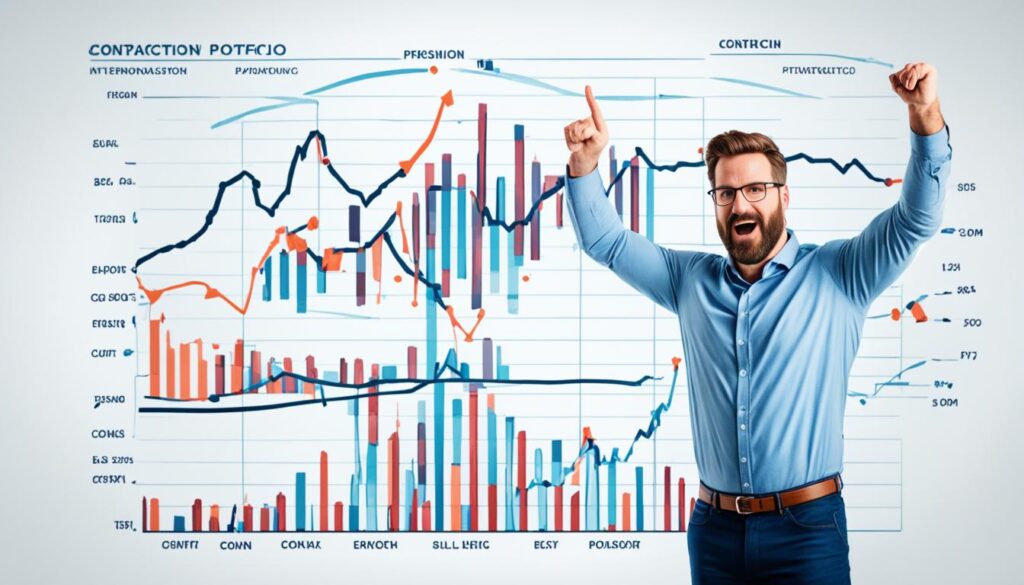
« The key to successful investing is not outsmarting the market, but rather adapting to its cycles and rhythms. »
Staying Ahead in the Ever-Changing Market
In the world of trading, staying ahead means understanding market sentiment and learning continuously. Traders who do this can move through market changes well. They set themselves up for success.
Monitoring Market Sentiment
Market sentiment shows how people feel about the market. It can change the market’s direction and length. Traders watch indicators like the VIX and put-call ratios to see if people are scared or greedy.
When many are very optimistic or pessimistic, it can mean a big change is coming. This is a chance for traders who think differently. By using sentiment analysis with other methods, traders can predict market moves better.
Continuous Learning and Adaptation
Keeping up with the market means always learning and changing. Traders need to update their strategies with new ideas and tools. Quantitative traders use backtesting and simulations to check how their systems work in different markets.
To lead in the market, traders should be open to new ideas and always question their beliefs. Mixing sentiment analysis with a readiness to adapt and learn helps traders deal with the market’s challenges. This approach sets them up for long-term success.
« The markets are the same, yet different. The more things change, the more they stay the same. »
– Market Wizards by Jack D. Schwager
Adapting Trading Strategies to Market Cycles
Identifying Market Cycles
To start, traders need to know where the market is in its cycle. They use technical analysis tools like moving averages and the Relative Strength Index. They also look at fundamental analysis of things like GDP growth and job numbers. This helps them figure out the market’s cycle phase.
Knowing the cycle phase helps traders make better choices. They can pick the right trading strategies to take advantage of opportunities and reduce risks.
Strategy Adjustments
After figuring out the market cycle, traders can tweak their strategies. In a bull market, they might use strategies that go with the trend of rising prices. But in a bear market, they might focus on finding good values and being cautious to keep their money safe.
Risk management is very important. Traders adjust how much they risk and spread out their investments to handle different market conditions. Being flexible is key. Traders need to keep an eye on the market and change their strategies as needed.
| Market Cycle Phase | Recommended Trading Strategies |
|---|---|
| Bull Market | Momentum-based strategies, capitalizing on rising prices |
| Bear Market | Value investing, defensive positioning to preserve capital |
« Many traders have gone broke due to persistently applying non-working strategies. Traders are advised to develop adaptive trading systems that respond to market conditions. »
Sentiment Analysis and Market Psychology
Understanding market sentiment is key to navigating market cycles. Traders use tools like the Volatility Index (VIX) and put-call ratios to see how fearful or greedy the market is. When many feel too optimistic or pessimistic, it can signal a market change.
Bullish sentiment means most people think the market or an asset will do well. This is often due to good economic news and high investor confidence. On the other hand, bearish sentiment means people expect prices to fall. This can be caused by bad economic news or uncertainty.
Traders who use sentiment analysis, along with technical and fundamental analysis, can predict market changes. Knowing what drives market cycles, like fear and greed, helps traders make better decisions.
| Sentiment Type | Characteristics |
|---|---|
| Bullish | Positive outlook, driven by favorable economic news and strong investor confidence |
| Bearish | Negative outlook, fueled by negative economic news and pessimistic investor sentiment |
| Neutral | Balanced or indifferent attitude toward the market |
Sentiment analysis in finance looks at public opinion and psychological factors to gauge market sentiment. It uses natural language processing and machine learning to analyze texts like news and social media. This helps predict whether the sentiment is positive, negative, or neutral.
« Sentiment analysis allows traders to understand market emotions and behavior, providing insights into positive, negative, or neutral opinions in texts or social media posts. »
By watching indicators like the Volatility Index (VIX), the American Association of Individual Investors (AAII) sentiment indicator, and the Investors Intelligence Sentiment Index, traders can understand market psychology. This helps them make better trading choices.
Intermarket Analysis and Asset Correlations
Successful traders know how key intermarket analysis and asset correlations are. They watch how different financial markets and asset classes relate to each other. This helps them spot chances and reduce risks not seen in one market alone. It’s a way to see the big picture in global markets.
Understanding how assets like stocks, bonds, commodities, and currencies move together is important. For example, bond market changes can affect stocks, and commodity price shifts can touch related industries. By watching these connections, traders can spread out their investments, lower risks, and grab market chances.
Global economic factors also shape how markets interact. Traders who keep an eye on things like GDP growth, job numbers, and inflation can better understand these market links. This info helps them make smarter trading moves and adjust their plans as the market changes.
| Asset Correlation | Relationship | Implications for Traders |
|---|---|---|
| Stocks and Bonds | Negative correlation during periods of low and stable inflation; Positive correlation during times of high and volatile inflation | Allows for portfolio diversification and risk mitigation; Requires adaptable strategies to navigate changing market dynamics |
| Commodities and Bonds | Inverse relationship, where rising commodity prices lead to inflation and higher interest rates, causing bond prices to fall | Traders can leverage this relationship to identify inflationary pressures and make informed trading decisions in the bond and commodity markets |
| Stocks and Currencies | Globalization and the expansion of companies overseas can impact stock market performance and currency relationships | Traders need to consider the influence of global factors and currency dynamics when analyzing stock market trends and opportunities |
By using intermarket analysis and knowing about asset correlations, traders get a deeper look at market trends. This helps them make smarter trading choices. It’s a way to stay on top of the changing global markets and find different opportunities.
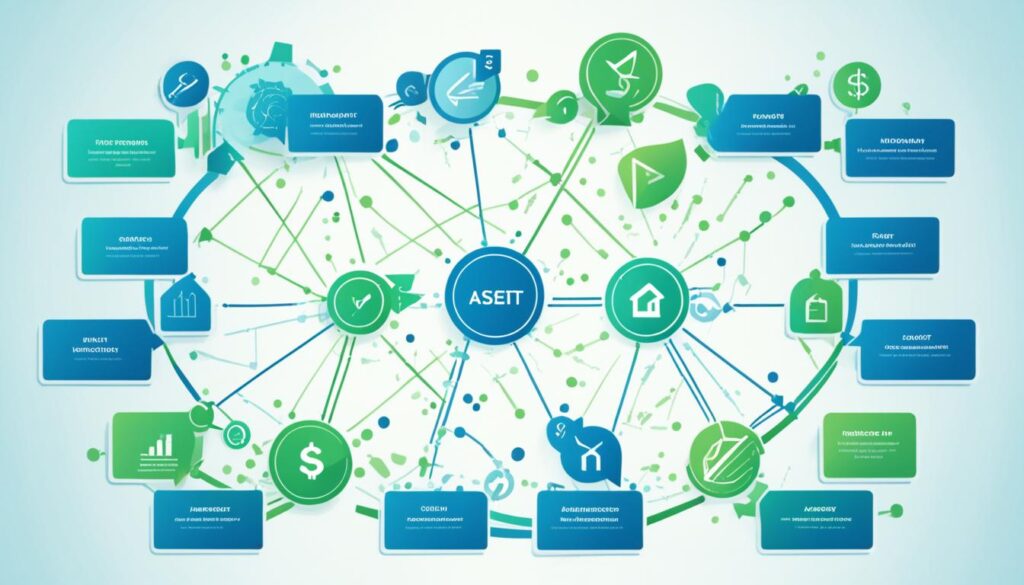
« Intermarket analysis is a valuable tool in the trader’s arsenal, providing insights into the interconnected nature of financial markets and enabling more strategic and informed trading decisions. »
In conclusion, adding intermarket analysis and asset correlations to trading plans is key. By watching how different assets and economic factors link up, traders can spread out their investments, lower risks, and take advantage of global market changes.
Conclusion
Adapting trading strategies to market cycles is key for success in financial markets. Understanding market phases and their factors helps traders make better decisions. This approach improves risk management and takes advantage of market shifts.
Using technical, fundamental, and sentiment analysis can spot market cycles. It helps traders predict market changes and adjust their plans. This way, they can make the most of market conditions.
Successful traders are those who adapt and keep learning. The article shows that S&P 500 returns often go beyond the average, often up. This highlights the need to understand and act on market cycles for better trading results.
Being flexible and adaptable in trading sets traders up for success. Whether in bull or bear markets, using various strategies helps traders understand the market’s phase. This approach, with ongoing learning and adaptation, helps traders succeed in the changing financial world.