
Looking into aircraft accidents is key to making flying safer and stopping future ones. Agencies like the National Transportation Safety Board (NTSB) in the U.S. lead this effort. They use a detailed method to find out why accidents happen and what made them happen.
The NTSB starts with checking if an accident needs looking into. Then, they collect facts and evidence at the accident site. They also analyze flight data and look at the wreckage. After that, they figure out the main causes and issue a report with safety tips.
This careful process helps us understand what went wrong. It helps us make flying safer and stop similar accidents later.
Key Takeaways
- The NTSB looks into about 1,200 aviation accidents and incidents every year. They also check around 60 accidents in other types of transport.
- The goal is to find out what caused accidents, not to blame anyone.
- ICAO Annex 13 sets global rules for checking aircraft accidents and incidents.
- The team in charge must be independent and have full control to make sure the review is fair and complete.
- The final report and safety tips from the NTSB are key to making flying safer.
Introduction to Aircraft Accident Investigations
The main goal of aircraft accident investigations is to prevent future accidents, not to blame anyone. They follow international standards set by ICAO Annex 13. This guide helps countries know their roles and how to investigate.
Objectives and Purpose of Accident Investigations
Aircraft accident investigations have key goals:
- Find out why accidents happen to stop them from happening again
- Look into factors that might have caused the accident
- Check how well safety measures are working
- Make suggestions to make flying safer and operations better
International Standards and Regulations (ICAO Annex 13)
The ICAO Annex 13 sets global rules for investigating aircraft accidents. It covers who does what, how to investigate, and how to keep investigations fair. This helps make flying safer for everyone.
| Key Features of ICAO Annex 13 | Description |
|---|---|
| Investigative Jurisdiction | Defines the rights and duties of countries involved in an investigation |
| Investigation Procedures | Details how to do thorough and fair accident investigations |
| Reporting Requirements | Shows what the final report on an accident should include |
Following these global standards helps countries do their accident investigations well. This makes flying safer for everyone around the world.
« The sole objective of the investigation of an accident or incident shall be the prevention of accidents and incidents. It is not the purpose of this activity to apportion blame or liability. »
– ICAO Annex 13
Initiating the Investigation Process
The aircraft accident investigation starts with the accident notification process. When a safety issue is reported, authorities quickly decide if they should investigate. This decision to investigate is key to starting the process.
The jurisdictional authority for the investigation usually comes from the State where the accident happened. But, other countries can join in if the plane was registered there, made there, or if their citizens were involved. This international cooperation is key for a complete and thorough check.
| Participating Countries | Investigative Responsibilities |
|---|---|
| State of Occurrence | Leads the overall investigation |
| State of Registry | Appoints accredited representatives and advisers |
| State of Operator | Provides expertise and information related to the operator |
| State of Design and Manufacture | Contributes technical information about the aircraft design and production |
| States with Special Interest | Can appoint experts to visit the accident site and access investigation data |
The investigation follows international rules and standards, like ICAO Annex 13. These rules outline who does what in the investigation. By working together, countries make sure the investigation is thorough and effective. This helps make flying safer for everyone.
On-Site Fact Gathering and Evidence Collection
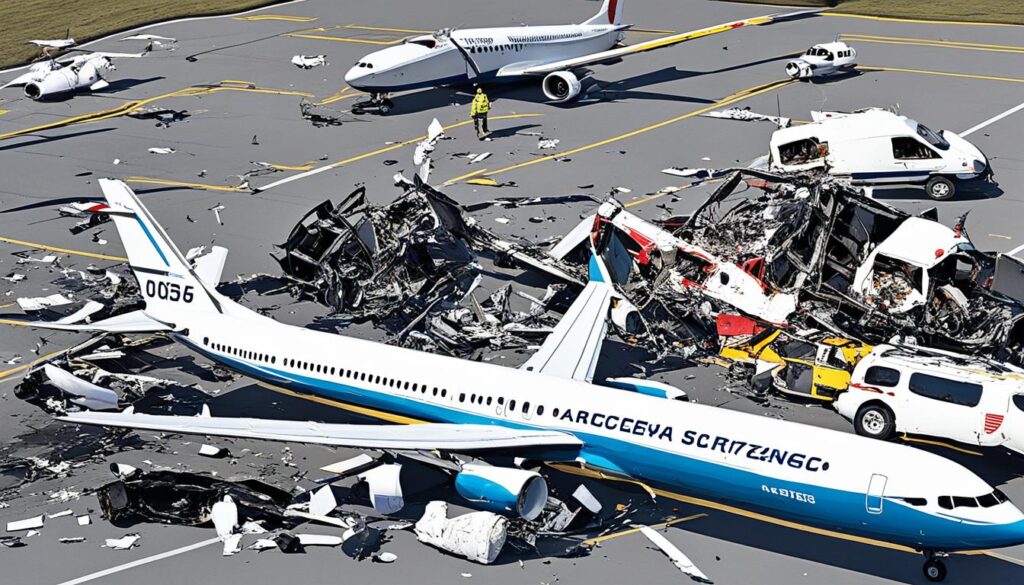
When an aircraft crashes, experts quickly lock down the accident site. They do this to keep everyone safe and save important clues. They carefully collect physical evidence and talk to witnesses to figure out what happened.
Securing the Accident Site
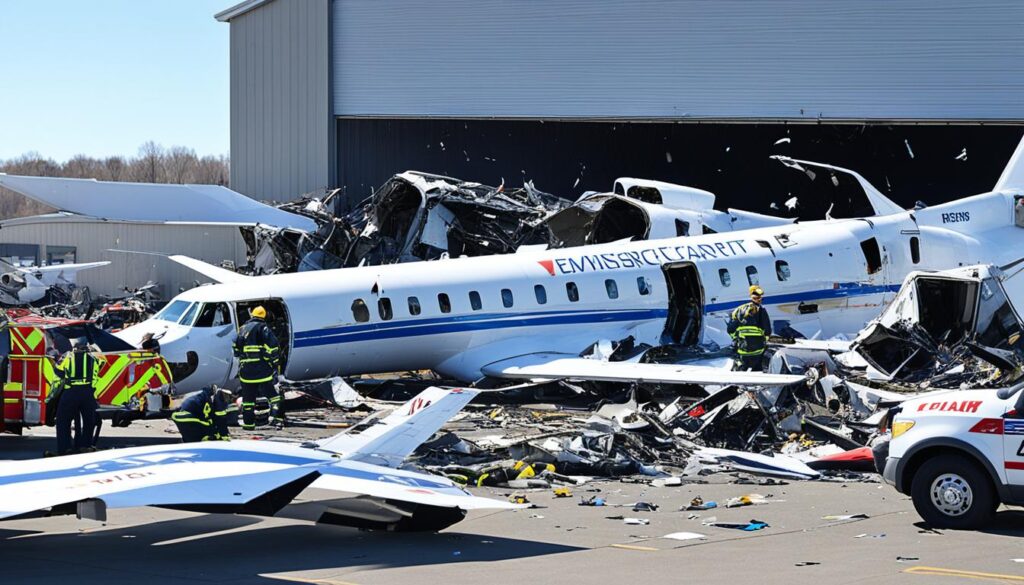
First, they make sure the crash site is safe. They work with groups like Search and Rescue, Coastguard, Fire and Emergency, and police. Together, they set up a safe area and control who goes in. This keeps the physical evidence safe and helps the investigation.
Gathering Physical Evidence and Witness Accounts
After making the site safe, the team starts collecting all the physical evidence they can find. This includes parts of the plane, records, and more. They also talk to witnesses to get their stories. These stories can be very helpful in understanding what happened.
Collecting evidence is a big job. It involves taking pictures of the scene, finding wreckage, getting electronic data, and looking at maintenance and flight records. Investigators use special powers to make sure they can get and protect evidence. They can even decide who to talk to.
The team keeps the people in charge updated on their findings and what they think happened. They share important info and make quick decisions to move the investigation along.
« The investigative team typically comprises at least two members traveling to the accident scene, with additional support personnel such as a vehicle recorder and data specialist, families and media liaison officer, and logistics support depending on circumstances and scale of the incident. »
Analyzing Flight Data and Wreckage
Looking into plane crashes means checking the flight data recorder (FDR) and cockpit voice recorder (CVR), also called « black boxes. » These tools give key info on the plane’s actions and the crew’s actions before the crash. They help investigators understand what happened by giving them details on the plane’s state and the crew’s actions.
Retrieving and Analyzing Flight Recorders
Getting the FDR and CVR back is a big deal for those who investigate crashes. These devices hold lots of data, like how the plane was doing and what the pilots said. By looking at this info, investigators can figure out what the plane and pilots did before the crash.
Reconstructing the Accident Sequence
Looking at the wreckage helps investigators put the crash together. They collect things like plane parts and engines to see what happened when. They aim to find out if technical issues, design problems, or human mistakes caused the crash. This helps make flying safer by learning from these incidents.
| Accident Investigation Statistic | Value |
|---|---|
| General Aviation Accidents in the U.S. (2015) | 1,210 |
| General Aviation Fatalities (2015) | 238 |
| General Aviation Flight Hours (2015) | 24,142,000 |
| General Aviation Fatality Rate (2015) | 1.68 per 100,000 flight hours |
« The purpose of the federally mandated aircraft accident investigation is focused on prevention to enhance aviation safety. »
aircraft accident investigation process
The process to investigate an aircraft accident looks into both technical and human factors. Experienced investigators check the aircraft’s design, maintenance, and if it was ready to fly. They also look at how the crew made decisions and their training.
Investigating Technical Factors
The team checks the aircraft’s technical parts, like its design and maintenance history. They look at flight data recorders to see what went wrong. This helps find out if there were any problems with the plane or its parts.
Analyzing Human Factors and Operational Procedures
The team also looks at the people involved, like the crew’s training and how they made decisions. They check how the crew acted and communicated. This helps find out if human mistakes were part of the accident.
This way, the investigation gets a full picture of what happened. It helps find out why the accident happened. This info is used to make safety changes to prevent future accidents.
« The investigation of an aircraft accident is a complex and meticulous process that leaves no stone unturned in the pursuit of understanding what went wrong and how to prevent it from happening again. »
Determining Probable Cause
At the center of aircraft accident investigations is finding out why the accident happened. Investigators look at all the evidence to understand what caused it. They use this to make safety tips to stop such accidents later.
Integrating Analysis from Various Aspects
Investigators check the technical, human, and operational parts of the accident. They look at flight data, wreckage, and what witnesses saw. This helps them figure out what happened and why.
Identifying Contributing Factors
They also find out what else might have made the accident worse. This could be design problems, maintenance issues, or human mistakes. Knowing these helps them make better safety plans.
The probable cause determination and finding contributing factors are key in accident investigations. This integrated analysis helps make better accident prevention plans. It makes flying safer for everyone in the future.
Final Report and Safety Recommendations
The end of an aircraft accident investigation is when a final investigation report is made. This report tells us what happened, finds the probable cause, and gives safety recommendations. These are to make flying safer and stop similar accidents later.
Drafting and Adopting the Final Report
The team, led by the investigator-in-charge, puts together all the facts and findings into a report. This report is a detailed look at the accident. It has a timeline, technical info, and talks about human factors. After checking it well, the aviation authorities accept it.
Issuing Safety Recommendations
- The report has safety recommendations based on what the investigation found.
- These are for regulatory agencies, plane makers, and those who run planes. They tell them how to prevent accidents and follow the rules.
- These can cover many things like design changes, how planes are used, training, and checking up on things.
- It’s important to follow these recommendations quickly. This helps fix safety issues and lowers the chance of more accidents.
By sharing the final report and safety recommendations, the authorities want to make real changes. They aim to make flying safer for everyone on the plane.
Post-Investigation Actions
The investigation into an aircraft accident doesn’t end with the report. It starts a key phase – making sure safety steps are followed and pushing for better safety. This ongoing work is key to making flying safer.
Monitoring Implementation of Recommendations
The team works with groups like the FAA and NTSB to make sure safety tips are followed. They check on the steps being taken, see if they work, and help others during this process.
Advocating for Improved Safety Measures
- The team pushes for safety tips to be used, talking to leaders and the public on why they matter.
- They go to meetings and talk to the media to share what was learned from the accident. They want to make flying safer.
- By always pushing for safety, the team helps make big changes that make flying safer for everyone.
Working hard after an accident is key to making flying safer. It makes sure the lessons from the accident help make flying safer. This keeps passengers and crew safe.
| Monitoring Implementation of Recommendations | Advocating for Improved Safety Measures |
|---|---|
|
|
The team’s hard work and push for safety make flying safer over time. They help make big changes that make flying safer for everyone.
Conclusion
The process of investigating aircraft accidents is key to making flying safer. Experts work hard to find out why accidents happen. They use rules from the ICAO and get help from many groups to keep improving air safety.
They collect lots of data, analyze it carefully, and make safety suggestions. By finding problems and offering ways to fix them, they help the aviation industry get better. This way, flying becomes safer for everyone.
The NTSB and others like them are very important as flying gets more complex. They keep high standards of investigation. This helps make flying safe for passengers, crew, and planes. It helps keep air travel safe for the future.
FAQ
What are the key objectives of aircraft accident investigations?
How does the NTSB investigation process begin?
What happens at the accident site during the investigation?
How do investigators analyze the flight data and wreckage?
What factors do investigators consider when determining the probable cause of an accident?
How does the final investigation report and safety recommendations get developed?
How are the safety recommendations implemented and monitored?
Source Links
- The Investigative Process
- Introduction to Accident Investigation | SKYbrary Aviation Safety
- Aircraft Accident Investigation Process & Procedures – 3 Days • SASSofia
- Free Course: Aircraft Accident Investigation from Embry-Riddle Aeronautical University | Class Central
- Safety Occurrence Investigation | SKYbrary Aviation Safety
- ICAO: Frequently Asked Questions
- Accident Investigations
- Evidence gathering | TAIC
- Here’s how airplane crash investigations work, according to an aviation safety expert
- EDT Engineers
- Aircraft Accident Investigation – USC Viterbi | Aviation Safety & Security
- Aircraft Accident Investigation Bureau
- NTSB Accident Investigations: What You Need To Know
- Inside the NTSB’s General Aviation Investigative Process
- NTSB Report Analysis
- Investigation – Final Report | SKYbrary Aviation Safety
- Aviation Investigation Classification
- Investigative Process | AAIA
- FAA Order 8020.11D – Aircraft Accident and Incident Notification, Investigation, and Reporting
- DoDI 6055.07, "Mishap Notification, Investigation, Reporting, and Record Keeping," June 6, 2011, Incorporating Change 2 June 11, 2019
- Accident investigation – to the power of 13
- Unraveling the Mystery: Aircraft Accident Investigation by Samuel Masereka Amirale