
Owning a guinea pig is a joy, but it’s important to know how to care for them well. This guide covers everything you need to know about guinea pig care. It helps you make sure your cavies are happy, healthy, and loved. You’ll learn about their special diet, behavior, and how to keep them safe and well.
If you’re new or experienced with guinea pigs, this info is for you. It’s all about giving your furry friends the best life and enjoying their company for many years.
Key Takeaways
- Hay is the cornerstone of a guinea pig’s diet, providing essential nutrients and supporting digestive and dental health.
- Fortified pellets and fresh leafy greens are crucial for supplying additional vitamins and minerals.
- Guinea pigs are social creatures that thrive on companionship and enrichment activities.
- Proper habitat size, temperature, and hygiene are critical for maintaining guinea pig health and well-being.
- Regular veterinary check-ups and grooming are important to prevent and address any health issues.
The Importance of a Proper Guinea Pig Diet
Feeding your guinea pig right is key to their health and happiness. They should eat a lot of high-quality guinea pig hay. This hay is full of fiber, which keeps their digestive system healthy and helps their teeth grow.
Hay: The Cornerstone of a Healthy Diet
Guinea pigs need lots of fresh guinea pig hay every day. It should be about 80% of what they eat. They should also get to eat fresh grass every day to graze.
Fortified Pellets for Essential Nutrients
Along with hay, give them guinea pig pellets every day. These pellets have the vitamins and minerals they need, like vitamin C. They can’t make this vitamin on their own.
A good guinea pig diet has about 1/8 cup of these pellets a day. Add in lots of hay and fresh veggies. Give them about 1/2 to one cup of veggies each day, with lots of leafy greens.
When adding new foods, do it slowly to prevent diarrhea. If your guinea pig gets stones, avoid foods like spinach and strawberries.
Good guinea pig nutrition is vital for their health. Feed them lots of timothy or orchard grass hay, pellets, and fresh veggies. This will help them live a happy life.
Fresh Greens and Vitamin C for Guinea Pigs
A healthy guinea pig diet is all about fresh leafy greens. These greens give them the fiber, vitamins, and minerals they need. Guinea pigs need a steady supply of vitamin since they can’t make it on their own. Romaine lettuce, kale, and cilantro are great for this.
Guinea pigs need 10 to 30 mg/kg of vitamin C every day to stay healthy. Sometimes, they might need up to 50 mg/kg/day if they’re not getting enough. It’s best to feed them premium pellets like Oxbow, which have vitamin C to last.
Here are some top vitamin C sources for guinea pigs:
- Guava – 1 cup has 377 mg of vitamin C, giving 25 mg/day in just 1.1 tablespoons.
- Red peppers – 1 cup chopped has 190 mg of vitamin C, needing 2.1 tablespoons for 25 mg/day.
- Kale – 1 cup chopped has 80.4 mg of vitamin C, requiring 5 tablespoons (1/3 cup) for 25 mg/day.
- Broccoli – 1 cup chopped has 81.2 mg of vitamin C, needing 5 tablespoons (1/3 cup) for 25 mg/day.
A good guinea pig diet is about 80% hay, pellets, and fresh veggies. Try to give them 3 to 5 different veggies every day. If your guinea pig seems low on vitamin C or has other diet needs, talk to a vet.
Understanding Guinea Pig Behaviors
Guinea pigs are lively, curious, and love to make sounds. Knowing their behaviors helps us understand their happiness and connect better with them.
Activity Patterns and Vocalizations
Guinea pigs are most awake at dawn and dusk, but they sleep a lot during the day. They talk to us in different ways, like « wheeking » when they’re excited or hungry. They also jump high, a fun move called « popcorning, » often when they’re young.
Signs of Happiness and Socialization
Guinea pigs like being with others of their kind. They show they’re happy by cuddling or grooming each other. They might even lick their owners as a way to say hello or ask for attention.
Watching these behaviors tells us how our guinea pigs feel. It helps us make sure they’re happy and cared for. By knowing what they like, we can make their home better for them.
| Behavior | Description |
|---|---|
| Wheeking | A high-pitched call often used by guinea pigs when excited or begging for treats. |
| Moaning | A sound that may indicate complaints or discomfort in guinea pigs. |
| Loud Squeaking | Can signify pain or distress in guinea pigs. |
| Teeth Chattering | A sign of annoyance or grumpiness among guinea pigs. |
| Rumblestrutting | A behavior related to dominance or amorous intentions in guinea pigs. |
| Purring | Indicates relaxation and enjoyment of attention in guinea pigs. |
« Understanding guinea pig behaviors is key to providing them with the best possible care and building a strong bond with these delightful companions. »
Enrichment for Natural Guinea Pig Instincts
It’s important to give guinea pigs enrichment that fits their natural behaviors. These small pets like to chew, hide, and explore. By meeting these needs, you make a happy and interesting home for your guinea pig.
Chewing and Dental Health
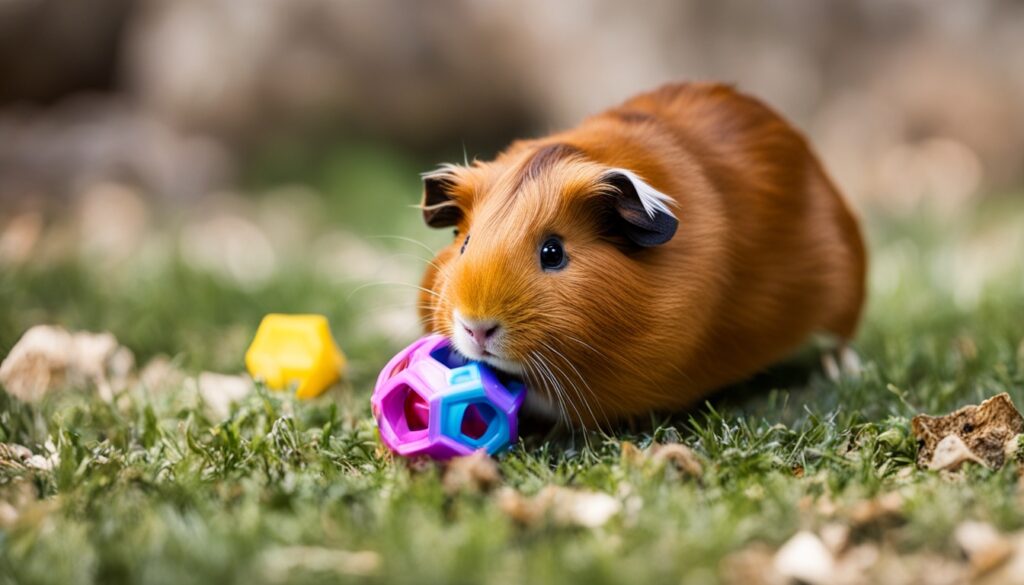
Chewing is key for guinea pigs because their teeth keep growing and need to wear down. Safe, tough chew toys like wooden blocks or hay-based items help them chew naturally. This keeps their teeth healthy.
Hiding and Exploring Behaviors
Guinea pigs need to hide and explore because they’re prey animals. Give them places to hide, like tunnels and cardboard boxes, for safety. A big space with different things to check out keeps them curious and happy.
« The most crucial environmental enrichment for guinea pigs is social grouping. »
Understanding your guinea pig’s instincts helps make a great home for them. Things like chew toys, hiding spots, and things to explore make them happy and healthy. A well-enriched home is key to a happy guinea pig.
Creating a Comfortable Guinea Pig Habitat
It’s important to make sure your guinea pig has a comfy and big living space. They need at least 4 feet by 2 feet of space to move around. The more space they have, the happier they will be.
Choosing the Right Habitat Size
Size is key when it comes to where your guinea pigs live. The Kaytee Open Living™ Habitat gives them 8 or 12.5 square feet to explore. This lets them move around and stay healthy both in body and mind.
Adding special features to their home is also a good idea. Use water bottles all over the enclosure so they can get to water easily. The Kaytee® Hay & Food Bin Feeder makes a great spot for meals.
For extra comfort, use bedding that fights odors, like the Kaytee Clean & Cozy Extreme Odor Control Bedding. This keeps their home fresh for up to 14 days. It makes keeping their space clean easier.
Adding things like Kaytee Apple Orchard Sticks is also a good idea. These let your guinea pigs chew and play, which is good for them. A comfy and fun home means your guinea pigs will live a happy life.
Essential Guinea Pig Supplies
Having the right supplies for your guinea pig’s home is key to their happiness and health. From top-notch hay to chew toys, the list of must-haves might look long. But, it’s a big step in caring for your pet over time.
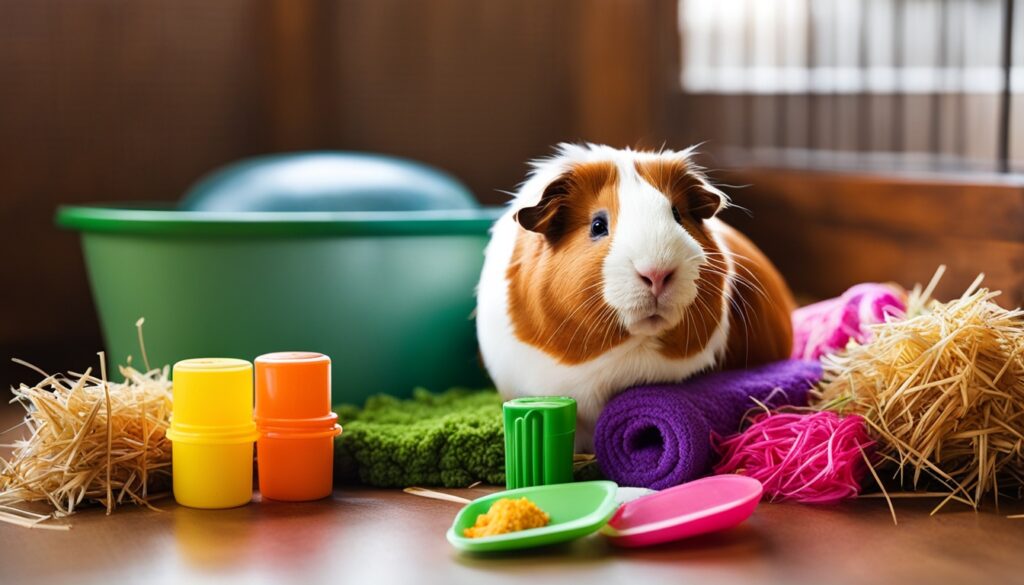
Here are the top guinea pig accessories and guinea pig care essentials to make their space comfy and fun:
- A spacious and well-ventilated enclosure, such as a large cage or playpen
- Absorbent and comfortable bedding, like paper-based or fleece liners
- Cozy hideouts and tunnels for your guinea pig to burrow and explore
- Food and water bowls or bottles to provide a steady supply of timothy hay, fortified pellets, and fresh greens
- Chew toys to maintain healthy teeth and satisfy their natural urge to gnaw
- Grooming supplies, including a soft brush and nail clippers
- Cleaning essentials, such as a litter box, scoop, and disinfectant
By getting these guinea pig supplies, you’re setting up a caring space for your pet. It’s all about giving them what they need for their body and mind. A happy guinea pig comes from the right care and supplies.
« Creating a comfortable and stimulating habitat for your guinea pig is one of the most important aspects of their care. Investing in the right supplies can make all the difference in their overall happiness and health. »
Don’t forget to add toys, tunnels, and other fun things to your guinea pig’s space. These items encourage them to burrow, explore, and be social. With the right guinea pig supplies and some creativity, your furry friend will love their new home.
Maintaining Guinea Pig Health
Keeping your guinea pig healthy is very important. It’s key to watch their health closely and spot any issues early. Check their eyes, ears, teeth, feet, and coat often for any signs of problems.
Monitoring for Health Issues
Knowing about common guinea pig health issues is crucial. Getting quick veterinary care for problems is important. It helps stop or fix health issues early.
Regular visits to a guinea pig veterinarian are a good idea. They can check your pet’s health and catch illnesses early.
Grooming and Hygiene Practices
Good grooming and hygiene is key for guinea pig care. You should trim their nails, brush their coat, and keep their area clean. This keeps them healthy and happy.
Focus on your guinea pig’s health and follow good grooming and hygiene habits. This way, your pet can live a long, healthy life.
Guinea Pig Companionship
Guinea pigs love to be with friends of their own kind. Keeping them with a buddy can stop them from getting lonely and bored. It’s important to introduce new guinea pigs carefully to help them get along.
Great friends for guinea pigs are a neutered male and one or more females, or two females. Sometimes, neutered brothers can also be good friends if they grew up together. Female guinea pigs are usually not neutered because it’s a tricky surgery. On the other hand, most male guinea pigs are neutered unless they’re for breeding.
Guinea pigs that grew up together usually get along well. But, if you’re introducing adult males for the first time, they might fight. It’s important to make sure they have places to hide from each other to prevent stress and fights.
Guinea pigs that are handled a lot from a young age see humans as friends. But, even a solitary guinea pig needs daily attention to feel loved. Cats, dogs, and rabbits might not be the best friends for guinea pigs because they have different needs and might bully or not understand each other.
Having another guinea pig around makes them very happy. They learn from each other about food and how to use things like water bottles. This helps them eat better and use things correctly.
Encouraging guinea pigs to be social makes them happier and more active. They can play and exercise together, sharing their space. Not every guinea pig finds a best friend, but most like having another pig close by. This shows how important it is for their happiness.
In Sweden, the law says guinea pigs must be sold in pairs or groups. This shows how important it is to meet their social needs. There are resources and articles to help you introduce guinea pigs to each other right, highlighting the importance of their social life.
Training and Bonding with Your Guinea Pig
Building a strong bond with your guinea pig is key to their happiness and well-being. Gentle handling, training, and positive reinforcement help a lot. Getting your guinea pig used to health checks, grooming, and routine care makes these activities less scary.
Teaching them simple commands or tricks also strengthens your bond. The secret to successful training is patience and being consistent. Begin by spending time with your pet, giving them treats by hand, and talking softly to them.
Over time, you can teach them commands like « come » or « stand up. » Reward them with their favorite snacks when they do it right. This way, you’ll grow closer.
Handling your guinea pig often helps build trust and comfort. Always approach them from the side, away from their eyes, to not scare them. Remember, they shouldn’t be held more than 15 minutes because they need to pee often.
Creating a safe space for your guinea pig to play and explore helps bonding too. Think about getting a 3-sided C&C grid enclosure for them. This lets them chew and hide naturally.
Taming a guinea pig takes time, from weeks to months, depending on the guinea pig. Handling baby guinea pigs early helps make a stronger bond. With daily effort, like spending time, talking softly, and giving treats, you’ll build a strong connection with your pet.
« Guinea pigs are social creatures, and building a strong bond with your pet can greatly improve their quality of life. »
Conclusion
Caring for your guinea pigs well is key to their long, happy life. Make sure they eat 80% hay, 10% pellets, 5% veggies, and 5% fruit. This diet gives them the nutrients they need to stay healthy.
Know their behavior, like how active they are and what sounds they make. This helps you make a home that feels right for them.
Give your guinea pigs a big cage, at least 24″ x 36″ x 24″, and keep it clean. Clean their living area and brush them often. Seeing a vet regularly can stop or fix health problems early.
Using the guinea pig care, guinea pig tips, and guinea pig resources from this guide will help you take great care of your pets. Being committed and ready for the costs of caring for guinea pigs means they’ll live a happy, healthy life with you.