
Keeping a healthy aquarium takes a lot of work and careful attention. You need to watch the water and make sure all equipment works well. This guide will show you how to keep your fish happy and your tank in top shape.
Regular upkeep is vital for a stable, healthy aquarium. If filters get clogged or algae grows too much, your fish could get sick. By doing things like changing the water, cleaning gear, and testing the water, you help your fish live well.
Key Takeaways
- Regular aquarium maintenance is essential for a healthy ecosystem
- Proper filter cleaning and replacement is crucial to maintain water quality
- Performing weekly water changes and monthly water testing helps prevent issues
- Thorough cleaning of the aquarium and equipment prevents algae growth
- Introducing new fish requires a quarantine period to ensure disease prevention
Understanding the Importance of Aquarium Maintenance
Keeping your aquarium healthy is key for your fish’s well-being. Aquariums are different from natural waters because they need regular care to stay clean. If you don’t take care of your aquarium, harmful waste and algae can grow. This can make your fish sick.
Maintaining Water Quality and Equipment
It’s important to keep the water’s pH, alkalinity, and hardness right for your fish. Testing the water often helps spot problems early. Also, make sure your filter is working well and change its media when needed to keep the water clean.
Preventing Algae Growth and Disease
Stopping algae and diseases is a big part of aquarium care. Good lighting, managing nutrients, and cleaning right can help fight algae. Always check for disease signs and isolate new fish to keep your tank healthy.
By knowing how important aquarium maintenance is, you can make a great home for your fish. Putting effort into keeping the water clean, the equipment working, and preventing problems keeps your aquarium full of life.
Cycling and Establishing a Healthy Aquarium
Aquarium cycling is key to a thriving, healthy fish environment. It starts by letting the tank sit empty for a day. This step seeds the water with beneficial bacteria using a cycling aid. These bacteria start the nitrogen cycle, turning harmful ammonia into safer nitrites and nitrates.
After the nitrogen cycle starts, you can slowly add hardy fish. This lets the bacteria grow and stabilize before more fish join. Skipping this step can be dangerous for your fish.
Experts suggest adding just 1 small fish for every 10 gallons of water at first. This prevents too much ammonia and nitrites. Test the water daily or every two days with ammonia and multi-test strips during cycling.
Adding beneficial bacteria from another tank or live nitrifying bacteria can speed up the aquarium cycling process. This can cut the time it takes from weeks to just a few days. The cycle is done when ammonia and nitrite levels are 0 ppm, and nitrate levels are above 0 ppm.
« Most people cannot watch an empty aquarium for several weeks or months, indicating that a fish-in cycling approach is the most common method used by both beginner and veteran fish keepers. »
Once the tank is cycled, you can start adding more fish slowly. Give the bacteria time to adjust between fish introductions. Keep an eye on water conditions and do regular maintenance for a healthy aquarium.
Regular Water Testing and Monitoring
Keeping your aquarium healthy is key for your fish’s well-being. Regular water testing is the core of good aquarium care. By using reliable kits and learning to test key parameters, you keep your aquarium a great home for your fish.
Testing for pH, Alkalinity, and Hardness
It’s important to check the pH, alkalinity, and hardness of your aquarium water. Most freshwater fish like a pH between 6.5 and 8.0. General hardness (GH) should be 4–8 dGH, and carbonate hardness (KH) should be at least 3 dKH (50 ppm). Testing with multi-test strips helps you spot and fix any water issues.
Checking Ammonia, Nitrite, and Nitrate Levels
The nitrogen cycle in your aquarium is very delicate. Keeping an eye on ammonia, nitrite, and nitrate levels is crucial. Ammonia and nitrite should be at 0 ppm, and nitrate should be under 50 ppm. Testing with ammonia, nitrite, and nitrate strips lets you see how the nitrogen cycle is doing. This helps you make changes to keep your fish healthy.
| Parameter | Ideal Range | Measurement Method |
|---|---|---|
| pH | 6.5 – 8.0 | Multi-Test Strips |
| General Hardness (GH) | 4 – 8 dGH (70 – 140 ppm) | Multi-Test Strips |
| Carbonate Hardness (KH) | 3 dKH (50 ppm) or above | Multi-Test Strips |
| Ammonia | 0 ppm | Ammonia Test Strips |
| Nitrite | 0 ppm | Multi-Test Strips |
| Nitrate | 50 ppm or below | Multi-Test Strips |
Regular monitoring and adjusting your aquarium’s water will keep your fish healthy and happy. By always testing the water and making changes as needed, you can make sure your fish have a great home.
Performing Routine Water Changes
Keeping your aquarium healthy is key, and regular water changes are vital. They remove waste, add important minerals, and keep the water clean. This keeps your fish and plants happy.
We suggest changing 10% of your aquarium water every week, and 25% each month. This keeps the nitrogen cycle stable and fights waste and toxins. Always use water that matches your tank’s temperature and has no chlorine to protect your fish.
- Perform 10% water changes weekly to remove waste and replenish beneficial minerals
- Conduct 25% monthly water changes to further improve water quality
- Use dechlorinated, temperature-matched water to maintain a stable environment
- Clean the gravel during water changes to remove accumulated dirt and debris
- Wipe down the glass to maintain clear visibility and reduce algae growth
- Maintain filter media by replacing cartridges and avoiding tap water during cleaning
- Trim excess plant growth and remove dead leaves to promote a healthy aquatic ecosystem
Testing your aquarium water for things like ammonia, nitrate, and pH is a good idea. This keeps your water perfect for your fish. By following these steps, you’ll make a great home for your aquatic pets.
« Proper water changes are the foundation of a healthy aquarium. They help to remove waste, replenish vital minerals, and create a balanced ecosystem for your fish to thrive. »
Maintaining Effective Filtration Systems
Keeping your aquarium’s filtration system in top shape is key to a healthy tank. It’s important to regularly clean and replace your filter media. This ensures your water stays clean and your fish stay happy and healthy.
Cleaning and Replacing Filter Media
Check and clean your filter every month. Start by rinsing the pre-filter to get rid of debris. Then, swap out the carbon and filter cartridges if they need it. Don’t change all the filter media at once. This can harm the good bacteria that keep your tank clean.
Many think a dirty filter means it’s not working well. But, the gunk in your filter is actually home to beneficial bacteria. These bacteria are key for breaking down harmful substances in the water. Cleaning your filter too much can upset the balance in your tank.
| Filtration Component | Maintenance Frequency | Importance |
|---|---|---|
| Pre-filter | Monthly | Removes large debris, protects mechanical and biological filtration |
| Carbon Cartridges | As needed (typically 4-6 weeks) | Removes dissolved organic compounds, odors, and discoloration |
| Biological Media | Avoid replacing all at once | Provides a habitat for beneficial bacteria that process waste |
Looking after your aquarium’s filter and keeping the good bacteria around helps your fish thrive. Regular filter maintenance is a must for a healthy aquarium.
Proper Aquarium Cleaning Techniques
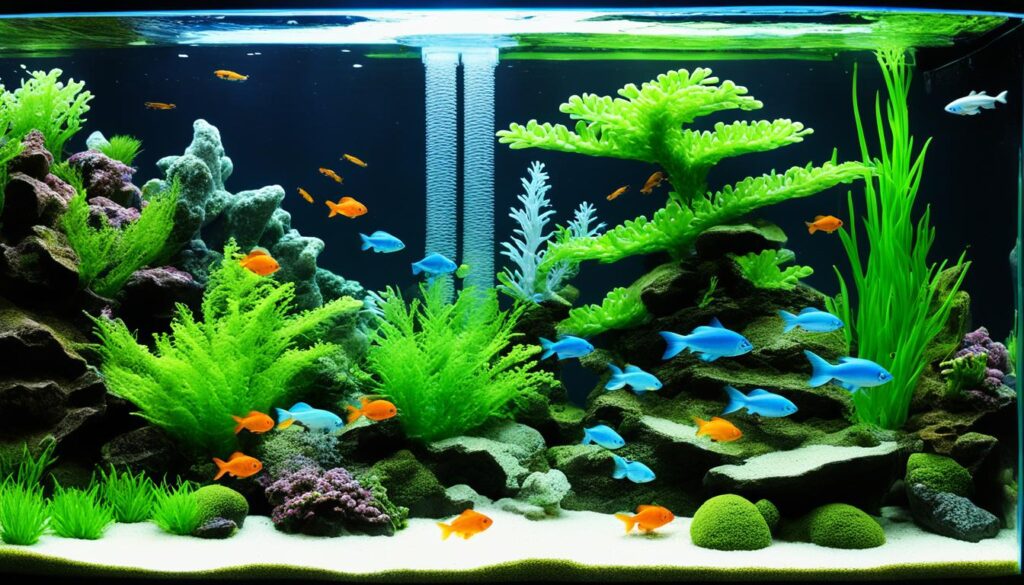
Keeping a healthy aquarium means cleaning it regularly but not too much. It’s important to find the right balance. This balance helps your fish and the tank’s ecosystem stay healthy. By following simple steps, you can keep your aquarium in great shape and your fish happy.
Substrate Vacuuming
Substrate vacuuming is a key part of cleaning your aquarium. Use a siphon tube to vacuum the gravel or sand at the tank’s bottom. This removes detritus, uneaten food, and fish waste. Do this every week, changing 15-25% of the water.
Algae Removal
Dealing with algae is a big part of aquarium care. Use an algae scrubber or a soft cloth to clean the glass. Also, shake or prune live plants to remove debris.
Equipment Maintenance
Keeping your aquarium equipment in good shape is vital. Clean the filter media and check that heaters and other devices work right. Make sure the water stays at the right temperature for your fish.
Always be gentle when cleaning your aquarium. Avoid harsh chemicals that could hurt your fish. Focus on creating a healthy environment for your aquatic friends.
| Aquarium Cleaning Task | Frequency |
|---|---|
| Substrate Vacuuming | Weekly during water changes |
| Algae Removal | Weekly |
| Filter Cleaning | Monthly |
| Water Testing | Monthly |
| Water Changes | 15-25% every 1-2 weeks |
« Proper aquarium maintenance is the key to a healthy, vibrant fish tank. Take the time to care for your aquarium, and your fish will thrive. »
Quarantining and Introducing New Fish
Quarantining new fish before adding them to your aquarium is key to preventing disease. This step can save you a lot of money and keep your fish healthy. For example, Koran Weston spent about $200 to treat a disease that killed many fish, including three angelfish.
Experts like Dr. Tim Miller-Morgan stress the need for quarantining new fish. They say it’s a vital step that many fish keepers overlook. Dr. Edward Noga suggests quarantining for 3-4 weeks. Some koi hobbyists even quarantine for a year before mixing new fish with their others.
While in quarantine, it’s a good idea to medicate the fish to prevent parasites. For freshwater fish, a salt dip works well. For marine fish, a freshwater dip is better. But, only medicate if you see signs of disease. Giving fish medicine without a reason can stress them out and make diseases harder to treat.
| Quarantine Duration | Recommended Practices |
|---|---|
| 3-4 weeks |
|
| 1 year |
|
By following these best practices for quarantining new fish, you can effectively prevent the introduction of diseases and parasites into your established aquarium, ensuring the long-term health and well-being of your fish.
« Quarantining new fish is an essential practice in fish keeping that is often underutilized. »
– Dr. Tim Miller-Morgan
Ensuring Compatibility Among Tank Inhabitants
Keeping your aquarium peaceful is key for your fish’s health. Fish compatibility is a delicate matter. Some fish may not get along due to different needs or aggressive behaviors.
Before adding fish to your tank, research their nature and needs. Aggressive fish like cichlids need special care to live with others. Peaceful fish, such as tetras and guppies, do well in a balanced tank.
| Fish Type | Temperament | Compatibility |
|---|---|---|
| Cichlids | Territorial and Aggressive | Require specific tank mates and careful monitoring |
| Tetras and Guppies | Peaceful and Social | Ideal for community aquariums |
| Siamese Fighting Fish | Highly Territorial | Males should not be kept together, but can coexist with peaceful females |
It’s important to know how each fish acts and what it needs. A well-designed aquarium environment helps fish live together peacefully. Providing hiding spots and a balanced fish ratio can prevent behavioral issues.
Watch how your fish interact closely. If you see aggression, you might need to move the fish or change the tank setup. A well-thought-out aquarium setup is key to keeping your fish happy and healthy.
Feeding Your Fish a Balanced Diet
Feeding your fish right is key to their health. When it comes to fish feeding, pick foods that fit their eating habits. This makes sure each fish gets enough to eat.
Choosing the Right Foods
Omnivorous fish like many types can eat flakes, pellets, frozen, or live food. Herbivores need lots of plants in their diet. Carnivores do well with a diet high in protein. Knowing what your fish nutrition needs is crucial for a healthy tank.
Avoiding Overfeeding
- Many people overfeed their fish, leading to too much waste and health problems.
- Since fish are cold-blooded, they only need a little food once a day, or maybe not every day.
- Skipping a feed day and mixing in frozen or live food helps keep fish healthy and stops overfeeding.
- Use a kitchen scale to measure food, so your fish get just enough to stay healthy.
By knowing what your fish need to eat and avoiding too much food, you help them stay healthy. This ensures they get a balanced diet that keeps them thriving.
Maintaining Ideal Temperature and Lighting
Keeping the aquarium temperature right is key for your fish’s health. The best temperature is between 74-82°F (23-28°C), but it depends on the fish types. A steady aquarium temperature is crucial to avoid stress and health problems in your fish.
Aquarium lighting is also crucial for your fish and plants. The right lighting helps with natural behaviors and health. It’s important to match the lighting to your fish and plants for a healthy aquarium.
| Parameter | Ideal Range | Reason to Test | Solution |
|---|---|---|---|
| Nitrate | Below 40 ppm | Builds up from biological filtration. High levels stress fish and cause algae. | Change 25% of the water and use Tetra® EasyBalance® Solution. Live plants help too. |
| Nitrite | Below 0.5 ppm, 0 is ideal | High when filter bacteria don’t work. It’s toxic and harms fish. | Feed your fish less, change some water, and add Tetra® SafeStart® Solution bacteria. |
| Total Hardness | 50 to 150 ppm, depends on the fish | It’s about calcium and magnesium levels. | Let your fish get used to local tap water instead of changing it. |
| Total Chlorine | 0 ppm | Tap water disinfectants are bad for fish and invertebrates. | Use Tetra® AquaSafe® Solution in all tap water before adding it to your tank. |
| Total Alkalinity | Above 80 ppm (freshwater), Above 180 ppm (saltwater) | It’s about buffers like carbonates. Low levels cause acid buildup. | Change 25% of the water and add Tetra® EasyBalance® Solution. |
| pH | 6.8 to 7.8 (freshwater), 7.8 to 8.4 (saltwater) | It measures acid and base levels. Fish need stable levels to stay healthy. | Change 25% of the water and use Tetra® Correct pH®. |
By keeping the right aquarium temperature and lighting, and testing and adjusting environmental parameters, you can make a great home for your fish.
Monitoring for Signs of Disease
Keeping your aquarium fish healthy is key to being a good fish owner. It’s important to watch your fish closely for any signs of sickness. Spotting health problems early can stop diseases from spreading and keep your fish healthy for a long time.
Cauliflower disease, also known as lymphocystis, is a common viral infection in freshwater fish. It causes white growths that look like cauliflower on the fish’s body. This can happen when the water quality is poor or when fish touch infected fish.
Bacterial infections like Dropsy and Fin Rot are highly contagious. They can cause swelling, change fish scales color, make fins look frayed, and make eyes cloudy. These infections spread easily and can be serious.
Parasitic infections can also spread quickly in an aquarium. They can cause growths, redness, and fish acting strangely. Fungal infections happen after injuries or illnesses and look like fuzzy growths on the fish’s body.
Sometimes, fish get sick from injuries, accidents, or fighting with other fish. Keeping the aquarium healthy with proper setup, quarantine, and regular water checks is key to avoiding these problems.
By watching your fish closely and acting fast when they’re sick, you can keep them healthy and happy. Early detection and quick treatment are crucial for your fish’s health.
Aquarium maintenance services offer expert advice and care to keep your fish and tank healthy. They can help with water testing, filter upkeep, and treating diseases. These services are great for a disease-free aquarium.
Live Plant Care and Aquascaping
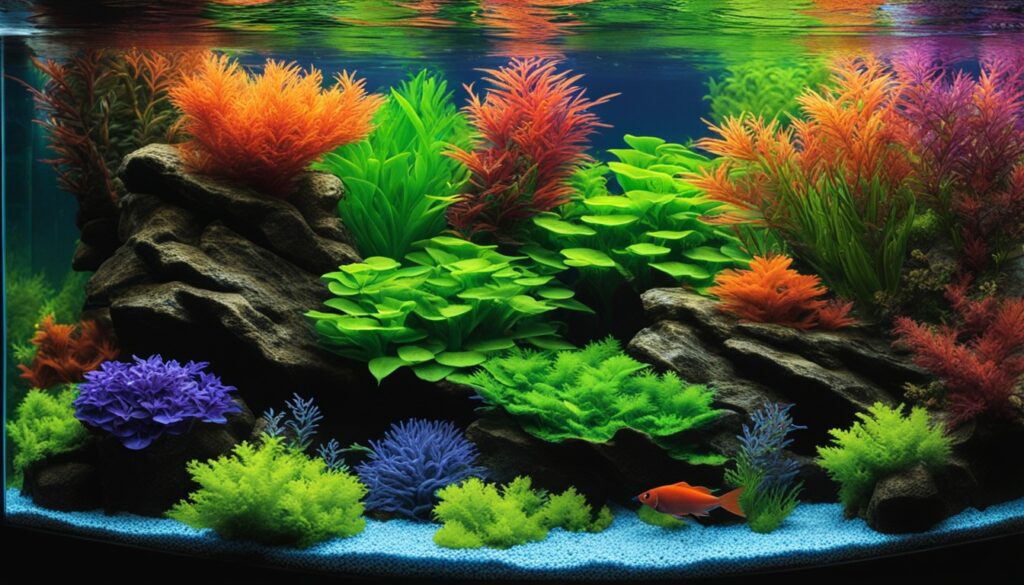
Keeping a healthy aquarium means taking good care of live plants. These plants make your tank look beautiful and help keep the water balanced. They support the health of your fish and other sea creatures.
Trimming and Fertilizing Plants
It’s important to take care of your live plants. Cut off dead or long leaves and stems to help them grow new ones. This also stops them from fighting over food.
For fertilizing, aquarium plants do best in certain conditions. They like a pH of 6.5 to 7.8, and the water should be a bit hard and alkaline. Keeping nitrates and phosphates low helps stop algae and feeds your plants well.
Aquascaping is the art of arranging plants in your tank. It lets you create beautiful scenes that look like real underwater places. This makes your tank a great home for your fish.
Choosing the right plant substrate is important. Gravel is good but needs cleaning to stop algae. Sand is easy to care for but might slow down plant roots. Soil-based substrates give plants the nutrients they need.
Changing your tank water regularly is key for plant health. Aim to change at least 10% of the water each week. This keeps your plants and fish happy.
Good lighting is vital for your plants. They like light in the 6000K to 8000K range, about two watts per gallon. Giving them 6 to 8 hours of light a day helps them make food through photosynthesis.
By taking the time to care for your live plants, you can make a beautiful and healthy aquarium. This creates a great place for your fish and other sea creatures to live.
Essential Aquarium Maintenance Tools
Keeping an aquarium healthy needs the right tools. You’ll need aquarium maintenance equipment and cleaning tools for the job. Let’s look at the must-have items for every aquarium lover.
- Dedicated aquarium bucket: A strong, safe bucket just for aquariums is key for water changes and cleaning.
- Siphon: A good siphon or gravel vacuum makes removing water during changes easy and safe.
- Algae scraper: This tool is great for getting rid of hard-to-remove algae from the tank’s glass and decorations.
- Filter brush: A filter brush cleans the hard-to-reach parts of filters, keeping them working well.
- Aquarium-safe cleaning solutions: Use cleaners made just for aquariums to keep water quality up and fish safe.
- Replacement filter media: Having extra filter media like cartridges or sponges means you can change them quickly when needed.
With these key aquarium maintenance tools at the ready, cleaning becomes easier and your tank stays healthy. Using these tools often helps stop algae, water quality issues, and filter problems. This keeps your aquarium and its fish happy and healthy for a long time.
There are more tools that can make aquarium care better. Think about getting a magnetic algae scraper, a gravel cleaner, and a water testing kit. With the right cleaning tools and care, your aquarium will be colorful and easy to look after.
Aquarium Maintenance Schedule and Routine
Keeping your aquarium healthy means sticking to a regular maintenance plan. This plan should include daily checks, weekly tests, and monthly deep cleans. Keeping a log of your maintenance helps you spot trends and remember important tasks.
Experts say freshwater tanks need about 30 minutes of weekly care. Saltwater tanks take around an hour. For tanks under 10 gallons, change 25% of the water weekly if it’s not too planted and has few fish. Monthly, change 20% of the water in balanced tanks, spending less than two hours.
Change the water every two weeks, using 25% of the tank’s volume. Test the water weekly with kits like API MASTER TEST KITS or API 5-IN-1 TEST STRIPS. Also, check the filter’s water flow and add new filtration materials as suggested by the maker.
| Maintenance Task | Frequency |
|---|---|
| Water change | Every 2 weeks, 25% volume |
| Water testing | Weekly |
| Filter maintenance | Cleaning impeller, replacing cartridges as per manufacturer |
| Aquarium cleaning | Monthly deep clean |
| Plant care | API ROOT TABS monthly, API LEAF ZONE weekly |
For a healthy aquarium, add high-quality liquid live bacteria every 3 months or when the tank needs it. Clean the impeller and soak equipment in vinegar to prevent scale buildup. Always match the new water’s temperature to the tank’s to keep things stable.
By sticking to a regular maintenance schedule, your aquarium will stay in top shape. This means a better home for your fish and plants.
Conclusion
Keeping your aquarium healthy and lively needs regular care. Make sure to check the water quality, change the water often, and keep your filter clean. This helps your fish stay healthy and happy.
It’s important to test the water for things like nitrate, nitrite, and pH levels. This helps you spot and fix any problems early. Stick to a schedule for changing the water and cleaning the filter to keep your tank in top shape.
By taking good care of your aquarium, you can enjoy it for many years. Putting in the effort to maintain it will pay off with beautiful fish and a stunning display. You and your guests will love it.