
Dive into the world of fish keeping with our guide. It’s perfect for both new and experienced aquarists. We’ll give you the knowledge and tools to make a thriving aquatic home. You’ll learn how to pick the right equipment and fish, and how to keep their environment healthy.
Learn the joy of keeping fish tanks. We’ll show you how to set up a beautiful freshwater or saltwater aquarium. Our expert tips will guide you through choosing the right aquarium supplies, aquarium lighting, and aquatic plants. With this guide, you’ll create a stunning underwater world at home.
Key Takeaways
- Discover the essential equipment and supplies needed to set up a thriving fish tank
- Learn how to choose the perfect location for your fish tank and prepare the substrate
- Understand the importance of water conditioning and cycling the aquarium to establish a healthy ecosystem
- Explore tips for selecting the right aquarium heater and filter to maintain optimal water conditions
- Gain insights into introducing fish safely and maintaining a balanced aquarium environment
Understanding the Importance of Setting Up a Fish Tank
Fish as Pets: Providing the Best Care
Keeping fish as pets means giving them the best aquarium care. A well-set up fish tank is key for their health and happiness. Fish depend on you to keep their home clean and safe from toxins. Creating a healthy home for them takes work, but it’s very rewarding.
Freshwater aquariums are a great choice for keeping fish as pets. They add beauty and calm to a space. Make sure the tank’s spot has power for the equipment. Starting with a big tank costs a lot, but you can start with smaller setups for under $100.
Good fish tank maintenance is vital for your fish’s health. Test the water weekly to know when it’s safe for fish. Adding fish and setting up the tank on the same day can be risky. It lets harmful toxins build up.
Things like the right water temperature (72–82 degrees Fahrenheit), tank placement, and water treatment are key for a healthy freshwater aquarium. Fish food and supplies are cheap. You can also hire experts for tank care.
« Setting up a fish tank and adding fish on the same day is not recommended as the biological filter may not have had sufficient time to develop, increasing the risk of fish mortality due to ammonia or nitrite toxicity. »
Choosing the Right Location for Your Fish Tank
Setting up a fish tank is exciting for anyone who loves aquariums. But, where you put your fish tank is key to your fish’s health. You need to think about a few important things to make the best spot for your fish.
First, your fish tank should sit on a level surface that can hold its weight. A gallon of water weighs about 8 pounds. So, a 10-20 gallon tank can be very heavy once full. Make sure the furniture or stand you pick can handle the weight of the tank, water, and equipment.
| Tank Size | Approximate Weight | Furniture Recommendation |
|---|---|---|
| Under 20 gallons | Up to 200 lbs | Solid vanities and countertops |
| 30 to 50 gallons | Around 500 lbs | Careful consideration of structural integrity |
| Exceeding 50 gallons | Over 500 lbs | Specialized aquarium stands and furniture |
Don’t put your fish tank where it gets direct sunlight, drafts, or has changing temperatures. Sunlight can make algae grow fast, and changing temperatures can stress your fish. It’s best to put your aquarium in a quiet spot, away from loud appliances or busy areas.
Think about how easy it is to get to your fish tank for upkeep and watching. Having it near water and outlets makes changing water and setting up equipment easier. Plus, being able to see and reach your tank lets you watch your fish and fix any problems fast.
Choosing the right spot for your setting up fish tank makes a big difference. It helps your aquarium be a happy and beautiful place for your fish. With the right spot, your fish tank can be a beautiful part of your home, bringing the ocean into your life.
Preparing the Tank and Substrate
Before you put water in your new fish tank, make sure the aquarium substrate is ready. This can be gravel, sand, or a mix made for plants. It’s key to rinse the substrate well to keep the water clear and free of dust.
Cleaning and Placing the Gravel
Begin by putting the gravel or sand in a big bucket. Use a high-pressure hose to rinse it, moving it around to get rid of dust. Do this until the water is clear, which might take 20-30 minutes.
After cleaning, put the substrate in the tank. Make sure it slopes gently from back to front. This makes the tank look better and helps with water flow and cleaning.
How much substrate you need depends on your tank’s size. A good rule is to use 1-2 pounds of gravel for every gallon of water. Getting your aquarium substrate ready is important for a healthy fish tank.
« Proper substrate preparation is a critical step in setting up a healthy, vibrant aquarium. Taking the time to thoroughly clean and arrange the gravel or sand will pay dividends in the long run by maintaining water quality and creating an ideal environment for your fish and plants. »
Filling the Aquarium with Water
Filling your fish tank needs to be done carefully to avoid disturbing the substrate. Use a clean plate or dish as a barrier when pouring water. This method keeps the substrate in place and the water clear.
Filling the aquarium takes time, about 45 minutes for most tanks. For bigger tanks, it might take longer. Start by filling it halfway with water at room temperature. This slow fill lets the equipment work right and the water settle before adding fish.
Using Water Dechlorinator
Using a water dechlorinator is key when filling the tank. Tap water has chlorine and chloramines that are bad for fish. The dechlorinator removes these, making the water safe for fish. Always follow the instructions to make sure your aquarium water is dechlorinated right.
After filling and treating the water, let it run for at least 24 hours before adding fish. This lets the heater and filter work well and creates a stable home for your fish.
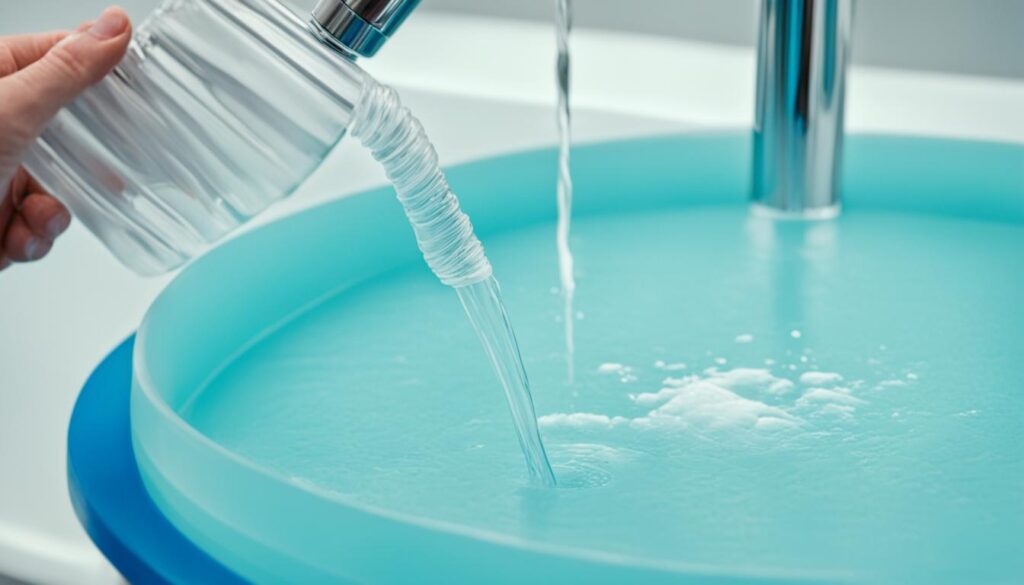
« Taking the time to properly fill and prepare your aquarium is the foundation for a thriving, healthy fish community. »
Patience and detail are the keys to success. By following these steps, your fish tank will be ready for its new friends. It will be a safe and cozy home for them.
Selecting the Appropriate Heater and Filter
Keeping your fish tank healthy starts with the right aquarium heater and fish tank filter. You need to pick the right heater wattage and filter flow rate for your tank.
Calculating Heater Wattage and Filter Flow
Most pet fish like water between 78-80°F. Some fish, like discus and certain cichlids, need it hotter, around 85°F. A good rule is to use 5 watts of heater power per gallon to heat the water 10 degrees above room temperature.
If your home is cold, you might need a second heater to get the water to 15 degrees above room temperature. The right heater size depends on your tank’s size and the temperature you want.
For big tanks, it’s better to use several smaller heaters. This helps avoid damage if one heater fails.
Your aquarium filter should move water at a rate that cleans it well. Aim for 3-5 times the tank volume per hour. This keeps the water clean and supports your fish’s health.
| Tank Size | Heater Wattage | Filter Flow Rate |
|---|---|---|
| 20 gallons (75.7 litres) | 75 watts | 225-375 GPH |
| 50 gallons (189 litres) | 250 watts | 600-900 GPH |
| 100 litres | 100 watts | 300-500 LPH |
Choosing the right aquarium heater and fish tank filter makes a big difference. It helps your fish live in a stable, healthy environment.
Setting Up Lighting and Electrical Components
Proper aquarium lighting is key for a thriving fish tank. If you have live plants, pick an LED or fluorescent light made for aquariums. Set the lights on a timer for 8-10 hours of light each day.
Also, make sure all electrical equipment, like the heater and filter, are plugged in right. Keep cords away from water to prevent accidents. This keeps your fish tank electrical setup safe.
Choosing top-notch aquarium equipment is crucial. Get a reliable heater and a filter that fits your tank. Correctly setting up your electrical gear makes a safe home for your fish.
« The key to a successful aquarium is striking the right balance between lighting, filtration, and temperature control. »
Good lighting and electrical setup are vital for your fish’s health. Do your homework and pick the best parts for a happy aquarium.
Cycling the Aquarium and Building Beneficial Bacteria
Before adding fish to your new aquarium, you must let it go through the aquarium cycling process. This step is vital for creating a healthy balance of beneficial bacteria. These bacteria turn harmful substances like ammonia and nitrites into safer nitrates. This makes the tank a good home for your future fish.
The nitrogen cycle, or biological filtration, is crucial for a healthy aquarium. Nitrifying bacteria like Nitrosomonas spp. and Nitrobacter spp. are key. They break down waste from fish and other aquatic life.
- Nitrosomonas bacteria convert ammonia into nitrites.
- Nitrobacter bacteria then convert nitrites into less toxic nitrates.
It’s important to grow these beneficial bacteria to keep the water clean and safe for fish. Good filtration, especially in the filter media, helps by providing the right flow, food, and oxygen for these bacteria.
There are different ways to cycle a new aquarium, each with its own benefits and things to consider. Fishless cycling is a good choice for beginners. It lets the tank get ready for fish without risking harm to them. This method usually takes about 12-15 days.
Or, you can try fish-in cycling. This means adding a few hardy fish to the tank right at the start. It can be tougher but helps seed the tank with good bacteria from the fish’s waste. Keep an eye on the water and change it regularly to keep the fish safe.
No matter the method you pick, knowing about the nitrogen cycle and biological filtration is key. By letting your tank cycle, you’re setting up a great home for your fish. This patience will pay off with a thriving aquarium.
fish tanks and Aquarium Accessories Checklist
Setting up a successful fish tank means getting all the right aquarium supplies, fish tank equipment, and essential aquarium accessories. This list makes sure you have everything before you start. You’ll be ready to fill the tank and add fish.
- Aquarium: Pick the right size and shape for your space and fish type.
- Substrate: Use gravel or sand for a natural look, about 1 pound per gallon of water.
- Decorations: Add driftwood, rocks, or plants to make the tank look good and keep fish happy.
- Heater: Choose a heater with the right wattage, usually 3-5 watts per gallon, to keep the water at 74-77°F.
- Filter: Make sure the filter can change the tank’s water 4 times an hour for good filtration.
- Lighting: Pick from LED, fluorescent, or incandescent lights based on your tank’s needs.
- Water Conditioner: Use a dechlorinator to make tap water safe for fish by removing harmful substances.
- Test Kit: Keep an eye on water quality with a test kit that checks pH, ammonia, nitrites, and nitrates.
- Gravel Vacuum: A siphon gravel vacuum is key for regular water changes and keeping the substrate clean.
- Fish Net: A good fish net is vital for safely moving fish around during water changes or adding new fish.
This detailed aquarium supplies and fish tank equipment checklist gives you all the essential aquarium accessories for a thriving fish tank.
| Accessory | Recommended Guideline |
|---|---|
| Aquarium Size | At least 16 gallons for freshwater fish, with bigger tanks offering more space |
| Substrate | 1 pound of gravel or sand per gallon of water for a 1-2 inch layer |
| Heater | 5 watts per gallon for small tanks, 3 watts per gallon for large tanks |
| Filter | Turnover rate of 3-5 times the total water volume per hour |
| Lighting | 1-2 watts per gallon for fish-only tanks, 2-5 watts per gallon for planted tanks |
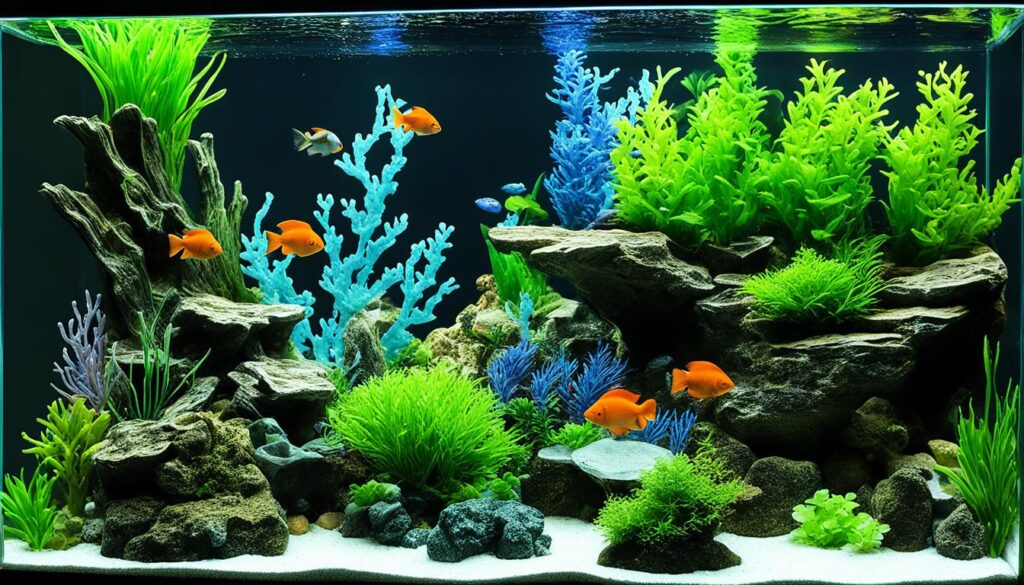
« A well-planned aquarium setup is the foundation for a thriving, healthy fish community. »
Adding Fish to Your New Aquarium
Tips for Introducing Fish Safely
Congratulations on setting up your new fish tank! Now, it’s time to add the most important part – the fish. When you put fish in your tank, make sure to do it slowly. This helps them adjust and reduces stress.
Start by picking healthy fish that get along well. Wait at least two weeks before adding more fish. This lets the tank’s ecosystem settle down. It keeps the balance in your tank stable.
To acclimate the fish, use the floating method. Put the sealed bag in the tank for 15-20 minutes to match the water temperatures. Then, slowly mix tank water with the bag’s water over 30 minutes to an hour.
Once the fish are ready, gently net them and put them in the tank. Don’t pour the bag water in the tank because it has too much ammonia and carbon dioxide. Throw away the bag water and add fresh, dechlorinated water before adding the fish.
Keep the aquarium lights off for a few hours to help the fish settle. Adding a little food to the tank can also help. It distracts the other fish and makes it easier for the new ones to join.
By following these tips, you’ll help your fish settle in well. Remember, be patient and go slow for a stress-free start.
Maintaining a Healthy Aquatic Environment
Keeping your fish tank clean is key for your aquatic pets’ health. You need to do regular tasks like aquarium maintenance, fish tank water changes, and filter cleaning. These steps keep the water stable and support your fish’s health.
Water Changes and Filter Replacements
Changing 25% of the water every 2-4 weeks is vital. It removes waste and adds fresh, clean water. This keeps the water chemistry right for your fish to thrive. Also, change the filter media as needed to keep the water clean.
Good aquarium maintenance keeps your fish healthy and stops harmful stuff like ammonia and nitrates from building up. It’s also important to keep the pH and water hardness right for your fish and plants.
- Aim for a pH between 6.8 and 7.8 for most freshwater tropical fish
- Maintain zero levels of ammonia and nitrites
- Limit nitrate levels to below 50 ppm
- Seed new tanks with established media to speed up the cycling process
By doing fish tank water changes and filter cleaning regularly, you make a great home for your fish. Being consistent and careful is what keeps your aquarium looking good and easy to take care of.
« The best way to prevent illness from fish and their environment is to wash hands often. »
By following these important aquarium maintenance tips, you’ll have a happy, stress-free aquarium. This makes fish-keeping very rewarding.
Decorating Your Fish Tank
Turning your fish tank into a beautiful and lively home for your fish is a fun part of being an aquarium owner. By picking the right fish tank decor, aquarium plants, and aquarium accessories, you can make a space that looks natural and supports your fish’s health.
Decorating your tank offers many choices. Gravel is a top choice, coming in different shapes, sizes, and colors. It’s best to use medium-sized gravel, as it’s good for plants and doesn’t trap too much debris.
Other safe decorations include natural lava rock, slate, quartz, river rock, and petrified wood. Lace rock looks cool but can be hard to clean. You can also use glass, ice rock, river pebbles, pagoda rock, zebra rock, honey onyx, rainbow rock, and red desert rock.
For those who love plants, artificial ones are now more realistic and easier to care for than live ones. Ceramic items, like unglazed terracotta pots, are great for decoration if they’re safe for dinnerware and won’t break down in acidic water.
When setting up your fish tank decor, try to cover 50-70% of the tank’s surface. Put taller items in the back and smaller ones in the front for depth. Always clean decorations before putting them in your tank.
For a unique look, try a zen-themed aquarium with products from Biorb and Aqua One. Or go for a glow-in-the-dark theme with Marina’s iGlo collection, which includes galaxy gravel and a mushroom house.
By choosing and arranging your fish tank decor, aquarium plants, and aquarium accessories well, you can make your fish tank a beautiful and lively place.
Conclusion
Setting up a fish tank is rewarding and fun, but it takes patience and dedication. This guide offers a step-by-step approach to creating a thriving aquatic world. It’s a way to add peace and beauty to your home.
Choosing the right spot and getting the tank ready are key steps. So is cycling the system and adding fish. Each step is vital for your fish’s health and happiness. By focusing on water quality and the needs of different fish, you can create a lively and diverse tank.
This guide is great for both new and experienced fish keepers. It gives you the info and tips to set up and maintain a fish tank, aquarium, and enjoy successful fish keeping. By diving into aquarium setup and care, you start a journey to enjoy the beauty of the underwater world at home.