
Earth’s orbit is filled with old satellites, rocket parts, and other space debris. This debris poses a big risk to today’s and tomorrow’s space missions. Launches have jumped by 10 times in the last decade, but we’re not keeping up with safety rules. Even if we stopped launching now, the debris would still grow, making space dangerous for the future.
We need strong space debris risk mitigation plans to keep space safe. These plans help protect our space for the next generations.
Key Takeaways
- Space debris is a big threat to today’s and future space missions. Launches have gone up, but safety efforts haven’t kept up.
- Good space debris risk mitigation plans are key for safety in orbit and keeping space safe for the future.
- We’re working on reducing debris, stopping it from breaking apart in space, avoiding collisions, and cleaning up after missions.
- International rules and standards help us deal with space debris. They were made by the United Nations and the Inter-Agency Space Debris Coordination Committee.
- Creating new technologies for active debris removal, space traffic management, and space situational awareness is important to tackle the space debris problem.
Understanding the Threat of Space Debris
Earth’s orbit is getting crowded with old satellites, rocket parts, and other space junk. This junk is a big threat to space missions now and in the future. More satellites are being launched, but not enough are being cleaned up. This means more space junk is coming, making some areas in space unusable.
This could stop us from using space for a long time. It’s a big problem for the future of space travel and science.
Earth’s Orbit Littered with Hazardous Objects
NASA says there are at least 26,000 pieces of space junk the size of a softball or bigger in low Earth orbit. There are over 500,000 pieces that could hurt spacecraft or satellites. And, there are more than 100 million tiny pieces that could damage spacesuits.
This junk is a big danger to both manned and unmanned space missions.
Increasing Launch Rates and Non-Compliance
NASA has been doing pretty well, getting rid of most space junk within 25 years. But the world isn’t following the same rules. Most countries don’t remove their space junk from orbit in time.
This lack of action, along with more launches, makes the problem worse. It’s putting the future of space travel at risk.
« NASA states a compliance rate of approximately 96% for end-of-mission disposal within 25 years in the last decade, but global compliance rates for spacecraft removal from orbit within the stipulated 25 years have averaged between 20-30%, falling below the recommended 90% mark. »
ESA’s Zero Debris Approach
The European Space Agency (ESA) is fighting the threat of space debris with a « Zero Debris approach ». They’ve set new rules to reduce space debris. These rules started in 2023 and aim to cut down on debris left in space.
New Stricter Debris Mitigation Guidelines
The ESA has made new rules to prevent more space debris. These rules include:
- Reducing the maximum disposal time for low-Earth orbit missions from 25 to 5 years
- Requiring a probability of successful disposal larger than 90%, with even stricter requirements for large satellite constellations
- Mandating that space objects in protected orbital regions be equipped with interfaces to facilitate active debris removal if they fail in orbit
- Implementing new collision avoidance and space traffic coordination requirements based on industry best practices
- Addressing the avoidance of generating debris in lunar orbits and interference with radio and optical astronomy
Key Requirements for ESA Missions
The ESA wants to reduce debris in Earth and lunar orbits by 2030. All ESA missions must follow strict rules. These rules include:
- Guaranteeing successful disposal
- Improving orbital clearance
- Avoiding in-orbit collisions and internal break-ups
- Minimizing intentional object releases
- Assessing on-ground casualty risks
ESA is leading the way in reducing space debris. They want a sustainable future in space. By following the « Zero Debris approach », ESA is making space safer for the future.
Guaranteeing Successful Disposal
The space industry is growing fast, making it more important to dispose of space objects safely. The European Space Agency (ESA) has set strict rules for space object disposal, end-of-life disposal, and satellite deorbiting. These rules help keep space safe.
ESA now demands a success rate of over 90% for missions that aim to bring space objects back to Earth or put them into a safe orbit. This rule lowers the chance of objects colliding and breaking apart. It also reduces the amount of space debris in orbit.
ESA also makes sure its missions can remove objects from orbit if they can’t do it themselves. This plan helps prevent more space debris if something goes wrong.
| Metric | Target |
|---|---|
| Probability of Successful Disposal | Higher than 90% |
| Disposal Method | Atmospheric Reentry or Reorbiting to Safe Altitude |
| Backup Disposal Interfaces | Required for Assisted Removal |
The ESA is leading the way in making space safe for the future. It’s doing this by setting tough rules for space debris management. These steps are key to protecting space exploration and the growth of the space industry.
Improving Orbital Clearance
More satellites and objects are going into Earth’s orbit, raising concerns about collisions and space debris. The European Space Agency (ESA) has set new rules to manage this issue. They want to make sure spacecraft are removed from orbit after they stop working.
ESA now says objects can’t stay in low-Earth orbits for more than 5 years after they’re done working. This change means less time for objects to cause collisions. Also, ESA is making sure satellite constellations follow strict rules for orbital clearance and removal.
These steps are taken to prevent more space debris from building up. By controlling how long spacecraft stay in orbit, ESA is helping to keep space safe for the future. This is important for all space activities.
| Metric | Past Limit | New Limit |
|---|---|---|
| Maximum Time in Protected Low-Earth Orbits | 25 years | 5 years |
Keeping space clear is crucial because too much debris can harm working satellites and future missions. ESA’s new rules help make space use responsible and sustainable. They’re leading the way in protecting our orbit.
« The less time an object spends in orbit, the smaller the chance it will collide with another object and create further debris. »
Avoiding In-Orbit Collisions
The number of satellites and space debris is growing, making in-orbit collisions a big worry for the space world. Collision avoidance maneuvers are now common to prevent satellites from hitting each other. With more space activity, we’re getting more alerts about potential collisions every week.
To lower the risk of in-orbit collisions, we need better collision avoidance strategies. These should include automation, space traffic management, and new ways to communicate. This will help keep space safe for the future.
| Debris Size | Estimated Number |
|---|---|
| 10 cm or larger | Approximately 23,000 objects |
| 1 cm to 10 cm | Estimated 500,000 objects |
| 1 mm to 1 cm | Roughly 100 million objects |
« Collisions in Low Earth Orbit (LEO) occur at a closure rate of more than 10 kilometers per second, which is over 11 times faster than a bullet. »
There’s a lot of debris in space, from tiny pieces to big abandoned objects. These can be a big danger to working satellites. While we can track and move around the big objects, the small ones are harder to see and avoid. They’re the biggest risk to satellites in low-Earth orbit.
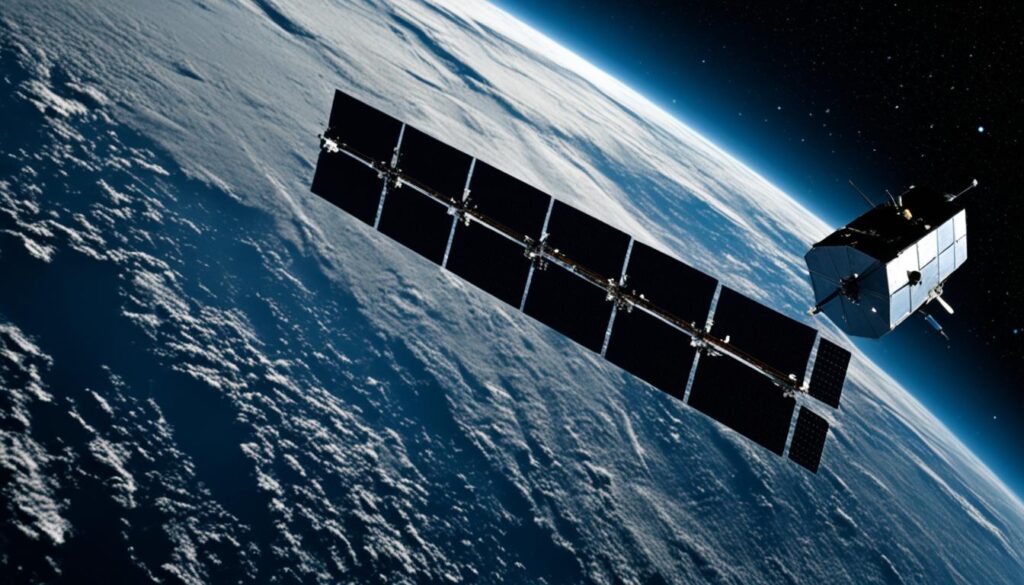
We need a complex plan to deal with in-orbit collisions. This includes better collision avoidance tech, improved space traffic management, and working together internationally. By tackling this issue, we can keep space safe for the future and make sure space missions can keep happening.
Preventing Internal Break-Ups
The number of satellites in Earth’s orbit is rising, making collisions and space debris a big worry. To stop satellites from breaking apart, it’s key to keep an eye on their health and use strong passivation methods. This helps avoid damage from system failures or other problems inside the satellite.
A 1999 study by the United Nations found that man-made space debris doesn’t much harm unmanned spacecraft now. But, as more debris is made, the risk will grow. The IADC, a group of space agencies, has set rules to deal with this issue. They aim to stop satellites from breaking apart in space, get rid of old spacecraft, and reduce objects released during normal use.
National and international space groups have made their own rules to fight space debris. These rules focus on stopping satellites from breaking apart, removing old spacecraft from busy orbits, and controlling objects released during normal use. The IADC’s guidelines offer ways to reduce space debris by following these steps.
With more satellites being launched than ever, focusing on satellite health monitoring, satellite passivation, and debris generation prevention is vital. This ensures the long-term use of space and protects our valuable space assets.
« Over the past two years, more satellites have been launched than in the entire six decades of space exploration. »
As the space industry gets bigger, working together and using strong debris prevention plans is key. This will help keep our space safe and sustainable for the future.
Minimizing Intentional Object Releases
Space agencies are working hard to reduce the amount of space debris. They focus on not releasing objects on purpose during space missions. This includes things like covers, lens caps, and rocket fairings. If not disposed of right, these can add to the growing space junk.
The IADC Space Debris Mitigation Guidelines say it’s key to plan and dispose of these items well. They want mission planners and designers to keep the number of released objects low. This means making sure every part is dealt with properly after its use.
New tech like big satellite constellations in Low Earth Orbit (LEO) makes the problem worse. The Commission is making new rules to tackle these issues. They want satellites to be able to move to avoid collisions and to share info on potential risks.
| Key Regulations for Intentional Debris Mitigation |
|---|
|
Following these rules and new laws helps space agencies, satellite companies, and makers. They can reduce the amount of space junk. This protects our space for the future.
« We must cut down on releasing objects like covers, lens caps, and rocket fairings. Good planning and disposal are key to stopping space debris from growing. »
Assessing On-Ground Casualty Risks
The space industry is growing fast, with launch rates 10 times higher than before. This means the risk of on-ground casualty from spacecraft reentry and reentry debris assessment is getting bigger. New tools and methods are being made to measure the danger to people or property from falling space debris.
The ORSAT and DAS tools are key for checking if reentering debris can survive. As more objects fall back to Earth and efforts to remove them grow, these tools will likely be used more. NASA and ESA have different ways to define a « casualty, » which affects how ORSAT works. NASA sees a casualty as any injury, while ESA says it means death. This makes ORSAT predict a higher chance of a « casualty » than ESA’s model.
NASA should update ORSAT to include chances for injury and death, experts say. This change would give a clearer picture of the dangers of spacecraft reentry.
- The risk of an aircraft hitting falling debris is once every 200 years worldwide, which is a big issue for companies with many satellites.
- There’s a big risk of harm to people on the ground from big pieces of debris, with up to 1 casualty every 10 years expected.
- Guidelines suggest getting rid of satellites from busy space areas within 25 years to reduce the chance of human casualties.
It’s important to dispose of satellites safely and reduce the risks of on-ground casualty from spacecraft reentry and reentry debris assessment. This is key as the space industry grows and changes.
Maintaining Dark and Quiet Skies
The number of satellites in low Earth orbit is growing fast, thanks to megaconstellations. This growth poses a big challenge for astronomers who need dark and quiet skies for their work. With over 36,500 objects bigger than 10 cm in orbit, and maybe over 1 million that could harm satellites, the problem is getting worse.
This space debris is making the night sky brighter, with some saying it could be up to 10% of the natural light. If more satellites are added, this will get much worse. Soon, satellite trails could be in up to 30% of images taken by the LSST.
| Metric | Current Status | Projected Impact |
|---|---|---|
| Functional satellites in LEO | More than doubled since 2019 | Continued rapid growth |
| Objects larger than 10 cm in orbit | Around 36,500 | Potential for over 1 million |
| Increase in night sky brightness | Up to 10% of natural background | Rapid rise as debris proliferates |
| Satellite trails in LSST images | N/A | Potential for 30% of images |
Efforts are underway to tackle these issues and protect astronomy and radio astronomy. Policymakers, space agencies, and scientists are working together. They aim to reduce the impact of space debris on astronomy.
The space economy is expected to hit $1 trillion by 2030. It’s vital to balance space exploration with keeping the skies dark and quiet. Collaboration and international standards are key to protecting astronomy and radio astronomy for the future.
Protecting Beyond Low-Earth Orbit
The European Space Agency (ESA) is working hard to keep space clean, not just in low-Earth orbit (LEO) and Geostationary orbit (GEO). They’re also focusing on other important areas like those for Global Navigation Satellite System (GNSS) and orbits around the Moon.
With more satellites expected to launch soon, ESA is coming up with new ways to keep space safe. They want to protect GNSS orbits, lunar orbits, and prevent more debris in space. This is crucial for space exploration and operations.
- Safeguarding GNSS Orbits: GNSS constellations are key for navigation and location services. ESA is making sure these orbits stay clear of debris. This keeps these services reliable and safe for everyone.
- Securing Lunar Exploration Orbits: As we go back to the Moon, ESA is making sure the space around it stays clean. This is important for future missions and activities on the Moon.
- Mitigating Debris in Extended Orbits: ESA is also working on keeping orbits far from Earth clean. This is vital for the growth of space exploration and activities.
ESA is tackling the big challenges of keeping space safe for the future. They’re focusing on GNSS orbit protection, lunar orbit protection, and extended orbit debris mitigation. This way, space can continue to be a place for exploration and progress for all of us.
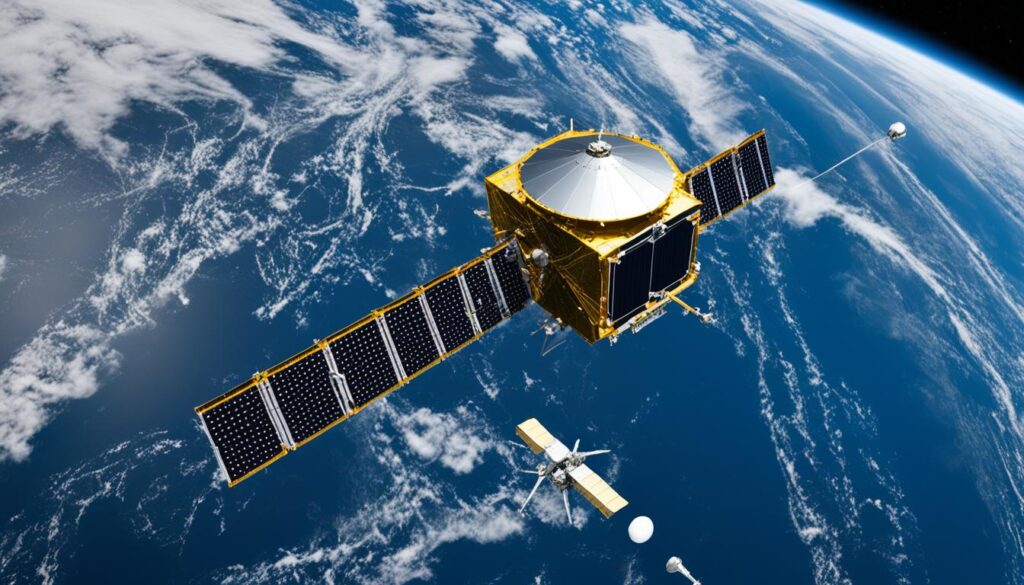
space debris risk mitigation plans: A Global Effort
The European Space Agency (ESA) is leading the way in dealing with space debris. But, they know they can’t do it alone. Space is a shared resource that needs global teamwork to keep it safe.
Dealing with global space debris is a big challenge. There are about 170 million pieces of debris in space, with over 55,000 tracked. This could lead to big problems, like crashes that could ruin space services we rely on.
We need international collaboration and new tech to fix this. This means better tracking, stricter rules, and new ways to remove debris.
Together, we can keep space safe for the future. This way, space technology can keep helping us live better lives.
| Mitigation Approach | Estimated Cost Range | Estimated Time to Recover Costs |
|---|---|---|
| Ground laser nudges for debris management | $300 to $6,000 per kilogram | N/A |
| Just-in-time collision avoidance via Laser Nudges | $6 to $500 for a 100 kg object, $60,000 for a 9,000 kg object per maneuver | N/A |
| Physical sweeping for debris management | $90,000 to $900,000 per kilogram | N/A |
| Recycling debris | Approximately $1.4 billion at 15,000/kg | 3-4 years for trackable debris, under a decade for small debris |
| Controlled re-entry for the 50 largest debris objects | Around $4,000 to $60,000 per kilogram | Around three decades |
| Uncontrolled re-entry for debris removal | Approximately $3,000 to $40,000 per kilogram | N/A |
This table shows the costs and times needed for different ways to deal with space debris risk mitigation. It shows we need a big, global effort to solve this big problem.
« By working together, the global space community can ensure that the space sustainability is maintained for generations to come, allowing for the continued growth and development of space-based technologies and services that are vital to our modern way of life. »
Collaborative International Standards
The world of space has joined forces to fight the growing problem of space debris. They’ve created guidelines and standards together. This work ensures fair competition and safe space access for the future.
IADC and UN Guidelines
In 2002, the Inter-Agency Space Debris Coordination Committee (IADC) came up with the Space Debris Mitigation Guidelines. These were the base for the UN Space Debris Mitigation Guidelines in 2007. These guidelines help tackle the space debris issue.
These guidelines are not mandatory but are widely accepted. They’ve influenced laws and projects in many countries and organizations, like NASA, ESA, and ROSCOSMOS.
But, there’s a big issue: no one agrees on how to figure out if a piece of space junk will stay in orbit. This makes it hard to know if we’re doing enough to prevent more debris. With plans to launch thousands more satellites soon, keeping up with these standards will be tough.
« The space industry has experienced rapid growth over the past decade, posing challenges for space debris mitigation efforts. »
As space technology gets better, the IADC guidelines and UN space debris guidelines will keep getting updated. They aim to tackle new problems and keep space safe for the future.
The Zero Debris Charter
The European Space Agency (ESA) has led a big step to fight space debris with the Zero Debris Charter. Over 40 groups from the space world came together to make this plan. They aim for a future where space is safe from debris.
This charter shows the space sector’s strong commitment to being sustainable. By signing, groups promise to help achieve no new debris in space by 2030. This helps keep space safe for the future.
The charter has clear goals for its signers. They aim to make satellite collisions or breakups very rare. They also want to make sure debris doesn’t harm people on Earth. Plus, they must remove satellites safely when they’re done.
Many space groups are excited about the Zero Debris Charter. Over 100 groups have shown interest. The European Union is also looking at space laws that support these goals, making a zero debris future more likely.
The space sector is taking a strong stand with the Zero Debris Charter. They’re setting big goals and working together. This will help make space safe and responsible for the future.
« The Zero Debris Charter is a testament to the space sector’s unwavering commitment to sustainability. By signing the charter, space entities from around the world pledge to work towards the ambitious goal of achieving no net addition of debris in orbit by 2030. »
Developing Enabling Technologies
The European Space Agency (ESA) is working hard to make space cleaner. They study how space tech affects the environment and help create new tech. This is all part of their Clean Space initiative.
They focus on tech that helps reduce space debris risks. This is key for a safer space future.
Clean Space Initiative
ESA’s Clean Space is leading in making new tech for satellites and tracking space debris. They aim to solve the space debris problem. This will make space safer for everyone.
Debris Tracking and Monitoring
It’s vital to track and monitor space debris to manage it better. The MIT Orbital Capacity Assessment Tool (MOCAT) is a big step forward. It helps us see how space debris will grow and how to stop it.
Companies like Astroscale and ClearSpace are also working on removing debris. In 2022, Astroscale removed a piece of space junk with magnetic tech. They and ClearSpace got £4 million to work on missions to clean up space. These efforts are key for keeping space safe for the future.
« MOCAT empowers stakeholders such as satellite operators, regulators, and the public to make data-driven decisions for space sustainability. »
Conclusion
Creating plans to deal with space debris is key to keeping space safe and sustainable for the future. The European Space Agency (ESA) leads the way with its zero debris goal and new rules. They also work on technologies to help manage space debris. This shows how important it is for countries to work together to protect space for future space use.
International groups like the ESA set standards to help manage space debris. These standards, like ISO 24113:2019 and GOST R 52925-2018, give clear rules for space systems and how to reduce debris. By planning launch paths carefully and removing debris, the space industry is taking steps to lessen the risks from space debris.
With more space launches, the need for good debris management plans grows. We need better tools for modeling risks and working together through groups like the Inter-Agency Space Debris Coordination Committee (IADC). These efforts will help make space safer and more sustainable for everyone.