
Space debris poses a big risk to working spacecraft and satellites. It’s important to track and reduce threats from both known and small, hard-to-track pieces of debris. Experts use complex models and software to figure out the risk of collisions. They look at things like a satellite’s size, height, and path.
Even though the risk for one satellite might seem small, there are so many satellites up there. This means a collision could happen every 10 years on average. It’s crucial to lower these risks to keep expensive spacecraft safe and make space use sustainable.
Key Takeaways
- Satellite collision risk assessment is a critical challenge in the aerospace industry.
- Sophisticated probability models and software are used to predict collision risks based on factors like satellite cross-sectional area, orbital altitude, and flight path.
- The combined profile area of all satellites in orbit means the average time between destructive collisions is roughly 10 years.
- Mitigating collision risks is essential to protect spacecraft and ensure the long-term sustainability of space operations.
- Effective space situational awareness and debris tracking are key to assessing and mitigating satellite collision risks.
Understanding Satellite Collision Risks
Space debris is a big threat to working satellites and the future of space travel. It comes from old satellites, rocket parts, and pieces from past crashes. These pieces, from tiny to over 1 meter wide, can harm spacecraft.
Sources of Space Debris
More satellites are coming, with thousands planned in the next decade. Most space debris comes from explosions and collisions. This debris can destroy satellites, causing big problems on Earth.
Tracking and Monitoring Space Objects
It’s important to track space objects to avoid collisions. The ESA and JAXA use advanced sensors and models to watch debris in space. This helps satellite operators avoid crashes.
The U.S. Space Surveillance Network and NASA’s Orbital Debris Program Office track space debris too. They use radars, telescopes, and spacecraft data. Their work is key to keeping space safe for future missions.
Assessing Collision Probability
Figuring out the chance of a satellite colliding is hard work. It needs advanced orbital mechanics and smart modeling. Scientists use top-notch software like the European Space Agency’s DRAMA. This tool helps predict where space objects will go and the risk of a big crash.
These models look at many things, like the size, height, and path of satellites. They give clear risks for planning and running missions. With smart algorithms, they can tell us the collision probability between satellites and space junk.
Analyzing Collision Risks in Satellite Constellations
More satellites in the sky, like OneWeb and Starlink, make it more important to check for collision risks. Studies show a big chance of a bad collision over five years with some debris and Starlink satellites.
New models are coming up to help us understand these risks better. They look at how satellites might cross paths with each other or with space junk. This helps us plan safer ways to put satellites in space and take them out.
Looking closely at how many satellites are in the sky is key to keeping space safe for everyone. We need to think about how big and likely to fail the satellites are while they’re working.
Mitigating Satellite Collision Risks
Satellite operators use many strategies to lower the risk of collisions in space. They design spacecraft with strong shielding and maneuvering capabilities. These features help them survive and avoid potential impacts. This makes satellites better at staying safe and avoiding collisions.
Operators also work together to plan avoidance maneuvers when they see high-risk situations. This teamwork is key for managing space traffic. It helps reduce the risk of collisions in crowded orbits.
| Mitigation Approach | Key Considerations |
|---|---|
| Satellite Design |
|
| Operational Procedures |
|
To effectively lower collision risk, we need a plan that covers design and operations. It also requires working together among operators and the space community. By using these strategies, the industry can make space safer and more sustainable for everyone.
Satellite Design Considerations
The space industry is booming, with more satellites and private launches. Designers must balance protecting satellites with the dangers of space debris. This is crucial as the number of satellites in space grows.
Shielding and Protection
Designers focus on satellite shielding to protect against space debris. Whipple shields are advanced technologies that shield against debris up to 1 cm in size. These shields absorb impacts, protecting the satellite’s important parts.
Maneuvering Capabilities
For threats bigger than 1 cm, satellites need to move out of the way. They need strong propulsion systems for this. Good planning and fuel use are key to avoiding collisions during their life.
It’s important to balance shielding and moving abilities in satellite design. This keeps satellites safe in a busy space environment. New safety standards and teamwork are pushing for better ways to deal with space debris.
« The deployment of new satellite constellations might increase the risk of internal collisions or collisions with existing satellites and orbital debris, thus challenging satellite operations’ safety. »
| Shielding Technology | Debris Size Capability |
|---|---|
| Whipple Shields | Up to 1 cm |
| Maneuvering Capabilities | 1-10 cm |
satellite collision risk assessment
Assessing the risk of satellite collisions uses advanced satellite collision risk analysis models. These models predict the chance of big impacts. They look at a satellite’s size, height, and the number of pieces of space junk.
The risk for one satellite might seem small, but it adds up for all satellites in space. This means we need to plan ahead to deal with space debris impact modeling. By the end of 2003, there were over 10,000 tracked pieces of space junk around Earth.
A satellite with a certain size at a certain height might not hit space junk for about 15,000 years. But if we look at all satellites together, the risk of a big collision is much higher, happening every 10 years or so.
| Satellite/Debris Characteristics | Mean Time Between Impacts |
|---|---|
| 100 m^2 satellite at 400 km (10 cm debris) | 15,000 years |
| 30 m^2 ESA ERS satellite (10 cm debris) | 4,000 years |
| Combined profile of all satellites | 10 years |
The insurance world sees the creation of satellite collision risk assessment tools as a big step forward. Companies like LeoLabs are making tools to help see risks, predict them, and analyze after they happen. This could make more companies want to insure space activities.
« Tools like this can incentivize more firms to offer coverage for on-orbit activities, providing financial security and encouraging investment in space-related ventures. »
With more objects in space, we need to act now to reduce satellite collision risks. This is key to keeping space safe for the future.
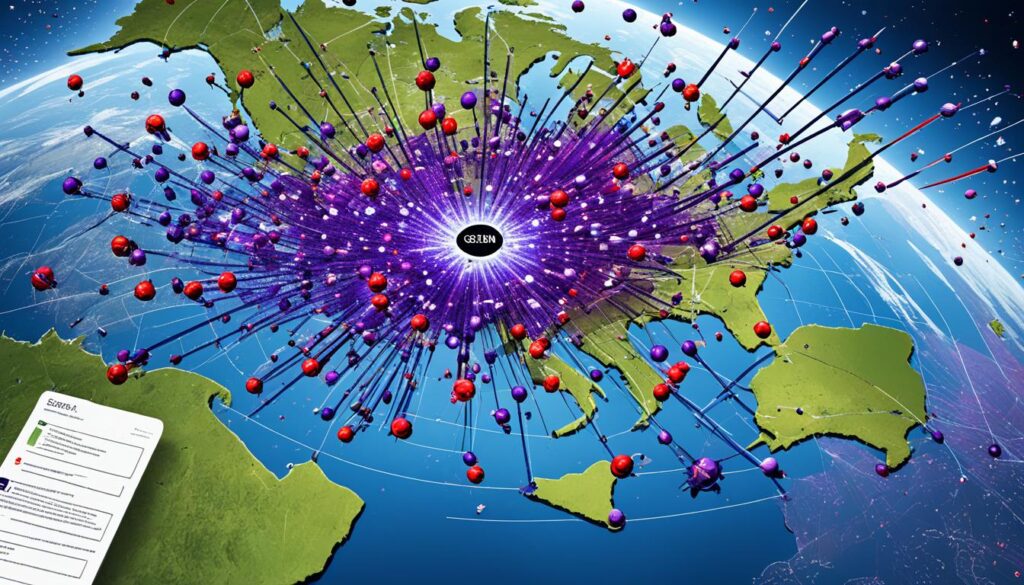
Space Traffic Management
Outer space is getting more crowded with satellites and space activities. This has raised the risk of collisions between spacecraft and space debris. To tackle this, we need good space traffic management (STM). This means working together and sharing information between satellite operators.
Cross-Operator Coordination and Information Sharing
Sharing conjunction data messages (CDMs) is key to keeping space safe. These messages warn operators of possible collisions. This helps plan and take steps to avoid these risks.
Working together on space safety is crucial. We need to set up ways to talk and coordinate. This ensures our space assets keep running safely without interruptions.
| Key STM Attributes | Description |
|---|---|
| Space Domain Awareness | Understanding the space environment, tracking, and identifying space objects. |
| Operational Coordination Services | Helping satellite operators communicate and coordinate to avoid collisions. |
| Collision Avoidance | Quickly spotting potential collisions and taking steps to avoid them. |
| Space Environment Preservation | Working to reduce space debris and keep space safe for the future. |
Good space traffic management is key to the future of space. By working together and sharing information, we can make space safer and more sustainable.
« STM is the assurance value chain that contributes to a safe, secure, and sustainable space operations environment, composed of Space Traffic Coordination (STC) and Regulation & Licensing, and dependent upon a foundation of continuous Space Situational Awareness (SSA). »
Regulatory Frameworks and Guidelines
As space technology grows, governments and international groups have made rules to use space wisely. They aim to stop the spread of space debris. These rules help keep space safe for future use and protect the area around Earth.
The United Nations’ Space Debris Mitigation Guidelines give advice on how satellites should work. They tell operators to create less debris and dispose of satellites safely when they’re done. The International Organization for Standardization (ISO) also has standards like ISO 24113 to help with sustainable space use.
These international guidelines set a basic safety level. But, the fast pace of space innovation means we need flexible rules. Groups like the U.S. Federal Communications Commission (FCC) update their rules to keep up with new tech and set clear standards for safety.
Leading satellite companies have also joined in. They support the « Best Practices for the Sustainability of Space Operations » document. This shows everyone’s commitment to keeping space safe and clean.
With more satellites going up, these regulatory frameworks and guidelines are key. They help the space industry grow responsibly, protect valuable space assets, and keep space safe for exploration.
« The revision of orbital debris mitigation rules incorporates technical guidance from the U.S. Government interagency community, developers of the recent update to the U.S. Government Orbital Debris Mitigation Standard Practices. »
Debris Mitigation Strategies
More satellites and space debris are filling our space, making it vital to keep space safe for the future. Satellites and space agencies use two main ways to deal with this: avoiding debris and removing it actively.
Avoidance Maneuvers: Navigating the Debris Minefield
Debris avoidance maneuvers are a key method to keep satellites safe. When satellites are at risk of hitting other objects, they change their path to avoid a collision. This needs careful planning and teamwork to work well.
Active Debris Removal: Cleaning up the Space Environment
There’s also a push for active debris removal to lessen the danger in space. This means creating special spacecraft to grab, move, or remove big pieces of debris. It’s a new idea, but it could help keep space safe for a long time.
To fix the space debris problem, we need to use satellite maneuvering and on-orbit servicing together. These methods help prevent collisions and keep space safe for future space use.
« The implementation of space debris mitigation measures is recommended due to the potential damage space debris can cause to spacecraft, leading to the loss of missions or manned spacecraft, thus implicating crew safety. »
Impact of Collisions on Satellite Operations
A satellite collision can be very dangerous, leading to the loss of a spacecraft and disrupting or ending a mission. Even small impacts can cause big damage, like the hole in the Hubble Space Telescope’s antenna after hitting a piece of debris. It’s crucial to protect our satellite technology to keep important space services running smoothly.
The 2009 collision between Iridium 33 and Cosmos-2251 satellites showed the dangers of space debris and how missions can be disrupted or fail because of satellite crashes. The Space Surveillance Network (SSN) tracks thousands of objects in space to predict possible collisions. Satellite operators use detailed data and models to figure out the chance of a collision.
Operators decide when to act based on the risk of a collision. They balance the risk against the cost and risks of moving a satellite. New systems are being made to help avoid collisions faster and reduce mistakes. But, it’s hard to tell apart friendly and unfriendly objects in space and we need better tracking of small debris.
Even with these efforts, satellite collisions are still a big concern. By the end of 2003, there were about 10,000 pieces of debris in space. The average time between collisions is around 10 years. Events like the damage to the Hubble Space Telescope and the Cerise satellite show how important it is to avoid collisions.
« The average time between destructive collisions for all satellites in orbit is estimated to be about 10 years. »
Working together is key to avoiding collisions because space activities are global. We need more research, new technology, and teamwork among satellite operators, space agencies, and rules makers. This will help fight the threat of satellite collisions and keep space services safe for the future.
Case Studies and Historical Events
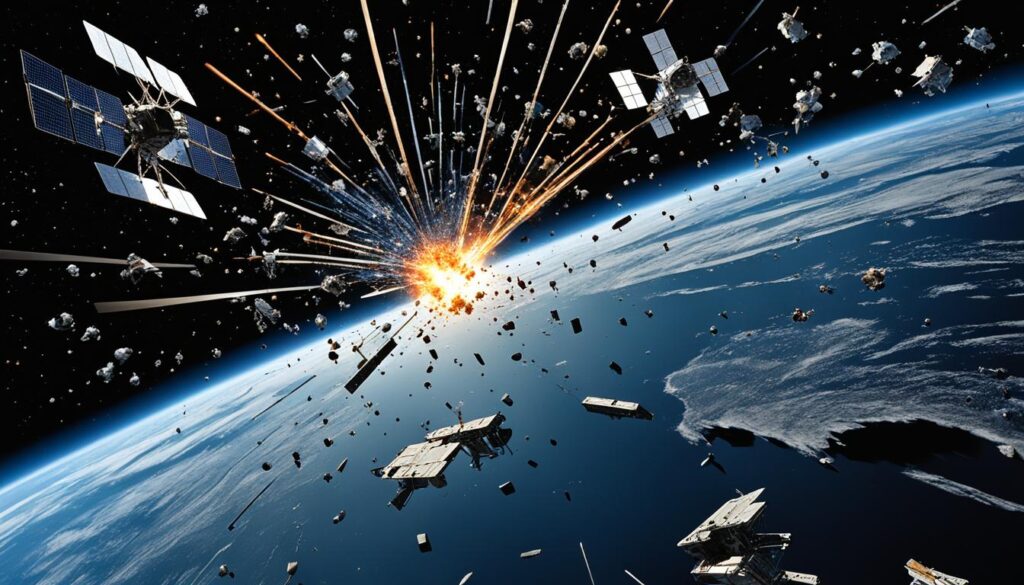
The history of satellites has seen many big collisions. One major event was in 2009. An Iridium communications satellite and a Russian Cosmos satellite collided, creating over 2,000 pieces of trackable debris. This shows how one event can greatly increase the dangers in space.
Another big event was the 2007 Fengyun-1C anti-satellite test by China. It caused a huge amount of debris that still threatens satellites today. This added more than 3,500 pieces of trackable debris, making it crucial to work on preventing more collisions and cleaning up space.
« Accelerating the Kessler Syndrome, where debris density increases to a self-sustaining level, is a significant risk if space debris pollution is not controlled. »
These events show we need strong plans to deal with space debris. NASA’s Orbital Debris Program Office has made a model to predict how many pieces of debris a collision might create. They use past data and simulations for this.
After the 2007 Chinese test, Aerospace set up the Debris Analysis Response Team (DART). DART quickly checks risks for satellites in debris fields. They also have the Aerospace Debris Environment Projection Tool (ADEPT) for long-term predictions. This helps them understand how our actions affect space.
These events and the work to fix the space debris problem show how important it is to work together. We need rules and new tech to keep space safe for future use.
Future Challenges and Opportunities
The space industry is always changing, bringing new tech and solutions to the table. These advancements aim to tackle the growing issue of space debris. We’re seeing the creation of advanced vehicles that can grab and pull down big debris pieces. Also, satellites are getting smarter with better shields and movement systems.
Emerging Space Technologies
With the satellite count expected to jump from about 5,300 to possibly 100,000 in the next ten years, space is getting crowded. This raises big concerns about collisions. New tech is stepping up to meet these challenges:
- On-orbit servicing vehicles: These systems are made to catch and safely pull down big debris, lowering the risk of hitting other satellites.
- Active debris removal: Projects like the European Space Agency’s ClearSpace-1 mission, set for 2025, aim to actively take out large debris from orbit.
- Improved satellite shielding and maneuvering: Companies are making satellites tougher, using better shields and propulsion to dodge potential collisions.
Even with big challenges ahead, these new technologies give us hope. They could help keep space safe for satellites in the future.
« The rapid growth of the satellite industry, with an estimated increase from around 5,300 satellites currently orbiting the Earth to as many as 100,000 within the next decade, has heightened concerns about orbital overcrowding and the risk of collisions. »
| Metric | Value |
|---|---|
| Current Operational Satellites | Around 5,300 |
| Projected Satellites Within Next Decade | Up to 100,000 |
| Confirmed Fragmentation Events | More than 550 |
| Debris Caused by Deliberate Events | 24% of Fragmentation Events |
Collaboration and International Cooperation
Fixing the space debris problem needs a worldwide team effort. Satellite companies, space agencies, and global groups must work together. They need to create and use debris removal plans, share important data, and make agreements for responsible space use. This teamwork is key to keeping space safe for the future and using space technology’s benefits.
The Inter-Agency Space Debris Coordination Committee (IADC) started in 1993. It has 13 major space agencies from around the world. The IADC sets the standard for dealing with space debris. It has groups focused on measuring, modeling, protecting, and removing debris, helping with research and sharing info.
Today, there are over 5,000 satellites in space, up from about 1,000 in 2010. This shows how important cooperation is for space sustainability. Satellites move to avoid hitting debris, showing how agreements help keep space safe and responsible.
| Key Collaborative Initiatives | Participating Agencies | Focus Areas |
|---|---|---|
| Quadrilateral Security Dialogue (Quad) Space Working Group | United States, Australia, Japan, India | Satellite communication, Earth observation, space situational awareness |
| United Nations Office for Outer Space Affairs | Global membership | Promoting the peaceful use of outer space, developing international space law |
| International Telecommunication Union | Global membership | Coordinating the use of the radio-frequency spectrum, managing satellite orbits |
As more satellites are launched, cooperation will be key for managing space traffic, servicing satellites, removing debris, and using space wisely. By working together, space agencies and satellite companies can set global rules for space sustainability. This will keep space safe for the future.
« Cooperation on space debris management can safeguard commercial satellites, future space operations, and space exploration efforts, ensuring continued economic growth. »
Conclusion
Dealing with space debris is a big challenge for the global space industry. We need advanced modeling, monitoring, and strong satellite designs. Also, working together on debris removal and rules is key to keeping space safe for the future.
Recently, the way we look at satellite risks and safety has changed a lot. This is because more satellites are going up and we have more megaconstellations. We need new ways to remove debris and avoid collisions. Also, working together worldwide is important.
As we explore more in space, we must stay alert and act fast to solve the debris problem. We need new tech, better ways to watch and predict space events, and teamwork. This way, we can keep using space safely and make the most of its benefits for everyone.