
Space situational awareness (SSA) means knowing and tracking objects in space. It helps predict close calls between objects and warns space teams to avoid collisions. The Aerospace Corporation has been key in this field, helping the U.S. government with SSA. They’ve worked on tracking systems and developed important algorithms for tracking and predicting space events.
Key Takeaways
- Space situational awareness (SSA) involves tracking and monitoring objects in Earth’s orbit to predict potential collisions and ensure the safety of space operations.
- The Aerospace Corporation has played a crucial role in developing the processes and algorithms used by the U.S. government for orbit determination, conjunction prediction, and space object cataloging.
- SSA data is essential for enabling collision avoidance maneuvers and maintaining the sustainability of the space environment.
- Aerospace has created various tools and models to improve the accuracy and efficiency of space object tracking and debris monitoring.
- The company’s expertise in SSA has contributed to the overall advancement of space safety and traffic management.
Introduction to Space Situational Awareness
Definition and Importance of SSA
Space Situational Awareness (SSA) means knowing what’s happening in space. It tracks the places, movements, and states of objects in space. This includes satellites, old satellites, and space junk. SSA is key to understanding what’s happening now and what might happen in space.
SSA is very important. There are over 27,500 tracked objects in space, and thousands of close calls happen every month. Keeping track of space is crucial for safety, avoiding collisions, and planning for the future in space.
Challenges in Maintaining Awareness of the Space Environment
Keeping track of space is hard. Space is huge, there are many objects up there, and space activities are getting more complex. Maris-Tech’s video and AI solutions are helping make space safer for satellites and future missions.
« The average meteoroid flux through low Earth orbit indicates an expected loss of one satellite every 20 years, considering a current active satellite population of around 1000. »
More satellites like Starlink and OneWeb make tracking harder. We need new tech, working together, and sharing data to use space safely and securely.
Components of Space Situational Awareness
Understanding the space environment is key to keeping space safe and sustainable. At the core, we have the space surveillance network. It’s a global system of radar and optical sensors that track space objects. This helps predict collisions and lets satellite operators avoid them.
Space Surveillance Network
The U.S. Space Surveillance Network (SSN) is vital for space awareness. It uses ground and space sensors to track thousands of objects in orbit. These include satellites, old spacecraft, and debris. The SSN’s data creates a detailed catalog of space objects, helping us track their paths.
Orbital Debris Tracking
SSA also tracks orbital debris, which comes from old satellites and rockets, or natural events like meteor storms. The Aerospace Corporation’s CORDS has made advanced models to understand this debris. This info helps make policies for a safe space environment.
With more objects in space, like 20,000 new satellites soon, we need strong space awareness. The space surveillance network and debris tracking models help reduce risks in a crowded space.
Aerospace Corporation’s Role in SSA
The Aerospace Corporation has played a key role in creating the methods and algorithms used by the U.S. Space Force. They focus on orbit determination, conjunction prediction, and collision probability estimation. Aerospace teaches the space industry how to turn sensor data into accurate orbit information. This helps with collision avoidance.
Orbit Determination and Conjunction Prediction
Aerospace has been a leader in space traffic management (STM) from the start. They’ve led in collision avoidance analysis for launch and orbit activities. The company works with the U.S. Space Force Space and Missile Systems Center. They do debris mitigation compliance assessments and look at how new satellite constellations affect the space debris environment.
Modeling Untrackable Debris Environment
For years, Aerospace’s Center for Orbital and Reentry Debris Studies (CORDS) has worked on models of the untrackable debris environment. They aim to understand unseen risks now and in the future. The Aerospace Debris Environment Projection Tool (ADEPT) predicts the future debris environment under different scenarios.
It shows how various behaviors and policies will affect future debris, collision frequencies, and satellite conditions.
| Key Statistics | Value |
|---|---|
| Objects Tracked by DoD | Over 44,000 space objects, with only about 5,600 verified as active payloads |
| Untrackable Objects | Estimates suggest there are over 36,000 space objects larger than 10 centimeters and 1,000,000 objects between 1cm and 10cm in Earth’s orbit |
| Funding for SSA Activities | $16 million allocated to the Office of Space Commerce for its SSA activities in the Consolidated Appropriations Act, 2022 |
Aerospace Corporation’s skills in orbit determination, conjunction prediction, and modeling the untrackable debris environment are vital. They help the U.S. Space Force and the space industry keep space safe and sustainable.
space situational awareness technology
In today’s fast-paced space exploration, the role of space situational awareness technology is vital. These technologies include sensors, data tools, and analytical skills. They help us monitor, track, and predict the movements of objects in space and their surroundings.
At the core of space situational awareness technology are space surveillance systems. These systems use sensors on the ground and in space to spot, identify, and track objects around Earth. They keep an eye on active satellites, old spacecraft, and the growing issue of space junk. This junk poses a big threat to the safety and future of space use.
The market for space domain awareness technology is growing, even with the challenges of the COVID-19 pandemic. The pandemic slowed down space production and caused launch delays. Yet, the need for better understanding of space remains strong. Companies like Lockheed Martin, L3Harris Technologies, and Analytical Graphics are leading the way in creating new tools and methods for space challenges.
With thousands more satellites expected to launch soon, the need for strong space situational awareness technology is urgent. These systems are key to safe and efficient space use. They support national security and help keep space safe for the future.
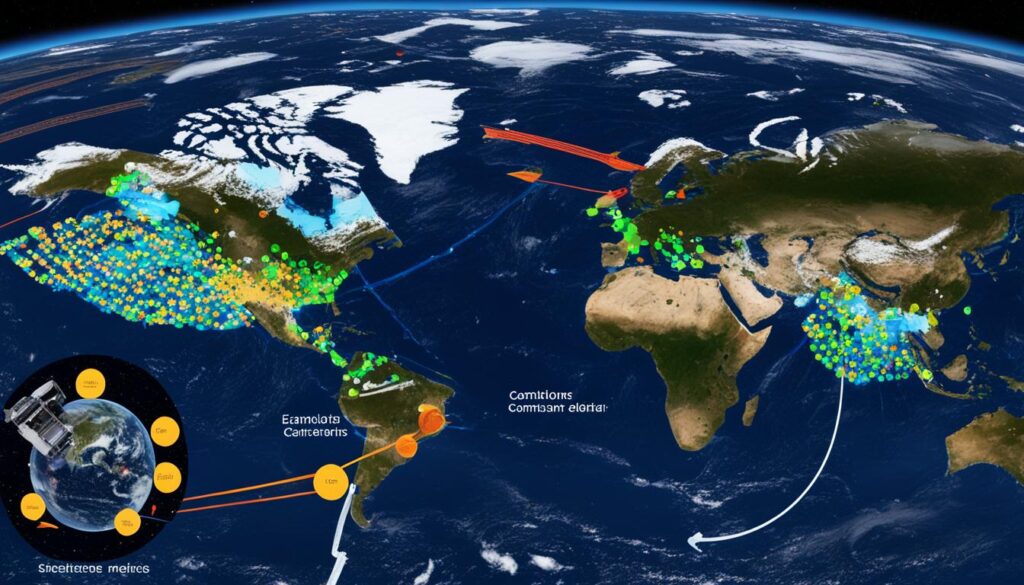
« The space situational awareness market is expected to grow significantly in the coming years, driven by the increasing complexity of the space environment and the need to maintain a comprehensive understanding of objects and activities in orbit. »
Sensor Technologies for SSA
Ground-based space sensors like radar and optical telescopes are key to the U.S. Space Surveillance Network. Radar helps track objects in low Earth orbit. Optical sensors look at satellites in higher orbits. Each type has its own strengths and weaknesses.
Ground-Based Sensors: Radar and Optical
Ground-based space surveillance sensors have been around for over 20 years. They work on the Goldstone Family of Systems (GFS) network for tracking space. These sensors get updated often to give a clearer view of space. They also set up and manage ground sites for the network.
Ground RF sensors use advanced tech for tracking space objects. They also have software for managing missions and keeping up with new tech.
Space-Based Sensors and Their Advantages
Space-based sensors have big advantages over ground-based ones. They work outside the Earth’s atmosphere. This lets them see more objects, even the small and dim ones, and track them for longer.
But, these sensors are not without their challenges. They cost more to make and launch, and they have to work in a tough space environment.
« The number of Anti-Satellite Objects (ASOs) has been going up since 1957. Developing SSA sensor tech is key to dealing with the space debris problem. »
Data Processing and Analysis Tools
The aerospace industry uses advanced software to track space objects orbiting Earth. Companies like The Aerospace Corporation have developed these tools. They help model and analyze space objects’ movements and characteristics.
Orbital Analysis Software Suite
The Aerospace Corporation offers software like NORSSTrack. It has many features for tracking space data. These include tracking objects, analyzing collisions, and spotting satellite movements. This software helps space operators understand the space environment better.
Collision Avoidance and Maneuver Detection
The Aerospace Corporation is key in avoiding collisions in space. They use their data analysis skills to predict collisions and track satellites. This helps space operators prevent risks and keep space assets safe.
| Key Features | Benefits |
|---|---|
|
|
The Aerospace Corporation is crucial for the space industry. They use advanced software and knowledge to keep space safe and sustainable.
International Cooperation and Data Sharing
Space situational awareness (SSA) needs data from many sources. This includes government agencies, commercial groups, and international partners. It’s key to have standard ways to share data and a common language for cooperation.
In recent years, more space situational awareness data sharing agreements have been made. Now, there are 169 agreements, up from 124 two years ago. These agreements include 33 with nations and international groups, and 129 with commercial partners. Seven involve academic institutions.
The United States is a big supporter of global SSA cooperation. The Department of State and the Department of Defense work with the European Space Agency and the European Union. They aim to improve SSA skills. The U.S. also has space security dialogues with 15 countries to boost space cooperation.
The United Nations Committee on the Peaceful Uses of Outer Space (UN COPUOS) sees the value of global SSA cooperation. The Working Group on the Long-term Sustainability of Outer Space Activities (LTS) is working on SSA guidelines. They aim to make orbital data more accurate, ensure spaceflight safety, and set global standards for sharing space object info.
Even with efforts, preventing big satellite collisions is moving slowly. The growing market for space data and the increasing number of space objects highlight the need for better cooperation and data sharing in the space situational awareness field.
« The global ‘space economy’ in 2015 amounted to $323 billion, with over 75 percent attributed to commercial space products and services, infrastructure, and support industries. »
As space surveillance data sharing changes, it’s vital for government, industry, and academia to work together. This will improve our understanding of space and help make space activities sustainable for the long term.
Commercial Entities in the SSA Sector
Private companies are now key players in the space situational awareness (SSA) field, alongside government agencies. Companies like Raytheon NORSS provide important SSA services. These include sensor operations, data processing, and analytical software. They help keep space safe and secure for both government and commercial users.
Services Offered by Private Companies
The SSA industry has grown a lot, with 74 nodes worldwide as of 2020. This includes 25 commercial entities, 42 government agencies, 5 international organizations, and 2 nonprofits. Over half of these groups run their own SSA sensors, showing the private sector’s wide range of skills.
There’s a big need for space-based services and managing space traffic. This is because of more satellites and space debris. Private companies offer services like commercial space situational awareness, private sector space surveillance, and space data services. These services meet the changing needs of the space industry.
The United States and the European Space Agency (ESA) lead in SSA. Satellite operators are also important, showing their wide range of SSA data. As governments offer basic SSA services, commercial companies are focusing on specialized services and advanced analysis.
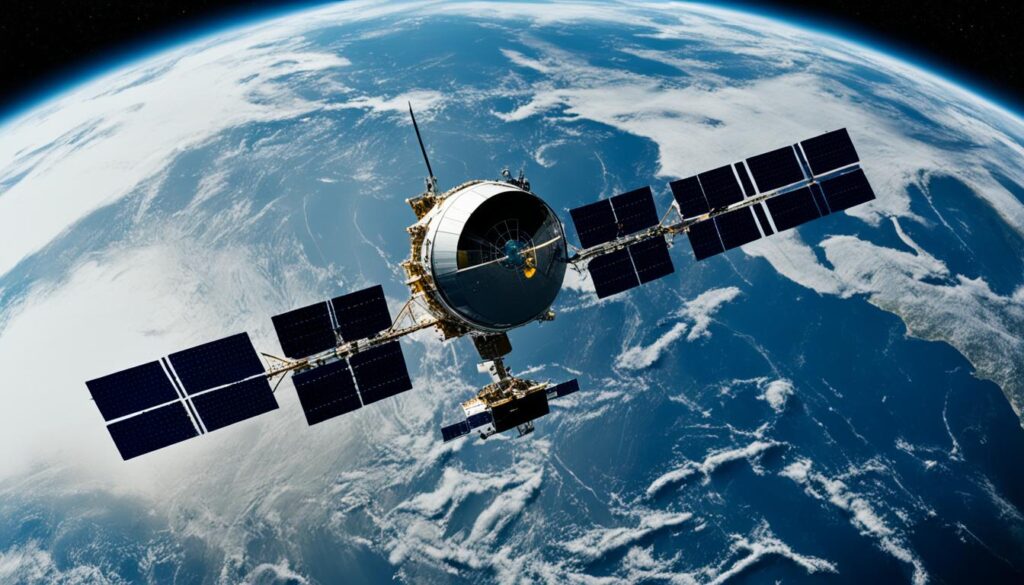
The SSA industry is set to keep growing. It was worth $1.5 Billion in 2021 and could hit $1.8 Billion by 2026. This growth is thanks to more demand for space services, the need for managing space traffic, and the importance of satellite technology in various fields.
Policy and Regulatory Considerations
Space activities are growing fast, and so is the problem of space debris. We need strong policies and rules to keep space safe for the future. Working together and setting common standards for space situational awareness, space traffic management regulations, and space debris mitigation guidelines is key.
The U.S. military tracks over 23,000 objects in space, with 1,800 satellites still working. Recent events like China’s 2007 test and India’s 2019 test show space is getting more dangerous. So, we need good space situational awareness policy to prevent accidents and conflicts.
Commercial satellites and the military both need top-notch space situational awareness data to avoid crashes. With plans for thousands of new satellites, this is more important than ever. If satellites crash, they create more debris, which can cause more problems for other satellites.
The U.S. Department of Commerce plans to share space situational awareness data with others. The U.S. military is also improving its skills and working with others to get better at tracking space. Many countries are working on improving their space situational awareness capabilities, showing how big this issue is worldwide.
The Outer Space Treaty talks about working together and helping each other in space. As more companies go to space, we’ll need strong space traffic management regulations and space debris mitigation guidelines. These rules will help keep space safe for everyone.
| Key Policy and Regulatory Considerations | Implications |
|---|---|
| Space Situational Awareness Policy | Enhancing data sharing and cooperation to mitigate collisions and conflict in space |
| Space Traffic Management Regulations | Coordinating and synchronizing space activities to ensure long-term sustainability |
| Space Debris Mitigation Guidelines | Reducing the risk of collisions and the generation of new debris in orbit |
« The Outer Space Treaty, which governs activities in outer space, includes clauses emphasizing cooperation, mutual assistance, and collective responsibility to maintain space activities for the benefit of all countries. »
Future Challenges and Research Areas
Increasing Space Traffic and Debris
More objects are now in space, making it harder to keep track of them all. The risk of a Kessler Syndrome event, where many objects collide and create more debris, is growing. This highlights the need for new ideas and research in tracking space objects.
Improving Tracking and Identification Capabilities
Researchers are working hard to make tracking and identifying space objects more accurate. They’re using data from different sensors, including those from other countries and companies. They’re also looking into new methods like active transponders and tracking how objects break apart.
These efforts are key to understanding the growing number of objects in space. They help reduce the risks from more space traffic and debris.
| Challenges | Potential Solutions |
|---|---|
| Increasing space traffic and debris | Continued innovation in space situational awareness technologies |
| Kessler Syndrome risk | Developing advanced debris tracking and identification capabilities |
| Limited sensor coverage and data sources | Incorporating data from international and commercial providers |
| Challenges in tracking small objects | Exploring techniques like active transponders and fragmentation event processing |
« Regulatory frameworks need to be developed and enforced to manage increasing space traffic, prevent interferences or collisions between assets, and ensure sustainability in space. »
The space around us is getting busier, making it crucial to keep improving our ability to track and identify objects. By tackling the issues of more space traffic and debris, we can make space safer and more sustainable. This will help us use space technology to its fullest for the good of all humans.
Applications of SSA Beyond Space Operations
Space situational awareness (SSA) technology does more than keep space safe. It helps us understand the space environment and what’s happening there. This knowledge is key for national security and keeping an eye on the space domain. It helps make better decisions and plan strategies for the military and intelligence agencies.
National Security and Space Domain Awareness
Advanced SSA systems give us important data for national security. They track satellites, spacecraft, and even space junk. This helps spot threats or odd behavior in space. It’s a big part of keeping our country safe today.
- SSA data can spot and track foreign satellites, missiles, or other space stuff, warning us of possible threats early.
- Knowing where things are in space helps us plan defenses and countermeasures.
- SSA also helps in making decisions about military space operations, protecting assets, and handling crises.
The space around us is getting crowded and contested. It’s vital for the military and intelligence to know what’s up there. SSA technology is key to this understanding, making our country safer.
| Metric | Value |
|---|---|
| Beyond Gravity’s SSA solution data collection | Over six years |
| Satellites monitored by Beyond Gravity’s SSA platform | Over 10,000 |
| Expected global space economy by 2040s | Over $1 trillion US dollars |
| Beyond Gravity’s sales growth in 2023 | 8% increase to USD 427 million (CHF 383 million Swiss francs) |
Space domain awareness and military uses of space situational awareness are more important than ever. SSA technology is crucial for national security applications. As space gets busier and more complex, we’ll need strong and reliable SSA solutions more than ever.
Conclusion
Space situational awareness (SSA) technology is key to keeping space safe and sustainable. It uses advanced sensors, data tools, and analysis to understand space and its dangers. With over 23,000 trackable objects in space, knowing what’s up there is crucial.
More research and working together globally are needed to manage space traffic and reduce debris. Improving orbital prediction, detecting maneuvers, and avoiding collisions are important. Using new tech like artificial intelligence and cloud computing will help too. This tech is vital for safe space use, which is key for future space missions and discoveries.
The space industry is growing, making strong SSA solutions more important. By using new tech and working together, we can keep space safe and open for everyone. This helps us explore and use space for the good of all humanity.