
Start your journey with a dropshipping business. This model lets you sell many products without keeping inventory. You can begin with just $100 and create your own ecommerce store. You’ll also use direct-to-customer shipping to reach customers easily.
Dropshipping is great for new entrepreneurs who want to start online with low costs. When a customer buys from your dropshipping store, the supplier ships the item directly. This means you don’t have to buy or store inventory, saving you money upfront and later.
Key Takeaways
- Dropshipping businesses can be started with as little as $100 in upfront investment.
- Dropshippers typically aim for profit margins between 15% and 20%.
- Finding reliable suppliers who can provide timely fulfillment and reasonable shipping costs is crucial.
- The process of starting a dropshipping business involves six key steps: choosing a business concept, sourcing products, selecting suppliers, building an online store, registering the business, and marketing effectively.
- Leveraging online marketplaces and social media platforms are effective strategies for successful dropshipping businesses.
Understanding the Dropshipping Business Model
What is Dropshipping? Dropshipping is a way for merchants to sell products without keeping any inventory. When a customer buys something, the merchant tells the supplier to send it directly to the customer. This means the merchant doesn’t have to worry about storing, packaging, or shipping products. It’s a great choice for those wanting to start an online business with little money upfront.
Benefits and Drawbacks of Dropshipping
The benefits of the dropshipping business model include:
- Low startup costs since no inventory is needed
- Flexibility to easily grow the business based on demand
- No costs for managing inventory
But, the drawbacks of dropshipping are:
- Less control over how products are made and delivered
- More competition since many can sell the same items
- Lower profit margins than traditional retail
Choosing the right dropshipping partner is key. Look for quality products, good profit margins, and reliable delivery and stock levels. This will help your dropshipping business succeed.
| Pros of Dropshipping | Cons of Dropshipping |
|---|---|
| Low startup costs | Less control over supply chain |
| Scalable business model | Potential quality issues with products |
| No need to manage inventory | Increased competition |
| Flexibility to operate from anywhere | Lower profit margins |
The dropshipping model has many benefits but also challenges. Entrepreneurs need to think carefully about these when starting an online business.
Choosing a Profitable Niche for Your Dropshipping Business
Starting a dropshipping business means picking the right niche is key. By choosing a niche that’s profitable and in demand, you can focus on specific customers. You can also tailor your product catalog to meet their needs. You can find a great niche by using your own knowledge and interests or by doing deep market research.
Conducting Market Research
Market research is vital to see if a niche can make money. Tools like Google Trends, Facebook Audience Insights, and online marketplaces give insights into what customers want and what’s popular. They also show how competitive the market is.
- Use Google Keyword Planner to check how often people search for products and keywords.
- Look at AliExpress, Amazon, and eBay to see what sells well and who’s selling it.
- Meta’s Audience Insights tool helps you understand who your customers are and what they like.
Analyzing Competitor Offerings
Looking at what your competitors do is important when picking a niche. See what products they sell, how they price things, how they market, and how they connect with customers. This helps you find ways to stand out and meet customer needs that aren’t being met.
| Competitor Analysis Insights | Potential Business Opportunities |
|---|---|
| Identify popular and trending products | Offer unique or complementary products |
| Assess pricing and profit margins | Implement a competitive pricing strategy |
| Evaluate marketing strategies | Develop a targeted marketing approach |
| Observe customer engagement and reviews | Improve customer service and product quality |
By mixing your interests, deep market research, and competitor analysis, you can find a profitable niche. This niche should match your business goals and what customers want.
« The key to a successful dropshipping business is finding a niche that aligns with both your passions and the market’s needs. »
Finding Reliable Dropshipping Suppliers
Finding the right dropshipping supplier is key to your online business’s success. They handle inventory, orders, payments, and shipping. Your choice affects your profits, product quality, and customer happiness.
Many entrepreneurs use online directories like AliExpress, Worldwide Brands, and Doba to find dropshipping suppliers. These sites connect you with suppliers that have been checked, offering a wide range of products.
When evaluating dropshipping suppliers, look at product quality, customer service, warehousing, return policies, and inventory accuracy. Try ordering samples and check the supplier’s history to make sure they’re good for your customers.
Popular dropshipping wholesalers include Salehoo with over 8,000 suppliers and Worldwide Brands with more than 16 million certified products. Spocket and Zendrop offer fast shipping from US warehouses, perfect for domestic sellers.
| Supplier | Product Selection | Warehousing | Pricing |
|---|---|---|---|
| AliExpress | Over 100 million products | Global shipping | Competitive prices |
| Worldwide Brands | Over 16 million products | Worldwide suppliers | $299 lifetime membership |
| Doba | Over 2 million products | Integration with 160+ suppliers | Monthly subscription |
| Spocket | Millions of products | 60% of suppliers in US/Europe | Affordable pricing |
By doing your homework and working with dropshipping wholesalers, you can create a successful dropshipping business. This will give your customers a great experience.
Building an Ecommerce Website for Your Dropshipping Business
Creating a strong ecommerce site is key for your dropshipping business’s success. Your online store is where you show off your products and make buying easy for customers. To make a successful dropshipping store, pick a platform that fits your business needs.
Selecting a Suitable Ecommerce Platform
Platforms like Shopify, WooCommerce, and Squarespace are great for dropshipping. They have tools for finding suppliers, handling orders automatically, and designing your store. Think about how easy it is to use, how big it can grow, and if it has special dropshipping features when choosing an ecommerce platform for dropshipping.
Shopify is known for its dropshipping tools. Squarespace has customizable designs and good prices. Bluehost, starting at $9.95 a month, offers a domain name and SSL certificate for security.
Optimizing Product Pages for SEO
Your store’s content is key to a great customer experience and better search engine ranking. Make your product pages better by adding detailed descriptions, guides, and blog posts. Using AI to make SEO-friendly product copy and images can help you stand out. Posting new, useful content often can improve your search engine ranking, increasing your dropshipping store’s visibility.
Focus on making a great ecommerce site for your dropshipping business. Put effort into making it easy for users and good for search engines. This will help draw in your target audience, boost sales, and grow your dropshipping business.
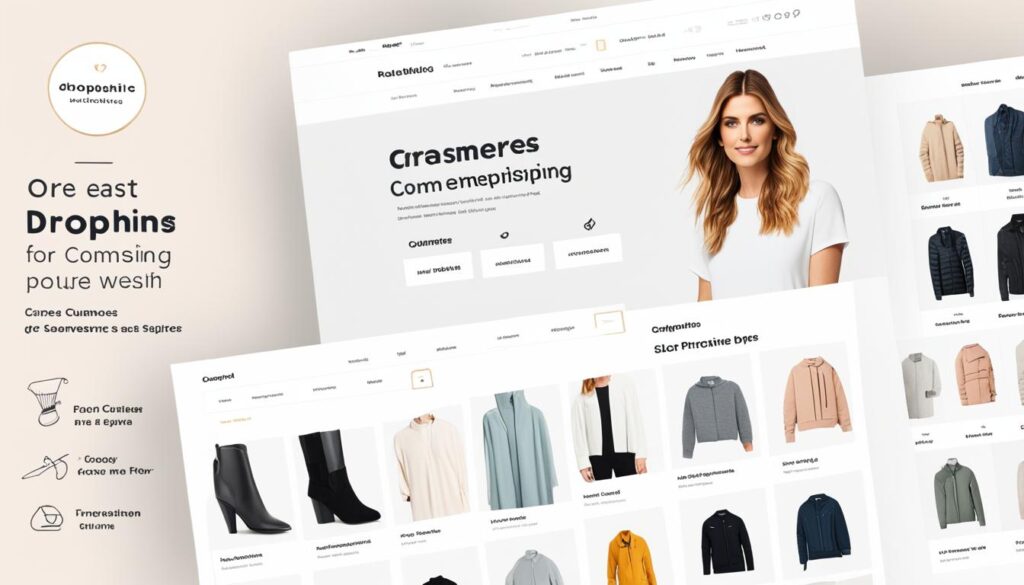
Curating a Profitable Product Catalog
Building a successful dropshipping business starts with the products you sell. You need to pick items that your target audience wants. By choosing trending and high-demand dropshipping products, you boost your chances of making money and growing.
Identifying Trending and High-Demand Products
To pick profitable dropshipping products, look at what other sellers are doing well. Check out customer reviews, top sellers, and industry trends. This helps you find high-demand dropshipping niches that could lead to great sales. Also, try out samples from suppliers to check their quality and reliability.
- Use data and analytics to find popular products in your niche
- Look at how suppliers perform, including their delivery times and customer satisfaction
- Order samples to make sure they match your quality standards
By focusing on trending and high-demand dropshipping products, you can make a product catalog that will appeal to your customers. This can help drive steady sales for your business.
« The key to a successful dropshipping business lies in your ability to identify and offer the right products that your customers want and need. »
Pricing Your Dropshipping Products for Profitability
Pricing your dropshipping products is key to a successful business. You need to balance your costs with market prices. This balance helps you set a profit margin that keeps your business going.
Think about the product type, its value, and what others charge when setting prices. This approach helps you make more money and keep your products appealing. The goal is to optimize dropshipping product pricing to increase your price dropshipping products and set profit margins for dropshipping.
On average, dropshippers make 15% to 20% profit, based on the niche and costs. But, some can make up to 100% to 300% profit by smart pricing.
| Pricing Strategy | Description |
|---|---|
| Fixed Dollar Markup | Adding a fixed dollar amount to the supplier’s price |
| Fixed Percentage Markup | Applying a consistent percentage markup on the supplier’s price |
| Tiered Markup on Cost | Implementing different markup percentages based on product price tiers |
| MSRP Strategy | Pricing products based on the manufacturer’s suggested retail price |
| Psychological Pricing | Leveraging odd-ending prices like $19.99 to influence customer perceptions |
| Bundle Pricing | Offering discounts for purchasing multiple related products together |
To get the best prices for your dropshipping products, think about how customers buy, who else is pricing, and your costs. Also, consider how much your products are worth. Adjusting your prices often can help you make more money and stay ahead in the dropshipping market.
Legally Registering Your Dropshipping Business
Starting a dropshipping business means making it a legal entity. This keeps it separate from your personal stuff. You need to pick a business name, file for an LLC or corporation, and get a tax ID from the IRS. You might also need a sales tax or reseller’s permit, depending on where you are.
When you register your dropshipping business, you follow the legal requirements for dropshipping. This keeps your personal stuff safe. It’s the first step to making your online store work well.
- Choose a Unique Business Name: Pick a name that shows what your brand is about and is okay to use in your state.
- Register Your Business Entity: Fill out the forms to make your business an LLC, corporation, or other legal type.
- Obtain a Tax Identification Number (TIN): Get an Employer Identification Number (EIN) from the IRS for taxes.
- Acquire Necessary Licenses and Permits: Find and get any state or local licenses or permits you need to register dropshipping business in your area.
By doing these important steps, you make sure your dropshipping business is legally registered. This sets you up for success. You can then focus on making and growing your online store.
Setting Up Business Finances and Accounting
Managing your finances well is key to a successful dropshipping business. It’s important to manage your dropshipping business finances, set up strong accounting systems, and track expenses and revenue. Having a separate bank account for your business helps you keep your personal and business money apart. This makes it easier to watch your income, expenses, and taxes.
Think about using accounting software or getting a professional bookkeeper to keep your finances right. This way, you’ll know exactly how your business is doing financially. It helps you make smart choices and stay financially stable.
| Key Accounting Practices for Dropshipping Businesses |
|---|
|
By setting up accounting for dropshipping and tracking expenses and revenue early, you’re ready to handle the challenges of an online store. You can make choices based on data to grow and increase your dropshipping business’s profits.
« Proper financial management is the key to the long-term success of any dropshipping business. »
Marketing Strategies for Your Dropshipping Store
Starting a dropshipping business is just the first step. You also need to market your products and find customers. Using social media and SEO are great ways to do this.
Leveraging Social Media Marketing
Social media can really help your dropshipping business grow. Sites like Facebook, Instagram, and TikTok have lots of people you can reach. Join groups that fit your products, make interesting posts, and use ads to promote your store to more people.
Platforms like Pinterest and Instagram are great for showing off dropshipping products. Videos on Instagram Reels and TikTok can also make your store more visible. Keep your social media real by posting mostly content, not ads.
Implementing Search Engine Optimization (SEO)
SEO is key to making your dropshipping store easy to find online. This means making your product pages better, writing blogs, and getting links to your site.
Use keywords, organize your site well, and write SEO-friendly content to climb up in search results. AI tools can help write lots of SEO articles to make your site more visible.
By using social media and SEO together, you can really market your dropshipping business. This helps you connect with customers and bring more people to your store.
| Marketing Channel | Potential Impact | Key Considerations |
|---|---|---|
| Social Media |
|
|
| Search Engine Optimization (SEO) |
|
|
start a successful dropshipping business online
The dropshipping industry is a great chance for new entrepreneurs. It’s expected to grow as global retail eCommerce sales hit $8.1 trillion by 2026. This growth means the dropshipping market could reach $476.1 billion in 2026, making it a good choice for starting an online business.
To succeed in dropshipping, start by researching the market to find a profitable niche. Use tools like Google Trends and Ahrefs to find trending products and check out what competitors offer. Social media can also give you clues about what customers want.
Then, find reliable suppliers that fit your business goals. Look at their location, product range, and how easy they are to work with. Websites like AliExpress and SaleHoo can help you find good suppliers.
Next, set up an eCommerce website. Choose a platform like Shopify that’s easy to use. Make sure your product pages are easy to find online. Use tools like Sell The Trend to find products that sell well.
To get more customers and sales, have a strong marketing plan. Use social media, email, and SEO to reach people. Keep an eye on your results with Google Analytics and Facebook pixels to make your marketing better.
By following these steps and using the right tools, you can increase your chances of success in dropshipping. Remember, it takes market research, planning, and being flexible to succeed in this industry.
| Pros of Dropshipping | Cons of Dropshipping |
|---|---|
|
|
In conclusion, starting a successful dropshipping business takes a strategic plan. This includes market research, picking the right suppliers, building an eCommerce site, and marketing. With the right tools and approach, entrepreneurs can make the most of the growing dropshipping market and build a successful online business.
Managing Inventory and Order Fulfillment
As a dropshipping entrepreneur, you don’t have to handle a big inventory yourself. But, making sure orders are fulfilled well is key for a smooth customer experience. By linking your online store with your suppliers’ systems, you can automate many tasks. This cuts down on mistakes and makes the process smoother.
Automating Fulfillment Processes
Use tools and apps that link your online store to your suppliers’ systems. This helps with updating inventory, placing orders, and sending shipping updates. Automation saves time and makes your fulfillment more accurate. This leads to happier customers and fewer problems.
| Key Dropshipping Fulfillment Metrics | Average Performance | Best-in-Class Performance |
|---|---|---|
| Order Accuracy | 92% | 99% |
| On-Time Shipping | 87% | 95% |
| Order Fulfillment Cycle Time | 4-7 business days | 2-3 business days |
Automating your dropshipping inventory management and order fulfillment helps you handle inventory better. It also automates order fulfillment and streamlines the process. This ensures a smooth customer experience and boosts your business efficiency.
« Integrating your ecommerce platform with your suppliers’ systems can help automate many of the order processing and fulfillment tasks, reducing the risk of errors and improving the customer experience. »
Providing Exceptional Customer Service
As a dropshipping business owner, it’s key to offer great customer service for success. You might not ship the products yourself, but how you talk to customers matters a lot. Being quick to answer questions, having clear rules for returns, and solving problems fast can really help.
Building strong bonds with customers is key for loyalty and repeat business. These are crucial for making money with dropshipping. By giving top-notch service, you stand out and become a trusted partner for your customers.
Handling Returns and Inquiries
Some customers might want to return or swap products. Having clear rules for this and training your team to be kind and efficient helps keep customers happy. Answer quickly, offer many ways to talk, and fix problems fast.
Leveraging Customer Feedback
Listening to what customers say is a great way to deliver great customer service for dropshipping and improve the dropshipping customer experience. Ask customers to review your store, and use their feedback to get better. This shows you care about making customers happy.
| Customer Service Metric | Industry Benchmark | Your Goal |
|---|---|---|
| Response Time | Within 2 hours | Within 1 hour |
| Customer Satisfaction | 4.5 out of 5 stars | 4.8 out of 5 stars |
| Repeat Purchase Rate | 30% | 40% |
Setting and aiming to beat industry standards in customer service helps you handle returns and inquiries better. It also makes the customer experience better, which is good for your business’s growth and profits.

« Exceptional customer service is the cornerstone of a successful dropshipping business. It’s not just about processing orders – it’s about building lasting relationships with your customers. »
Scaling and Growing Your Dropshipping Business
As your dropshipping business grows, it’s key to keep an eye on your main performance indicators (KPIs). Look at revenue, profit margins, customer costs, conversion rates, and how fast you fulfill orders. This helps you pick the best products, market them well, and run your business smoothly. By always testing and improving, you can make your dropshipping business more profitable.
Analyzing Sales Data and Metrics
It’s vital to track important metrics for your dropshipping business. Keep an eye on:
- Revenue: Watch your total sales and spot trends to focus on top products.
- Profit margins: Make sure your prices help you make a good profit.
- Customer acquisition costs: Check how well your marketing works and tweak it if needed.
- Conversion rates: Find ways to make your website and product displays better.
- Order fulfillment times: Work on your supply chain and logistics to please customers more.
By analyzing dropshipping performance data and tracking key metrics for dropshipping, you can make smart choices to scale and grow your dropshipping business well.
« Consistent branding can lead to a 33% lift in revenue. » – [Source]
Use what you learn from your data to improve your product choices, marketing, and how you run things. This way, you can scale and grow your dropshipping business and increase profits.
Conclusion
Starting a dropshipping business needs careful planning. It involves picking a niche, checking suppliers, optimizing ecommerce, and marketing. By using the steps in this guide, you can set your business up for success. Always be ready to change your plans as the market changes.
The dropshipping model has many benefits. It makes running a business easier, can lead to more sales, and costs less to start. With easy-to-use ecommerce sites and reliable suppliers, you can open an online store without worrying about inventory. Good marketing, like using social media and SEO, can help draw in and keep customers.
With the dropshipping market growing, now is a great time for new entrepreneurs. By keeping up with trends, focusing on customers, and improving your strategies, you can overcome challenges and seize opportunities in this exciting field.