
China is the world’s second-largest economy, affecting global markets, trade, and finances. This article looks at how China’s economy impacts the world. It uses insights from a survey in 35 countries across six continents. It talks about how China’s rise affects global trade, investment, and supply chains.
It also looks at how China’s economy changes regional dynamics and international cooperation. The article explores what people think about China’s economic influence. It looks at the role of Chinese companies worldwide and the effects on the world economy.
This article aims to give a detailed view of how China’s economy connects with the global scene. It shows the complex sides and chances that come with China’s growing economic strength.
Key Takeaways
- China’s economy is a big deal in the global scene, making up 16% of the world’s GDP in 2018.
- China’s part in global goods trade went from 1.9% in 2000 to 11.4% in 2017, making it a big trade player.
- China’s investment going out has grown a lot, becoming the second-biggest source of foreign investment from 2015 to 2017.
- Chinese companies are big worldwide, with 110 in the Global Fortune 500 in 2018.
- China’s economy affects more than just trade and investment. It changes things like commodity prices, currency rates, and global supply chains.
Perceptions of China’s Economic Influence Across the World
People around the globe have different views on China’s economic power. Surveys by the Pew Research Center show how varied these opinions are.
Positive Sentiments in Middle-Income Countries
In many middle-income countries, people see China’s economic influence as good. A median of 47% of adults think it’s positive for their country. Countries like Thailand, Kenya, and Bangladesh have over 70% of people with positive views.
Negative Sentiments in High-Income Countries
But in high-income countries, opinions are mostly negative. A median of 57% of adults believe China’s economic influence is bad. The United States, Canada, Germany, and France are among those worried about China’s economic effects.
These differing views show how complex China’s economic influence is worldwide. As the second-largest economy, China’s actions and policies affect the global economy. This leads to varied reactions from different countries and groups.
The Impact of Chinese Companies Globally
China’s economic power is growing, making Chinese companies more important worldwide. The survey shows how these companies affect local economies and the environment.
Perceived Benefits for Local Economies
In nine middle-income countries, most people think Chinese companies help their economies. A big majority, 72%, believe these companies are good for the economy. This shows a strong positive view of their role and impact.
Environmental Concerns and Labor Practices
But opinions are more divided on environmental and labor issues. About 63% think Chinese companies protect the environment. Yet, only 57% believe they treat workers fairly. This shows that while many see economic benefits, there are worries about their environmental and labor practices.
As Chinese companies grow globally, they must work on these issues. They need to meet environmental standards and ensure fair labor practices. This will help them keep a good reputation and support local economies.
the impact of the Chinese economy on the world economy
The Chinese economy is now a key player in the global economy. It touches many parts of the world’s economy. Understanding how China’s economy affects the world is very important.
China plays a big role in global trade. It’s the second-largest economy and trades with many countries. Its big market and manufacturing skills make it important in global supply chains. When China’s economy slows down, it can affect global trade, changing how goods move around the world.
China’s growth also changes the global financial system. Its financial markets and institutions work closely with the world economy. So, China’s economic health and policies can sway global financial markets. A slowdown in China could worry investors and affect the global financial scene.
China also affects commodity prices, like raw materials and energy. It’s the biggest user of many commodities. When China’s economy is down, it can lower commodity prices. This might help Western consumers but could hurt countries that depend on commodity exports.
The Chinese economy’s impact is wide and deep. It affects global trade, finance, and commodity prices. The way China does and its policies have big effects on the world economy.
« The Chinese economy has become a driving force in the global economy, shaping the trajectory of international trade, financial markets, and commodity prices. »
Growth of China’s Outward Foreign Direct Investment
Over the past decade, China’s outward foreign direct investment (OFDI) has grown a lot, reaching almost $3 trillion by 2024. This shows China’s growing economic influence worldwide. Chinese companies and investors are looking for opportunities abroad.
The data shows some interesting trends:
- Chinese non-financial FDI in Belt and Road Initiative nations was $15.6 billion in 2008, a jump of 8.9% from the year before.
- China now has 16,000 multinational enterprises (MNEs) with about 22,000 foreign partnerships in 179 countries and regions.
- From 2004 to 2013, China’s foreign investment soared 13.7 times, from $45 billion to $613 billion.
- Before 2014, half of China’s $468 billion foreign investments went into energy, with $88.8 billion in metals, making up about 68% of the total.
- From 2015 to 2018, Chinese investments moved towards sectors like agriculture, technology, transportation, tourism, real estate, and consumer goods and materials.
China’s increasing outward foreign direct investment is changing the global economy. It affects international trade, investment, and regional development. It also shapes geopolitical dynamics. As China grows its economic influence, it’s important to understand its global investment trends and effects.
| Year | Chinese Non-Financial FDI in Belt and Road Initiative ($ billion) | Increase from Previous Year (%) |
|---|---|---|
| 2008 | 15.6 | 8.9 |
| 2009 | N/A | N/A |
| 2010 | N/A | N/A |
| 2011 | N/A | N/A |
| 2012 | N/A | N/A |
| 2013 | N/A | N/A |
| 2014 | N/A | N/A |
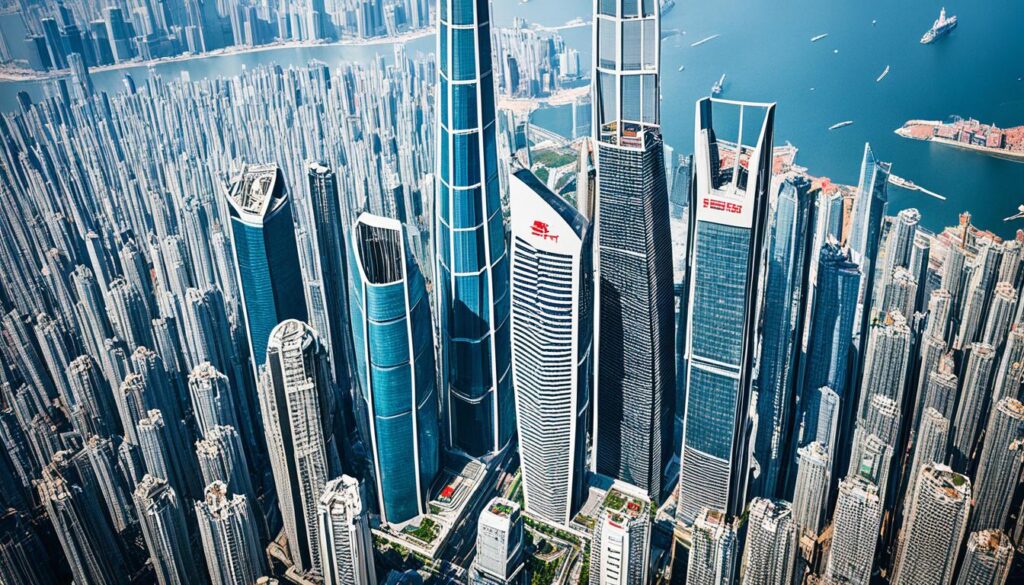
The rise of China’s outward foreign direct investment shows its growing economic influence globally. As Chinese companies and investors expand worldwide, their impact on international trade, investment, and geopolitics will keep changing.
Territorial Disputes in the Asia-Pacific Region
The Asia-Pacific region is seeing a lot of territorial disputes. China is in conflicts with its neighbors over maritime and land borders. These territorial disputes could lead to big border tensions and even conflicts. These conflicts could affect the economy and politics of many countries.
Concerns Over Border Tensions and Conflicts
Most countries in the Asia-Pacific region are worried about these territorial disputes. In the Philippines, for example, 91% of people are concerned about the border tensions with China. This includes 65% who are very worried.
The Asia-Pacific region relies a lot on shipping through the South China Sea and the Malacca Strait. If all international shipping stopped, it could cause big economic losses. Countries like Taiwan could see their economy shrink by 33%.
China claims a lot of the South China Sea, which has a lot of oil and gas. This has made border tensions worse. China has built many outposts in the Paracel and Spratly Islands, even though a court ruled in 2016 that the Philippines has some claims there.
Because of China’s actions, countries like Japan are helping the Philippines and Vietnam with military equipment. The United States also said it will defend the Philippines in the South China Sea. These moves show how serious the conflicts are getting in the Asia-Pacific region.
China’s Contribution to Global Peace and Stability
China’s growing economic power has made people around the world think more about its role in keeping peace and stability. In the Asia-Pacific region, opinions on China’s role vary. Some see it as a positive force, while others are more doubtful.
In places like Malaysia and Thailand, most adults think China helps with peace and stability. For example, 80% of Thai adults believe China makes a positive impact. But in Australia, Japan, and South Korea, many are not convinced. They question China’s dedication to global peace.
- A median of 61% of adults across the 10 Asia-Pacific countries surveyed believe that China generally contributes to global peace and stability.
- However, a median of 72% are concerned about territorial disputes involving China and its neighboring countries.
- Over 80% of adults in Australia, Japan, and South Korea share concerns about China’s territorial disputes with its neighbors.
- In contrast, 61% of Thai adults are not worried about territorial disputes between China and its neighboring countries.
These different opinions show how complex China’s role in the region is. Its economic strength has changed regional dynamics. But, worries about territorial claims and possible conflicts have also shaped views in many places. As China plays a bigger role globally, working with other countries and addressing regional concerns is key to keeping peace and stability.
« China’s leadership has undertaken public relations events internationally and promoted Chinese language programs to address concerns about its rise and build a supportive international environment for its growth. »
China’s Partnership with the World Bank
China and the World Bank have grown closer over the last 40 years. This growth shows China’s economic rise and its development. As China’s economy changed, so did its partnership with the World Bank. Now, they work together on research and studies that help understand China’s growth and challenges.
Joint Research and Flagship Studies
The World Bank and China have worked on many research projects together. They use their knowledge to create important reports. Two key studies are « Innovative China: New Drivers of Growth » and « Four Decades of Poverty Reduction in China. »
These studies have deepened our understanding of China’s economic changes. They also help in policy talks and sharing knowledge between the World Bank and China.
- The « Innovative China » report looks at what makes China’s economy grow. It shows how innovation and technology are key to its growth.
- The « Four Decades of Poverty Reduction in China » study talks about China’s big wins in fighting poverty. It gives lessons for other poor countries.
These research projects show the strong China-World Bank partnership. They help both sides understand China’s economic journey. The results of these flagship studies help make policy decisions and shape talks on China’s economic development.
« The World Bank and China have a long-standing partnership that has evolved over time to address the country’s changing development needs. Our joint research efforts have provided invaluable insights into China’s remarkable economic transformation and its implications for the global economy. »
World Bank-Financed Projects in China
The World Bank has been a key partner in China’s growth since 1945. It has given China both low-interest and regular loans. These loans have helped improve infrastructure, healthcare, and the environment.
Recently, the World Bank and China have worked together on projects for global public goods. These projects bring new ideas and let China share its development knowledge with others.
Decarbonization of the Agriculture Sector
The Methane-Reducing and Water-Saving Paddy Rice Program is one example. It aims to make farming greener and save water. By using smart farming methods, it helps farmers cut down on carbon emissions and improve their work.
Greening of Rural Development
China and the World Bank also work on the Green Agricultural and Rural Revitalization Program. This project brings together green practices, nature restoration, and community efforts. It shows how to grow the economy and protect the environment at the same time.
Water Pollution Control and Ecological Protection
The Yangtze River Protection and Ecological Restoration Program is another key project. It tackles water pollution and protects a famous river. The project has made the water cleaner, brought back wetlands, and increased wildlife in the Yangtze River Basin. This helps the local people and the planet.
Plastics Reduction
The World Bank and China are also working on the Plastic Waste Reduction Project. This project aims to lessen plastic waste. It focuses on better waste management, a circular economy, and changing how people and businesses act.
These projects show the World Bank’s support for sustainable growth and tackling big global issues. By trying new things and sharing knowledge, these efforts could make a big difference in China and around the world.

Age and Ideological Differences in Perceptions
Recent surveys show that how people see China’s economic influence changes with age and political views. Younger people and those on the left tend to see China’s economy more positively. On the other hand, older folks and those on the right see it more negatively.
61% of Americans aged 65 and older have a very unfavorable view of China. This is compared to just 27% of adults under 30. Also, 90% of Republicans and Republican-leaning independents view China unfavorably. This is in contrast to 77% of Democrats and Democratic leaners.
These differences show how complex and varied people’s views on China’s economy are. Age and political beliefs greatly influence how people think about this topic.
« Confidence in Chinese President Xi Jinping is low among Americans, with about eight-in-ten having little or no confidence in him. »
The survey also found that Americans with a four-year college degree have a higher negative opinion of China (87%). This is compared to 78% of those without a college degree. This suggests that education level also affects how people see China’s economic role.
Overall, the findings highlight the importance of understanding public views on China’s economic influence. As China’s economy grows, it’s key to consider the varied perspectives and experiences that shape these opinions.
Shifts in Views Over Time
The Pew Research Center survey shows how people’s views on China’s economic power have changed. In many countries, more people now see China’s economic impact as bad.
In the U.S., by March 2020, about three-quarters of people had a bad view of China. This was a big jump from before. Republicans in the U.S. also saw China’s economic influence more negatively, by nearly 20 percentage points, from 2018 to 2019.
This growing doubt about China’s economic power isn’t just in the U.S. In South Korea, 80% of people had a bad view of China by 2020. Japan saw China at 93% negative in 2013. Australia saw a big jump in negative views, 24 percentage points, from 2019 to 2020.
But, in some countries like Mexico, opinions have turned more positive. This shows how complex and changing people’s views on China’s economic influence are.
Many things have led to these changes in how people see China. These include political tensions, trade issues, and worries about the environment and workers’ rights. Knowing these reasons is key for those making policies and for global leaders to understand the changing views on China’s economic influence.
| Country | Change in Negative Perceptions of China’s Economic Influence |
|---|---|
| United States | Around three-quarters of Americans had unfavorable opinions of China by March 2020. |
| South Korea | Unfavorable views of China reached a historic high of 80% in 2020. |
| Japan | Japanese views of China were at 93% negative in 2013. |
| Australia | A 24 percentage point increase in negative views of China occurred between 2019 and 2020, the largest year-on-year increase. |
These changes in how people feel about China’s economic influence show how complex and changing these views are on the global stage.
Regional Variations in Economic Impact
China’s economic reach is global, but its effects differ greatly around the world. Middle-income countries often see China’s impact as positive. On the other hand, high-income countries tend to view it more negatively. This shows how complex China’s economic ties are with the world.
In Latin America and the Caribbean, China is a big player in trade and investment. Brazil trades almost twice as much with China as with the U.S. Many in the region see China as a key partner for growth and security.
In Central Asia, countries see China’s economic help as a boost for their goals. But, there are worries about unfair lending and mostly benefiting Chinese companies. The China-Pakistan Economic Corridor (CPEC) has faced such criticism.
In wealthy areas like the U.S. and Europe, views on China’s economic role are mostly negative. The competition between the U.S. and China in Latin America worries many. China’s moves in the Red Sea, including a military base in Djibouti, raise concerns about its global goals.
These differences in views show how China’s economic power affects different places in complex ways. As China grows stronger, understanding these regional differences will be key to its global economic role.
« China’s economic and strategic expansion in the Red Sea region, including the establishment of its first overseas military base in Djibouti, have fueled concerns about China’s geopolitical ambitions. »
Conclusion
This deep dive into the Chinese economy’s impact on the world shows its wide reach. It reveals how people in 35 countries see China’s economic power. The views range from positive in some countries to negative in others, showing the complex picture.
Looking at how Chinese companies work around the world and China’s growing investments, we see its big role. We also see how its actions affect regional peace and stability. This gives us a full view of China’s economic role globally.
This article has given us a detailed look at the Chinese economy’s global impact. It uses lots of data and evidence to show us the big picture. As China grows stronger, these insights will help with making important decisions and understanding the world economy better.