
The European economy is bouncing back in 2024 after a slow period. It grew by 0.3% in the first quarter, which is a bit slow but better than expected. This marks the end of a mild recession in the second half of last year.
Inflation in the EU is going down, which is good news. The forecast says GDP growth will be 1.0% in the EU and 0.8% in the euro area this year. Inflation is expected to keep falling, reaching 2.7% in 2024 and 2.2% in 2025 for the EU.
Key Takeaways
- The European economy saw a rebound in the first quarter of 2024, with GDP growth of 0.3% exceeding expectations.
- Inflation across the EU is projected to continue declining, from 6.4% in 2023 to 2.7% in 2024 and 2.2% in 2025.
- The US economy remains strong, with historic low unemployment and a record rate of new business creation.
- Europe faces challenges such as a lack of Big Tech companies, reliance on renewable and foreign energy, and a declining and aging population.
- The US has outperformed Europe in infrastructure investments and clean energy initiatives.
European Economy Rebounds, but Growth Remains Modest
The European economy is slowly getting better, but it’s not happening fast. The European Union’s GDP is set to grow by 1.0% in 2024. This is a bit more than the previous forecast. In the euro area, growth is expected to hit 0.8% in 2024.
The recovery is happening, but it’s slow. The challenges Europe faces mean growth is still not strong. But, inflation rates are going down. In the euro area, inflation is forecasted to fall from 5.4% in 2023 to 2.5% in 2024. In the EU, it’s expected to drop from 6.4% to 2.7%.
GDP Growth Projections for 2024
Europe’s economic recovery is not the same for all countries. France and Spain did better in the second quarter of 2023, with growth rates of 0.3% and 0.8%, respectively. But, Germany, a key economy, saw a 0.1% drop in output, falling back into contraction.
Inflation Rates Continue Declining
Inflation rates in the European Union are expected to keep falling. This is thanks to the European Central Bank’s efforts to control inflation. As the ECB raises interest rates, inflation is set to go down. This will help European consumers and businesses.
« The European economy is showing signs of resilience, but the path to a robust recovery remains challenging. Policymakers will need to carefully navigate the ongoing economic uncertainties to ensure sustainable growth and address the needs of businesses and households across the region. »
Resilient Labor Markets Fuel Economic Recovery
The U.S. economy added more than two million jobs in 2023, despite not growing much overall. This shows how strong the labor market is. The employment rate for people aged 20-64 hit a record high of 75.5% in the last quarter of 2023.
The unemployment rate was at a record low of 6.0% in March. This shows a tight labor market and a strong need for workers. Workers’ pay went up by 5.8% in 2023, slowing down in the second half.
Employment Growth and Unemployment Rates
The U.S. economy is expected to grow by 2.4% in real terms in 2024. This growth will slow down to 1.1% in 2025. But, the labor market will stay strong. The unemployment rate will drop, then rise to just under 4% in 2025, and then start falling again.
Wage Growth and Real Incomes
Real wages are expected to keep growing, and by 2025, they will be back to their 2021 levels. This good news for wages and real incomes will help boost consumer spending and help the economy recover.
« The resilience of the U.S. labor market has been a key driver of the economic recovery, with strong employment growth and a falling unemployment rate signaling a healthy job market. »
Private Consumption: A Vital Driver of Growth
The European economy is bouncing back in 2024, and private spending is key to this growth. With steady wage and job growth, people will have more money to spend. But, they might save more, which could slow down spending to just 1.3% growth.
By 2025, things look even better with more money in people’s pockets. Lower interest rates will also make saving less appealing, helping spending grow by 1.7% in the EU. This growth is crucial for Europe’s economic recovery and strength.
| Key Indicators | 2023 | 2024 | 2025 |
|---|---|---|---|
| EU GDP Growth | – | 1.0% | 1.6% |
| Euro Area GDP Growth | – | 0.8% | 1.4% |
| EU Private Consumption Growth | 0.4% | 1.3% | 1.7% |
| EU Investment Growth | 1.5% | – | – |
In 2024 and beyond, private spending will keep driving Europe’s growth. This is thanks to better job markets and less inflation. This strong demand will help guide Europe’s economic comeback.
Investment Outlook: Signs of Cautious Optimism
The global economy is going through a tough time in 2024. Yet, there’s a mix of cautious hope and new trends in investments. Some sectors and areas are showing they can bounce back, hinting at a slow recovery.
Equipment Investment and Construction Trends
Investing in equipment is set to grow a little this year, and then pick up speed in 2025. Non-residential building investments are staying strong, thanks to government spending and the Recovery and Resilience Facility (RRF). But, the housing market is facing tough times, with falling prices and too many homes for sale.
| Indicator | 2023 | 2024 Forecast | 2025 Forecast |
|---|---|---|---|
| Equipment Investment | 1.5% growth | Marginal expansion | Accelerated growth |
| Non-Residential Construction | Resilient | Resilient | Resilient |
| Housing Investment | Contracting | Continued contraction | Potential stabilization |
The outlook for investments is a mix of caution and hope. While some areas like equipment and non-residential building are showing signs of recovery, the housing market is facing tough times.
the European economy and the American economy 2024
The world economy is still recovering from the pandemic, showing big differences between the European economy and the American economy in 2024. Both regions have faced challenges, but their recovery paths have taken different turns. This makes for an interesting look at their economic indicators.
GDP Growth and Income Disparity
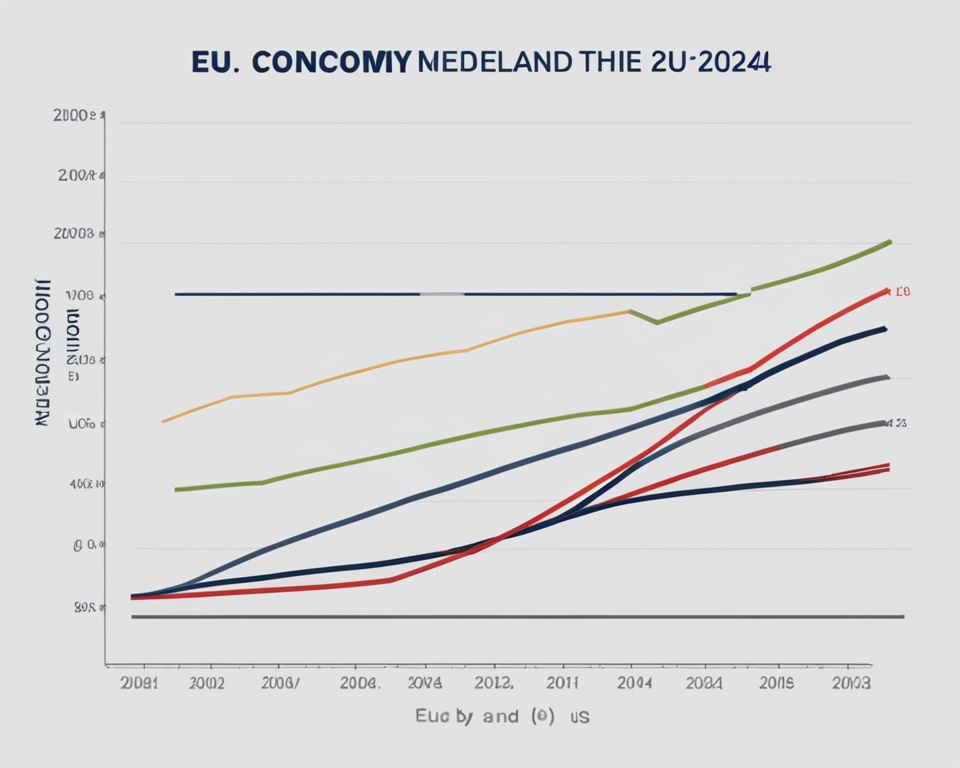
In 2008, the American economy was about the same size as the euro-zone’s. Now, the American economy is almost twice as big. This gap is seen in average incomes, with European income being 27% lower than in the United States. Average wages in Europe are 37% lower than in the U.S.
Investment and Savings Dynamics
Europe sends about 300 billion euros to other markets each year, mostly to the United States. This shows the big difference in investment chances between the two areas. Europe has a lot of private savings, about 33 trillion euros.
Defense Spending and Geopolitical Implications
The gap between the European and American economies goes beyond just money matters. It also shows in defense spending and world politics. The U.S. has a strong military, while European defense spending often helps U.S. companies because of Europe’s lack of unity.
| Economic Indicator | United States | European Union |
|---|---|---|
| GDP Growth (Q2 2024) | 0.7% (2.8% annualized) | 0.3% |
| Fiscal Policy Support (% of GDP) | 25% | N/A |
| Inflation Rate (June 2024) | N/A | 2.5% |
| New Car Sales (H1 2024) | N/A | 4.3% increase, but still 18% below pre-pandemic levels |
The paths of the European economy and the American economy in 2024 show how complex and connected the world economy is. As we move forward, how well leaders and business people handle these differences will shape the future economy.
Global Trade Environment: Challenges and Opportunities
The European Union (EU) is showing strength in a slow global economy. It’s dealing with changes in consumer demand, inventory issues, and tighter money rules. Despite this, the EU is growing its share in the export market.
Export and Import Projections for the EU
EU exports and services are expected to grow by 1.4% in 2024 and 3.1% in 2025. But, it might lose some market share in the process. Imports are also expected to bounce back, which could help EU growth slightly.
The EU is proving to be resilient in the changing trade scene. As the world adjusts to post-pandemic conditions, the EU’s exports and imports will be key to its economic future and global trade influence.
« The EU’s ability to gain export market shares in a lacklustre trade environment is a testament to its resilience and adaptability. »
The EU’s trade performance will be crucial for its economic success in the future. As the global economy faces new challenges, the EU’s trade will play a big role in its economic growth.
Monetary Policy Dynamics: Navigating Inflationary Pressures
The global economy is still recovering from the pandemic’s effects. Central banks worldwide are working hard to manage rising inflation. They’re using various monetary policy tools to keep interest rates stable.
In the U.S., the Federal Reserve has raised interest rates to fight inflation. This move aims to slow down the economy and get inflation back to 2%. But, the inflation is harder to control than expected, making the Fed cautious.
The European Central Bank (ECB) is also boosting its monetary policy efforts. It sees wage growth as a big factor in inflation in the Eurozone. The ECB is increasing interest rates to reduce inflationary pressures. It’s watching closely to balance inflation control with economic growth.
Central banks face big challenges as they deal with changes like decarbonization and the rise of AI. These changes affect economic cycles and inflation rates. They make it harder for policymakers to keep prices stable and support growth.
| Indicator | United States | Eurozone |
|---|---|---|
| Inflation Rate | 7-9% in 2022 | 7-9% in 2022 |
| Interest Rate Hikes | 5.25 percentage points over two years | Gradual pace of rate hikes |
| Wage Growth | 4% expected in 2024 | Significant impact on inflation |
| Unemployment Rate | 3.7% (close to 50-year low) | Not provided |
Central banks are trying to find the right balance between fighting inflation and supporting growth. They need a careful and flexible approach as they face the changing global economy.
« The ultimate goal of monetary policy is to promote the best long-term economic outcome. This means achieving and maintaining price stability, maximum sustainable employment, and moderate long-term interest rates. »
Energy Crisis and Supply Chain Disruptions
The energy crisis and ongoing supply chain issues have hit hard on manufacturing and industrial production in the U.S. and Europe. Europe has shown more resilience than expected without Russian gas, but the manufacturing sector still faces big challenges. These include high inflation and tight monetary policies.
Global merchandise trade has slowed down, and there’s a shift from goods to services after the pandemic. Inventory levels are low in advanced economies, and strict monetary policies affect trade-intensive goods. These factors have led to a big slowdown in manufacturing and industrial production.
Impact on Manufacturing and Industrial Production
In late 2020, a chip shortage caused a product shortage, including cars. But, chip supplies got better in 2022, easing some price issues. Yet, labor shortages are still big problems, with about 1.2 jobs for every worker in the U.S.
The U.S. economy grew by 2.5% in 2023 and 1.3% in the first quarter of 2024, beating 2022’s growth. The CHIPS and Science Act aims to boost domestic semiconductor plants. This should help fix the chip supply chain issues over time.
| Indicator | 2023 | 2024 | 2025 |
|---|---|---|---|
| EU GDP Growth | 0.5% | 0.9% | 1.7% |
| Euro Area GDP Growth | 0.5% | 0.8% | 1.5% |
| EU HICP Inflation | 6.3% | 3.0% | 2.5% |
| Euro Area HICP Inflation | 5.4% | 2.7% | 2.2% |
The energy crisis and supply chain issues are big hurdles for manufacturing and industrial production in the U.S. and Europe. While there’s been some progress in easing chip shortages, labor shortages and tight monetary policies are still major problems. These issues need to be tackled for a strong recovery in manufacturing.
Fiscal Policy Measures and Government Spending
The United States and the European Union are facing economic challenges in 2024. Fiscal policy and government spending are key to helping the economy recover. Data shows that fiscal policy has had mixed effects on growth. Programs like pandemic-era transfers helped, but their end has slowed things down.
Recently, GDP grew by 2.8% annually in the second quarter of 2024. However, fiscal policy made the U.S. GDP growth drop by 0.1 percentage point. Federal and state purchases increased the Fiscal Impulse Measure (FIM) by 0.2 percentage point. But, the end of pandemic-era transfers and subsidies cut the FIM by 0.6 percentage point.
Looking forward, the FIM is set to become neutral in the fourth quarter of 2024. It will then turn negative by the second quarter of 2026. This assumes the Tax Cuts and Jobs Act of 2017 are extended. Without this, the FIM would be even more negative in 2026.
| Economic Indicator | 2023 | 2024 (Forecast) |
|---|---|---|
| Real GDP Growth | 2.8% | 0.7% |
| Fiscal Deficit (% of GDP) | 7.4% | 5.9% |
| Fed Funds Target Rate | 3.75% | 4.25% |
| Core PCE Inflation | 3.4% | 2.4% |
| Consumer Spending Growth | 2.7% | 0.6% |
| Unemployment Rate | 3.5% | 4.4% |
Policymakers must balance fiscal policy and government spending carefully. This balance is crucial for supporting recovery and promoting growth in the United States and the European Union.
Geopolitical Risks and Economic Uncertainties
The global economy faces big challenges from geopolitical risks and economic uncertainties. These issues affect policymakers and businesses a lot. Conflicts in different areas and the use of tariffs and sanctions are making things harder for American companies and consumers.
Experts predict the global inflation rate will stay high at 5.8% in 2024. Core inflation won’t drop to about 2% until 2025. Advanced economies might see inflation under 3% in 2024, but emerging markets and developing economies could see 7.8% inflation, up from 8.5% in 2023. Countries like Argentina, Turkey, and Egypt face even higher inflation rates, making things tougher for their economies.
Potential Scenarios and Contingencies
Scenario analysis is key in this uncertain time. If geopolitical conflicts and trade actions keep up, inflation might stay high. This could lead to higher interest rates and slower GDP growth. The U.S. might see 2.2% GDP growth in 2024 and just 0.6% in 2025.
Also, the world is expecting big changes in 2024 with at least 64 countries holding elections. History shows that populist governments can hurt the economy. Plus, geopolitical risks can cause oil prices to rise, investment to drop, and make capital flows and private sector credit in emerging markets less stable.
Policymakers and business leaders need to stay alert and plan for different scenarios. Understanding the changing political scene and its economic effects is crucial. This will help them make strong strategies and stay resilient against these big challenges.
Structural Reforms and Competitiveness
The European economy faces big challenges to boost its productivity and competitiveness. It lacks big tech companies and depends too much on renewable and imported energy. Also, there’s not enough venture capital. But, the Inflation Reduction Act has helped European manufacturing a lot. Investments in AI and new technologies are also pushing growth in businesses.
Enhancing Productivity and Innovation
Boosting productivity and innovation is key to making the European economy stronger. To do this, structural reforms are needed. These reforms aim to fix the underlying issues and unlock the economy’s true potential:
- Making capital and labor markets work better to speed up productivity growth
- Lowering barriers to the Single Market for goods and services, which could increase European output by up to 7 percentage points
- Improving border infrastructure to boost trade and incomes by about 1.6 percent over the long term
- Helping high-productivity sectors grow and cutting down on low-productivity activities
- Closing the productivity gap with the United States, which is behind nearly 70 percent of the income difference
- Keeping the single market strong by reducing national state aid measures
By making these structural reforms, the European Union can tap into its productivity and innovation potential. This will improve its global competitiveness and secure a brighter economic future.
Demographic Trends and Labor Force Participation
The US is facing big changes in its population, which could affect the economy. As people get older and have fewer babies, there might be fewer workers. But, with smart policies, we can lessen the impact of these changes.
Death rates in the US have gone down, making Americans live longer and healthier lives. But, the number of babies born has also dropped, from 2.12 in 2007 to 1.67 in 2022. This means fewer people are having kids, leading to fewer workers in the future.
The number of people working in the US is expected to go down to 61 percent by 2022. This is similar to the early 1970s. The aging of the baby boom generation is a big reason for this. But, we can still make a difference by helping people with health issues find work and by improving education.
Even with these challenges, the US labor force is still expected to grow by 16.2% from 2020 to 2060. This growth comes from more people going to school, getting jobs, and working longer. Germany, on the other hand, expects its labor force to shrink by 10.7% in the same period.
Policymakers and business leaders need to act fast to deal with these changes. By focusing on the right strategies, we can keep our economy strong and competitive, even with these changes.
Environmental Sustainability and Green Transition
Europe is leading the world in fighting climate change. It aims for a sustainable and eco-friendly future. The focus is on using more renewable energy and cutting down on harmful emissions.
Renewable Energy and Climate Change Mitigation
Europe depends a lot on renewable and foreign energy, which can make it less competitive. But, it’s making big moves to change this. Investments in buildings and infrastructure are strong, thanks to government support, including the Recovery and Resilience Facility (RRF). This support goes into renewable energy and fighting climate change.
Europe is warming faster than any other continent, at twice the global rate since the 1980s. From 1980 to 2022, extreme weather caused about €650 billion in losses in the EU. In 2022, these losses were 41% higher than in 2009 due to climate change.
The European Union has set big goals to cut down on greenhouse gas emissions and use more renewable energy. It aims to reduce fossil fuels in its energy mix from 73% in 2020 to about 20% by 2050. This will help reach net zero emissions. To do this, the EU needs to invest an extra €620 billion a year from 2023 to 2030. This is 3.7% of the EU’s GDP in 2023.
Waiting to switch to green practices will cost more than acting now. Extreme heat can raise food prices in Europe by about 0.7 percentage points in 2022. By 2060, very hot summers could increase food prices by up to 2%.
« Transitioning to a more sustainable and eco-friendly economy is not only a moral obligation but also an economic imperative. The investments made today will pay dividends in the long run, both in terms of mitigating the devastating effects of climate change and ensuring the long-term competitiveness of the European economy. »
Regional Disparities and Economic Convergence
The European economy is bouncing back in 2024, highlighting regional economic differences and the push for convergence. The south is growing faster than the north and west. This means the EU is slowly getting more economically balanced.
Research shows that every euro spent on the 2014-2020 and 2021-2027 Cohesion Policy programs creates an extra €1.3 by 2030. By 2043, this effect will almost triple. This proves that focusing on regional development helps reduce economic gaps between areas.
But, the effects of these policies differ across regions. Some areas see a bigger change in GDP than others. This shows we need specific plans for each region to help them catch up.
| Region | GDP Impact in 2030 (% variation from baseline) |
|---|---|
| Northern Europe | 2.5% |
| Western Europe | 1.8% |
| Southern Europe | 3.2% |
| Eastern Europe | 4.1% |
As the EU keeps investing in regional development, it must tackle the challenges of climate change. This issue could make economic gaps wider. We need specific policies to ensure a fair and sustainable future for everyone.
« Cohesion Policy interventions are proving effective in reducing regional economic disparities, but more work is needed to ensure a truly inclusive and sustainable growth trajectory across the EU. »
To move forward, we need a complex plan. This plan should include targeted investments, specific policies, and a strong commitment to a fair and strong economy across the EU.
Conclusion
The European economy is starting to bounce back in 2024, with a 1.0% GDP growth forecast for the EU and 0.8% for the euro area. Inflation is dropping, and job markets are strong, helping the economy recover. Yet, there are still hurdles like geopolitical issues, energy and supply chain problems, and deep-seated weaknesses.
Overcoming these challenges and boosting competitiveness with more productivity and innovation is key. This will help the European economy keep growing and getting closer together. In contrast, the U.S. economy is doing well, with GDP above pre-pandemic levels and a 2% growth forecast for the future.
The U.S. also has its challenges, like high debt and deficits. But it’s expected to get back to pre-pandemic growth levels this year. Leaders in Europe and the U.S. must handle inflation, fix structural issues, and support fair trade. This will help ensure a strong and lasting economic recovery for both regions in the years ahead.