
Moroccan food is famous for its complex tastes and vibrant flavors. Most dishes simmer slowly, filled with spices, and smell amazing. They mix sweet, salty, savory, and spicy tastes perfectly. Couscous is a key dish in North African meals, acting as a light base for rich stews and tagines.
This article will dive into the exciting world of delicious Moroccan vegetarian dishes. We’ll look at traditional Moroccan tagine recipes and creative Moroccan couscous salads. We’ll see how unique spices, cooking ways, and regional flavors make Moroccan food so special.
Key Takeaways
- Moroccan cuisine is known for its complex flavors, blending sweet, salty, savory, and spicy elements.
- Couscous is a staple starch in Moroccan meals, often served with flavorful stews and tagines.
- Vegetarian Moroccan dishes showcase a wide range of ingredients, from harira soup to vegetable pastries and zaalouk eggplant dip.
- Moroccan chickpea stews and minted lentils are delicious and nutritious options.
- The use of unique Moroccan spice blends and preserved lemons adds depth and complexity to vegetarian dishes.
Introduction to Moroccan Vegetarian Cuisine
Moroccan cuisine is famous for its complex and aromatic flavors. It combines sweet, savory, and spicy tastes. This is thanks to Moroccan spices and slow-cooking methods.
The Moroccan cooking methods, like tagines and stews, bring out these rich flavors. They let the spices blend well and infuse the food with their unique tastes.
Flavors, Spices, and Aromas of Moroccan Cooking
Important spices used in Moroccan cooking are cumin, coriander, cinnamon, ginger, turmeric, and ras el hanout. These spices, along with sweet elements like dried fruits and honey, make Moroccan vegetarian dishes unique.
Moroccan dishes are often slow-cooked. This lets the flavors of Moroccan cuisine get better over time. This slow cooking is key to the complex flavors of Moroccan vegetarian dishes.
« The essence of Moroccan cuisine lies in the harmonious balance of sweet, savory, and spicy flavors, a true testament to the culinary artistry of this North African nation. »
Couscous: The Beloved Moroccan Starch
What is Couscous and Its Role in Moroccan Dishes
Couscous is a staple in Moroccan cuisine. It’s small, steamed balls of semolina wheat. It has been around since the 11th century in North Africa. This ingredient is key to the region’s cooking.
It has a light texture that soaks up flavors well. This makes it perfect for Moroccan dishes. The bold spices and aromas of Moroccan cooking stick to couscous.
Many ask what is couscous, but its role is special. It goes with stews, tagines, and salads. It absorbs the rich flavors of these dishes. Or, it can be the main dish, like in Moroccan-Style Vegetable Couscous.
This dish combines couscous with slow-cooked vegetables, chickpeas, and spices. Moroccan couscous dishes show how versatile couscous is. It can be a base, a side, or the main dish. Couscous is a key part of Moroccan food, linking flavors and traditions.
« Couscous is the glue that holds Moroccan cuisine together. It’s the foundation upon which so many of our most beloved dishes are built. »
– Chef Fatima Ait Outakarinine, Moroccan Culinary Instructor
Couscous is known for its light, fluffy texture and flavor absorption. It has been a staple in Moroccan kitchens for centuries. As Moroccan cuisine evolves, couscous stays a constant. It adapts to new ingredients and techniques while keeping its traditional essence.
Tagine vs. Stew: Understanding the Cooking Methods
Exploring Moroccan cuisine reveals the interesting difference between a tagine and a stew. A tagine is a special North African pot, made of clay or earthenware, with a unique cone-shaped lid. This design traps steam, making the food tender and full of flavor. While the real deal is a tagine, many use heavy pots or Dutch ovens to get close to the same taste.
Whether it’s called a tagine or a stew doesn’t really matter. The cooking way and the taste are unmistakably Moroccan. This Vegetarian Moroccan Tagine recipe is for a regular pot, so more folks can enjoy this traditional North African dish.
| Dish | Cooking Method | Key Characteristics |
|---|---|---|
| Tagine | Slow-cooked in a clay or earthenware vessel with a cone-shaped lid | Tender, flavorful stew with vegetables and/or meat |
| Stew | Simmered in a heavy-bottomed pot or Dutch oven | Thick, hearty dish with ingredients simmered in liquid |
Even though the way they’re made is different, tagines and stews can taste very similar. They both bring the rich, spiced flavors of Moroccan cuisine to the table. Choosing between them often depends on what you like and if you have a traditional tagine pot.
« The true essence of Moroccan cuisine lies in the harmonious blend of spices, the slow-simmered stews, and the communal experience of sharing a meal. »
Essential Moroccan Spices and Ingredients
Harissa, Ras el Hanout, and Preserved Lemons
Moroccan food is known for its special spices and ingredients. Harissa, a spicy chili paste, brings heat to many dishes. Ras el hanout, a mix of over a dozen spices, is key in Moroccan cooking. Preserved lemons, cured in salt, add a unique flavor to recipes. These items, along with cumin, coriander, cinnamon, and ginger, make Moroccan vegetarian dishes special.
In the US, Moroccan restaurants are fewer than Thai or Indian ones. But, places like San Francisco and Boston have top Moroccan restaurants. These spots, like Mourad, Oleana, and Sarma, highlight Moroccan cuisine’s rich flavors.
| Spice or Ingredient | Role in Moroccan Cooking |
|---|---|
| Cinnamon | Highly valued for its sweet, floral Ceylon variety, cinnamon is a versatile spice used in both sweet and savory dishes. |
| Saffron | An essential and expensive spice known for its transformative properties in Moroccan cuisine. |
| Tomato Paste | Provides depth and umami to Moroccan dishes, making it a crucial and underrated ingredient. |
| Harissa | This North African chili paste can be used as a condiment or seasoning in various dishes, adding heat and complexity. |
| Ras el Hanout | A signature Moroccan spice blend that can contain up to 30 different spices, resulting in a complex and distinctive flavor profile. |
| Preserved Lemons | An essential ingredient in the Moroccan pantry, providing a unique, intensely flavorful component to many dishes. |
These spices and ingredients, along with cooking methods like tagines and couscous, make Moroccan food special. They create the unique tastes and smells we love.
Moroccan-Style Vegetable Couscous Recipe
Discover the vibrant tastes of Moroccan cuisine with this Moroccan-Style Vegetable Couscous recipe. It’s a vegan dish filled with slow-cooked veggies like sweet potatoes, zucchini, and carrots. These are cooked in a broth flavored with harissa, cinnamon, and ras el hanout.
Dried apricots and golden raisins add a sweet touch. Chickpeas bring protein, making it a hearty meal. The couscous absorbs all the tasty juices, making it a perfect base.
Make this Moroccan-style couscous for a meatless main or a tasty side. It’s easy to prepare and packed with flavors that will take you to Morocco’s vibrant markets.
Ingredients:
- 2 tablespoons olive oil
- 1 large onion, diced
- 2 medium tomatoes, chopped
- 2 teaspoons harissa paste
- 1 teaspoon ground cinnamon
- 1 teaspoon ras el hanout spice blend
- 2 teaspoons salt
- 1 teaspoon ground turmeric
- 1 teaspoon ground ginger
- 1 teaspoon black pepper
- 2 cups diced sweet potatoes
- 2 cups diced zucchini
- 2 cups diced carrots
- 1 cup cooked chickpeas
- 1/2 cup dried apricots, chopped
- 1/2 cup golden raisins
- 2 1/2 cups water
- 2 cups couscous
- Chopped parsley and cilantro for garnish
Instructions:
- In a large pot, heat the olive oil over medium heat.
- Add the diced onion and sauté until translucent, about 5 minutes.
- Stir in the chopped tomatoes, harissa paste, cinnamon, ras el hanout, salt, turmeric, ginger, and black pepper. Cook for an additional 2-3 minutes.
- Add the diced sweet potatoes, zucchini, and carrots to the pot. Pour in the water and bring the mixture to a boil.
- Reduce the heat to low, cover, and simmer for 30-35 minutes, or until the vegetables are tender.
- Stir in the cooked chickpeas, dried apricots, and golden raisins. Simmer for an additional 10 minutes.
- In a separate pot, prepare the couscous according to package instructions.
- To serve, place the cooked couscous on a plate or in a shallow bowl. Top with the Moroccan-style vegetable stew and garnish with chopped parsley and cilantro.
Enjoy this Moroccan-Style Vegetable Couscous as a satisfying meatless main or a delightful side dish. The mix of spices, tender veggies, and fluffy couscous offers a true Moroccan taste experience.
Vegetarian Moroccan Tagine: A Feast of Flavors
Moroccan cuisine is famous for its spices, flavors, and slow-cooked stews called tagines. Traditionally, these tagines have meat, but the vegetarian version is a great alternative. It celebrates fresh produce with its flavors.
Layering Vegetables and Building Depth of Flavor
Creating a vegetarian Moroccan tagine means layering vegetables and building flavors. Start by sautéing onions and garlic, then add spices like cumin, coriander, and paprika. Add sweet potatoes and carrots first, letting them cook until tender and sweet.
Next, add bell peppers, eggplant, and zucchini on top. This lets the flavors mix and the steam cook the veggies. The result is a flavorful tagine that goes well over couscous for a full meal.
| Ingredient | Quantity |
|---|---|
| Shallots | 8 |
| Sweet Potato | 1 large |
| Fennel | 1 |
| Red Capsicums | 2 |
| Eggplant | 1 |
This Moroccan vegetarian tagine recipe is not just tasty; it’s also packed with nutrients. It’s full of vitamins, minerals, and antioxidants. It’s a great choice for Meatless Monday or any day you want a healthy meal.
« The Moroccan vegetarian tagine is a feast for the senses, with its aromatic spices, vibrant colors, and tender, flavorful vegetables. »
If you love Moroccan food or are just getting to know it, this vegetarian tagine will impress you. It’s a dish that pleases the taste buds and feeds the body.
delicious moroccan vegetarian dishes: Exploring Regional Variations
Moroccan cuisine is full of variety, thanks to the country’s diverse regions. Each area has its own special dishes and ways of making regional moroccan vegetarian dishes and moroccan vegetable dishes.
Coastal areas often have seafood tagines, while mountains use more root veggies and beans. The Sahara Desert uses dried fruits and nuts. The fertile regions of the Rif and Middle Atlas are known for their fresh produce.
Trying these regional dishes lets you really get to know Moroccan vegetarian food. You’ll find everything from the aromatic Tangia of Marrakech to the tasty Zaalouk of the North. Each dish has its own story of the land and its people.
« Moroccan cuisine is a tapestry of flavors, woven with the cultural threads of different regions. Discovering these regional delights is a true culinary adventure. » – Chef Fatima Lakhdar
In Essaouira, you might try a Vegetarian Seafood Tagine. It has sautéed eggplant, zucchini, and bell peppers in a broth with preserved lemons and a hint of harissa. In the High Atlas Mountains, they have a Root Vegetable and Lentil Tagine. It shows off the area’s fertile valleys.
Heading south to Zagora, you might find a Dried Fruit and Nut Couscous. This dish combines the sweet flavors of dates, apricots, and almonds with fluffy couscous.
The variety in moroccan vegetable dishes and regional moroccan vegetarian dishes shows Morocco’s rich food culture. By trying these dishes, you can go on a tasty journey through Moroccan cuisine.
Moroccan Spice Blends and Their Versatility
Moroccan cuisine is famous for its bold and complex tastes. These come from the skillful use of spice blends. At the heart of these blends is the ras el hanout, meaning « head of the shop » in Arabic. This mix can have up to 60 spices, leading to many recipe variations from one family to another.
Ras el Hanout: The Head of the Market
Ras el hanout shows the depth of Moroccan spice culture. It’s a blend of cardamom, cumin, clove, cinnamon, and chili peppers, among others. Despite its variations, ras el hanout is key in Moroccan cooking. It adds flavor to tagines, couscous, roasted veggies, and even baked goods.
Other spice mixes like baharat and chermoula add to the variety of Moroccan vegetarian dishes. These blends season a wide range of foods, from chickpeas and cauliflower to lamb and chicken. This shows the amazing versatility of Moroccan spice blends.
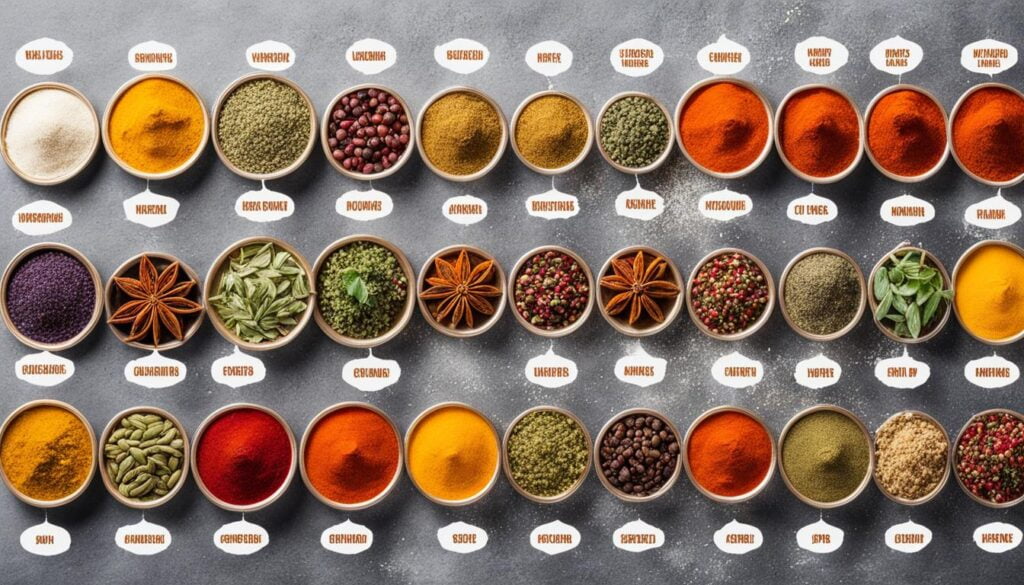
Now, ras el hanout is easy to find in many supermarkets. It can last up to 3 years if kept in a closed jar. This lets you experiment with its flavors for a long time. You can also make your own ras el hanout blend, adjusting it to your taste and the dishes you make.
« The Moroccan spice blend recipe consists of 1 tbsp ground cumin, 1/2 tbsp ground cardamom, 1/2 tbsp ground black pepper, 1/2 tbsp ground ginger, 1 tsp cayenne pepper, and 1/2 tbsp ground cinnamon. »
These Moroccan spice blends are perfect for seasoning lamb, beef, or chicken. They also add depth to vegetarian dishes like roasted chickpeas and cauliflower. Try them out and let Moroccan spices guide your cooking adventures.
Pairing Moroccan Dishes with Wines
Moroccan food is known for its mix of sweet, salty, and spicy tastes. It goes well with many wines. Red wines from the southern Rhône region of France, like Gigondas, are perfect for vegetarian Moroccan tagines and stews. These wines have ripe red fruit flavors, earthy notes, and bright acidity. They enhance the flavors of slow-cooked vegetable dishes.
For those on a budget, Côtes du Rhône by Guigal is a great choice. Its herbal and peppery flavors balance the sweetness of Moroccan spices. Couscous with Vegetables pairs well with light to medium white wines. These wines bring out the dish’s delicate tastes.
| Moroccan Dish | Wine Pairing |
|---|---|
| Moroccan Tagine | Red wines (Grenache, Syrah/Shiraz, Mourvedre) or medium-bodied white wines |
| Couscous with Vegetables | Light to medium white wines (Riesling, Gewürztraminer, Chenin Blanc) |
| Chicken with Preserved Lemon and Olives | Medium white wines or rosé |
| Kefta (Spiced Meatballs) | Light to medium red wines |
| Harira (Lentil and Tomato Soup) | Light red wines or rosé |
When picking wines for Moroccan food, think about the spices, heat, sweetness, fat, and acidity. It’s good to try different wines to see what you like best. Wine pairing is all about balance and matching flavors with your taste.
Moroccan wines, red and white, are special because of the country’s unique land. They’re worth trying with Moroccan moroccan dishes. Whether you like bold reds or crisp whites, exploring wine pairing with Moroccan food is fun.
Traditional Moroccan Breads and Accompaniments
No Moroccan meal is complete without traditional breads and accompaniments. Breads like khobz, a flatbread, and msemmen, a layered, flaky pastry, are key. They’re served with tagines and couscous dishes. These breads help scoop up flavorful sauces and juices, making them vital to the meal.
Moroccans also serve pickled vegetables, fresh herbs, olives, and harissa paste alongside the breads. These add a delightful mix of flavors and textures. They make the Moroccan meal even better.
There are at least a dozen types of breads in Morocco, with many more to discover. The big round khobz loaves are popular. They’re made with wheat flour and are mostly semi-leavened. A small round loaf costs from $0.10 to $0.20, showing its common use and importance in Moroccan food.
| Moroccan Bread Varieties | Description |
|---|---|
| Khobz | A traditional large, round, semi-leavened flatbread made with wheat flour |
| Msemmen | A layered, flaky pastry-like bread |
| Batbout | A puffed, pocket-like bread often served with tagines |
| Rghaif | A thin, layered bread with a slightly crispy exterior |
| Moufletta | A traditional Berber bread made with semolina flour |
These traditional Moroccan breads and accompaniments complete the dining experience. They’re perfect for enjoying the rich, complex vegetarian dishes that define Moroccan cuisine.
« Bread and mrqa (sauce) are key elements of tajine, the primary dish for many Moroccans. Moroccans use bread as a utensil to scoop up food, considering it an integral part of the meal rather than merely a side. »
Vegan and Gluten-Free Adaptations
Moroccan vegetarian cuisine is known for its bright flavors and many plant-based dishes. Many of these vegan moroccan dishes and gluten-free moroccan dishes can be made to fit different diets easily.
Vegan-friendly options use chickpeas, lentils, or tofu instead of dairy or eggs. These changes let the spices and herbs stand out, making tasty and healthy plant-based meals.
For gluten-free diets, swap couscous with quinoa or cauliflower rice. These changes keep the dish’s texture and flavor, making gluten-free versions just as good as the original.
Changing spice blends and cooking methods a bit is all it takes to make Moroccan vegetarian dishes vegan or gluten-free. This way, the unique, aromatic tastes of Moroccan food stay, even with dietary limits.
With some creativity, anyone can make delicious Moroccan vegetarian dishes that fit different diets. Whether you’re vegan or gluten-sensitive, Moroccan flavors are easy to adapt for your taste.
| Nutrient | Vegan Moroccan Vegetable Tagine | Gluten-Free Moroccan Couscous |
|---|---|---|
| Calories | 341 kcal | 359 kcal |
| Carbohydrates | 60g | 50.6g |
| Protein | 18g | 14.2g |
| Fat | 5g | 13g |
| Fiber | 21g | 14g |
| Sodium | 1335mg | 337.3mg |
Both vegan moroccan dishes and gluten-free moroccan dishes are nutritious and tasty, full of Moroccan flavors. With a few easy changes, you can enjoy these vibrant, plant-based meals while meeting different dietary needs.
Tips for Recreating Authentic Moroccan Flavors
To get the complex, vibrant flavors of Moroccan food at home, follow a few key steps. First, get the right spices and pastes. Make sure you have ras el hanout, harissa, and baharat spice mixes on hand.
Next, use slow-cooked, layered cooking to let flavors blend well. Dishes like tagines and stews are great for this. The long simmering time lets the ingredients mix their unique tastes and smells.
It’s also key to balance sweet, salty, and briny tastes. Add dried fruits, honey, olives, and preserved lemons for depth. Make sure to add these ingredients at the right time to cook them just right.
| Essential Moroccan Spices | Key Flavor Profiles |
|---|---|
| Ras el Hanout | Warm, fragrant, and complex blend of spices |
| Harissa | Spicy, earthy, and aromatic chili paste |
| Baharat | Allspice-forward, aromatic, and slightly sweet spice mix |
Follow these tips and stock up on the right ingredients to make traditional Moroccan vegetarian dishes at home. With practice and patience, you can enjoy the tastes of Morocco’s markets and kitchens right in your own kitchen.
« The secret to authentic Moroccan flavors lies in the spices, the layering of ingredients, and the slow, gentle cooking methods. »
Conclusion
Moroccan vegetarian cuisine is a world full of flavors and textures. It offers a mix of slow-cooked tagines and fluffy couscous. These dishes have a perfect balance of sweet, savory, and aromatic tastes.
Key ingredients like harissa, ras el hanout, and preserved lemons are essential. They help bring out the depth and complexity of Moroccan vegetarian dishes. By learning these cooking techniques, anyone can make these dishes at home.
These dishes are great as main courses or side dishes. They introduce you to North Africa’s rich culinary traditions. Moroccan vegetarian dishes are versatile and easy to make, inviting everyone to try them.
Moroccan vegetarian cuisine shows the region’s cultural heritage. It proves that plant-based ingredients can be bold and satisfying. As people seek out new culinary experiences, Moroccan vegetarian dishes become more important. They help keep these traditions alive and inspire food lovers around the world.