
Join us as we dive into the world of Moroccan cuisine. Learn how to make healthy Moroccan dishes with our guide. Discover the magic of aromatic spices, fresh ingredients, and traditional cooking methods.
Chickpeas are a key ingredient in Moroccan cooking, packed with protein. Cumin is another staple that aids digestion. Moroccan food is full of flavors and health benefits. Let us show you how to make delicious, healthy meals inspired by North Africa.
Key Takeaways
- Explore the health benefits of Moroccan ingredients like chickpeas, cumin, and dried fruits.
- Learn how to prepare traditional Moroccan dishes like tagines and couscous for a nutritious meal.
- Discover the role of spices like cinnamon, ginger, and turmeric in Moroccan cuisine and their health properties.
- Incorporate Moroccan flavors into your diet to enjoy a flavorful and balanced Mediterranean-inspired lifestyle.
- Understand the cultural and historical context of Moroccan cooking traditions and their influence on healthy eating.
Introduction to Moroccan Cuisine
Moroccan cuisine is famous for its complex flavors and diverse cultural influences. It uses fresh, seasonal ingredients. This tradition comes from centuries of cultural exchange. It includes Berber, Arab, Middle Eastern, Sephardic, Andalusian, and French influences.
Overview of Moroccan Cooking Traditions
Moroccan food is varied, with traditional recipes, modern twists, and new fusion dishes. It offers a mix of sweet and savory flavors. The focus is on plant-based foods and spices.
Traditional dishes like b’stilla, harira, and zaalouk highlight the country’s culinary roots. Modern dishes, such as Moroccan-spiced roasted vegetables and shakshuka, show how the cuisine is evolving.
Health Benefits of Moroccan Dishes
Moroccan cuisine is part of the Mediterranean diet, known for its health benefits. It focuses on fresh produce, whole grains, and healthy fats like olive oil and nuts. This makes Moroccan dishes nutritious and tasty.
Dishes like the Moroccan Mallow Salad, Moroccan Orange Cake, and Moroccan Avocado Milkshake are healthy and delicious. Spices like cumin, cinnamon, and turmeric add to the nutritional value of these dishes.
« Moroccan cuisine is a vibrant tapestry of flavors, reflecting the country’s diverse cultural heritage and its commitment to using fresh, seasonal ingredients. »
Essential Moroccan Ingredients
Moroccan cuisine is famous for its bold flavors. Chickpeas and cumin are key to these tastes. They make Moroccan dishes unique.
Chickpeas: A Protein-Packed Staple
Chickpeas, or garbanzo beans, are a big deal in Moroccan food. They’re packed with protein and used in many dishes. From stews to salads, they add a nutty taste and creamy texture.
- Chickpeas are a great source of plant-based protein, with one cup giving you nearly 15 grams.
- They’re also full of fiber, complex carbs, and important vitamins and minerals, making them a nutritious Moroccan ingredient.
- Chickpeas can be roasted, mashed for dips, or simmered in savory dishes.
Cumin: A Flavorful and Nutritious Spice
Cumin is another key Moroccan ingredient. It has a warm, earthy taste that’s found in many dishes. From couscous to tagines, cumin adds depth and complexity.
« Cumin is truly the backbone of Moroccan cooking. Its fragrant, slightly sweet and nutty notes are the foundation for so many of our best-loved dishes. »
Cumin isn’t just great for cooking; it’s also good for you. It’s full of antioxidants and can help with digestion and boost the immune system.
Incorporating Dried Fruits
Dried fruits are a key ingredient in Moroccan cooking. They add sweetness, chewiness, and nutrition to many dishes. You’ll find them in tagines, stews, couscous, and salads, enhancing flavors and textures.
Raisins, apricots, dates, and prunes are staples in Moroccan kitchens. They bring sweetness, fiber, and vitamins and minerals. These fruits contrast well with the savory spices and herbs, making the food both tasty and healthy.
The Vegan Moroccan Couscous with Chickpeas recipe has been shared over 24,000 times. This shows how much people love using dried fruits in Moroccan dishes. Couscous, a staple from North Africa, is the perfect dish to show off dried fruits, veggies, and spices.
When making authentic Moroccan couscous, remember that what you find in the U.S. is often an « instant » version. The real Moroccan couscous is steamed and soaks up the flavors of the stew or sauce. This lets the dried fruits blend well with everything else.
Dried fruits aren’t just for main dishes. They’re also in salads, snacks, and drinks. You might find dates and figs in smoothies or dried cherries and cranberries in salads. These fruits add flavor and nutrition to Moroccan meals.
If you want to sweeten a savory tagine or add nutrition to your Moroccan recipes, use dried fruits. They’re key to this cuisine’s flavors and health benefits. Let these Moroccan traditions guide your cooking adventures.
The Seven Vegetable Tradition
Moroccan cuisine is famous for its « seven vegetable » tradition. This tradition combines many vegetables in one dish, often with couscous. It makes meals flavorful, beautiful, and packed with vitamins, minerals, and fiber. These dishes are also low in fat, making them a great choice for a plant-based diet.
Nutritional Value of Moroccan Vegetable Dishes
The seven vegetable tradition is more than just cooking. It’s a way to make meals rich in nutrients. Moroccan cooks mix different vegetables to create dishes full of flavor and health benefits. Each vegetable adds something special, like vitamin C from red peppers or fiber from zucchini.
| Vegetable | Nutritional Highlights |
|---|---|
| Onions | Rich in vitamin C, B6, and fiber, onions also contain antioxidants that may help reduce inflammation. |
| Tomatoes | High in vitamin C, K, and the antioxidant lycopene, which may help protect against certain types of cancer. |
| Zucchini | A good source of vitamin C, manganese, and dietary fiber, zucchini also contains plant compounds that may have anti-inflammatory properties. |
| Red Peppers | An excellent source of vitamin C, red peppers also provide vitamin B6, vitamin K, and carotenoids like beta-carotene. |
| Carrots | Rich in beta-carotene, a powerful antioxidant that can help support eye health and immune function. |
| Turnips | A good source of vitamin C, fiber, and various plant compounds that may have anti-cancer properties. |
| Butternut Squash | High in vitamin A, C, and fiber, butternut squash also contains antioxidants like lutein and zeaxanthin. |
Moroccan cooks blend these nutritious vegetables into one dish. This creates a meal that’s both healthy and delicious. It’s a great way to get all the nutrients your body needs.
« The seven vegetable tradition in Moroccan cooking is a testament to the country’s commitment to healthy, plant-based eating. »
Fava Beans: A Moroccan Superfood
In Morocco, fava beans, also known as broad beans, are a key ingredient. They are packed with nutrients and are a big part of traditional dishes. They are seen as a Moroccan superfood. Their health benefits and versatility make them a must-have in a healthy diet.
Fava beans are used in many Moroccan recipes, like dips, soups, stews, and vegetarian tagines. They are a great source of protein. This makes them a perfect match for the smaller amounts of meat in Moroccan meals. Using pulses like fava beans helps create meals that are both tasty and nutritious.
The Bessara soup is a famous dish that features fava beans. It’s a vegan soup made with dried and peeled fava beans, cumin, and garlic. Fava beans are a main ingredient, giving the soup its unique taste and texture.
| Fava Bean Nutritional Facts | Amount per 100g |
|---|---|
| Calories | 341 kcal |
| Protein | 26.1g |
| Fiber | 25g |
| Vitamin K | 36% DV |
| Vitamin B1 | 29% DV |
| Vitamin B6 | 19% DV |
| Iron | 29% DV |
Fava beans are a big deal in Moroccan cooking and are a nutritional powerhouse. They are full of protein, fiber, and important vitamins and minerals. These include vitamin K, B1, B6, iron, and more. They are a great addition to any diet looking to be healthy and balanced.
Fava beans are a key part of Moroccan food and health. They show the country’s rich food culture and focus on health. As a Moroccan superfood, they make meals tasty and support your health.
Healthy Moroccan Salads
Moroccan cuisine is famous for its vibrant, tasty salads. They are not just delicious but also very healthy. These salads are a key part of the Mediterranean diet. They mix fresh veggies, herbs, and a bit of spice perfectly.
Looking to eat more plant-based foods or explore Moroccan cuisine? These salads are a great choice.
Traditional Moroccan Salad Recipe
A classic Moroccan salad has chopped veggies like carrots, celery, lettuce, onion, and tomato. Add fresh herbs, olive oil, and spices like cumin. These salads are easy to make and full of nutrients for your health.
To make this salad, chop your veggies into small pieces. Put the carrots, celery, lettuce, onion, and tomato in a big bowl. Add chopped fresh herbs like parsley or cilantro.
Drizzle with olive oil and season with cumin, salt, and pepper. Mix everything well.
Enjoy these salads as a side or a main dish. They go great with Moroccan dishes like tagines or couscous. This makes for a balanced and filling meal.
| Moroccan Salad Recipes | Serving Size | Calories | Protein | Fat | Fiber |
|---|---|---|---|---|---|
| Moroccan Carrot Salad | 2 cups | 262 kcal | 6g | 11g | 5g |
| Moroccan Beet Salad | 2 cups | 262 kcal | 6g | 11g | 5g |
| Loubia (Moroccan Bean and Tomato Salad) | 2 cups | 534 kcal | 24g | 16g | 14g |
| Za’alouk (Moroccan Eggplant Salad) | 2 cups | 262 kcal | 6g | 11g | 5g |
| Moroccan Cucumber Salad | 2 cups | 262 kcal | 6g | 11g | 5g |
These Moroccan salads are not just tasty but also good for you. Adding them to your meals brings the flavors of Morocco to your table. It also supports your health.
Spices for Health and Flavor
Moroccan cuisine is famous for its vibrant spice blends. These blends make food taste great and are good for your health. Cinnamon is a key spice that boosts digestion and has many health benefits.
Cinnamon: An Antioxidant Powerhouse
Cinnamon is a must-have spice in Moroccan cooking, from breakfast to dessert. It’s full of antioxidants that fight off harmful free radicals and boost health. Cinnamon can help control blood sugar and reduce inflammation, making it great for a healthy meal.
« Cinnamon is a true superfood that can transform the flavor and nutritional profile of Moroccan cuisine. Its versatility and health benefits make it an essential ingredient in the Moroccan spice pantry. »
Other spices like cumin and turmeric are also packed with nutrients. They make your food taste better and are good for you. Using Moroccan spices in your cooking adds flavor and nutrition to your meals.
Using spices right is crucial for making authentic Moroccan dishes. Trying different spice blends, like Ras El Hanout, can open up new flavors and health benefits. Moroccan spices, like cinnamon and cumin, can make your cooking better and keep you healthy.
Economical Meat Choices
Moroccan cuisine often uses affordable meat like beef or lamb ribs. These are slow-cooked in Moroccan tagines and Moroccan stews. This method makes the tough meat tender and fills the dish with rich flavors. It also boosts the nutritional value, making these meals healthy and easy on the wallet.
Slow-Cooked Tagines and Stews
Tagines, famous Moroccan clay pots, turn cheap meat into tender, juicy dishes. The slow cooking blends flavors and makes the meat soft. Moroccan stews do the same, turning low-cost meats into filling meals.
These slow-cooked dishes are great for getting the most out of your ingredients. The long simmer breaks down tough parts, making nutrients easier to absorb. This makes Moroccan tagines and stews a smart choice for those wanting to eat well without spending a lot.
| Dish | Cooking Time | Meat Type | Nutrition |
|---|---|---|---|
| Moroccan Tagine | 2.5+ hours | Beef or Lamb Ribs | High in Protein, Minerals, and Vitamins |
| Moroccan Stew | 2+ hours | Chuck Roast or Round Steak | Balanced Macronutrients, Fiber, and Antioxidants |
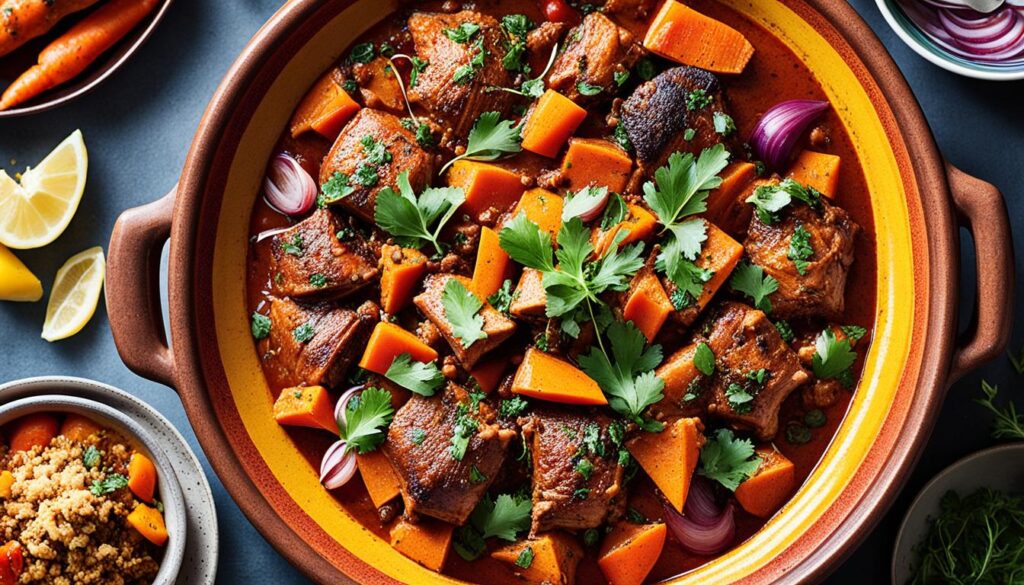
« Moroccan cuisine is all about making the most of affordable, readily available ingredients. Tagines and stews are the perfect way to transform economical cuts of meat into delicious, nourishing meals. »
Ginger: An Aiding Spice for Digestion
Ginger is a key spice in Moroccan cooking. It helps with digestion and reduces inflammation. Gingerol, a compound in ginger, fights inflammation. This can ease digestive problems and muscle pain.
Adding ginger to Moroccan dishes like tagines and marinades boosts their health value. It’s easy to do and makes meals healthier.
Ginger can lessen inflammation in the body, helping people with arthritis. It’s been used for ages to ease nausea and indigestion. Ginger also has antioxidants that boost the immune system and fight off illnesses.
Studies show ginger can ease nausea, especially in pregnant women and those getting chemotherapy. But, some people might find ginger too strong. For them, ginger tea is a gentler option.
Yet, ginger might cause heartburn, stomach upset, or diarrhea in some. It’s also used to ease menstrual cramps thanks to its anti-inflammatory effects.
« Ginger has been a staple in Moroccan cuisine for centuries, valued for its ability to aid digestion and soothe inflammation. »
Adding ginger to your Moroccan dishes does more than just taste great. It brings health benefits too. You can use fresh ginger, powder, or tea to enjoy its digestive and anti-inflammatory perks.
Turmeric: The Golden Superfood
Turmeric is a key spice in Moroccan cooking, known for its golden color. It’s a superfood thanks to curcumin, a compound that fights inflammation and acts as an antioxidant. This makes it great for a healthy diet.
In Moroccan dishes like tagines and vegetable dishes, turmeric adds a unique flavor. It has been a part of Moroccan food since the 7th century, brought by the Arabs.
Studies show that turmeric’s curcumin can lower cholesterol and prevent heart disease. It’s also a strong antioxidant. In recent years, turmeric has become popular in the West for its health benefits.
| Turmeric Dish | Flavor Profile | Health Benefits |
|---|---|---|
| Turmeric Chickpea Oats | Savory twist on a typically sweet dish | Showcases the potential use of turmeric in savory dishes |
| Turmeric Ginger Colada Smoothie | Blend of fruits and spices | Flavorful and colorful smoothie offering in the health food industry |
| Honey Mustard Turmeric Chicken | Integration of turmeric into meat dishes | Added flavor and variety in cooking |
| Moroccan-Spiced Parsnip Soup | Blend of turmeric with various spices | Versatility of turmeric in soup recipes |
| Turmeric Carrot Soup | Combination of turmeric and carrots | Adaptability of turmeric to complement a range of vegetables |
| Turmeric Mac and Cheese | Integration of turmeric into traditional comfort foods | Flavor complexity and modern culinary twist |
| Peach Chutney with Turmeric | Turmeric as a condiment option | Versatility of turmeric in elevating the flavor profile of various dishes |
| Smashed Chickpea and Goat Cheese Wraps | Turmeric in the seasoning | Incorporation of turmeric in wraps and sandwich fillings |
Turmeric is a versatile spice used in many Moroccan dishes, from savory tagines to sweet pastries. Its vibrant color and unique flavor are key to Moroccan cuisine. Plus, its health benefits make it a superfood to add to your diet.
« Turmeric has been a key ingredient in Moroccan cuisine since the 7th century, when the Arabs introduced it to the region. »
If you want to add anti-inflammatory properties to your meals or explore Moroccan flavors, turmeric is a great choice. This superfood can elevate your dishes and is worth trying.
healthy moroccan cooking tips
Tips for Incorporating Moroccan Flavors
Exploring Moroccan cuisine is a great way to spice up your cooking. It brings variety and excitement to your meals. You can make tasty, healthy dishes that feel like a trip to Morocco’s markets.
Spice blends like ras el hanout are key in Moroccan cooking. This mix of spices, including cumin, cinnamon, and coriander, adds a unique flavor. Try adding these spices to meats, veggies, or couscous for a Moroccan twist.
Preserved lemons are another important ingredient. They bring a tangy, salty taste to many dishes. Add chopped preserved lemons to sauces, marinades, or sprinkle them on roasted veggies for a Moroccan touch.
Slow cooking is a big part of Moroccan cooking. Dishes like tagine and tangia get their deep flavors from cooking slowly. Let your stews and braises simmer, filling your kitchen with Moroccan spices’ aromas.
Using these ingredients and techniques can open up the world of Moroccan cuisine. Try new flavors, enjoy slow cooking, and let Moroccan spices and preserved lemons take you on a culinary journey.
« Moroccan cuisine is a harmonious blend of spices, textures, and techniques that celebrate the essence of wholesome, flavorful food. »
Beverages in Moroccan Cuisine
Moroccan Mint Tea: A Refreshing Tradition
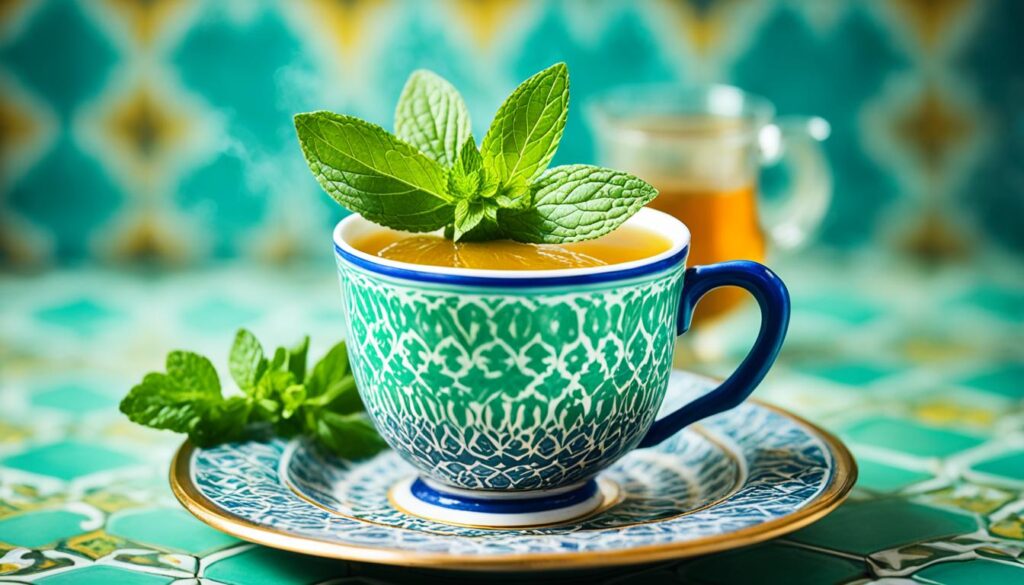
Moroccan cuisine is incomplete without its iconic drinks, like the traditional moroccan mint tea. Known as « atay » in Morocco, this tea is a refreshing drink. It’s often served as a social ritual and to help with digestion. The mix of green tea, fresh mint, and sometimes sugar or honey creates a soothing drink. It goes well with the rich, spiced flavors of Moroccan dishes.
Mint tea, also called « Moroccan whiskey, » is a favorite in Morocco. It’s served in small glasses with fresh mint. You can find it in cafes, restaurants, and homes all over the country.
Aside from the famous moroccan mint tea, Moroccan cuisine has many other moroccan beverages. These drinks show off the country’s unique tastes and traditions. From the aromatic Moroccan coffee to the cool jus d’Orange and the creamy avocado smoothie, each drink tells a story of Moroccan culture and food heritage.
| Beverage | Description |
|---|---|
| Moroccan Coffee | It’s made with dark roasted coffee beans and spices like cardamom or cinnamon. Moroccan coffee is strong and aromatic. It’s important in Moroccan culture and can be found in cafes and restaurants in cities like Casablanca and Rabat. |
| Jus d’Orange | This drink is made from fresh oranges and is loved for its refreshing taste. Jus d’Orange is often had for breakfast or as a refreshing drink in the summer. You can find it at juice stands, cafes, and restaurants, especially in markets and tourist spots. |
| Avocado Smoothie | This smoothie is creamy and nutritious, perfect for health-conscious people and vegans. It’s made with ripe avocados blended with milk or dairy-free alternatives. You can find it in cafes and juice bars in cities like Marrakech and Tangier. |
These moroccan beverages are not just refreshing drinks. They also show off Morocco’s rich food heritage and diverse flavors. Whether you’re trying the classic moroccan mint tea or exploring Moroccan cuisine’s unique drinks, they’re sure to delight your taste buds. They’ll take you to the vibrant culture of Morocco.
Conclusion
Moroccan cuisine is full of healthy, tasty ingredients and cooking methods. You can easily add these to your daily meals. By using aromatic spices, vegetables, and legumes, and choosing affordable meats, you can make dishes that are both tasty and healthy. These dishes follow the Mediterranean diet’s principles.
Trying out traditional Moroccan recipes or adding Moroccan flair to your dishes is a great idea. These healthy Moroccan cooking tips will help you discover the amazing flavors of this unique culinary tradition.
Moroccan cuisine is known for its exotic spices and incredible tastes. Many people find it very appealing. Ingredients like chickpeas, turmeric, cinnamon, and preserved lemons are not only tasty but also good for you. They are full of protein, fiber, and have anti-inflammatory properties.
By following the Mediterranean diet in Moroccan dishes, you can eat well and enjoy the rich flavors of this old culinary tradition.
Whether you’re making a Moroccan Chickpea Stew or a traditional Moroccan tagine, there are many ways to enjoy healthy Moroccan cooking. So, start a culinary journey through Morocco’s vibrant flavors. Discover a world of nourishment and joy for your taste buds.